
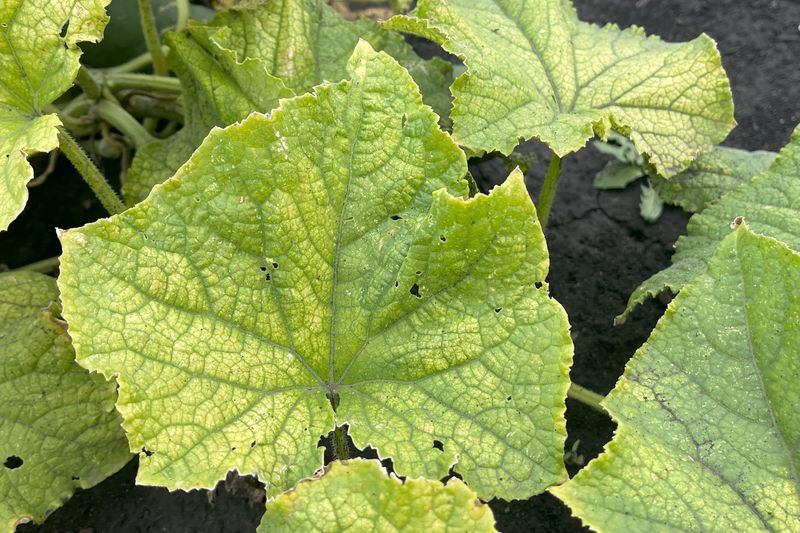
Yellow patches spreading between the veins of your cucumber leaves while the veins themselves stay green is one of the more unsettling sights in a summer garden. The symptom has a name – interveinal chlorosis – and it can point toward several different problems, not just one missing nutrient. Knowing how to read the clues on the leaf, check the root zone, and test before you treat can save your crop and keep you from making things worse.
Older cucumber leaves can make magnesium worth investigating
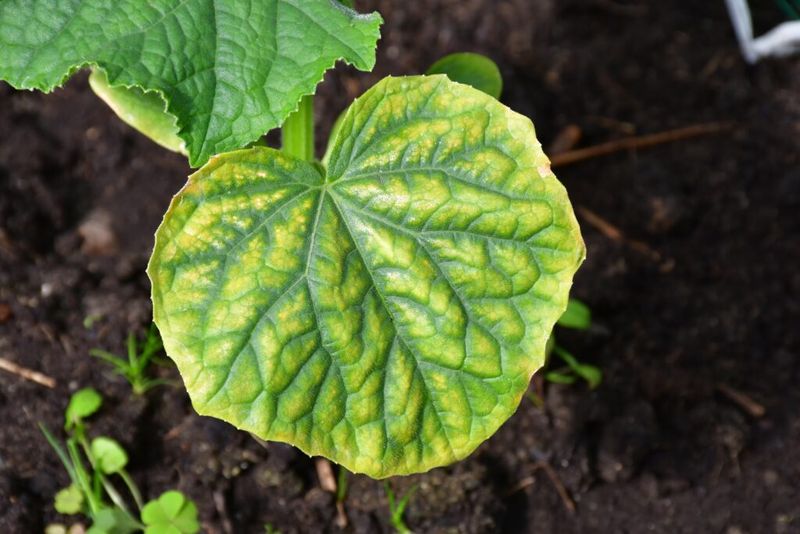
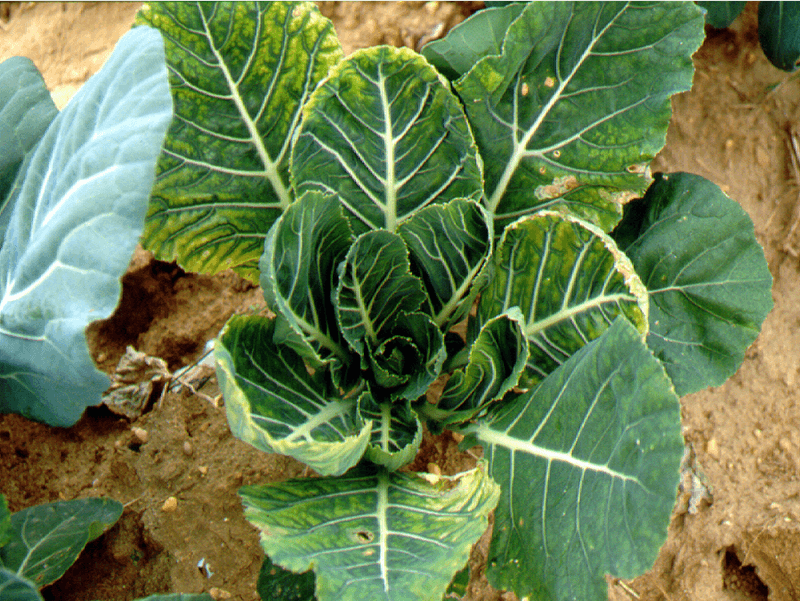
Interveinal chlorosis means the tissue between the leaf veins turns yellow while the veins themselves stay noticeably green. On cucumber plants, when you spot this pattern on the older or lower-to-middle leaves rather than on the newest growth at the tips, magnesium deficiency becomes a reasonable hypothesis to explore. Magnesium moves freely within a plant, so when the supply runs short, the plant pulls it from older tissues first to support younger, actively growing leaves.
Field cucumber production guidance from the University of Hawaii describes this interveinal pattern on mature leaves as consistent with magnesium deficiency, and plant nutrition research on cucurbit mineral uptake confirms that mobile nutrients like magnesium commonly show up first on older foliage. As the problem advances, the leaf edges may become brittle, curl slightly, or develop small necrotic patches along the margins.
Recognizing this pattern is a useful starting point, not a finished diagnosis. Several other nutrient problems, pests, and diseases can produce leaves that look nearly identical. Treating based on appearance alone risks adding a nutrient the plant does not actually need, which can create new imbalances. Use older-leaf interveinal yellowing as a reason to investigate further, not as a green light to reach for the fertilizer bag.
Heat adds stress but does not identify the cause
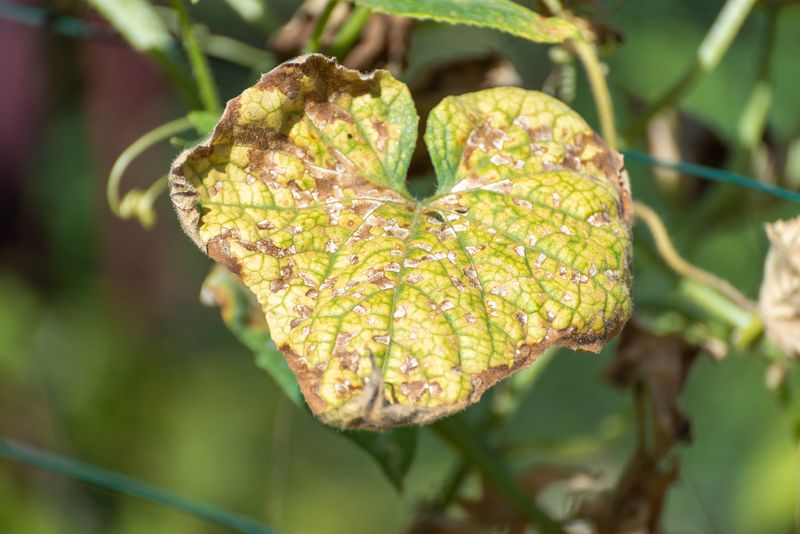
A heat wave is genuinely hard on cucumbers. High temperatures accelerate water loss through the leaves, push the root zone toward rapid drying, and can slow or alter the way nutrients move from the soil into the plant. When gardeners notice leaf symptoms during a stretch of hot weather, the natural instinct is to connect the two – but heat does not tell you which specific problem is happening.
Research on heat stress and plant nutrient dynamics shows that elevated temperatures can disrupt nutrient uptake and transport in multiple ways, none of which point exclusively to magnesium. A heat wave may instead expose a root problem that was already developing, bring spider mites to damaging population levels, or accelerate a disease that was spreading quietly. According to University of Minnesota Extension guidance on hot-weather plant diseases, high temperatures can shift which pathogens thrive and which plant defenses weaken.
Treat a heat wave as a signal to inspect your plants more carefully, not as a diagnosis by itself. Pull back the mulch and look at the soil moisture level, check the undersides of leaves for pests, and note which leaves are affected and where on the plant they sit. That information will be far more useful than the temperature outside.
Use leaf age, margins, and pattern to compare nutrient clues
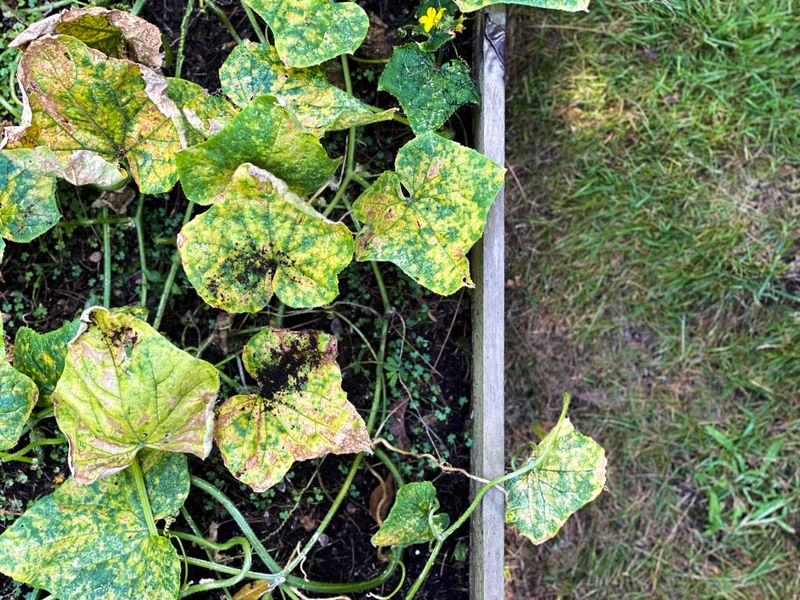
Before choosing any treatment, spend a few minutes building a clearer picture of what the yellowing actually looks like and where it is happening on the plant. Leaf age is one of the most reliable first clues. When the interveinal yellowing is concentrated on the newest leaves at the growing tips, iron or manganese deficiency tends to fit better than magnesium, because iron and manganese move poorly within the plant and young tissues suffer first when supply is short. University of Florida IFAS guidance on micronutrient deficiencies notes that young leaves with pale or nearly white tissue between strongly green veins are a classic sign of iron deficiency.
Potassium deficiency follows a different path. Rather than beginning evenly across the leaf surface between the veins, potassium problems in cucumbers typically show up first as yellowing along the outer edges of older leaves. That marginal yellowing can then work its way inward, and the edges may eventually turn brown and crispy in a pattern called marginal firing. University of Kentucky greenhouse cucumber research documents how a heavy fruit load can intensify potassium symptoms, because the developing cucumbers draw heavily on the plant’s potassium supply.
Magnesium, potassium, iron, manganese, and zinc deficiencies can overlap visually, especially in the early stages. University of Georgia Extension’s nutrient management guide reinforces that no single visual symptom confirms a diagnosis, and that soil or tissue testing is needed to separate these possibilities reliably.
Rule out pests, disease, and root-zone problems
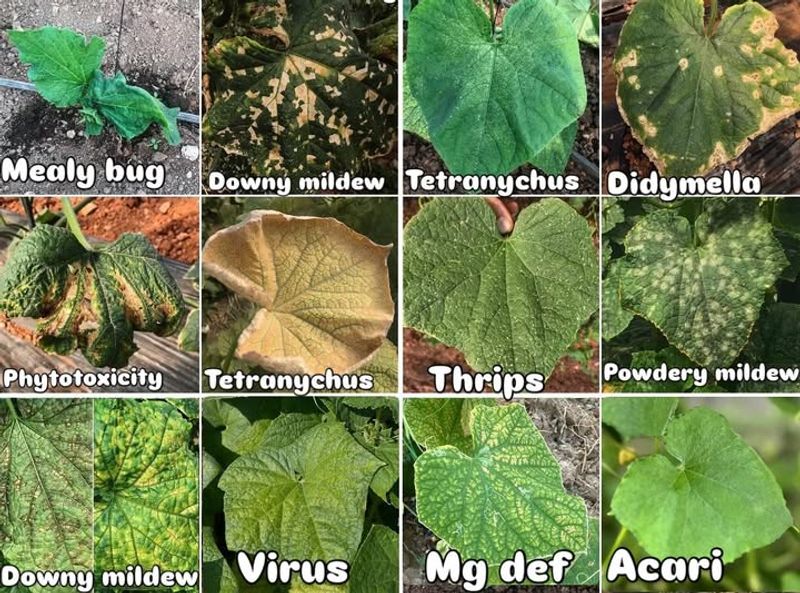
Nutrient deficiency is not the only explanation for yellowing cucumber leaves, and some of the most common lookalikes are caused by pests, disease, or root-zone conditions that no amount of fertilizer will fix. The University of Minnesota Extension cucumber leaf diagnosis tool lists spider mites, downy mildew, mosaic viruses, and several other conditions that can produce widespread discoloration on cucumber foliage.
Spider mites cause pale stippling or a fine bronze cast on the leaf surface rather than the broad interveinal yellowing of a nutrient problem, and they thrive in hot, dry conditions. Flip the leaf over and look for tiny moving dots or fine webbing. Downy mildew produces angular yellow spots that are bounded by the leaf veins, and in humid weather you may find gray-purple fuzz on the leaf underside directly beneath those spots, according to University of Minnesota Extension guidance on cucurbit downy mildew. Aphid feeding, cucumber mosaic virus, bacterial wilt, and herbicide drift or residue injury can also produce yellowing patterns that superficially resemble nutrient problems.
Root-zone conditions deserve equal attention. Roots that have been repeatedly dried out and then flooded, roots sitting in poorly draining soil, or roots damaged by disease or pests may struggle to absorb nutrients even when those nutrients are present in the soil. According to University of New Hampshire Extension guidance on nutrient problems, poor root health is a common and frequently overlooked reason why nutrient symptoms appear even in well-fertilized plants. Check the soil a few inches down before assuming the problem is in the leaves.
Test soil or tissue before choosing a nutrient correction
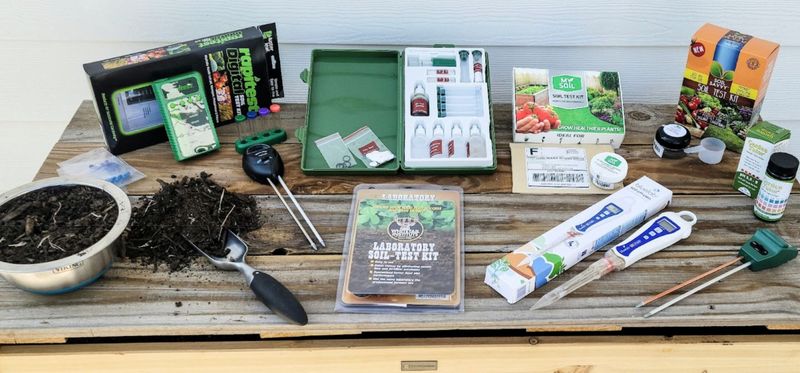
A visual inspection narrows the possibilities but rarely closes them. Soil testing is the most practical next step for most home gardeners because it measures pH and the actual levels of magnesium, calcium, potassium, and other nutrients available in your specific soil. That information matters because a nutrient can be physically present in the soil but still unavailable to the plant. Soil pH that is too high or too low, excess potassium or calcium, high salinity, waterlogged roots, or poor root health can all block uptake without the soil being completely depleted.
Penn State Extension’s soil testing guidance explains how a standard soil test report gives you a foundation for any amendment decision rather than guessing. University of Minnesota Extension’s soil testing resource notes that home garden kits are available from most cooperative extension services and many garden centers, and that results typically include specific product recommendations for your region. For container-grown cucumbers or high-tunnel situations, Penn State’s high-tunnel soluble salts guidance highlights that salt buildup from repeated fertilizer applications can mimic deficiency symptoms.
When symptoms are ambiguous or the planting is particularly valuable, tissue testing offers a more direct look at what the plant is actually taking up. University of Florida IFAS guidance on plant tissue analysis describes how tissue testing complements soil testing rather than replacing it. Either way, testing before applying an amendment protects you from adding a nutrient that is already adequate and from creating secondary imbalances in the process.
Match a confirmed magnesium correction to soil conditions
Once a soil test confirms that magnesium is genuinely low or unavailable, the right amendment depends on what else the test reveals. Soil pH plays a central role in that decision. Dolomitic lime contains both calcium and magnesium and raises soil pH, making it the better choice when your test shows acidic soil alongside low magnesium. If your soil pH is already in the acceptable range for cucumbers, roughly 6.0 to 6.8, applying dolomitic lime could push pH too high and create new nutrient availability problems.
In that case, magnesium sulfate is the more targeted option because it supplies magnesium and sulfur without altering soil pH.
University of Georgia Extension’s nutrient management guidance recommends matching the amendment to the specific soil condition rather than defaulting to one product for every situation. Whatever product you choose, follow the rate on the soil-test report and the product label rather than applying a general amount, because over-application carries real risks including salt injury, nutrient imbalance, and runoff.
Routine Epsom-salt applications are not recommended as a fix for suspected magnesium deficiency. University of Minnesota Extension’s review of common garden amendments is direct on this point: Epsom salt should only be used when a soil test confirms deficiency. Excess magnesium interferes with calcium uptake, and foliar Epsom-salt sprays can scorch leaf tissue. The goal is a targeted, test-guided correction, not a precautionary dose.
Stabilize moisture and protect the root zone
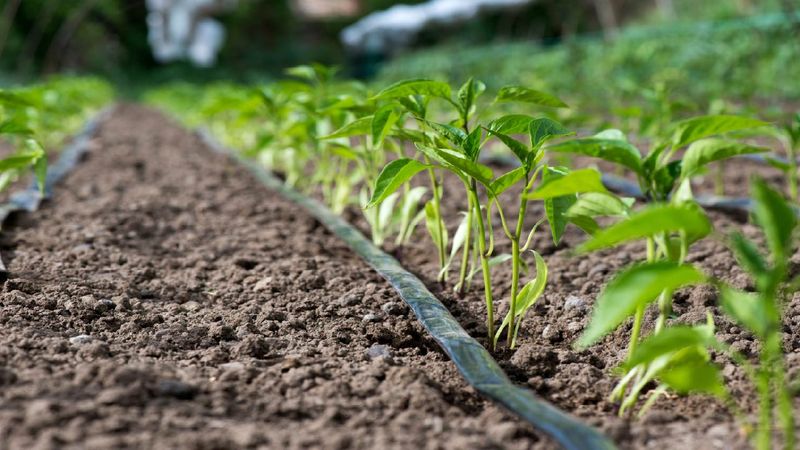
Consistent soil moisture does more for nutrient uptake than most gardeners realize. When the root zone swings repeatedly between bone dry and waterlogged, roots are under constant stress and their ability to absorb nutrients – including magnesium – suffers even when the soil contains adequate amounts. That pattern of dry-wet-dry cycling is common in summer gardens where watering is irregular or where rainfall arrives in short intense bursts followed by long dry spells.
A 2 to 3 inch layer of organic mulch around the base of your cucumber plants helps moderate those swings by slowing evaporation and keeping soil temperature more stable. University of Georgia Extension recommends mulch and consistent irrigation as practical tools for supporting root health and nutrient uptake in vegetable crops. Drip irrigation or soaker hoses are more effective than overhead watering for maintaining steady moisture without saturating the soil surface.
Good drainage matters equally. Roots sitting in waterlogged soil become oxygen-deprived and lose their ability to function normally, which limits uptake regardless of what the soil contains. These moisture management steps support whatever diagnostic and treatment process you are working through, but they cannot reverse confirmed disease, virus infection, herbicide injury, or a root system that is already severely damaged. Think of them as the foundation that makes other corrections more likely to work.
Judge success by new growth, not by a guaranteed cure
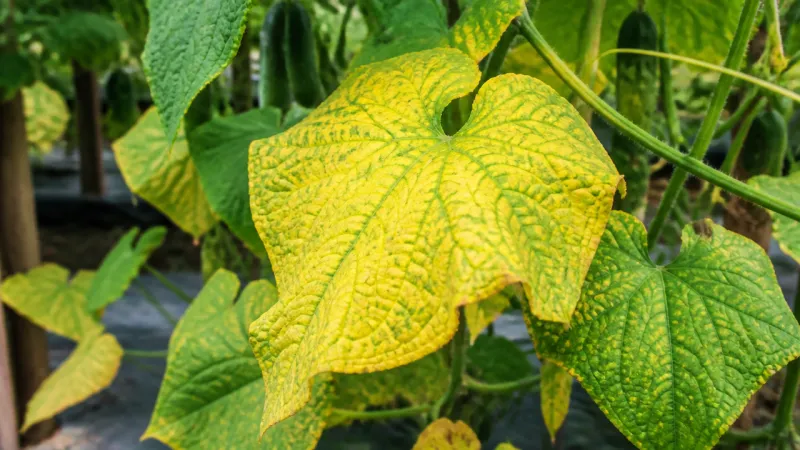
After working through the diagnostic steps – noting leaf age and pattern, checking for pests and disease, assessing the root zone, and applying a test-guided correction if one is warranted – the question becomes how to know whether things are improving. Established yellow or necrotic tissue very likely will not turn green again. Leaf cells that have already lost their chlorophyll do not typically recover, so waiting for old damage to disappear will leave you uncertain about whether the treatment is working.
A more reliable sign of progress is what the plant does next. Healthy new leaves emerging from the growing tips, with normal green color and no interveinal yellowing, suggest that the underlying problem has been addressed or stabilized. Symptom progression stopping on the existing leaves is also a meaningful signal. University of Florida IFAS fertilizer management guidance for cucumbers and Hawaii cucumber production research both frame recovery in terms of halted progression and improved new growth rather than reversal of existing damage.
Magnesium is genuinely worth investigating when older cucumber leaves show interveinal yellowing – but heat and leaf appearance alone cannot close that case. The plant will tell you more than the weather will.