
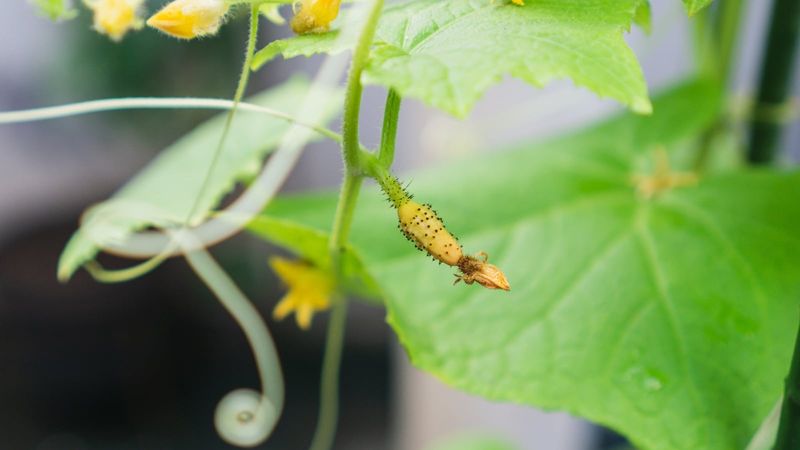
You worked hard to get those cucumber vines going, and now they’re sprawling and green – but the cucumbers coming off them look stubby, curved, or just plain wrong. Before you blame the heat alone or reach for a bag of fertilizer, take a closer look at what’s happening at the flower level. Poor pollination is one real and common reason ordinary field-grown cucumbers turn out misshapen, though it’s not the only explanation. Understanding what’s going on at the flower gives you something practical to act on right now.
Start with the symptom and the flower
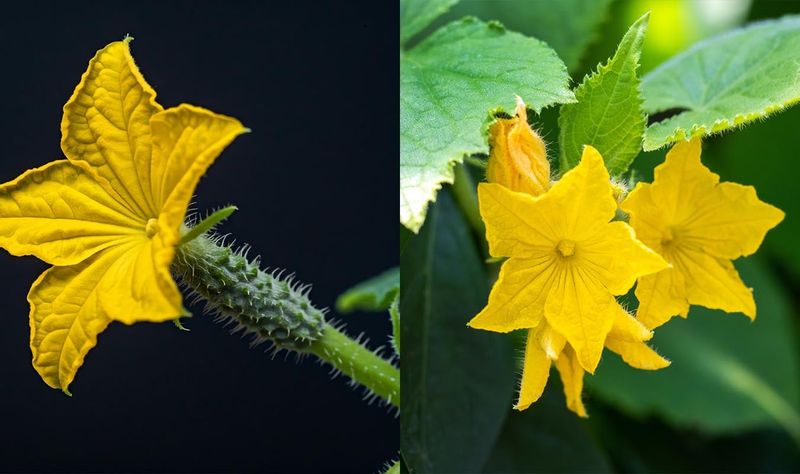
Before you can figure out what went wrong, you need to look at two things at once: the shape of the fruit already forming and the flowers currently open on your vine. Cucumber plants produce separate male and female flowers on the same plant, and both need to be present and working together for normal fruit to develop. Penn State Extension’s cucumber pollination guidance explains that insufficient pollination can reduce fruit size, seed development, yield, and shape in ordinary field-grown cucumbers.
Telling the two flower types apart is straightforward once you know what to look for. A female flower has a swollen, miniature cucumber-like bump right at its base, just behind the petals. That tiny structure is the ovary, and it’s what becomes the cucumber if pollination succeeds. A male flower sits on a thin, straight stem with no swelling at the base at all.
Early in the season, most of the flowers you see will be male. University of Minnesota Extension’s cucumber growing guide notes that the first flowers to open are commonly male and will drop off without producing any fruit – that’s normal and not a sign something is wrong. A misshapen cucumber does suggest something disrupted fruit development, but the shape alone cannot tell you whether poor pollination, water stress, a virus, or something else is responsible.
How hot weather can disrupt fruit set
Heat can interfere with cucumber fruit set in more than one way, and separating those mechanisms helps you understand why a hot stretch might produce a flush of odd-looking cucumbers. University of Minnesota Extension’s guide on heat effects in the vegetable garden notes that when daytime temperatures push near or above approximately 90 degrees F and nighttime temperatures stay near or above approximately 70 degrees F, plants tend to produce more male flowers relative to female ones, and bee activity and pollination may decline near those thresholds.
Those figures are approximate. The actual effect on your garden depends on your specific variety, your soil, shade patterns, wind, and how long the heat persists – not a single universal cutoff. What matters practically is that several things can go wrong at once during a hot spell: fewer effective insect visits to open female flowers, an imbalance in flower types, increased flower drop before fertilization, and intensified water stress that strains the whole plant.
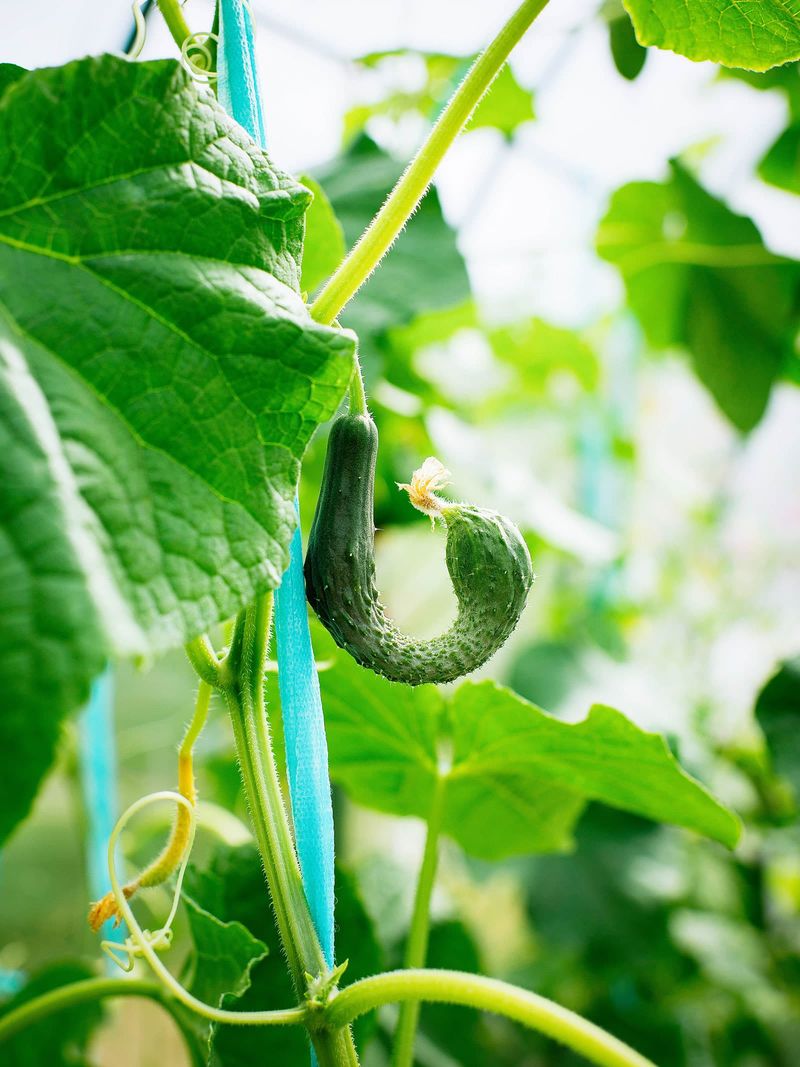
Each of those problems can produce a stubby or curved cucumber through a different pathway. A fruit that formed from an incompletely pollinated flower may be small and seedless on one side. A fruit that developed under drought stress may be pointed or bitter. The visible result can look similar even when the root cause is different, which is why hot weather should be treated as a contributing factor to investigate, not an automatic answer.
Hand-pollinate the next female flower
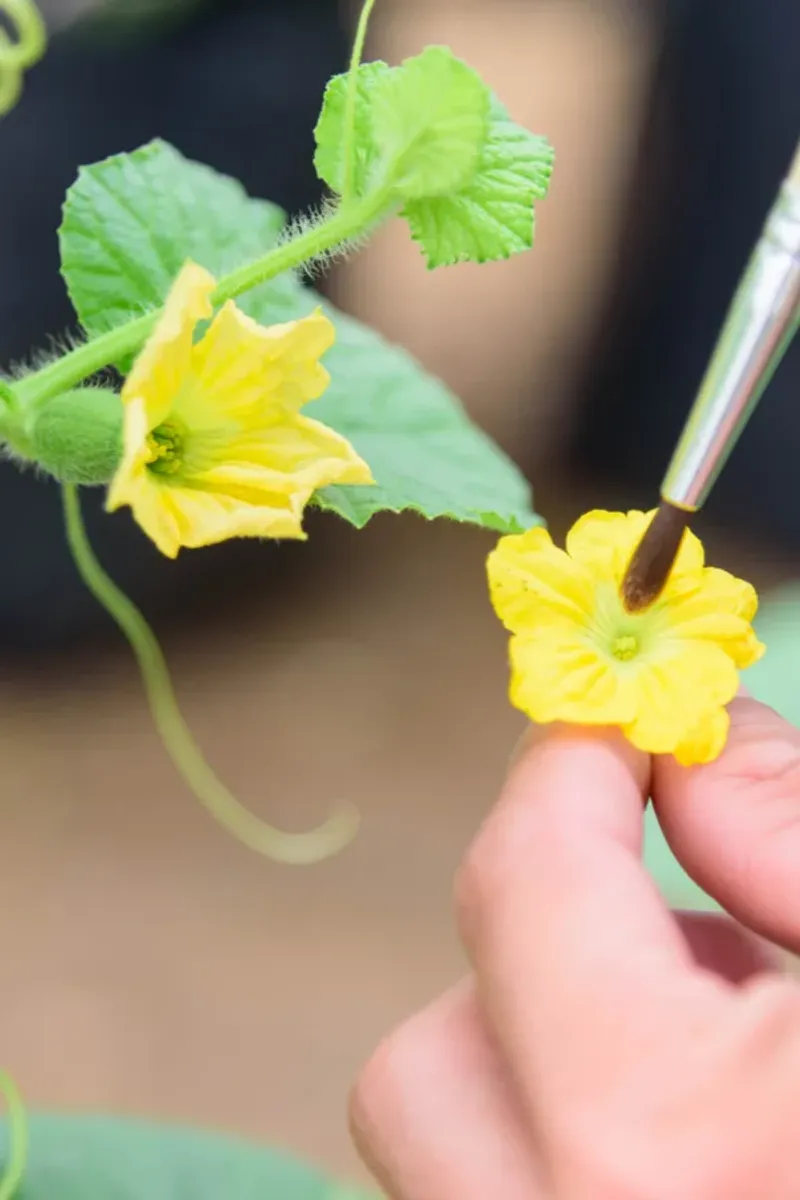
When compatible female flowers are open but bee activity has been low because of heat, rain, or other disruptions, hand-pollinating is the most direct thing you can do right now. The window for each flower is short. University of New Hampshire Extension’s guide on cucurbits flowering without fruit recommends working in the morning when flowers are freshly open and receptive, because a cucumber flower may stay viable for only about one day.
The procedure itself is straightforward. Find a male cucumber flower that opened this morning – look for the thin stem and no swelling at the base. Gently pull back or remove its petals so the central pollen-bearing structure, called the anther, is exposed. Then touch that anther lightly but directly to the stigma, the sticky central structure inside a freshly opened female flower.
You’re aiming to transfer visible yellow pollen. One gentle contact is usually enough, but a second pass doesn’t hurt.
If you’d rather not handle the flowers directly, a small, clean paintbrush or a dry cotton swab works just as well to pick up pollen from the male anther and dab it onto the female stigma. Utah State University Extension’s cucumber growing resource confirms that cucumbers do not cross-pollinate with squash, pumpkins, muskmelons, or watermelons in a way that changes the current season’s fruit, so you only need another cucumber flower – any cucumber variety on hand will do. Cross-pollination between varieties affects seed genetics, not the cucumber you’ll harvest this summer.
Existing malformed fruit will not straighten
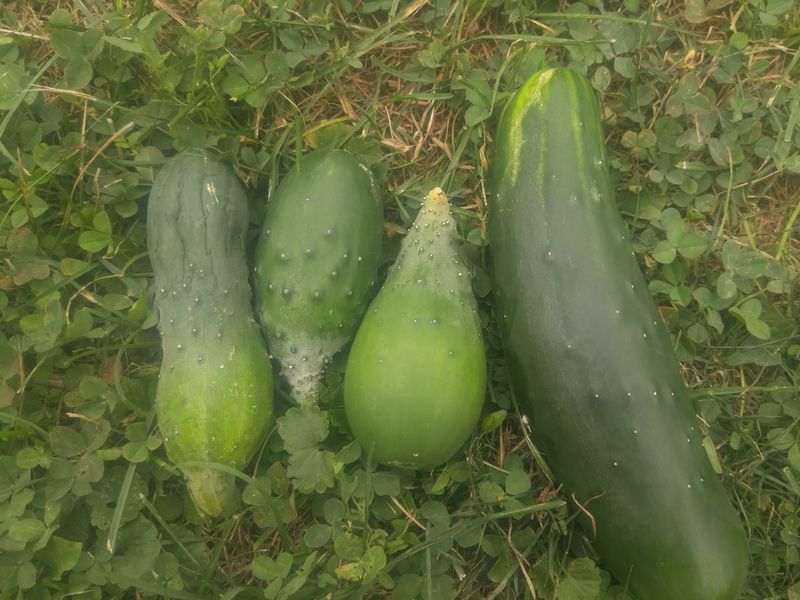
Once a cucumber has already developed a pronounced curve, stubby tip, or irregular shape, that distortion is set. University of Illinois Extension’s cucumber guide is direct on this point: a badly misshapen young fruit generally will not develop into a normal cucumber, regardless of what you do to the plant from that point forward. Waiting and hoping the shape corrects itself uses up plant energy that could go toward the next round of flowers.
A practical response is to remove severely malformed fruits cleanly from the vine. Cutting them off frees the plant to put its resources into the female flowers that are opening now and in the days ahead. Keep in mind that removing the current batch of odd cucumbers does not fix whatever caused them to form that way – it just clears the path for better opportunities.
Your energy is better spent preparing for the next female flower rather than tending to fruit that’s already compromised. Identify which flowers are male and which are female, note when new female buds appear, and be ready to hand-pollinate the morning they open. That forward focus is where you actually have leverage over the outcome.
Keep moisture steady through the heat
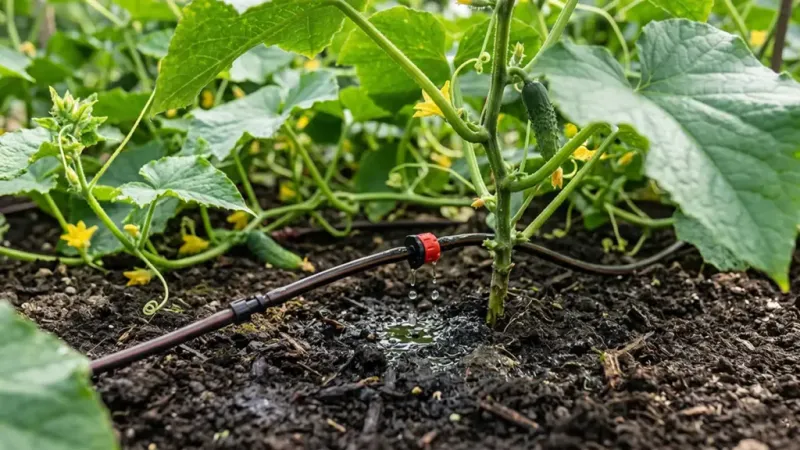
Hand-pollination addresses only one possible piece of the puzzle. If your soil moisture is swinging between bone-dry and waterlogged, the cucumbers that form – even from well-pollinated flowers – can still come out pointed, bitter, or misshapen. Utah State University Extension’s cucumber guide identifies water stress and fluctuating soil moisture as direct causes of poor fruit quality, separate from pollination.
Rather than watering by a fixed schedule, check the soil itself. Push a finger two inches into the ground near the root zone – if it feels dry at that depth, it’s time to water. How much and how often depends on your soil texture, recent rainfall, plant size, wind, air temperature, and whether your cucumbers are in the ground or in containers. Containers dry out faster than in-ground beds, especially in heat.
University of Minnesota Extension’s heat gardening tips recommend mulching around plants to conserve moisture and moderate soil temperature during hot spells. A two-to-three inch layer of straw, shredded leaves, or wood chips placed around the base of the plant – but not piled against the stem – can slow evaporation noticeably. Drip irrigation, a soaker hose, or watering directly at the soil surface also reduces the amount of moisture lost to evaporation and keeps foliage drier than overhead watering, which matters because wet leaves in heat can invite disease.
Check the cultivar and look for other causes
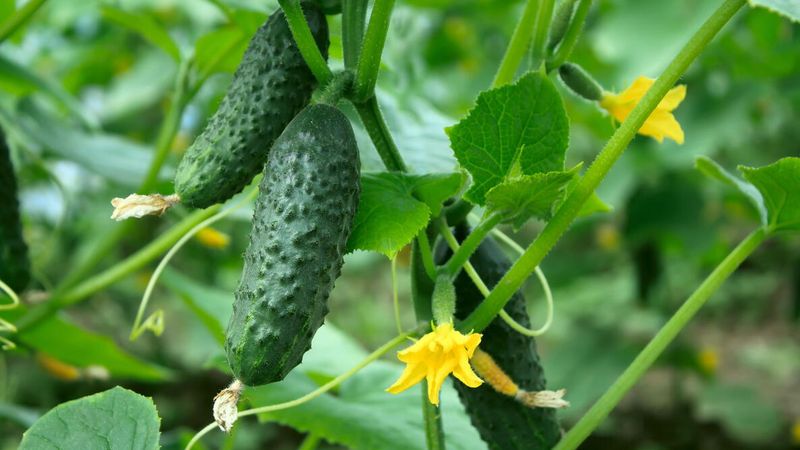
Not every cucumber plant is supposed to depend on bees. Some greenhouse, tunnel, and specialty cucumber varieties are parthenocarpic, meaning they’re bred to set fruit without any pollination at all. Penn State Extension’s pollination resource warns that for these cultivars, bee visits can actually produce seeded, bitter, curved, or misshapen fruit – the opposite of what you want. Check your seed packet or the plant tag before you try to attract more pollinators or hand-pollinate; if the label says parthenocarpic, seedless, or greenhouse type, the pollination fix does not apply.
A lush, vigorous vine with plenty of leaves does not mean the plant is producing fruit well. Excess nitrogen can push heavy leaf and stem growth at the expense of flowering and fruit set. Low fertility, flooding, or prolonged heat can also interfere with development in ways that look similar to incomplete pollination. If you haven’t done a soil test recently, that’s a more reliable guide than adding fertilizer by guesswork – indiscriminate fertilizing can worsen the imbalance rather than correct it.
The University of Minnesota Extension’s cucumber fruit diagnostic tool and Illinois Extension’s cucumber guide both point to mosaic or mottled leaf patterns, curling, puckering, stunting, ring patterns, or unusual fruit coloration as signs of a possible cucurbit virus rather than a pollination problem. Visual symptoms alone cannot reliably identify which virus is involved; a lab diagnosis may be needed. Separately, Utah State University Extension’s cucurbit scab resource describes sunken lesions, oozing spots, rot, or scab-like surface damage as signs of disease or injury that require a different response entirely.
Protect natural pollinators
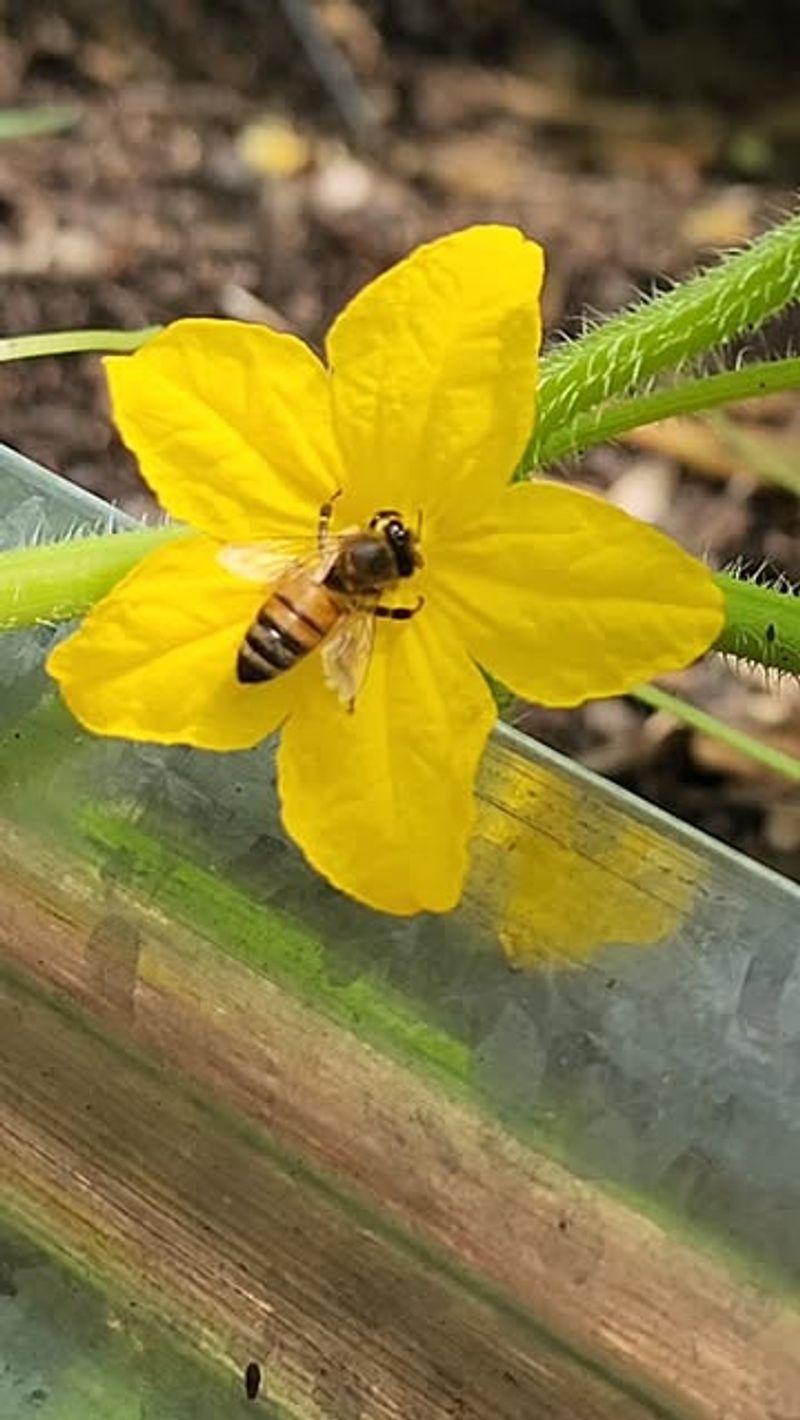
Hand-pollination is the most direct short-term action when female flowers are open and bee visits are scarce, but protecting the insects that already visit your garden matters just as much for the long run. Pesticide exposure is one of the more controllable threats to pollinator activity in a home garden. EPA pollinator protection guidance emphasizes reading and following the specific product label before any application near blooming plants – label requirements vary by product and some impose restrictions specifically around bloom time or during certain conditions.
Avoid applying any insecticide directly to open cucumber flowers or to blooming weeds growing nearby. Penn State Extension specifically notes that insecticides applied to cucumber flowers or blooming weeds in the area can harm pollinators and reduce pollination. “Early morning is safe” is not a blanket rule – some wild bee species forage early, and the right timing depends on what the product label specifies for your situation.
Longer-term habitat improvements, like adding flowering plants that bloom at different times or reducing bare-soil areas where native bees nest, may support pollinator populations over time. Those changes are worthwhile but won’t produce immediate results for the cucumbers you’re looking at today. For the current season, hand-pollination is the more reliable backup when compatible flowers are open and bee activity is low.
Use the next fruit as evidence, not proof
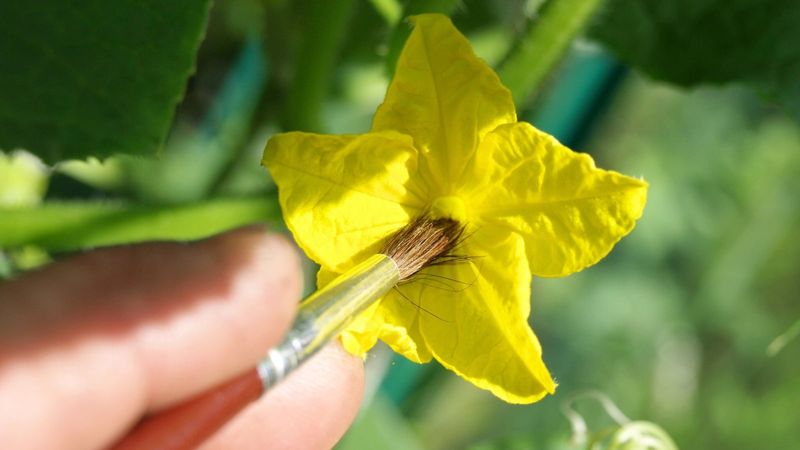
A practical sequence to follow starting tomorrow morning: locate a newly opened female flower, confirm it’s a standard field-grown variety that needs pollination, and hand-pollinate it using a fresh male flower or a clean brush. Keep the root zone evenly moist and check the soil before each watering rather than watering on a fixed schedule. Then watch what develops over the next several days.
If the next fruit fills out normally and develops good length and shape, that’s meaningful – it may suggest that inadequate pollination contributed to the earlier problems. Penn State Extension and Illinois Extension both make clear, though, that one improved fruit is useful evidence, not a confirmed diagnosis. Earlier malformed cucumbers may have had multiple contributing causes.
If misshapen fruit continues after you’ve addressed pollination and moisture, or if you notice leaf mottling, stunting, or lesions, the University of Minnesota’s cucumber diagnostic tool is a good next stop. Sometimes the flowers are only part of the story – and knowing when to look further is what turns a worried gardener into an effective one.