
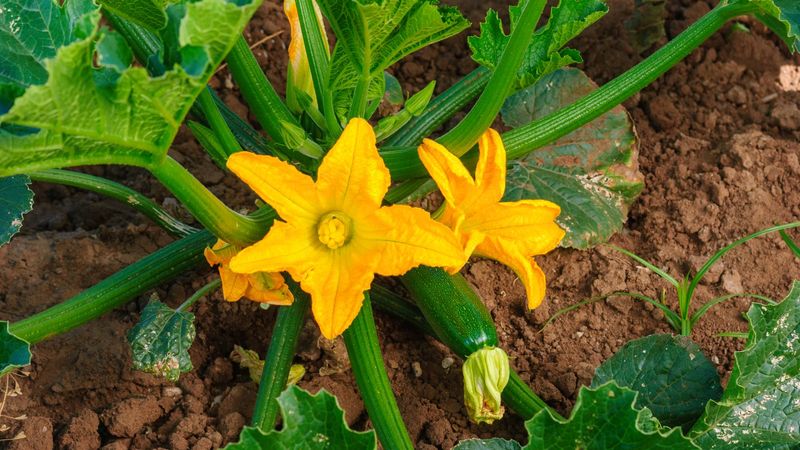
Your zucchini plant is covered in bright yellow blossoms every morning, yet not a single fruit is forming. That can feel like something is badly wrong, but heavy flowering alone does not tell you much until you know what kind of flowers you are actually looking at. The blossoms are the best place to start your diagnosis, but they are a clue to follow, not the proven cause of the problem.
Start with the blossoms, but do not assume they caused the problem
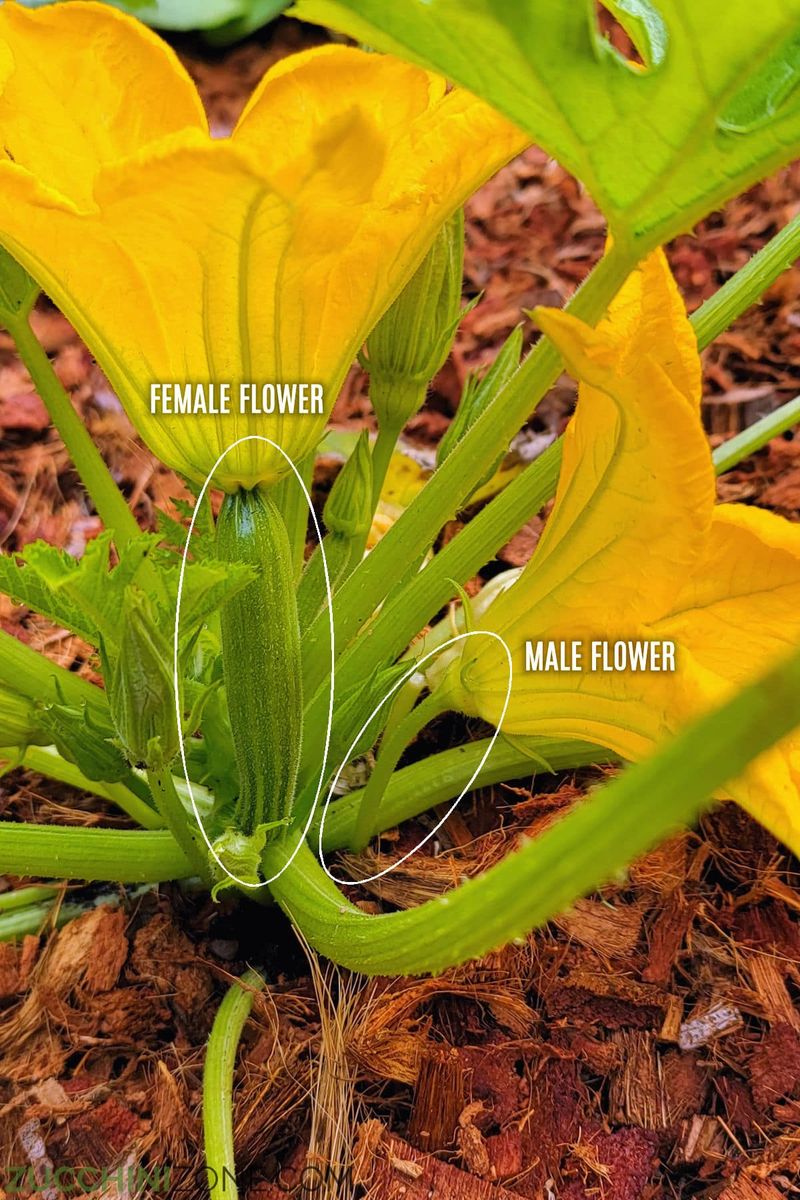
Grab a cup of coffee and head out to your zucchini patch before the sun gets high. Look closely at the base of each open flower, because that one detail will tell you more than anything else about why fruit is not forming. According to K-State Extension’s fruit-set guidance, male and female zucchini flowers are separate, and only female flowers can develop into zucchini.
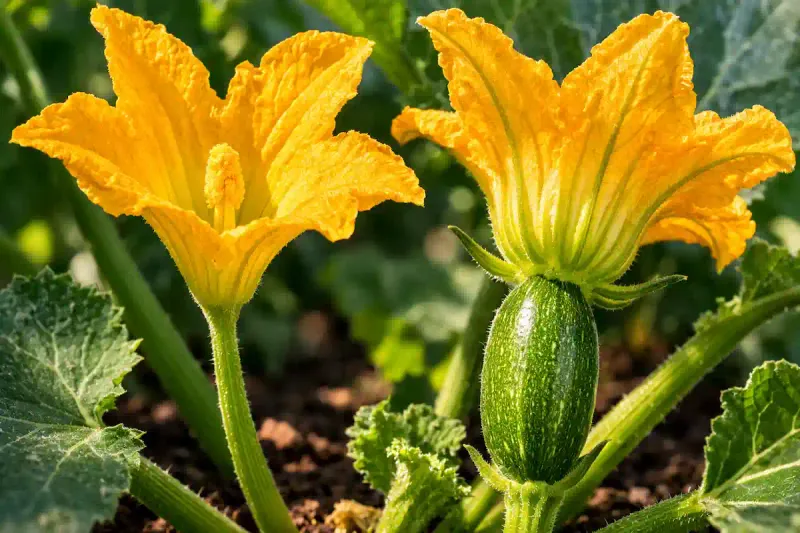
Male flowers sit on a thin, straight stem and contain a pollen-covered anther at the center. Female flowers have a swollen, miniature zucchini sitting right behind the petals, and a sticky central structure called the stigma that receives pollen. If you press a fingertip gently against the center of a flower and yellow powder sticks, you are holding a male.
A plant that is loaded with male blossoms will look impressively floriferous while producing zero fruit, because male flowers simply cannot become zucchini no matter how many bees visit them. Iowa State University Extension notes that the first flowers on a young plant are commonly male, and an early run of male-only blossoms is normal. Identify what you have before changing your watering schedule, adding fertilizer, or attempting any hand-pollination.
Heat can reduce female flowers and fruit set
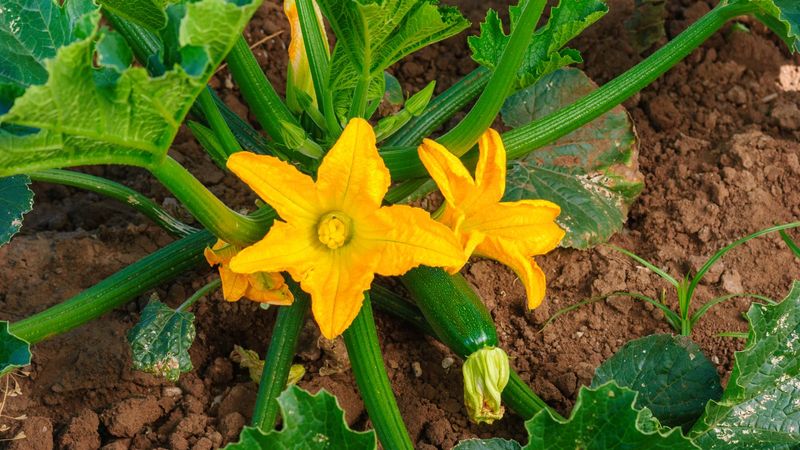
Not every fruit-set failure traces back to bees missing the morning shift. Heat creates two separate problems that look alike from a distance but require different responses.
The first is flower imbalance. Sustained hot days combined with warm nights can push zucchini toward producing more male flowers while delaying or reducing female-flower development. University of Minnesota Extension’s vegetable heat-stress research explains that high temperatures can shift cucurbits toward male-heavy flowering and reduce overall fruit set. The second problem is abortion: even when female flowers do form, heat, dry air, or drought stress can cause the flower or the tiny developing fruit to drop before you ever notice it.
Temperatures around 90 degrees Fahrenheit during the day and 70 degrees at night are useful warning conditions, but they are not universal cutoffs. A 2024 NC State zucchini cultigen evaluation found that sustained temperatures above 90 degrees were associated with limited male-flower production and poor pollination, showing that heat effects can vary by cultivar and timing. Humidity, water status, and how many consecutive hot days the plant has endured all shape the outcome.
Walk your row and look for three specific signs: no female flowers at all, tiny zucchinis behind closed buds that turn yellow before the flower opens, or small fruit that forms and then shrivels within a day or two. Hand-pollination cannot help a plant that is producing only male flowers or aborting female buds before they open. Recognizing which situation you face is the only way to decide what comes next.
Check morning pollinator activity before intervening
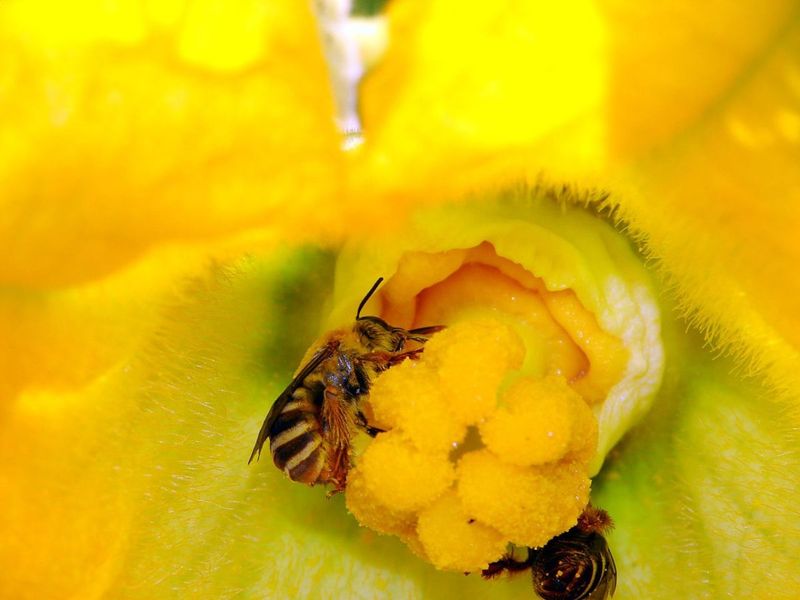
Before reaching for a paintbrush, spend ten minutes watching your open zucchini flowers in the early morning. Squash flowers open around dawn and can close by late morning or noon, so that short window is the only reliable time to observe both insect visits and flower readiness. Squash bees, bumblebees, honey bees, and other native insects may already be doing the work without your help.
Squash bees in particular are worth knowing. University of Minnesota Extension’s cucurbit pollination guide notes that squash bees forage early in the day and are closely associated with squash crops. A single plant visit from one of these bees can transfer enough pollen to set multiple fruit. If you see bees entering female flowers regularly, the problem is more likely flower imbalance or heat stress than a pollination gap.
One zucchini plant produces both male and female flowers on its own, so you do not automatically need a second plant to get fruit. The question is whether pollen is moving from an open male to an open female at the right moment. The decision point for hand-pollination is specific: viable female flowers are open, male flowers carry visible pollen, and insect activity at those flowers is absent or very low. If all three conditions are met, stepping in makes sense.
If female flowers are absent or insects are already active, waiting and watching is the better first move.
Hand-pollinate an open female flower gently
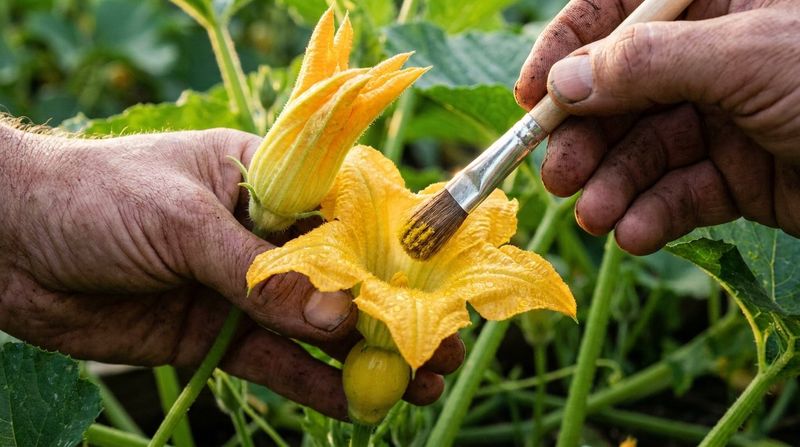
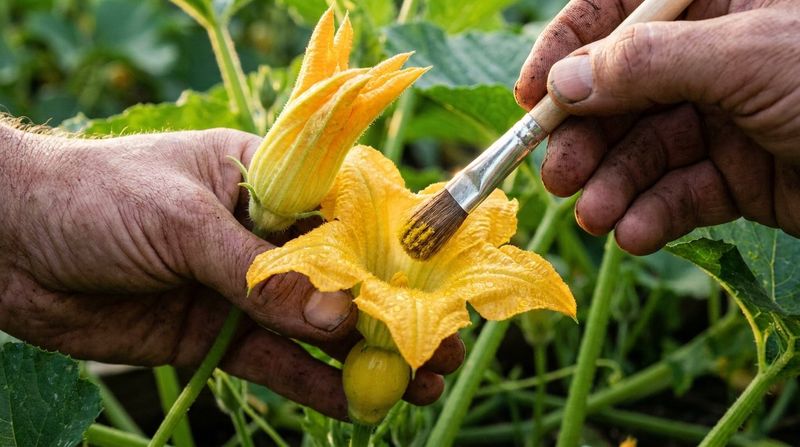
When you have confirmed that a female flower is open, a male flower carries visible yellow pollen, and bees are not visiting, you have a genuine opportunity to step in. The whole process takes about two minutes per flower and works best between sunrise and mid-morning before the blossoms close.
Find an open male flower with a clearly dusty, yellow anther at its center. Fold the petals back or remove them entirely so the anther is easy to reach. Then gently dab the anther directly onto the sticky stigma at the center of the open female flower, or use a small artist’s paintbrush to transfer the pollen if you prefer not to handle the flower directly. Colorado State University Extension’s vegetable garden guidance outlines this same approach as a reliable method for home gardeners when bee activity is low.
After pollinating, mark the treated female flower with a small piece of brightly colored yarn or a twist tie so you can track its progress over the following days. Repeat the process each morning that you find open female flowers and low insect activity. One male flower can often pollinate more than one female if pollen remains on the anther.
Keep in mind that this method cannot revive a flower that has already closed, fix a plant producing no usable female flowers, or overcome heat-induced pollen sterility. UMass Amherst’s squash fact sheet confirms that hand-pollination is most effective when both flower types are open and viable. Transferring pollen is the goal; there is no need to remove male flowers from the plant.
Track the marked flower for signs of fruit set
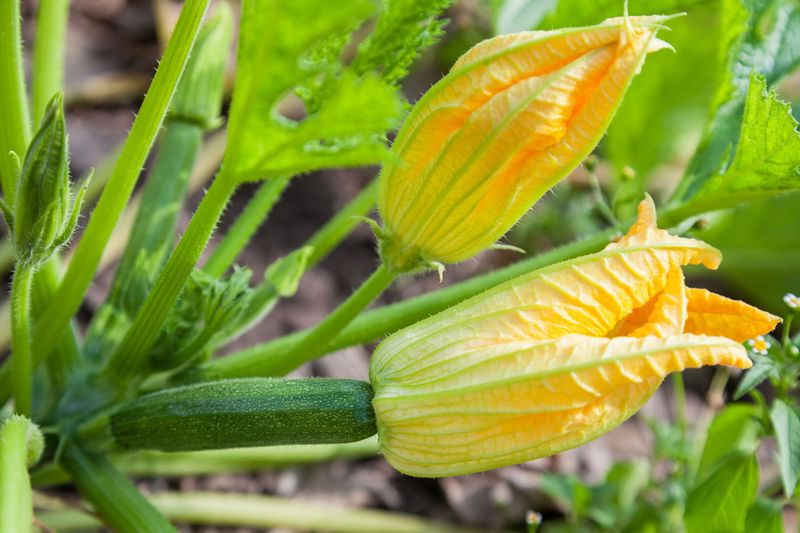
After hand-pollinating, the marked flower needs a few days to show you whether the attempt worked. A developing zucchini should begin enlarging noticeably within two to four days. The blossom end may wilt and dry, which is normal, but the small fruit behind it should continue growing steadily in size and stay firm and green.
Several things can go wrong even after a careful hand-pollination. University of Minnesota Extension’s pollination requirements resource explains that poor pollination can result in no fruit development, a misshapen fruit, or a small fruit that quickly yellows, shrivels, or drops from the vine. Any of those outcomes points toward a pollination issue, but they can also signal heat stress, water stress, or disease, so one failed attempt is not the end of the story.
An important distinction: if you find a female flower that never opened and has already turned yellow or started to rot, that blossom could not have been hand-pollinated in the first place. That is a different problem, more likely tied to heat, drought, excessive moisture, or disease than to a missed pollination window.
Use what you observe on the marked flower to guide your next steps. Continued enlargement means the method worked and you should repeat it on the next open female flower. Shriveling or drop means the limiting factor may not be pollination alone, and it is worth checking soil moisture, temperature patterns, and overall plant health before automatically hand-pollinating again.
Reduce stress and keep pollinators able to reach the flowers
Flower inspection and morning pollination are the core fixes, but a few practical conditions in the garden can quietly undermine even careful effort. Row covers are a good example. They protect young plants from cucumber beetles and squash vine borers, but once flowering begins, a cover that stays on around the clock blocks every bee from reaching the blossoms. University of Minnesota Extension’s summer squash guide recommends removing row covers once flowering starts unless the gardener is prepared to hand-pollinate every female flower that opens.
Soil moisture matters too, but it works differently than most people expect. Consistent moisture during heat and fruit development helps reduce plant stress, yet it cannot correct a male-heavy flower flush, poor pollination, or heat-induced abortion on its own. Both drought stress and waterlogged soil can contribute to flower or small-fruit drop. Poorly drained soil can limit root function and reduce the plant’s ability to handle heat, even when the surface looks fine.
Water at the soil level rather than overhead when possible, because rain and overhead irrigation can interfere with pollen transfer and may contribute to blossom rot.
Pesticides deserve careful thought during flowering. Broad-spectrum insecticides applied when pollinators are active can harm the same bees you are counting on to do the pollination work. EPA pollinator protection guidance emphasizes applying any necessary pesticide when pollinators are not foraging, avoiding blooming plants, and following all pollinator-protection requirements on the product label. The label is the legal standard, and it controls when and how any pesticide can be used.
If a pest problem genuinely requires treatment, read the label first and treat in the early evening after flowers have closed for the day.
Know when waiting is more useful than more hand-pollination
A clear decision rule saves a lot of unnecessary effort. When open female flowers and pollen-bearing male flowers are both present and bee activity is low, hand-pollinate them early in the morning. That is the situation where the technique is genuinely useful.
When the plant is producing only male flowers, aborting female buds before they open, or showing signs of broader heat or water stress, hand-pollination cannot solve the immediate cause. University of Minnesota Extension’s cucurbit fruit-set guide and K-State Extension’s crop production guidance both point to consistent moisture, reduced heat stress, and pollinator-friendly care as the longer-term levers in those cases. Keep inspecting blossoms each morning, maintain even soil moisture, and avoid disturbing pollinators.
Failed early male blossoms and a temporary heat-related pause are not signs that the plant is finished. Conditions shift, female flowers return, and bees resume their routines. The gardener who keeps watching carefully is the one most likely to catch the right morning window.