
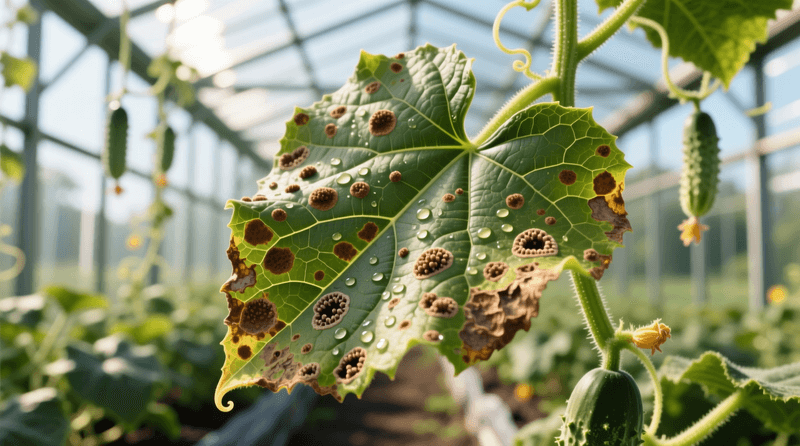
Crispy brown edges on cucumber leaves are one of the most alarming things a home gardener can spot during a heat wave. The damage looks exactly like sunburn, but the real cause is often harder to see than the leaf itself. Before you reach for a spray bottle or start pruning, the most useful place to look is right below the soil surface, where the plant’s water supply begins. This guide walks you through a step-by-step inspection so you can match the treatment to what is actually happening, not just what the leaf looks like.
Brown edges offer a clue, not a diagnosis
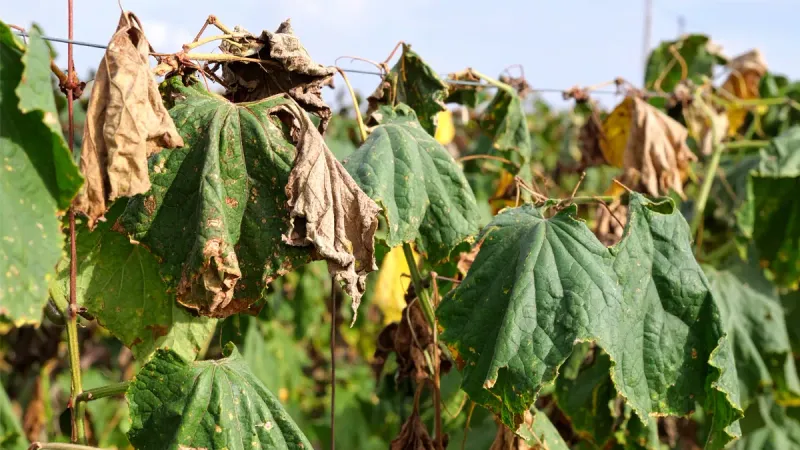
Crispy brown margins on cucumber leaves during a heat wave are easy to write off as sunburn, and heat really can scorch foliage directly. Hot, dry wind pulls moisture out of leaves faster than the plant can replace it, and the edges, which are the farthest from the main veins, tend to show stress first. But the same appearance can come from something going wrong underground rather than in the air around the plant.
A failure in the plant’s water supply, whether from dry soil, shallow irrigation, compacted ground, poor drainage, or damaged roots, can produce leaf-edge scorch that looks nearly identical to heat injury. University of Minnesota Extension guidance on heat stress notes that brown, crispy foliage during hot weather often reflects a water-supply problem at the root zone rather than direct sunburn. That makes the soil and roots worth checking first, even when the air temperature is the obvious suspect.
Salt buildup, potassium deficiency, herbicide injury, spider mites, and leaf-spot diseases can all produce similar browning, so the leaf edge alone does not confirm any single cause. The inspection sequence that follows is designed to help you work through the most likely possibilities in a logical order, starting below the surface and moving outward, so you can respond to evidence rather than appearances.
How heat exposes a water-supply problem
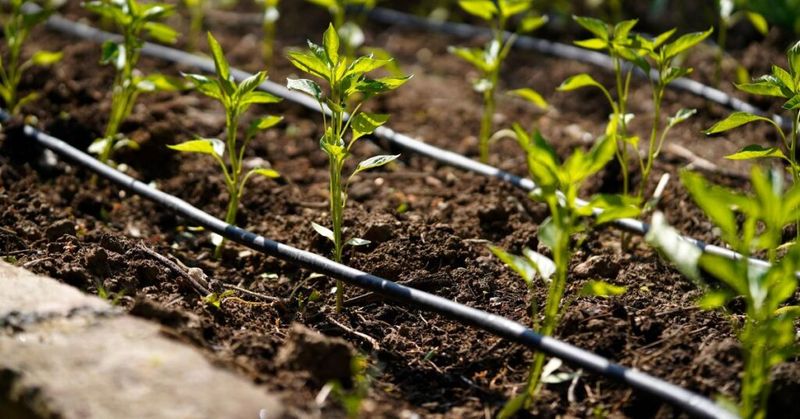
Cucumbers lose water through their leaves constantly, a process that accelerates sharply when temperatures rise or a dry wind moves through the garden. Roots must replace that water fast enough to keep leaves turgid and functioning. When the supply chain breaks down anywhere along that path, the outermost leaf tissue is usually the first to show it.
Dry soil is the most obvious bottleneck, but it is not the only one. Shallow irrigation that wets only the top inch or two leaves deeper roots without a reliable supply. Compacted soil reduces the pore space that roots need to spread and absorb water efficiently. Poor drainage can saturate the root zone, which starves roots of oxygen and impairs their ability to take up water even when plenty of it is present.
UMN’s vegetable garden watering guidance explains that cucumbers prefer soil that holds moisture well but drains freely, because both extremes, bone dry and waterlogged, can limit water uptake.
Root damage from cultivation, pests, or disease can reduce the plant’s effective absorbing surface at exactly the moment heat demand peaks. A plant with compromised roots may look fine in the morning, then show wilting or scorched margins by early afternoon as temperatures climb. The key takeaway is that wet-looking soil does not automatically mean the roots are functioning, and dry-looking leaves do not automatically mean the soil is the problem. Both deserve a direct look.
Check moisture below the surface
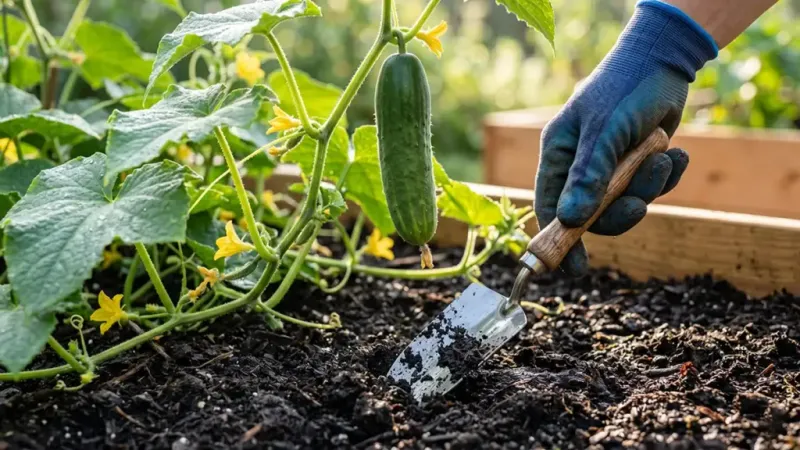
The most common mistake gardeners make during a heat wave is judging soil moisture by the color of the surface or the feel of the air. A dry, dusty top layer can sit above a root zone that is still reasonably moist, while a surface that looks fine after a brief rain may be bone dry two or three inches down where roots are actively feeding.
Push a finger or a wooden dowel two to three inches into the soil near the base of the plant. If it comes out dry or barely damp, the root zone likely needs water. Penn State Extension’s summer watering guidance recommends checking actual soil conditions rather than relying on a calendar schedule, because heat, wind, soil type, and plant size all affect how quickly moisture is depleted. Container cucumbers dry out faster than in-ground plants and may need attention more often, but the test is the same: check the soil, not the clock.
While you are at the soil surface, look for signs that water is not reaching the root zone at all. Runoff along the edges of a raised bed, water pooling on a crust rather than soaking in, or soil that swings rapidly from soaked to powder-dry between waterings all point to a delivery problem. Penn State’s drip irrigation guidance for vegetables notes that how long you run irrigation matters as much as how often, because short, frequent cycles often wet only the surface while leaving the deeper root zone untouched.
Know when wet soil points to failing roots
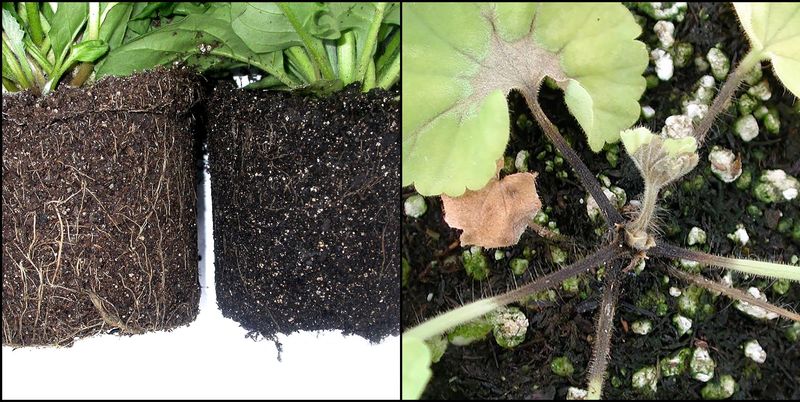
Moist soil that should be helping the plant but isn’t is one of the more confusing situations a gardener can face. When a cucumber continues to wilt, stunt, yellow on older leaves, or show scorched margins despite soil that feels adequately wet, the problem may have moved from the ground itself to the roots growing in it.
Gently expose the crown, the area where the stem meets the soil, and follow a few roots outward. Healthy roots are firm, pale tan to white, and show active white root tips. Penn State Extension’s guidance on fungal root rots describes warning signs that include dark or black roots, root tissue that is soft and strips away from a central strand, few or no white growing tips, and limp roots that lack structural firmness. Stem discoloration or softening near the soil line can also point to crown or root disease.
Keep the diagnosis proportional to what you find. Brown leaf margins alone are not enough to conclude that root rot is present. UC IPM’s cucurbit pest damage guide points out that root and crown problems usually show up alongside broader decline: whole-plant wilt that does not recover overnight, progressive yellowing from the base upward, or a vine that is visibly collapsing over several days. If the roots look healthy and the soil moisture is reasonable, the cause of the brown margins is more likely to be found above ground.
Restore steady moisture without drowning the plant
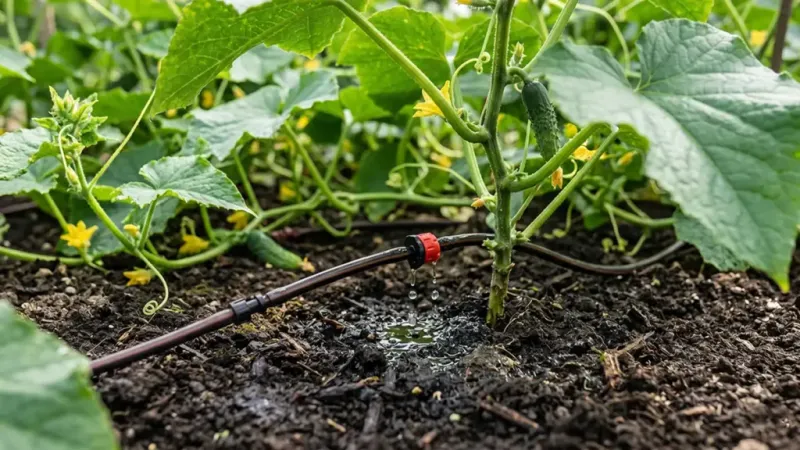
Once you know the root zone is genuinely dry, the goal is to wet it thoroughly and then let the soil guide the next watering rather than the calendar. Apply water slowly at the base of the plant so it soaks in rather than running off. A drip line, soaker hose, or low-flow hand watering directed at the soil surface does this job well. Frequent shallow sprinkling tends to wet only the top inch, which can encourage surface rooting and leave the plant more vulnerable during the next dry stretch.
General vegetable guidance often references roughly one to one and a half inches of water per week, but Penn State Extension’s drip irrigation resource makes clear that actual needs depend on soil texture, plant size, weather, rainfall, mulch cover, and whether the cucumber is growing in a container or in the ground. During an extended heat wave or a stretch of dry wind, a mature plant in sandy soil may need more water than that general figure suggests. Check the root zone before adding water, not after a set number of days.
A two- to three-inch layer of organic mulch spread over the soil surface can slow evaporation meaningfully and help keep moisture more consistent between waterings. UMN’s vegetable watering guidance recommends mulch as part of moisture and disease management, but with one important note: mulch reduces evaporation loss, it does not fix a drainage problem. Keep mulch a few inches away from the stem so the crown stays dry and air can move around the base of the plant.
Let the symptom pattern redirect the investigation
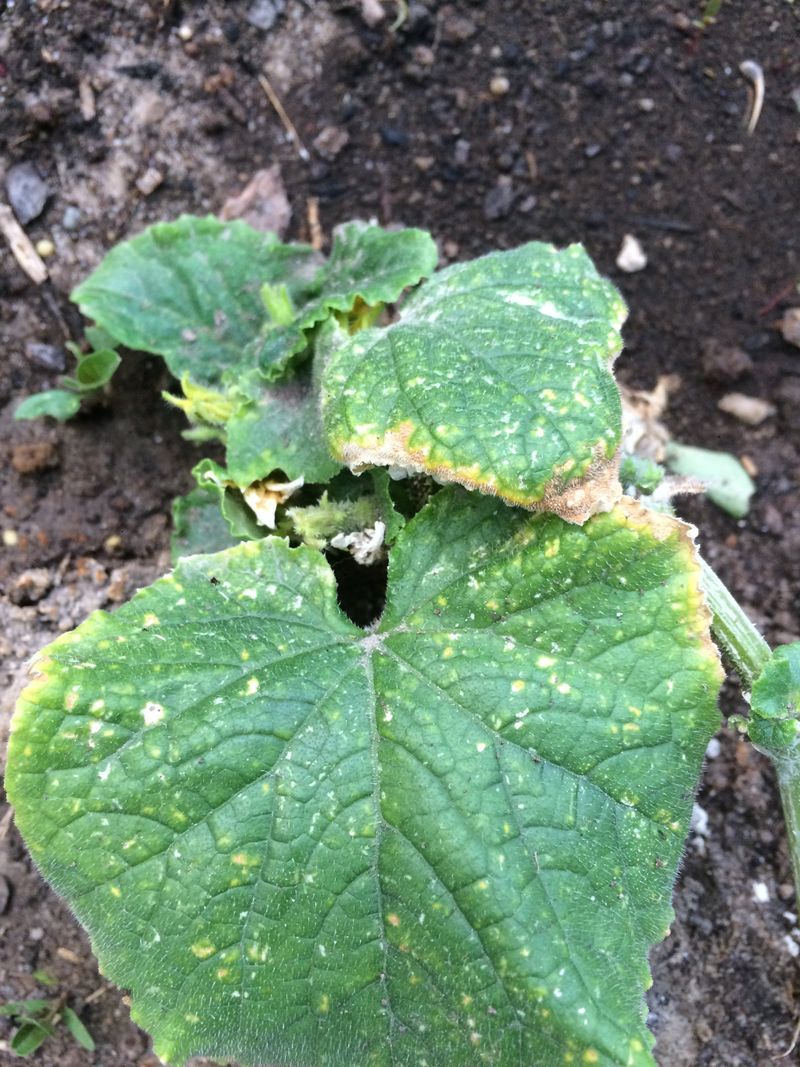
Uniform browning along the outer edge of a cucumber leaf is a useful starting point, but the shape, location, and pattern of the damage can tell you a great deal about whether you are dealing with a water problem or something else entirely. Taking a close look at several leaves, including both older and younger ones, often narrows the possibilities quickly.
Angular leaf spot produces small lesions that are bounded by leaf veins, giving them a squared or angular shape rather than a smooth margin. They typically start water-soaked or tan, sometimes with a yellow halo, and the centers may dry out and fall away, leaving ragged holes. UC IPM’s angular leaf spot resource distinguishes this pattern clearly from uniform edge scorch. Powdery mildew shows as a white or gray powdery coating on leaf surfaces, while anthracnose produces discrete brown spots or lesions rather than a continuous crispy margin.
Sudden vine wilt, especially in a plant that looked healthy the day before, should prompt a look for cucumber beetles, which can transmit bacterial wilt and cause rapid collapse. Check stems and undersides of leaves for beetles or feeding scars before assuming irrigation is to blame.
Salt or fertilizer injury can produce leaf-margin burn, curling, and stunting that looks similar to drought stress. Utah State University Extension’s salinity management guidance notes that excess salt from fertilizer, compost, manure, or saline irrigation water can cause margin burn even when soil moisture is adequate. Potassium deficiency is another testable alternative: Texas A&M AgriLife’s cucurbit potassium deficiency guide notes that in cucurbits it typically begins on older leaves and may include marginal yellowing or necrosis, leaf cupping, weak growth, and abnormal fruit. Soil or tissue testing is the reliable way to confirm a nutrient problem before treating for it.
Avoid reflex treatments that can worsen stress
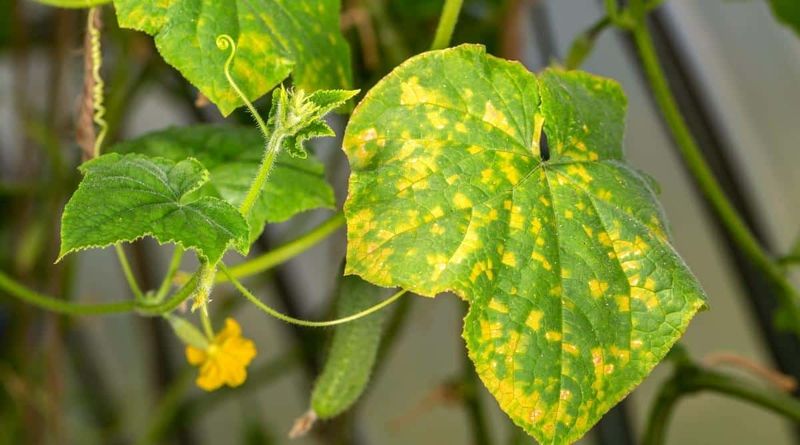
Brown leaf margins on a cucumber plant can feel urgent, and that urgency sometimes pushes gardeners toward treatments that make the situation worse. Adding fertilizer when the cause is unknown is one of the most common missteps. Fertilizer salts can injure roots and intensify leaf scorch, particularly when the soil is already dry or the plant is stressed. USU Extension’s salinity guidance recommends stopping fertilizer applications when salt or fertilizer injury is plausible, and using soil testing to assess the situation before adding anything.
Brown margins alone do not establish a calcium or potassium deficiency, so reaching for supplements without testing is a gamble that can backfire.
Fungicides are not appropriate for abiotic scorch, drought stress, or salt injury, and they are not a useful response to an unconfirmed disease. Penn State Extension’s fungicide guidance is clear that disease management depends on identifying the specific pathogen and matching the product to it. Applying a broad-spectrum fungicide to a plant suffering from dry roots accomplishes nothing and can add unnecessary chemical load to the soil.
Watering at the soil line is generally preferable to overhead sprinkling. UC IPM’s angular leaf spot resource notes that splashing water can spread cucumber diseases including angular leaf spot. When overhead irrigation is the only option, morning application gives foliage time to dry before evening, which reduces the period of leaf wetness that favors disease.
Lightly or moderately scorched leaves that are not infected do not automatically need to come off the plant. Removing too much foliage reduces the plant’s ability to photosynthesize and recover. UMN’s plant disease management guidance recommends removing infected tissue while keeping total removal to no more than one-third of the plant’s leaves at one time. Reserve pruning for tissue that is dead, visibly infected, or blocking your inspection of the crown and roots.
Start with the roots, then follow the evidence

A practical decision sequence helps when the cause is not immediately obvious. Start with soil moisture at root depth, not surface appearance. If the soil is dry, improve irrigation delivery and check again in a few days. If the soil is adequately moist but the plant continues to decline, wilt, stunt, or yellow, move to a root and crown inspection.
If the roots look healthy and the soil is fine, shift your attention to the foliage pattern and compare it against the disease, pest, salt, herbicide, and nutrient possibilities described earlier in this article.
UMN Extension’s cucumber growing guide and Penn State’s plant health diagnostic guidance both emphasize that similar symptoms can have different causes, and that matching the treatment to the evidence matters more than acting quickly on an assumption.
After correcting a suspected problem, monitor new growth and ongoing symptoms rather than watching the damaged leaves for a reversal. Tissue that has already scorched is unlikely to change color, but healthy new leaves emerging after a watering correction are a reliable sign the plant is recovering. If the pattern does not fit any of the causes described here, or if the plant continues to decline despite your best efforts, a soil or tissue test and a conversation with your local cooperative extension office can provide the specific diagnosis that general guidance cannot.
Cucumber problems rarely announce their cause on the leaf surface alone. The plant that looks sun-scorched from the porch often has a story to tell at the roots, and taking the time to read that story is what separates a real fix from a repeated guess.