
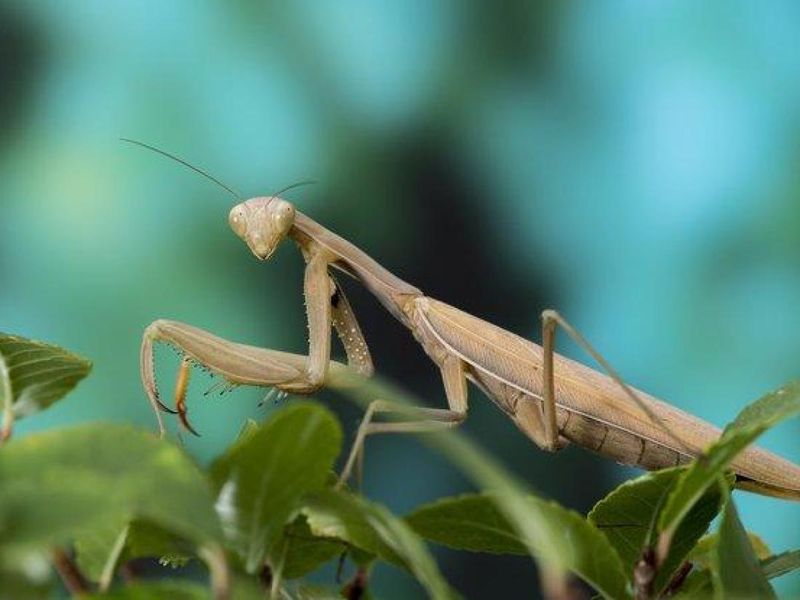
Praying mantises are one of those backyard creatures that California homeowners genuinely root for, partly because they look prehistoric and partly because the idea of a bug that hunts other bugs feels like free pest control. The reality is a little more complicated, and understanding it can actually help you do more good for these animals than the popular advice suggests. Mantises in California survive winter as eggs sealed inside hardened cases attached to twigs, stems, fences, and other surfaces, and those cases can be accidentally cut away or scraped off during routine fall and winter cleanup. Knowing where to look, what to preserve, and what the science actually says about mantis behavior will make you a more effective steward of your own yard.
Mantises are fascinating predators, not garden pest-control services
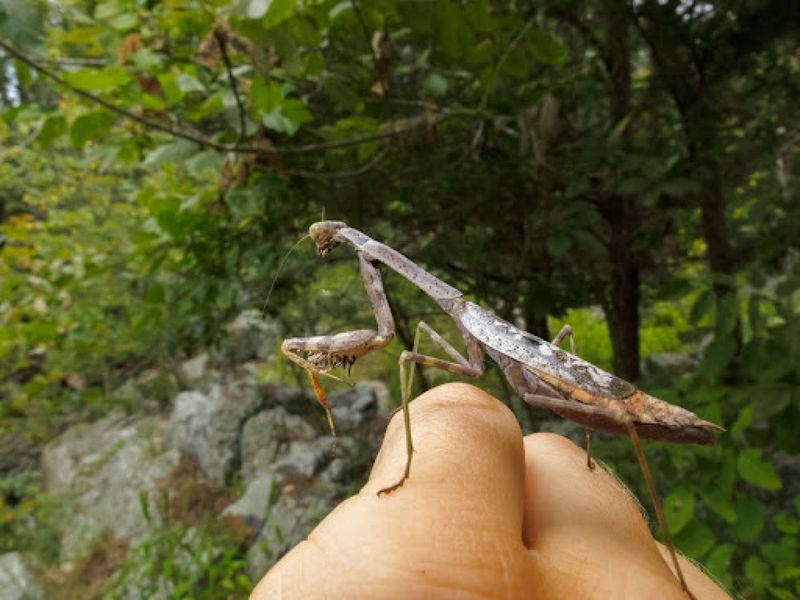
Few insects command as much attention in a California yard as a praying mantis. That upright posture, the swiveling head, the way it freezes and then strikes faster than the eye can follow, these qualities have earned it an almost mythological reputation as a garden guardian. Walk into almost any nursery or scroll through gardening forums and you will find the idea repeated confidently: mantises eat the pests destroying your plants, so protect them and your garden benefits.
The problem is that mantises do not hunt the way a targeted pesticide or a specialist predator does. UC Integrated Pest Management is direct on this point: mantises are generalist, relatively inactive ambush predators that consume too few pests to prevent plant damage, and they are not effective biological-control agents for gardens. They will take aphids and caterpillars when opportunity presents itself, but they are equally likely to grab a butterfly, a bee, a syrphid fly, or another insect that was quietly working in your favor.
Research from the Bohart Museum of Entomology at UC Davis and Utah State University Extension both describe mantises as opportunistic hunters with no preference for pest species over beneficial ones. A single mantis stationed on a rose bush is just as likely to intercept a visiting pollinator as it is to intercept a grasshopper. That is not a reason to dislike mantises; it is a reason to appreciate them honestly.
Mantises are worth observing and, when practical, worth conserving as part of a living yard. They are remarkable animals. What they are not is a dependable substitute for actual pest management. Treating them as one is likely to leave you disappointed and may lead you to skip the identification and monitoring steps that integrated pest management actually depends on.
California mantises survive winter inside attached egg cases
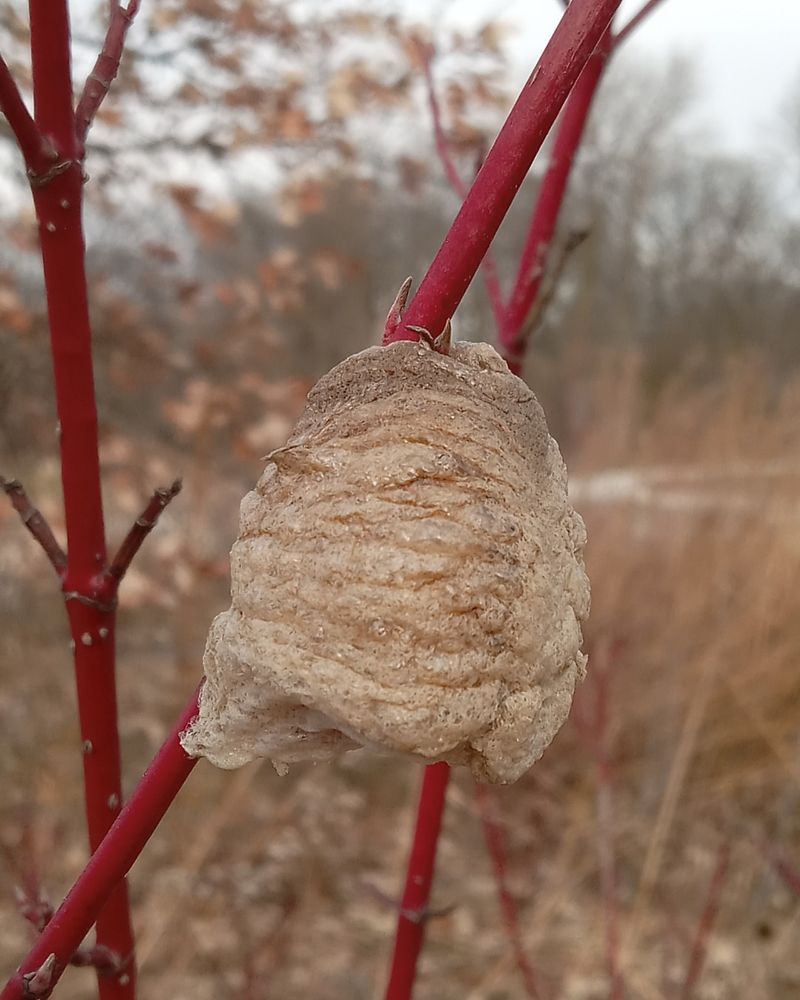
When fall arrives and temperatures drop, adult mantises and the nymphs that hatched earlier in the year do not survive the winter. What carries the population forward is a structure most people walk right past: the ootheca, a hardened, frothy or papery egg case that the female deposits in autumn and fastens securely to a twig, stem, piece of bark, fence rail, rock face, tree limb, or similar surface. The eggs inside are insulated by that outer casing and remain viable through cold, rain, and wind.
According to UC IPM’s mantid resource, nymphs emerge from late winter through spring and disperse quickly. Cannibalism among siblings is common in those first hours after hatching, which means a large clutch rarely produces a proportionally large number of surviving juveniles. The ootheca itself looks like a small brown mass roughly the size of a walnut or smaller, with a layered or ridged surface. Once you have seen one, you tend to spot them more easily going forward.
California has several native mantid species, including the California mantid (Stagmomantis wheeleri, also referenced in some sources as Stagmomantis californica), the bordered mantid (Stagmomantis limbata), and species in the Litaneutria genus. The state also has introduced species: Chinese, European, Mediterranean, and South African mantids have all established populations here. The UC Master Gardeners of Butte County note that the large mantises most California gardeners encounter in their yards are often introduced species rather than native ones, though native mantids do persist in many areas.
The Bohart Museum and USU Extension both confirm that the ootheca stage is the only part of the mantis life cycle built to withstand winter conditions. Understanding that biology shifts the conservation question from “where do mantises hide in leaf litter?” to “what surfaces in my yard might be holding an attached egg case right now?”
Pruning and cleanup can remove next spring’s nymphs
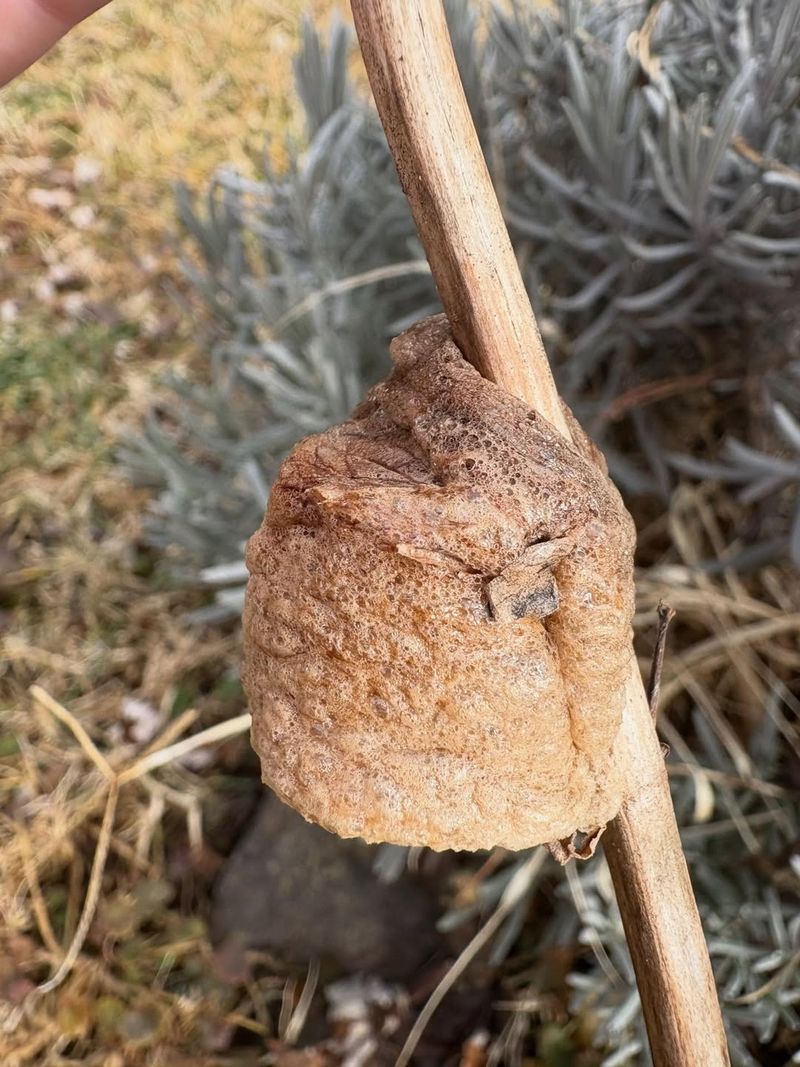
Fall and winter are when most California homeowners tackle the harder garden tasks: cutting back perennials, trimming shrubs, clearing brush along fences, and scrubbing down garden structures before the new season. These are reasonable, often necessary jobs. They are also the circumstances most likely to accidentally destroy a mantis egg case, because the ootheca is attached to exactly the kind of material that ends up on the ground or in the green waste bin.
The visual clue to watch for is a brown, hardened mass roughly the size and shape of a large grape or small walnut, with a ridged or layered surface, fastened firmly to a stem, twig, fence board, bark surface, or rock. It will not come off easily if you brush against it; it is genuinely glued to its substrate. Ask Extension confirms this attached appearance and notes that the casing can be easy to mistake for a fungal growth or dried plant material on first glance.
When you find one, the least disruptive response is to leave it exactly where it is. Skip that stem during pruning, work around that section of fence, or flag the spot so other household members know to avoid it. The case does not need to be moved, watered, or otherwise tended. It just needs to not be cut, scraped, or crushed.
If the supporting twig genuinely must be removed, relocating the intact twig with the case still attached to a nearby protected outdoor location is a more defensible option than discarding it. A sheltered corner of the yard, a brush pile kept at a safe distance from structures, or the fork of a nearby shrub can work. What to avoid is bringing the case indoors: UC Master Gardeners of Butte County warn that the warmth of a heated house can trigger premature hatching, releasing dozens to hundreds of tiny nymphs into a living space with nowhere appropriate to go. Keep it outside, keep it attached to its twig, and let the spring temperatures do the work.
Leaf litter supports habitat, but it is not a mantis nursery
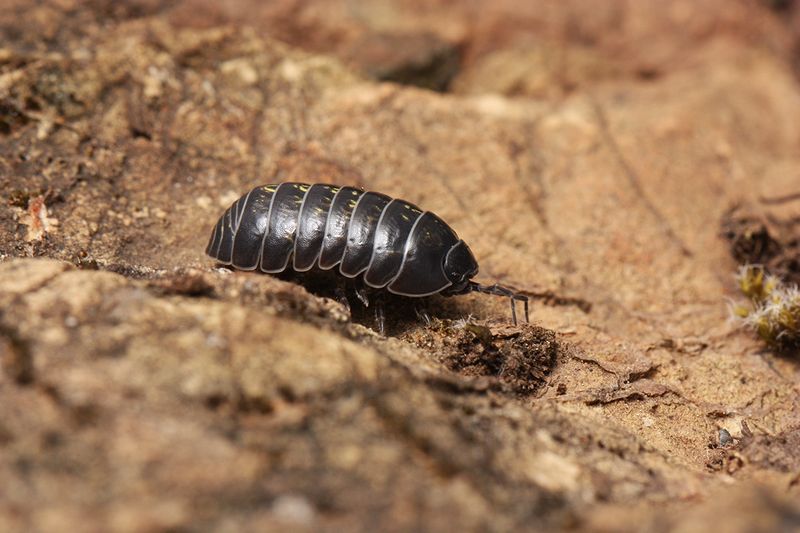
A lot of habitat advice aimed at California homeowners includes some version of “leave the leaves,” and there is genuine ecological reasoning behind it. Fallen leaves can shelter ground beetles, spiders, overwintering butterflies, native bees, and many other creatures that contribute to a healthy yard. UC Master Gardeners of Contra Costa County describe the value of leaf litter for soil health and insect habitat, noting that it can support a meaningful range of wildlife when managed thoughtfully.
Mantis egg cases, though, are not part of that picture. UC IPM describes oothecae as attached to twigs, stems, bark, fences, rocks, and other exposed surfaces above the ground. Leaf litter is not identified as a characteristic or required overwintering site for California mantises. Clearing a thick layer of fallen leaves from your garden beds will not meaningfully harm a mantis population, because the egg cases are almost certainly somewhere else entirely.
That distinction matters practically. If you skip leaf cleanup because you believe it protects mantises, you may end up with drainage problems, increased risk of fungal disease on plants, or slip hazards on walkways, without actually benefiting the animals you were trying to help. UC Master Gardeners of San Luis Obispo County recommend removing fallen leaves and dead plant material from garden beds as part of standard winter preparation, particularly to reduce disease pressure.
A reasonable approach is to retain a modest layer of leaves in areas where it does not create plant-health, drainage, or access problems, and to remove material where it does. That supports habitat for the many insects that genuinely do use leaf litter, without conflating leaf management with mantis conservation. The mantis question belongs with the stems and woody surfaces, not the ground layer.
Defensible space sets the limit on wildlife-friendly cleanup
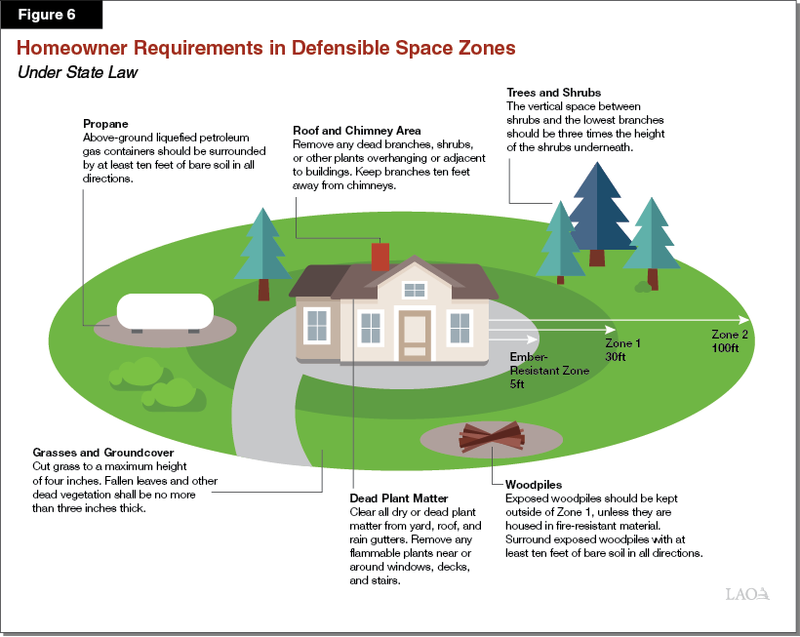
For a large portion of California homeowners, especially those in hillside communities, foothill neighborhoods, or anywhere near wildland vegetation, habitat advice always has to pass one test before anything else: does it conflict with defensible-space requirements? When the answer is yes, fire safety wins. That is not a close call.
CAL FIRE’s defensible space guidance organizes the area around a home into zones with specific requirements. Zone 1 extends 30 feet from the structure (or to the property line) and requires removing dead or dry leaves, dry grass, and other combustible material from the ground. Zone 2 extends from 30 to 100 feet and calls for reducing fallen leaves, needles, twigs, bark, cones, and small branches, though some material may remain to a depth of three inches under the stated guidance. These are legal requirements in designated fire hazard severity zones, not optional suggestions.
A mantis egg case attached to a twig or fence post within Zone 1 is worth a careful look before pruning, but it is not a reason to leave dry, combustible vegetation in place. If preserving an ootheca means retaining a dry stem or branch that would otherwise be removed for fire safety, the stem comes out. The egg case can be relocated on its twig to a sheltered outdoor spot that is not within the hazard zone, if that is feasible. If it is not feasible, clearing the fuel is the right call.
UC Master Gardeners of Contra Costa County acknowledge that the “leave the leaves” approach must be weighed against local fire risk, and that homeowners in fire-prone areas need to apply habitat advice selectively. Wildlife stewardship in California is always practiced within the constraints of wildfire reality, and defensible space is one of the clearest examples of where that constraint applies directly.
Purchased egg cases will not make mantises reliable pest managers
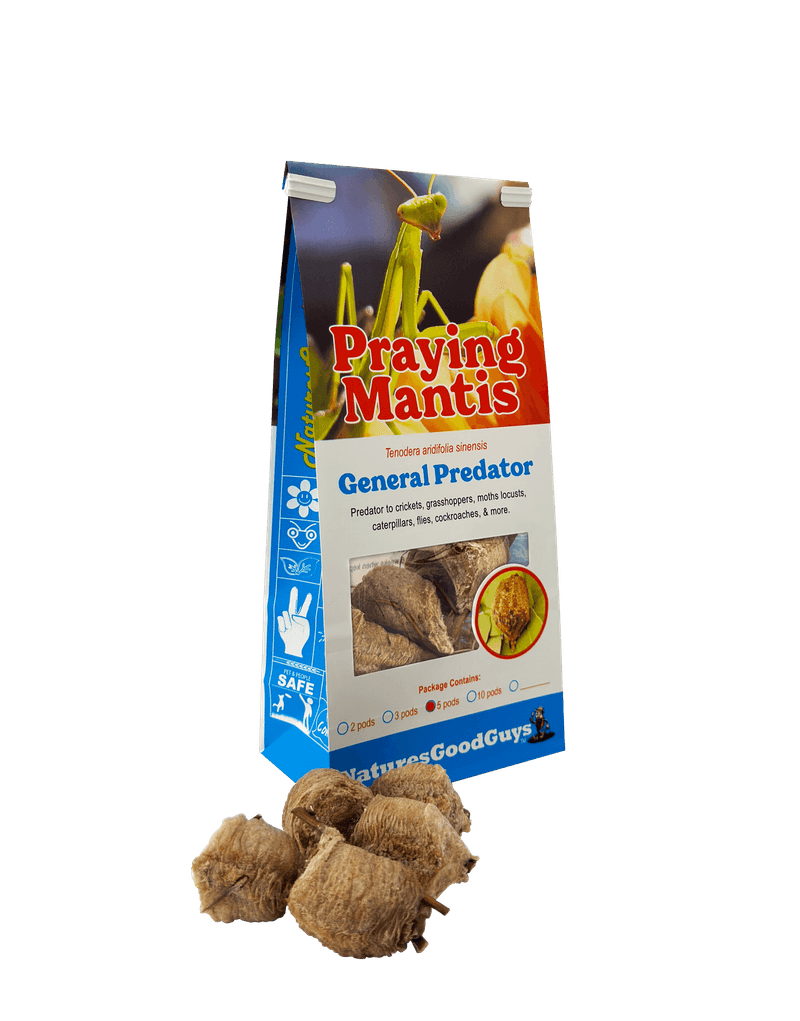
Garden centers and online retailers sell praying mantis egg cases as a biological pest control product, and the pitch is appealing: buy a case, release the nymphs, let them handle your aphid or caterpillar problem. The reality, according to UC IPM, is that commercially available Chinese and Mediterranean mantises provide little or no biological-control benefit in gardens. The same generalist hunting behavior that makes mantises indiscriminate in the wild makes them equally indiscriminate after a commercial release.
Chinese and Mediterranean mantises are among the introduced species sold through nurseries and mail-order suppliers. They are established in California and across much of the United States, but introduced does not automatically mean invasive in the precise ecological sense. A genome study of the Chinese mantis documents its wide establishment, and while generalized ecological concerns exist about introduced predators competing with native species, the available California-specific sources do not establish a measured statewide impact on native mantid populations. Using “invasive” loosely for every nonnative mantis overstates what the evidence currently supports.
What the evidence does support is that releasing purchased mantises is unlikely to solve a pest problem. UC IPM’s guidance on natural enemy releases explains that releasing organisms is not automatically effective and that conserving the natural enemies already living in your yard is often a more productive approach. Resident predators, whether spiders, ground beetles, parasitic wasps, or lacewings, are already adapted to local conditions and the specific pest community in your garden.
Buying a mantis egg case and hoping for pest control is a bit like hiring a contractor who does not specialize in the job you need done. The mantis will hunt, but it will hunt whatever crosses its path. Spending that energy on identifying what is actually damaging your plants, and then selecting a response matched to that specific pest, will produce better results than any commercially released generalist predator.
Protect resident predators and manage the actual pest
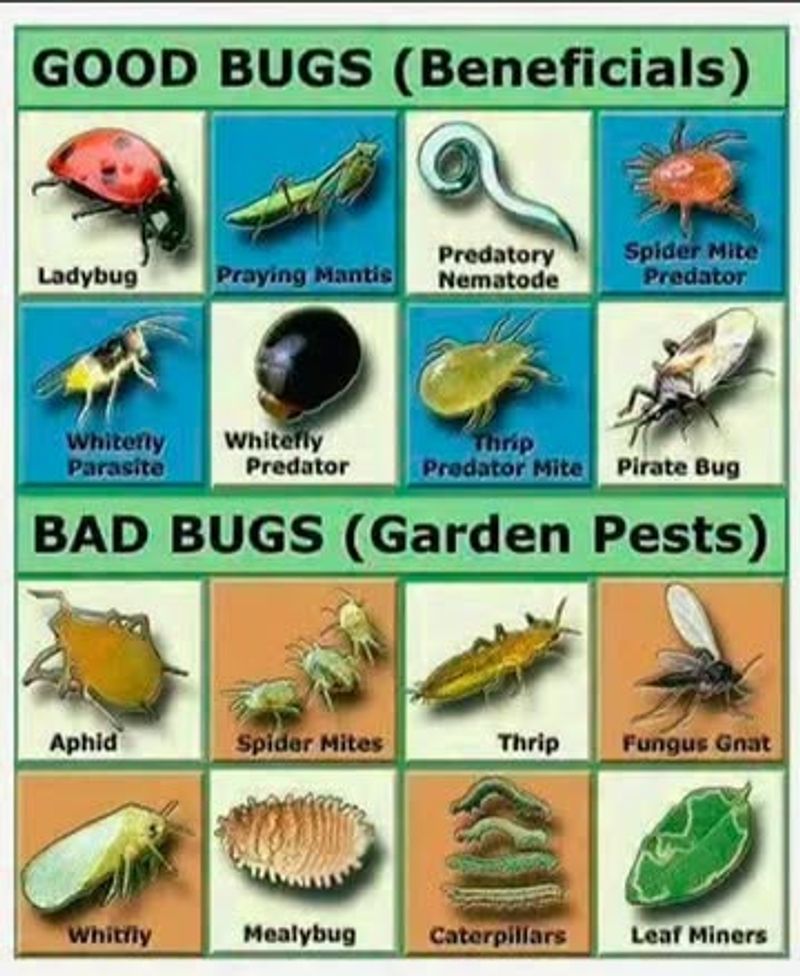
The most useful thing a California homeowner can do for their garden’s natural pest management is not to buy anything. Start by figuring out what is actually causing the damage. Caterpillar feeding looks different from aphid colonies, which look different from fungal damage or nutrient deficiency. Misidentifying the problem leads to responses that either do nothing or harm the insects you were trying to protect.
Once you know what you are dealing with, UC IPM’s biological control guidance recommends working through a sequence: cultural and mechanical controls first, then targeted treatments if needed, with pesticide choices made carefully to avoid harming resident natural enemies. UC IPM’s guidance on protecting natural enemies and pollinators gives specific advice on timing and product selection to reduce collateral damage to beneficial insects, including the predators that are already working in your yard without any assistance from you.
Mantis egg cases fit into this picture as a modest, low-effort habitat consideration. If you find an ootheca attached to a stem or fence post during fall or winter cleanup, leave it in place when you can. If it is on a twig that must be removed, relocate the intact twig to a sheltered outdoor spot and leave it alone. That is a reasonable act of stewardship.
What it is not is a guarantee that the nymphs hatching in spring will address whatever pest problem shows up in summer. UC IPM’s natural enemy release guidance is clear that conserving resident predators through good habitat and careful pesticide use outperforms purchasing and releasing generalist organisms.
A practical decision rule for California homeowners: preserve attached egg cases when it does not conflict with fire safety or necessary maintenance, clear combustible fuels when defensible-space rules require it, and use integrated pest management when damage is serious enough to warrant a response. UC IPM’s mantid page puts it plainly: mantises are interesting animals, but they are not a pest-control service. A yard that supports diverse resident predators through thoughtful planting and selective pesticide use will do far more for long-term pest balance than any single charismatic hunter perched on a rose stem.