
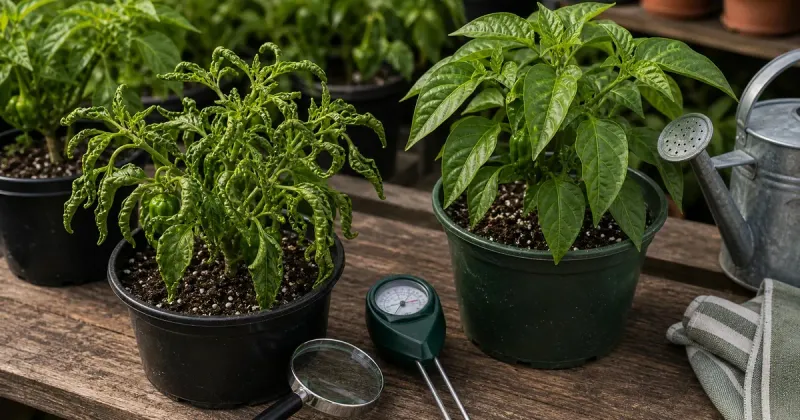
Curled or cupped leaves on a pepper plant can send any gardener into a panic, especially when temperatures are soaring. The good news is that water imbalance is one common contributor, and it is something you can often address today. The tricky part is that curling alone does not tell you what caused it, and several very different problems can produce leaves that look nearly the same. Working through a short checklist before reaching for the hose or a spray bottle will save you time and protect your plants.
Curling leaves do not identify the cause
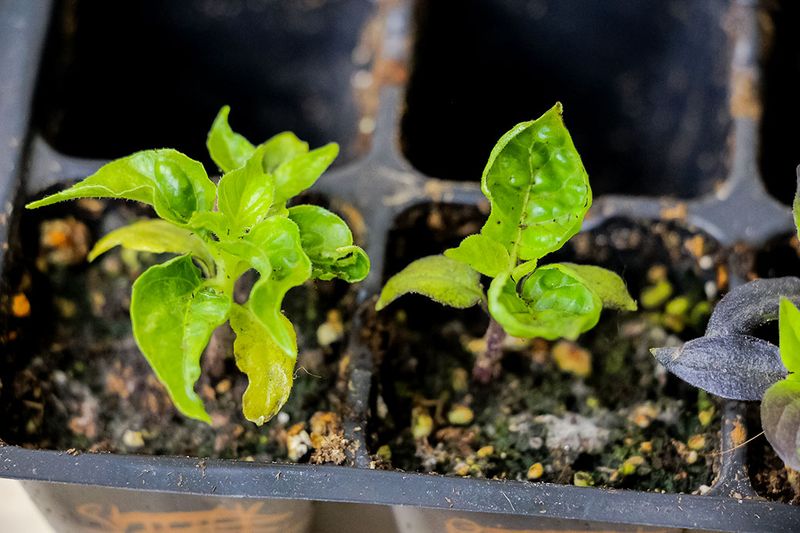
Seeing a pepper with rolled or cupped leaves in the middle of a heat wave naturally makes you think watering is the problem, and that may be partly right. Water imbalance can contribute to leaf curling in hot weather, but one watering change is not established as the usual cause of this exact symptom, and treating it as a certainty can lead you in the wrong direction.
One distinction worth knowing upfront: the clearest published descriptions of upward-rolling, firm, leathery leaves apply to tomato physiological leaf roll, not to peppers. UC IPM guidance on physiological leaf roll in vegetables notes that pepper leaf rolling tends to appear differently, often as downward rolling or cupping, while tomato leaves are the ones most commonly described as curling upward and becoming thick or leathery. Borrowing that tomato description and applying it directly to peppers can lead to the wrong conclusion.
Curling direction, leaf texture, and appearance alone are not enough to name a cause. Plant variety, leaf age, heat, root condition, soil moisture, cultivation damage, and chemical exposure can all shape how a pepper leaf responds. Utah State University extension guidance on peppers points to pests, viruses, and root problems as additional possibilities that deserve a look before any treatment decision.
Treat curled leaves as a prompt to inspect your plant and its growing conditions, not as a diagnosis in themselves.
Heat can overwhelm water uptake
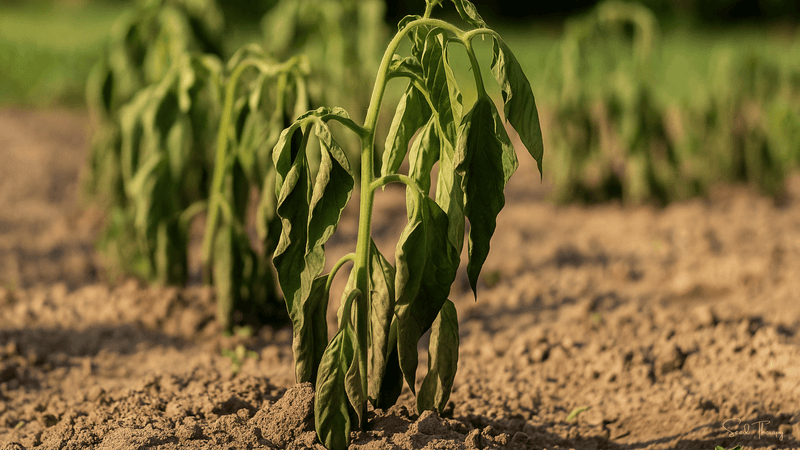
On a scorching afternoon, a pepper leaf can lose water through its surface faster than the roots can pull moisture up from the soil. That temporary imbalance causes the plant to curl or fold its leaves inward, reducing the surface area exposed to the sun. This is a heat-stress response, and it can happen even when the soil holds adequate moisture.
University of Minnesota Extension guidance on keeping gardens thriving through heat explains that increased evaporative demand during extreme weather can trigger physiological leaf rolling or cupping as the plant tries to conserve water. The key point is that heat stress and drought stress overlap but are not the same thing. A plant can curl its leaves under intense heat while the soil is still reasonably moist.
The reverse is also true. Soil that is waterlogged or poorly aerated can damage roots and block water uptake just as effectively as dry soil. Research on abiotic stress responses in Capsicum species confirms that both drought and flooding impair the water balance inside pepper plants, producing overlapping symptoms that look similar from the outside.
Abrupt swings from very dry soil to heavy watering can also create stress by shocking roots that have already been struggling. Steady, consistent moisture is easier on the plant than dramatic corrections, which is why checking conditions before acting matters more than reacting to midday leaf appearance alone.
Check the root zone before watering again
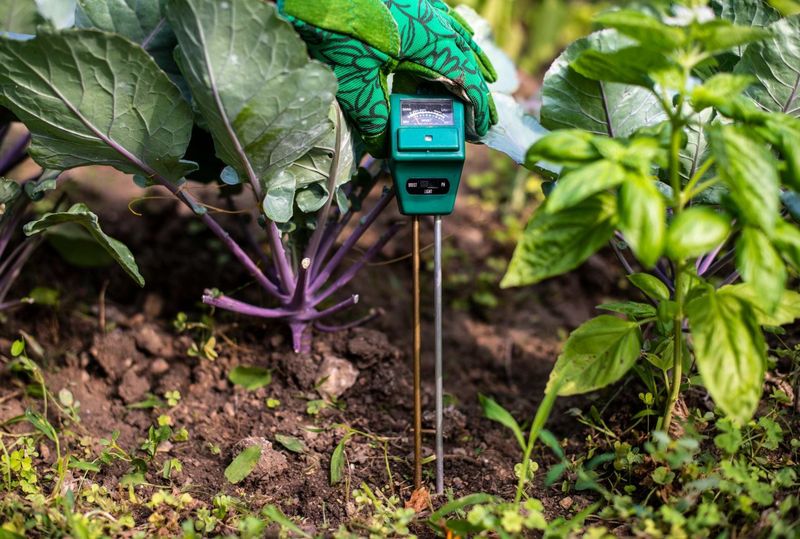
Midday is the worst time to judge whether a pepper needs water. Leaves can curl and droop during peak heat even when the root zone holds enough moisture, so reacting to leaf appearance alone risks overwatering a plant that is already adequately hydrated. A better first step is to push a finger or a narrow trowel two to three inches into the soil near the plant’s active roots and feel what is actually there.
If the soil feels dry at that depth, the plant likely needs water. If it feels moist and cool, hold off and check again in the morning. If it feels soggy or smells sour, the problem may be saturation rather than drought, and adding more water will make things worse. University of Minnesota Extension’s pepper-growing guidance recommends keeping root-zone moisture consistent rather than swinging between dry and saturated conditions.
A common starting point for home gardens is roughly 1 to 2 inches of water per week from rain and irrigation combined, but that number is a flexible guide, not a fixed rule. Containers dry out much faster than in-ground beds, sometimes needing daily attention during a heat wave. Sandy soil drains quickly and may require more frequent watering than clay. Wind, plant size, and rainfall all shift the schedule too.
The goal is to maintain even moisture at root depth, which means checking the soil regularly rather than following a fixed calendar. That consistent habit prevents both the drought stress and the overwatering that can each leave a pepper looking stressed and curled.
Restore steady moisture without creating soggy soil
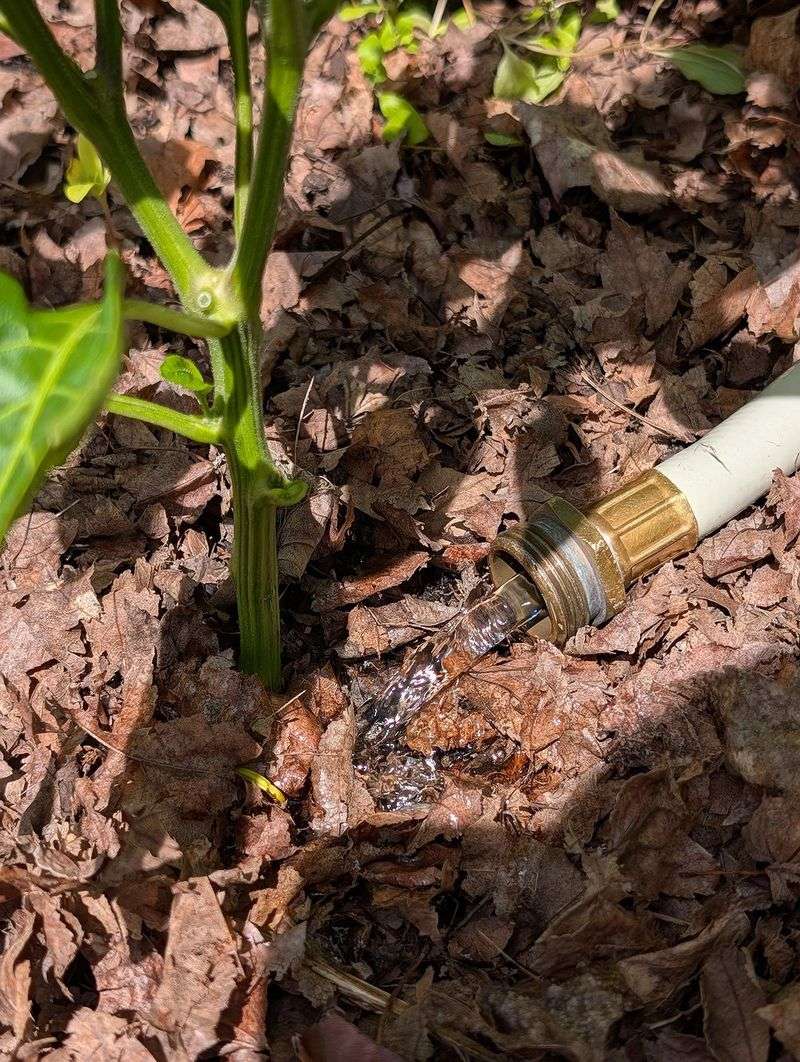
Once you know the root zone is genuinely dry, a slow, thorough soaking at the soil surface is the right response. Applying water slowly gives it time to move down to where the roots are, rather than running off the surface or evaporating quickly. Aim the water at the base of the plant rather than overhead, because routine leaf-wetting can increase disease risk and splash soilborne pathogens onto foliage.
If the soil is already saturated, stop watering entirely and check that the bed or container drains freely. Standing water around pepper roots can damage them within a day or two, compounding whatever stress the plant is already under. Improve drainage before adding any more moisture, and wait until the top few inches of soil feel moderately moist before resuming a normal schedule.
After correcting an obvious dry or wet extreme, the job becomes maintaining steady moisture going forward. Avoid the habit of shallow, frequent sips that wet only the top inch of soil, because they encourage roots to stay near the surface where they are most vulnerable to heat and rapid drying. Minnesota Extension heat-garden guidance recommends focusing irrigation at the root zone and monitoring soil conditions to adjust frequency as weather changes.
Container peppers deserve special attention here. During extreme heat, a pot can dry out completely in a single day, so daily checks are reasonable. Sandy in-ground beds fall in between. These steps address water stress, but they do not confirm that water stress caused the original curling, so keep observing the plant after you adjust.
Reduce evaporation and midday heat
Organic mulch is one of the most practical tools available once you have addressed the root-zone moisture itself. A two- to three-inch layer of straw, wood chips, or shredded leaves spread around the base of the pepper slows evaporation from the soil surface, buffers soil temperature, and reduces the frequency of the dry-to-wet swings that can stress roots. Keep the mulch a few inches away from the stem to allow airflow and prevent rot at the crown.
Minnesota Extension pepper guidance specifically recommends mulching to conserve soil moisture and notes that it can reduce the need for frequent supplemental watering during hot stretches. Adding mulch after a thorough watering locks in that moisture before the next hot day arrives.
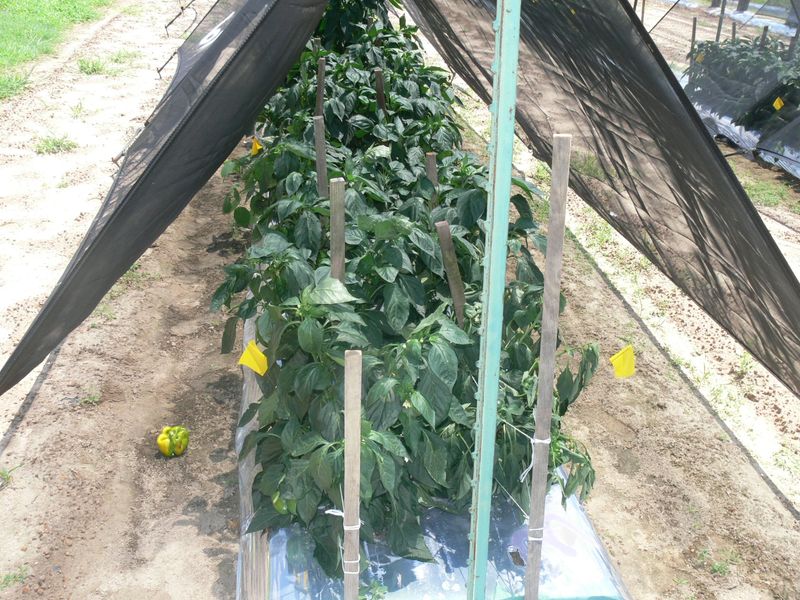
Temporary afternoon shade can also reduce additional stress during extreme heat, particularly for container peppers that cannot draw on a larger soil reservoir. A piece of shade cloth, a floating row cover propped on stakes, or even a patio umbrella positioned to block the harshest west-facing sun from roughly 1 to 5 p.m. can lower leaf temperature meaningfully. This is a short-term protective measure while moisture conditions stabilize, not a substitute for addressing the root zone directly. Once temperatures moderate or the plant shows new growth, the extra shade can come down.
Inspect for clues that watering cannot explain
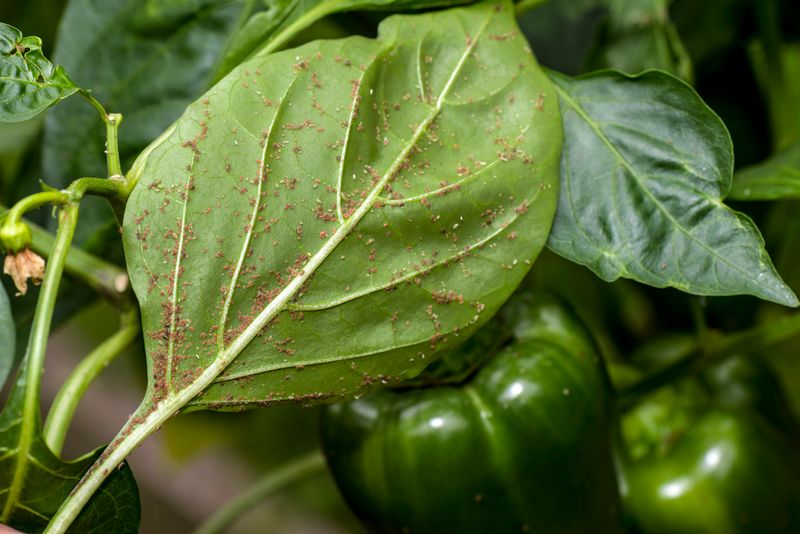
After adjusting moisture and adding mulch, spend a few minutes looking closely at the plant before assuming the job is done. Several problems produce curled or distorted leaves that look like water stress but will not respond to better watering at all.
Start with the undersides of the leaves. Fine white or yellow stippling, a dusty bronze cast, or barely visible webbing can signal spider mites. Hot, dry weather accelerates mite reproduction dramatically, and their feeding damage can closely mimic drought stress from a distance. Minnesota Extension guidance on twospotted spider mites describes stippling and bronzing as characteristic feeding signs worth checking whenever heat and dry conditions combine, though that guidance focuses on soybean and should be treated as a general inspection prompt rather than pepper-specific proof.
Sticky leaf surfaces or clusters of small soft-bodied insects are reasons to look carefully for aphids. Minnesota Extension plant diagnosis guidance notes that heavy aphid feeding can cause curling, discoloration, and wilting in vegetable crops.
Mottled light-and-dark green coloring, severe distortion limited to new growth, stunting, or malformed fruit point toward possible viral disease. USU pepper guidance notes that viruses cannot be reliably identified from leaf appearance alone and may need laboratory confirmation.
Twisted or cupped new growth, veins that appear thickened and crowded together, or distortion that follows a pattern matching a neighboring lawn or field application are signs of possible herbicide drift. Peppers are notably sensitive to growth-regulator herbicides such as 2,4-D and dicamba, and symptoms often appear across several nearby plants rather than on a single one.
Finally, if curling persists despite adequate soil moisture and good drainage, check for root stress from waterlogged conditions. Research on Capsicum abiotic stress responses documents that flooding and root oxygen deprivation impair water uptake and can cause curling, wrinkling, and reduced growth. Where irrigation water is saline or fertilizer has accumulated, USU guidance on managing saline and sodic soils describes salt stress symptoms that can resemble drought, including leaf-margin burn and curling that persists even when moisture appears adequate.
Monitor new growth before treating the plant
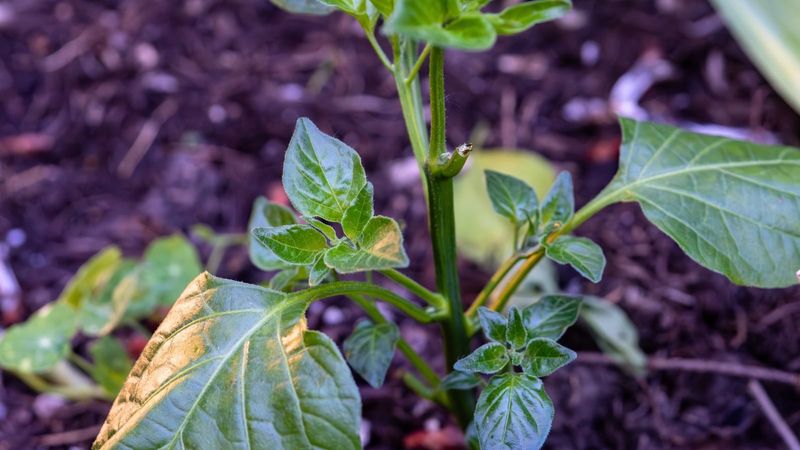
Already-curled leaves are not the most reliable measure of whether your pepper is recovering. Rolled or cupped leaves may stay that way even after conditions improve. Minnesota Extension tomato disorder guidance notes that tomato leaves affected by physiological leaf roll often remain rolled after weather and moisture improve, and that new growth is the more useful thing to watch. That principle applies broadly to monitoring pepper recovery as well, though pepper-specific research on this point is limited.
New leaves emerging normally at the growing tip, continued flowering, and steady fruit development are all signs that the plant is moving forward despite whatever stress it experienced. UC IPM guidance on physiological leaf roll reinforces that nonpathogenic leaf rolling generally does not require chemical treatment or aggressive pruning, and that removing leaves from an already-stressed plant can add to the burden rather than help.
Hold off on calcium applications, pesticides, fungicides, and fertilizer until you have a clearer idea of what caused the curling. None of those are automatic fixes for leaf curl, and applying them without a confirmed cause risks adding stress or missing the actual problem entirely. Keep checking soil moisture, watch new growth over the next week, and let the plant’s own recovery trajectory guide your next step.