
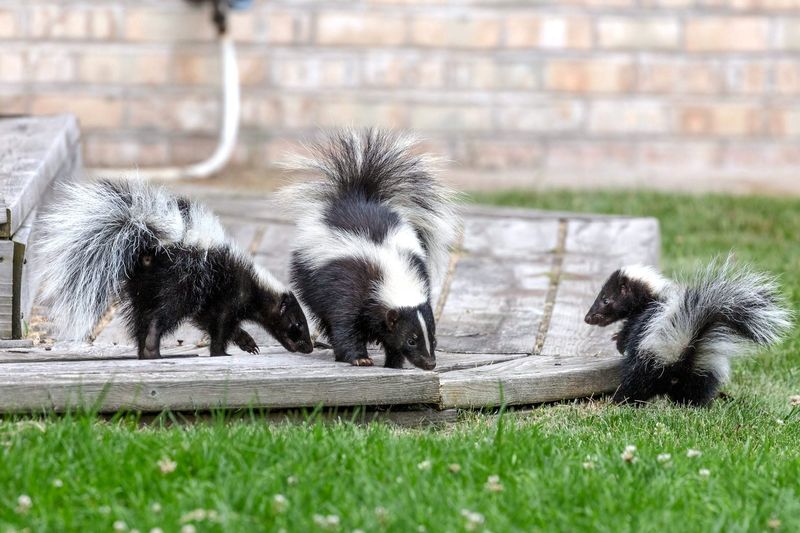
Most California homeowners see fresh holes in the lawn and immediately blame the skunk waddling through the yard at night. That reaction is understandable, but it often leads to chasing off an animal that was simply looking for a meal while passing through. Understanding what a skunk actually does in your yard, and what it cannot reliably do, can save you money, protect local wildlife, and help you fix the real problem.
A skunk may help, but it is not your lawn’s pest-control service
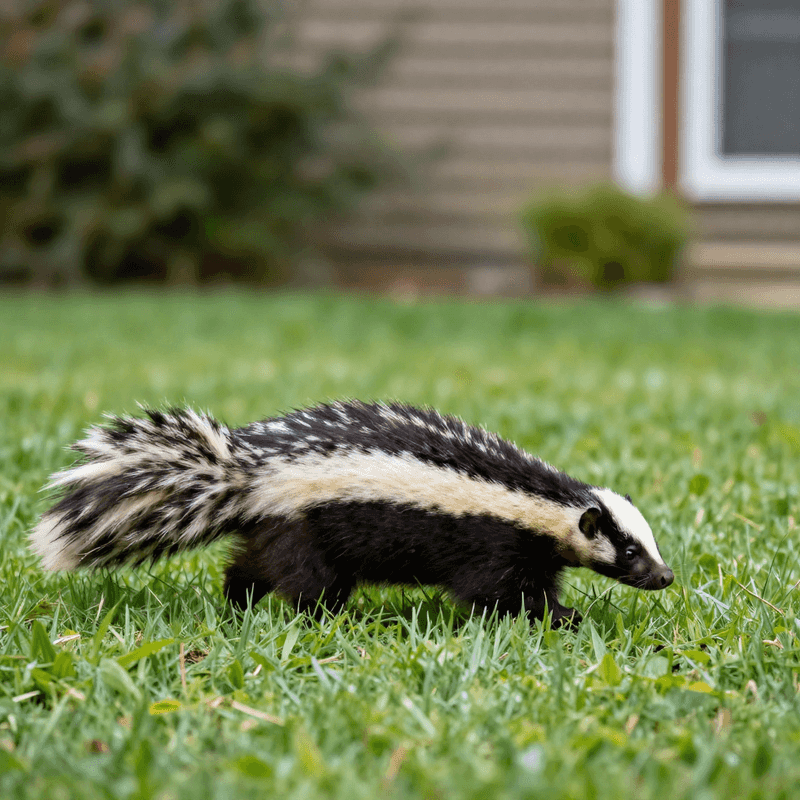
Striped skunks are the species California homeowners most often encounter near houses, and their nighttime foraging can look alarming when you find the evidence the next morning. UC IPM’s skunk guidance confirms that skunks dig in lawns while searching for insects, grubs, earthworms and other invertebrates, and that the California Department of Fish and Wildlife credits them with general ecosystem services including insect and rodent control. That is genuinely useful, but it is not the same as saying a skunk will solve a pest problem for you.
Both the striped skunk and the less common western spotted skunk are native to California, and both eat a wide variety of foods depending on what is available. Their diet shifts with the seasons and can include small rodents, reptiles, amphibians, eggs, fruit, pet food and garbage alongside the insects and earthworms they dig for in turf. Calling them pest specialists misrepresents what they actually do.
The snail question deserves particular attention. Some homeowners assume that because skunks eat invertebrates, they must be clearing out garden snails as well. A 2023 study of western spotted skunks in Oregon found snail shells in only 6 of 130 scat samples, while wasps and millipedes appeared far more often. That study was conducted in Oregon, not California, and it examined wild habitat rather than residential lawns.
It shows that skunks occasionally eat gastropods, not that they routinely target the brown garden snails common in California yards.
The practical takeaway is straightforward. A skunk passing through your yard at night may consume some organisms that feed on your turf, but it can also dig pits that damage the lawn surface, eat bird eggs, and return repeatedly if it finds human-provided food. Treating it as a free pest-control service sets up unrealistic expectations and may lead you to ignore the actual cause of lawn or garden damage.
What cone-shaped holes can—and cannot—tell you
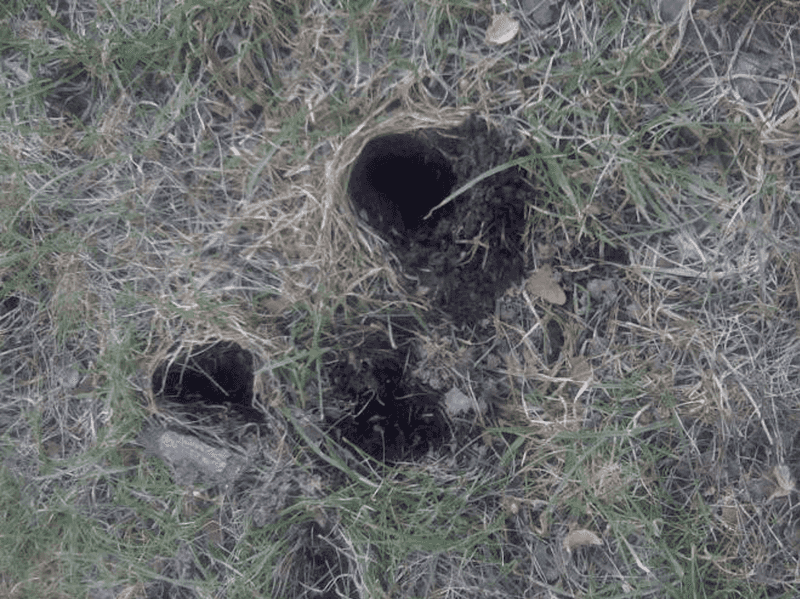
Finding a scattering of small pits in your lawn is startling, but the holes themselves tell only part of the story. Skunk foraging typically leaves cone-shaped depressions about 3 to 5 inches across, and UC IPM describes this pattern as consistent with a skunk rooting for food. However, the shape of a hole does not identify what the skunk was eating, and it certainly does not confirm that your lawn has a grub infestation.
Skunks forage for earthworms, beetle larvae, other soil invertebrates and whatever else is near the surface at the time. A lawn can have zero damaging grubs and still attract a skunk that is simply following earthworm activity after an irrigation cycle. Before you treat for grubs, you need to know whether grubs are actually there in numbers large enough to matter.
Other animals leave similar or overlapping damage. UC ANR’s turf-damage guide points to raccoons, wild pigs, birds and lawn insects as other possible causes, and UC IPM’s lawn-insect resource notes that poor cultural care, unsuitable grass varieties and non-insect conditions are more common explanations for unhealthy California turf than insects are. Raccoons tend to peel back larger sections of sod; birds peck shallowly across a wider area; wild pigs root aggressively and leave much larger, rougher disturbances.
A practical first step is to confirm the animal. A motion-activated camera or a light dusting of flour near the disturbed area can help you identify what visited overnight. Once you know the species, you can peel back a small section of turf and count what is living in the soil beneath. That count, not the presence of holes alone, should drive any decision about lawn treatment.
Diagnose the lawn before treating grubs
Lawn insect problems are less common in California than many homeowners expect. UC IPM’s lawn-insect page states plainly that poor cultural practices, unsuitable grass selection and non-insect causes explain most unhealthy California turf. Before reaching for any product, take a few minutes to rule out overwatering, underwatering, compaction, thatch buildup or shade stress, all of which can produce brown or thinning patches that look identical to insect damage.
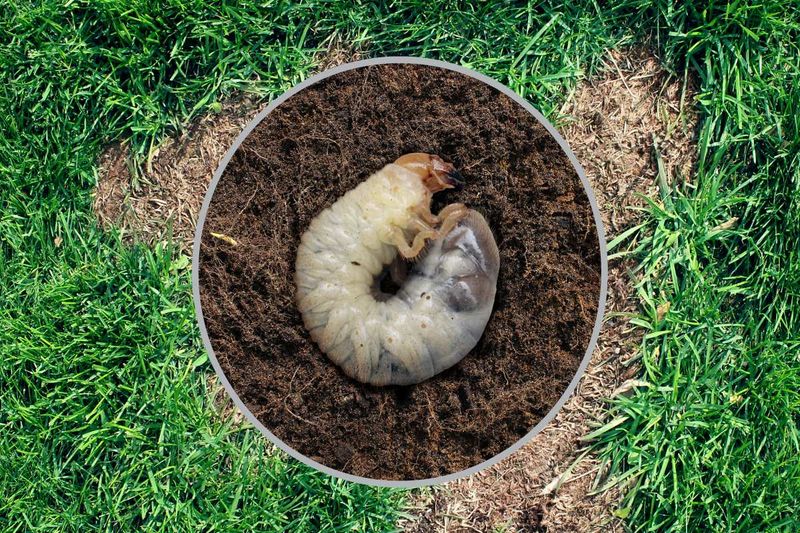
If you do suspect grubs after ruling out cultural problems, inspect the soil. Cut a one-square-foot section of turf, fold it back and count the larvae you find. UC ANR guidance on grubs in gardens notes that healthy lawns can tolerate some insect feeding without showing visible harm, and that low populations may not justify any treatment at all. UC IPM’s turfgrass monitoring guide offers approximately six white grubs per square foot as an example threshold for considering curative insecticide applications, but this figure applies to certain pest and turf situations and is not a universal rule.
Thresholds vary by pest species, turf condition, grass type and the treatment being considered.
When a pesticide is genuinely warranted, the choice of product and timing matter. UC IPM’s vertebrate-pest-and-turf resource explains that insecticides used against soil invertebrates can contaminate stormwater, harm non-target wildlife and disrupt ecosystems. California has specific restrictions on certain lawn pesticides to protect water quality, as detailed in California Department of Pesticide Regulation guidance on urban-area water protection. Always select a product registered for the specific pest and site, follow the label exactly, prevent runoff, and keep people and pets out of treated areas as directed.
Treating for grubs to discourage a skunk is not a sound strategy. Treat only when an identified pest is present at a level that is actually damaging your turf, and handle the skunk situation separately through the attractant and exclusion steps covered later in this article.
Treat snails as a separate garden problem
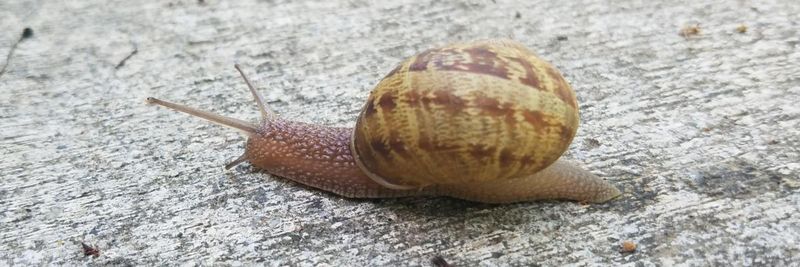
Garden snails and lawn grubs are completely different organisms requiring separate management strategies. Snails are mollusks; grubs are insect larvae. Seeing a skunk in the yard does not mean your snail population is being controlled, and planning your garden-pest strategy around a passing skunk is likely to leave you disappointed.
The western spotted skunk study mentioned earlier found gastropod remains in a small fraction of scat samples, but that research was conducted in Oregon wildlands, not California gardens. UC IPM’s snail and slug management guide does list natural enemies of snails, including beetles, snakes, toads, turtles and birds, but it also states clearly that most natural enemies are rarely effective enough on their own for satisfactory garden control. Skunks are not identified as a dependable snail predator in California residential settings.
Practical snail management starts with changing conditions in the garden rather than waiting for wildlife to intervene. Hand-picking snails after dark or on overcast mornings, when they are most active, can significantly reduce populations in a small garden. Removing debris, boards, dense ground covers and other daytime hiding places cuts down on the habitat snails need to survive dry California days. Choosing plants that snails find less palatable is another long-term strategy that reduces pressure without any products at all.
When additional control is needed, iron phosphate baits registered for garden use are widely available and considered lower-risk to wildlife and pets than older metaldehyde-based products. If you are in a Southern California county where decollate snails have been approved as a biological control option, they can be effective against brown garden snails in established gardens. However, UC IPM cautions that decollate snails are not legal to release statewide and should never be introduced near natural areas where they could affect native snail species. Check your county’s rules before pursuing that option.
Remove the food sources that keep skunks returning
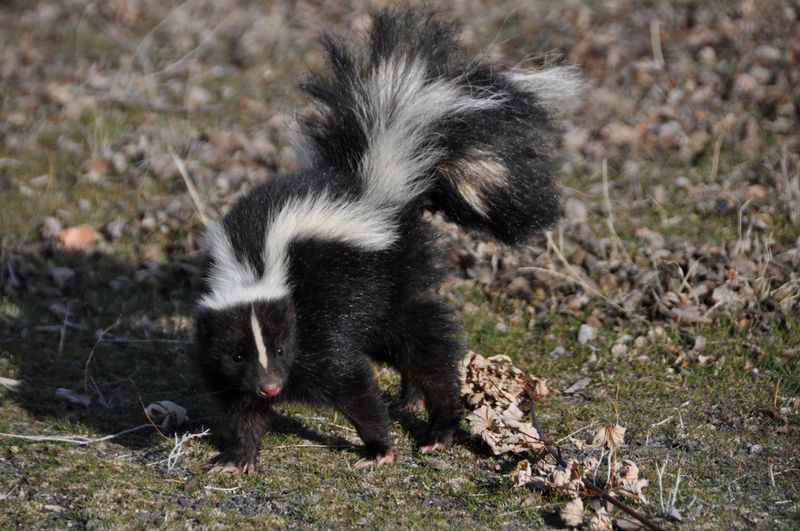
A skunk that wanders through your yard once looking for earthworms is very different from one that returns every night. Repeated visits almost always trace back to a reliable food source the homeowner has accidentally provided. Identifying and removing those attractants is the single most effective step you can take to reduce conflict without harming the animal or spending money on products.
UC IPM’s skunk management guidance lists the most common attractants: fallen fruit left on the ground, spilled birdseed beneath feeders, unsecured garbage containers and pet food left outside overnight. Each of these provides a reliable, easy meal that rewards a skunk for returning to the same property night after night. Removing them shifts the cost-benefit calculation for the skunk without any confrontation.
A few practical habits make a real difference. Pick up fallen fruit daily during stone-fruit and citrus season, which in California can stretch from early summer well into winter depending on your climate zone. Move birdseed feeders to a location where spill collects in a tray you can empty each evening, or switch to a tube-style feeder that limits scatter. Bring pet bowls inside before sunset, and never deliberately set food out for a skunk, even if you enjoy watching it.
Feeding a wild skunk reinforces its comfort around people, which creates safety risks for the animal and for your household.
Garbage cans are a frequent problem in neighborhoods where weekly collection means bins sit outside for extended periods. Bungee cords, locking lids or storing cans in a garage until collection morning all reduce access. These steps also deter raccoons, opossums and rats, making them worthwhile regardless of which species is visiting your yard.
Verify the den is empty before excluding the skunk
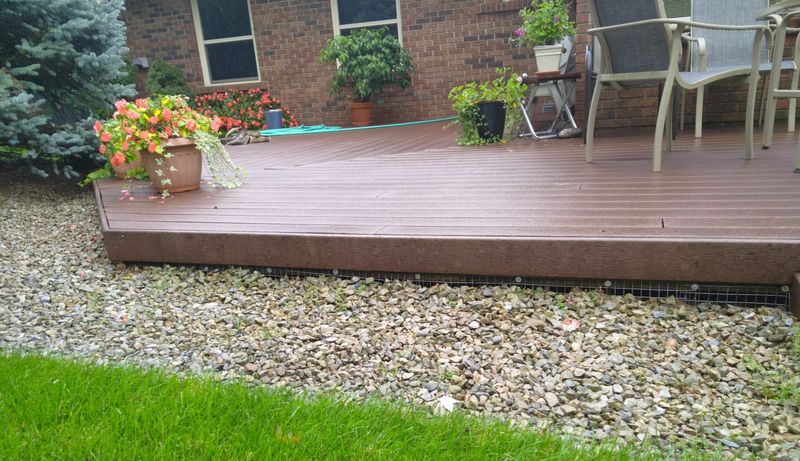
A skunk foraging through your lawn at night is one thing; a skunk living under your deck or garden shed is a more pressing concern that calls for a deliberate, careful response. The sequence matters enormously here: exclude the animal only after you have confirmed it has left, never before.
Sealing an occupied den traps the skunk inside, which creates a far worse situation than the one you started with. UC IPM recommends a simple tracking method to confirm departure: spread a smooth layer of flour across the entrance to the den and check it after dark. Fresh tracks leading outward and no inward tracks indicate the skunk has left for its nightly forage. Once you have confirmed the animal is out, you have a window to install exclusion material before it returns.
The recommended material is quarter-inch hardware cloth, installed tightly against the base of the structure with no gaps at corners or where the mesh meets siding. Where soil is present, bury the bottom edge at least 6 inches down and bend it outward at an L-shape underground to discourage digging beneath the barrier. Flimsy materials, wide-mesh chicken wire or temporary patches tend to fail quickly, especially in the soft soils common in California gardens after winter rains.
Timing matters seasonally as well. Spring is denning and pupping season for skunks. If you suspect a female with young is using a space under your structure, wait until the young are mobile and foraging independently before attempting exclusion. Sealing a mother in with her young creates a humanitarian problem and a significant odor risk.
If you are uncertain about the situation, contact your local animal control agency or a licensed wildlife professional before proceeding.
Recognize the boundary between coexistence and danger
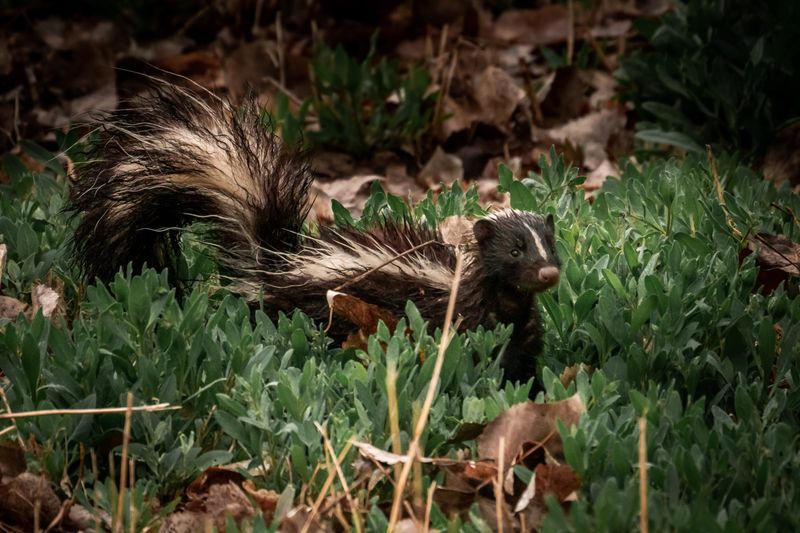
Most encounters with a skunk in a California yard are uneventful. The animal is foraging, it detects your presence, and it moves on. Knowing where ordinary coexistence ends and genuine risk begins helps you respond appropriately rather than either panicking or dismissing a warning sign.
Daytime activity alone is not a reliable indicator of illness. Skunks are primarily nocturnal, but a skunk moving through your yard during the day is not automatically sick. California Department of Public Health guidance on rabies identifies the warning signs that actually warrant concern: unusual tameness, apparent lack of fear of people, unprovoked agitation or aggression, disorientation, and other erratic behavior. A skunk that approaches you without provocation, staggers, or shows no response to noise or movement deserves a cautious response and a call to local animal control.
Never approach or attempt to handle a wild skunk under any circumstances. Keep children indoors and away from the animal until it has left the area. Pets should be kept inside or on a leash, and their rabies vaccinations should be current. A skunk can spray before you get close enough to realize the encounter has gone wrong, and a bite creates an immediate public-health obligation.
If a person or pet is bitten, wash the wound immediately and thoroughly with soap and running water, then seek medical advice and report the bite to local animal control right away. Prompt action matters for both treatment options and public-health follow-up.
Beyond health concerns, the situations that call for professional involvement include a skunk that repeatedly dens under a structure despite your exclusion attempts, ongoing conflict with pets, and damage or odor that you cannot manage safely on your own. UC IPM notes that California law prohibits relocating skunks and other wildlife without written permission from the California Department of Fish and Wildlife, so live-trapping and releasing the animal elsewhere is not a legal do-it-yourself option.
Use a practical coexistence rule
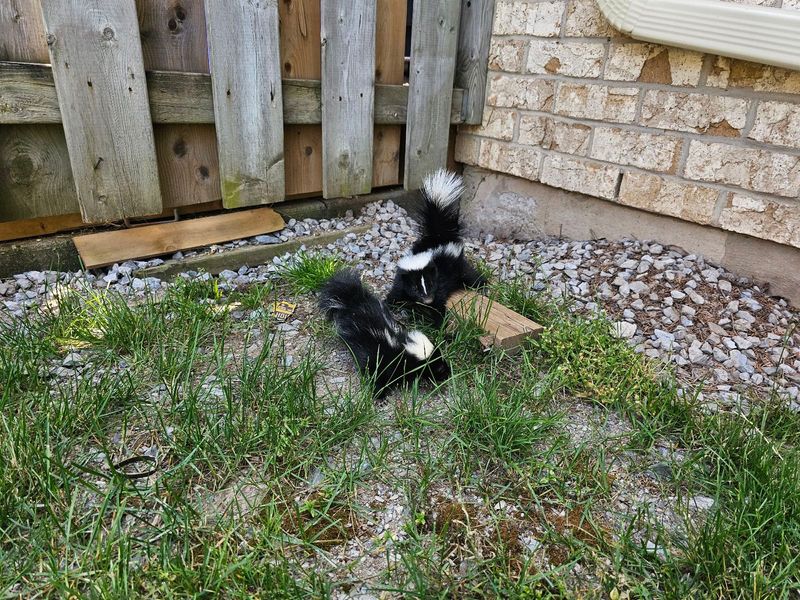
Pulling all of this together comes down to a simple decision framework. When a skunk passes through your yard at night, causes no structural damage, shows no threatening behavior, and is not returning because of food you have left out, the most reasonable response is to leave it alone. Ordinary nighttime foraging by a healthy wild skunk does not require intervention.
When the situation goes beyond that baseline, act on the specific problem rather than on the skunk’s presence. Diagnose lawn damage by inspecting the soil before treating anything. Address snail problems with UC IPM-supported garden management steps rather than hoping wildlife will handle it. Remove attractants that are bringing the animal back repeatedly.
If a skunk is denning under a structure, use the flour-tracking method and proper hardware cloth exclusion described earlier, and get professional help if the situation is beyond your comfort level.
A skunk that behaves unusually – approaching without fear, moving erratically, or active during the day with no apparent reason – warrants a call to animal control rather than a DIY response, consistent with California public-health guidance. And UC IPM’s guidance is clear that the animal cannot legally be relocated without written state permission, so that path is closed without proper authorization.
A skunk’s possible ecological value is real but limited, and it does not obligate you to accept safety risks or serious property damage. The goal is a yard that works for your household and leaves room for the wildlife that belongs there. Most of the time, a skunk and a California homeowner can share a neighborhood without either one causing the other much trouble.