
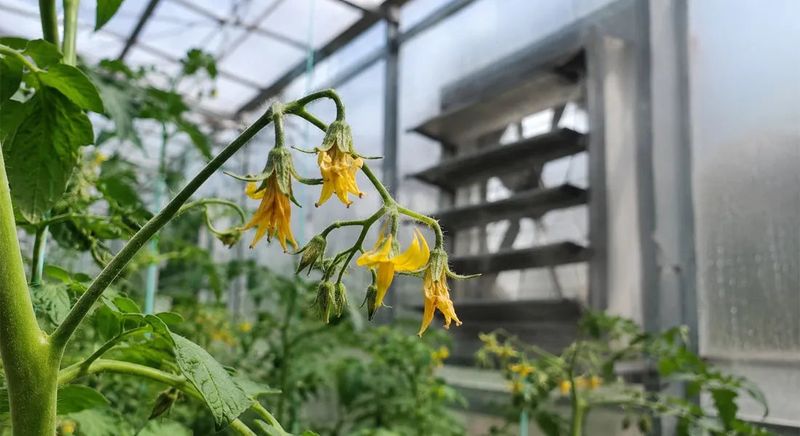
Watching every single tomato flower fall off a plant that otherwise looks lush and healthy is one of the most frustrating things a summer gardener can experience. The good news is that this problem has a real explanation, and it is not as mysterious as it feels in the moment. What is really going on is almost always tied to sustained heat, not one bad night, and understanding that difference is the first step toward getting your plants back on track.
Treat heat as a leading possibility, not a one-night diagnosis
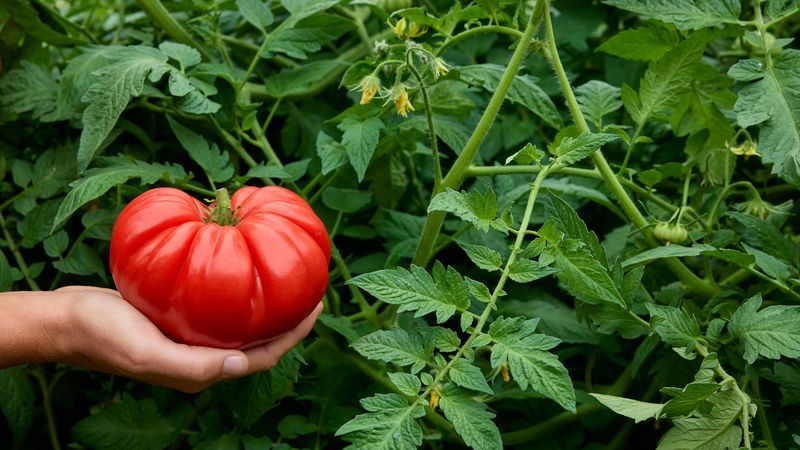
Flowers dropping from an otherwise vigorous tomato plant during a summer hot spell is a signal worth taking seriously, and heat is a strong candidate for the cause. The framing that “one overnight temperature swing” is usually responsible, though, understates what the evidence actually shows. Widespread blossom drop during peak heat is more reliably linked to repeated hot days combined with warm nights over a stretch of days, not a single temperature change.
University of Minnesota Extension notes that tomatoes are especially vulnerable when daytime temperatures exceed roughly 85 degrees F and nighttime temperatures stay above 70 degrees F. A run of about 50 hours under those combined conditions can cause an entire flush of flowers to drop. Different extension programs use slightly different numbers: Illinois Extension points to daytime highs above 90 degrees F, while Colorado State University flags mornings when temperatures reach 90 degrees F by 10 a.m. as a warning sign. These are practical guidance points, not rigid biological cutoffs, and they shift depending on cultivar, humidity, wind, and whether you are measuring air temperature or canopy temperature.
Pennsylvania State University Extension describes heat stress beginning in the upper 80s to low 100s range, with reproductive tissues being particularly sensitive. If your recent weather fits a pattern of sustained heat day and night, heat stress belongs at the top of your list. When temperatures have not been unusually high, or the flower loss is limited to one branch or cluster, other causes deserve equal attention.
How heat disrupts flowers at two different stages
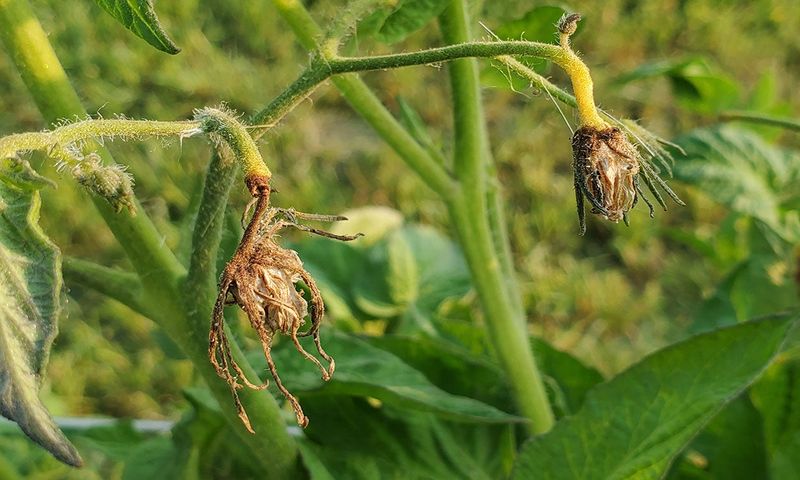
Tomato flowers are not all damaged the same way or at the same moment. Heat can interfere with a flower before it ever opens, and it can separately undermine pollination and fruit set after the flower has opened. Keeping those two pathways distinct helps explain why flower loss can seem delayed or confusing.
PSU Extension notes that temperatures in the 7 to 15 days before a flower opens can contribute to later abortion. A plant may look completely fine today while carrying flowers that were compromised during a heat event that happened last week. Those flowers may open on schedule and then fall without ever setting fruit, making the damage seem to appear out of nowhere.
After a flower opens, heat introduces a second set of problems. Research on tomato reproductive physiology found that warmer nights reduced normal pollen production, pollen viability, and fruit set. Pollen that forms under high nighttime temperatures may be less viable or may not release properly when it should. A separate study published in The American Naturalist found that day and night temperature combinations around 39 degrees C by day and 22 degrees C by night produced severely deficient fruit set in multiple cultivars.
Not every flower that drops was necessarily compromised before it opened; some fail because pollination could not succeed under the conditions present when the flower was ready.
Use the pattern to separate heat from other causes
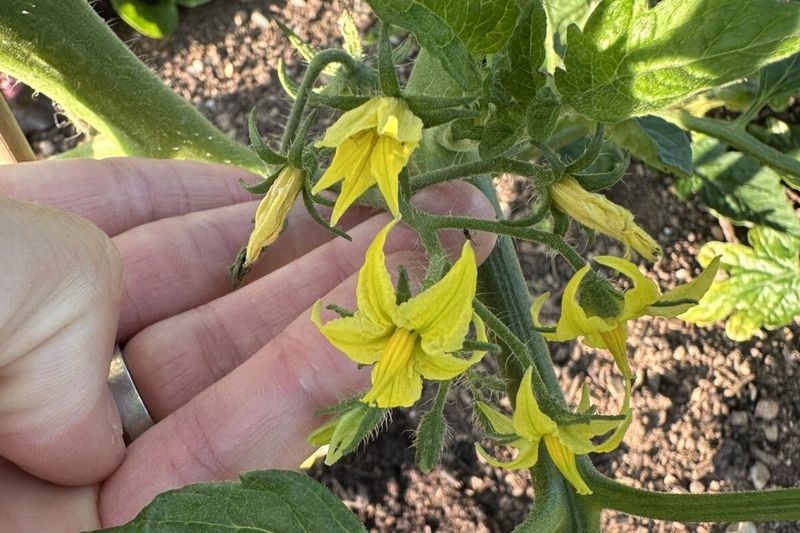
Before settling on heat as the explanation, spend a few minutes matching the symptom pattern to the recent conditions. Heat-related blossom drop tends to affect many flowers across the plant at roughly the same time, following a stretch of hot days and warm nights. If only a few clusters are affected, or if the damage looks chewed, spotted, or distorted, a different cause is more likely.
Run through a short checklist. Were daytime temperatures consistently above the mid-80s to 90-degree range, with nights staying warm? Did the drop happen across most open flowers at once? Are the fallen flowers intact, or do they show signs of insect feeding or disease?
UMN Extension’s tomato growing guide lists several non-heat causes of blossom drop, including poor pollination, cool temperatures early in the season, low humidity, and nutrient imbalances. Each of those can produce the same visible outcome but calls for a different response.
One thing that often surprises gardeners: a plant with full, dark-green leaves and no obvious wilting can still be suffering heat-related reproductive failure. PSU Extension explains that flowers and reproductive tissues are more heat-sensitive than foliage and stems, so the plant can look thriving while its blossoms are quietly failing. Cultivar matters here too. Controlled research and breeding studies have documented large differences in heat tolerance among tomato varieties, meaning one plant in your garden may set fruit while a neighbor variety drops nearly everything under the same sky.
Stabilize the root zone before adding anything
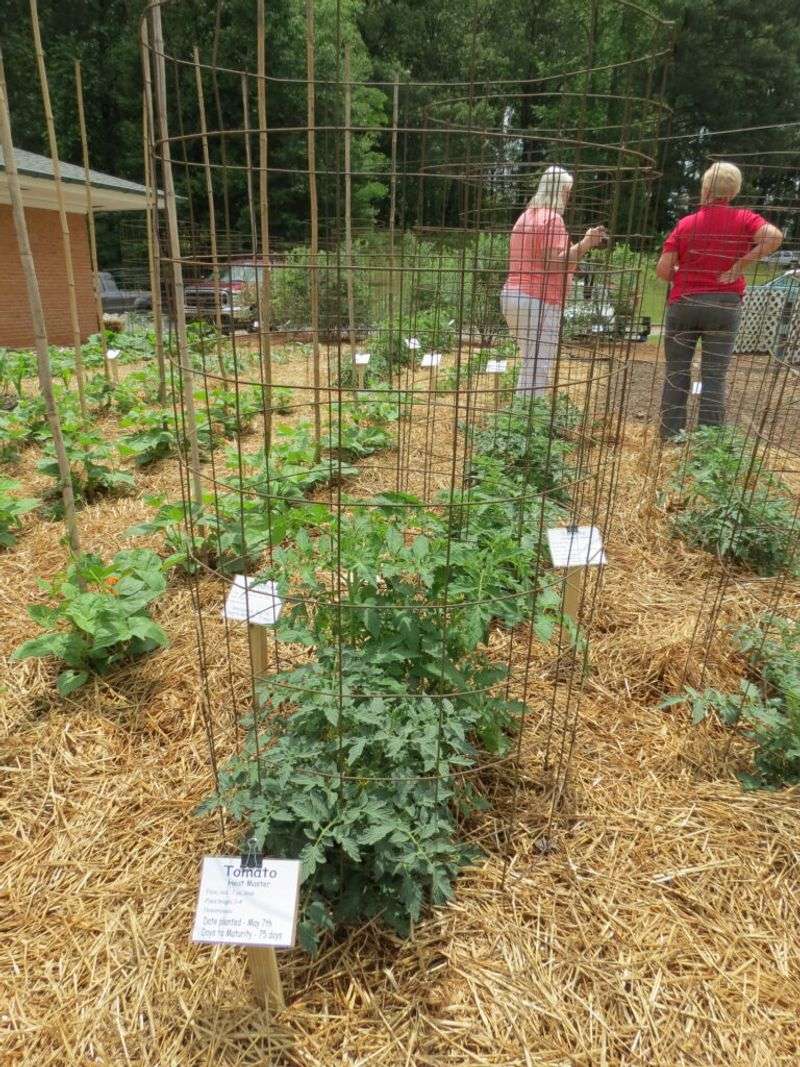
The instinct to reach for fertilizer or a calcium spray when flowers are dropping is understandable, but it is usually the wrong first move during a heat event. Before adding anything to the soil, check what is actually happening at the root zone. Push a finger or a trowel a few inches into the soil near the base of the plant. The goal is consistent, moderate moisture throughout the root zone, not wet on top and bone-dry six inches down.
UMN’s heat-stress garden guidance cautions against assuming that a wilted plant automatically needs more water; sometimes the soil is already saturated and the wilt reflects heat load rather than drought. Oregon State University Extension recommends watering deeply at the root zone rather than giving repeated shallow applications, and Utah State University Extension advises preventing the root zone from cycling between very dry and excessively wet. A 2 to 3 inch layer of organic mulch over the root zone helps hold moisture and buffers soil temperature swings.
Uneven soil moisture can worsen heat stress and contribute to other disorders, but it does not displace sustained heat as the leading explanation when temperatures have been extreme. As for fertilizer, UMN’s tomato guide and general fertilizing guidance from UMN Extension both caution that excess nitrogen more often pushes leafy growth while delaying fruiting. Treating blossom drop as evidence of a phosphorus or calcium shortage and responding with an automatic application is not supported; those products cannot repair heat-damaged pollen or reverse flower abortion.
Create a temporary cooler window
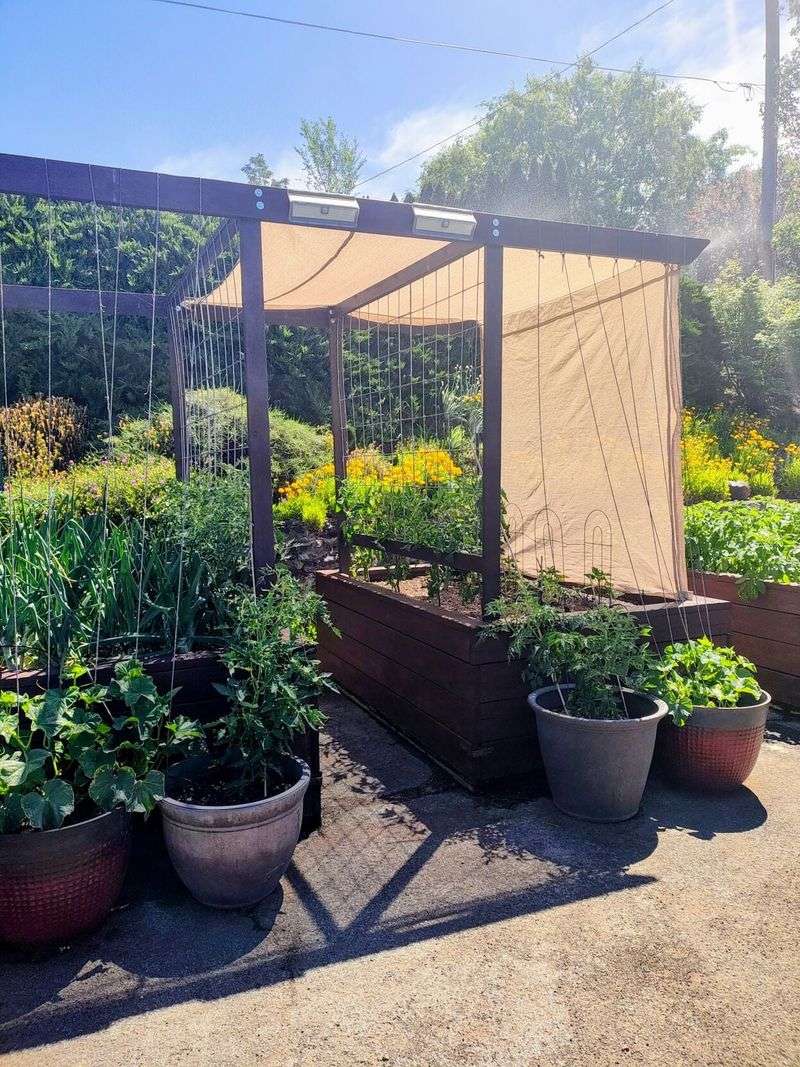
Reducing the heat load on your plants during a stretch of extreme temperatures is one of the most direct things you can do while waiting for conditions to improve. The steps below work best in priority order, starting with the most urgent.
If a plant is genuinely wilted and the soil is dry when you check it, water right away. Oregon State Extension’s heat-wave plant guide is direct on this point: a severely wilted plant should not be left waiting just because morning is the preferred watering time. Morning watering is a sensible default on ordinary days because it reduces foliar disease risk, but urgency overrides routine when a plant is in distress and the soil is dry.
Once moisture is addressed, temporary shade cloth can meaningfully cut the heat load on flowers and developing pollen. University of Delaware Cooperative Extension recommends approximately 30 percent shade cloth for tomatoes and peppers during heat stress, and Colorado State University Extension echoes the same 30 percent recommendation during excessive heat. Install the cloth so that air can still move freely underneath, and plan to remove or reduce it once extreme temperatures pass. Tomatoes require substantial sunlight to produce well, and UMN Extension is clear that heavy or permanent shade reduces photosynthesis and overall yield.
Temporary and moderate is the right approach.
Use hand-pollination only as a limited supplement
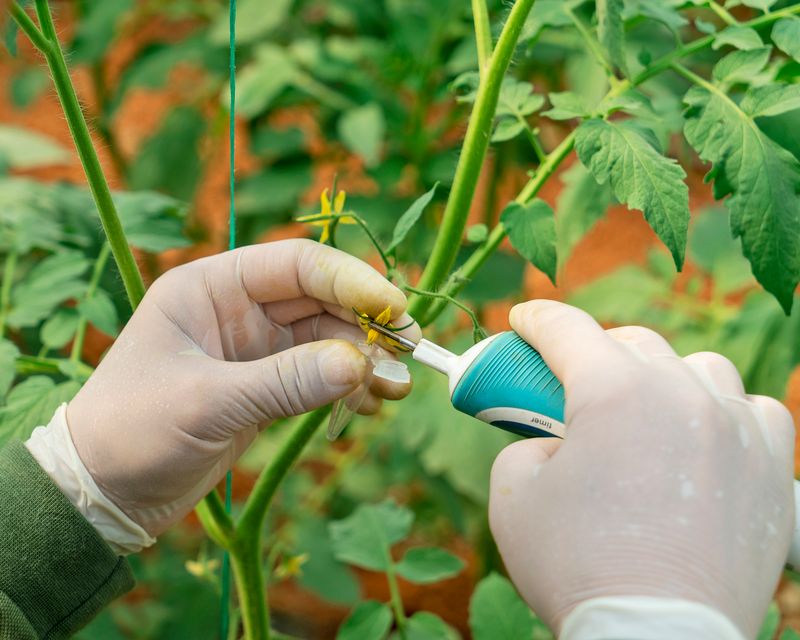
Touching or gently vibrating tomato flower clusters is sometimes recommended as a way to boost fruit set, and under the right conditions it can help. The key phrase is “under the right conditions.” Tomato flowers are self-fertile and rely on vibration, typically from wind or visiting bees, to release pollen from the anther cone onto the stigma. In a sheltered spot or an enclosed greenhouse where air movement is limited, that release may not happen reliably, and a gentle nudge with a finger or an electric toothbrush can fill the gap.
UConn’s greenhouse tomato pollination guidance describes vibrating or touching the flower stem to dislodge pollen as a practical technique in low-airflow environments. For outdoor plants in a typical backyard, wind and native bees usually handle this job without any help.
Where hand-pollination falls short is when heat is the real problem. PSU Extension and published research on heat and tomato pollen both confirm that pollen rendered nonviable by high temperatures cannot be rehabilitated by vibration. A flower that has already aborted physiologically will not reverse course because it was touched. Hand-pollination is a reasonable optional step when pollen release is the limiting factor, not a substitute for addressing temperature and moisture first.
Do not confuse dropped flowers with blossom-end rot
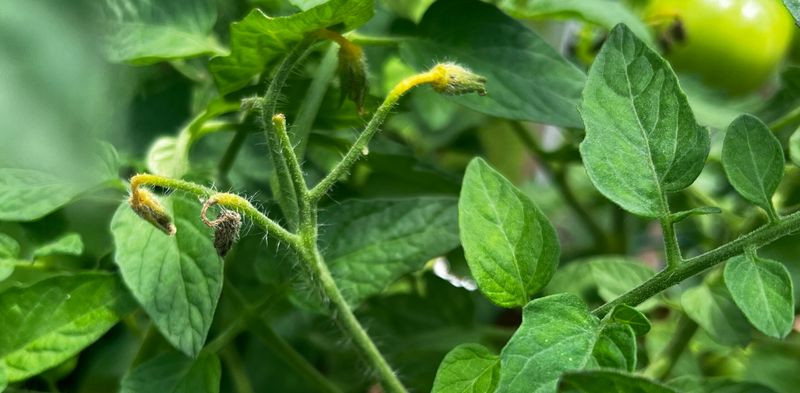
Two different tomato problems share the word “blossom” in their names, and mixing them up leads to the wrong fix. Blossom drop means a flower fails to develop into fruit and falls away from the plant entirely, often leaving just a clean stem behind. The plant never produces a tomato from that flower at all.
Blossom-end rot is something else. A fruit actually forms, but as it develops, a dark, sunken, leathery patch appears on the blossom end, which is the bottom of the tomato opposite the stem. UMN Extension’s tomato disorders guide and Oregon State University Extension’s blossom-end rot fact sheet both describe this condition as related to how the plant moves calcium into developing fruit, which is tied to water movement, root health, and consistent soil moisture rather than a simple shortage of calcium in the soil.
This distinction matters practically because the popular fix for blossom-end rot, spraying calcium onto the plant, will not help with heat-related blossom drop at all. Calcium products cannot repair pollen that failed under high temperatures, and they cannot reverse a flower that has already aborted. UMN Extension’s fertilizing guide recommends soil testing and consistent moisture as the safer starting points rather than automatic product applications. If the tomatoes you are losing are falling off before any fruit forms, you are dealing with drop, not rot, and the response is entirely different.
Watch the next flowers without expecting a guarantee
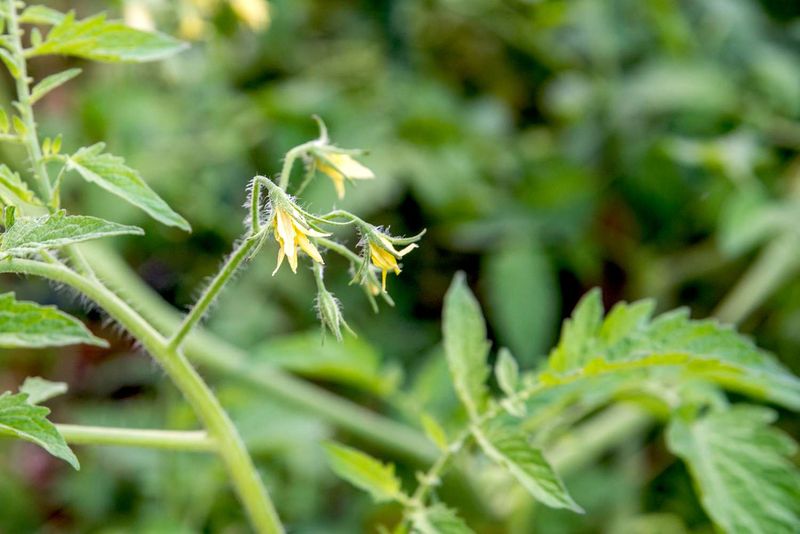
Once a flower drops, it is gone. There is no treatment that restores an aborted blossom or reverses heat-damaged pollen already released. The practical focus shifts entirely to the next round of flowers, and that means keeping conditions as stable as possible while temperatures remain high and staying patient as the weather changes.
Maintain even soil moisture by checking the root zone regularly rather than watering on a fixed schedule. Keep any temporary shade cloth in place through the worst of the heat, then reduce or remove it as temperatures moderate. Avoid aggressive pruning, root disturbance, and emergency fertilizing during this period; those interventions add stress rather than reducing it. Oregon State Extension and UMN Extension’s heat-garden guidance both emphasize steady care over reactive interventions during a heat event.
New flowers may set fruit after temperatures moderate if the plant remains healthy and adequately watered. UMN Extension notes that production often improves once heat eases, provided the plant has not been weakened by other problems. If fruit set does not improve after temperatures drop back into a comfortable range, revisit the differential checklist from earlier: pollination problems, pest pressure, disease, or a nutrient issue may be at work. The next flowering cycle is where recovery happens, and the best thing you can do for it is keep the plant stable, not scramble to fix what has already fallen.