
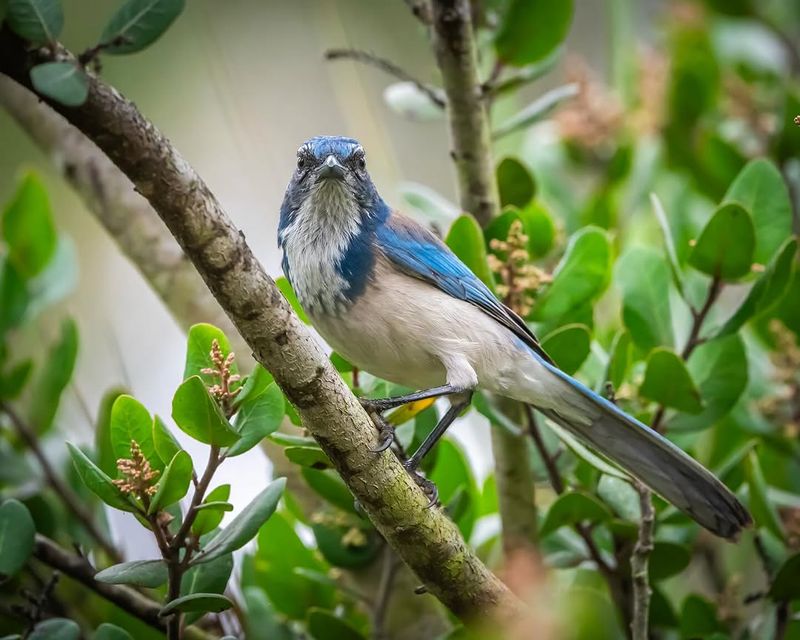
That loud, blue-and-gray bird raiding your tomatoes might actually be doing your garden a favor. The California Scrub-Jay is one of the most common backyard birds in the state, and while it has a reputation for being a nuisance, it also eats insects and other invertebrates that can damage your plants. Before you shoo it away or reach for a pesticide, it’s worth understanding what this bird actually does, and what you can do to support the natural pest-control community already working in your yard.
How to identify a California Scrub-Jay in your yard
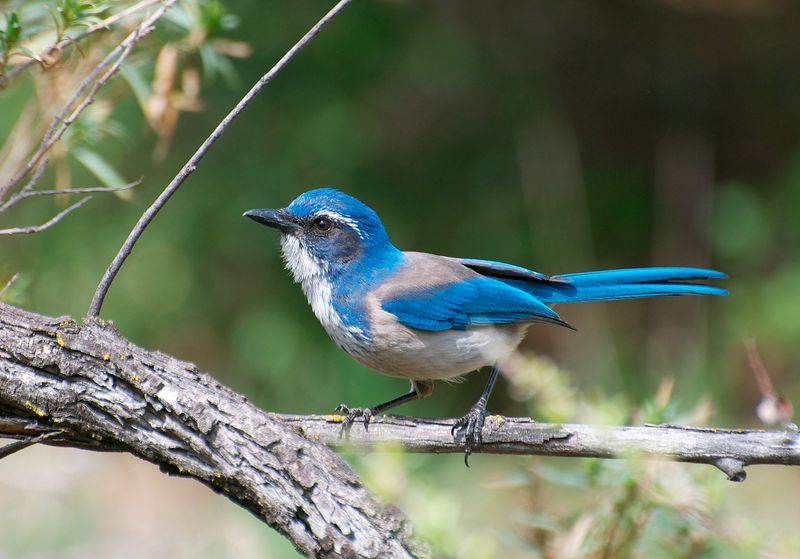
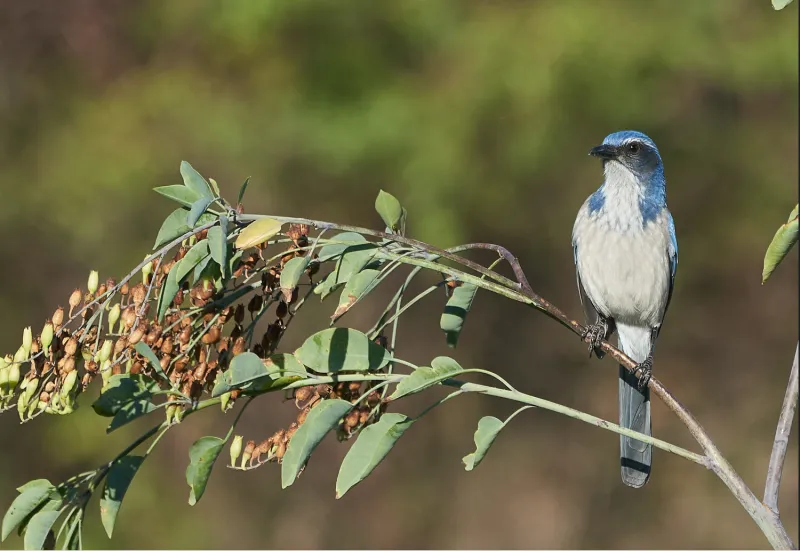
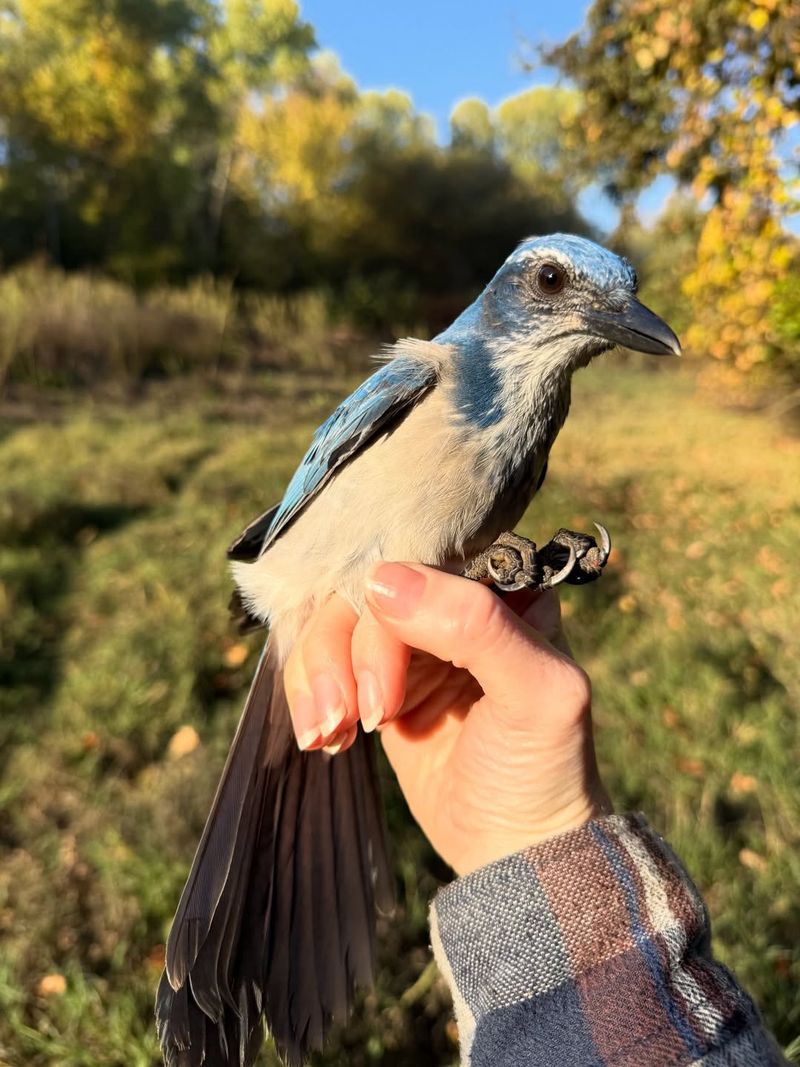
Plenty of California homeowners spot a blue bird in the yard and assume it’s either a pest or a helpful garden helper, without ever checking which species they’re actually looking at. Getting the identification right matters, because not every blue jay in California is the same bird. Cornell Lab’s identification guide describes the California Scrub-Jay as a medium-sized, crestless bird with a vivid blue head, wings, and tail, a pale gray or whitish underside, and a distinctive white throat outlined by a dark blue collar that loops across the chest like a necklace.
That missing crest is the fastest field check. If the blue bird in your yard has a tall, pointed crest, you’re looking at a Steller’s Jay, a different species common in forested areas and higher elevations. The California Scrub-Jay has a smooth, rounded head with no crest at all. Its back is often a dull grayish-brown, which contrasts with the brighter blue of its wings and tail.
Older field guides, pest-control documents, and web searches may still use the name Western Scrub-Jay. That name covered a broader grouping that was later split into separate species. The U.S. Fish and Wildlife Service taxonomic record now recognizes California Scrub-Jay and Woodhouse’s Scrub-Jay as distinct species.
California Scrub-Jays are the birds you’ll find across most of coastal and inland California, while Woodhouse’s Scrub-Jays range farther east into the Great Basin and Rocky Mountain region.
Knowing which bird you have also matters for legal reasons. The National Park Service notes that California Scrub-Jays are a protected native species. Confirming the identification before deciding how to respond to the bird is always the right first step.
Its broad diet may help, but it does not guarantee pest control
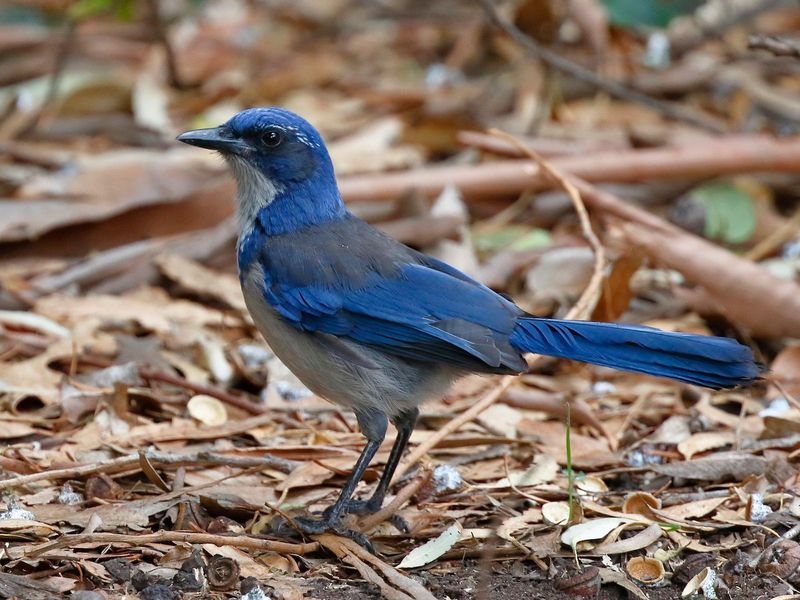
One reason California Scrub-Jays get credit as garden helpers is that insects and fruit make up a large share of their warm-season diet. Cornell Lab’s life history account reports that insects and fruit are especially important in spring and summer, while acorns, seeds, and nuts become the primary food source in fall and winter. The California Department of Fish and Wildlife describes the species as gleaning food from foliage, bark, wood, and the ground, which means a foraging jay may pick off caterpillars from leaves or probe soil for invertebrates during certain parts of the year.
That foraging range is genuinely broad. Scrub-jays consume beetles, grasshoppers, spiders, and other arthropods, along with fruit, nuts, lizards, eggs, and nestlings. The CDFW species account confirms invertebrate consumption and ground foraging, but neither that document nor any other currently available source quantifies how many caterpillars or beetle grubs a scrub-jay removes from a typical California yard. The ground-foraging behavior makes some invertebrate consumption biologically plausible, but it is not evidence of routine, measurable grub suppression in lawns.
Broader research on birds and pest control shows a mixed picture. A USDA Forest Service review of peer-reviewed studies found that birds reduced pest abundance on some crops while effects on others were less predictable, and birds occasionally consumed other natural enemies as well. That finding supports a careful “can contribute” framing rather than a guaranteed garden service.
The practical takeaway is that a scrub-jay visiting your yard may remove some pest insects, but it is one player in a larger system. Its diet is too varied, and its visits too opportunistic, to rely on it as a stand-alone solution for caterpillar or grub problems.
Start with the actual pest, not the visiting bird
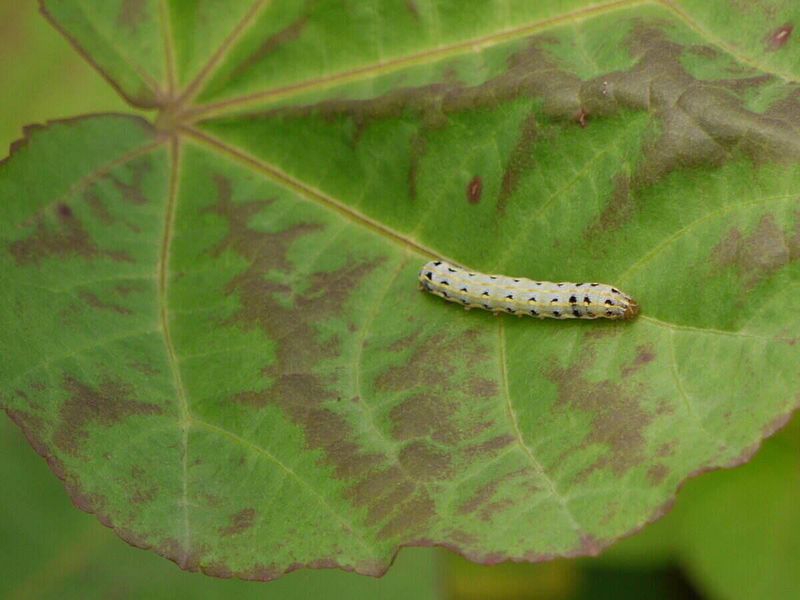
Seeing a scrub-jay digging near your roses or hopping through the lawn is not a pest diagnosis. The bird’s presence may mean there’s something edible in the soil, or it may mean nothing more than that a jay passed through. Before deciding whether a pest problem warrants action, the first job is to find and identify the actual insect causing the damage.
UC Cooperative Extension’s Integrated Pest Management program lays out a clear sequence: identify the pest correctly, inspect the affected plants or lawn area, monitor the extent of the damage over time, and then decide whether the population is high enough to justify a control response. Skipping identification leads to treatments that miss the target insect entirely and may harm beneficial species in the process.
For caterpillar problems on ornamentals or vegetables, start by checking the undersides of leaves, stems, and around the base of plants in the morning when caterpillars are most active. For suspected grub damage in a lawn, cut a one-square-foot section of turf to a depth of about three inches and count the grubs. A handful of grubs per square foot may not require treatment at all, depending on grass type and overall lawn health.
UC IPM’s pest notes on rose insects list hand-picking as a practical first option for caterpillar infestations that are still small and localized. Wearing gloves and removing caterpillars by hand into soapy water is low-cost, targeted, and does not affect natural enemies or the scrub-jays themselves. When a larger infestation makes hand-picking impractical, UC IPM’s guidance on protecting natural enemies recommends choosing the most targeted, least-disruptive product available rather than defaulting to a broad-spectrum spray.
A jay’s presence neither confirms a pest infestation nor proves the bird is removing enough insects to resolve one. Monitoring the plants and soil directly is the only reliable way to know whether action is needed.
Protect the whole natural-enemy community
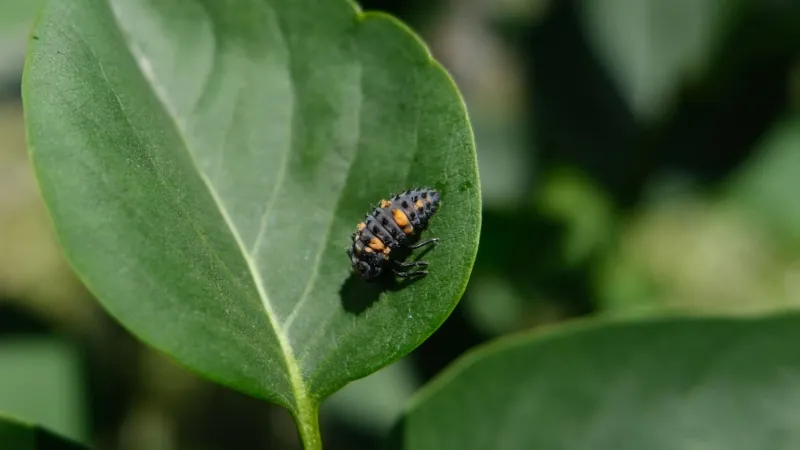
Garden pest control works best when the whole community of natural enemies is healthy, not just when one bird species shows up occasionally. UC IPM’s biological control resource identifies that community as including birds, spiders, predatory beetles, lacewings, parasitoid wasps, and pathogens, each of which targets different pests at different life stages. Scrub-jays are one thread in that web, not the whole fabric.
The single most damaging thing most California homeowners do to that community is apply broad-spectrum insecticides on a routine schedule rather than in response to a confirmed, monitored infestation. Products that kill a wide range of insects do not spare spiders, parasitoid wasps, or predatory beetles just because they’re beneficial. UC IPM’s guidance on protecting natural enemies and pollinators recommends avoiding persistent, broad-spectrum products when a more targeted option exists, applying any pesticide only when monitoring confirms a threshold has been reached, and always following the label directions to reduce off-target exposure.
Pesticide drift is a real concern in suburban yards where neighboring gardens, water features, and wildlife corridors are close together. Spraying on windy days, applying more product than the label specifies, or treating the entire yard when only one bed has a problem all increase the risk of harming non-target species. UC IPM’s natural-enemies reference illustrates just how many different organisms contribute to keeping pest populations in check in a typical garden.
Habitat also matters. Dense shrubs, leaf litter, and a variety of plant heights give spiders, ground beetles, and parasitoid wasps places to shelter and overwinter. Native plants can support the insect diversity that feeds higher up the food chain, including scrub-jays, though no single plant species is guaranteed to attract jays or eliminate any particular pest. Building a layered, diverse yard supports the whole system rather than betting on one species to do all the work.
Support scrub-jays without feeding them
When people discover that a scrub-jay might be helping with garden pests, the first instinct is often to put out peanuts or mealworms to keep the birds close. That approach is well-meaning but carries real risks. California’s Wildlife Health Laboratory cautions that shared feeding stations and artificial water sources can concentrate birds and spread disease, including salmonellosis and other pathogens that move easily through communal food and water.
Artificial feeding also changes scrub-jay behavior in ways that can create new conflicts. Birds that associate a yard with reliable food become bolder and more persistent, which can increase competition with other native species and may attract more jays than the habitat naturally supports. Cornell’s life history account notes that scrub-jays are already opportunistic and adaptable foragers in suburban settings, meaning they do not need supplemental feeding to find and use a yard with suitable habitat.
Safer support looks different. Leaving established scrub-jays undisturbed when they are not causing a specific, documented problem costs nothing and avoids the disease risks of feeding. Reducing unnecessary pesticide use protects the arthropod prey that scrub-jays and other insectivorous birds depend on. UC IPM’s natural-enemy protection guidance reinforces that a yard with fewer chemical disruptions supports a broader food web, which benefits birds without requiring a feeder.
Maintaining native shrubs, trees, and ground cover gives scrub-jays foraging surfaces and shelter without creating the disease risks that come with concentrated artificial food or water. These steps support the bird as part of a functioning yard ecosystem rather than as a managed garden service.
Manage documented conflicts without harming the bird
California Scrub-Jays are not uniformly beneficial, and it is worth being honest about that. Cornell’s life history account documents that scrub-jays eat cultivated fruit, nuts, bird eggs, nestlings, lizards, and other small animals. A homeowner whose strawberries are disappearing or whose bluebird nest box is being raided has a real conflict, not just an inconvenience, and that conflict deserves a practical response.
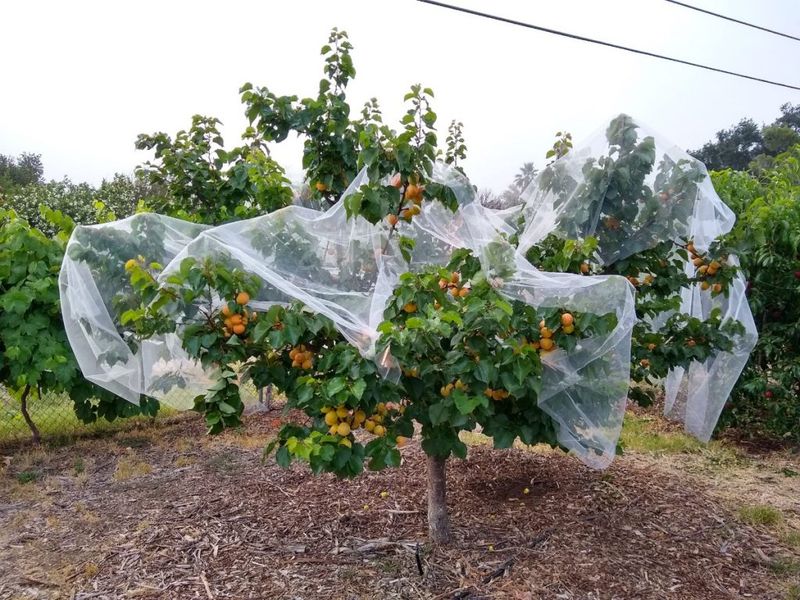
The right response is exclusion, not elimination. Lightweight bird netting draped over fruit trees or berry bushes during harvest season is effective, inexpensive, and does not harm the birds. Nest boxes for cavity-nesting species can be placed away from dense shrubs that give jays easy perching access, or fitted with predator guards that make entry difficult for larger birds. These are targeted solutions that address the specific documented problem without affecting the scrub-jay population in the broader yard.
Poisoning or attempting to kill a California Scrub-Jay is not a legal option for a homeowner with a fruit-eating complaint. The federal Migratory Bird Treaty Act protects native migratory birds, including scrub-jays, from being killed, captured, or harassed without authorization. California adds its own protections at the state level. California AB 454, introduced in the 2025-2026 legislative session, reflects ongoing state legislative attention to bird protection, though homeowners should verify the current status of any specific bill and check applicable local rules before undertaking work near nesting birds.
Active nests deserve particular care. Avoid pruning or removing shrubs and trees during active nesting periods when possible, and if major vegetation work is necessary, verify current federal, state, and local requirements first. Not every disturbance near a nest is automatically a legal violation, but the safest approach is to plan around nesting activity rather than through it.
Treat the scrub-jay as one garden partner, not the entire pest plan
A practical approach to scrub-jays in a California yard comes down to a short checklist. Confirm the bird’s identity before drawing conclusions about its behavior. Allow it to forage when it is not causing a specific, documented conflict. Follow UC IPM’s sequence for any actual pest problem: identify the insect, monitor the damage, and choose the least-disruptive control only when monitoring confirms that action is genuinely warranted.
Avoid unnecessary broad-spectrum pesticides that reduce the food supply for scrub-jays and the rest of the natural-enemy community. Skip the artificial feeders and water stations; habitat protection and pesticide reduction are safer ways to support the bird. When a real conflict arises over fruit or nesting birds, use physical exclusion rather than lethal control. UC IPM’s biological control guidance is a reliable starting point for understanding how the full natural-enemy community works together.
Cornell’s account of the California Scrub-Jay confirms that it eats insects and may remove some garden pests, but the available evidence does not support treating it as a reliable caterpillar-and-grub patrol. It is one capable, adaptable bird in a yard that works best when the whole ecological system is left reasonably intact. A yard that supports many natural enemies, including but not limited to scrub-jays, is more resilient than one that depends on any single species to solve its pest problems.