
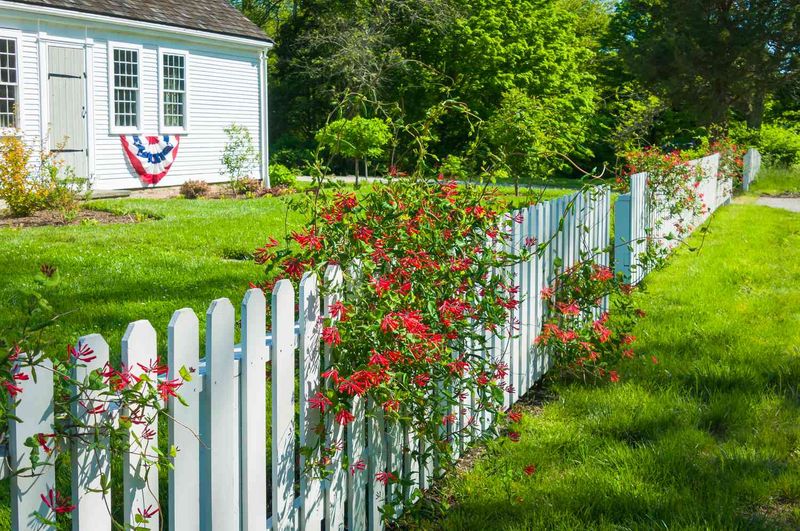
A vinyl privacy fence that looks yellow, streaky, or slightly buckled is one of those Florida yard problems that nags at you every time you walk outside. Before you blame the heat and call a contractor, though, the real explanation might surprise you. And once you know what you are actually dealing with, a Florida-native vine called coral honeysuckle can gradually turn that tired-looking barrier into something worth looking at again, while also drawing hummingbirds to your yard.
Separate heat damage from ordinary vinyl weathering
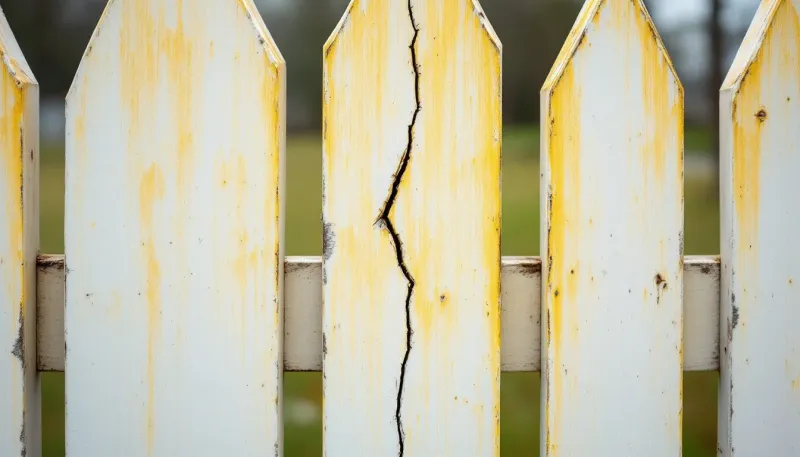
Blaming Florida’s air temperature alone for every vinyl fence problem is an easy call, but it is not always the right one. Outdoor exposure over months and years can cause gradual fading or a slight color shift, and that is normal weathering. Dirt, mildew, pollution, and unequal sun exposure across the fence panels can all make vinyl look yellow or blotchy even when nothing structural has gone wrong.
Material quality matters too. Manufacturer technical documentation draws a clear line between ordinary weathering and localized distortion caused by intense reflected or concentrated heat, such as the kind that bounces off Low-E windows or other reflective surfaces nearby. That kind of concentrated exposure can actually distort, soften, or warp vinyl in specific spots, but that is a different problem from the fence simply aging in the sun. If your fence looks wavy or melted in one section near a window or a metal surface, reflected heat is worth investigating.
If the whole fence looks dull or faintly yellow, you are probably looking at ordinary weathering, mildew, or a lower-grade product.
Warranty language from Weatherables and Daytona Vinyl distinguishes between abnormal discoloration and expected outdoor color change, which tells you that manufacturers expect some fading and treat unusual discoloration separately. Walk the fence line and look at the pattern: is the discoloration even across the whole fence, or is it concentrated near a reflective surface, a shaded section that stays damp, or a spot where panels meet at an odd angle?
That inspection matters before you plant anything. A vine can cover an ugly surface once it grows in, but it cannot straighten warped panels, stabilize failed posts, reverse brittle material, or make an improperly installed fence safe. If the fence has real structural problems, those need to be handled separately before a plant enters the picture.
Coral honeysuckle offers a gradual living screen
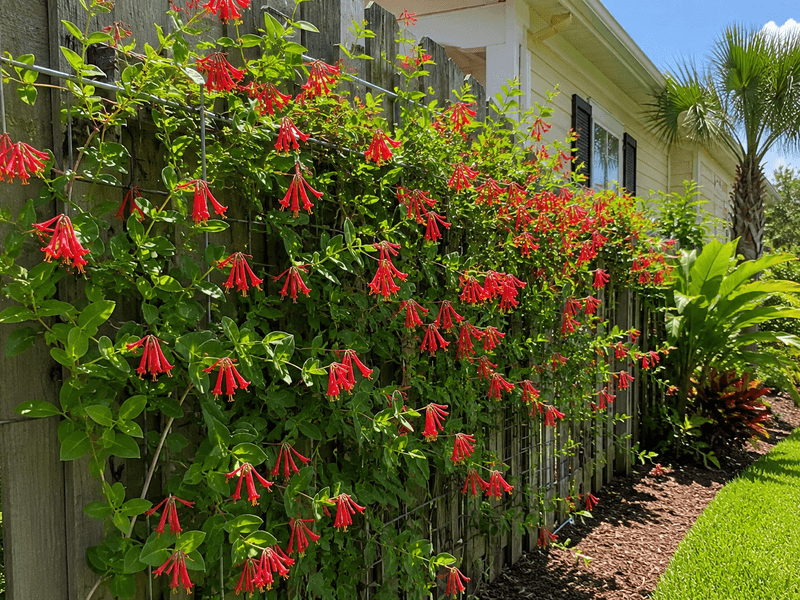
Coral honeysuckle, Lonicera sempervirens, is a strong, well-supported native option for homeowners who want to screen a fence with a Florida-appropriate plant. UF/IFAS native plant guidance lists it as a recommended landscape vine for fences and property lines, which gives it solid regional backing. The vine twines onto fences and trellises and can reach roughly 10 to 20 feet under suitable conditions, making it tall enough to cover a standard privacy fence over time.
Full sun brings out the best in this plant. Denser growth, more prolific flowering, and better overall coverage all come with adequate sunlight, though the vine can handle some shade if that is what your fence line offers. Positioning it where it receives at least six hours of direct sun daily is the smarter move if screening is the goal.
One important warning: the word “honeysuckle” on a nursery tag does not automatically mean you are buying a native plant. Florida’s noxious weed field guide identifies Japanese honeysuckle, Lonicera japonica, as invasive in Florida, capable of forming dense mats and climbing over native vegetation. The two plants look similar enough that the label mix-up happens at retail. Always confirm the scientific name is Lonicera sempervirens before purchasing, and buy from a reputable native plant nursery whenever possible.
The UF/IFAS plant profile for coral honeysuckle notes that while the vine can eventually cover a fence quickly once established, it is slow to establish initially. That qualifier matters for setting realistic expectations. A newly planted vine in sandy Florida soil is not going to hide your fence by next month. Plan for the screen to develop gradually, with meaningful coverage building after the plant has had time to root in and climb.
Check whether the fence can support a twining vine
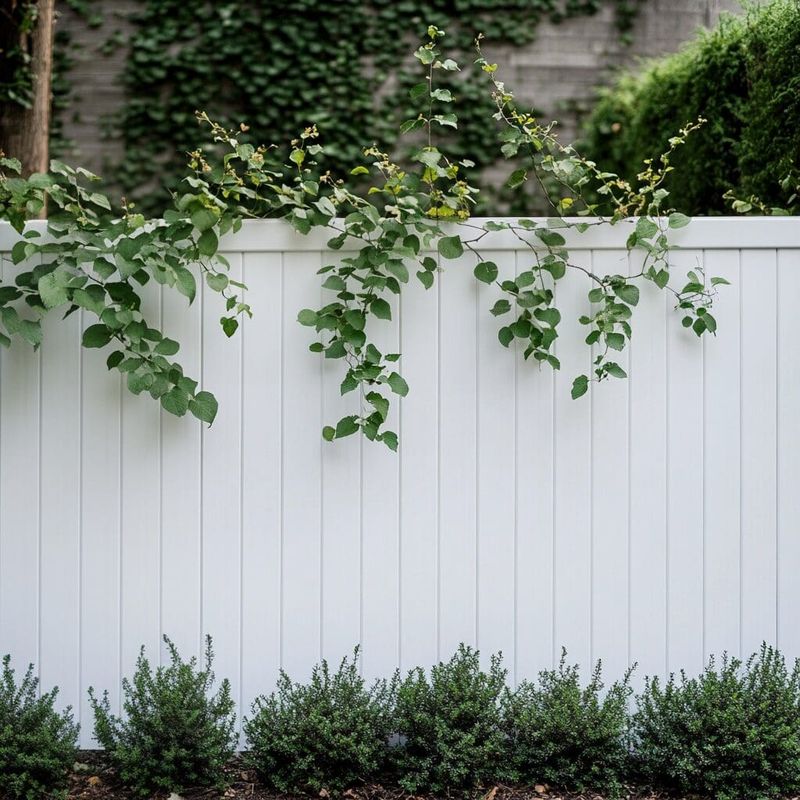
Coral honeysuckle grows by twining, meaning its stems wrap around whatever support is available rather than gripping surfaces the way ivy or climbing fig does. That distinction has real consequences for how you install it. The vine needs something physical to wrap around: a trellis, a wire grid, an arbor, or fence rails and posts sturdy enough to hold the plant’s weight plus the added wind resistance that comes with a leafy screen.
Before you plant anything, spend five minutes assessing the fence itself. Push gently on the panels and posts. Look for flex, lean, cracking, or signs that posts are loose at the base. UF/IFAS guidance on coral honeysuckle describes training the vine onto fences and trellises, which assumes the support is sound.
An aging, warped, or lightweight vinyl fence that already shows signs of movement is not a reliable anchor for a mature vine, especially when a storm adds wind load to the equation.
When the fence itself is questionable, the safer approach is to install a separate freestanding trellis or wire support in front of or alongside the fence. This keeps the vine’s weight and wind surface off fragile panels while still letting the plant grow up and eventually screen the fence from view. The support should give stems something to wrap around without transferring that load directly to panels that may already be compromised.
Florida International University hurricane-loss-reduction research specifically flags vine-covered fences as structures that need management before storms, partly because the added plant mass increases wind-catching surface. A fence that is already structurally weak becomes a bigger liability, not a smaller one, when you add a dense vine and then ignore the combination heading into hurricane season. The vine’s job here is to screen the fence visually, not to compensate for a fence that needs repair or replacement.
Give coral honeysuckle a Florida-ready start
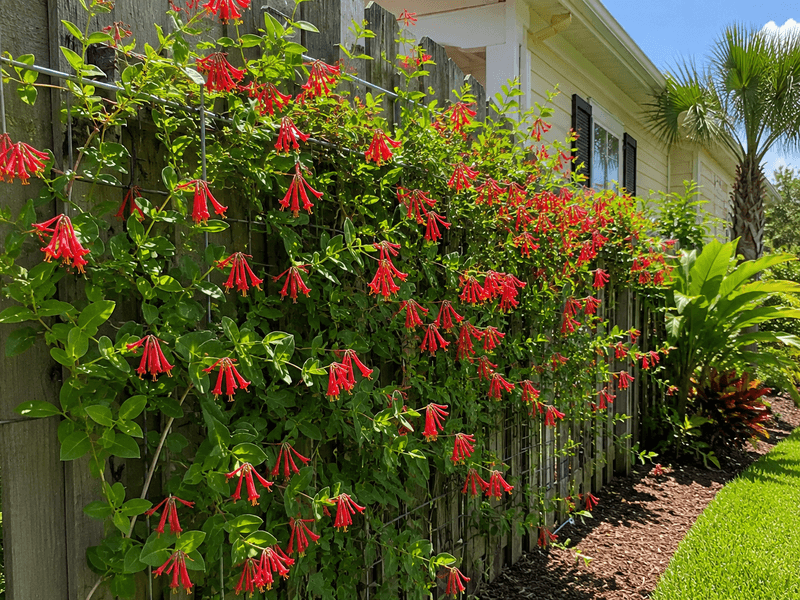
Getting coral honeysuckle off to a solid start in Florida comes down to three things: sun, water during establishment, and early training onto its support. Plant it where it will receive substantial direct sunlight for the dense growth and flowering that make it useful as a screen. A spot that gets morning shade and afternoon sun, or a mostly shaded fence line, will produce a thinner, less floriferous vine that takes even longer to provide coverage.
Watering during establishment is not optional. The UF/IFAS coral honeysuckle plant profile specifically calls out establishment watering as part of proper care, and Florida’s sandy, fast-draining soils make this especially important. Water drains quickly through sandy substrate, so newly planted vines can dry out between rains even during Florida’s wet season. Plan to water consistently through the first growing season, tapering off as the plant roots in and shows signs of active growth.
Guide new stems onto the support structure as they grow. Coral honeysuckle will twine on its own once it finds something to grip, but early training helps direct growth across the fence face rather than letting it bunch up at the base. Loosely tie stems to the trellis or wire with soft garden ties if needed, then let the plant take over from there.
Pruning timing matters more than most gardeners expect. Missouri Botanical Garden guidance recommends pruning after flowering to avoid cutting off next season’s blooms, and warns that excessive pruning or high-nitrogen fertilizer can push leafy growth at the expense of flowers. Keep pruning light and well-timed.
For gardeners near the coast, NC State Extension notes that coral honeysuckle has useful salt tolerance, which can be an advantage in coastal yards exposed to salt air. That tolerance does not extend to flooding, storm surge, or prolonged waterlogged soil, so low-lying coastal spots with drainage problems are a different challenge entirely.
The flowers and berries offer specific wildlife benefits
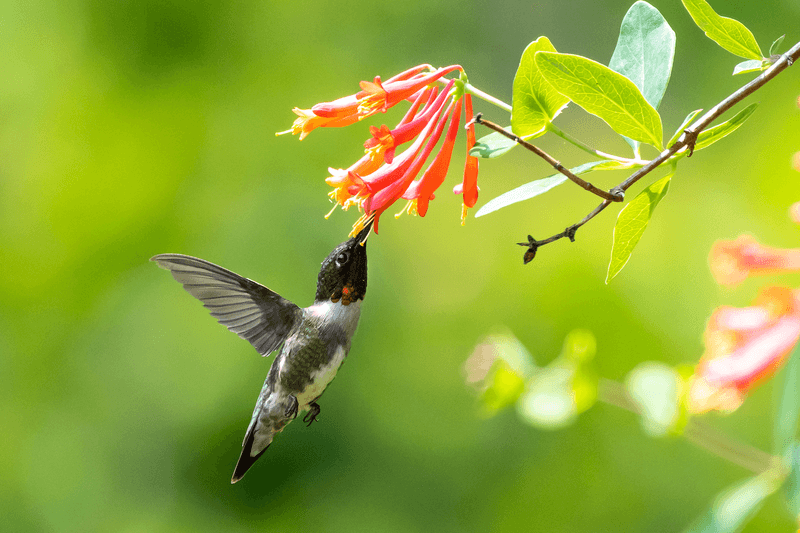
Coral honeysuckle earns its wildlife reputation through two specific mechanisms, and understanding both helps set realistic expectations. The bright, tubular red flowers are shaped almost perfectly for hummingbirds, which are among the few pollinators with bills long enough to reach the nectar. Butterflies also visit the flowers. UF/IFAS native plant resources confirm both hummingbirds and butterflies as visitors, making the flowering season genuinely active for anyone watching from the yard.
After flowering, the vine produces small red berries that some fruit-eating birds will use as a food source. Audubon’s guide to berry-bearing native plants includes coral honeysuckle among plants that can benefit fruit-eating birds, though the specific species that visit will depend on what is already present in your area. One vine along one fence panel is not going to turn your yard into a bird sanctuary on its own.
Audubon’s hummingbird attraction guidance points out that a complete yard for wildlife also needs shelter, nesting places, water, and a variety of food sources across seasons. Coral honeysuckle contributes meaningfully to that picture, but it works best as one layer of a broader planting rather than the whole solution.
The connection back to the fence is straightforward: while the vine is doing its wildlife work, it is also growing. Over time, that same plant that draws a hummingbird to your yard is gradually covering the panels you were staring at with frustration. The wildlife benefit and the screening benefit arrive together, just not immediately.
Manage dense growth before it becomes a storm liability
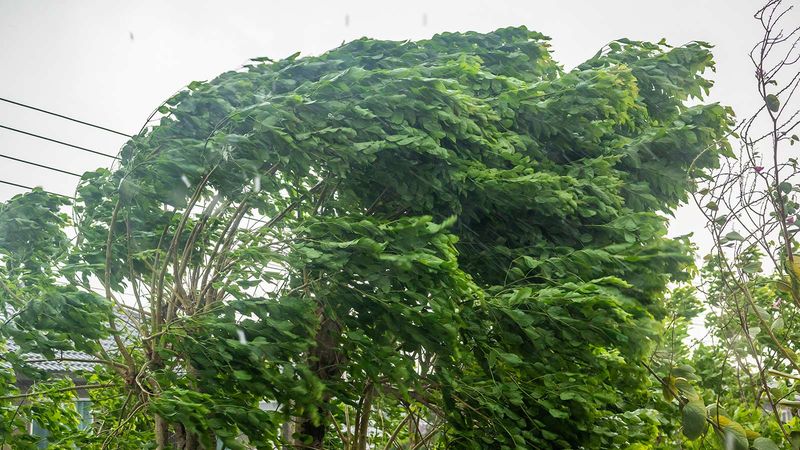
A vine that has filled in nicely along your fence is doing its screening job well. That same density, though, catches wind the way a sail does, and in Florida that tradeoff deserves attention before hurricane season. Coral honeysuckle is not a storm-hardening treatment for a vinyl fence. Adding plant mass to a fence increases the wind load that fence has to handle, not the other way around.
Florida International University hurricane-loss-reduction research recommends thinning vines on fences so wind can filter through, and specifically identifies vine-covered fences as structures that need management before storms. That recommendation applies conditionally: the right response depends on how dense the vine actually is, how solid the support structure is, what condition the fence panels and posts are in, and how exposed your yard is to wind. A lightly covered vine on a solid trellis in a sheltered yard is a different situation from a heavily matted vine on a questionable fence in a coastal lot with no windbreak.
Routine post-flowering pruning and pre-storm thinning are two different tasks. The first keeps the plant shapely and flowering well year to year. The second is a conditional decision made by looking at the specific combination of vine density, support integrity, fence condition, and local storm exposure before a named storm or active hurricane season period.
Miami-Dade building product approval documentation makes clear that fence performance in high-wind conditions depends on the entire assembly: posts, footings, panel connections, layout, and applicable local requirements. No plant species, no fence material, and no single management step substitutes for evaluating the full system. Do not let a healthy-looking vine give you false confidence about a fence that has not been inspected in years.
Use the vine to disguise the fence, not to excuse a failing one
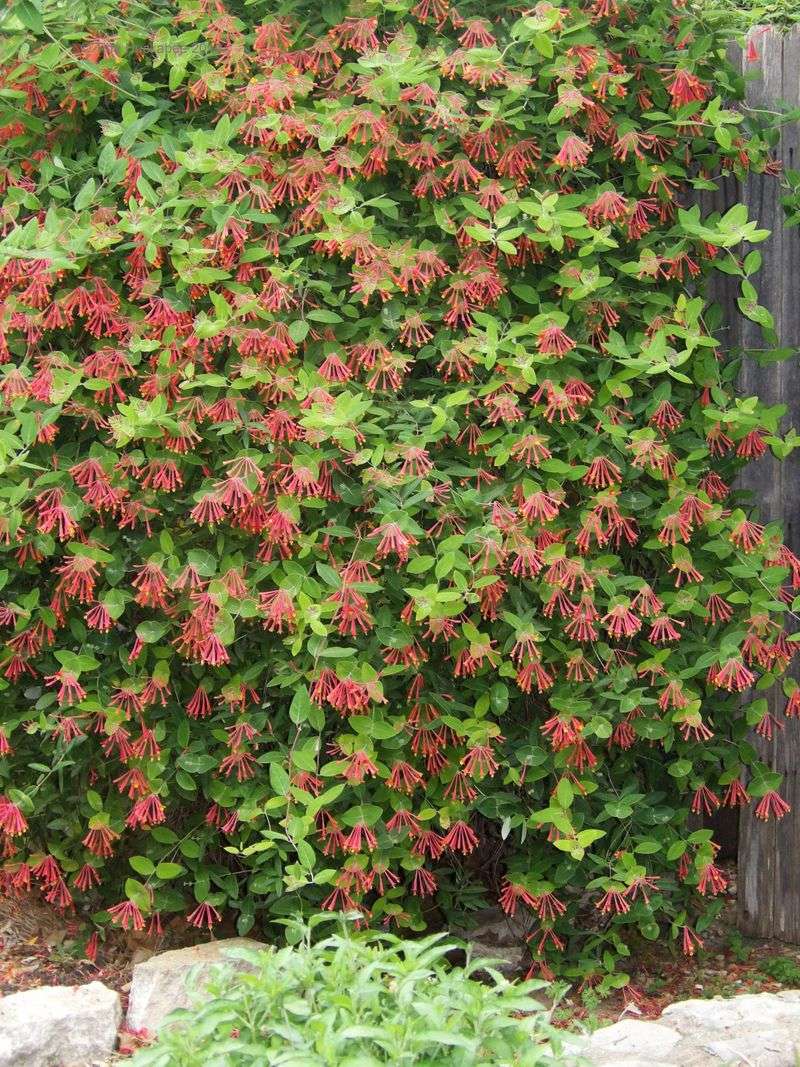
Coral honeysuckle is a practical, Florida-native screening choice when the conditions are right. That means providing a secure support the vine can actually use, accepting that real coverage develops gradually rather than overnight, watering consistently through establishment in Florida’s sandy soil, and managing dense growth when your specific combination of vine, support, fence, and storm exposure calls for it.
UF/IFAS native plant resources back it as a fence and property-line vine, and the UF/IFAS plant profile confirms it can cover a fence once established, while being honest that establishment takes time. Those qualifications are not reasons to avoid the plant; they are the honest terms of the project.
Address any structural problems with the fence separately. Investigate unexplained discoloration or localized warping before assuming ordinary weathering is the cause. A vine planted against a fence with failing posts or brittle panels is not a fix; it is a distraction from a problem that will eventually become more expensive.
When the fence, support, plant, and storm plan all work together, the result is a fence line that earns its keep: living cover that draws hummingbirds, produces seasonal berries for fruit-eating birds, and gradually turns an eyesore into something that looks like it belongs in a Florida yard. The fence does not disappear overnight, but given time and reasonable care, it mostly disappears behind something better.