
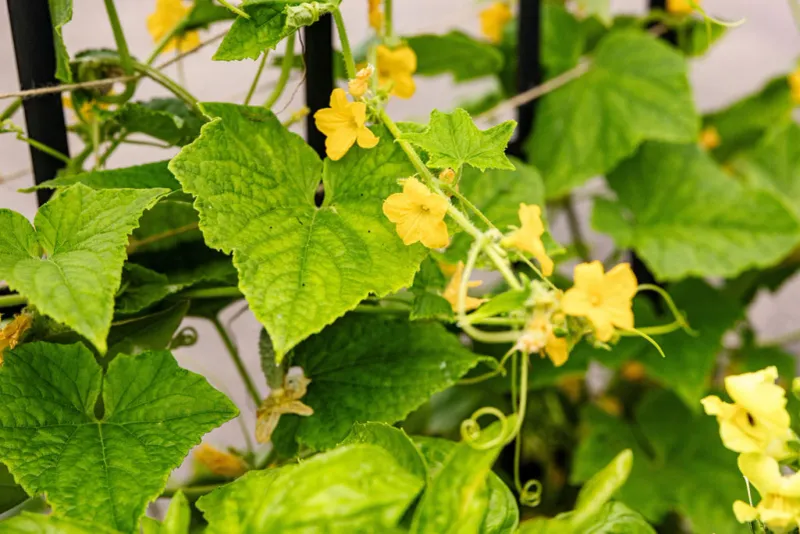
You check your cucumber vines every morning, and the flowers keep coming, but there is still not a single cucumber forming. That is one of the most common midsummer panics for home gardeners, and the good news is that it is often diagnosable with a quick look at the flowers themselves. Getting to the root of the problem means checking what kind of flowers you actually have before assuming anything went wrong with pollination.
Identify the flower before diagnosing the problem
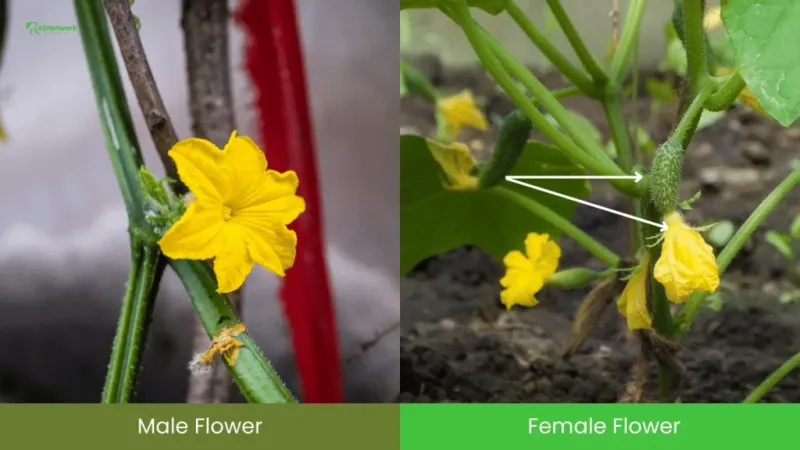
Before blaming bees or heat, crouch down and look closely at where each flower connects to the vine. Male cucumber flowers grow on long, slender stems with no swollen base at all. Female flowers are the ones that matter for fruit production, and they have a small, cucumber-shaped ovary sitting directly behind the blossom, like a tiny green bump that has not grown up yet.
Only female flowers can develop into cucumbers. No amount of careful hand-pollination will produce fruit from a male flower, because male flowers simply do not have the ovary needed to form a cucumber. University of Minnesota Extension notes that male flowers typically appear first on the vine, sometimes by a week or more, and it is completely normal for those early male flowers to drop off once they have finished releasing pollen.
A vine covered entirely in flowers that all sit on thin, straight stems with no swollen base has not yet produced a flower that could become fruit. Waiting a few more days and checking again is the right move at that stage. University of Georgia Cooperative Extension confirms that this male-flower-first pattern is a normal part of cucumber development, not a sign that something is wrong with the plant.
Understand how heat can reduce fruit set
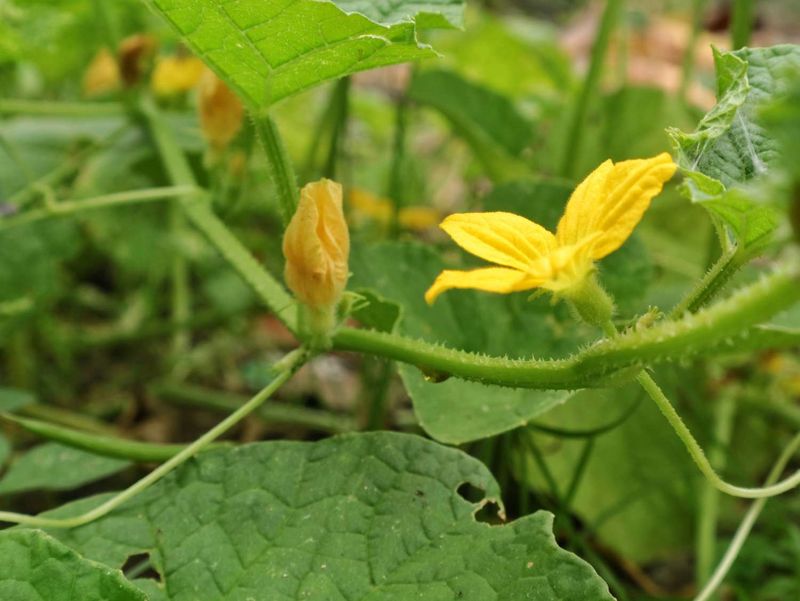
Hot weather can work against cucumber fruit set through several different pathways, and that matters because hand-pollination can only address one of them. When temperatures climb into the 90s during the day or stay in the 70s overnight, University of Minnesota Extension guidance on cucurbit flower and fruit set identifies these ranges as risk zones for flower and young-fruit abortion. These are practical warning ranges, not a universal cutoff where every variety fails at exactly the same temperature.
One way heat interferes is by reducing insect activity. Cucumber flowers open for only a few hours, often in the morning, and if visiting insects are less active during a heat wave, pollen transfer may be inadequate during that short window. Research on cucumber male flower development under heat stress shows that high temperatures can also reduce pollen viability, meaning that even when a flower is visited, the pollen itself may not function properly.
Heat can also shift sex expression in some cucumber varieties, pushing the plant toward producing more male flowers and fewer female ones. Research on temperature and cucumber sex expression shows this response varies by genotype, so the effect is not the same for every cultivar in your garden. Hand-pollination is a useful test when female flowers are present and insect activity seems low, but it cannot reverse pollen damage, flower abortion, or a shift toward male-only flower production caused by sustained heat.
Hand-pollinate an open female flower in the morning
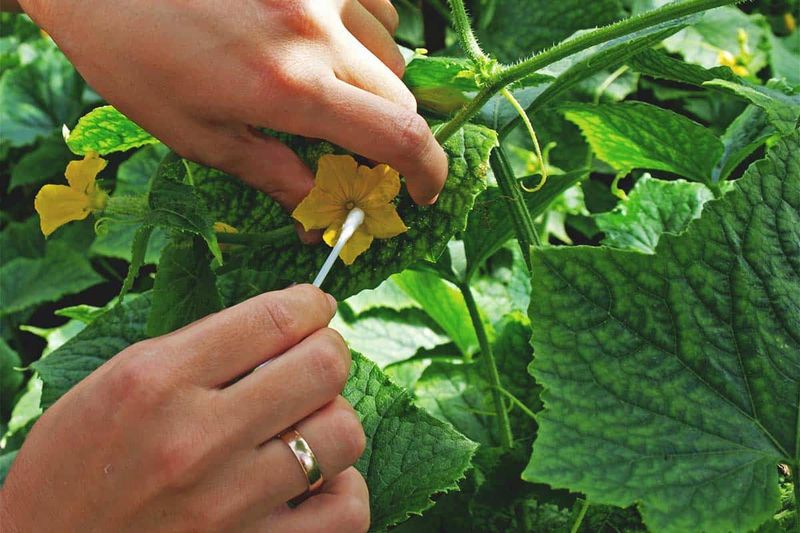
Once you have confirmed that female flowers are present and open, morning is the time to act. Cucumber flowers can close within a few hours of opening, and insect activity is also most likely to be reduced later in the day when heat peaks. Catching the flowers while they are freshly open gives pollen the best chance of being viable and the stigma the best chance of accepting it.
The process itself is straightforward. Find a newly opened male flower and a newly opened female flower at the same time. Gently fold back or remove the petals of the male flower so you can see the pollen-covered anthers in the center. CSU Extension guidance on hand pollination recommends pressing those anthers directly against the sticky stigma at the center of the female flower.
If you prefer a more precise tool, a small artist’s paintbrush works well for collecting pollen from the male and dabbing it onto the stigma.
Repeat the transfer for each fresh female flower that is open that morning. You do not need to hand-pollinate every single flower the plant ever produces for a harvest to occur. Colorado State University Extension treats hand-pollination as a practical intervention rather than a required step for every bloom. Think of it as a test of whether inadequate pollen transfer is a contributing factor, not a guaranteed fix if extreme heat, water stress, or poor pollen viability are also in play.
Read what happens after pollination
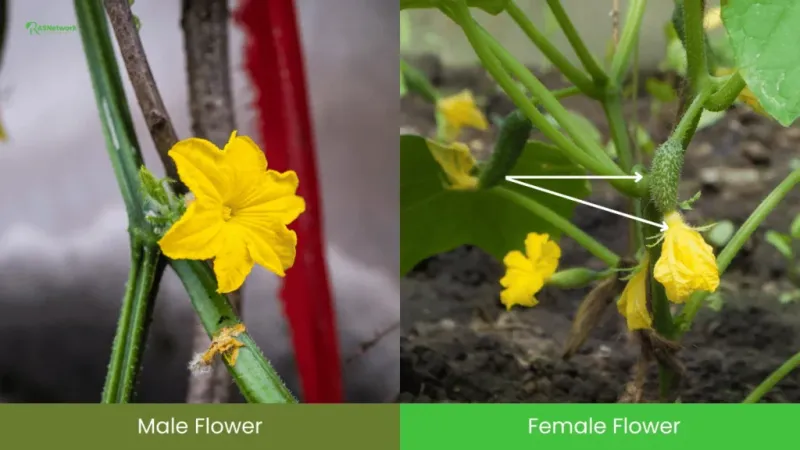
After hand-pollinating, the vine will tell you something useful over the next day or two. A successfully pollinated female flower should show the tiny ovary beginning to swell and elongate. That enlargement is the clearest sign that pollen transfer worked and that the fruit is developing. A female flower that shrivels and drops without any enlargement is a less definitive signal, because several things can cause the same outcome.
Inadequate pollination, heat stress, water stress, poor pollen viability, and flower abortion can all produce a dropped female blossom. University of Minnesota Extension points out that a dropped female flower does not establish any single cause, so a failed attempt at hand-pollination should prompt you to check moisture levels, heat conditions, and whether viable male flowers were actually available. If your vine had very few open male flowers at the time, pollen from another standard cucumber plant of the same species can be used in the same way.
One thing to be clear about: pollen should only be transferred between cucumber flowers. Illinois Extension notes that cucumbers do not cross-pollinate with muskmelons, watermelons, or other cucurbits in a way that would affect this season’s fruit. Mixing pollen from unrelated cucurbits will not help the cucumber set fruit and is not worth attempting.
Stabilize moisture and avoid pushing leafy growth
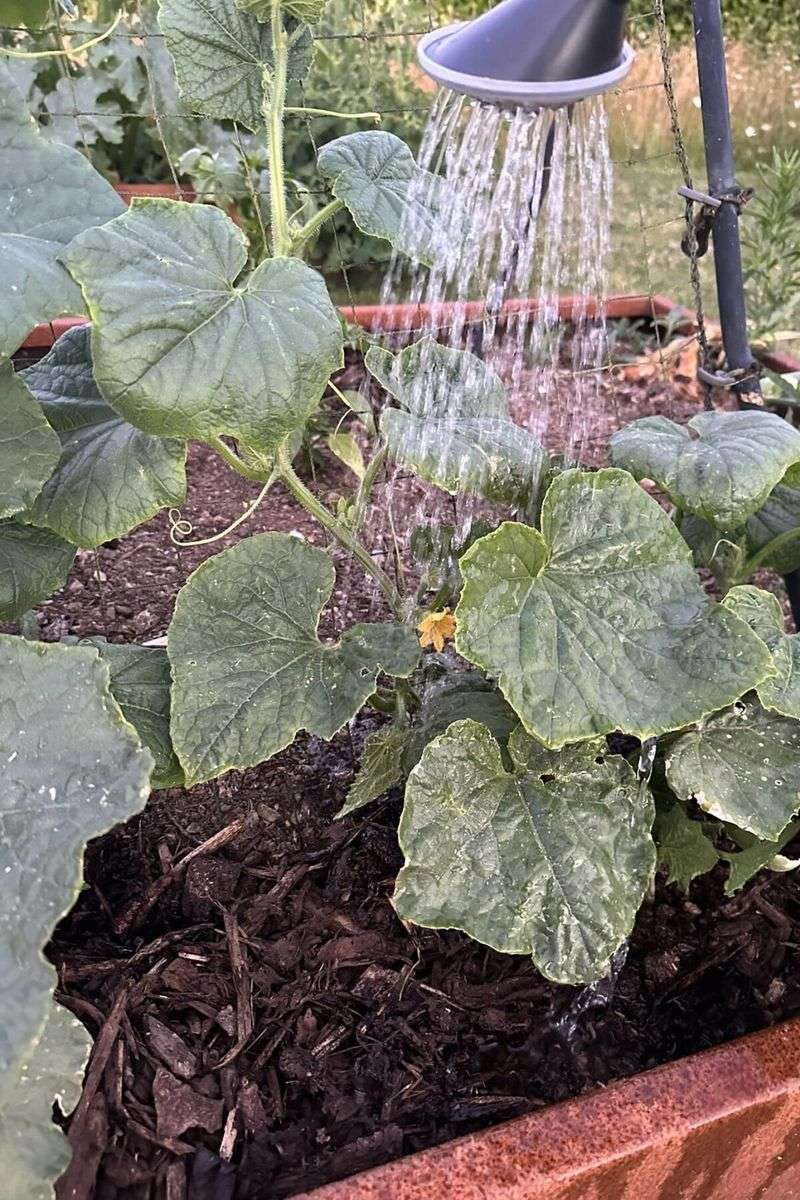
Even when pollination goes well, young cucumber fruit can abort if the plant is under stress. Keeping soil moisture reasonably consistent throughout the growing season is one of the most practical things you can do to support the flowers and small fruits that form after pollination. Uneven watering, including long dry spells followed by heavy irrigation, can contribute to flower and fruit drop in the same way heat stress can.
Fertilizer choices matter too. University of Missouri Extension notes that excessive nitrogen pushes cucumbers toward producing more leafy vine growth at the expense of flowering and fruiting. If your plant looks lush and green but keeps dropping flowers, a high-nitrogen fertilizer may be part of the problem. University of Minnesota Extension guidance on fertilizing plants reinforces that matching fertilizer type to the plant’s actual stage is more useful than applying extra nutrients on a fixed schedule.
Skip the bloom-booster products that promise extra phosphorus, potassium, or calcium as a cure for flowering without fruiting. None of those additions are supported by the available evidence as a reliable fix for this specific problem. Consistent moisture and avoiding nitrogen overload are proportional, sensible steps that support fruit set without substituting for the pollination work the plant actually needs.
Check the cultivar and the pollination conditions
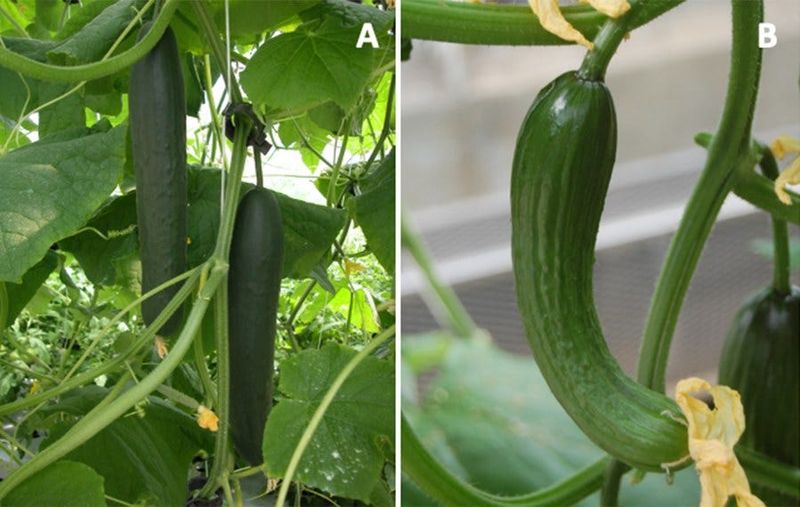
Not every cucumber variety relies on the same pollination process, and checking your seed packet can save a lot of diagnostic guesswork. Parthenocarpic cucumbers are bred to set fruit without pollination and are commonly used in greenhouse or high-tunnel settings. University of Minnesota Extension on pollination requirements explains that parthenocarpic types do not need insect visits to develop fruit, while standard monoecious garden varieties generally do.
Gynoecious cultivars are a separate category worth knowing about. These varieties produce mostly or exclusively female flowers, which sounds ideal, but they may still require pollen from a separate pollinizer variety. Penn State Extension guidance on cucumber production notes that seed companies sometimes include a few pollinizer seeds in a gynoecious packet for exactly this reason. If you planted a gynoecious variety without a pollinizer nearby, that could be contributing to poor fruit set.
Row covers are a useful tool against cucumber beetles and other pests, but they need to come off during flowering if your variety requires insect pollination. University of Missouri Extension on cucumber and melon pests confirms that leaving row covers in place through bloom time can exclude the visiting insects the plant needs. When you do remove covers, avoid applying pesticides while flowers are open. EPA pollinator-protection guidance recommends minimizing pesticide exposure at bloom time and following label directions to reduce harm to visiting insects.
Harvest any mature cucumbers promptly too, because Colorado State University Extension notes that leaving ripe fruit on the vine can slow or stop additional fruit set.
Use the next female flower as a cautious test
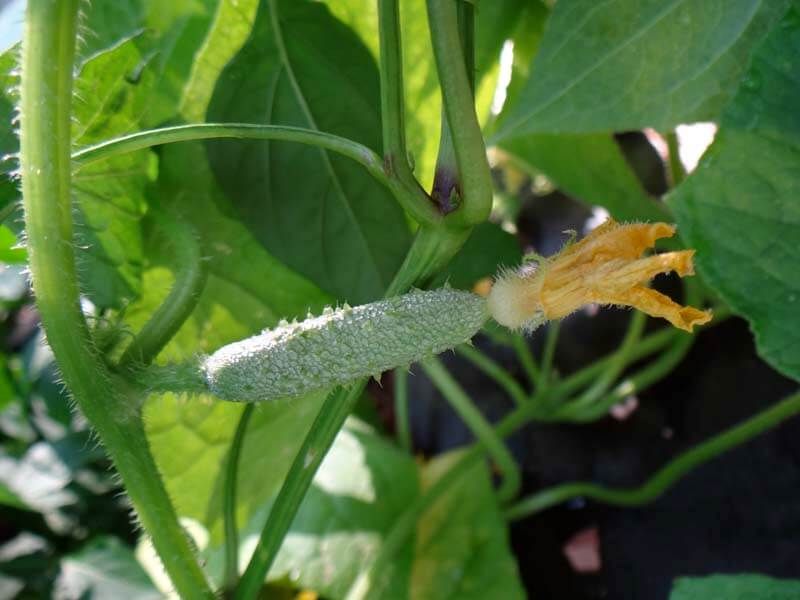
The most useful thing you can do right now is look at the next flower to open and check for that small swollen ovary behind the blossom. If a female flower is present and insect activity seems low during the heat, hand-pollinate it in the morning using a fresh male flower from the same vine or another standard cucumber plant nearby. Keep soil moisture steady and watch the base of the flower over the next day or two.
If the tiny cucumber begins to enlarge, inadequate pollination was likely a contributing factor, and continuing to hand-pollinate fresh female flowers each morning is a reasonable approach while conditions remain hot. University of Minnesota Extension and Colorado State University Extension both support this kind of targeted morning intervention for open female flowers when pollinator visits may be reduced.
If flowers continue to drop without enlarging, or if female flowers are not appearing at all, the problem is more likely heat stress, cultivar behavior, water or nutrient issues, or another condition that hand-pollination alone cannot correct. A vine that keeps producing and dropping female flowers in a heat wave is telling you something beyond pollination is off. That distinction is worth paying attention to.