
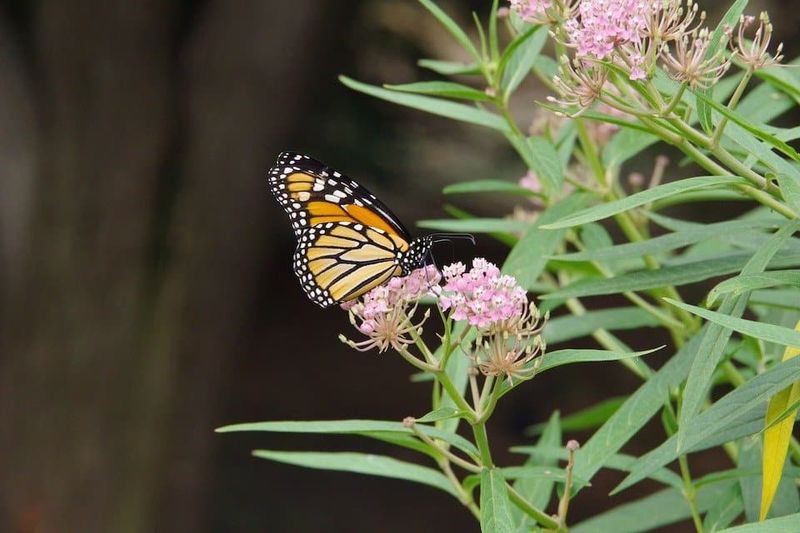
Many California gardeners plant tropical milkweed with the best intentions, wanting to help monarch butterflies survive and thrive. The problem is that in California’s mild winters, this popular plant can stay green year-round and create conditions that may work against the very monarchs you are trying to support. Narrowleaf milkweed, a true California native, offers a more locally appropriate choice for many inland and Central Valley yards. Swapping plants is a meaningful step, though no single species can fix all the challenges monarchs face today.
Why California gardeners should reconsider evergreen tropical milkweed
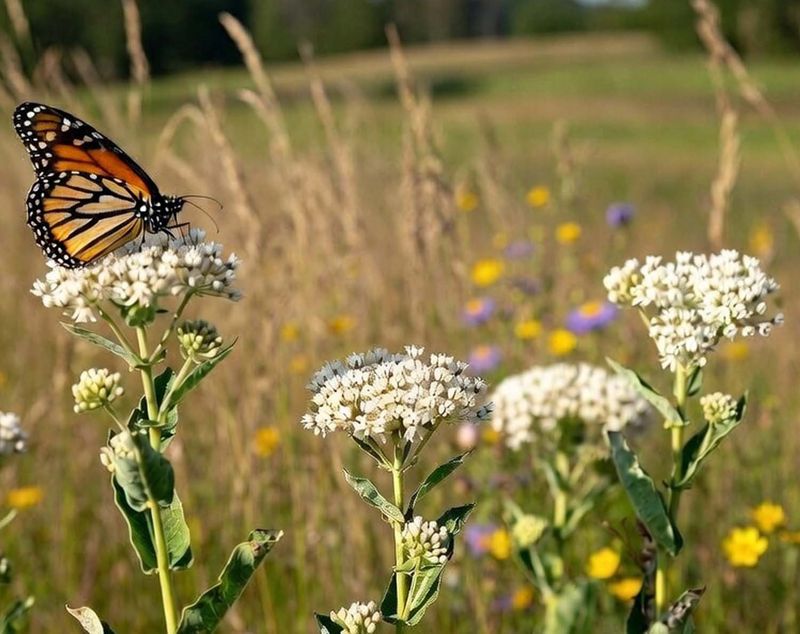
Tropical milkweed, sold under the botanical name Asclepias curassavica, lines the shelves of most California garden centers in spring and summer. Its vivid red-and-orange flowers are hard to miss, and it grows quickly, which makes it a natural grab for anyone who wants to attract monarch butterflies fast. For gardeners with good intentions and a patch of bare soil, it checks every visible box.
The catch is location and season. Tropical milkweed originates in Central America and is not adapted to California’s natural rhythms. In most of the state’s inland valleys and Central Valley communities, a hard winter frost will knock it back. But in many milder parts of California, the plant can stay green and flowering well into December or beyond, long after it would have died back in its native range.
That persistent winter growth matters because the California Department of Fish and Wildlife notes that milkweed supports monarch caterpillars as a larval host plant, but milkweed alone does not provide complete monarch habitat. Adult monarchs also need nectar sources throughout breeding, migration, and overwintering periods, and overwintering monarchs primarily need suitable roosting sites, not standing foliage.
Tropical milkweed is not a statewide gardening mistake, and replacing it will not single-handedly reverse the western monarch decline. Habitat loss, pesticide exposure, climate shifts, and degraded overwintering sites all contribute to the pressures monarchs face. Still, where mild winters keep tropical milkweed evergreen, the case for reconsidering it is real. A 2025 study of Northern California urban gardens found results not consistent with gardens functioning as a major ecological trap, showing that the California-specific picture remains genuinely mixed.
Narrowleaf milkweed is a conditional replacement that suits many, not all, California gardens.
What persistent winter growth can change for monarchs
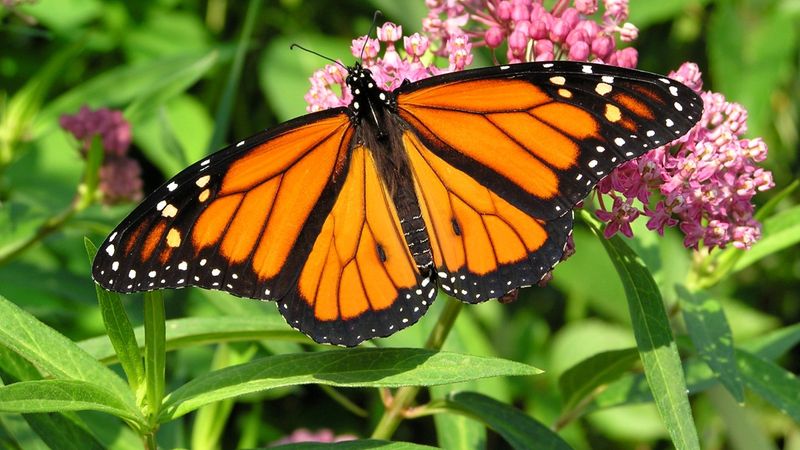
When tropical milkweed stays green through a California winter, it can support breeding activity that would not normally occur. Monarchs that should be preparing for or completing migration may instead respond to available foliage by beginning or continuing to reproduce. Research published through the NSF Public Access Repository found that exposure to non-native tropical milkweed is associated with promoting reproductive development in migratory monarch butterflies, a pattern that may interfere with the physiological state needed for long-distance movement.
Year-round foliage also creates a surface where Ophryocystis elektroscirrha, the parasite known as OE, can accumulate across generations. OE is a protozoan that spreads when monarchs pick up spores from contaminated plant surfaces or from other infected individuals. An infected butterfly deposits spores on leaves and stems as it moves around; the next monarch to visit that plant can pick those spores up. When tropical milkweed never dies back, those spores can build up on the same plant material season after season without the natural reset that dormancy provides.
Research on migratory species and their pathogens links resident, nonmigratory monarch populations with higher OE infection risk, and year-round milkweed availability is considered one factor that can encourage sedentary behavior. Heavily infected monarchs often show reduced body mass, weakened flight ability, and lower survival rates.
Two important qualifications apply here. OE is not exclusive to tropical milkweed: monarchs can acquire it through multiple transmission routes regardless of which milkweed species is present. Native milkweed’s seasonal dieback may interrupt environmental spore buildup, but it does not stop OE transmission entirely or guarantee parasite-free butterflies. Additionally, CDFW’s reporting on monarch decline identifies habitat loss, pesticide use, climate effects, and degraded overwintering sites as additional stressors, none of which are solved by changing one garden plant.
Why narrowleaf milkweed suits many inland California gardens
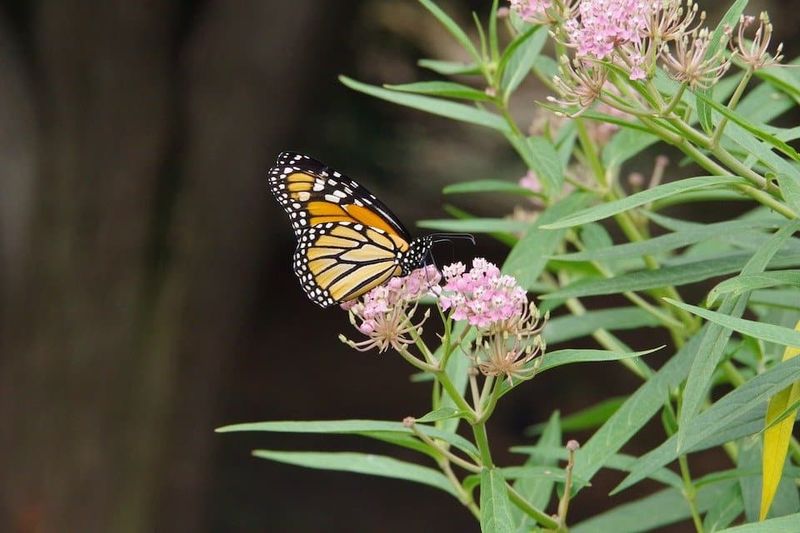
Asclepias fascicularis, commonly called narrowleaf milkweed, earns its reputation as the go-to native option for many inland and Central Valley California homeowners. UC Agriculture and Natural Resources describes it as a California native perennial that typically grows three to five feet tall, produces small pink-purple flower clusters in summer, and dies back to the root in winter. That winter dormancy is the quality that makes it particularly relevant to the tropical milkweed conversation.
When narrowleaf milkweed goes dormant, its above-ground foliage disappears. There are no standing stems for OE spores to accumulate on through the cold months, and no fresh leaves to encourage out-of-season breeding. The plant is not actively doing something to protect monarchs during winter; it is simply absent from the surface, which removes a specific evergreen-foliage risk that tropical milkweed can create in mild climates. Overwintering monarchs along the California coast are primarily using roosting trees and nectar sources during that period, not milkweed.
Beyond its seasonal behavior, narrowleaf milkweed brings practical strengths to a California garden. The UC Davis Arboretum lists it as a California All-Star, recognizing its drought tolerance once established, its adaptability across a range of soil types, and its value as a larval host plant for monarchs. It is also among the most commercially available California native milkweeds, which matters for gardeners who cannot easily source plants from specialty growers.
Narrowleaf milkweed is a broadly useful option for many inland gardens, not a universal prescription for every California yard. The Xerces Society’s guide to native milkweed in California makes clear that species selection should reflect local habitat and ecological region, not a single statewide default. Still, for the suburban gardener in Sacramento, Fresno, or the Inland Empire who wants a monarch-friendly, water-wise native, narrowleaf milkweed is a strong starting point.
Match the native milkweed to your county and growing conditions
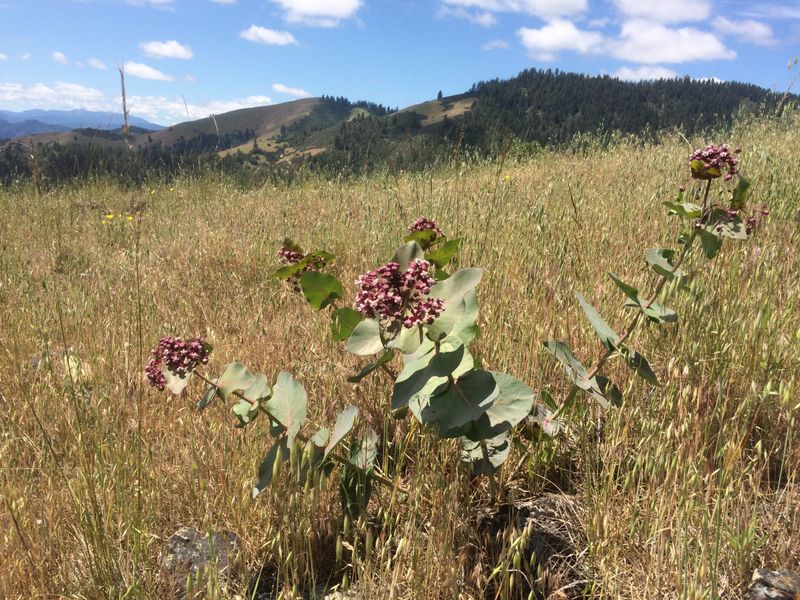
Narrowleaf milkweed is a reliable default for many California inland sites, but it is one of at least six native milkweed species with documented value for monarchs in the state. Choosing the right one means looking at your county, your soil, your water situation, and the ecological community around your garden, not just picking whatever is on the shelf at the native nursery.
Showy milkweed, Asclepias speciosa, is a broadly useful option across much of California’s interior, particularly where soil retains a bit more moisture. UC ANR’s guide to growing California native milkweeds notes that showy milkweed’s larger, ball-shaped flower clusters and broader leaves make it easy to identify, and it can establish well in garden beds that receive occasional deep irrigation. It is often available from native plant nurseries alongside narrowleaf milkweed.
California milkweed (Asclepias californica) and woollypod milkweed (Asclepias eriocarpa) tend to emerge relatively early in the season, which may help monarchs leaving coastal overwintering sites in spring. Woolly milkweed (Asclepias vestita) and heartleaf milkweed (Asclepias cordifolia) round out the native palette for specific habitat types, particularly drier foothills and chaparral edges. The tradeoff is that these species can be harder to find at mainstream nurseries and are not appropriate for every yard.
The practical path forward is to check which species are documented for your specific county or ecological region before buying. CDFW’s monarch butterfly resource page points toward regional planting guidance, and tools like Calscape and the Western Monarch Milkweed Mapper can show which milkweed species have been recorded near your address. The Xerces Society’s Western Monarch Call to Action also provides regionally specific planting recommendations and can help connect gardeners with locally sourced plant material, which tends to be better adapted to local soil and climate conditions than nursery stock grown elsewhere in the state.
Coastal California requires a separate milkweed decision
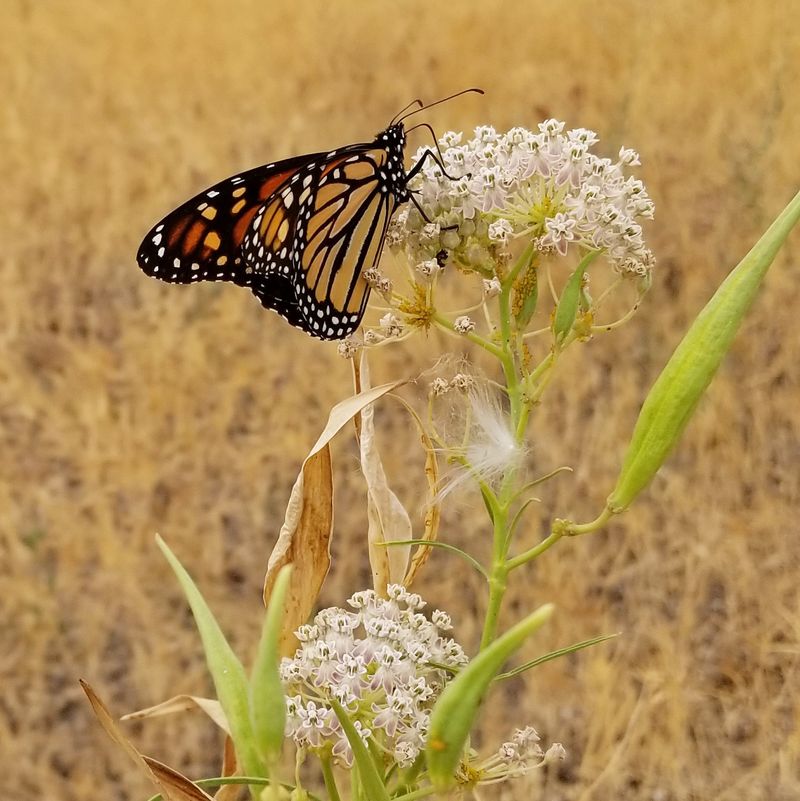
Gardeners within a few miles of the California coast face a different calculus than their inland counterparts. The same mild winters that make coastal living appealing to people also mean that even native milkweed species may stay green through December, January, and February near the ocean. That changes the risk equation considerably.
The Xerces Society advises against planting milkweed close to monarch overwintering areas because standing foliage near roosting sites can encourage winter breeding even when the milkweed is a California native. The specific buffer distances Xerces recommends vary by location: guidance for areas north of Santa Barbara differs from guidance south of that point, and some Xerces documents use a broader five-to-ten-mile range for central and northern coastal zones. Because these recommendations reflect local overwintering-site conditions that can shift over time, applying one single mileage rule statewide would be misleading. Coastal gardeners should check directly with Xerces, their local native plant society, or other site-specific sources for current guidance relevant to their community.
The western monarch population is also a distinct subpopulation from the eastern monarchs most people picture when they think of migration. Western monarchs breed across the western United States and overwinter along the California coast, primarily in Monterey, Santa Cruz, Morro Bay, and dozens of other sites. Their migration geography, population trends, and conservation needs are separate from those of eastern monarchs. Xerces Society’s native milkweed guidance for California addresses the western population specifically, which is why California-focused planting advice does not always translate to gardeners in Texas, Florida, or the Midwest.
For coastal gardeners who want to help monarchs, the most impactful actions often involve supporting roosting habitat, planting nectar sources that bloom through the overwintering season, and avoiding pesticide use near known overwintering trees.
Replace tropical milkweed safely and monitor any temporary cutback
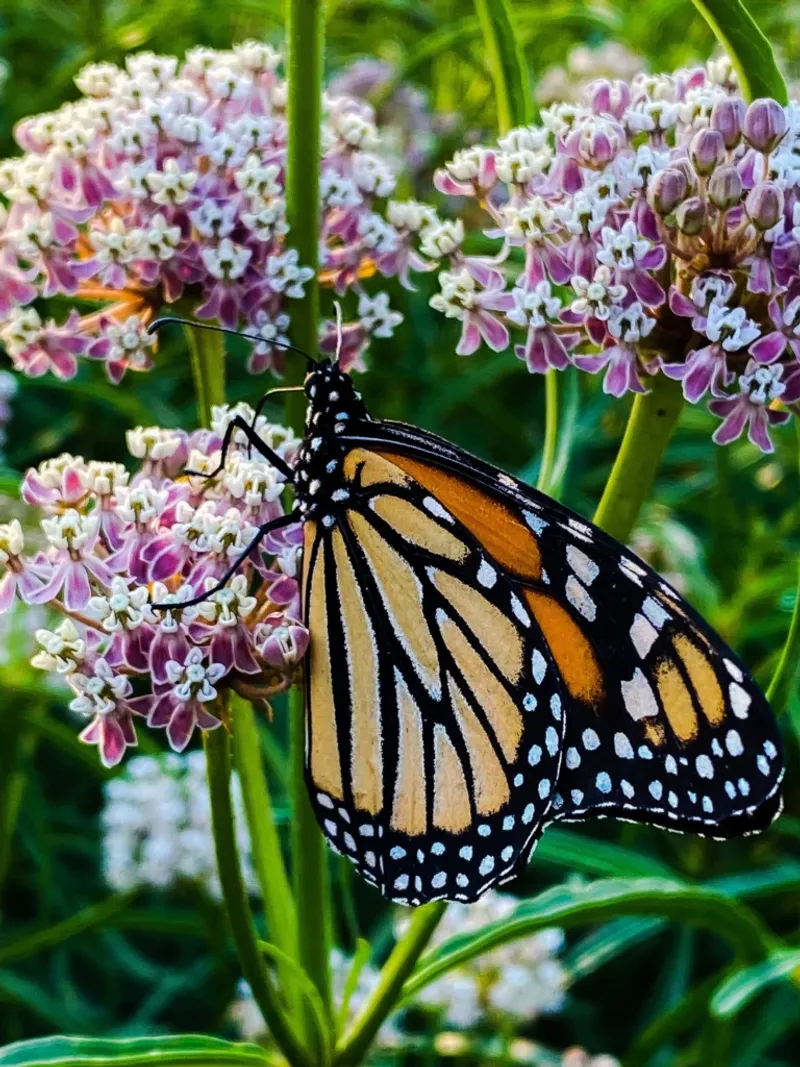
Replacing tropical milkweed with a locally appropriate native is the preferred long-term action, and for most inland and Central Valley gardens that replacement species will be narrowleaf milkweed. The transition does not need to happen overnight, but it should happen deliberately, with attention to what might already be living on the plant you are removing.
Before cutting any milkweed, look carefully at every stem and leaf. Monarch eggs are tiny, pale yellow, and usually laid on the underside of leaves. Caterpillars at early stages are small enough to miss at a glance. In California, monarchs may use milkweed from spring through fall, so a plant that looks past its prime in October could still be hosting active life stages.
Xerces Society’s milkweed FAQ recommends timing any management to late fall where possible and preserving part of a patch when vegetation work is necessary, rather than removing all plants at once.
If immediate replacement is not possible and tropical milkweed is already established in a mild-winter location, an early-fall cutback is a reasonable interim step. Monarch Joint Venture guidance recommends cutting stems back to about six inches during fall and winter, then recutting every few weeks as leaves return. That repeated monitoring is essential: tropical milkweed resprouts readily, and a single cut does not make it equivalent to a dormant native plant. The foliage will come back, and without follow-up management the OE-spore-buildup risk returns with it.
Replacement removes the need for that ongoing maintenance cycle. When you are ready to make the swap, pull or dig out the tropical milkweed root system in late fall or early winter after checking for caterpillars, then plant your native milkweed in the same spot. Native milkweed planted in fall or early spring has time to establish roots before summer heat arrives. Keep a small section of old tropical milkweed in place until the native plants are established if monarchs are actively using your garden, then remove the remainder.
Build complete habitat with nectar, water, and pesticide-free care
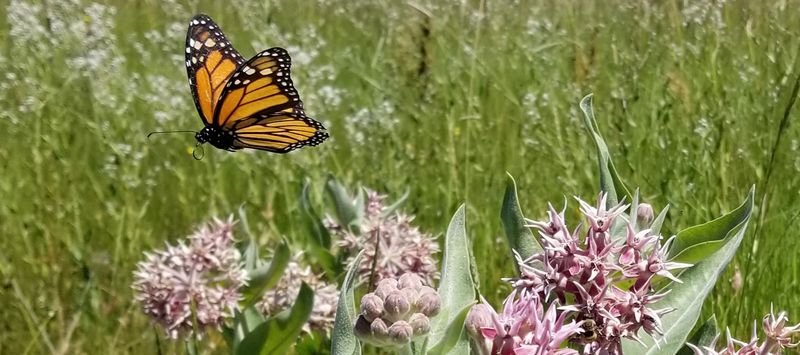
Milkweed handles one part of a monarch’s life: the larval stage. Caterpillars eat it exclusively, and without it they cannot develop. But adult monarchs need nectar throughout breeding season, during fall migration, and while overwintering along the coast. A yard with milkweed and nothing else is like a house with a kitchen but no other rooms.
New native milkweed plantings need consistent water to get established. UC ANR’s milkweed growing guidance notes that narrowleaf milkweed is drought-tolerant once established, but that establishment takes a full growing season or more. Water new plants regularly during their first summer, tapering off as roots develop. Assuming that a drought-tolerant plant needs no water right after planting is one of the most common reasons California native plantings fail in their first year.
For nectar, aim for a sequence of bloom that carries through spring, summer, and fall. The Xerces Society’s monarch nectar plant list for California includes native options such as native goldenrods, native sages, gum plants (Grindelia), and native asters that fit naturally into a water-wise California garden. CDFW emphasizes that nectar availability is especially critical during migration and overwintering, when monarchs need energy reserves to survive and complete long-distance movement.
Pesticide use is a serious concern throughout the garden, not just on milkweed. Systemic insecticides applied to nursery plants can remain in plant tissues long after purchase, and monarchs feeding on treated milkweed or nectar plants can be harmed by residues they cannot see or avoid. A study of Northern California milkweeds detected pesticide contamination across agricultural, urban, and open-space sites, including plants from retail nurseries. Ask your nursery whether plants were treated with systemic insecticides before you buy, and avoid routine spraying for aphids or other common milkweed visitors.
Aphid infestations on milkweed are usually temporary, and the insects that naturally control them, including parasitic wasps and lady beetles, need time and an undisturbed habitat to do their work.
Make the safer seasonal choice without promising a cure
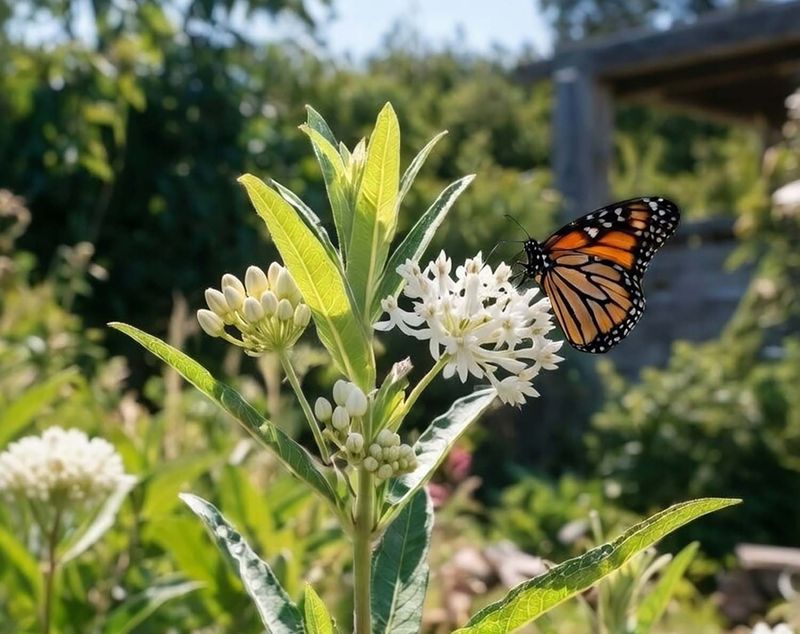
A practical decision for many California inland and Central Valley gardeners comes down to this: if tropical milkweed stays green through your winters, reconsider it. Its persistent foliage may promote winter breeding and allow OE spores to accumulate in ways that a seasonally dormant native plant would not. Narrowleaf milkweed is a well-supported replacement for many of those gardens, provided it is appropriate for your county, your soil, and your distance from coastal overwintering sites.
Before planting anything, confirm the species is documented for your area using Calscape or the Western Monarch Milkweed Mapper, buy from a nursery that can verify plants were not treated with systemic insecticides, and follow current local guidance if you live near the coast. Xerces Society’s milkweed FAQ and CDFW’s monarch butterfly page both offer regionally grounded starting points for California gardeners navigating these choices.
Seasonal native habitat may reduce a specific winter-breeding and OE-buildup risk, but it does not guarantee monarch health or reverse the broader western monarch decline. Habitat loss, pesticide exposure, and degraded overwintering sites remain serious threats that no garden plant can fix alone. What your yard can do is remove one documented stressor, add reliable nectar and larval habitat, and avoid making things harder for the monarchs that do pass through. Choosing the right native milkweed for your specific California location is less glamorous than a single sweeping answer, but it is the choice most likely to hold up over time.