
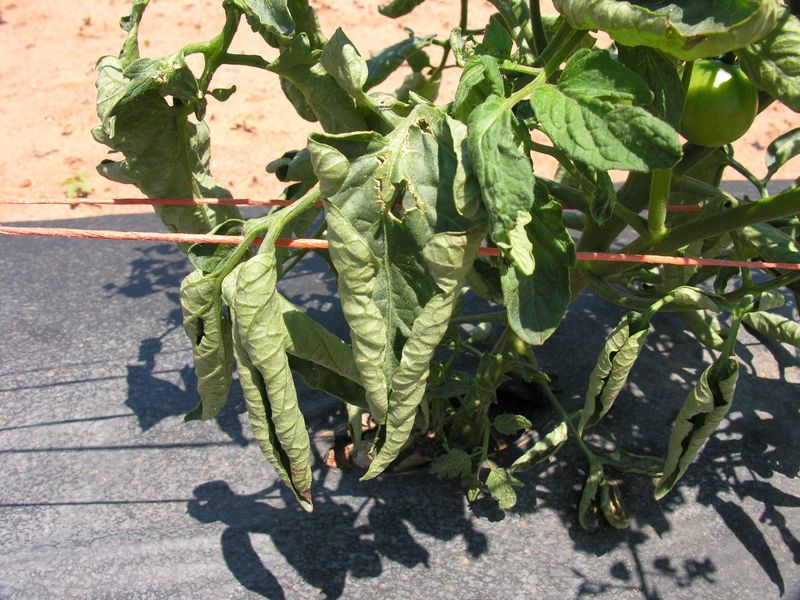
Rolled-up tomato leaves on an otherwise vigorous plant can send any gardener into a panic, but the symptom is often less alarming than it looks. A condition called physiological leaf roll can cause leaves to cup and curl tightly during hot weather, and the plant may keep right on growing. Understanding what you are likely seeing, and what to check before you change anything, can save you from making the situation worse.
The leaf pattern often points to physiological roll, not a dying tomato
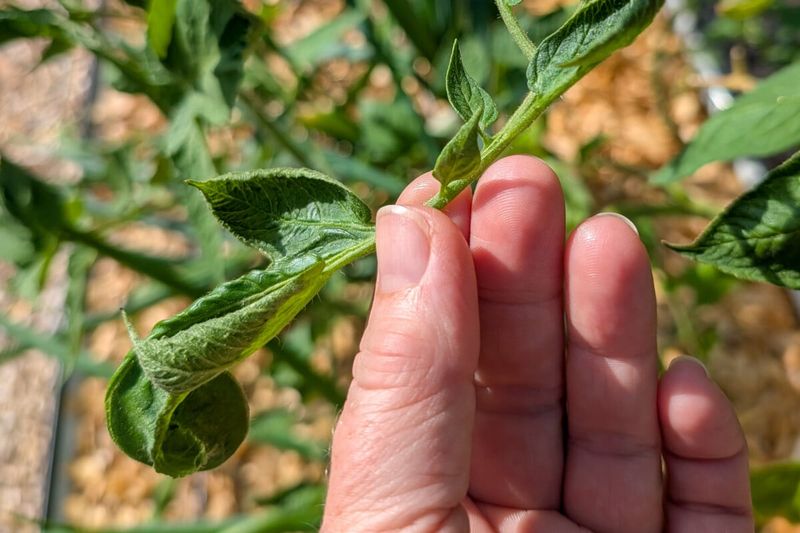
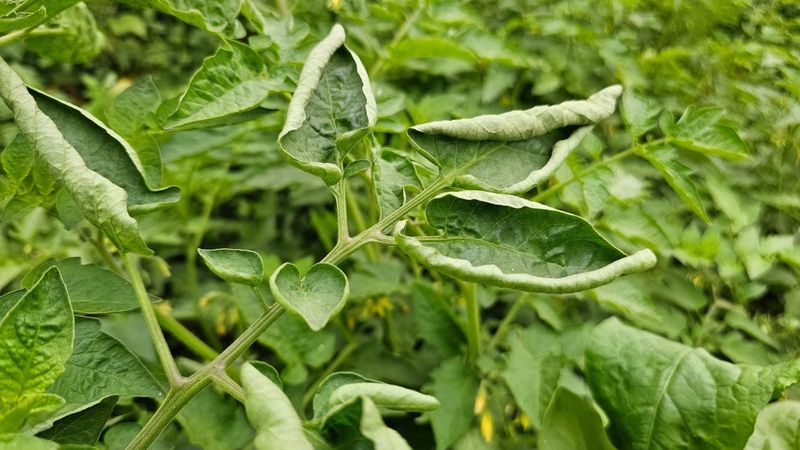
Seeing tightly curled tomato leaves for the first time is genuinely startling, but the visual pattern itself carries useful diagnostic information. University of Minnesota Extension’s guide on tomato disorders describes physiological leaf roll as a condition where leaves curl upward and inward from the margins, often progressing toward the midrib, while the plant as a whole continues growing normally. Older, lower leaves are commonly affected before upper ones, and the rolled leaves typically feel thick, firm, or leathery rather than limp or papery.
That combination – lower leaves rolling first, firm texture, no spots or mottling, continued growth at the top – makes physiological leaf roll a plausible explanation. Plausible, not confirmed. The rolled appearance is a useful clue, but it is not a diagnosis on its own, and several other problems can produce similar curling.
The reassuring part of this pattern is that physiological leaf roll generally does not reduce tomato growth, fruit set, or yield. A plant showing classic signs does not automatically need pruning, removal, fungicide spray, or insecticide. Reaching for a treatment before understanding the cause can create new problems without solving the original one, so the first job is observation, not intervention.
Heat and moisture stress can trigger the roll
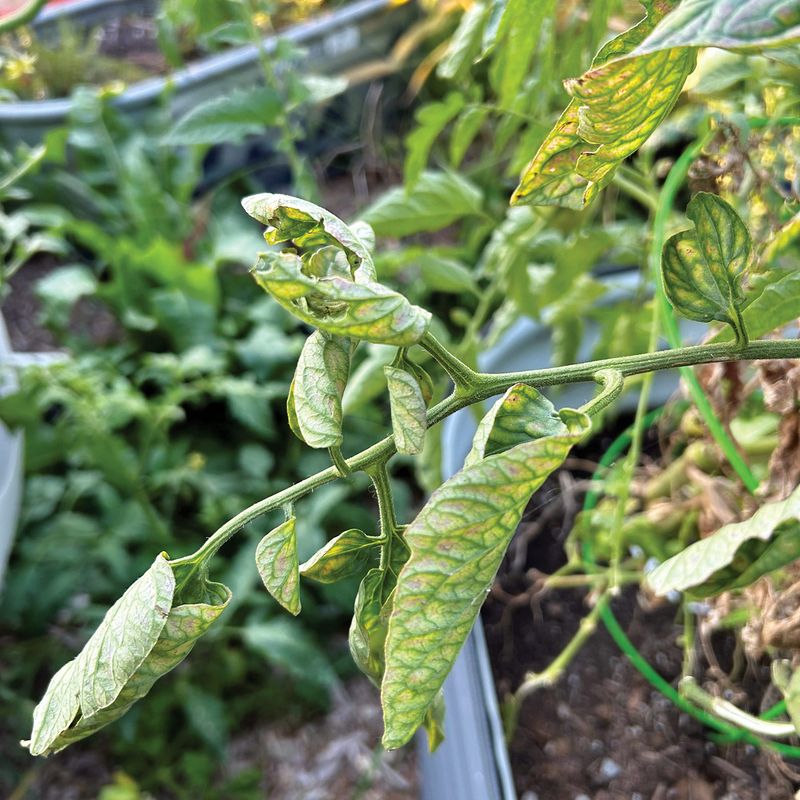
Tomatoes respond to intense heat by reducing the amount of leaf surface exposed to the sun. Leaves cup and roll inward, stomata close, and moisture loss slows. Oregon State University Extension’s heat-wave gardening guide notes that sustained temperatures above 90 degrees Fahrenheit commonly produce visible heat stress in many plants, with the specific response depending on wind, plant condition, soil moisture, and how long the heat persists.
Root-zone moisture matters here, but the relationship is not as simple as “thirsty plant equals rolled leaves.” Washington State University Extension’s publication on physiological leaf roll lists hot, dry conditions alongside wet soil, rapid growth, heavy pruning, root damage, excess nitrogen, and cultivar susceptibility as contributing factors. Any of those can produce the same physiological response, which is why “water more” is not a safe blanket answer.
The practical goal is steadier root-zone moisture, not simply a larger volume of water. A plant sitting in waterlogged soil after a well-meaning heavy soak is under a different kind of stress, but the leaves can still roll. Getting the moisture level right requires checking the soil first, not just reacting to the symptom you can see above ground.
Check the root zone before you reach for the hose
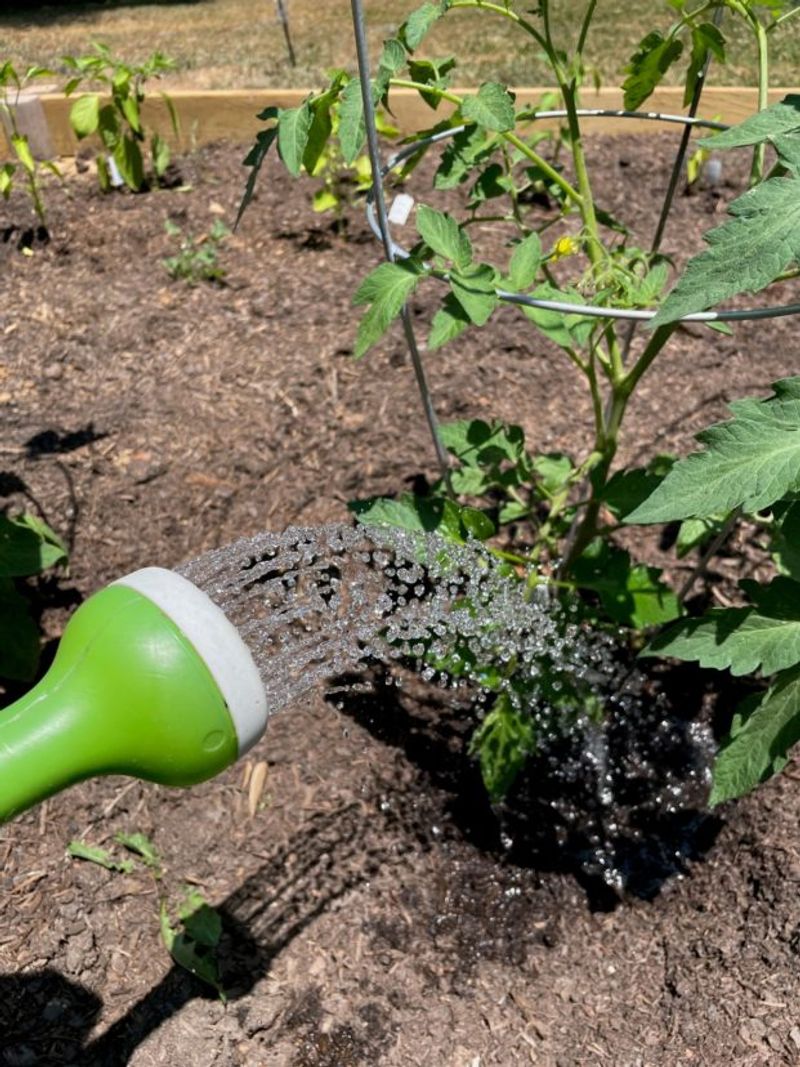
Before watering, push a trowel or soil probe into the ground beside the plant and check whether moisture is present at roughly 6 inches down. Tomato roots reach well below the surface, and the top inch of soil can look and feel dry while the deeper root zone still holds adequate moisture. University of Minnesota Extension’s vegetable irrigation guidance emphasizes adjusting irrigation based on actual soil conditions rather than a fixed calendar, because calendar-only watering frequently results in either drought stress or waterlogged soil depending on recent weather.
While you have the trowel out, check how well the bed drains. Soil that stays soggy for hours after watering, or that smells sour or swampy, may already have a drainage problem that adding more water will only worsen. University of Minnesota Extension’s tomato-growing guide offers approximately 1 inch of rainfall or irrigation per week as a rough starting point for established garden tomatoes, but notes that sandy soil, extreme heat, wind, raised beds, and containers all increase the need for more frequent attention.
That 1-inch figure is an estimate, not a rule. A raised bed in full sun during a heat wave may need water every two or three days, while a heavy clay bed in a cooler week might still be moist after five days. University of Minnesota Extension’s watering guide for vegetable gardens cautions that frequent shallow sips can leave deeper roots dry while encouraging shallow rooting, making plants more vulnerable to drought stress the next time temperatures spike.
Water deeply when the root zone begins to dry
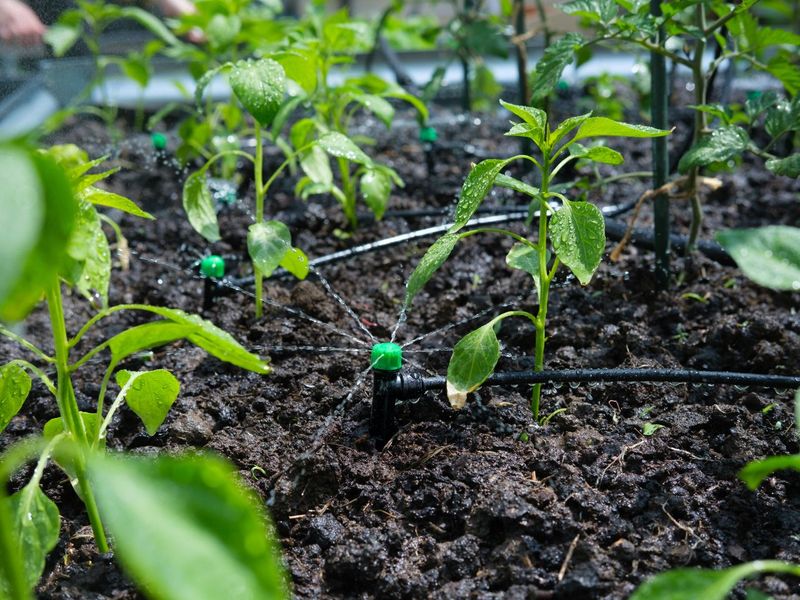
Once you have confirmed the root zone is beginning to dry out – moist soil at 6 inches yesterday, noticeably drier today – apply water slowly at the base of the plant until the entire root zone is thoroughly wetted. Then step back. Recheck the soil in a day or two and water again when it is beginning to dry but before the plant shows signs of drought stress like wilting that does not recover in the evening cool.
How long that interval turns out to be depends on your specific conditions. Sandy or gravelly soil drains fast and may need rechecking every day or two during a heat spike. Dense clay soil holds moisture longer. A large, established plant in a garden bed uses more water than a young transplant.
Weather, wind, and shade all shift the equation. University of Minnesota Extension notes that keeping soil constantly saturated deprives roots of oxygen and can promote poor growth or plant decline, so the goal is moist but not soggy.
Containers are a separate situation. Their limited root volume dries out much faster than in-ground soil, and during a heat wave a container tomato may need moisture checks once or even twice a day. University of New Hampshire Extension’s container tomato guidance stresses that drainage holes and a well-aerated potting mix are still essential even when frequent watering is needed – a container that holds standing water causes root problems regardless of how hot the weather gets.
Where practical, Oregon State University Extension recommends drip irrigation or soaker hoses to apply water slowly at the base, reduce evaporation, and keep foliage dry. Wet foliage is not a burn risk in most circumstances, but it does increase the chance of foliar disease and allows soilborne pathogens to splash onto leaves during overhead watering.
Mulch and restraint help tomatoes withstand a heat spike
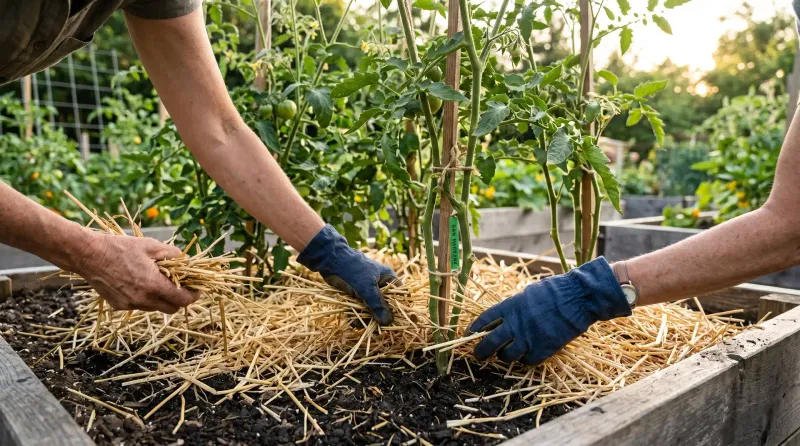
A 2-to-3-inch layer of organic mulch around the base of tomato plants can reduce how quickly soil moisture evaporates and moderate the wide temperature swings in the root zone that often accompany summer heat waves. Oregon State University Extension’s heat-stress guide recommends mulching as one of the most practical steps a gardener can take during extreme heat. Keep mulch pulled back an inch or two from the main stem to avoid trapping moisture against the bark, and make sure the bed still drains freely beneath it.
Restraint matters as much as mulch during a heat spike. University of Minnesota Extension advises avoiding heavy pruning and fertilizing until temperatures moderate, because both practices push the plant to redirect resources at exactly the moment it is already working hard to manage heat. Removing large amounts of foliage also reduces the shade the plant provides its own root zone.
Pesticide applications deserve the same caution. Some products can injure tomato foliage when applied in hot conditions, and spraying for a problem you have not yet confirmed is rarely a good trade-off. If a disease or insect treatment is genuinely needed, check the product label for temperature restrictions and apply during the cooler part of the day.
Look for clues that point beyond physiological leaf roll
Firm, uniformly rolled older leaves on a plant that is still putting out new growth are one picture. A different set of symptoms tells a different story, and knowing the contrast matters. University of Minnesota Extension’s tomato virus resource describes virus warning signs as yellow-green mottling on the leaves, new growth that looks narrow or shoestring-like, stunted overall size, reduced fruit number or size, or fruit with unusual rings or discoloration. A virus cannot be reliably identified by appearance alone and may need laboratory confirmation, so those symptoms are a signal to investigate further rather than a diagnosis.
Herbicide injury can look similar to viral distortion and is easy to overlook as a cause. University of Minnesota Extension’s tomato leaf-curl diagnostic tool lists clues including twisted or cupped new leaves, thickened veins, bleached or browned tissue, brittle or split stems, irregular fruit shape, or a pattern of injury concentrated on the side of the plant facing a neighboring lawn. Herbicide exposure can also arrive through contaminated mulch, lawn clippings, compost, or a sprayer that was used for weed killer before being rinsed and repurposed for fertilizer.
Aphids are worth checking before assuming heat or watering is responsible. University of Minnesota Extension notes that heavy aphid feeding can cause curling, yellowing, wilting, and stunting. Flip a few leaves over and inspect the undersides and growing tips for clusters of small soft-bodied insects. Pruning, root injury, excess nitrogen, wet soil, and cultivar genetics round out the list of possibilities that look similar to classic physiological roll.
Treat these symptoms as clues pointing toward a more specific diagnosis rather than triggers for reflexive spraying.
Measure recovery by new growth, not by flat old leaves
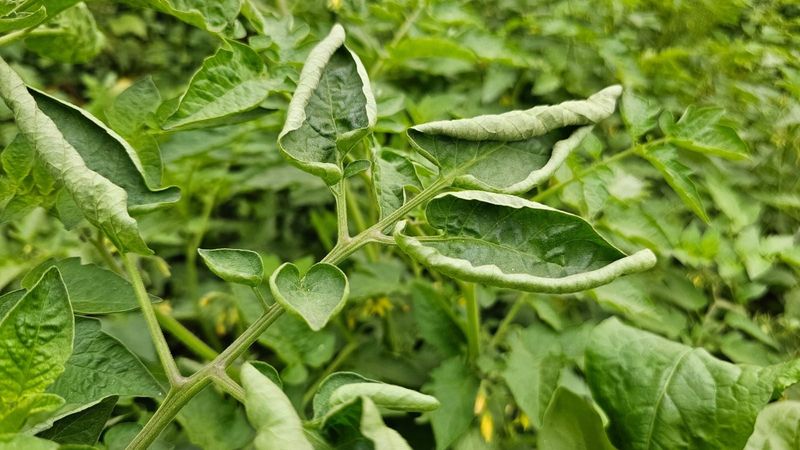
Rolled leaves that developed during a heat spike may stay curled for the rest of the season even after conditions improve. University of Minnesota Extension confirms that existing rolled leaves do not necessarily straighten after the stress is reduced, and that does not mean the plant is still declining. The more useful thing to watch is what comes next: normal-looking new leaves emerging at the top, continued flowering and fruit set, and no spreading mottling, distortion, or stunting.
A straightforward decision loop covers most situations. Check the soil moisture at root depth before watering. Apply water deeply and slowly at the base when the root zone is beginning to dry, then wait and recheck rather than watering on a fixed daily schedule. Avoid saturating the soil.
Keep mulch in place and hold off on heavy pruning or fertilizing while heat persists.
University of Minnesota Extension’s growing guide notes that steady soil moisture supports fruit quality and helps prevent disorders like blossom-end rot and cracking, so consistent attention to the root zone pays off beyond just managing leaf roll. If the plant begins to decline, produces distorted growth, develops mottling, or stops setting fruit, those are signals to look past physiological leaf roll and seek a more specific diagnosis. A tomato that keeps pushing out healthy new leaves and setting fruit is doing its job, even if the older foliage never uncurls.