
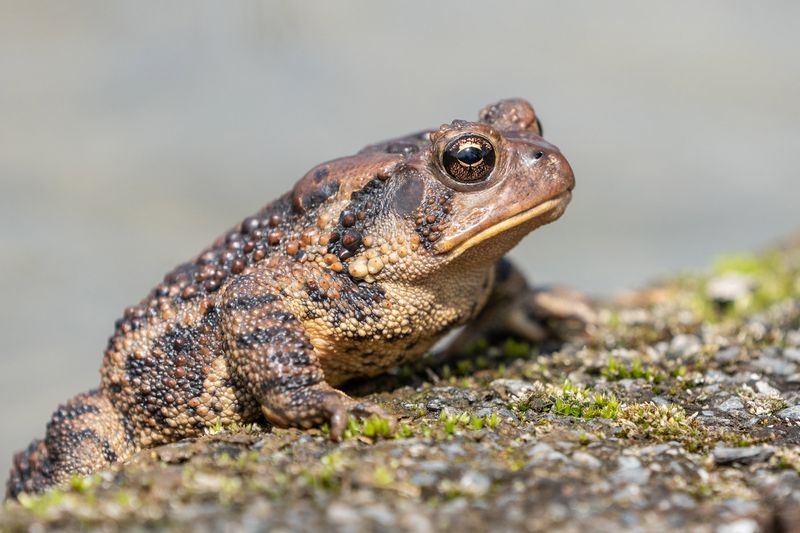
Finding a toad settled under your garden bed or tucked beside a flowerpot is one of those small backyard surprises that deserves a second look before you shoo it away. Native toads across North Carolina are quiet, nocturnal hunters that spend their nights picking off insects and other small invertebrates while you sleep. Understanding why one showed up, what it actually eats, and how to keep it safe can help you get the most out of a free ecological ally that asked for nothing but a little shade and a patch of moist ground.
A toad’s arrival can be welcome—but it does not explain itself
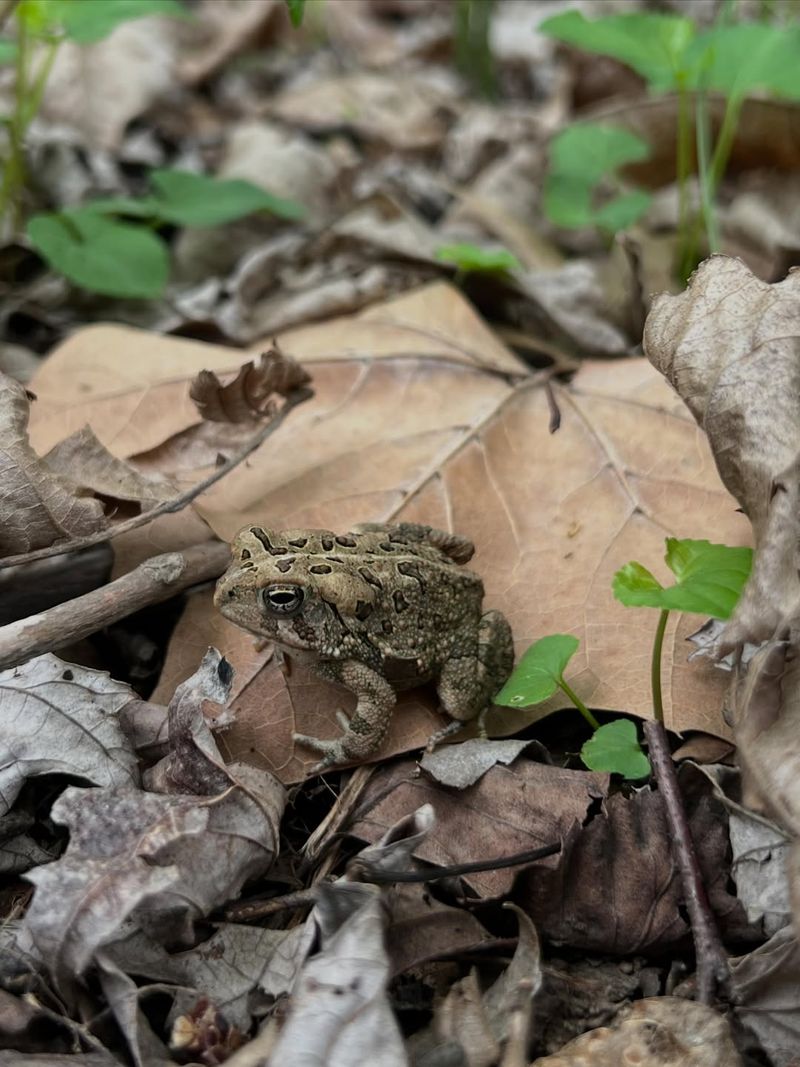
Spotting a toad settling into a corner of your garden is generally a good sign, not a reason to grab a shovel. North Carolina is home to several native true toads, including the American, Fowler’s, southern, and oak toad. NC Wildlife describes Fowler’s toad as a primarily nocturnal species with a ravenous appetite for insects and small terrestrial invertebrates, and it occurs across the Piedmont, Coastal Plain, and Mountains, making it the toad many NC homeowners are most likely to encounter.
What brought one into your yard is harder to pin down. A toad may have arrived because your property offered shelter, moisture, prey, or breeding conditions, or it may simply be passing through on its way somewhere else. Arrival alone does not tell you which of those reasons applies, and assuming your yard already has perfect toad habitat because one appeared would be getting ahead of the evidence.
What you can say with confidence is that adult toads are primarily nocturnal predators of terrestrial invertebrates. NC State Extension identifies amphibians as predators that help keep prey populations in check, which is a practical way to frame what a garden toad does every night it spends hunting in your beds. Think of it as a native ecological ally that may consume unwanted invertebrates, not a guaranteed household pest-control service. That distinction matters because it shapes realistic expectations about what the animal can and cannot do for your yard across the season.
What one toad may eat after dark
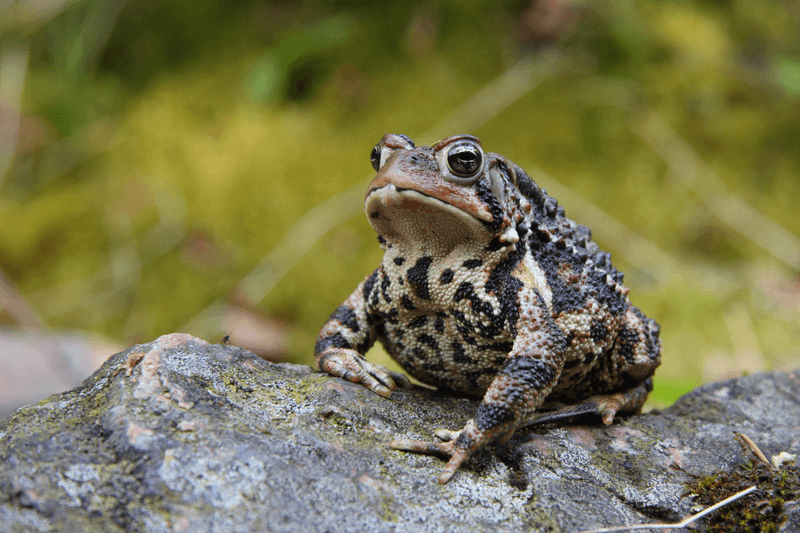
After the sun goes down, a toad begins working through whatever small invertebrates cross its path. The diet is opportunistic, meaning the animal eats what it finds rather than targeting specific pests. Extension materials have long repeated an estimate of roughly 10,000 insects during a summer or growing season, and that figure appears in toad-breeding guidance as a popular upper-range claim. Body size, temperature, season, activity level, habitat, and prey availability all affect how much any individual toad actually consumes, so the 10,000 number is better treated as a rough ceiling than a guaranteed output.
Field data complicate the picture further. A 2026 study of American toads in vegetable agroecosystems found a median of only 2.5 identifiable prey equivalents per stomach sample, with substantial variation across individuals. More than 80 percent of sampled prey were rove beetles, ants, ground beetles, and spiders. That result confirms meaningful predation but does not support assigning thousands of garden pests to every toad in the yard.
The prey mix matters for another reason: “garden pest” is not a biological category. Ground beetles and rove beetles, which together made up a large share of the sampled diet, are themselves predatory insects that feed on soil-dwelling pests and eggs. Spiders similarly contribute to natural pest suppression. A toad hunting at night is not sorting beneficial insects from harmful ones; it is eating what moves and fits in its mouth.
That generalist approach means a toad may eat slugs, mosquitoes, and caterpillars on one night and consume a ground beetle or spider the next. The net effect is still likely to favor the homeowner, but toads are not selective enough to be treated as precision pest eliminators.
A toad cannot replace mosquito control
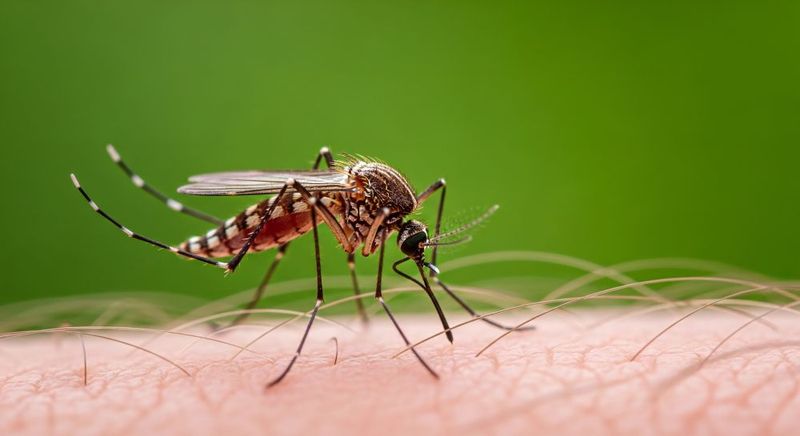
Plenty of homeowners hear that a toad eats insects at night and immediately wonder whether the one living under the rosemary bush is handling the mosquitoes. Adult toads may eat some mosquitoes as part of a generalist diet, and that is worth acknowledging. What the available evidence does not support is the idea that one backyard toad will substantially lower the number of adult mosquitoes biting you on the patio, or that its presence reduces the risk of mosquito-borne disease.
Part of the confusion comes from mixing up two different research areas. Some studies have examined whether aquatic amphibian larvae or tadpoles can consume mosquito larvae under experimental pond conditions. A recent review of amphibian mosquito suppression research found that evidence for meaningful larval control under real-world conditions is limited and inconsistent. A terrestrial adult toad hunting through your mulch is an entirely different situation from a tadpole in a controlled water column, and the two should not be treated as equivalent.
For actual mosquito reduction around the home, CDC guidance on mosquito control at home focuses on eliminating standing water in containers, gutters, and low spots where mosquitoes breed. North Carolina DHHS mosquito-prevention guidance reinforces source reduction and adds maintaining intact window and door screens, using EPA-registered repellents when outdoors, and following label directions for any larvicide or insecticide product. A toad is a welcome nighttime hunter, but those proven household measures are not optional just because one is living in the flower bed.
Create shelter and let the toad choose the yard
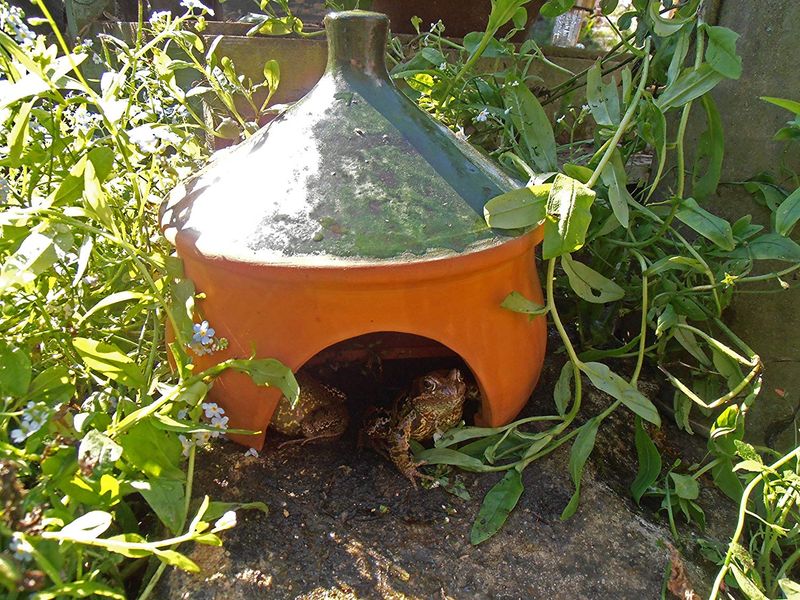
Once you have decided to welcome a naturally arriving toad, the most useful thing you can do is give it a reason to stay. Adult toads spend their days hidden in cool, moist spots and come out to hunt after dark, so shelter from heat and direct sun is more immediately useful than anything elaborate. NC State Extension recommends a shady structure made from untreated plywood, flat rocks, logs, or similar natural materials placed in a shaded part of the yard. A partially buried, overturned clay pot with a notch or opening cut into the rim is a simple and effective alternative that many homeowners already have on hand.
Adult toads do not need a pond to use your yard day to day. Moist, shaded terrestrial cover is the core requirement for a resting animal; breeding needs are separate and do not have to be met on your property for the toad to hunt there regularly. Extension guidance on toad breeding confirms that providing terrestrial habitat is distinct from providing breeding water, so a shelter and a shallow water dish can be enough to support a visiting adult without committing to a full water feature.
One firm boundary: do not buy, collect, or move toads from another location into your yard. NC State advises allowing amphibians to arrive naturally, and for good reason. Handling or relocating a wild toad can injure the animal, expose it to chemicals on your hands or in its new environment, and disrupt the habitat and population it came from. If your yard has shelter, moisture, and prey, a toad will likely find it on its own schedule.
Offer water only if you can clean it
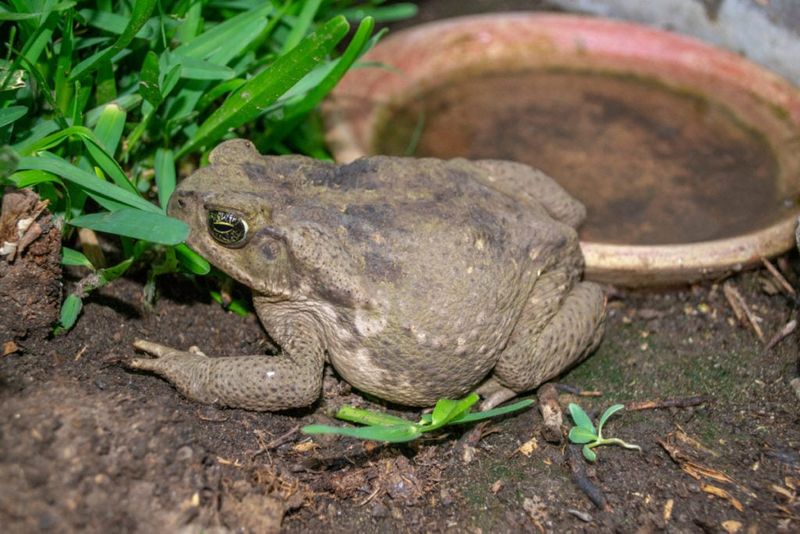
Amphibians absorb moisture through their skin rather than drinking in the conventional sense, so a shallow water source placed near a toad shelter can genuinely help. The container needs to be easy for a toad to enter and exit on its own, meaning the sides should be low or have a ramp of rocks or bark so the animal does not become trapped. Extension guidance on toad-friendly yards recommends keeping any water source clean and refreshed regularly, and NC State Extension emphasizes that water quality matters because chemicals absorbed through amphibian skin can be harmful.
The maintenance schedule is non-negotiable. CDC recommends emptying and scrubbing water-holding containers at least once a week to prevent mosquito breeding. North Carolina DHHS guidance specifically recommends changing birdbath and pet-bowl water at least twice weekly. A shallow toad dish falls into the same category of container that can become a mosquito nursery if left unattended.
Simply topping off the water is not enough. Mosquito eggs can be attached to the sides and bottom of the container, and adding fresh water on top of stagnant water does not remove them. Emptying the dish completely, scrubbing the interior surface, and refilling with fresh water is the only reliable way to prevent the feature from working against the very mosquito-control goal you are trying to support. NC State’s guidance on pools for amphibians reinforces that any wildlife water feature requires active upkeep, not just an initial setup.
If weekly scrubbing is not realistic for your schedule, skip the dish and focus on shelter and a shaded, moist garden bed instead.
Reduce chemicals, handling, and yard hazards
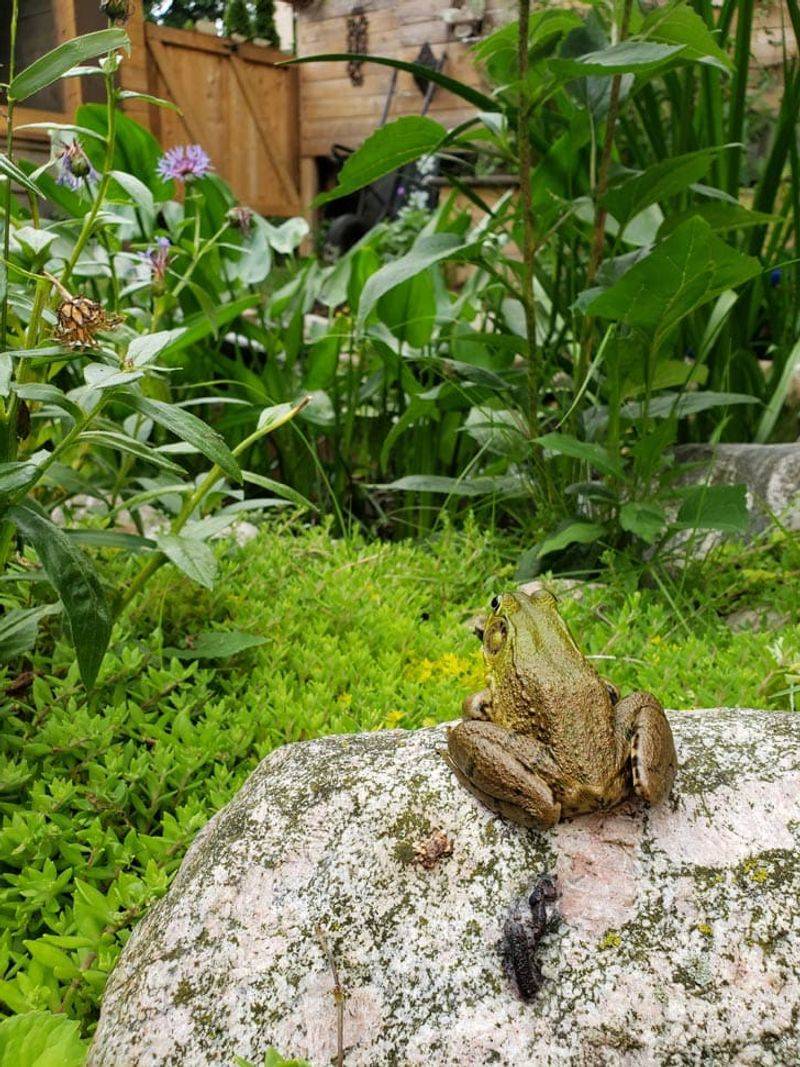
A toad’s skin is permeable, which is the same feature that lets it absorb moisture from damp soil. That permeability also means the animal absorbs whatever chemical residues happen to be in its environment, including pesticides in the soil, herbicides on plant surfaces, and runoff from treated areas nearby. EPA research on pesticide uptake in amphibians confirms that exposure can occur through skin contact, food, water, and environmental runoff, making the area around a toad shelter and water dish the most important place to minimize unnecessary chemical use.
Avoiding unnecessary insecticide and herbicide applications near toad habitat is the clearest protective step a homeowner can take. NC State’s amphibian pool guidance specifically warns against spraying chemicals around wildlife water features. The label on any pesticide product is a legal document, and EPA registration requirements mean that products are evaluated under specified use conditions, not for every possible off-label scenario. A product marketed for garden use is not automatically safe for amphibians living in that garden, so follow every label direction and avoid treating areas where a toad shelters, forages, or accesses water.
Handling deserves the same caution. Sunscreen, insect repellent, soap, and lotion residues on human hands can be absorbed through a toad’s skin and cause harm. NC State advises observing amphibians rather than picking them up, and notes that if handling is truly unavoidable, it should be done with great care and thoroughly clean, uncontaminated hands. Lawn equipment poses a separate risk: mowing over leaf litter, turning compost, or running a string trimmer near a shelter can injure or kill a resting toad.
Checking shaded corners and debris piles before running equipment is a small habit that costs nothing.
Keep pets from biting or licking a toad
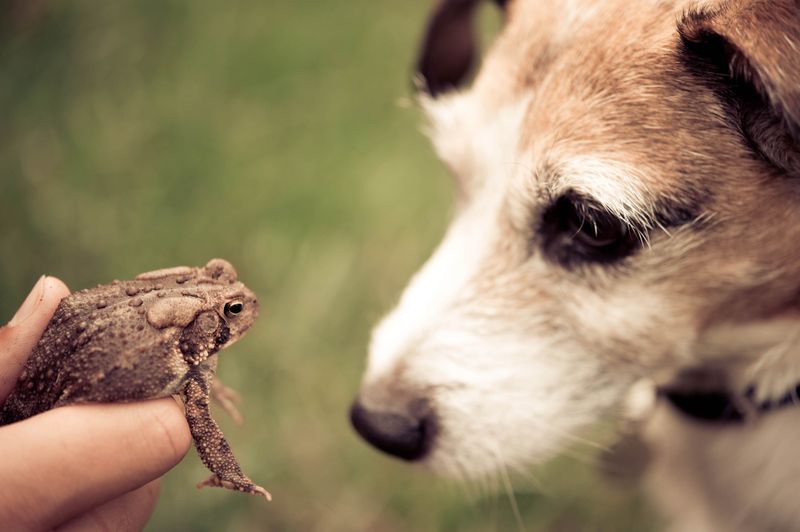
Dogs and cats that spend time in the yard may encounter a toad and investigate it the way they investigate most things, with their mouths. Toad skin secretions can cause drooling, pawing at the mouth, vomiting, and irritation of the gums and tongue in pets that bite or lick one. In more serious exposures, Pet Poison Helpline notes that toad toxins can cause neurologic or cardiac signs in dogs and cats, and recommends immediate veterinary or poison-control consultation after a pet bites, licks, or eats a toad.
The most dangerous toad species to pets are the cane toad and the Sonoran Desert toad, both of which produce highly potent secretions. Neither of those species is the normal backyard toad you are likely to encounter in a North Carolina garden. Fowler’s, American, southern, and oak toads, the native species common across the state, are not identical in toxicity to those two. That said, “less toxic than a cane toad” does not mean harmless, and a pet that mouths any toad should be rinsed out and watched carefully.
Supervision is the practical answer. Keeping curious pets away from garden areas where a toad is active, especially at dusk and after dark when toads are most likely to be moving, reduces the chance of an unpleasant encounter for both animals. Children should be encouraged to observe rather than handle toads, both to protect the toad from skin-contact chemicals and to keep small hands away from secretions. If a pet does contact a toad, rinse the mouth with water and contact a veterinarian or follow current amphibian safety guidance for next steps.
Leave the toad in place and keep expectations realistic
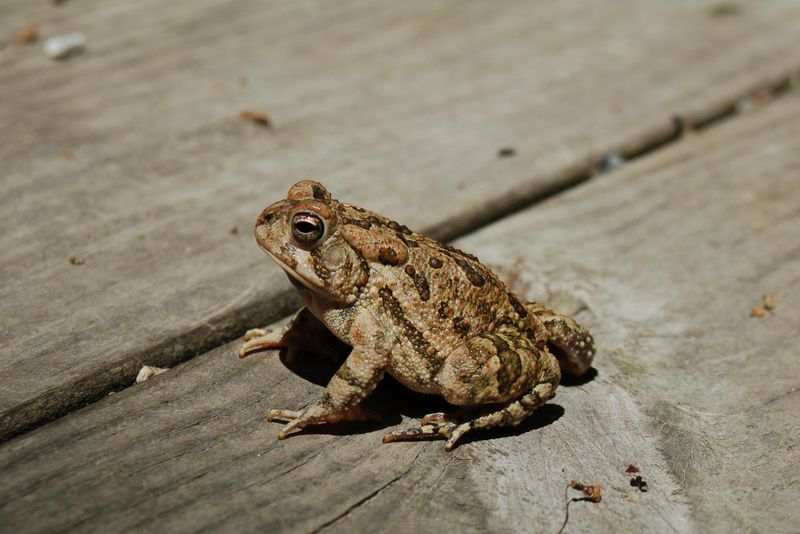
The clearest course of action when a native toad arrives in your yard is to leave it alone and make the space a little more hospitable. Provide shade and a clean, shallow water source you can actually maintain, pull back on unnecessary chemical applications near its shelter, and manage mosquitoes with the source-reduction and repellent practices that public health authorities actually recommend. Those steps support the animal without asking it to do a job it cannot guarantee.
NC Wildlife’s profile of Fowler’s toad frames the species as a beneficial insectivore, and the 2026 field study confirms that real predation occurs even if the volume varies. A single toad cannot be assigned a fixed seasonal body count or relied upon as a complete pest-control crew. What it can do is contribute to natural invertebrate predation night after night across a growing season, which is a meaningful ecological role even without a guaranteed number attached to it.
Protection from mosquitoes and mosquito-borne disease still requires the standard household measures: eliminating standing water, maintaining screens, and using CDC-recommended mosquito-control practices and EPA-registered repellents independently of whatever wildlife is living in the garden. Supporting a native toad and following NC DHHS prevention guidance are not competing choices. A yard that shelters a hunting toad and keeps its standing water managed is simply doing both jobs at once, which is the kind of low-effort stewardship that tends to pay off quietly, one dark night at a time.