
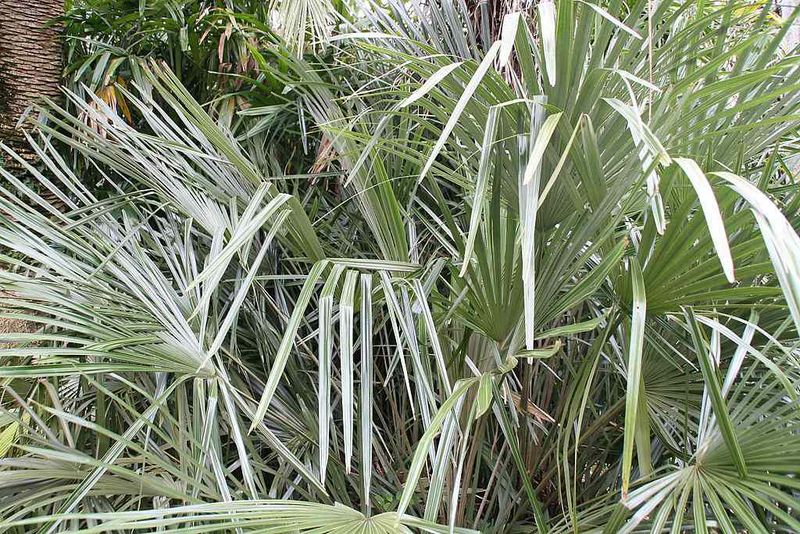
Florida gardeners who plant an areca palm for a tidy border or foundation bed sometimes find themselves with a palm that outpaces the space they had in mind. Areca can grow into a tall, feathery clump that suits a large yard but can feel out of scale in a narrow bed or beneath a window. Needle palm, a Florida native, offers a slower-growing, more compact alternative worth knowing before you pick up a shovel.
Areca’s mature size can challenge a compact planting
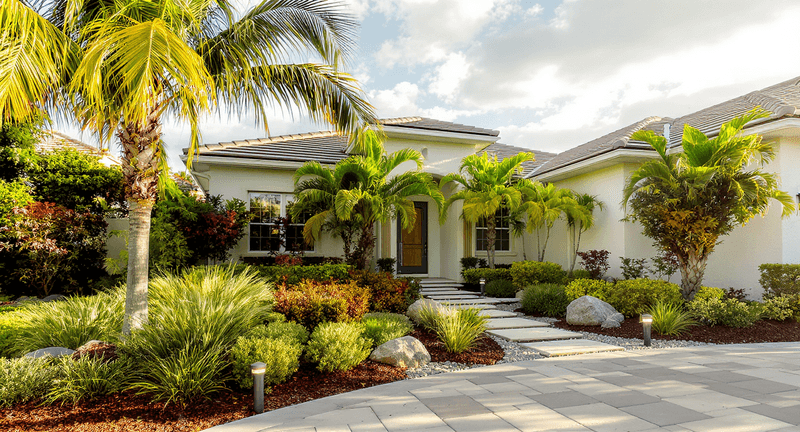
Areca palm, known botanically as Dypsis lutescens, is one of the most recognized palms in Florida landscaping. According to UF/IFAS documentation on Dypsis lutescens, areca is a clumping palm that can reach roughly 20 to 30 feet tall with an 8 to 10-foot spread, and UF/IFAS describes it as overused in Florida landscapes. That potential size works well in a spacious yard or a wide commercial planting, but it can feel out of proportion in a narrow foundation bed, beneath a window, or in a compact border where height is limited.
The practical issue is one of form and scale. A young areca in a three-gallon pot looks manageable, but the plant grows into a multi-stemmed, feathery canopy that rises well above a single-story roofline given enough time and good conditions. Pruning can manage the plant to a degree, and some homeowners maintain areca successfully with regular trimming. The question is whether the size and maintenance commitment match what the site actually needs.
For gardeners who want a slower-growing, smaller mature form from the start, a different palm may be a better site design choice. Needle palm is not a universal substitute for areca, and it will not replicate the tall, tropical privacy wall that areca provides. The two plants serve different landscape roles. But for a compact foundation planting, a low-to-medium border, or an understory accent where height control matters, areca’s documented size range makes needle palm worth a closer look.
Needle palm offers a slower, more compact native form
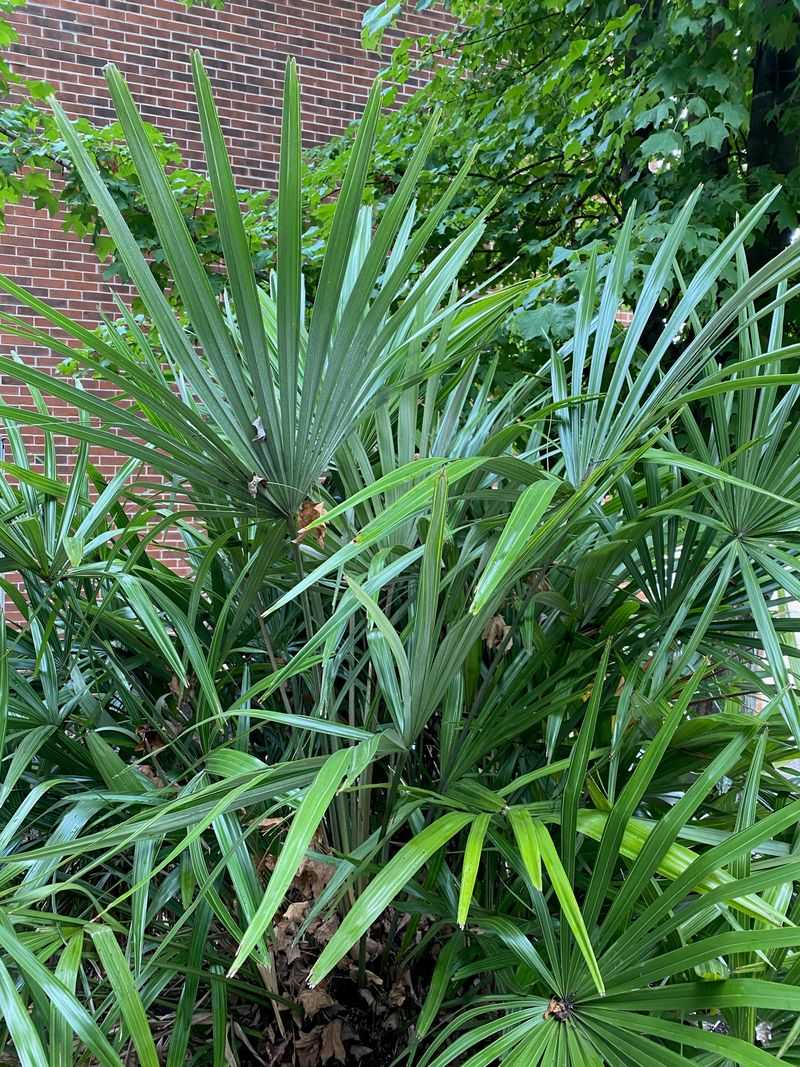
Needle palm, Rhapidophyllum hystrix, is native to Florida and the broader southeastern United States. UF/IFAS Gardening Solutions describes it as a slow-growing, shrubby, clumping palm that usually remains trunkless or short-trunked rather than rising into a tall single stem. That growth habit is the core reason it fits compact spaces that a mature areca would eventually overwhelm.
The plant’s fan-shaped, dark green fronds give it a bold, architectural look that reads more as a dense shrubby accent than as a tropical canopy. That appearance differs significantly from areca’s soft, feathery, yellow-green plumes, so choosing needle palm changes the visual character of the planting as well as the ultimate size. Gardeners who want areca’s tropical, flowing aesthetic should know up front that needle palm is a different look entirely.
UF/IFAS lists needle palm as suitable for use as an accent, understory plant, foundation planting, or security hedge. UF/IFAS ornamental palm guidance for Central Florida confirms the plant’s compact, clumping habit and its value in smaller-scale landscape roles. Those applications fit well in spaces where height must stay controlled and where a native, lower-maintenance clump is more practical than a tall privacy screen.
Being native to Florida also means needle palm is adapted to the state’s climate, pest pressures, and seasonal extremes without requiring the same level of intervention that some non-native palms need. It can be grown throughout Florida, from the Panhandle south, making it a broadly applicable choice rather than a specialty plant for one region. For gardeners who prefer plants with regional roots, that native status carries real weight.
Plan for a six-to-eight-foot clump, not a stationary plant
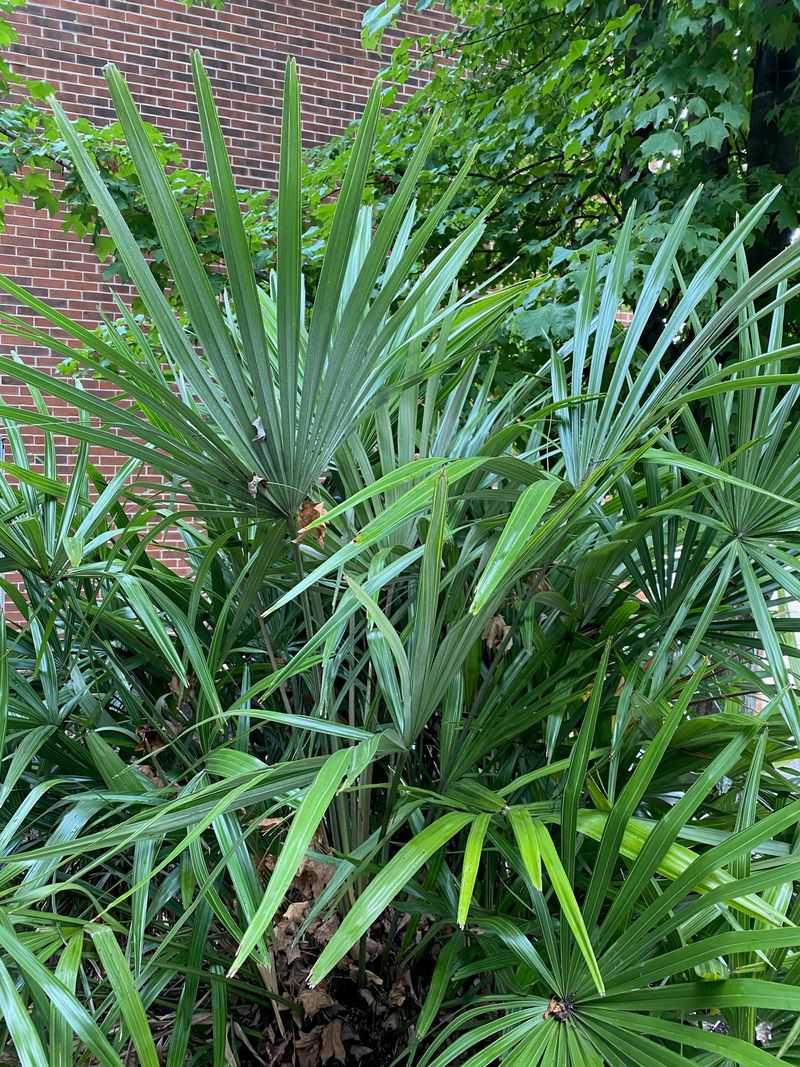
Slow growth does not mean no growth. Needle palm gradually develops into a clump that reaches roughly 6 to 8 feet tall and wide, and it can expand further over time through suckers that emerge at the base. That mature form is substantially smaller than areca’s documented range, but it is not a miniature plant, and treating it as one leads to placement mistakes that become obvious a few years in.
UF/IFAS notes that needle palm is slow-growing and clumping, expanding gradually rather than shooting upward the way a single-trunk palm does. The practical translation is that a plant installed today will take years to fill its full footprint, but it will get there. Allowing 8 feet of clearance in all directions from the center of the planting gives the mature clump room without crowding neighboring plants, structures, or walkways.
Good locations include spots beneath taller trees where the understory needs a durable, low-maintenance filler. Foundation beds that are wide enough to accommodate an 8-foot clump work well, as do broad borders along fences or property lines where a low-to-medium screen is more useful than a tall one. The palm also performs as a single specimen accent in a mixed bed, provided the surrounding plants have enough room to coexist with a clump of that size.
Measuring the bed before buying is straightforward and worth the two minutes it takes. If the available width is less than 8 feet, or if a structure sits within that range, a different plant or a different location will save future headaches. Needle palm’s slow pace gives some flexibility, but the mature width is the honest planning number to use.
Match light, moisture, and exposure to the site
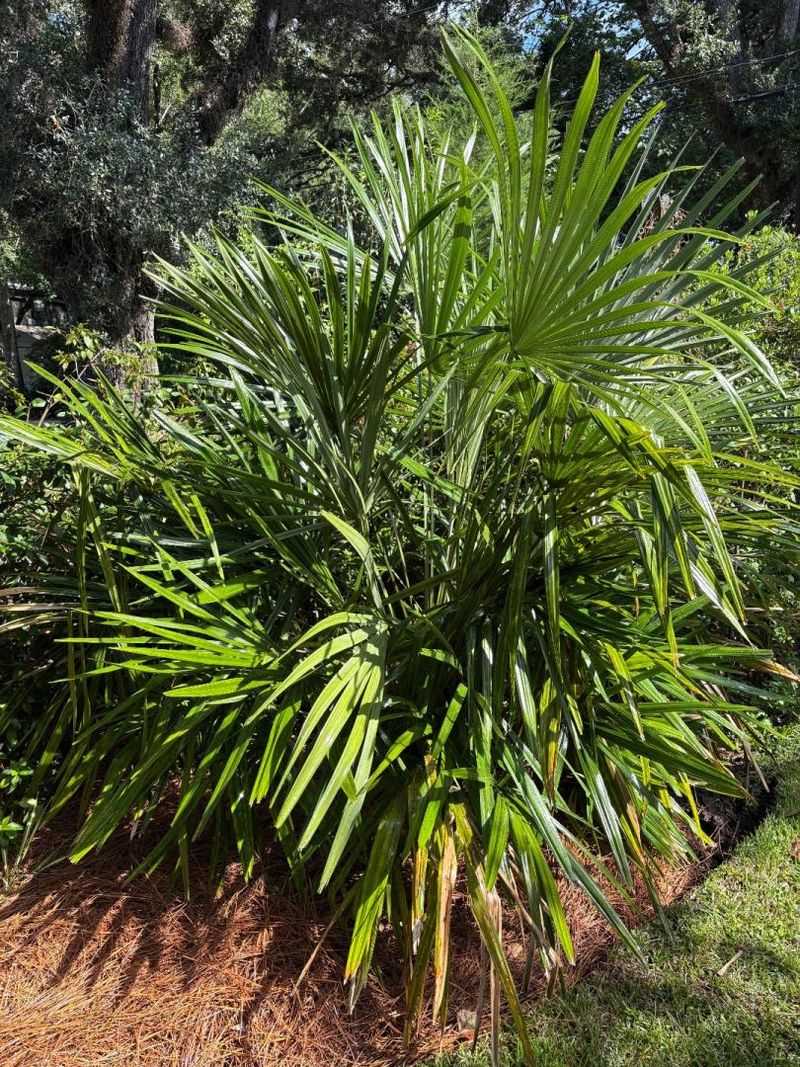
Partial shade is the safest general recommendation for needle palm in a Florida landscape, particularly when appearance matters. UF/IFAS guidance on landscaping in Florida shade notes that needle palm does best under shade, and UF/IFAS Gardening Solutions confirms that it prefers partial shade while noting the plant can adapt to full sun in some conditions. A site under the canopy of larger trees, on the north or east side of a building, or in a bed that receives filtered light through most of the day is a reliable starting point.
Full-sun placement is not automatically a problem, but results vary. A needle palm in an exposed, south-facing bed with no overhead canopy may perform adequately, or it may show more leaf stress than one grown in a sheltered spot. Highly exposed sites, alkaline soils, or locations that combine intense sun with reflected heat from pavement or walls are less predictable than a partly shaded understory planting.
Soil moisture matters as much as light. Needle palm prefers moist, well-drained soil and tolerates drought reasonably well after it is established. It can also handle some occasional wet conditions, which makes it adaptable to parts of the Florida landscape that experience periodic flooding or heavy rain. What it does not tolerate well is permanently saturated, poorly aerated ground.
Standing water around the root zone for extended periods can cause root stress regardless of how tolerant the plant is under normal conditions.
Coastal sites deserve separate consideration. UF/IFAS ornamental palm tables rate needle palm’s salt-spray tolerance inconsistently, with some references listing it as low and others as moderate. The practical guidance is to avoid planting needle palm in locations exposed to direct salt spray or saltwater flooding without first confirming that local conditions match what the plant can handle. A sheltered coastal garden with good drainage is a different situation from a front-row beachside bed.
Establish the palm carefully in Florida’s sandy soil
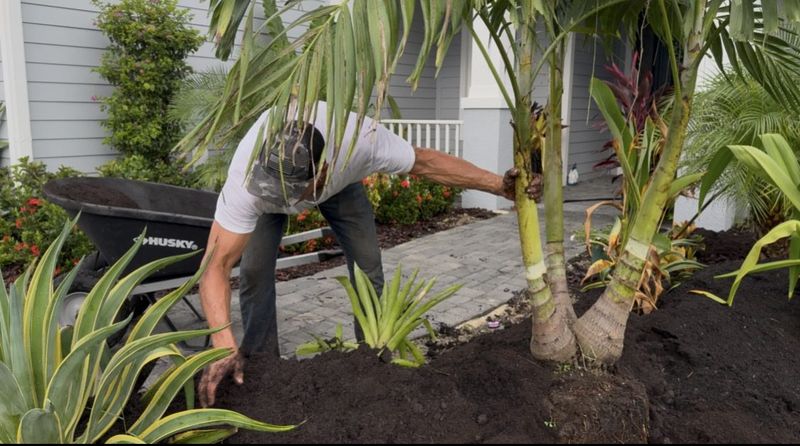
Florida’s sandy soils drain quickly and hold less plant-available water than heavier soils, which means a newly planted palm can dry out faster than it would in a more water-retentive mix. UF/IFAS field production guidance for palms notes that fast-draining sandy soils require more frequent irrigation and that establishment watering needs to reach the root zone rather than wetting only the surface. A light sprinkle that moistens the top inch of soil does very little for a root system that extends several inches below grade.
During the establishment period, which can last several months to more than a year depending on plant size and conditions, consistent deep watering is more important than any other care step. Watering every day or two during dry stretches, tapering off as the plant shows signs of active growth, gives the root system the time it needs to spread into the surrounding soil. Once established, needle palm tolerates dry periods better, but “established” does not mean the plant never needs water again during extended droughts.
A 2 to 3-inch layer of organic mulch spread over the root zone helps the soil hold moisture between waterings and moderates soil temperature. UF/IFAS planting guidance recommends keeping mulch away from the plant base or trunk to avoid creating conditions that promote rot or pest activity at the crown. Pulling the mulch back a few inches from the stem accomplishes this without reducing the moisture-retention benefit across the rest of the root zone.
Amending Florida sandy soil with large volumes of organic matter in the planting hole is generally not recommended by UF/IFAS for palms. A planting hole filled with rich amendment can create a moisture and drainage difference at the hole boundary that discourages roots from moving out into the surrounding soil. Match the planting site to its natural drainage characteristics, and let the mulch layer and consistent irrigation do the work during establishment.
Place the spiny palm away from high-contact areas
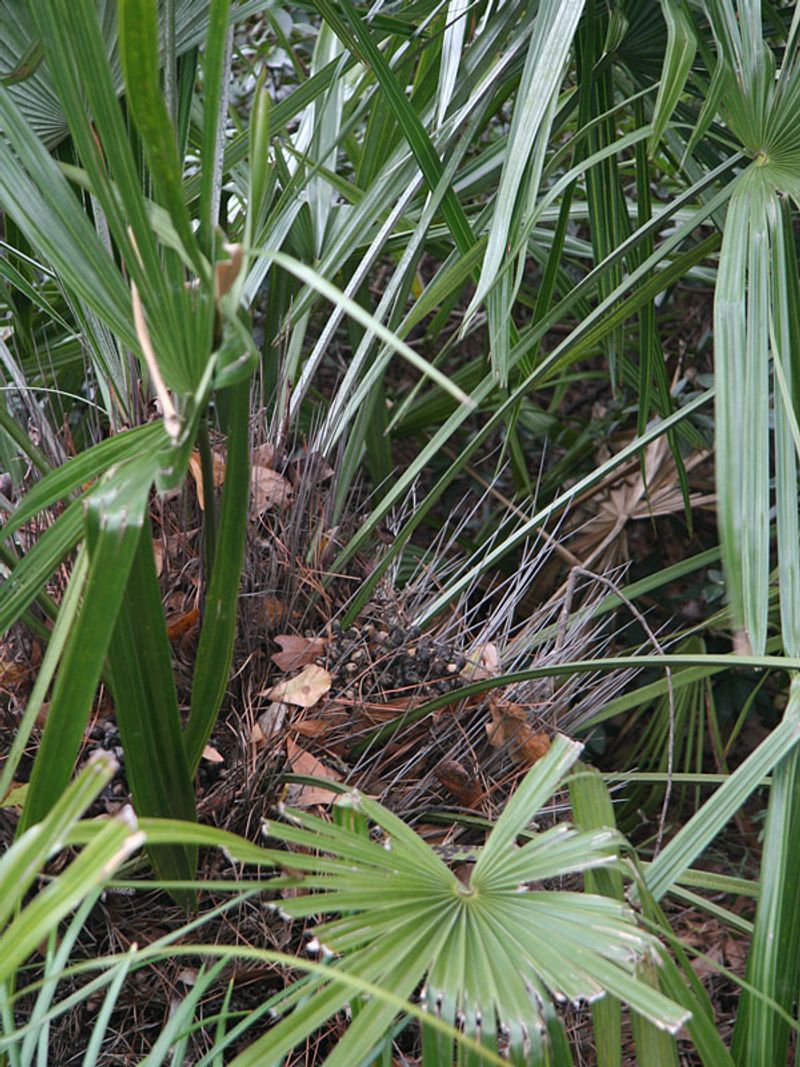
The sharpest practical drawback to needle palm is right there in its name. The plant produces dark, rigid spines around the short trunk or leaf bases, and UF/IFAS describes those spines as reaching roughly 4 to 10 inches in length. They are not decorative thorns. They are stiff enough to puncture skin and cause real injury to anyone who brushes against them or reaches into the clump without protection.
That spine situation rules out a number of otherwise tempting planting spots. Walkways, garden paths, pool access points, pool ladders, mailbox areas, benches, outdoor seating zones, and children’s play spaces should all be off the list. UF/IFAS Extension Citrus County palm care guidance specifically flags the spines as a meaningful consideration for placement decisions. The palm’s eventual 6 to 8-foot width also means that maintenance workers and homeowners will need to get close to it periodically, so clearance for safe access is part of the siting calculation from the beginning.
Where needle palm does work well from a spine standpoint is in a bed that people do not walk through or sit beside, such as a property border away from foot traffic, an understory planting beneath trees, or a foundation bed set back from a path. Some gardeners use it deliberately as a security planting beneath windows or along fence lines where the spines serve a deterrent purpose.
On the sourcing side, purchase needle palm only from reputable nurseries that propagate plants from cultivated stock. Florida’s endangered plant regulations protect needle palm in the wild, and collecting specimens from natural areas is regulated and may require authorization. Nursery-grown plants are the legal and responsible choice, and they typically establish better than wild-collected specimens anyway.
Low maintenance does not mean damage-proof
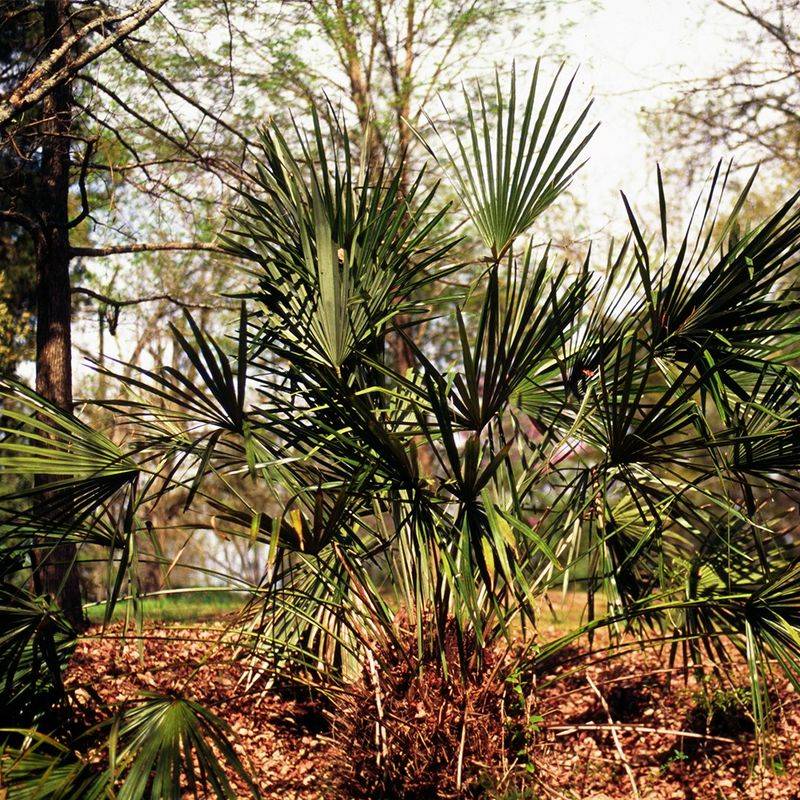
Needle palm has a well-earned reputation for being tough and low-maintenance once it settles in. UF/IFAS Panhandle Outdoors extension coverage on needle palm promotes it as a durable native that requires little routine intervention. Its slow growth means less frequent trimming than faster-growing palms, and its clumping form does not demand the kind of height management that a tall single-stem palm might need over time. That combination genuinely reduces the care burden for most homeowners.
Reduced maintenance is not the same as no maintenance, and the plant is not immune to damage. UF/IFAS research on physiological disorders of landscape palms identifies sunburn, cold injury, water stress, nutrient deficiencies, salt exposure, root problems, and disease as conditions that can all produce browning or spotting in palms. Needle palm is more cold-tolerant than many palms and handles heat reasonably well once established, but a leaf that browns does not automatically mean the plant is failing. Identifying the actual cause, whether it is a watering issue, a nutrient gap, or physical damage, leads to a better response than simply removing foliage and hoping for the best.
Storm care is a specific area where the guidance runs counter to common instinct. Many Florida homeowners believe cutting palms back hard before hurricane season protects the plant. UF/IFAS pruning guidance for palms warns directly against severe “hurricane cuts” that strip healthy green fronds. Palms store nutrients in their fronds, and removing living foliage weakens the plant rather than protecting it.
The appropriate pre-storm or post-storm action is removing dead or clearly dying leaves, not stripping the canopy back to a few stubs.
Needle palm is not hurricane-proof or flood-proof. Storm survival depends on root establishment, wind intensity, site drainage, and the specific conditions of a given storm. A well-rooted, properly sited palm has a better chance than one that was recently planted or severely pruned, but no palm comes with a storm guarantee.
Choose needle palm when compact form matters more than height
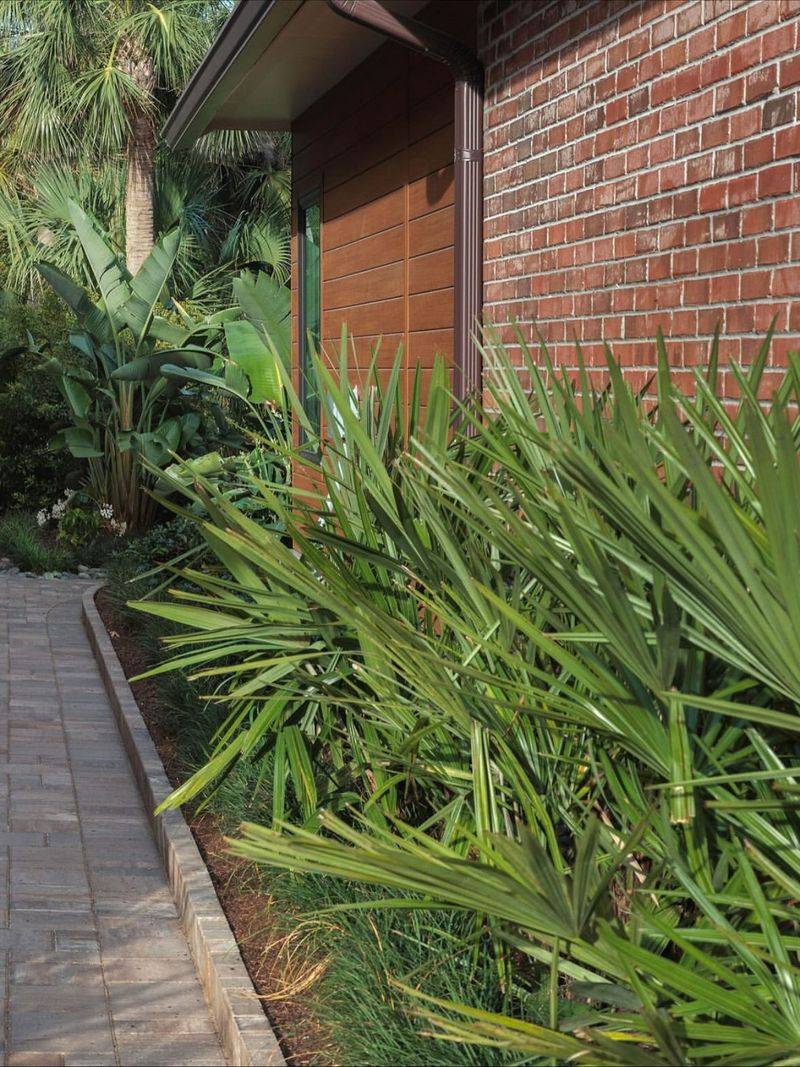
Needle palm fits a specific kind of planting decision: a Florida gardener who wants a slow-growing native clump for a compact site, not a tall, feathery privacy screen. That distinction matters because the two palms serve different purposes. If the goal is a 15 to 20-foot tropical backdrop or a tall visual barrier, needle palm is the wrong choice. If the goal is a durable, lower-profile native plant that fills a foundation bed, anchors a shaded border, or holds a corner without racing out of bounds, needle palm is worth serious consideration.
The conditions that support the choice are straightforward. The planting site should have room for roughly a 6 to 8-foot spread, appropriate light, well-drained soil that does not stay saturated, and consistent irrigation during establishment. The palm also needs safe distance from walkways, seating, and other high-contact areas because of its spines. When those conditions line up, UF/IFAS guidance on needle palm supports it as a low-maintenance, Florida-native option that holds its form over time.
The honest payoff is this: needle palm is less likely than a mature areca to dominate a suitably sized compact space, but it will grow, it can suffer damage, and it requires deliberate placement. A palm that fits the site from the start is always easier to live with than one that has to be managed into submission after the fact.