
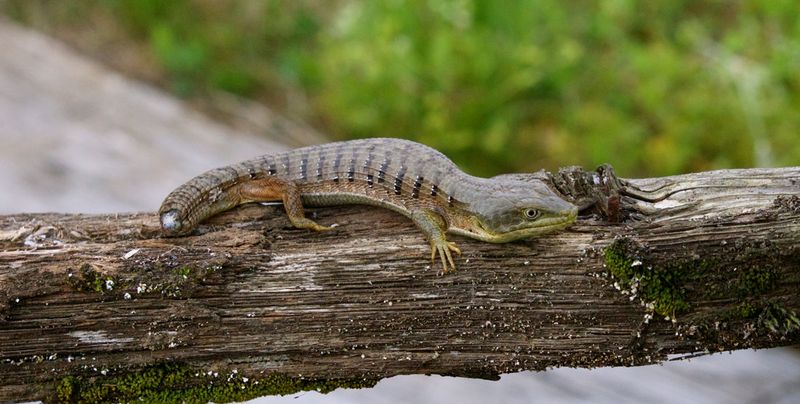
A scaly, slow-moving lizard that slips under your garden debris might be doing more for your yard than you realize. California alligator lizards eat snails and a range of other invertebrates, making them quiet, low-profile neighbors worth knowing about. The catch is that the tidy habits most homeowners practice, raking leaves, clearing brush and removing old wood, may make yards less welcoming to these native reptiles. Understanding what they actually do, and what they cannot reliably do, helps you make smarter choices for your garden and your local wildlife.
What California alligator lizards actually eat
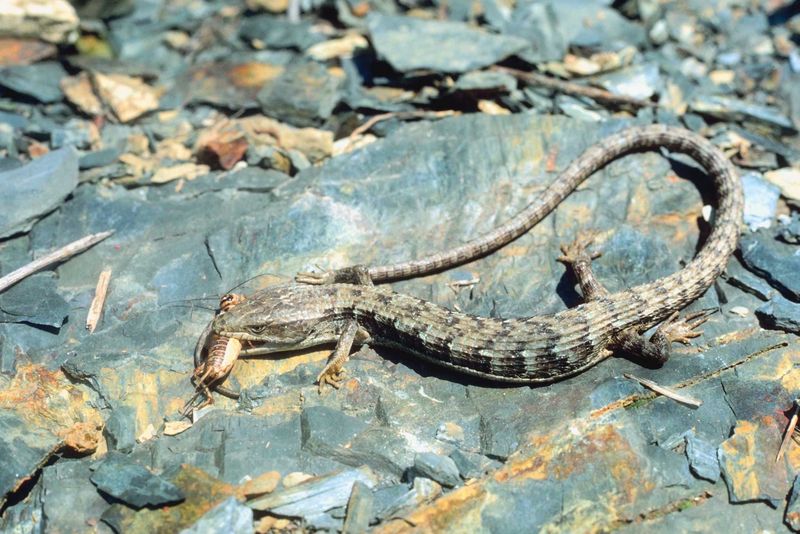
Two species travel under the everyday label “California alligator lizard,” and they do not share the same backyard. The southern alligator lizard ranges broadly across much of California, showing up in grasslands, chaparral, foothill oak woodland and suburban neighborhoods alike. The northern alligator lizard is found mainly in the northern and central portions of the state, and the California Department of Fish and Wildlife atlas of California biodiversity treats them as distinct species with different distributions. Knowing which one lives near you matters because diet data and habitat descriptions often focus on one species, not both.
Both are carnivores that eat a wide variety of invertebrates. For the southern alligator lizard, the National Park Service lists insects and their larvae as prominent prey, naming ground beetles, grasshoppers and crickets specifically, while snails appear as one item in a longer menu that also includes spiders, scorpions and small vertebrates. A National Park Service profile of the southern alligator lizard describes an opportunistic predator that takes what it can find at ground level, not a specialist targeting any single prey type.
Slug evidence is less consistent. The California Department of Fish and Wildlife life history account for the southern alligator lizard reports that alligator lizards may eat earthworms, snails and slugs, but the National Park Service’s channel islands account lists snails without specifically naming slugs. That difference matters for homeowners hoping for reliable mollusk control: snails appear in the diet with reasonable confidence, while slug predation is probable but less thoroughly documented across species and regions.
None of this means alligator lizards are garden-pest specialists. Their broad, opportunistic diet is ecologically valuable, but no published study establishes that an individual alligator lizard measurably reduces the snail or slug population in a residential yard. Think of them as useful native predators rather than a tested biological-control program.
Tidier yards may offer less suitable hiding cover
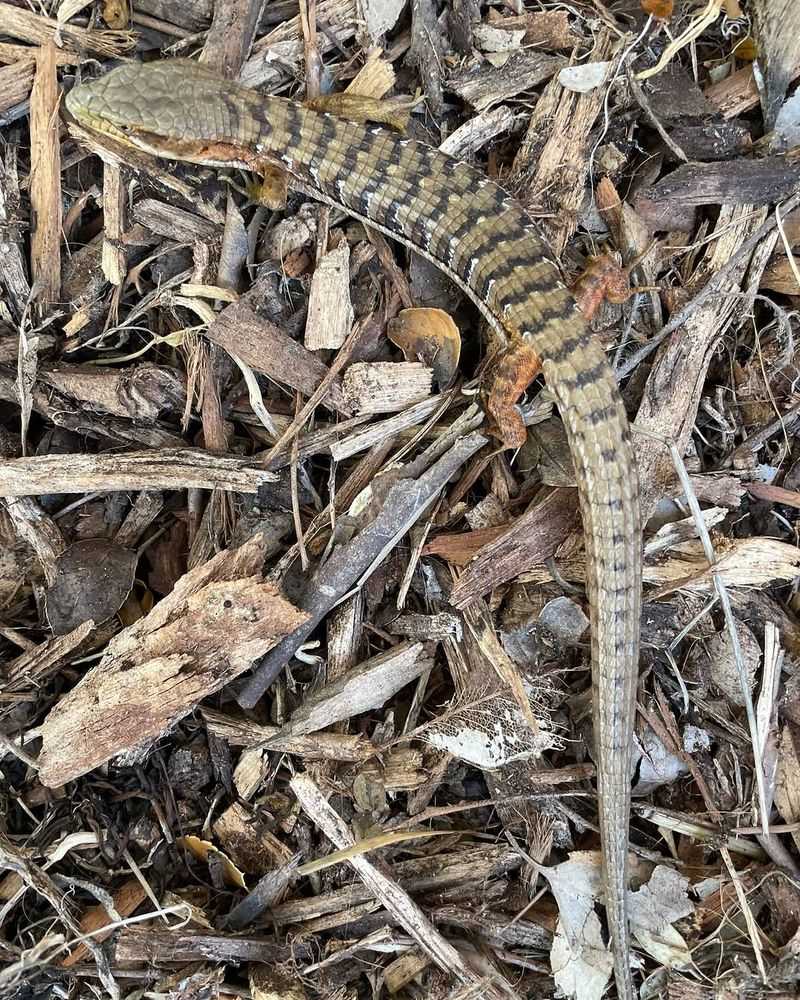
Alligator lizards spend most of their time close to the ground, and they are far more secretive than the fence lizards you spot basking on a sunny wall. Rather than perching in open view, they slip under boards, shuffle into leaf litter, press against the shaded side of a log and generally stay hidden except when actively hunting or warming up near a sunny patch. The Yosemite National Park wildlife blog on southern alligator lizards notes that these animals are often found beneath surface objects and in dense low vegetation, which is why many people go years without realizing one lives in their yard.
That concealed lifestyle means ground-level cover is genuinely important to them. Stable rocks, old logs, boards, dense low shrubs and patches of leaf litter all serve as daytime refuges, nighttime shelter and hunting corridors. A yard that still offers some sunny openings nearby gives the lizard a place to thermoregulate between foraging bouts. The National Park Service’s channel islands account describes exactly this pattern: concealment cover plus nearby open, sunlit ground.
Standard suburban tidying, removing every fallen branch, raking all leaf litter, pulling out low shrubby growth along a fence line, strips away most of what these lizards use. A yard reduced to bare lawn and open beds may simply not offer enough cover to support them. That inference is reasonable given what the sources describe, but a direct causal link between yard tidiness and measurable changes in snail or slug numbers has not been established in the available research.
The practical takeaway is modest but real. A heavily manicured yard may be less hospitable to alligator lizards than one with a few deliberate patches of ground-level cover. Whether that translates into any difference in pest damage on your vegetables is a separate question, and an honest answer is that nobody has measured it reliably in residential settings.
Fence lizards are not interchangeable slug patrols
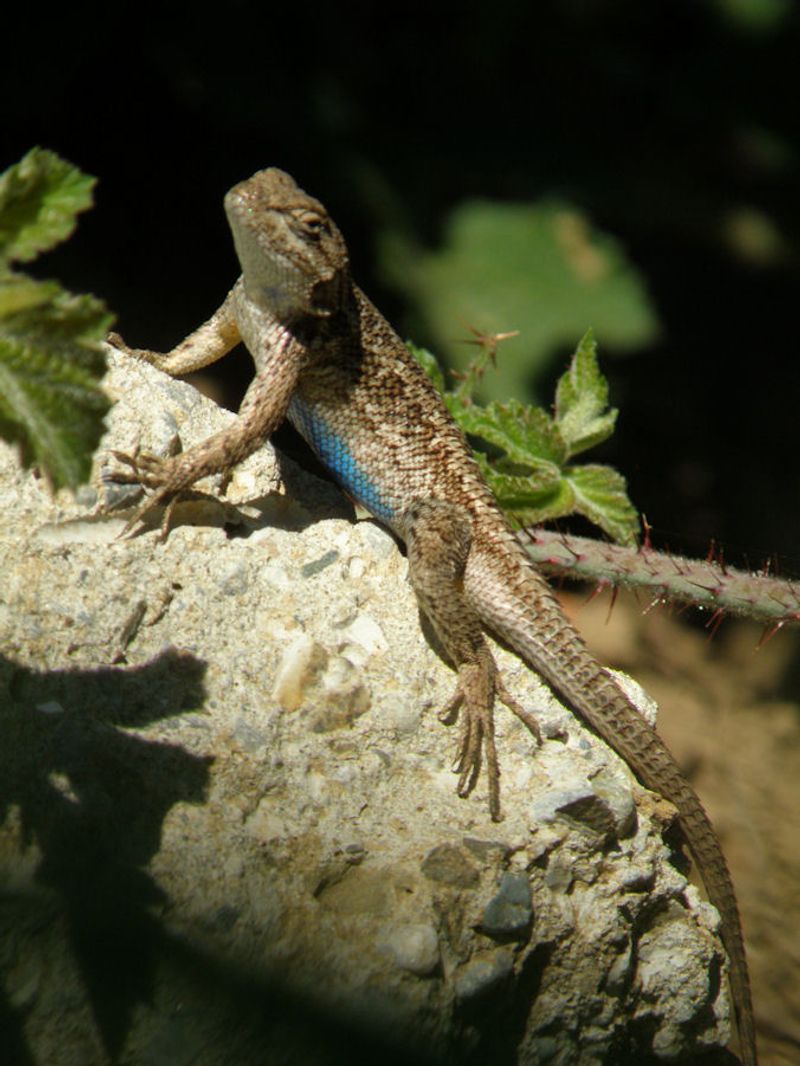
Western fence lizards are a familiar sight in California yards, doing push-ups on fence rails and soaking up afternoon sun. They are active, conspicuous hunters of flying and crawling insects, and the California Department of Fish and Wildlife life history account for the western fence lizard documents their diet as primarily terrestrial invertebrates, with insects dominating and spiders, ticks, scorpions, centipedes and isopods appearing as less frequent prey. Snails and slugs are not described as characteristic prey in that account.
Alligator lizards work differently. They are heavier-bodied, more secretive and built for subduing larger or harder prey at ground level. The CDFW life history account for the southern alligator lizard and the NPS southern alligator lizard profile both reflect a broader diet that includes snails, a prey item that takes more jaw strength than catching a cricket. That difference in prey handling is part of why alligator lizards come up in conversations about garden mollusks while fence lizards generally do not.
Treating the two species as equivalent pest managers would oversimplify things. Both are native, both are beneficial in their own right, and both deserve habitat support. But a yard full of fence lizards is not a substitute for the ground-level hunting that alligator lizards do, and neither species has been shown to provide dependable biological control of snails or slugs at garden scale. Appreciating each lizard for what it actually does, rather than assigning it a pest-management job it was never proven to perform, leads to better decisions about how to share your yard with them.
Create a compact wildlife corner instead of an untidy yard

Supporting alligator lizards does not mean letting the whole yard go wild. A small, deliberate habitat corner, roughly the size of a parking space or less, can offer what these animals actually need without turning your garden into a fire hazard or a slug nursery. The goal is a shaded edge or back corner with a few specific features placed together rather than scattered debris left everywhere.
Start with two or three stable flat rocks and one or two partially buried logs or large branches. These hold heat, create sheltered gaps and give a lizard somewhere to anchor while it waits for prey. Add a patch of dry leaf litter a few inches deep underneath a native or climate-appropriate low shrub, something like a coffeeberry, toyon or low-growing sage that suits your California climate zone. The UC Agriculture and Natural Resources guide on wildlife-friendly yard practices supports retaining some leaf litter and natural debris as habitat, while keeping maintained areas clear.
Position this corner near a spot that gets at least a few hours of morning or afternoon sun, since alligator lizards need to warm up between foraging bouts. The Yosemite NPS wildlife blog and the NPS channel islands profile both describe alligator lizards using concealed cover near open, sunlit ground, so that combination matters.
Keep the corner away from your vegetable beds and container plants when possible. Cover that supports lizards can equally shelter snails and slugs, so placing it at some distance from crops reduces that risk. Paths, drains and high-traffic areas should stay clear. A compact, well-chosen habitat patch is far more useful than a general policy of leaving all garden debris in place, and it is much easier to manage safely.
These features may make your yard more suitable for alligator lizards, but no source can promise one will move in or stay.
Fire safety determines where habitat belongs
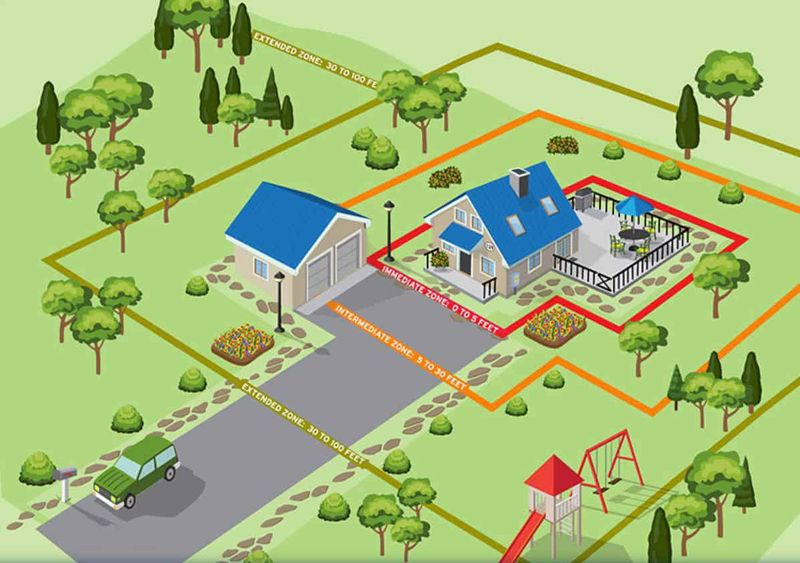
Before placing any rocks, logs or leaf litter in a California yard, fire safety has to come first. This is not a minor qualification: in fire-hazard areas, the location and management of combustible material around a home can be a matter of life and property. Any habitat feature that involves leaf litter, woody debris or dense low vegetation must be sited and maintained according to current local defensible-space rules, and those rules vary by jurisdiction.
CAL FIRE’s defensible space guidelines describe a structure-adjacent zone where combustible material is strictly limited. The first five feet around a structure, sometimes called Zone 0 or the ember-resistant zone, should be kept free of combustible bark mulch, dead vegetation and similar material. Gravel, pavers and non-combustible ground covers belong here, not leaf piles or wood debris.
Beyond that immediate perimeter, the rules shift but do not disappear. The California Board of Forestry and Fire Protection guidance on defensible space zones 0, 1 and 2 describes Zone 1, extending roughly 30 feet from a structure, as an area where dead and dry vegetation should be managed and combustible material kept well away from the building. Zone 2, from 30 to 100 feet or the property line, allows more flexibility but still requires maintaining spacing between plants and managing litter accumulation. Local requirements can be stricter than state minimums.
A wildlife habitat corner made of a few rocks and a couple of stable logs placed in a shaded corner of Zone 2, well away from structures, decks, vents, eaves and fences, is a very different thing from a brush pile against the back wall of the house. The first can work within fire-safety rules. The second is specifically what defensible-space guidance is designed to prevent.
Check with your local fire department or county fire safety office before installing habitat features, especially if your property falls within a State Responsibility Area or Very High Fire Hazard Severity Zone. Rules are updated regularly, and what was acceptable several years ago may no longer meet current standards.
Protect crops with integrated snail and slug management
Retaining a wildlife corner for alligator lizards is a worthwhile habitat choice, but it does not replace crop protection. The same cover that shelters a lizard can just as easily shelter the snails and slugs eating your lettuce, so counting on a lizard to patrol your vegetable beds is not a sound strategy. A more reliable approach combines several methods that directly reduce pest numbers and discourage new arrivals.
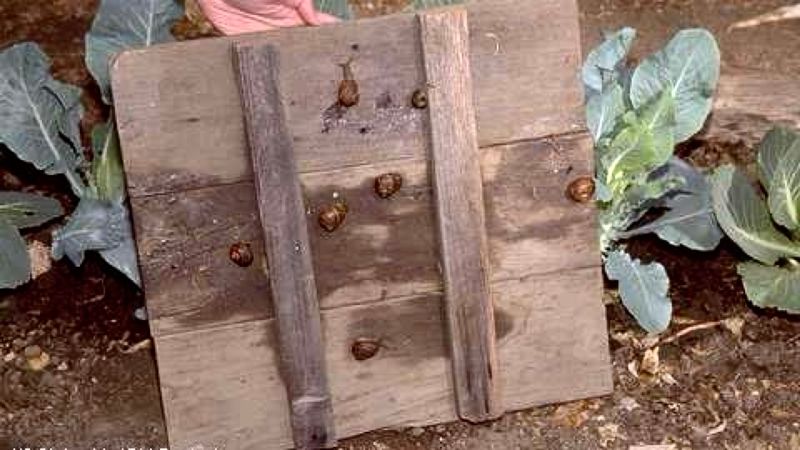
The UC IPM guide on snails and slugs recommends an integrated approach that starts with nonchemical controls. Hand-picking at night or on overcast mornings, when snails and slugs are active, removes pests directly and costs nothing. Board traps, flat pieces of wood or burlap left near beds overnight, attract snails and slugs that hide there by morning and can be collected and disposed of quickly. These methods work best when done consistently rather than occasionally.
Reducing excess moisture is equally important. Snails and slugs thrive in damp conditions, so switching from overhead sprinklers to drip irrigation, watering in the morning so soil surfaces dry by evening, and fixing leaks all make beds less hospitable. Removing boards, low-hanging plant debris, weedy growth and other pest shelters from the immediate vicinity of vulnerable crops reduces the places where mollusks hide during the day.
None of these measures works perfectly in isolation, and results depend on how much pest pressure a yard is under, how consistently the methods are applied and how many attractants remain nearby. A heavily shaded, consistently moist bed surrounded by ivy and wood debris will stay problematic regardless of what you do at the perimeter. Integrated pest management is the recommended framework precisely because it addresses multiple factors at once, but it requires ongoing attention rather than a one-time fix. A lizard-friendly habitat corner fits into this picture as a modest ecological addition, not a replacement for the rest of the work.
Use bait selectively and follow the label
When hand-picking, traps and moisture management are not keeping up with snail and slug damage, bait can be added as a backup measure. Two main active ingredients are available to California homeowners, and they are not equivalent in their risk profiles.
Metaldehyde has been widely used for decades, but it carries serious hazards for pets. UC IPM advises avoiding metaldehyde products where dogs, cats or children could encounter them, because the compound can be acutely toxic to companion animals even in small amounts. Wildlife concerns extend beyond pets, and the product’s broader environmental risks make it a poor choice for yards where lizards, birds and other beneficial animals are present.
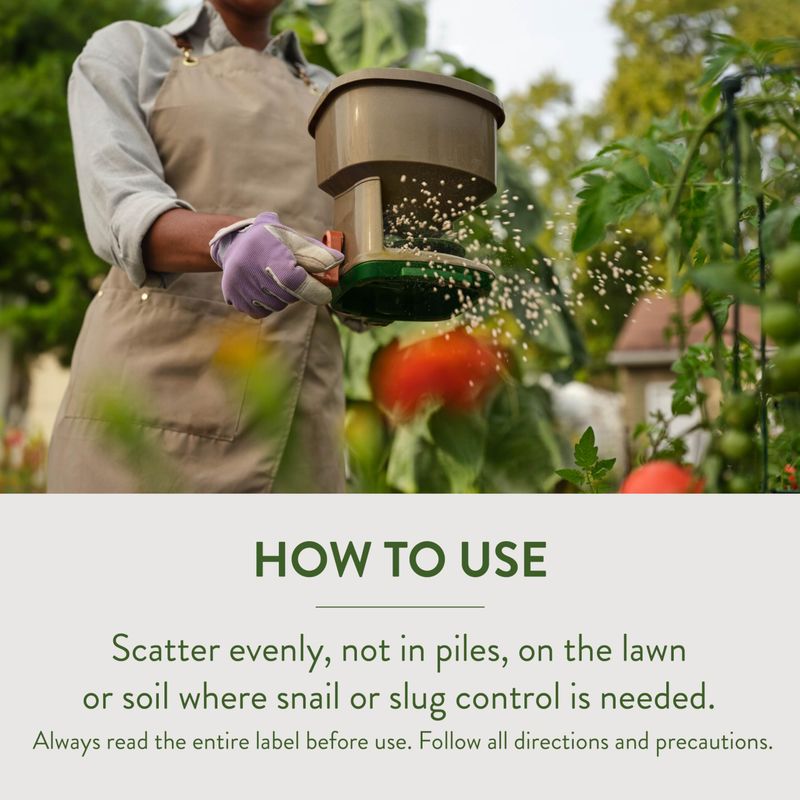
Iron-phosphate baits are described by UC IPM’s snail and slug management guidance as safer around children, pets, birds, fish and other wildlife than metaldehyde in many exposure contexts. That relative safety advantage is real, but it does not make iron phosphate harmless or appropriate for careless use. The UC IPM snails and slugs quick-tips card advises scattering bait thinly rather than piling it, targeting areas where pests are active, and following the product label precisely. The UC IPM pesticide active ingredients database entry for iron phosphate notes that some formulations contain additional active ingredients that may carry different risks, so reading the full label before purchase matters.
Having a lizard-friendly habitat corner nearby does not make any bait automatically safe. Bait should be placed where pests are active and away from the wildlife habitat patch when practical. Avoid applying bait as a routine preventive measure when nonchemical methods are managing damage adequately. The goal is to use the least amount necessary, only when the pest pressure justifies it, and always in strict compliance with label directions.
Give the lizard space and modest expectations
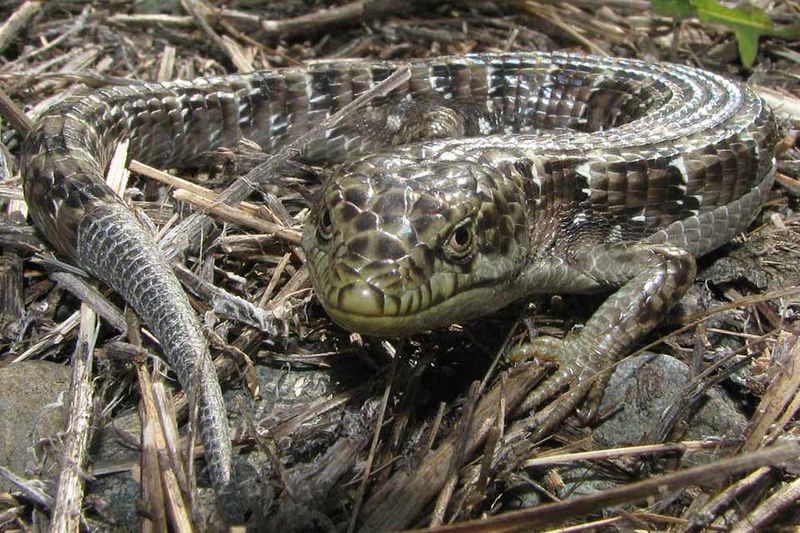
The best thing most homeowners can do for an alligator lizard is leave it alone. According to UC IPM’s guidance on California lizards, native lizards cause no measurable damage to garden plants and may help reduce pest insects. If one turns up inside a garage or gets into the house, it can be carefully guided or picked up and moved outdoors, but wear gloves: alligator lizards may bite when handled, and a firm grip from a strong-jawed lizard is unpleasant even if not dangerous. The safest approach is to avoid handling them unless moving one is genuinely necessary.
Avoiding unnecessary pesticide applications in and around a habitat corner also helps. Broad-spectrum insecticides reduce the invertebrate prey that alligator lizards depend on, and some products can affect reptiles directly or indirectly through contaminated prey.
Keep expectations realistic. A compact, fire-conscious habitat corner with a few rocks, a stable log and some leaf litter under a native shrub can make part of your yard genuinely more suitable for these native predators. That is worth doing on its own ecological merits, even if you never see the lizard that uses it. For actual snail and slug control, integrated pest management remains the more comprehensive strategy, combining habitat awareness, physical controls, moisture management and selective bait use as needed.
A native lizard is a neighbor worth supporting, not a service you can hire out.