
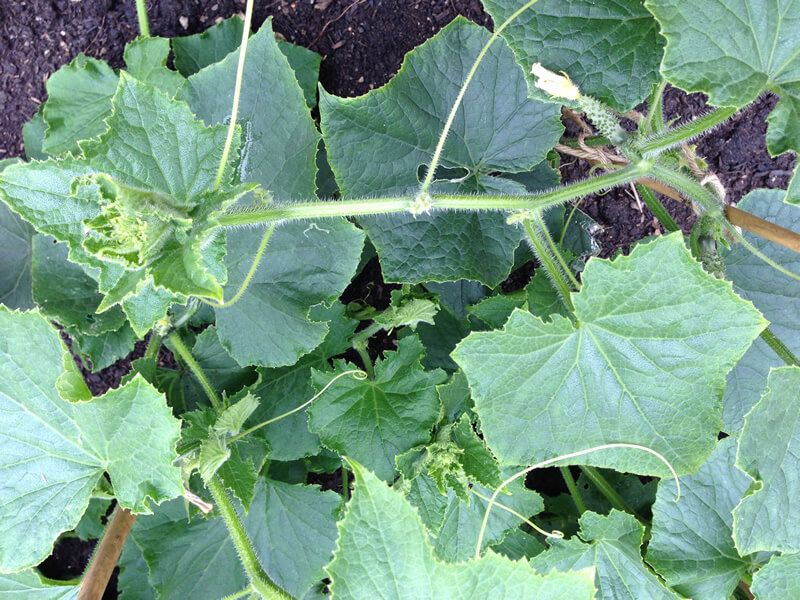
You walk out to your garden, see a tangle of lush green vines loaded with cucumbers, and bite into one only to get a mouthful of something that tastes like soap. Healthy plants and bitter fruit seem like a contradiction, but it happens regularly during hot summers, and the explanation usually starts underground. Heat and uneven soil moisture during fruit development can quietly affect cucumber quality even when the leaves above look perfectly fine. Understanding what is happening, and what to actually do about it, can save the rest of your harvest.
Healthy vines can hide fruit-development stress
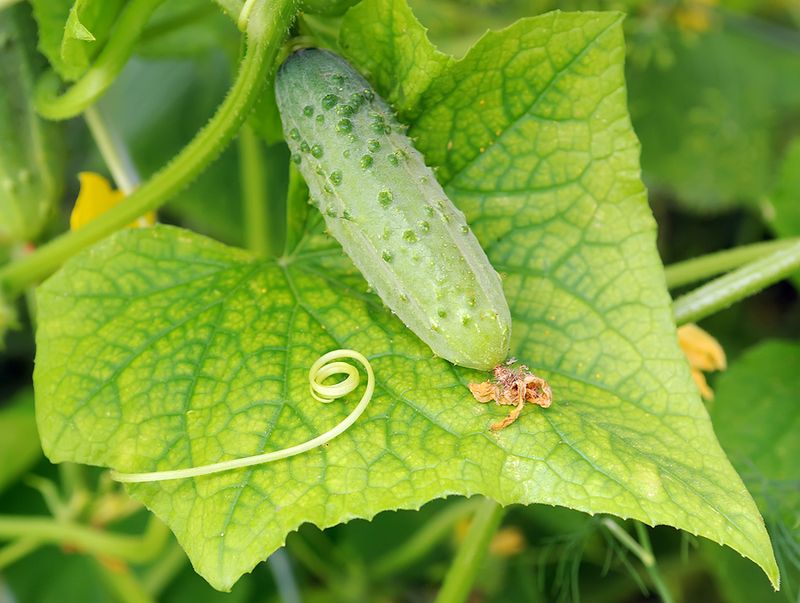
Lush cucumber foliage is genuinely reassuring, but leaf appearance and fruit quality are not always telling the same story. A vine can look full and green because the plant is drawing water and nutrients efficiently at the canopy level, even while the root zone experienced a brief dry spell or a burst of heat during the days when a particular fruit was forming. By the time you notice bitterness, the stress event that triggered it may have passed, leaving no obvious clue in the leaves.
Utah State University Extension specifically warns that water stress during fruit production can lead to bitter, pointed, or misshapen cucumbers, and Oregon State University Extension lists high temperatures, drought, and uneven watering among the common triggers for bitterness. That inconsistency between what you see above ground and what the fruit experienced below ground is exactly why healthy-looking vines can still produce fruit that tastes off.
Uneven root-zone moisture is a leading practical suspect in hot weather, but it is not the only possibility. Heat alone, wide temperature swings, cultivar genetics, and other stresses can also raise bitterness levels. The goal right now is not to assume a single cause but to start restoring steady, consistent soil moisture, which addresses one of the most common and correctable contributors.
Cucurbitacins create the bitter taste
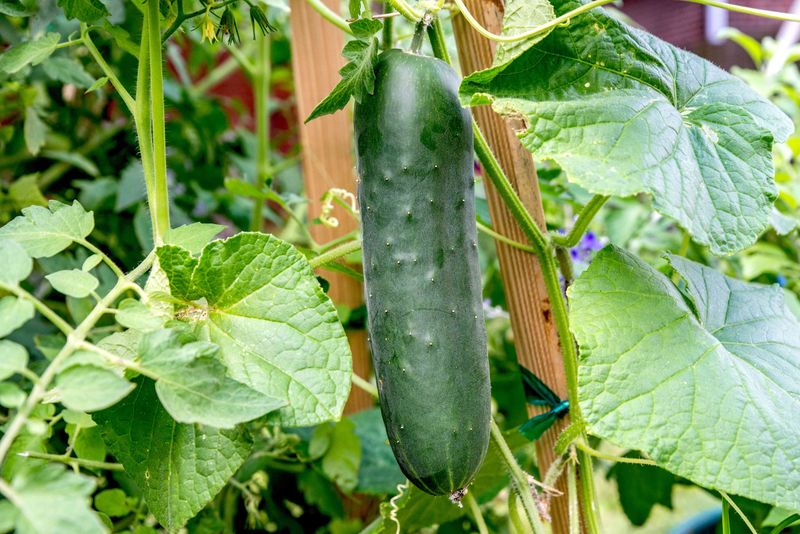
Bitterness in cucumbers comes from a group of naturally occurring compounds called cucurbitacins. Published research on cucurbitacin chemistry confirms that these compounds are produced throughout the cucumber plant, and their concentration in the fruit can rise when the plant encounters environmental stress. That is the link between a hot, dry, or inconsistent growing period and the unpleasant taste you notice at harvest.
According to Iowa State University Extension, high temperatures and drought are among the recognized triggers for increased cucurbitacin production. The plant does not need to wilt dramatically for this to happen. A few days of soil drying out more than usual, or a heat spike during fruit development, can be enough to shift the chemical balance inside a fruit that looks perfectly normal on the outside.
Cucurbitacins tend to be more concentrated near the skin and at the stem end of the fruit, which is why peeling and trimming that end can reduce mild bitterness. However, University of Minnesota Extension notes that distribution varies by fruit and cultivar, so these preparation steps cannot serve as a reliable safety test for a cucumber that is intensely bitter. Mild bitterness and extreme bitterness are different situations, and the preparation advice for each is not the same.
Check soil moisture before changing the watering schedule
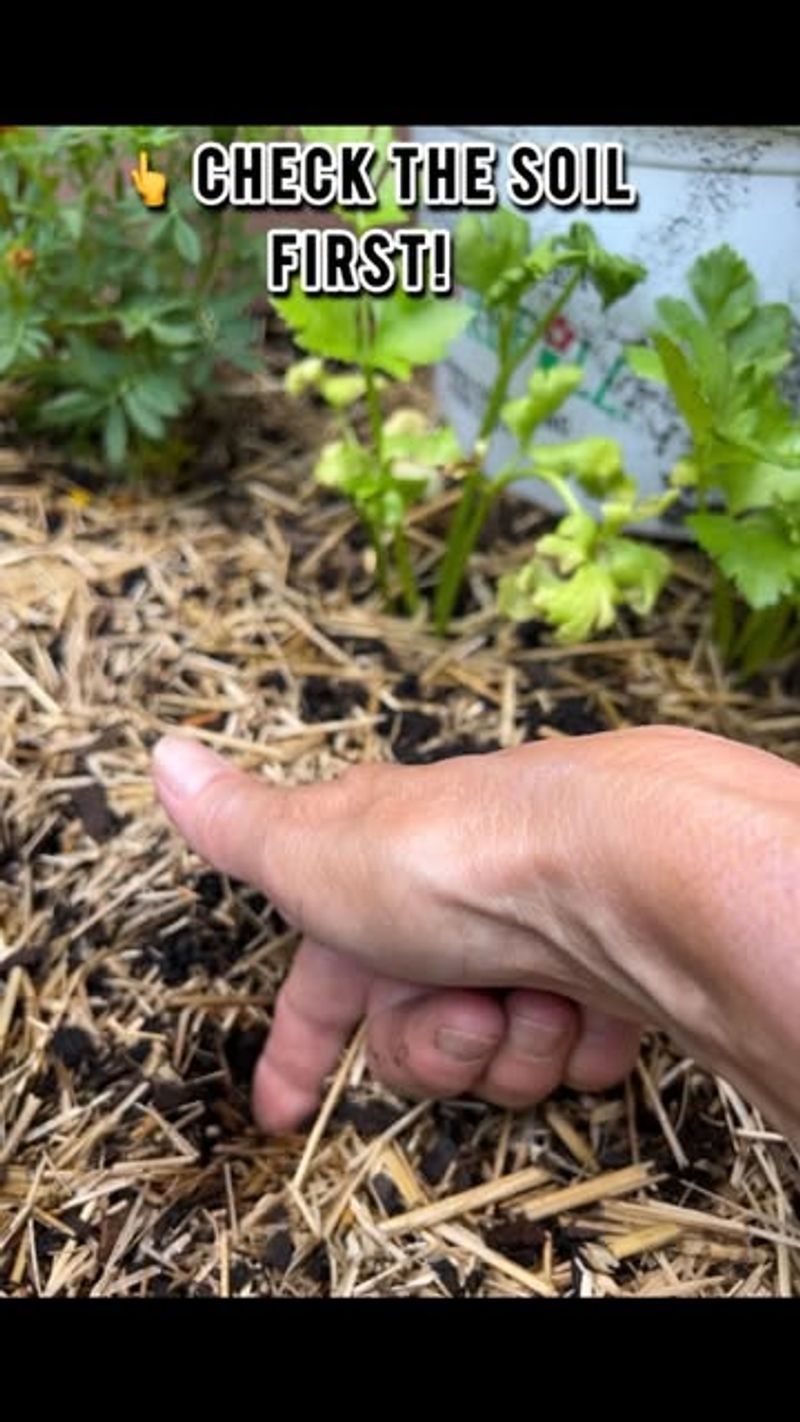
Before adjusting how often you water, spend two minutes actually checking the soil. Push a finger or a thin trowel several inches below the surface near the root zone, checking roughly the upper 6 inches where most cucumber roots are actively feeding. What you find there matters far more than what the leaves look like at noon on a hot afternoon.
Colorado State University Extension recommends checking soil moisture several inches down before deciding to water, and University of Minnesota Extension reinforces that relying on surface appearance alone is not enough. If the soil still feels cool and damp at depth, the root zone is not actually dry, even if the top inch looks parched.
Temporary midday wilting is easy to misread. Cucumber leaves often droop during the hottest part of the day as a normal response to heat load, then recover on their own by evening. Acting on that midday wilt by adding water to already-moist soil creates a different problem: waterlogged conditions reduce oxygen around roots and can cause root damage that makes stress worse, not better. Soil type, drainage, recent rainfall, plant size, and wind speed all change how quickly a root zone actually dries out, so there is no single calendar-based schedule that fits every garden.
UMN irrigation guidance for vegetables reinforces that watering decisions should follow soil conditions rather than a fixed timetable.
Restore consistent moisture without overwatering
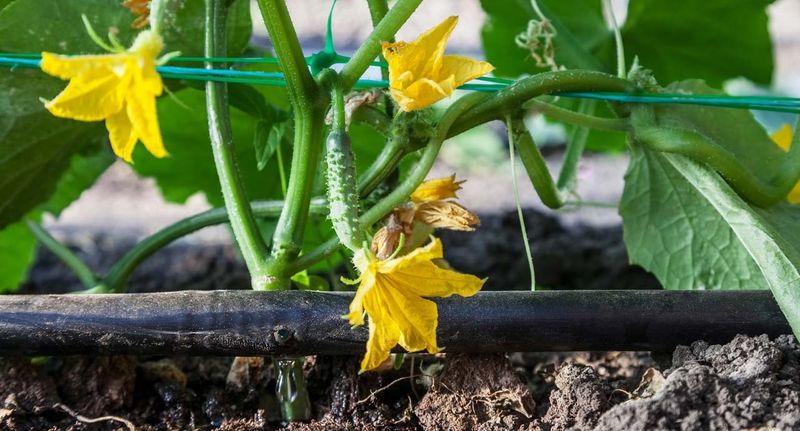
Once you have confirmed that the root zone is actually drying out between waterings, the corrective step is straightforward: water deeply and steadily, then let the soil dry slightly before watering again. The objective is not to keep the soil constantly saturated but to avoid the wide swings between bone-dry and waterlogged that stress developing fruit.
Utah State University Extension’s cucumber guide puts the general target at roughly 1 to 2 inches of water per week during flowering and fruit production, a figure also supported by USU’s broader vegetable water recommendations. Treat that range as a flexible starting point rather than a fixed rule. Sandy soil drains faster and may need more frequent attention; heavy clay holds moisture longer. Hot, windy days accelerate evaporation, and a week with significant rainfall needs no supplemental watering at all.
Watering at the base of the plant, slowly and at ground level, gives the root zone time to absorb moisture rather than letting it run off. Morning is the best time because the soil stays moist through the heat of the day, and any water that splashes onto foliage has time to dry before evening, which reduces disease risk. Colorado State University Extension’s drip irrigation guide explains how drip lines and soaker hoses deliver water slowly at the root zone, reducing the dry-to-wet fluctuations that can affect fruit quality while also keeping foliage dry.
Finding one bitter cucumber is not a signal to immediately soak the bed. Check the soil first, water if it is genuinely drying out, and then give the system time to stabilize before expecting improvement in fruit quality.
Use mulch to reduce hot-weather moisture swings
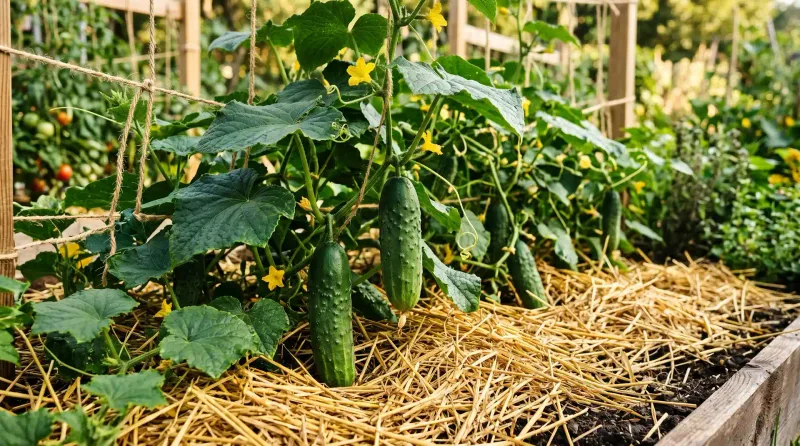
Mulch is one of the simplest tools available for keeping root-zone moisture more consistent during hot weather. A layer of organic material spread over the soil surface slows evaporation, which means the ground beneath dries out more gradually between waterings. It also moderates soil temperature, reducing the heat spikes at the surface that can stress roots on the hottest days.
University of Minnesota Extension recommends approximately 2 to 3 inches of organic mulch, such as straw, shredded leaves, or wood chips, as a practical way to slow moisture loss in garden beds. UMN’s July garden guidance and their heat-season gardening advice both highlight mulching as a key step for keeping vegetable gardens productive through summer heat.
One placement detail matters: keep mulch a few inches away from cucumber stems rather than piling it directly against the plant. Mulch pressed against stems can trap moisture at the crown, encouraging rot and disease at exactly the point where the plant is most vulnerable. Spread it out to the drip line instead, where it does the most good for the roots. Adding mulch now can support more consistent soil conditions going forward, though it cannot undo bitterness that has already developed in fruit on the vine.
Harvest young fruit before quality declines
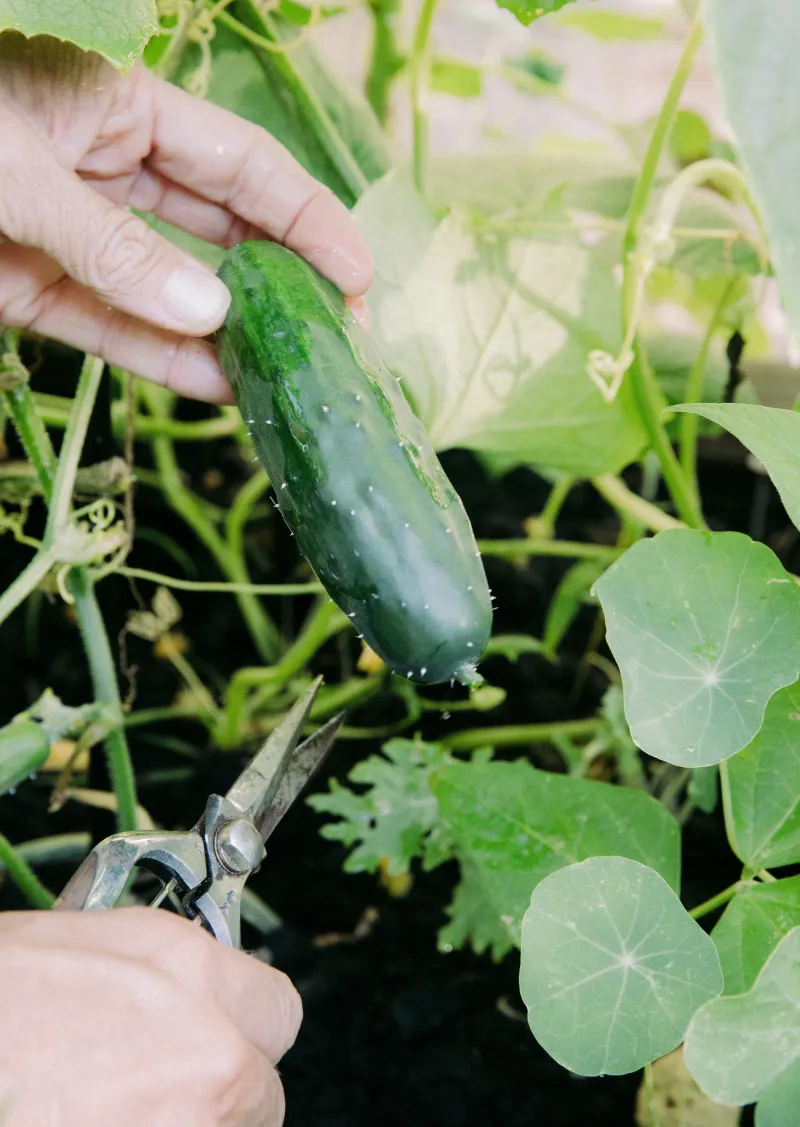
Regular harvesting is one of the more underrated strategies for protecting cucumber quality. Picking fruit while it is young and firm, well before any yellowing appears or seeds begin to harden, keeps the vine focused on producing new fruit rather than pouring energy into maturing existing ones. Leaving cucumbers on the vine too long can lead to off-flavors and a tough texture, and overripe fruit can also signal to the plant to slow down production.
Oregon State University Extension recommends harvesting cucumbers regularly to maintain quality, and Iowa State University Extension’s cucumber growing guide similarly advises picking before fruit becomes overmature. Checking the vines every day or two during peak production keeps you ahead of the curve.
Stabilizing your watering and reducing heat stress may well improve the quality of fruit that develops after conditions settle down, but there is no guarantee that a cucumber already formed under stressful conditions will become less bitter as it continues to ripen. Oregon State Extension’s guidance on bitter cucurbit fruit is clear that improvement in later fruit is possible but not certain. Harvest what looks good now, keep picking consistently, and give the vine a chance to set new fruit under better conditions.
Consider cultivar, weather, and other causes
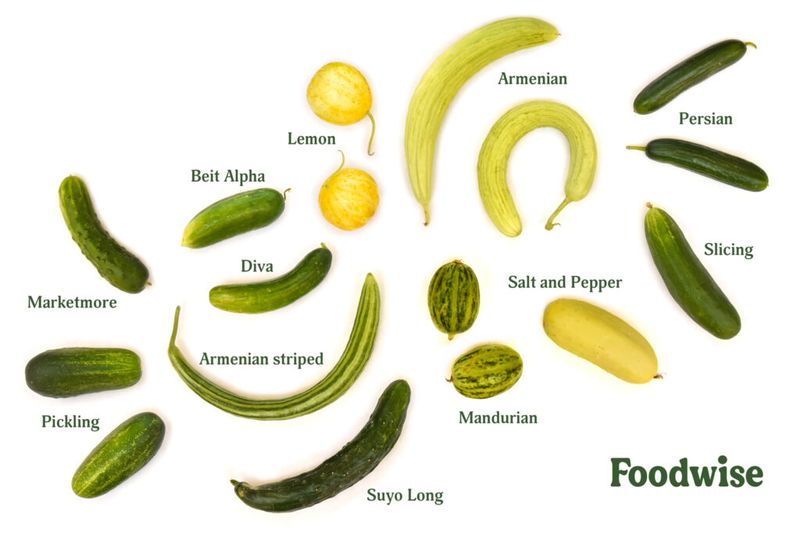
Moisture stress and heat are common suspects, but they are not the only explanation worth considering when bitterness keeps showing up. Wide temperature swings, especially days repeatedly pushing above roughly 90 degrees F or nights dropping below 60 degrees F, are also cited as stress factors. Poor soil nutrition, low soil pH, insect pressure, and disease can all add to the burden a plant is managing during fruit development.
Cultivar genetics are a real variable. Alabama Cooperative Extension’s guide on bitter cucumbers and University of Minnesota Extension both note that cucurbitacin levels differ among varieties. UC Agriculture and Natural Resources research identifies lower-bitterness or so-called bitter-free cultivars as a prevention option worth considering for future seasons. Switching varieties may reduce the frequency of the problem, though no cultivar can guarantee bitterness-free fruit under every set of conditions.
Two common explanations that do not hold up under scrutiny deserve a quick mention. First, Iowa State University Extension confirms that cucumbers do not cross-pollinate with squash, melons, pumpkins, or watermelons in a way that affects the fruit you are picking this season. Cross-pollination between cucumber varieties affects only future seed-grown plants, not fruit already on the vine. Second, poor pollination more commonly causes small, misshapen, or poorly set fruit rather than bitterness, according to Utah State University’s vegetable pollination guide.
Keep those symptoms diagnostically separate.
For handling what you have now: peeling and removing the stem end may reduce mild bitterness, since cucurbitacins tend to concentrate there. However, Oregon State Extension warns that extremely bitter cucurbit fruit can cause gastrointestinal illness and should not be eaten. Discard any cucumber that tastes intensely or abnormally bitter. Pickling does not make intensely bitter fruit safe to eat, and folk remedies like rubbing cut ends together are not supported by reliable evidence.
Purdue Extension’s cucumber food safety guidance supports peeling as a flavor-reduction step for mild bitterness, not as a treatment for severely affected fruit.
Treat consistency as the first response, not the only diagnosis
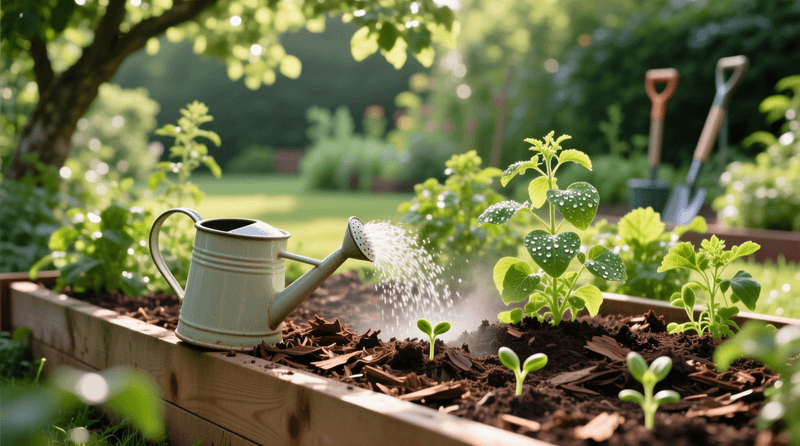
A practical starting point when cucumbers turn bitter is to work through a short checklist: check the soil moisture several inches down, water deeply if the root zone is genuinely drying out, and hold off if it is still moist. Add 2 to 3 inches of organic mulch if the bed is bare, adjust watering frequency when heat or wind picks up, and harvest fruit promptly while it is still young and firm. Colorado State University Extension’s vegetable irrigation guidance and UMN’s water-wisely advice both support this soil-first approach over automatic calendar watering.
If bitterness continues after conditions stabilize, heat stress, cultivar genetics, soil nutrition, or other factors may be contributing. A persistent problem across multiple seasons is a good reason to try a lower-bitterness variety next year alongside other adjustments.
For fruit in hand right now, peeling and removing the stem end may make a mildly bitter cucumber more palatable. Anything that tastes intensely or abnormally bitter should be discarded, as Oregon State Extension cautions that very bitter cucurbit fruit can cause digestive illness. Steady soil moisture will not fix the cucumbers already on the vine, but it gives the next wave of fruit a noticeably better chance.