
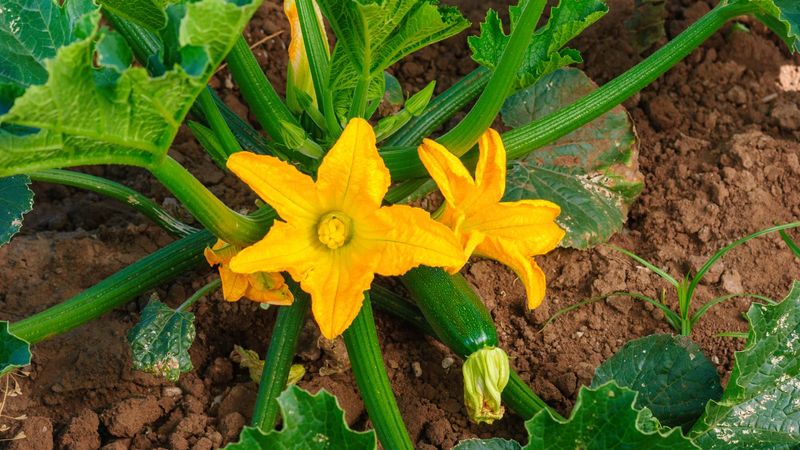
Watching your zucchini plants explode with leaves while the tiny fruits keep shriveling up is one of the most frustrating sights in a summer garden. The good news is that when female fruitlets form and then brown, shrivel, or abort, inadequate pollination is often a strong first suspect worth testing before you assume something is seriously wrong. Heat can quietly disrupt the whole pollination chain, from the insects that carry pollen to the pollen itself. A quick morning check and a simple hands-on test can tell you a lot about what is actually happening out there.
Start with the fruitlet, not the foliage
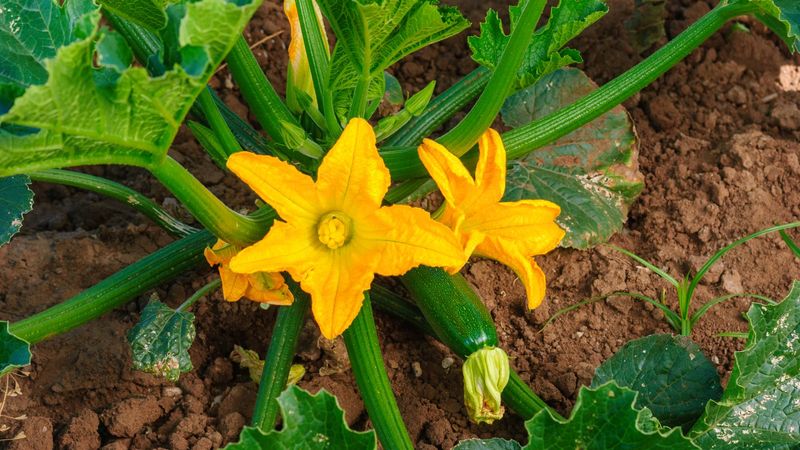
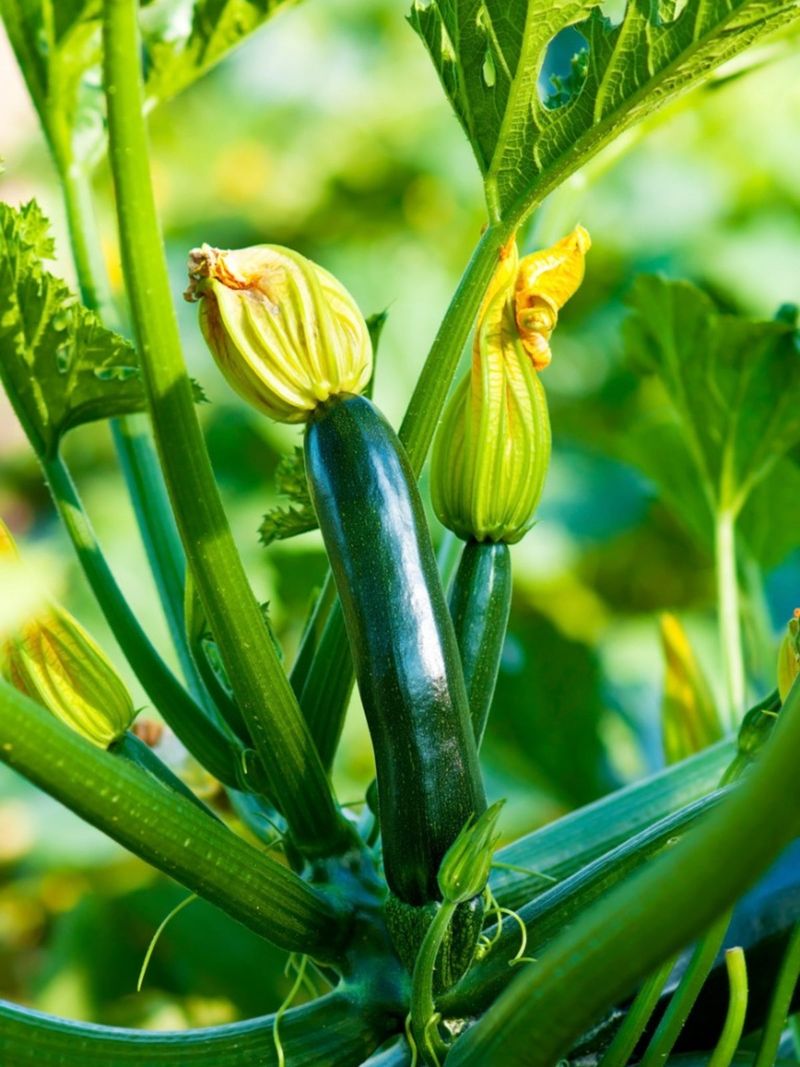
Before blaming the bees or the weather, crouch down and look at what is actually happening behind those blossoms. The clue that points toward a pollination problem is not a wall of leaves – it is a specific fruitlet pattern. You want to see whether tiny zucchini are forming behind female flowers and then stopping short: staying undersized, turning yellow or brown, shriveling up, aborting entirely, or growing into a crooked or flattened shape. UC IPM’s guide to poor pollination in cucurbits identifies these symptoms – small, shriveled, misshapen, or aborted fruitlets – as the hallmark signs that pollen transfer may have fallen short.
Slicing open a failed fruitlet and finding few or undeveloped seeds inside adds another supporting clue to that picture. Without enough viable pollen reaching the female flower’s stigma, the developing zucchini simply does not receive the signal it needs to grow normally, and the plant drops it.
A plant loaded with foliage but carrying no female flowers at all tells a different story. Zucchini routinely produces a flush of male flowers before female flowers appear, especially early in the season, and that is completely normal development rather than a sign of failure. Poor pollination becomes a reasonable working theory only when female flowers are present and the fruitlets that follow them repeatedly collapse. Heat stress, inconsistent watering, pest injury, disease, and excess nitrogen can all produce nearly identical symptoms, so keep those possibilities in mind as you investigate.
See how heat interrupts fruit set
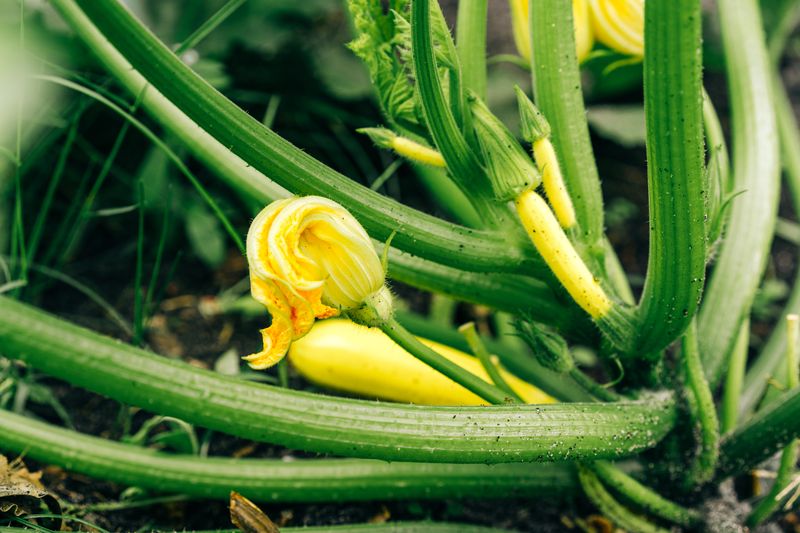
Zucchini is what botanists call monoecious, meaning it produces separate male and female flowers on the same plant rather than flowers that contain both sexes. Pollen has to travel from a male flower to the sticky stigma at the center of a female flower before that female blossom can develop into a full zucchini. In most home gardens, insects make that trip happen.
Hot weather can quietly disrupt every link in that chain. When temperatures climb and stay high, bees and other foraging insects often reduce their activity or shift their foraging hours, which means fewer visits to your squash blossoms during the window when those flowers are receptive. University of Minnesota Extension notes that daytime temperatures around 90 degrees F combined with nighttime temperatures around 70 degrees F can push vine crops like squash toward producing more male flowers and fewer female flowers, though these figures are approximate rather than a universal biological cutoff. Cultivar, how long the heat lasts, local humidity, and the plant’s water status all influence how severely flowering is affected.
Heat can also reduce pollen viability and germination directly. Even if a bee does visit a female flower, pollen that has been stressed by high temperatures may not germinate on the stigma reliably, leaving the fruitlet without the fertilization signal it needs. UC IPM’s cucurbit pollination resource confirms that reduced pollen performance is one of the recognized pathways to fruit loss during hot spells. Understanding these overlapping effects helps explain why a single heat wave can leave an otherwise healthy plant with a string of collapsed fruitlets and no obvious culprit on the surface.
Confirm that both flower types are available
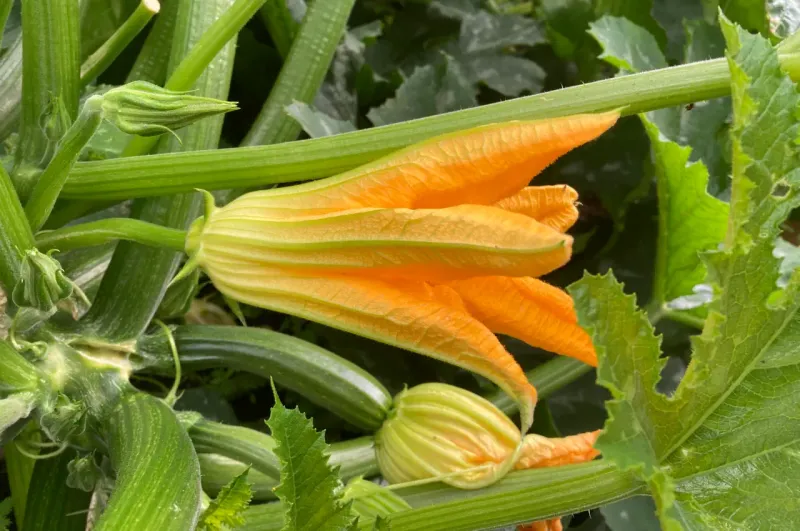
Reaching for a paintbrush before you know what flowers are open is a wasted trip. Spend two minutes doing a quick inventory first, because hand pollination can only help when both a fresh male flower and a receptive female flower are open at the same time.
Telling the two apart is straightforward once you know what to look for. A female flower has a small, undeveloped zucchini swelling directly behind the petals – that miniature fruit is unmistakable once you see it. University of Minnesota Extension confirms that only female flowers can develop into zucchini, so that swelling is the only part of the plant that will ever become fruit. A male flower, by contrast, sits on a narrow, plain stem with no swelling beneath the petals at all.
Early in the season, or after a stretch of stress, a plant can produce a run of male flowers without a single female flower appearing alongside them. University of New Hampshire Extension notes that this male-heavy flush is a normal part of squash development and should not automatically be read as a pollination failure. If you are seeing only male flowers, the plant simply has not reached the stage of producing receptive females yet, and waiting is more productive than worrying. Hand pollination cannot create fruit from a male flower alone, and it cannot conjure female flowers that are not there – so confirming that you have both types open on the same morning is the essential first step before any hands-on intervention.
Transfer fresh pollen during the morning
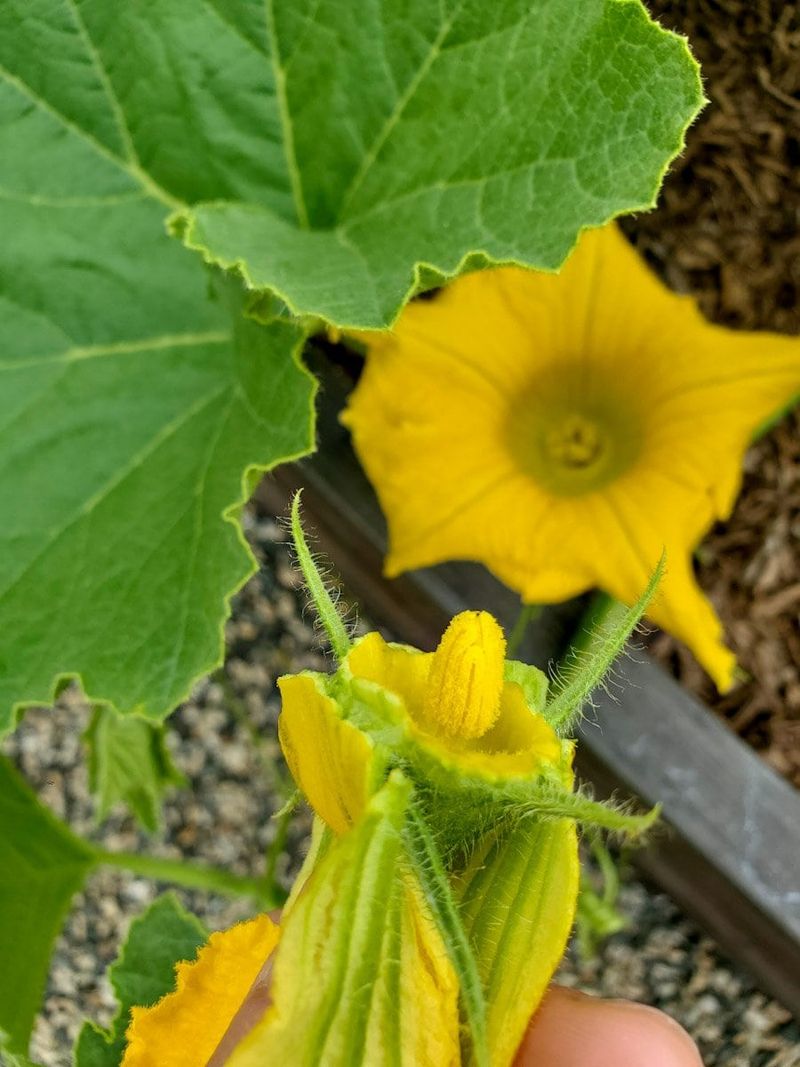
Once you have confirmed that both a fresh male flower and a receptive female flower are open at the same time, you can run a simple pollination test. Think of it as a targeted experiment rather than a guaranteed repair: if inadequate pollen transfer has been the limiting factor, this procedure gives the female flower a much better chance of receiving enough pollen to set fruit normally.
Timing matters more than technique. Squash blossoms generally open during the morning and remain receptive for part of a day, so the earlier you get out there, the more likely you are to catch flowers at their peak. University of New Hampshire Extension recommends working in the morning while blossoms are fully open. Pick a male flower that is carrying visible yellow pollen at its center – a dull or pollen-free anther is a sign the flower is past its prime or was stressed during development.
To transfer the pollen, gently remove or fold back the petals of the male flower to expose the pollen-bearing anther, then lightly touch or dab that anther directly against the stigma in the center of the open female flower. UC ANR research on fruit set problems in squash notes that zucchini pollen is relatively heavy and sticky, which is exactly why insect contact matters and why a direct transfer by hand can substitute when insect visits are inadequate. A small, clean paintbrush works as an alternative if you prefer not to use the whole flower. UC IPM’s cucurbit pollination guidance frames hand pollination as a legitimate rescue measure for home gardeners, not a promise that every treated flower will develop into a harvestable zucchini.
Reduce the stresses that compete with pollination
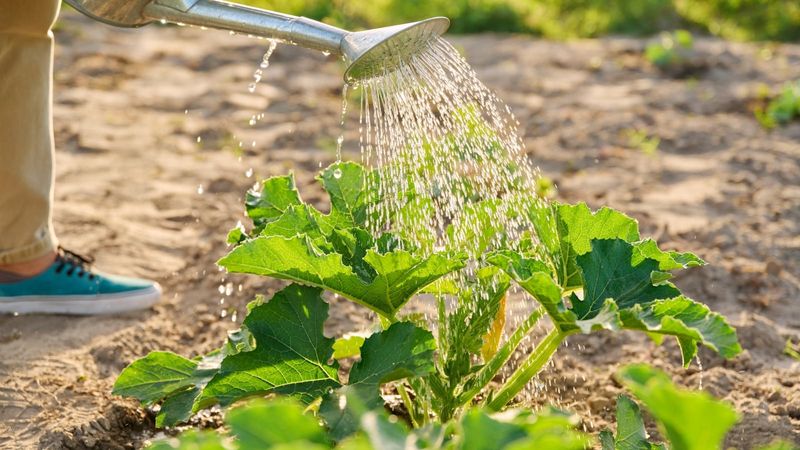
Hand pollination works best when the plant is not fighting multiple problems at once. Supporting the plant’s overall health during a heat stretch gives any pollinated female flower the best possible environment to follow through on fruit development.
Water stress is one of the most direct competitors with successful pollination. A published study on drought-induced pollen limitation in bee-pollinated squash found that soil moisture manipulation can affect pollen performance and fruit set, reinforcing the value of keeping soil consistently moist without letting it become waterlogged. Watering at the base of the plant rather than wetting the foliage helps reduce the risk of fungal issues. The goal is to prevent drought and severe water stress, not to claim that any particular watering method will single-handedly restore fruit production.
Fertility is worth looking at honestly too. University of Minnesota Extension’s fertilizing guidance makes clear that excess nitrogen can push plants toward vigorous leafy growth while delaying or reducing flowering and fruiting. A lush, overgrown plant is not automatic proof of a nitrogen problem – heat, water, and pollination issues can produce the same look – but adding more nitrogen by guesswork when the plant already looks leafy is unlikely to help and may make things worse. If you suspect a fertility imbalance, a soil test gives you something concrete to act on rather than guessing.
Harvesting mature zucchini promptly is another simple habit worth keeping. Colorado State University Extension recommends prompt harvesting to support continued fruit production, since leaving oversized fruits on the plant can slow or reduce the development of new ones. It will not correct an existing pollination failure, but it removes one more obstacle to continued production while you work through the other steps.
Know when pollination is only part of the problem
Hand pollination is a useful test, but it has real limits, and recognizing those limits saves you from chasing the wrong fix. Several other conditions produce fruitlets that abort, shrivel, or grow misshapen, and they can operate alongside a pollination shortfall or entirely on their own.
Few female flowers, severe heat or drought that the plant cannot recover from, pest feeding on developing fruit, bacterial or fungal disease, rot, low light from crowding or shade, heavy rain that washes pollen away, and poor soil structure can all cause fruit loss that looks identical to a pollination failure. UC IPM’s cucurbit resource treats a shriveled fruitlet as a symptom to investigate rather than automatic evidence of disease or a single cause. If your hand-pollination attempts do not improve the pattern after several tries, broaden your inspection to those competing stresses before drawing a conclusion.
The insects visiting your squash are more varied than most gardeners realize. Squash bees, bumblebees, honeybees, and other insect visitors all contribute to pollination, and University of Florida IFAS Extension’s guide to pollination of Cucurbita crops describes the range of bee species involved. Additionally, UMass Extension’s vegetable notes on summer squash point out that some zucchini and summer squash cultivars can set fruit parthenocarpically – without normal pollination – so the idea that every zucchini absolutely requires insect transfer is not universally true.
Protecting the pollinators you do have is worth the effort. Avoid applying insecticides to blooming squash whenever possible. EPA guidance on pollinator protection recommends applying any necessary products when bees are not actively foraging, following the label and its pollinator restrictions exactly, and preventing spray drift onto open flowers. A simple next-morning checklist – look for open female flowers, check for fresh male pollen, transfer if both are present, note whether the fruitlet holds or drops over the next few days – gives you repeatable data.
If the fruitlets keep failing after a week of consistent hand pollination, the plant is telling you to look somewhere else. University of Maryland Extension’s pollination resource reinforces that hand transfer has limited benefit when severe stress, disease, or inadequate female-flower production is the underlying issue. The most useful thing a gardener can do at that point is keep observing carefully – the plant almost always shows you the next clue.