

Spotting a fox trotting through your yard at dusk can stop you in your tracks – and your first instinct might be to call animal control or grab a spray can. Before you do either, knowing why that fox keeps showing up may change how you respond. North Carolina homeowners share their landscapes with two native fox species, both of which hunt small mammals that can host ticks. Understanding what the fox is actually doing, and what it cannot do for you, puts you in a much better position to protect your family, your pets, and the wildlife that belongs here.
The fox is probably using your yard as a route or resource
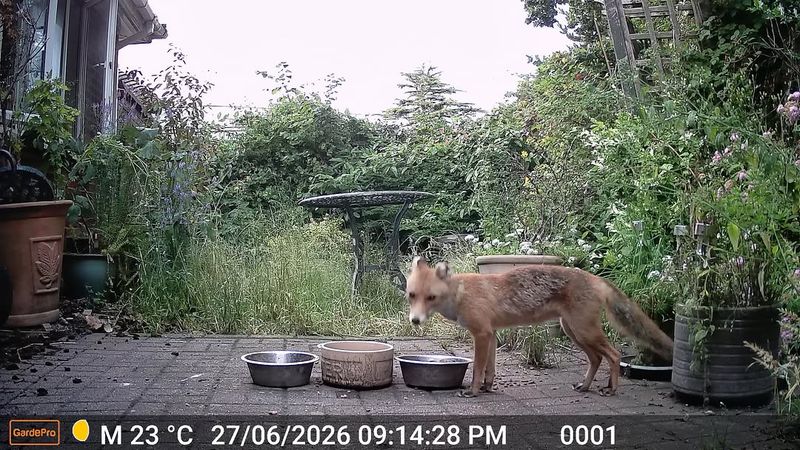
Repeated fox sightings rarely mean what people fear most. A fox crossing your yard several times a week is not necessarily denning under your porch, responding to a major rodent infestation, or performing any kind of deliberate pest management. More often, the animal is moving through because your property sits along a useful path between habitat patches, or because it offers something worth investigating: a brush pile, a low fence, a stretch of lawn that borders woods.
North Carolina is home to both red foxes and gray foxes. The NC Wildlife Resources Commission notes that red foxes use a wide range of habitats, from farmland and forest edges to suburban neighborhoods. The gray fox profile from NC Wildlife confirms that gray foxes occur statewide and are equally comfortable in developed landscapes, including residential areas with mature trees and shrubby cover.
A fox may visit because your yard connects two wooded patches, because a neighbor’s compost pile or bird feeder has attracted mice, or simply because the animal has learned that a particular route through several properties tends to produce food. Research on mesocarnivores in residential yards from the USGS confirms that yard features like cover, food availability, and connectivity to other habitats influence which predators use a space and how often.
None of that means the fox has claimed your yard as territory or that it is systematically working through a rodent population on your behalf. A single sighting, or even a regular pattern, does not tell you what the animal found on any given pass. Treat the visit as information about your landscape, not as a diagnosis of what lives in it or a promise of what the fox will do next.
Rodent hunting may help, but it does not promise control
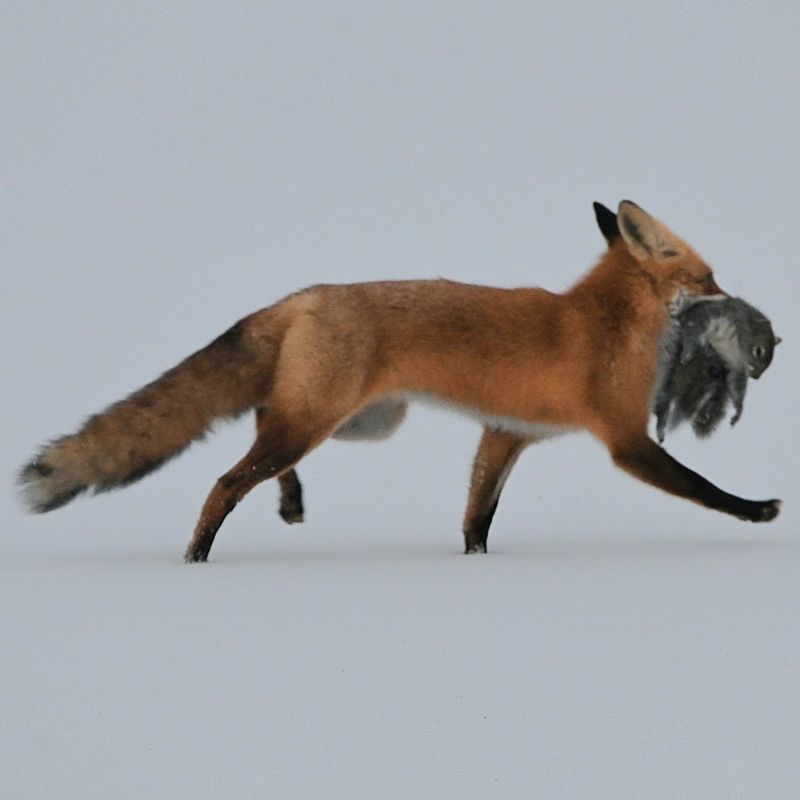
Foxes genuinely do hunt small mammals, and that part of their diet is well documented for North Carolina. NC Wildlife’s red fox page lists mice, meadow voles, and rabbits as core prey items, and notes that red foxes also eat insects, birds, eggs, fruit, and carrion depending on what is available. The gray fox profile describes a similarly broad diet that includes mice, rabbits, fruit, and agricultural crops.
Importantly, NC Wildlife describes foxes’ appetite for mice and rats as something that can benefit homeowners and farmers. The agency’s 2026 spring wildlife encounter guidance reinforces this framing: foxes are described as generally beneficial wild neighbors, partly because of what they eat. That is a useful piece of context, not a guarantee of results.
The gap between “foxes eat rodents” and “the fox in your yard is controlling your rodent population” is significant. One fox traveling a hunting circuit that covers several properties may catch a handful of mice and voles over a week. Whether that meaningfully reduces the number of rodents on your specific lot depends on how many animals are present, how quickly they reproduce, what other food sources are drawing them in, and how much suitable habitat exists nearby. Rodents breed quickly; a single predator rarely keeps pace with that rate under ordinary suburban conditions.
A fox visit can reasonably be understood as one small, uncontrolled contribution to the local food web. Framing it as a rodent-control service sets expectations the animal cannot reliably meet, and it risks leading homeowners away from the practical steps that actually reduce rodent attraction and tick exposure around the yard.
The rodent-to-tick connection has several missing steps
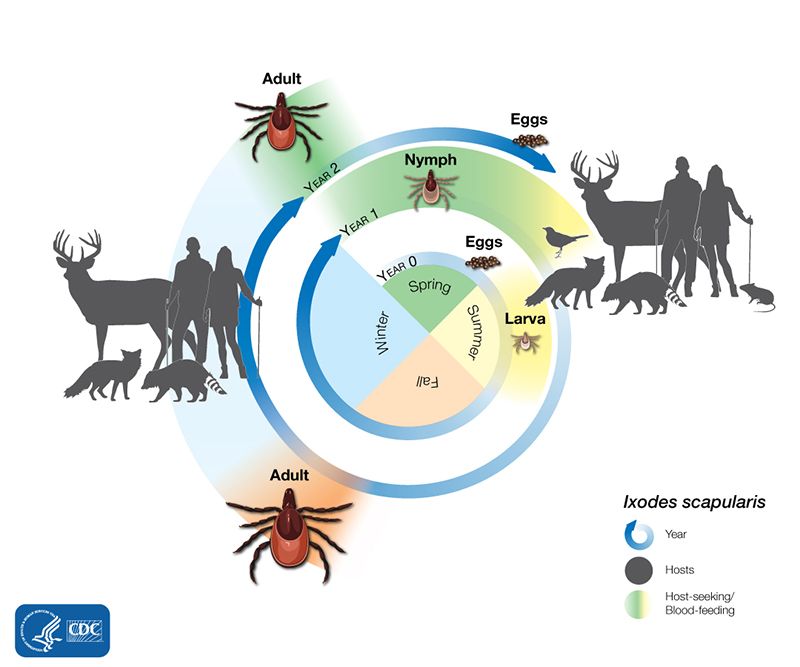
Ticks do not live their entire lives on one host. CDC guidance on tick life cycles explains that most medically important ticks require a blood meal at three separate stages: larva, nymph, and adult. Each stage may feed on a completely different host species. Small mammals can be important hosts at the larval and nymph stages, but the same tick may later feed on a deer, a dog, a bird, or a person.
Removing one type of host from the equation does not automatically reduce the tick population when other hosts remain available.
Not all rodents participate equally in tick and pathogen cycles, either. White-footed mice are well-established reservoirs for the bacterium that causes Lyme disease in much of the eastern United States, as documented in published research on spatiotemporal variation in Lyme disease hosts and vectors. Meadow voles, rats, and other rodents vary considerably in how efficiently they maintain and transmit pathogens – a distinction that matters when evaluating what a fox’s prey choices actually mean for disease risk. The CDC’s tick identification resource also notes that birds, reptiles, rabbits, deer, pets, and people all serve as tick hosts at various life stages.
A study on the effect of rodent density on tick and tick-borne pathogen populations found that the relationship between rodent abundance and tick-borne disease risk is not straightforward: tick abundance and infection rates depend on the full community of hosts, not just the number of rodents present. And experimental work on white-footed mouse reservoir competence underscores how much host identity matters, not just host abundance.
What this means practically: even if a fox catches several rodents around your yard this week, the ticks those rodents were carrying may already have moved on to other hosts, and new ticks from birds or deer may arrive regardless. Fox predation is one small input in a system with many moving parts.
North Carolina does not follow a simple Northeast Lyme script
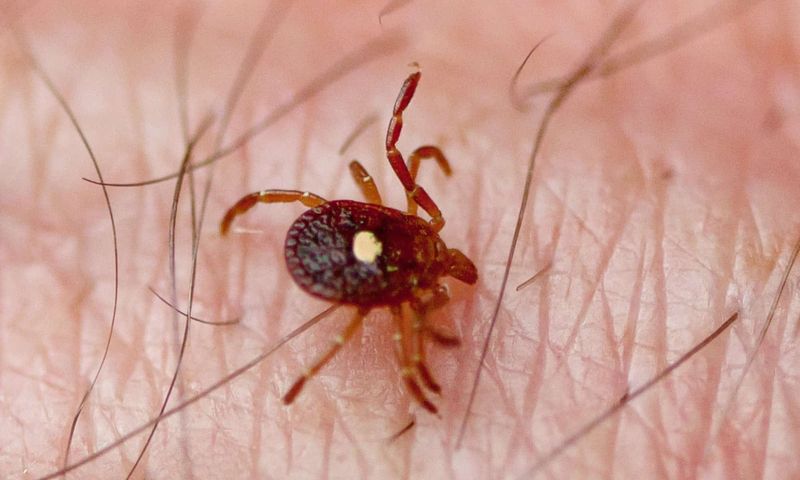
Tick-borne illness in North Carolina looks different from the picture most people have in their heads from news coverage focused on the Northeast. The NC DHHS tick-borne illness page identifies the lone star tick, the American dog tick, and the blacklegged tick as the most important human-biting species in the state. The diseases they transmit include ehrlichiosis, Rocky Mountain spotted fever and other spotted-fever illnesses, Lyme disease, anaplasmosis, and STARI.
Spotted-fever illnesses, including Rocky Mountain spotted fever, represent a significant share of North Carolina’s tick-borne disease burden. State tick-borne illness figures and the 2024 NC tickborne disease annual report both reflect a disease profile that is broader than the Lyme-centric story told about northern states. CDC maps of tick distribution confirm that North Carolina sits within the range of all three of those ticks.
The ecology underlying these differences is meaningful. Research published in PMC examining why Lyme disease is common in the northern U.S. but rare in the South found that in southern sites, blacklegged tick larvae attach more frequently to lizards than to rodents. Because lizards are less competent reservoirs for Lyme-causing bacteria than white-footed mice, this host shift helps explain why Lyme disease remains less common in the Southeast despite the presence of the tick vector.
For North Carolina homeowners, the takeaway is practical: the “fox eats mice, therefore fewer Lyme ticks” logic that circulates online is built on a northern ecology that does not map cleanly onto your yard. Local tick risk involves multiple species, multiple diseases, and a host community that includes lizards, birds, and deer alongside rodents. A fox sighting does not tell you anything specific about your yard’s disease exposure, and reducing one type of prey does not simplify a system this complex.
Make the yard less attractive to rodents and habituated foxes
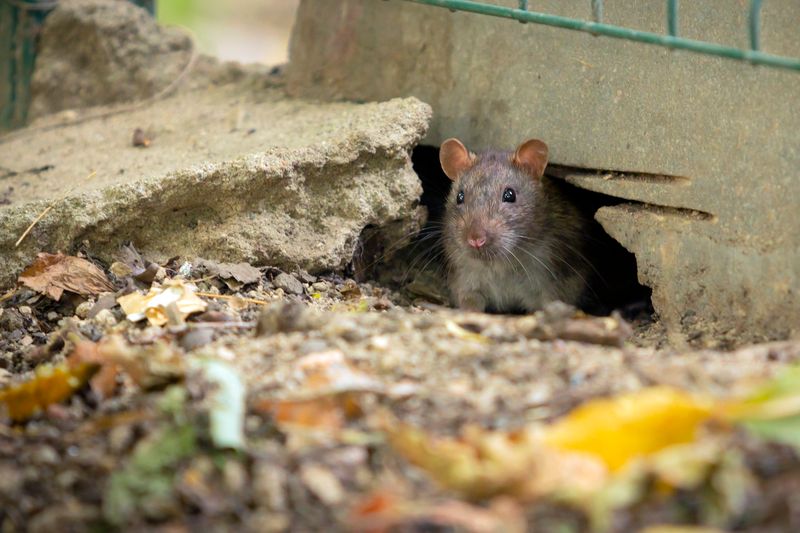
Rodents do not show up in yards by accident. They follow food, cover, and easy access into structures. Addressing those three things reduces the conditions that draw rodents in and, as a side effect, removes some of what may be attracting a fox to return repeatedly. CDC guidance on controlling wild rodent infestations recommends storing food in sealed containers, keeping garbage in lidded cans, removing clutter that provides nesting cover, and sealing openings larger than a quarter-inch in foundations, walls, and around utility penetrations.
Bird feeders deserve specific attention. Spilled seed on the ground is a reliable mouse magnet, and a mouse population under the feeder is exactly the kind of resource a fox will notice and return to. Clean up fallen seed regularly, or switch to a no-mess blend and a tray feeder that catches hulls. Fallen fruit from trees carries the same risk – rake it up before it ferments and starts drawing animals from several properties away.
NC Wildlife’s guidance on preventing wildlife conflicts includes these steps as part of a broader approach to reducing the conditions that bring wild animals close to homes.
Pet food left outdoors overnight is another common attractant for both rodents and foxes. Feed pets inside, or bring bowls in promptly after meals. Store firewood in a neat, dry stack away from the house rather than in loose piles against the foundation, which provide excellent rodent cover. NC Wildlife’s responsible feeding guidance makes clear that supplemental feeding of foxes is not appropriate: it reduces their natural wariness of people, increases the chance of conflict, and can concentrate animals and disease exposure in one spot.
The NC Wildlife coexist-with-foxes resource echoes this advice directly. These steps are not about punishing the fox or trying to erase wildlife from the neighborhood. They are about managing your property in a way that reduces risk for your household without creating conditions that make coexistence harder for both sides. And paired with the CDC’s tick prevention recommendations, they form the practical foundation of a yard that is genuinely less hospitable to the whole chain: rodents, ticks, and the pathogens some of them carry.
Coexistence still requires boundaries
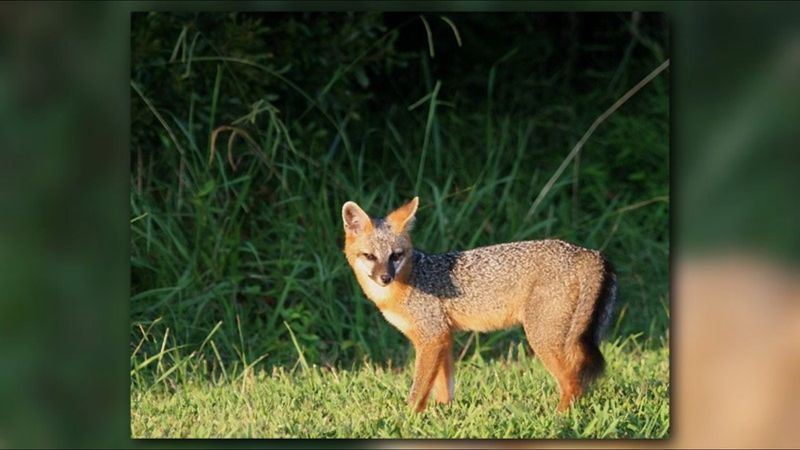
Watching a fox move through your yard from a distance is generally fine. Getting closer, offering food, or trying to handle the animal is not. NC Wildlife’s 2026 spring encounter guidance advises homeowners not to approach, feed, or attempt to medicate wild foxes, and to allow the animal space to leave on its own. A fox that is given no food reward and no easy access to shelter under structures will typically continue along its route without incident.
Poultry, rabbits, and small pets need active protection where foxes are present. The NC Wildlife coexistence guide recommends fully enclosed runs with hardware cloth rather than chicken wire, secure latches, and covered tops for outdoor birds and rabbits. Dogs should be leashed during outdoor time in areas where fox encounters are frequent, and cats are safest kept indoors or supervised. These are straightforward precautions, not extreme measures.
Daytime fox activity does not automatically signal a health problem. NC Wildlife confirms that foxes can be active during daylight hours, particularly in spring and summer when they are raising young or expanding their ranges. The behaviors that genuinely warrant concern are different: unprovoked aggression toward people or animals, staggering, obvious disorientation, or foaming at the mouth. Those signs may indicate rabies or another serious illness.
If you observe them, keep people and pets away and contact your local animal control or NC Wildlife officer.
If a fox bites or scratches a person or a pet, do not wait to see what happens. NC Wildlife’s wildlife handling guidance and CDC rabies public health information both identify foxes as potential rabies-vector species. Contact a healthcare provider, your veterinarian, or your local health department promptly after any exposure. One more boundary worth knowing: NC Wildlife’s wildlife problem guidance states clearly that relocating foxes is illegal in North Carolina because of disease-spread concerns and the poor survival outcomes for relocated animals.
Build a tick-safer yard instead of spraying at the fox

Yard management remains the most reliable tool available to North Carolina homeowners who want to reduce tick exposure, and it works whether or not a fox ever visits. CDC tick prevention guidance recommends removing leaf litter, mowing regularly, and clearing tall grass and brush from the areas around the house where people and pets spend time. Ticks do not travel far on their own; they wait on vegetation for a host to brush past. Keeping that vegetation short and open near patios, play areas, and frequently walked paths cuts the chance of contact.
A roughly three-foot barrier of wood chips or gravel placed between the lawn and any wooded or brushy edge is a specific measure the CDC describes as a way to reduce blacklegged tick movement into yard spaces. The CDC Tick Management Handbook notes that results from this barrier can vary depending on shade, the density of adjacent woods, initial tick abundance, and how well the material is maintained over time. It is a useful risk-reduction tool, not a perimeter seal. CDC Lyme prevention guidance pairs these yard steps with personal protection: use EPA-registered repellents, wear long sleeves and light-colored clothing in brushy areas, and do a full-body tick check after time outdoors.
Pets need their own tick prevention. Talk to your veterinarian about a tick preventive product appropriate for your dog or cat, and check pets after outdoor time just as you would check yourself. Ticks carried indoors on a pet can detach and find a human host.
Pesticides have a place in tick management, but they are not a first response to a fox sighting or a substitute for the habitat work. EPA pesticide safety guidance recommends using nonchemical methods where possible and turning to pesticides only when a specific need has been identified. Any product used must be EPA-registered and applied exactly according to its label, which is also a legal requirement. EPA label guidance covers required safeguards for children, pets, and wildlife – keep people and animals away from treated areas as the label directs, and never spray toward a fox, its den, or any wild animal.
Let the fox be one uncertain part of the yard’s food web
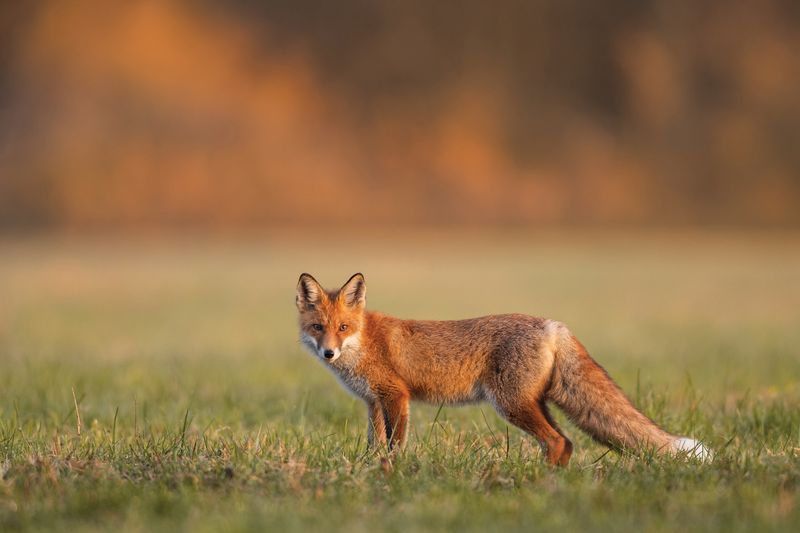
A fox moving through your North Carolina yard may well be hunting mice, voles, or rabbits nearby. That is a real part of what foxes do, and it contributes something small and uncertain to the local food web. But NC Wildlife’s own framing is measured: foxes can be beneficial neighbors, not guaranteed pest-control contractors. The animal cannot certify that your yard is free of ticks, and its presence does not replace any of the practical steps that actually reduce your family’s exposure.
The reliable order of operations stays the same regardless of what wildlife visits your property: remove food attractants, rodent-proof the yard and structures, protect pets and poultry with secure enclosures, maintain lower-risk yard zones through mowing and leaf management, check yourself and your pets for ticks after time outdoors, and use appropriate tick prevention products for animals. If wildlife behavior becomes dangerous or a bite or scratch occurs, follow up promptly with a healthcare provider, veterinarian, or local health department – as NC Wildlife’s encounter guidance and CDC tick prevention resources both advise.
The fox trotting through your yard at dusk is doing what foxes have always done in this landscape – moving, hunting, surviving. Letting it pass without interference, while keeping your own yard well-managed, is the most sensible response available. A wild neighbor does not owe you a service, but a well-kept yard owes you the best odds it can offer.