
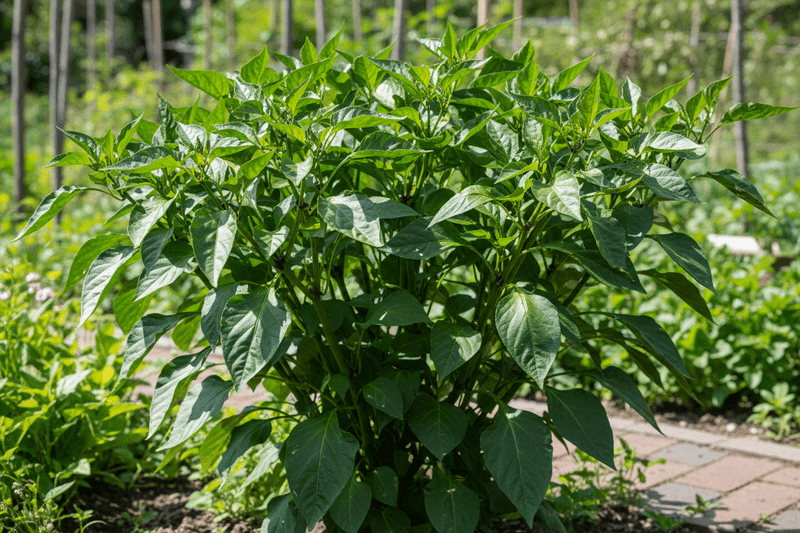
You step outside expecting to find peppers forming on your plants, but all you see are enormous leafy stems and maybe a handful of dropped flower buds on the ground. That picture is genuinely frustrating, and you deserve a straight answer about what is actually going on. The truth is that excess nitrogen can play a role, but summer heat is just as likely to be the real problem, and sorting out which one is hurting your harvest changes what you should do next.
Lush foliage is a clue, not a diagnosis
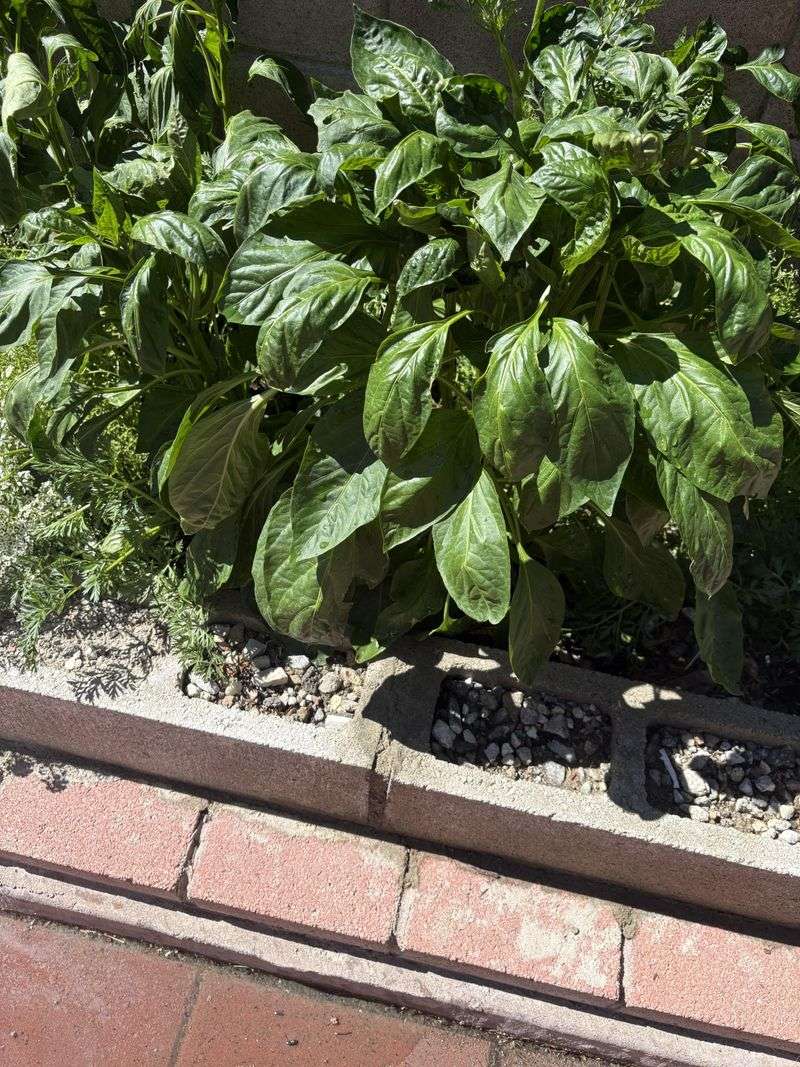
A pepper plant that looks more like a shrub than a vegetable is telling you something, but it is not telling you everything. University of Minnesota Extension notes that overfertilized peppers can become bushy and leafy while bearing fruit slowly, so excess nitrogen is a real possibility worth investigating. But foliage alone cannot confirm that diagnosis, and jumping straight to that conclusion can send you chasing the wrong fix.
Several other explanations produce the same picture. High heat and warm nights can cause flowers to drop before they ever develop into fruit, even on plants that look perfectly vigorous. Uneven watering, inadequate light, root problems, disease, cultivar differences, or simply a lag between flowering and the point when peppers become visible can all contribute. UMN’s fertilizing guide also points out that nutrient problems often look similar to each other and may involve more than one cause at the same time.
The most useful thing to do right now is compare the full picture: how many flowers are actually forming, whether you see dropped buds on the soil, what temperatures have looked like over the past few weeks, how consistently the soil has stayed moist, and what you have fed the plant. A leafy plant paired with dropped flowers during a heat wave points somewhere very different than a leafy plant that never flowers at all.
Check whether nitrogen has been overapplied
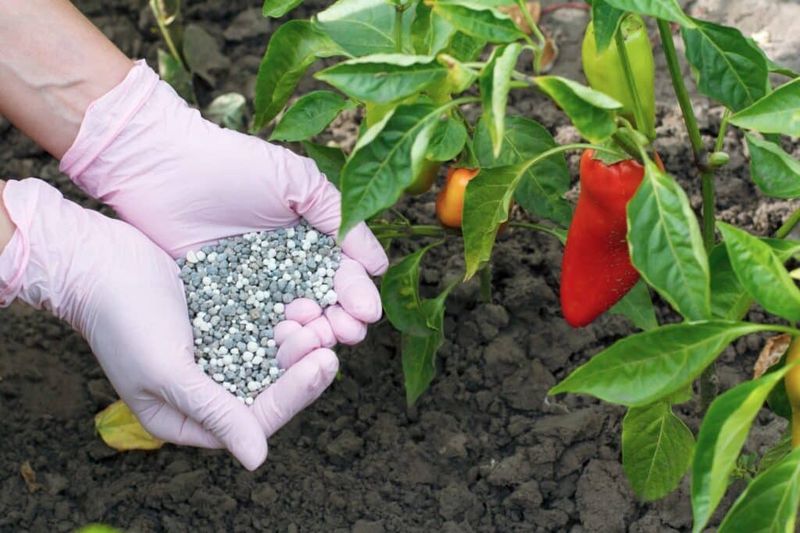
The fertilizer habit that can genuinely delay pepper fruiting is not simply using fertilizer. The problem arises when more available nitrogen reaches the plant and soil than the crop actually needs, and that condition can develop gradually through repeated applications over a growing season.
Common sources worth reviewing include frequent high-nitrogen liquid feeds, lawn-type granular fertilizers applied near the vegetable garden, and manure-based amendments, especially fresh or partially composted ones that release nitrogen quickly. None of those products is automatically harmful. What matters is the total nitrogen available from all sources combined, the timing relative to the crop stage, the amount applied each time, and what the soil already holds. UMN Extension and Utah State Extension both describe overfertilized peppers as unusually bushy and slow to bear, and USU’s pepper guide specifically links excess fertilizer to delayed fruit set and maturity.
Rather than assuming the plant is overfed because it looks lush, walk through your actual feeding history. How many times have you applied fertilizer since transplanting? What did the label show for nitrogen percentage, and how much did you use each time? Did you also add compost, amendments, or any other product that contributes organic matter?
UMN’s fertilizer selection guidance recommends choosing products based on soil-test results rather than general habit, which is the clearest way to know whether you have genuinely supplied more than the plant requires.
Heat may be dropping the flowers
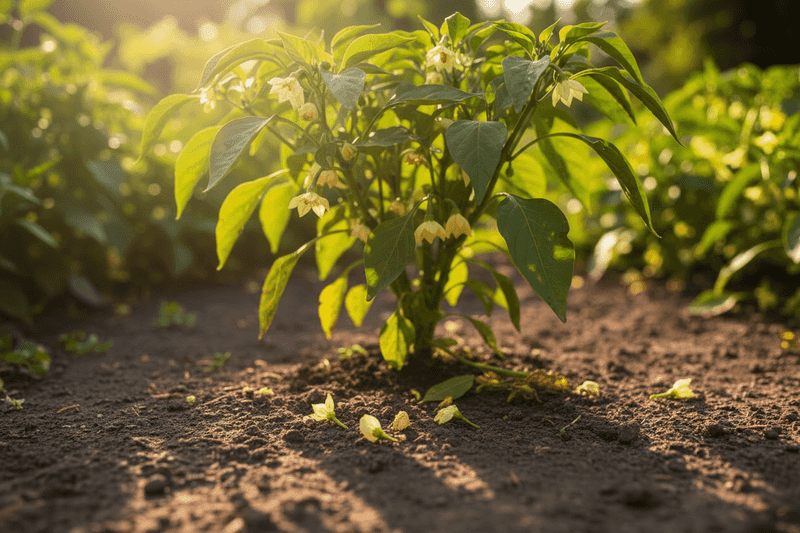
August heat is not a minor background factor for peppers. It is one of the most reliably documented reasons bell peppers fail to set fruit, and it can operate completely independently of what you have or have not fed the plant.
Oklahoma State University Extension reports that very little fruit sets when daytime temperatures exceed 90 degrees Fahrenheit or when nighttime temperatures stay above about 75 degrees, with the best fruit-setting window falling roughly between 65 and 80 degrees. Those numbers are useful reference points, not hard universal cutoffs, because individual cultivars, local humidity, and soil conditions all influence where a plant’s threshold actually falls. Bell pepper types tend to be more sensitive to heat-related flower abortion than some small-fruited hot pepper varieties, so the same weather that barely affects a jalapeño plant can shut down a bell pepper entirely.
The clearest sign that heat is the primary cause is finding dropped flower buds on the soil surface during or shortly after a stretch of very hot days. UMN Extension identifies high heat as a cause of flower drop in peppers, and Illinois Extension’s pepper production analysis notes that extreme heat may be the real explanation even when a plant looks extremely vigorous and well-fed. A lush plant dropping flowers during a heat wave is not necessarily overfertilized. It may simply be too hot to complete the reproductive process.
Pause unnecessary feeding and check the soil
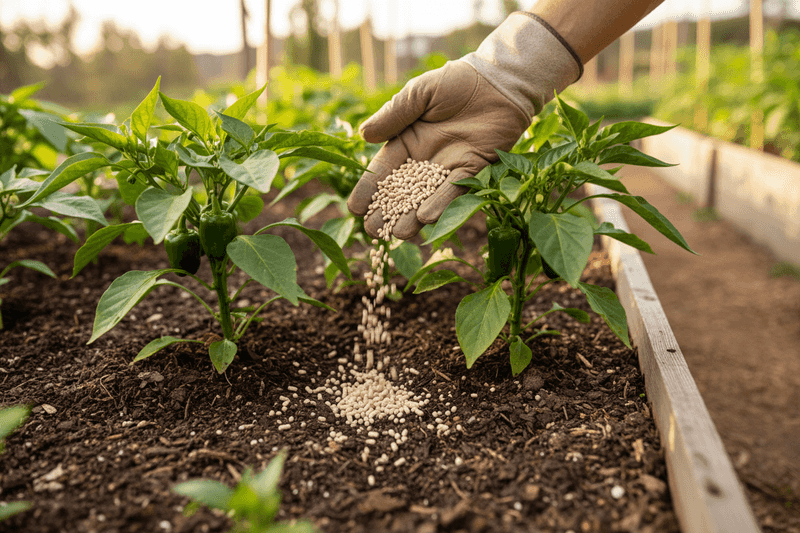
If your feeding history suggests you have applied nitrogen more often or in larger amounts than the plant and soil require, the practical first step is to stop additional nitrogen applications for now. Pausing prevents the situation from getting worse, but it does not reverse what has already happened. Flowers that have already aborted will not set fruit retroactively, and a plant that has been building dense foliage will not instantly redirect energy toward fruit the moment you stop feeding.
Before making any correction, check the fertilizer label you have been using and calculate the nitrogen you have actually applied across the season. Then consider whether a soil test would give you a clearer picture of what the soil already holds. UMN’s soil test guide explains how to read results and use them to make targeted decisions rather than guessing. The UMN pepper guide specifically recommends choosing fertilizer according to soil-test results to avoid excess nitrogen and unnecessary phosphorus applications.
Resist the urge to compensate by switching immediately to a high-phosphorus bloom booster. UMN’s phosphorus management guidance warns that many soils already contain enough phosphorus and that unnecessary additions can accumulate and contribute to water-quality problems. Colorado State Extension and Utah State Extension both tie side-dressing recommendations to specific crop stages and soil conditions, which illustrates why no single corrective dose applies across all gardens. When in doubt, wait for a soil test before adding anything new.
Stabilize moisture and reduce peak heat
Once you have addressed the fertility question, the next lever you actually control is the growing environment around the plant. Consistent soil moisture is one of the most reliable ways to support pepper plants during a heat stretch, and it matters more than most gardeners expect.
Water deeply at the root zone rather than sprinkling from above, since wet foliage is more prone to disease and surface watering does not reach the deeper roots where uptake happens. UMN’s vegetable irrigation guidance notes that consistent moisture can help mitigate heat stress, while Oklahoma State Extension cautions that over-irrigation promotes root-rotting organisms. The goal is even moisture, not saturated soil. Apply several inches of organic mulch around the base of the plants to slow evaporation between waterings, which UMN’s pepper guide recommends as a standard practice for moisture retention.
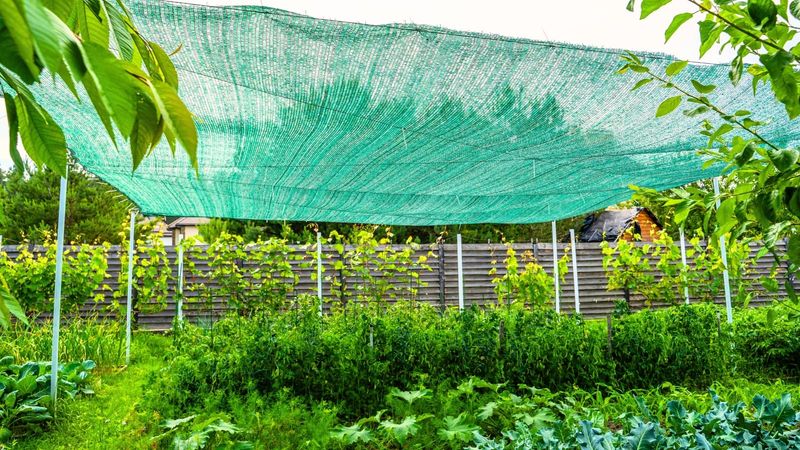
Temporary moderate shade during the hottest part of the day may reduce heat load on the plant and lower the risk of sunscald on developing fruit. UMN’s heat management guidance suggests 30 to 40 percent shade cloth during peak heat, while Utah State Extension describes 20 to 30 percent shade as useful when temperatures push above 90 degrees. Shade cloth is not a guaranteed path to fruit set, and heavy all-day shade can reduce light and productivity. Secure the cloth so it does not trap heat, allow ventilation, and remove or reduce it once the extreme heat period passes.
Match the remedy to the symptom
When a plant is struggling, the instinct to add something, whether a spray, a supplement, or a corrective product, is understandable. But several common rescue attempts do not address what is actually happening with heat-stressed or nitrogen-heavy peppers, and some can create new problems.
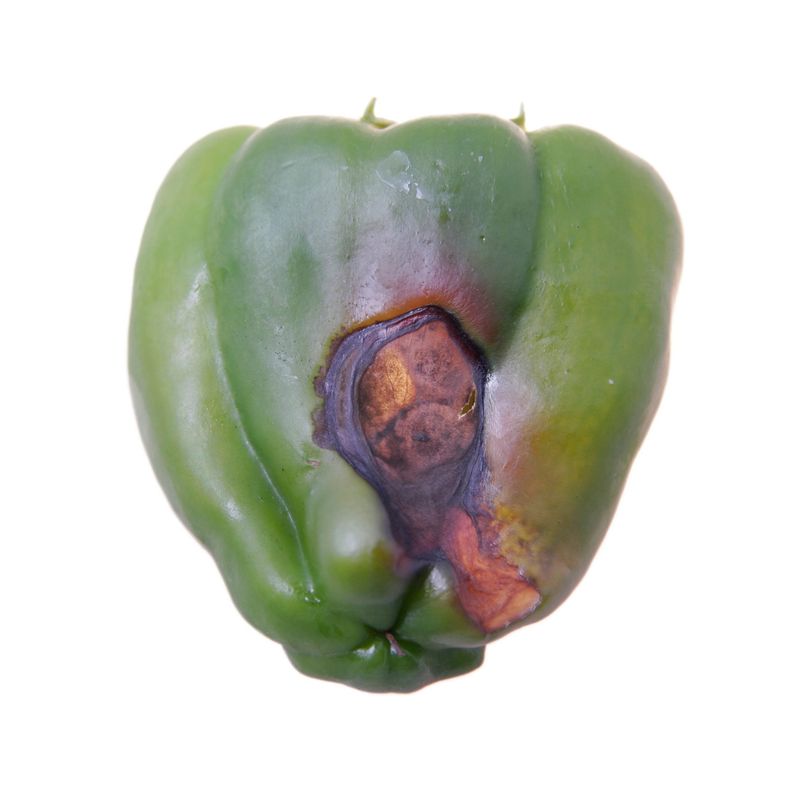
Blossom-end rot is a distinct issue that sometimes gets confused with failure to set fruit. It shows up as a dark, sunken, or leathery area at the bottom of a pepper that has already begun developing, and Illinois Extension links it to water movement and root stress rather than simply a calcium shortage in the soil. Treating it as a calcium deficiency by adding supplements is often unnecessary and may not help. UMN’s home-remedy review finds that Epsom salts do not improve plant productivity unless magnesium is genuinely deficient, can interfere with calcium uptake when overused, and may scorch leaves as a foliar spray.
Eggshells do not prevent blossom-end rot either.
Routine hand-pollination is not the primary fix for heat-related flower drop. Oklahoma State’s vegetable FAQ explains that pepper flowers are self-pollinating, and temperature stress can disrupt set before pollination becomes the limiting factor. Blossom-setting sprays are similarly unreliable under heat stress. Oklahoma State’s review of blossom-set sprays found little effect on fruit set during high-temperature conditions, and that finding should make gardeners cautious about applying comparable products to peppers without direct evidence of benefit.
Before adding any product, check flowers, soil moisture, temperatures, root health, and fertilizer history first.
Judge recovery by the next flowers
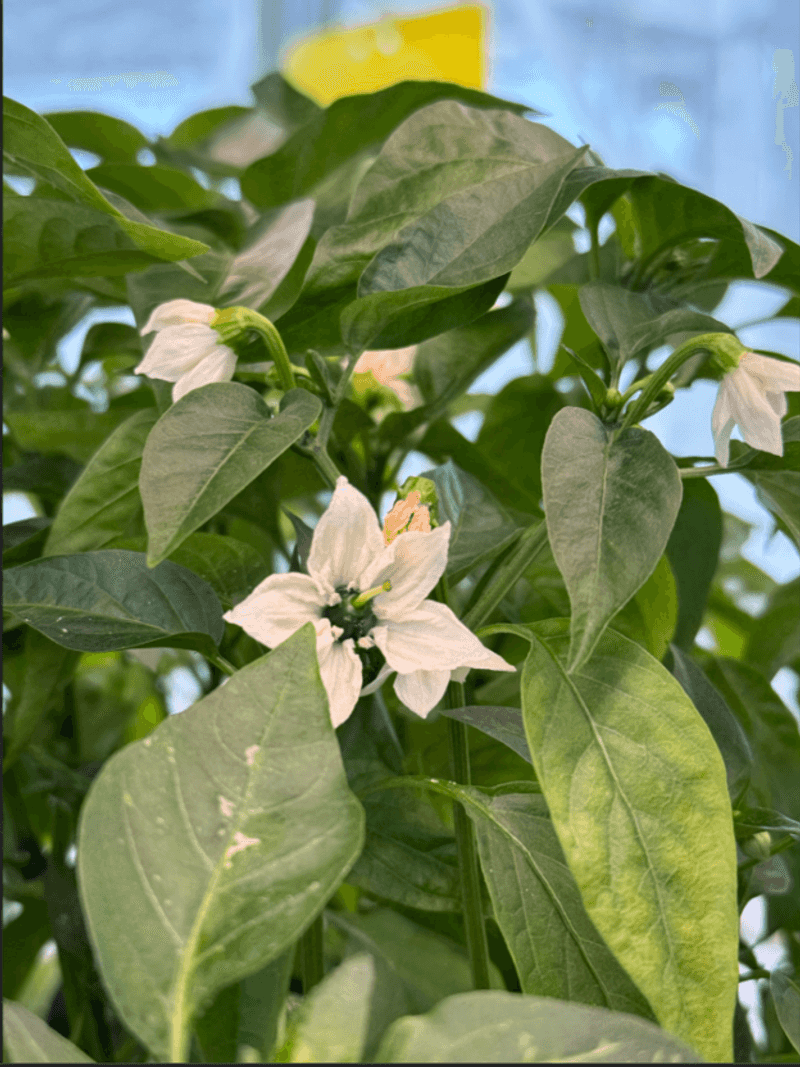
Flowers that dropped during the hottest weeks are gone, and no adjustment you make now will bring them back. What you are really waiting for is the next round of flowers, and whether those set fruit depends on whether conditions have improved enough for the plant to complete the process.
Illinois Extension’s pepper production analysis notes that peppers may begin producing more successfully after temperatures moderate, which is the most realistic timeline to hold onto. When you do see ripe or nearly ripe peppers on the plant, harvest them at your preferred maturity stage. UMN Extension confirms that continued harvesting encourages the plant to keep flowering and setting more fruit. That said, picking peppers will not restore aborted flowers or push through ongoing heat stress on its own.
The sequence that gives new flowers the best chance is straightforward: pause nitrogen if the feeding history suggests excess, keep soil moisture even, provide temporary shade if temperatures stay extreme, and get a soil test before changing fertility in any significant way. Recovery is not guaranteed, but new flowers forming as nights cool is the clearest sign that the plant is ready to try again. Peppers are more resilient than a bad August makes them look.