
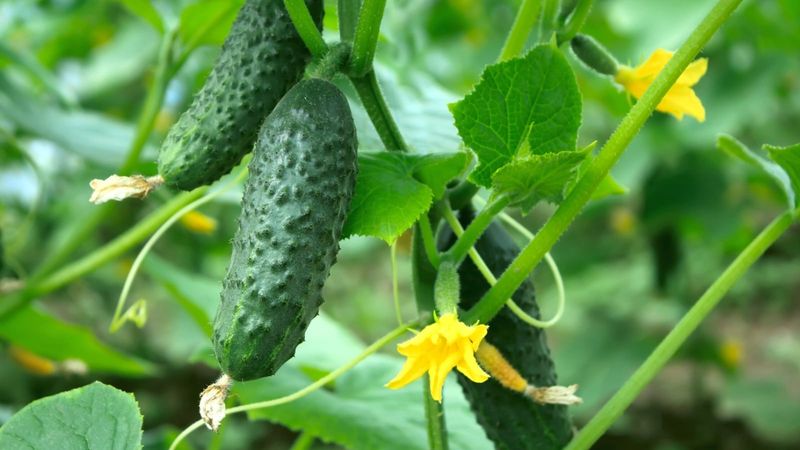
Biting into a cucumber you grew yourself and tasting something sharp and unpleasant is genuinely frustrating, especially after a brutal stretch of heat. The good news is that bitter cucumbers are not random bad luck, and the fix is more within your control than it might feel right now. Understanding what actually triggers that off flavor can help you protect the next flush of fruit your plants produce this season.
Cucurbitacins cause bitterness, but harvest timing still matters
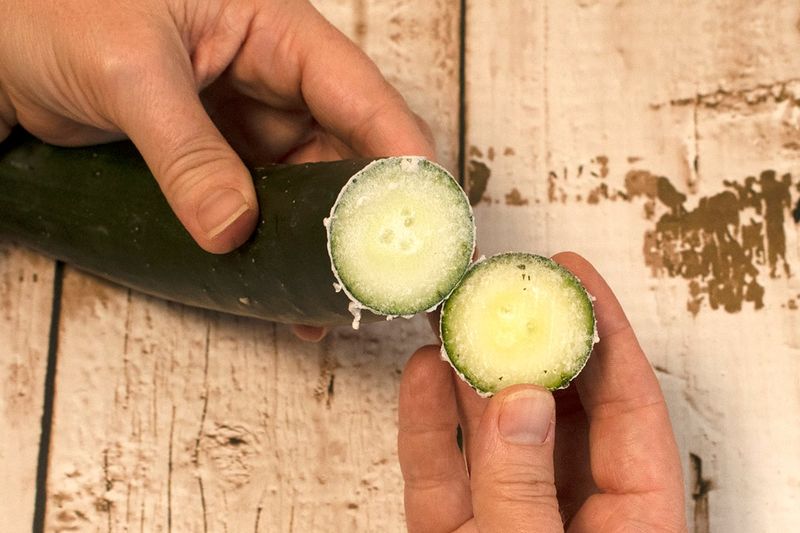
Cucumber bitterness comes from a group of chemical compounds called cucurbitacins, with cucurbitacin C being the primary offender in most cultivated varieties. Research on cucurbitacin C in cucumber shows these compounds tend to be more concentrated near the skin and toward the stem end of the fruit, which is why a peeled slice from the middle of a cucumber often tastes milder than a skin-on bite near the top.
Genetics and cultivar choice play a large role in how much cucurbitacin a plant is capable of producing. Some varieties are bred specifically to carry lower levels, and University of Minnesota Extension notes that variety differences are among the most significant factors in cucumber bitterness. That said, even a low-cucurbitacin cultivar can still produce bitter fruit when growing conditions go sideways.
Harvest timing matters too, but it is not the whole story. A cucumber left on the vine until it turns yellow or oversized can become tough and lower in quality, and University of Illinois Extension guidance on cucurbit types distinguishes between fruit that suffers from late harvest and fruit that became bitter because of environmental stress at an earlier stage. Blaming picking alone misses the upstream causes that often matter just as much.
Heat can raise the plant’s stress load during fruit development
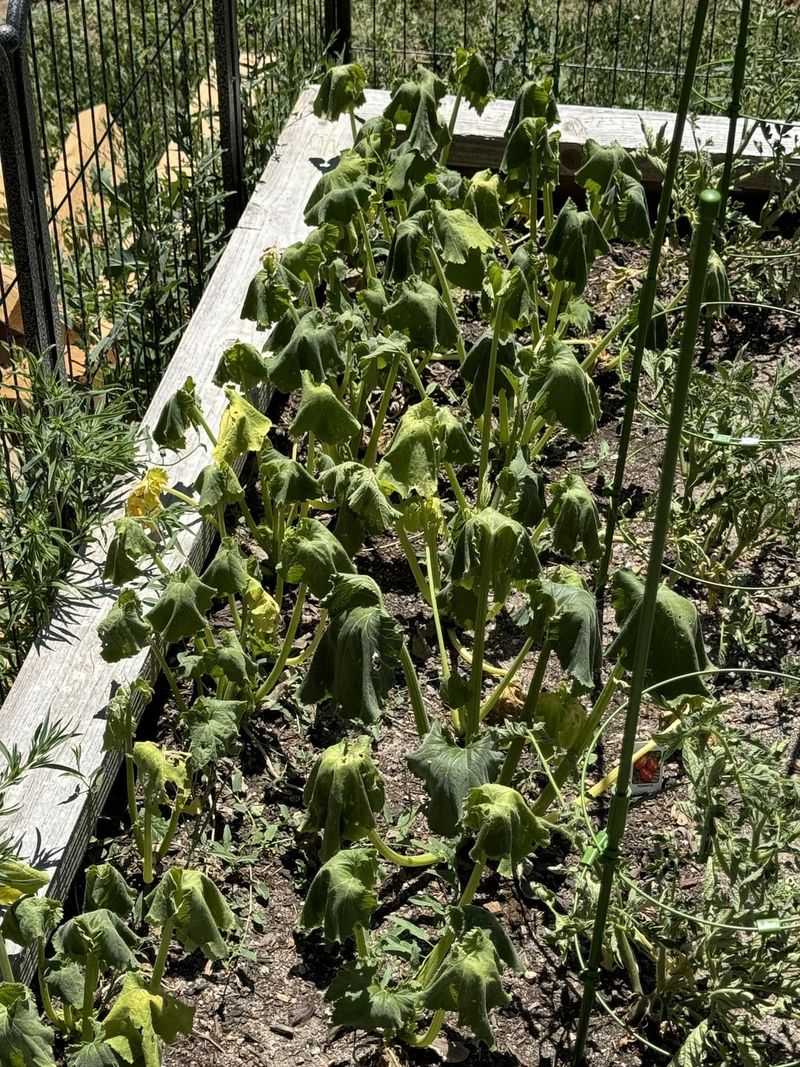
A heat wave does not flip a switch that automatically makes cucumbers bitter, but it can set off a chain of stressors that raise the odds considerably. When temperatures climb, cucumber plants lose water through their leaves much faster than usual, and if the soil cannot keep up with that demand, the plant experiences drought stress even if you watered recently. University of Illinois Extension identifies drought and uneven moisture as key contributors to bitter cucumbers, precisely because inconsistent water supply can disrupt normal fruit development.
The window that matters most is when flowers are opening and young fruit is first forming. Stress during that period, whether from water shortfall, temperature swings, or poor nutrition, can affect how the developing fruit accumulates cucurbitacins. Illinois Extension research on water stress and vegetable development notes that moisture shortages during active growth can alter fruit shape and quality. The timing is a possible pathway, not a guaranteed diagnosis for every bitter cucumber you pull off the vine.
Heat also causes other problems, including midday wilting, flower drop, and slowed production, and those responses do not automatically mean cucurbitacin is building up. Oregon State University Extension’s heat-stress guide treats wilting and fruit drop as separate heat responses from bitterness, and Kano et al. in Scientia Horticulturae found that bitterness in cucumber can actually increase under lower air temperatures combined with high nitrogen, not simply under heat alone. The relationship is real but complicated.
Compare the other likely explanations before changing your routine
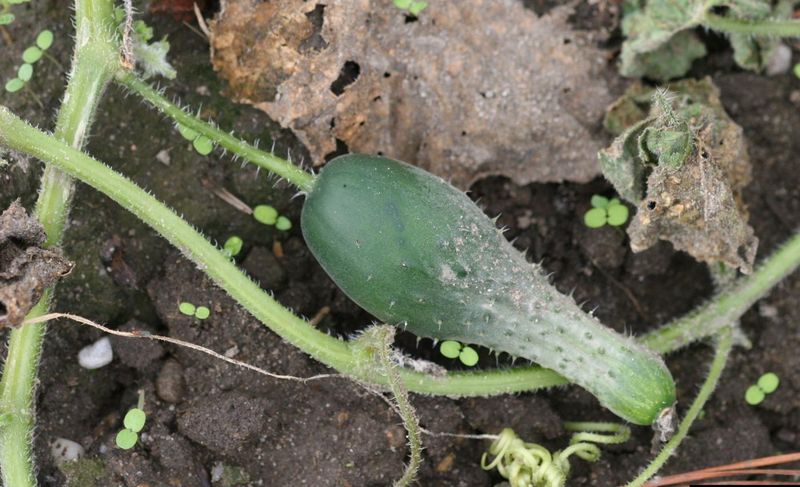
Before you overhaul your entire watering and fertilizing schedule, run through a quick mental checklist. Start with the cultivar you planted. Utah State University Extension points out that some varieties are simply more prone to bitterness than others, and if you planted a standard slicing type without checking for low-cucurbitacin genetics, that baseline susceptibility may be part of what you are tasting.
Next, think honestly about your watering pattern over the past few weeks. Did the soil dry out completely between waterings, or did it stay relatively even? Were there days you skipped irrigation and then gave the plants a heavy soak to compensate? That swing from dry to saturated is a known stress pattern.
Also consider your fertility history. UC Davis Cooperative Extension’s cucumber guide notes that variety differences are large and that fertilization practices can influence outcomes, while Minnesota Extension includes poor nutrition among the stress factors linked to bitterness.
One myth worth clearing up: cross-pollination with nearby squash, melons, or watermelons does not make your cucumber fruit bitter this season. Utah State Extension specifically calls this out as a misconception. Cross-pollination affects the seeds inside the fruit, meaning it could influence plants grown from those saved seeds next year, as Minnesota Extension’s seed-saving guidance explains, but the cucumber you are eating right now was not made bitter by a neighboring squash. Finally, check whether the fruit was simply left on the vine too long.
An oversized, yellowing cucumber may be lower quality from maturity, which is a separate problem from environmental-stress bitterness in a normally sized fruit.
Stabilize root-zone moisture for the next flush
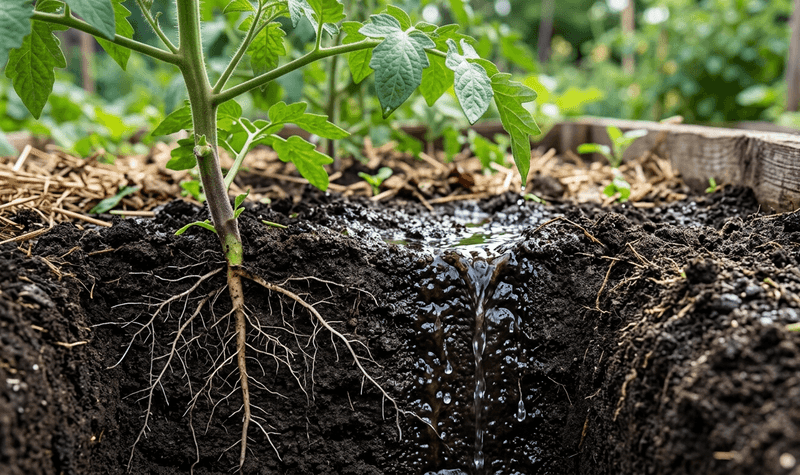
Getting moisture right is the most actionable thing you can do to support better fruit on the next flush. The goal is not just hitting a weekly total, but keeping the root zone consistently damp without letting it dry out completely between waterings. Utah State University Extension recommends roughly 1 to 2 inches of water per week as a starting point, but that number shifts depending on how hot it has been, how big your plants are, and whether your soil drains quickly. Sandy soil and peak summer heat can push that need considerably higher.
Water deeply rather than frequently and shallowly. A light sprinkle that only wets the top inch of soil encourages roots to stay near the surface, where they are most vulnerable to rapid drying. Utah State’s vegetable water recommendations support deep watering that reaches the full root zone, then allowing the surface to begin drying before the next cycle, so roots have reason to grow downward toward more stable moisture. A simple finger test or an inexpensive soil moisture meter can help you stop guessing.
During a heat wave, Oregon State Extension’s heat-stress guide advises watching for signs of wilting and not leaving plants dry for extended periods. Watering in the early morning gives moisture time to soak in before the hottest part of the day accelerates evaporation. One realistic expectation to set now: improving your irrigation will support the cucumbers still developing on the vine, but fruit that has already accumulated cucurbitacins will not sweeten up just because conditions improved. Oregon State Extension notes that already bitter fruit is a quality-loss issue, not something corrected by watering after the fact.
Use mulch to slow rapid drying
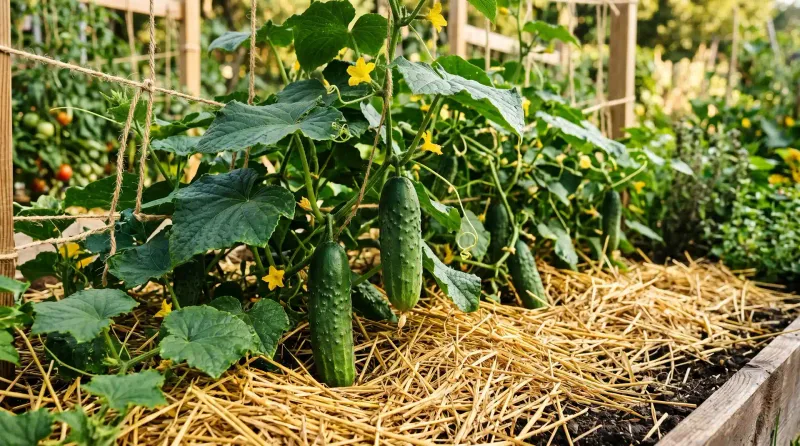
Mulch is one of the simplest tools for making your irrigation more effective during a heat wave. A 2- to 3-inch layer of organic material spread around your cucumber plants acts as insulation for the soil, slowing evaporation and keeping root-zone temperatures from spiking between waterings. University of Illinois Extension specifically recommends mulch as a way to conserve moisture during dry periods for cucumbers, and that consistency in soil moisture is exactly what you are trying to achieve.
Straw, shredded leaves, wood chips, and similar organic materials all work reasonably well. The one placement detail that matters most is keeping the mulch from piling up directly against the cucumber stem. Mulch pressed tight against the base of the plant traps humidity at the soil line, which can encourage rot and fungal problems. Leave a small gap of an inch or two around the stem itself, then spread the mulch outward from there to cover as much of the root zone as practical.
Mulch is a supporting tactic, not a guarantee. It helps make your watering more consistent, which reduces one of the stress pathways that can contribute to bitter fruit. But a plant that is severely water-stressed, poorly nourished, or grown from a high-cucurbitacin cultivar may still produce bitter cucumbers even with mulch in place. Think of it as one piece of a broader moisture-management approach rather than a standalone solution.
Skip the emergency nitrogen application
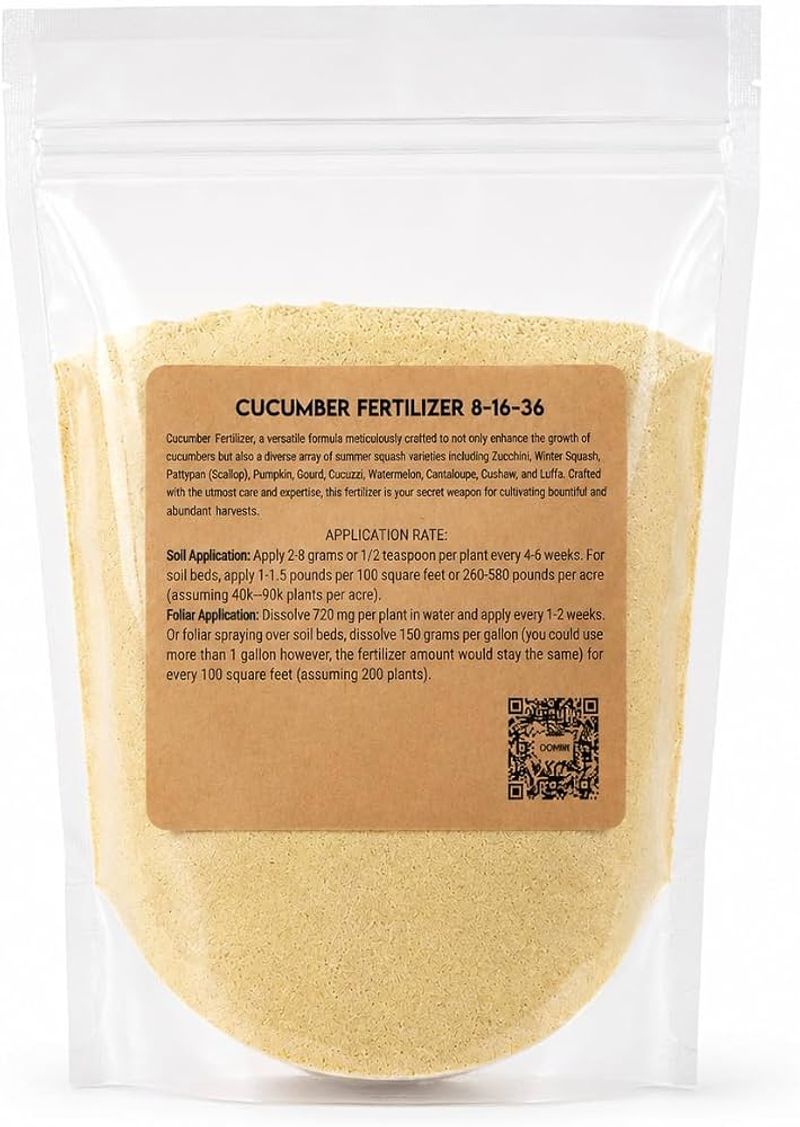
After a heat wave leaves your cucumbers tasting off, reaching for a bag of fertilizer can feel like a logical fix. Poor nutrition is a real stress factor for cucumber plants, and University of Illinois Extension lists it among the conditions associated with bitterness. The problem is that adding fertilizer without knowing what your soil actually needs can make things worse, not better.
High nitrogen in particular has been linked to increased bitterness in cucumber research. Kano et al. in Scientia Horticulturae found that elevated nitrogen fertilization was associated with higher cucurbitacin levels in some plant material, meaning an indiscriminate post-heat-wave nitrogen boost could push bitterness in the wrong direction. That finding does not mean fertilizer is always harmful, but it does mean that applying it without evidence of a deficiency is a gamble.
The more reliable approach is to base any fertilizer application on a soil test or the product’s specific crop-use directions. UC Davis Cooperative Extension’s cucumber production guide supports fertility management tied to actual soil conditions rather than reactive applications after a stress event. If you have not tested your soil recently, most university cooperative extension offices offer affordable test kits. Fertilizer is not an emergency treatment for bitter cucumbers; it is a baseline management tool used when there is a known reason for it.
Harvest promptly and handle mildly bitter fruit carefully
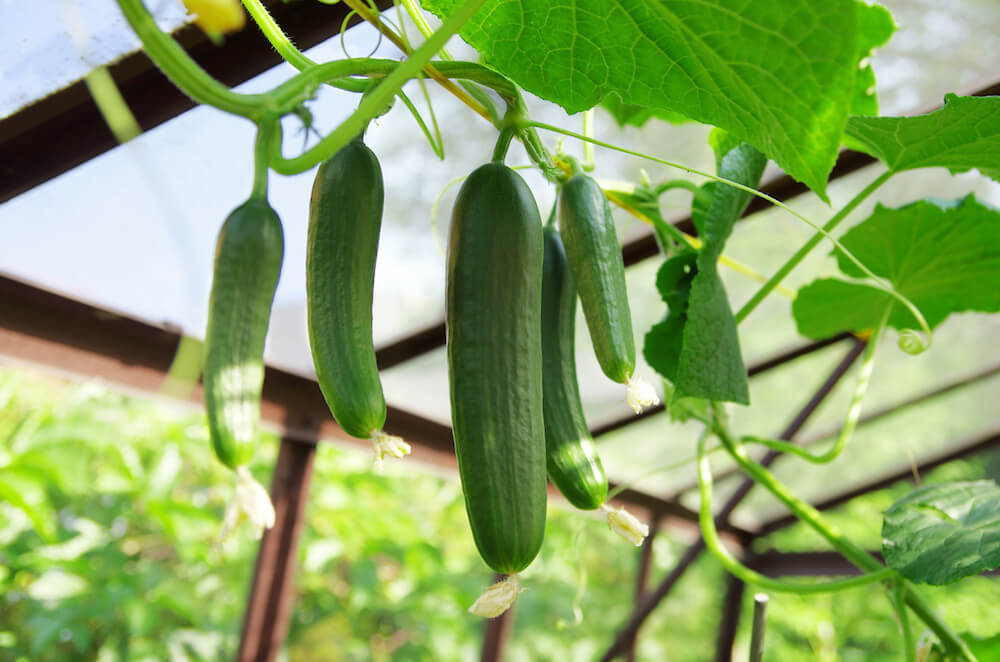
Picking cucumbers at the right size is one of the most consistent ways to protect fruit quality, and it matters regardless of whether heat stress was a factor. Oregon State University Extension’s cucumber growing guide recommends harvesting slicing types before they become oversized, and checking pickling varieties daily or every other day during peak season because they size up quickly. Fruit left on the vine past its prime becomes tough, seeds enlarge, and flavor declines in ways that are separate from environmental-stress bitterness.
Prompt harvesting also keeps the plant focused on producing new fruit. A mature cucumber left hanging signals the plant to slow down, which reduces your overall yield during the remaining season. University of Illinois Extension’s cucurbit guide reinforces that removing overripe fruit regularly supports continued production. Even so, timely picking explains some quality problems but not all bitterness, since a normally sized cucumber harvested on schedule can still taste bitter after environmental stress.
For fruit you have already brought inside, peeling near the stem end may reduce the unpleasant taste. Because cucurbitacins concentrate toward the skin and the stem end, removing that portion can make a mildly bitter cucumber more palatable, as Minnesota Extension notes. Skip the widely repeated trick of rubbing the cut ends together, since that method is not supported by reliable horticultural sources. More critically, peeling and pickling can mask bitterness but should not be used to salvage fruit that tastes severely bitter, because extremely high cucurbitacin levels are a safety concern, not just a flavor problem.
Protect the next harvest and know when to discard fruit
Pulling together everything you can control makes a real difference for the fruit still developing on the vine. Watch your plants each morning for signs of heat or water stress, including midday wilting, leaf rolling, flower drop, or a sudden slowdown in fruit production. Oregon State Extension’s heat-stress guide treats those symptoms as early warnings that plants need attention, not as proof that cucurbitacins are accumulating. Catching and addressing stress early gives developing fruit the best chance of maturing without the flavor problems you experienced this round.
Keep moisture steady, maintain your mulch layer with a clear gap around the stem, hold off on fertilizer unless a soil test shows a genuine need, and harvest on schedule. If you are choosing seeds or transplants for a fall planting or next year, consider a cultivar labeled as bitter-free or burpless. Minnesota Extension notes that these varieties are bred for lower cucurbitacin levels, though no variety is immune under every growing condition.
On the safety side, the line between a quality problem and a health concern depends on how bitter the fruit actually is. Mild bitterness in ordinary cultivated cucumbers grown from purchased seed is generally a palatability issue. Extremely bitter fruit, especially from a volunteer plant, an unknown seed source, or an unusual cucurbit you did not intentionally grow, should be discarded rather than eaten or preserved. Oregon State Extension warns that very high cucurbitacin levels can cause gastrointestinal illness, and their cucumber guide adds that pickling can mask extreme bitterness without making the fruit safe.
When in doubt, the compost bin is the right destination.