
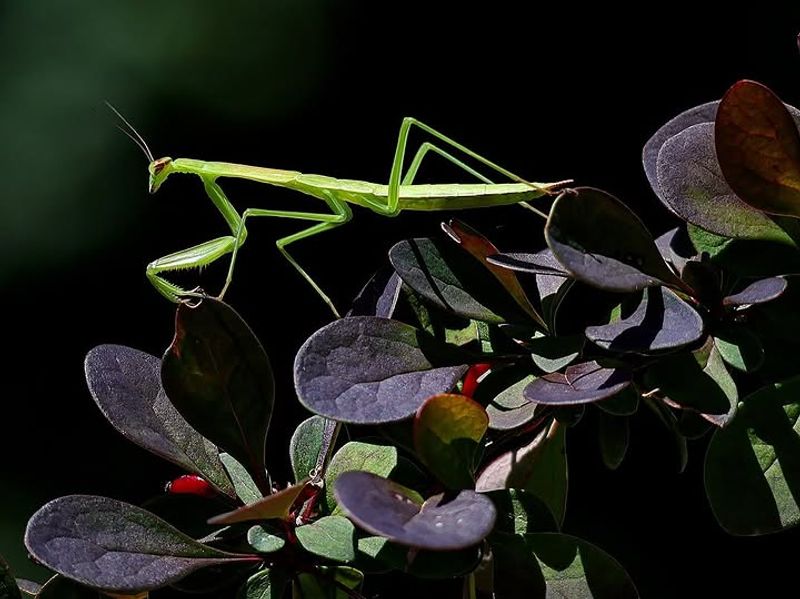
Spotting a praying mantis on your tomato cage or rose bush is one of those moments that makes you stop and look twice. These angular, patient hunters have a way of making a yard feel like something wild is happening just outside the back door. But before you start expecting one mantis to clean up your aphid problem, there are a few things worth knowing about what its presence actually signals and what it does not.
What a mantis sighting really tells you
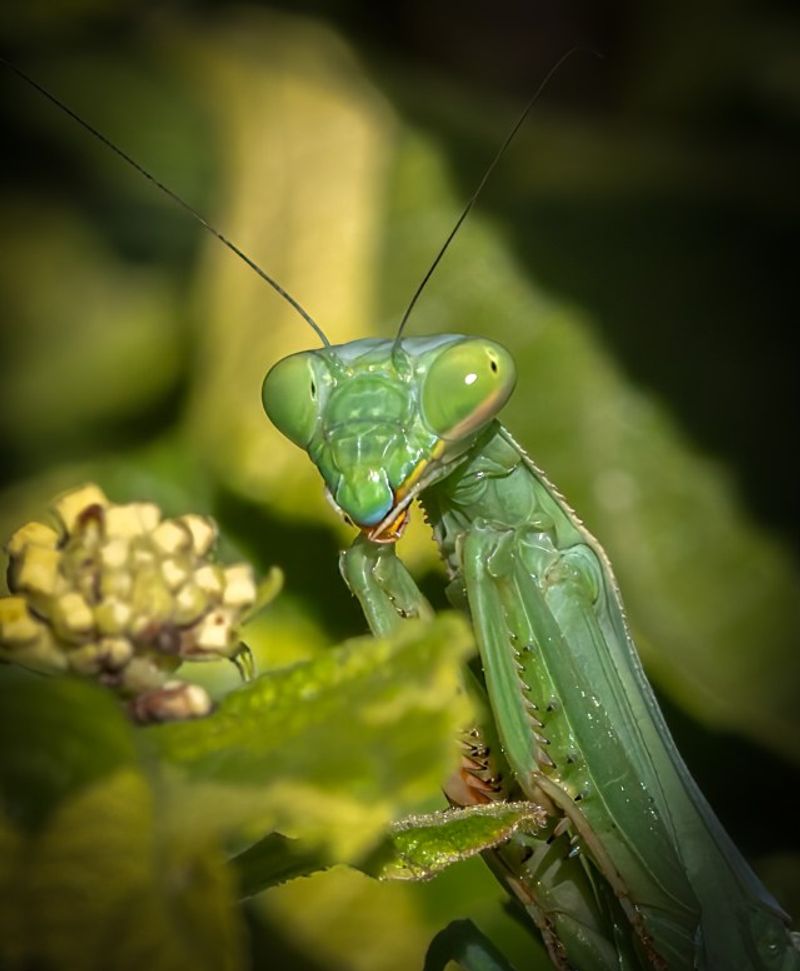
Finding a praying mantis in your yard feels like a small reward for keeping the place alive. The instinct is to read it as a sign that something is going right, that the garden is healthy, the pests are being handled, and nature is running its own pest-control program. That instinct is understandable, but it goes further than the evidence supports.
A mantis shows up where it can find live prey, some protective vegetation, and enough cover to ambush from. UC IPM’s profile of California mantids describes them as relatively inactive predators with a generalist diet, noting that their overall value as biological-control agents is little or none. Their presence may reflect that your yard has insects, plants, and structure worth hunting in, but it does not confirm that a specific pest is being targeted or that a damaging infestation is under control.
The distinction matters for how you respond. A mantis is not a meter that reads “yard health: excellent.” It is a predator that found a place to wait and hunt, and the insects it catches may include pests or may just as easily include bees, butterflies, or other creatures you would rather keep. Treating a sighting as proof of pest suppression can lead homeowners to skip pest monitoring or delay dealing with a real outbreak.
The better frame is simple: a mantis in your yard is a wild animal doing what wild animals do. University of New Hampshire Extension notes that mantises are indiscriminate hunters, which means their presence is evidence of available prey and suitable habitat rather than targeted pest management. Appreciate the sighting for what it is, and keep managing your yard on its own terms.
A generalist predator may capture pests and beneficial insects
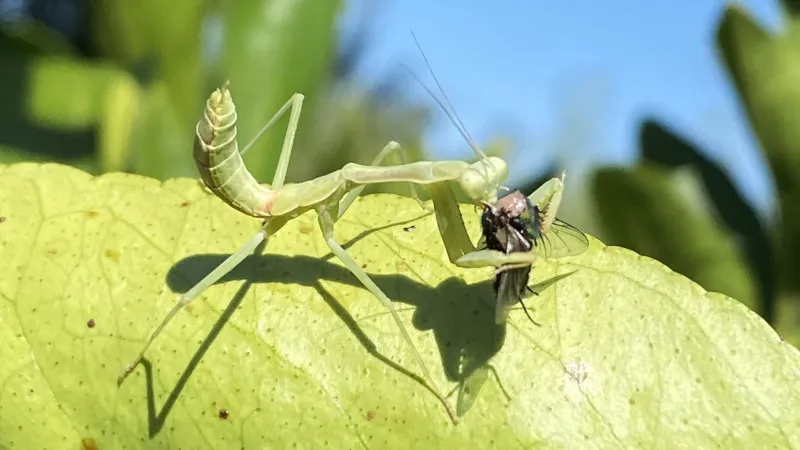
The way a mantis hunts tells you a lot about what ends up on its menu. Rather than tracking prey or patrolling for a specific insect, it picks a spot with good visibility and waits. Anything that moves within striking range and is the right size becomes a candidate for capture. That strategy makes the mantis a capable ambush predator, but not a selective one.
On the pest side of the ledger, mantises can and do catch insects that California gardeners frequently want gone. Kansas State University Extension notes that mantis prey commonly includes aphids, caterpillars, moths, flies, grasshoppers, leafhoppers, and wasps. If a mantis happens to station itself near an aphid colony on a rose cane or a moth-visited vegetable bed, it may well catch some of those insects. The word “may” is doing real work in that sentence.
The same opportunistic feeding that occasionally removes a pest also removes insects that support a functioning yard. Honeybees visiting a flower, syrphid flies whose larvae eat aphids, parasitic wasps that suppress caterpillar populations, butterflies moving through the garden: all of these are within the mantis’s range if they land or fly close enough. UC IPM specifically names bees and other beneficial insects among the organisms mantises may capture, and a community-effects meta-analysis in Ecological Entomology found that mantis predation can affect non-pest species as well as pest ones.
Mantises also eat each other. Cannibalism is common among nymphs and adults competing for the same territory or prey. That detail reinforces the broader point: this is a predator shaped by opportunity, not by a homeowner’s pest list. Knowing what it might eat is useful context, but it is not a guarantee that the insect you want eliminated is the one getting caught.
Why one mantis is unlikely to manage a pest outbreak
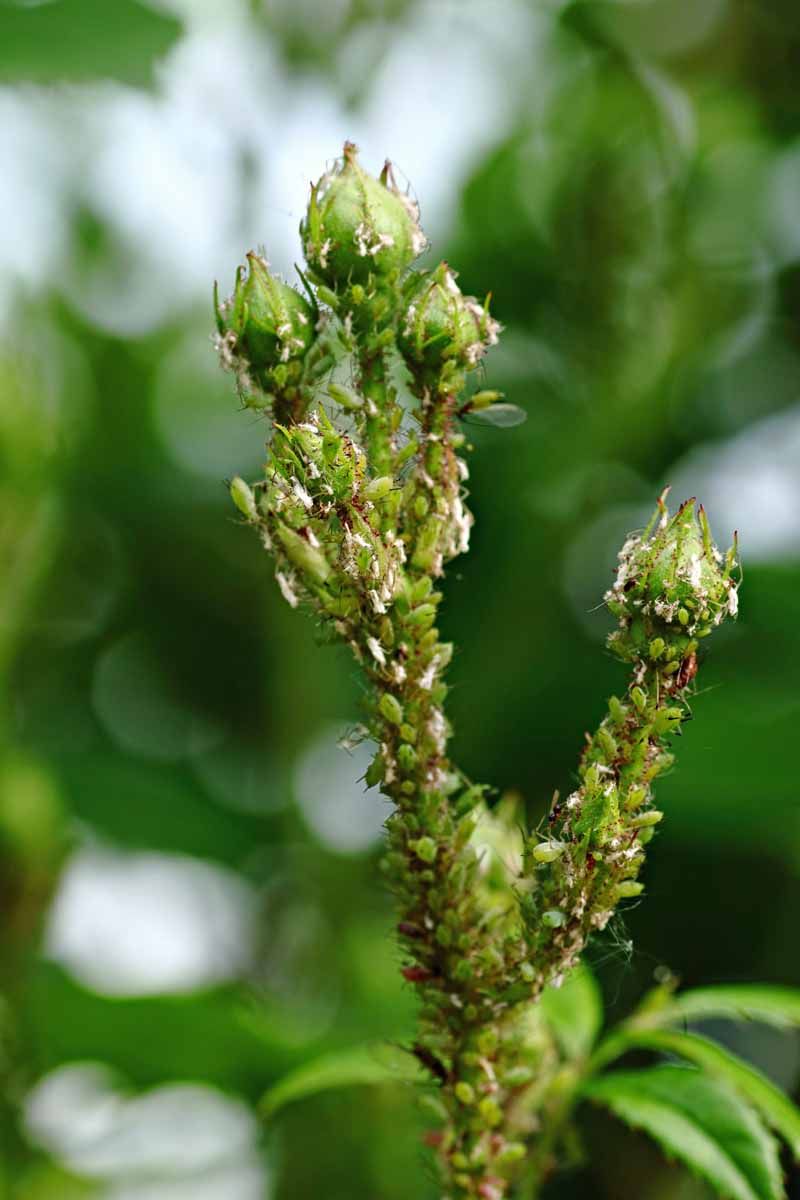
There is a real difference between a predator eating some pest insects and that predator controlling a pest population. One mantis catching a few aphids in a week does not reduce a colony of hundreds or thousands to a level that stops plant damage. Understanding that gap helps homeowners make smarter decisions when they see actual pest pressure building up.
UC IPM is direct on this point: mantises are relatively inactive and consume relatively few insects compared to other natural enemies such as lacewing larvae or parasitic wasps that reproduce quickly in response to pest outbreaks. University of Maryland Extension describes mantis value in the garden as limited, and while it recommends leaving garden mantises undisturbed because they will consume at least some pest insects, it stops well short of calling them a pest-control solution. That is a meaningful qualification, not a minor one.
Part of the problem is behavioral. A mantis does not speed up its hunting when pest numbers rise. It waits, catches what appears, and may spend long stretches completely still. A fast-reproducing pest like an aphid or a moth that lays dozens of eggs per night can outpace any single generalist predator many times over.
UNH Extension notes that purchased mantises have limited pest-control value precisely because they cannot be directed and do not scale their activity to match a pest problem.
None of this means a mantis contributes nothing. An individual mantis may reduce local insect activity in a small area, and that can have some incidental benefit. The practical point is that homeowners dealing with a real pest outbreak cannot rely on one mantis, or even several, to resolve it. Integrated pest management steps remain necessary, and the mantis is one small, unpredictable piece of a much larger ecological picture.
California has native and introduced mantises
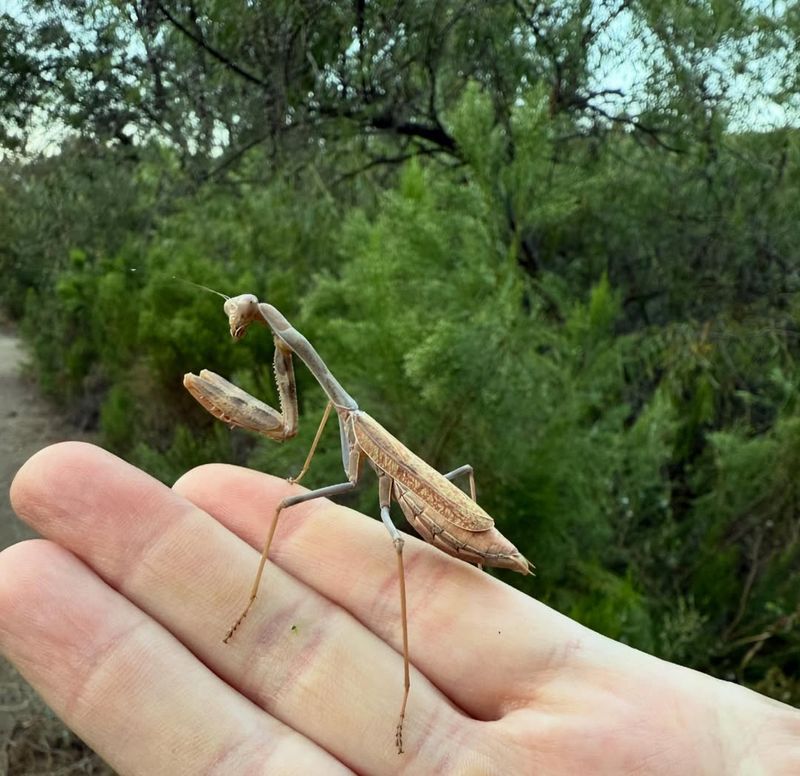
Not every mantis in a California yard belongs to the same story. The state is home to multiple species, some native and some introduced, and treating every sighting as either a local wildlife success or an invasive-species problem misses the nuance that actually matters for stewardship.
UC IPM lists at least nine mantis species found in California, including several native species such as the California mantis, as well as the Chinese mantis and Mediterranean mantis, both of which are introduced and are the species most commonly sold commercially in egg cases. The introduced species tend to be larger and are often the ones homeowners notice first because of their size, but size alone does not tell you whether a mantis is native or not.
For most homeowners, precise species identification is not the priority. What matters is knowing that the mantis in your yard could be either native or introduced, and that the two categories carry different conservation implications. Naturally occurring native mantises are part of California’s existing insect food web. Commercially purchased Chinese or Mediterranean mantis egg cases introduce a different species into that web, one that is not equivalent to a native resident in ecological terms.
The California life cycle is also worth knowing so you recognize what you are looking at across seasons. Egg cases form in fall and are attached to stems, twigs, fences, or other surfaces where they overwinter. Nymphs hatch in late winter or spring, and both nymphs and adults are generally present through spring and into fall. Seeing a mantis in July is normal.
Finding a hardened foam-like mass on a shrub in December is also normal, and it is worth knowing what that mass is before you prune or discard the stem it is attached to.
How to treat a mantis egg case outdoors
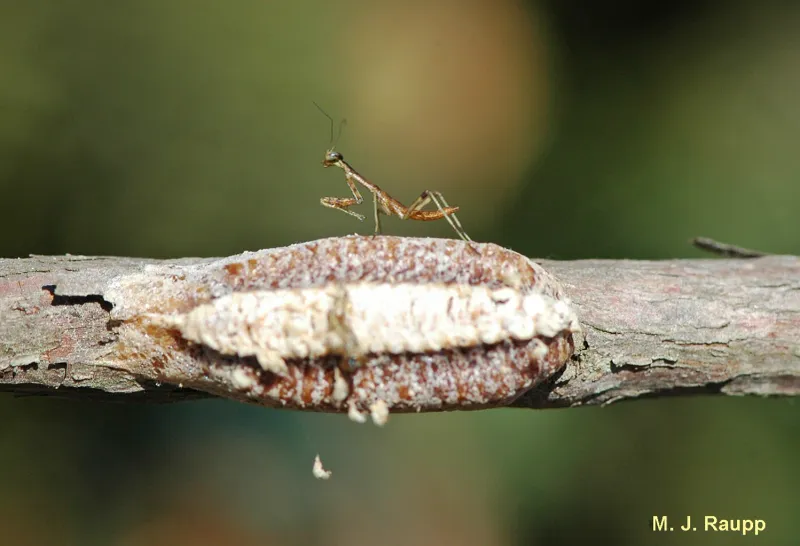
Mantis egg cases, called oothecae, are easy to overlook or misidentify. The case is a hardened, tan or brownish frothy mass, roughly the size of a large grape or small walnut, attached firmly to a twig, plant stem, fence rail, or wooden post. To someone doing fall cleanup, it can look like a fungal growth, a bit of debris, or something that needs to come off the plant.
Before pulling it off or tossing it with the prunings, check what you have. UC IPM notes that oothecae are the overwintering stage for California mantises, meaning the case contains eggs that will not hatch until late winter or spring when temperatures warm. Removing it during fall or winter cleanup eliminates the next generation before it has a chance to develop.
Smithsonian Gardens recommends leaving plant stems in place through winter to support overwintering insects, and that guidance applies directly to any stem carrying an egg case. If a stem needs to come down for fire-safety clearance or other legitimate reasons, the case can be carefully moved to a sheltered outdoor spot at a similar height rather than discarded. The key word is outdoor: the case should stay outside in ambient winter temperatures.
Bringing an egg case indoors is a mistake that happens more often than you might expect. UC Agriculture and Natural Resources warns that a single ootheca can produce hundreds of nymphs, and a warm house tricks the case into hatching weeks or months early. The result is a large number of tiny mantis nymphs with nowhere to go and nothing to eat indoors. Leave egg cases outside, note where they are before winter pruning begins, and let them hatch on their own schedule.
When to leave a mantis alone—and when to move it
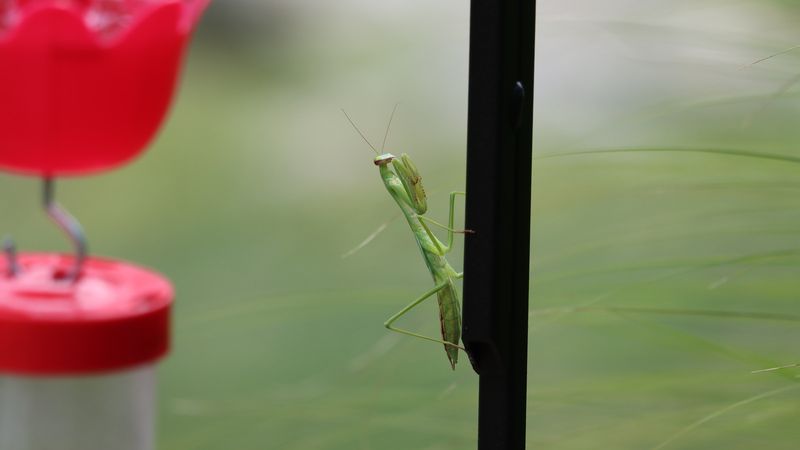
For most encounters, the right call is to do nothing. A mantis perched on a vegetable plant, a shrub, or a fence post is where it chose to be, and handling it unnecessarily stresses the animal and serves no practical purpose. University of Maryland Extension recommends leaving garden mantises undisturbed as a general rule, and that guidance holds whether the mantis is on a rose, a tomato cage, or a patch of ornamental grass.
The same principle applies to its egg case. Avoid spraying near a known ootheca, and do not destroy one simply because you are doing seasonal cleanup. If a case is on a stem that genuinely needs to be cut for fire-safety clearance or structural reasons, relocate it to a sheltered outdoor surface rather than discarding it.
There is one narrow exception worth knowing. A mantis that has stationed itself directly at a hummingbird feeder or at a dense cluster of pollinator-attracting flowers can pose a real and concentrated risk to the beneficial insects and birds you are actively trying to support. UC ANR notes that mantises at hummingbird feeders are a recognized concern, and carefully moving the mantis to a different part of the yard, away from that concentrated feeding site, is a reasonable response in that specific situation.
That targeted relocation is an exception, not a general policy. Moving every mantis you find because it might catch a bee is not supported by the evidence and removes a predator that may be catching pest insects elsewhere in the yard. The practical decision rule is straightforward: leave it alone unless it is directly positioned at a site where it is likely to cause repeated harm to pollinators or hummingbirds, and even then, relocate rather than kill.
Use California IPM instead of relying on mantises
Watching a mantis patrol your garden is satisfying, but it is not a pest-management plan. When real pest pressure shows up, aphids massing on new growth, caterpillars chewing through leaves, or leafhoppers stippling your squash, a single generalist predator is not the answer. A structured approach is.
The starting point is always identification. Before treating anything, confirm what insect is causing the damage and whether the damage level actually threatens the plant. UC IPM’s home and landscape resources are built for exactly this step, with pest-specific guides that cover identification, damage thresholds, and control options for California conditions. Many plants can tolerate moderate pest pressure without lasting harm, and tolerating minor damage saves time, money, and the beneficial insects that are already working in your yard.
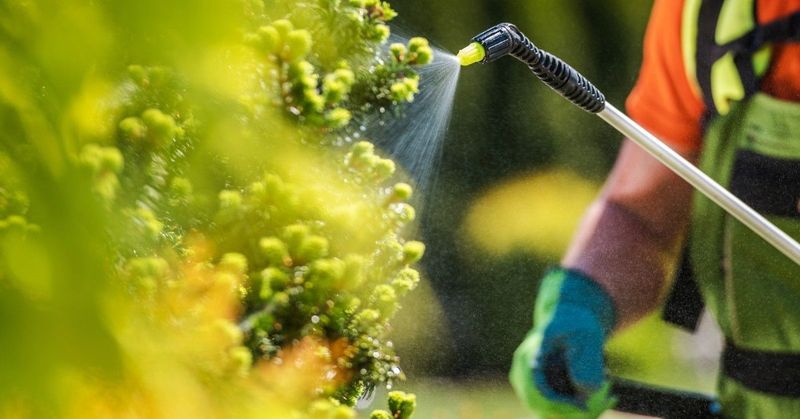
When action is needed, cultural and mechanical controls come first: removing infested plant material by hand, using a strong water spray to dislodge aphids, or adjusting irrigation to reduce conditions that favor certain pests. These steps do not harm mantises, pollinators, or other natural enemies. Pesticides become relevant only when those approaches are not sufficient and the pest problem is confirmed.
If pesticides are necessary, UC IPM’s guidance on protecting natural enemies and pollinators explains that broad-spectrum insecticides can kill mantises, predatory beetles, parasitic wasps, and other beneficial arthropods alongside the target pest. UC IPM also notes that eliminating natural enemies through broad-spectrum spraying can trigger secondary pest outbreaks as the predator community collapses. Targeted, least-toxic options applied at the right time and to the right location reduce those risks.
California homeowners also need to stay current on product rules. California’s Department of Pesticide Regulation implemented new restrictions on neonicotinoids for outdoor nonagricultural uses effective January 1, 2025, meaning some products that were previously available to homeowners are now limited to licensed applicators for those uses. Always read the current product label and verify California requirements before applying any pesticide. The mantis in your yard is one small part of a food web that careful, targeted pest management can support rather than dismantle.