
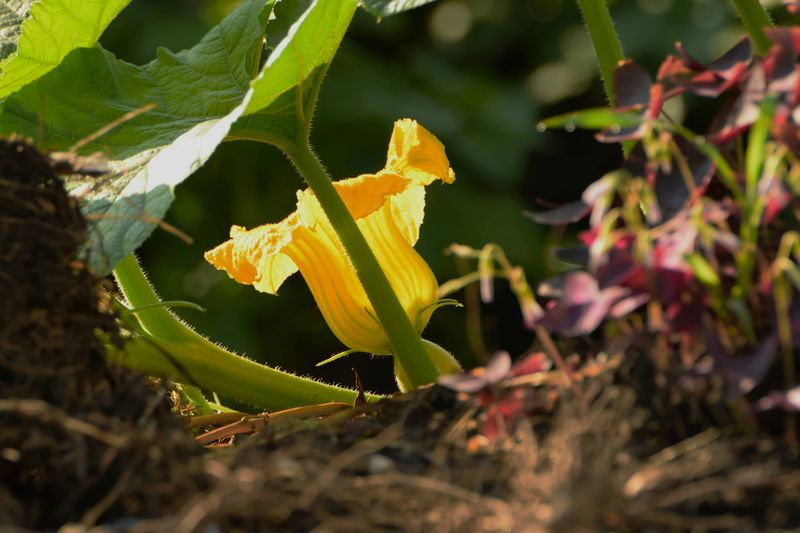
Watching zucchini flowers open day after day without a single fruit forming is one of the more frustrating experiences in a summer garden. The plant looks healthy, the blooms are beautiful, but the harvest never comes. Understanding why this happens means looking beyond the flower itself, because the conditions that decide whether fruit forms may already be in play before that blossom ever opens.
Not every open flower can become a zucchini
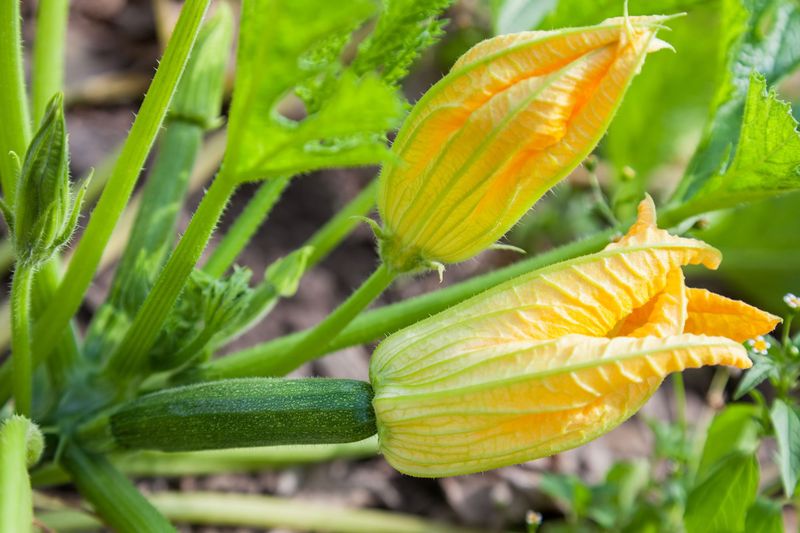
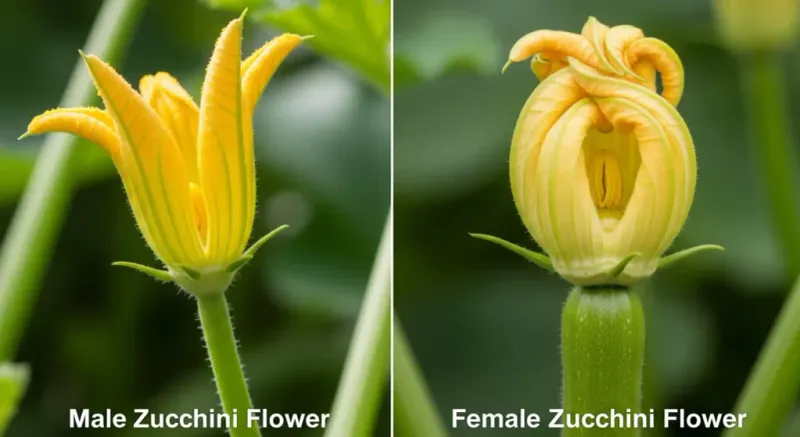
A zucchini plant covered in bright yellow blooms can still produce zero fruit if most of those flowers are male. Before blaming heat, pollinators, or anything else, the first thing to check is whether the plant is actually making female flowers at all. Male and female flowers look similar at a glance, but the difference is easy to spot once you know where to look.
Male flowers grow on a slender, typically longer stem with no swelling at the base. Female flowers have a small, distinctly zucchini-shaped ovary sitting directly behind the petals. That tiny green bulge is the only part of the plant that can develop into harvestable fruit. University of Minnesota Extension guidance on growing summer squash confirms that only the female flower can produce fruit, and that the ovary must receive pollen to develop.
Male flowers commonly appear first, sometimes by a week or more, and they drop off naturally after releasing pollen. That drop is completely normal and does not mean something is wrong with the plant. Utah State University Extension’s squash growing guide notes this as a standard part of the plant’s cycle.
The visible ovary behind the petals is your first diagnostic checkpoint. If you cannot find a single female flower on the plant, no amount of hand-pollination or bee activity will produce zucchini. Start there, every time.
Heat can affect fruit set before or during the morning bloom
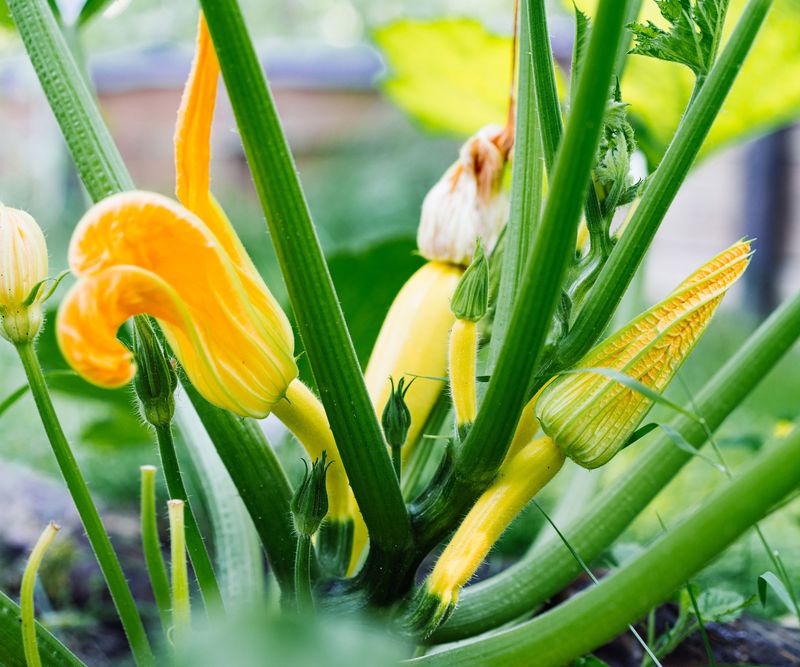
Squash flowers generally open around dawn and close by midday, leaving a short morning window for pollen to move from a male flower to a female one. That window is not just brief. It is also vulnerable to conditions that may be working against fruit set before the gardener even steps outside to check.
University of Minnesota Extension’s vining vegetable guide notes that high heat can reduce bee activity during the bloom period and may contribute to flower and small-fruit abortion. Utah State University Extension’s pollination guide reinforces that pollination generally must occur on the day the flower opens, making that compressed window especially sensitive to disruption.
Daytime temperatures around 90 degrees F and nighttime temperatures around 70 degrees F are commonly cited as points at which risk increases. A University of Minnesota Extension post on heat and vegetable yields explains that sustained heat may shift the plant toward producing more male flowers and fewer female ones, which compounds the problem. These thresholds are useful warning points, not universal failure temperatures. Cultivar, irrigation, plant health, and how long the heat persists all influence how the plant responds.
Two distinct problems can overlap here: reduced pollinator activity during the bloom window, and direct heat stress on the plant that limits female-flower production or triggers abortion of flowers and small fruit. Recognizing which one is more likely in your garden helps you choose the right response.
What a failed flower may reveal about fruit set
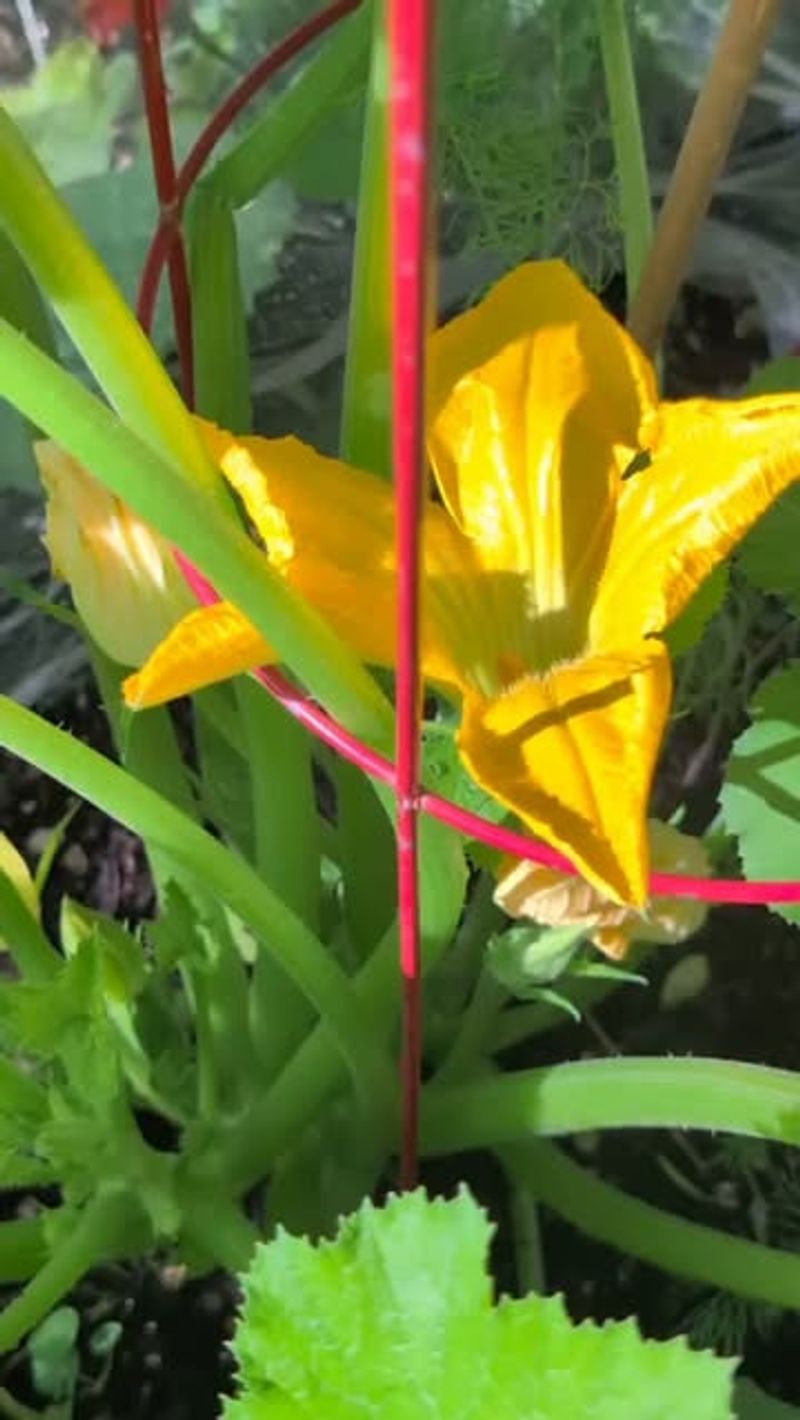
A morning inspection can narrow down what is going wrong, even if it cannot prove a single cause. The sequence matters: look for a female flower first, then observe what is happening while it remains open, then track the swollen ovary in the hours and days that follow.
Oregon State University Extension’s resource on squash bees points out that squash bees and bumblebees are particularly active during the early morning hours when zucchini flowers are open. If you go out at mid-morning and see no bee activity on an open female flower, that is a meaningful clue about pollinator access. Watch for a few minutes before drawing conclusions.
Three outcomes tell different stories. A male flower that drops cleanly after opening is normal. A female flower that never enlarges after opening, leaving only a withered blossom and a small, unchanged ovary, suggests that pollen transfer may not have occurred. A tiny zucchini that begins to swell and then shrivels or falls off is the most ambiguous result.
That last symptom, a started-but-aborted fruit, can point toward inadequate pollination. Colorado State University Extension’s cucurbit guide notes that heat stress, water stress, disease, or physical damage can produce identical-looking results. University of Minnesota Extension also identifies female flower drop as more diagnostically significant than male flower drop, particularly when a visible ovary is present. The inspection narrows the possibilities; it does not hand you a definitive verdict.
Hand-pollinate a female flower while it is open
When you spot a female flower open and bee activity looks poor, hand-pollination is a practical next step for that same morning. The window is the morning on the day the flower opens, not necessarily before sunrise. Both the male and female flowers need to be open at the same time for the transfer to work.
The process is straightforward. Select a freshly opened male flower, one with visible pollen on its central structure. Peel back or remove the petals so the pollen-bearing anthers are exposed. Then gently press or brush those anthers against the stigma, the sticky central structure, inside the female flower.
Colorado State University Extension’s vegetable garden hints describe this transfer method as a reliable way to move pollen when natural pollination is limited. Utah State University Extension’s seed-saving guide also describes the same technique in the context of controlled pollination.
Hand-pollination works best as a substitute when pollen transfer is the limiting factor. University of Minnesota Extension is clear that the procedure cannot produce female flowers where none exist, and it cannot reverse fruit abortion caused by severe heat, inadequate water, disease, or root stress. If the plant is producing female flowers and bee visits are scarce, hand-pollination may improve your fruit set meaningfully. If the plant has only male flowers or is under significant environmental stress, it buys you little until those underlying conditions improve.
Protect pollinators during the narrow bloom window
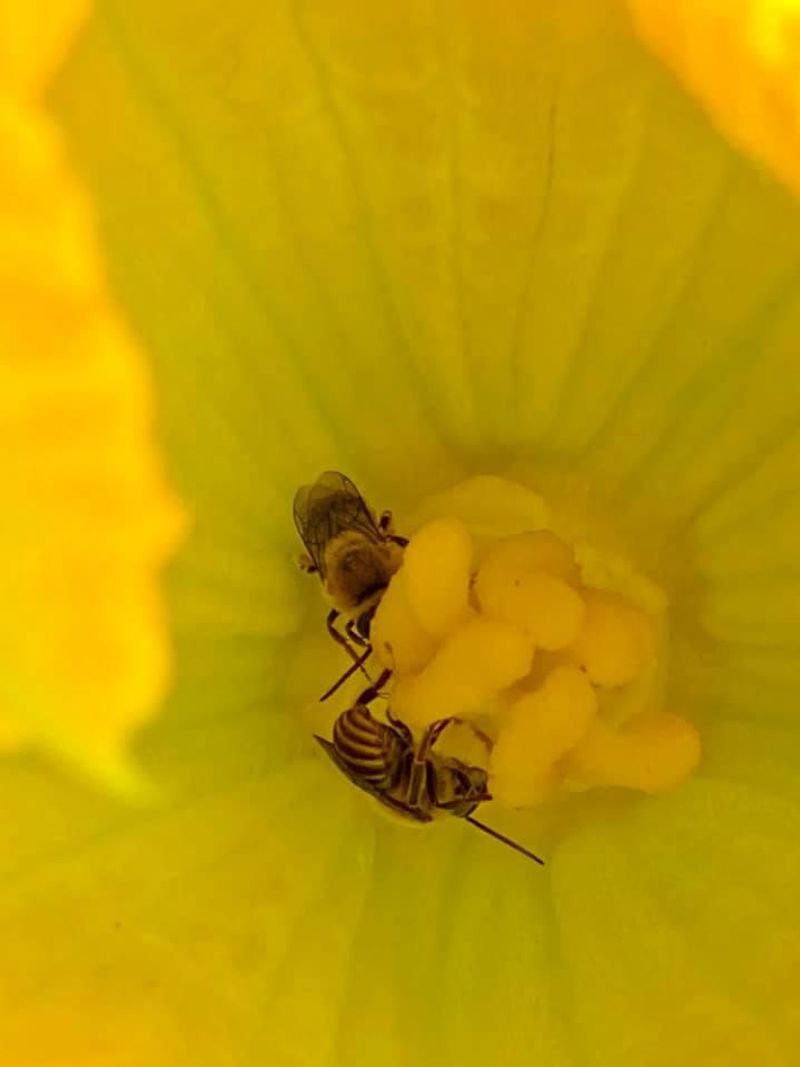
Natural pollination is still the most reliable path to consistent fruit set, which means protecting the insects that do the work is worth prioritizing before reaching for a paintbrush. Squash bees are specialists that time their activity to match the morning opening of cucurbit flowers. Oregon State University Extension’s squash bee fact sheet explains that these native bees often finish foraging before honeybees become active, making them particularly valuable during the brief window when zucchini flowers are receptive.
Row covers are a common source of unintentional pollinator exclusion. Utah State University Extension’s row cover research notes that covers protect against pests but also block beneficial insects. University of Minnesota Extension recommends removing row covers once flowering begins unless you plan to hand-pollinate every female flower. Covers can go back on after fruit set if pest pressure still warrants it.
Pesticide timing is a serious concern during the bloom window. EPA guidance on pollinator protection and EPA label-reading guidance both stress that applications should avoid open flowers and active bee foraging. Identify the target pest before spraying anything, confirm the product is labeled for use on the crop, follow the label’s timing instructions, and prevent drift onto nearby blooms.
Planting flowers to support pollinators is a longer-term investment. University of Minnesota Extension’s pollinator habitat guidance supports habitat planting as a meaningful way to build bee populations over time, but it cannot reliably rescue a single female flower that is open for only one morning. Immediate steps, removing barriers and observing morning activity, matter most right now.
Stabilize heat, water, and nutrition conditions
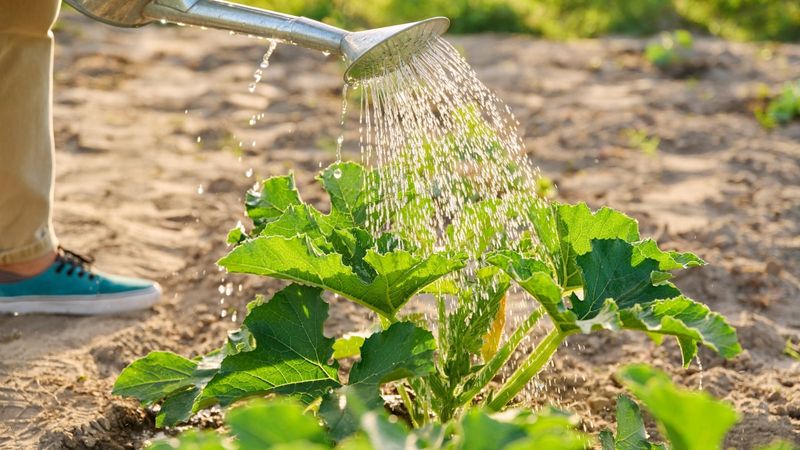
Consistent moisture is one of the most controllable factors in fruit-set stability. Both drought stress and excessive water can contribute to flower and fruit abortion in cucurbits. University of Minnesota Extension’s vining vegetable guide identifies erratic watering, cycling between dry and saturated soil, as a contributor to flower and fruit loss. Deep, regular irrigation that keeps the root zone consistently moist without waterlogging gives the plant its best chance of sustaining female flowers through a heat spell.
Utah State University Extension’s squash guide reinforces the value of well-drained soil combined with regular watering, particularly during periods of high heat. Mulching around the base of the plant can help retain soil moisture and moderate root-zone temperature, making irrigation more effective between watering sessions.
Shade cloth is sometimes suggested as a way to reduce heat load during the hottest part of the day. Oklahoma State University Extension’s column on fruiting vegetables presents moderate heat protection as a possible aid rather than a cure. Any shade cloth should be light enough to preserve airflow and sufficient light for flowering. Sustained heat may temporarily push the plant toward more male flowers, and in that case, patience and stable growing conditions matter more than any single intervention.
Fertilizer choices also play a role. University of Minnesota Extension cautions that excessive nitrogen can encourage leafy growth at the expense of flowers and fruit. Base any fertilizer application on a soil test rather than applying nitrogen or phosphorus broadly on a schedule.
Use a simple sequence to decide what to do next
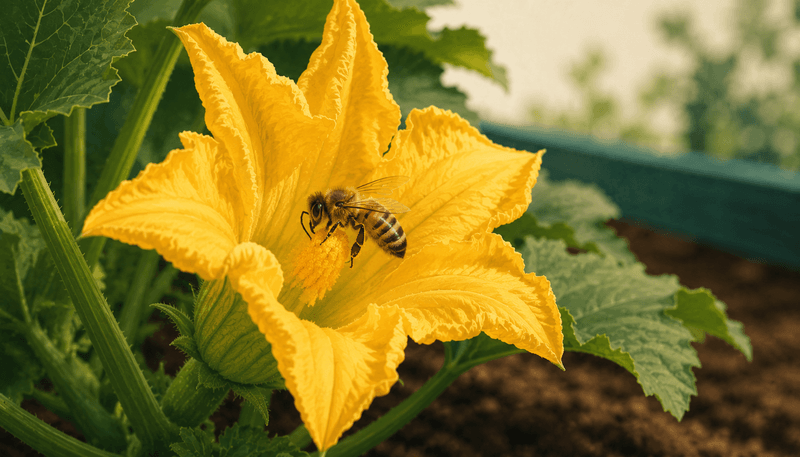
When zucchini flowers keep opening without producing fruit, a short sequence of checks keeps the diagnosis from stalling. Start by confirming the plant has female flowers with visible swollen ovaries. Without them, no other intervention will help until conditions shift and the plant begins producing female blooms again.
If female flowers are present, observe the morning pollination window and note whether bees are visiting. Hand-pollinate an available female flower that same morning if activity looks poor. Then watch the ovary over the following days. If small fruit begins to form and then aborts, redirect attention to heat and water conditions rather than assuming pollination is still the issue.
Utah State University Extension’s harvest and handling guide recommends picking zucchini while still immature, often around 6 to 8 inches long depending on variety. University of Minnesota Extension notes that leaving oversized fruit on the vine can reduce the plant’s subsequent production. Regular harvesting keeps the plant focused on new fruit rather than maturing seeds.
Dropped male flowers are part of every zucchini plant’s normal cycle and deserve no alarm. Repeated female-flower loss, especially when ovaries are present but never enlarge, is the pattern that warrants closer attention to growing conditions. A plant that keeps losing female flowers is telling you something about its environment, not its genetics.