
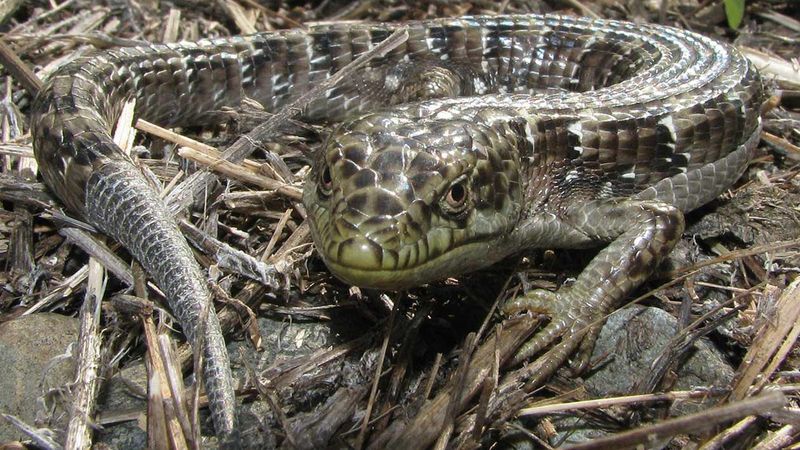
Spotting a scaly, thick-bodied lizard crawling through your garden can catch any California homeowner off guard, especially when it looks almost prehistoric. That creature is likely a southern alligator lizard, a native predator that shares your yard and may occasionally eat western black widows. Understanding what its presence actually means, and what it does not, can help you make smarter decisions about your yard, your spider concerns, and the wildlife you might be accidentally chasing off.
A lizard sighting does not confirm a black-widow problem
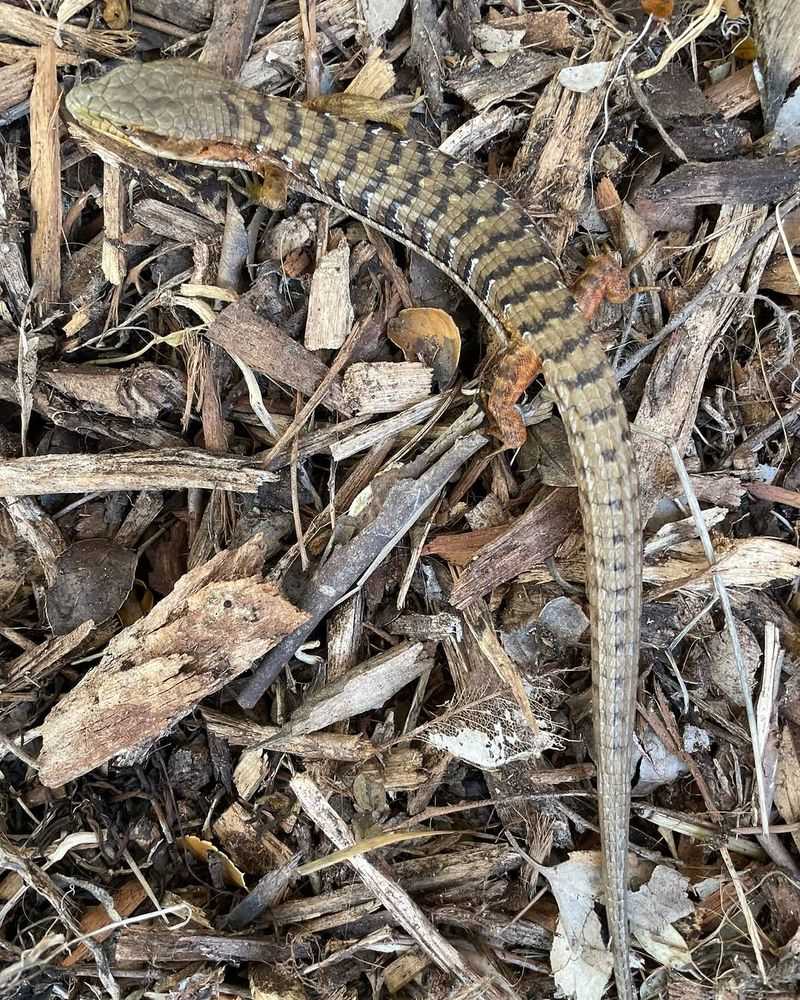
Catching a glimpse of a long, scaly lizard moving through your California yard can feel like a sign of something, but what it actually tells you is more limited than most homeowners assume. The animal you likely spotted is a southern alligator lizard (Elgaria multicarinata), a native species that lives across a wide range of California habitats. The California Department of Fish and Wildlife’s life-history account places this species in valley-foothill zones, chaparral, open woodland, and coastal scrub, and notes that it has adapted to some urban and suburban environments as well.
Before drawing any conclusions, be sure you are looking at the right animal. California is home to several lizard species that can look similar at a quick glance. Northern alligator lizards occupy cooler, moister habitats and share some of the same range. Western fence lizards, often called blue-bellies, are far more common in many suburban settings and are sometimes mistaken for other species in poor lighting or at a distance.
UC IPM’s lizard guidance notes that California has multiple native lizard species, and a brief sighting or a blurry phone photo may simply not provide enough detail for confident identification.
Southern alligator lizards are also turning up more often in urban neighborhoods. UCLA research on urban wildlife adaptation found that southern alligator lizards are among the better-adapted lizard species in the Los Angeles area, meaning suburban sightings are not unusual or alarming. Their presence reflects suitable local habitat, not necessarily an unusual ecological event in your yard.
Most critically, seeing one of these lizards does not mean your yard has a black-widow problem, and it does not confirm that the lizard is hunting spiders. Southern alligator lizards eat a wide variety of prey, and any individual lizard you spot may be chasing beetles, ants, or grasshoppers rather than spiders. A yard sighting is a reason to take a closer look at your local wildlife, not a diagnostic for your pest situation.
What the evidence shows about lizards and black widows
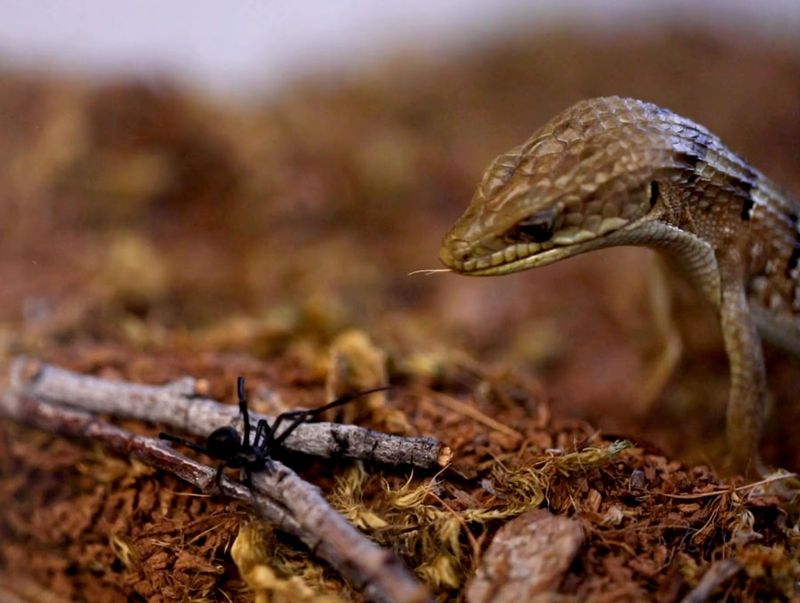
There is genuine scientific support for the idea that southern alligator lizards and western black widows interact as predator and prey. Field observations and natural-history records document this lizard consuming western black widows (Latrodectus hesperus), and some reports suggest they actively seek out black widow egg sacs. The National Park Service’s profile of the southern alligator lizard lists spiders among this species’ documented prey, consistent with its role as a broadly carnivorous predator.
The most compelling recent research comes from a 2022 peer-reviewed study published in Royal Society Open Science. Researchers tested how southern alligator lizards, western fence lizards, and side-blotched lizards responded to experimentally administered black-widow venom. The study, available through the Royal Society, found that southern alligator lizards showed the strongest resistance among the three species tested, with little or no measurable impairment after venom injection under controlled laboratory conditions. The Royal Society’s author interview about the research explains that this resistance is consistent with a specialized predator-prey relationship that has likely developed over a long evolutionary period.
Two important limits apply to these findings. First, strong resistance under experimentally tested conditions is not the same as invulnerability. The study does not prove that every individual southern alligator lizard, every age class, or every related species is completely immune to every black-widow bite in every real-world situation. Second, the study examined venom injection and tissue response in a laboratory setting.
It did not track how many black widows a lizard removes from a residential yard, how often predation occurs, or whether lizard presence measurably reduces spider numbers in homes or gardens.
What the evidence does support is this: southern alligator lizards are documented black-widow predators with a notable physiological ability to tolerate the venom under tested conditions. That makes a yard sighting worth noting with some interest, but it does not turn the lizard into a guaranteed pest-control solution.
Why the lizard cannot measure your spider control
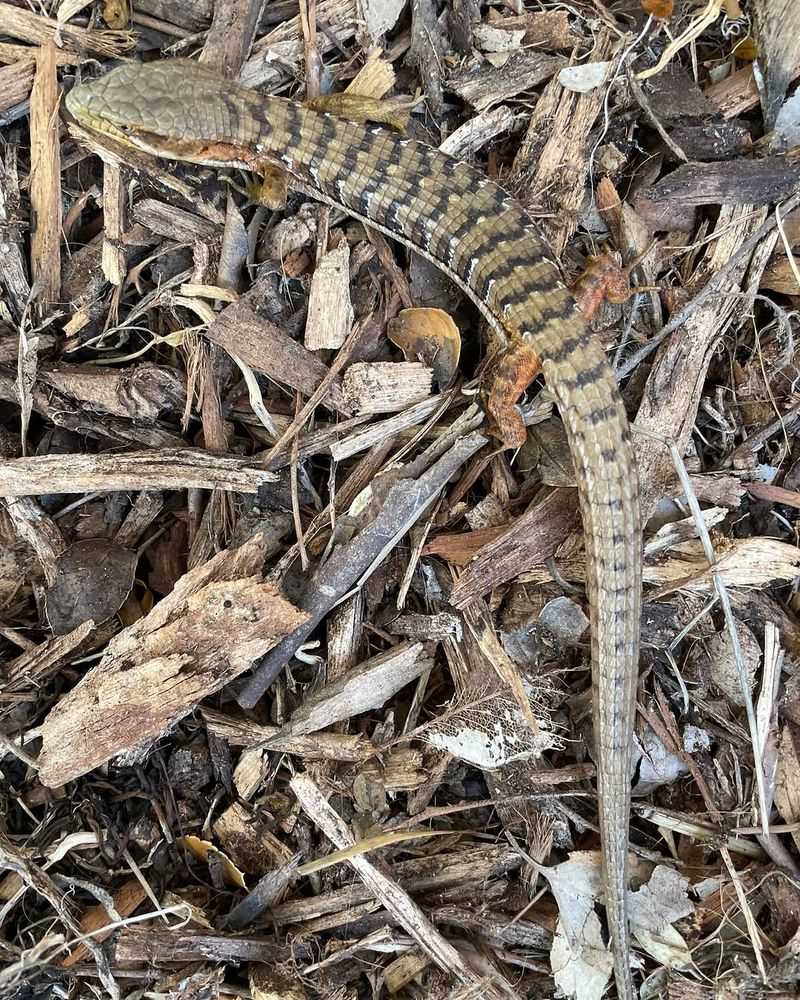
Even when a southern alligator lizard is confirmed in a California yard and is known to sometimes eat black widows, that does not mean it is doing so in your yard right now or that your spider numbers are declining because of it. The southern alligator lizard has a broad, opportunistic diet. The California Department of Fish and Wildlife’s species account lists insects, beetles, ants, wasps, aphids, grasshoppers, spiders, centipedes, scorpions, sow bugs, and snails as documented prey items, along with occasional small lizards. Any individual lizard you see may be working through a population of beetles or ants rather than targeting spiders at all.
One captive observation recorded in that same account noted an adult consuming three spiders during a single feeding session. That detail is interesting, but it does not establish a typical daily intake, a consistent predation rate, or any measurable effect on black-widow populations in an outdoor yard. A single feeding observation in a controlled setting cannot be extrapolated into a reliable pest-suppression program.
There is also a common misconception worth correcting: the southern alligator lizard is not the only California predator capable of eating spiders or tolerating black-widow venom. The 2022 venom study itself tested three lizard species, and UC IPM’s spider resource notes that reptiles, birds, wasps, and other spiders all prey on spiders. Calling the southern alligator lizard the only important predator of black widows would not be accurate.
Three separate claims are worth keeping distinct: a lizard is present in your yard; that lizard sometimes eats black widows as a species; and that lizard is currently reducing the black-widow population in your yard. The first claim may be true from a sighting. The second is supported by the research. The third is not something a lizard sighting alone can establish, and UC IPM’s lizard guidance does not position any California lizard as a dependable residential pest-control agent.
Leave the lizard alone and reduce unnecessary pesticide use
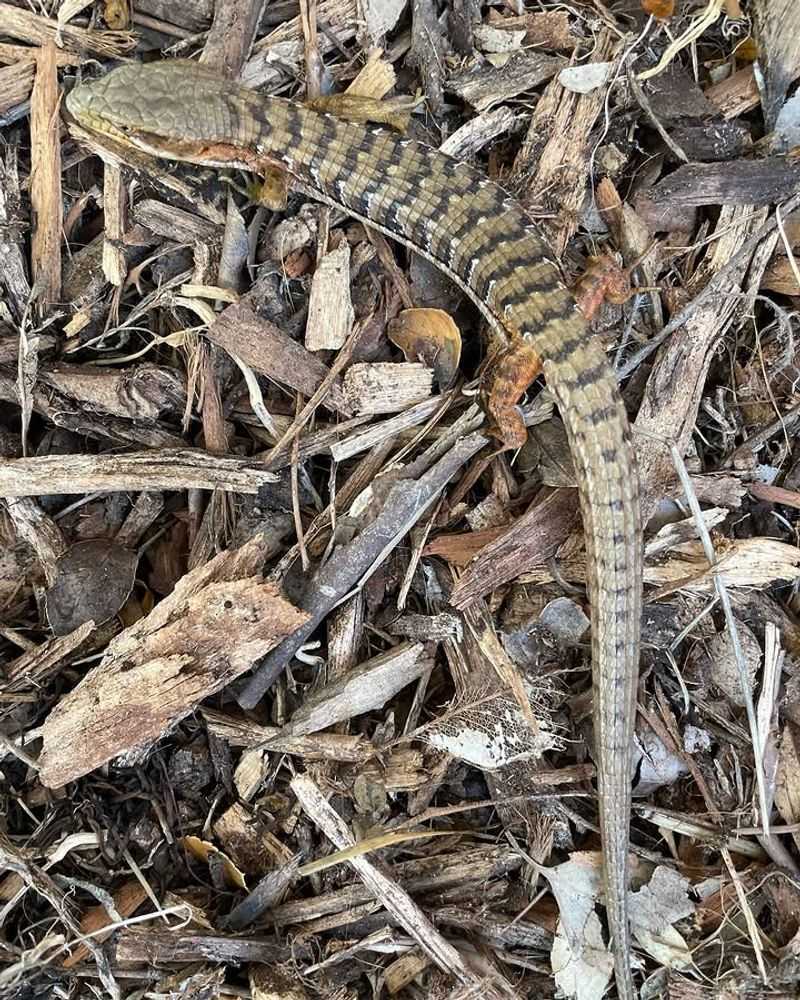
The most practical takeaway from the evidence is simple: if a southern alligator lizard shows up in your yard, leave it alone. UC IPM’s lizard guidance states that California lizards generally cause no measurable damage to garden plants and may contribute to pest control by consuming insects and other arthropods. Removing or killing a lizard that is bothering no one eliminates a native predator from your yard for no benefit.
One of the most meaningful things a California homeowner can do to support lizards and other beneficial wildlife is to reconsider broad-spectrum pesticide use. Many common yard pesticides can harm lizards directly or strip away the insect prey they depend on. UC IPM’s pesticide guidance recommends trying nonchemical methods first and selecting the least-toxic effective option when treatment is genuinely necessary. This approach, known as integrated pest management, reduces chemical exposure across the yard ecosystem without abandoning pest control entirely.
UC IPM’s guidance on protecting natural enemies explains that reducing unnecessary pesticide applications can help preserve populations of beneficial predators, including lizards, that would otherwise be harmed as bystanders. The goal is to shrink your chemical footprint where the science supports it, not to eliminate pest control altogether.
What this approach cannot do is replace targeted spider management. Reducing pesticide use around a lizard is a sound, evidence-backed practice, but it does not make the lizard a predictable substitute for sealing cracks, removing webs, reducing clutter, or calling a professional when a genuine spider risk exists. UC IPM’s spider resource is clear that exclusion and sanitation remain the foundation of spider management in California homes, regardless of what wildlife may be present in the yard.
Support lizard habitat without violating fire safety
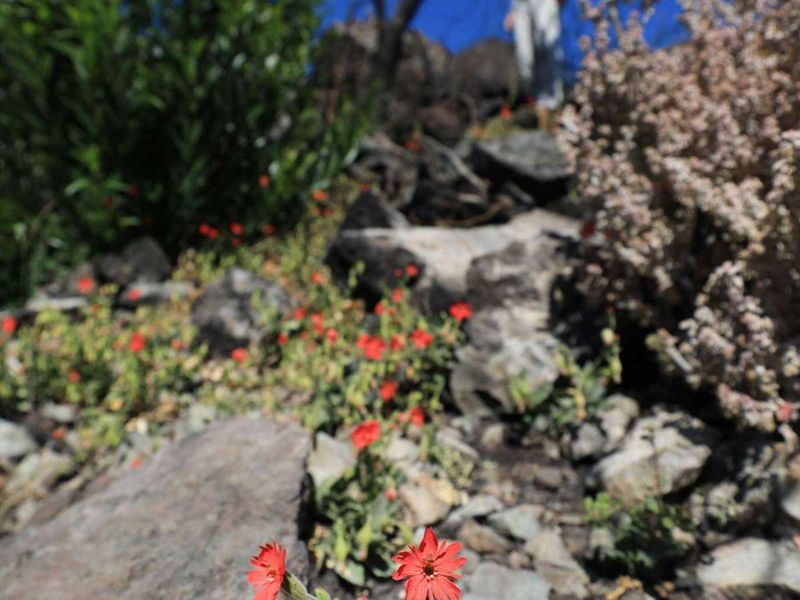
Knowing that a southern alligator lizard is a beneficial native predator naturally raises the question of how to make your yard more welcoming to it. The honest answer is that habitat support has real limits in California, and wildfire safety must come first, especially for homeowners in fire-prone foothill, hillside, or wildland-interface communities.
Southern alligator lizards use rocks, crevices, moderate ground cover, and natural vegetation as shelter and foraging areas. The California Department of Fish and Wildlife’s species account describes this lizard using surface cover such as rocks, logs, and dense vegetation, which suggests that a yard with some structural complexity offers more suitable habitat than a bare expanse of lawn or concrete.
However, wood piles, brush, combustible mulch, dense dry vegetation, and debris stacked near a home are exactly the materials that CAL FIRE’s defensible-space program asks homeowners to clear or manage carefully. California’s defensible-space zone requirements establish clearance distances around structures that take priority over wildlife-habitat preferences. Preserving a wood pile next to your garage because a lizard might use it is not a safe or compliant trade-off in a fire-prone neighborhood.
The practical path forward is to retain habitat where your local conditions and fire regulations allow it, farther from the structure rather than immediately adjacent to it. Flat rocks placed in a sunny corner of the yard, drought-tolerant native plantings in a compliant zone, and natural crevices in a retaining wall can all provide lizard-friendly structure without creating a fire hazard. UC IPM recommends leaving lizards alone as the primary management action, which means habitat modification is secondary to simply not disturbing animals that are already present.
One more caution applies here: do not try to collect or keep a southern alligator lizard as a substitute for habitat management. California Department of Fish and Wildlife regulations govern the taking and possession of native wildlife, and collecting wild lizards without proper authorization may be illegal. The right response to a lizard in your yard is to observe it, give it space, and let it move through on its own terms.
Manage black-widow encounters separately
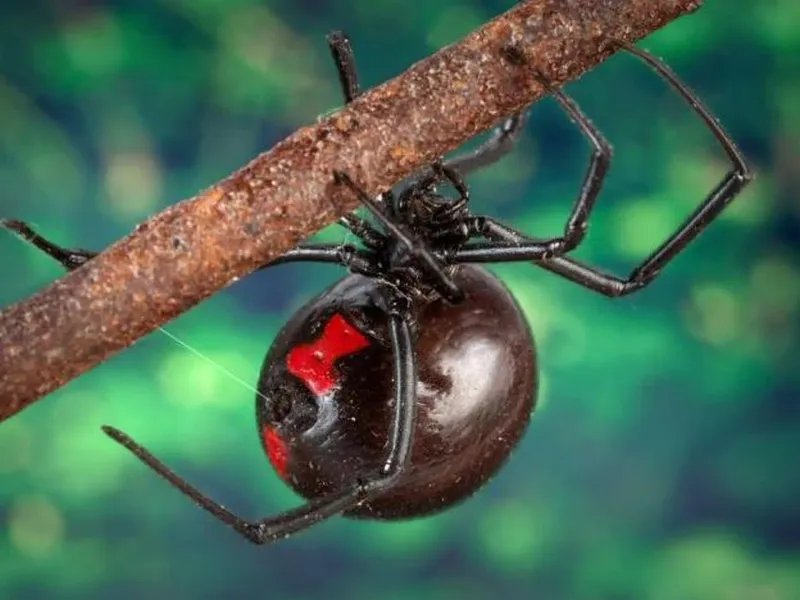
A southern alligator lizard in your yard is not a reason to relax your approach to black-widow management. Western black widows are real, and their bites, while uncommon, can cause significant symptoms that require medical attention. Handling the spider risk through practical steps is entirely separate from appreciating the lizard’s presence.
Black widows typically favor sheltered, dry, undisturbed locations. UC IPM’s widow spider guidance identifies common sites as cracks and crevices, garages, wood piles, outdoor furniture, garden equipment stored without use, and cluttered storage areas. The same resource recommends reducing clutter, sealing gaps in building exteriors, and physically removing webs with a brush or vacuum rather than automatically reaching for a pesticide spray.
Identification matters too. Not every dark spider in a California yard is a western black widow. Juvenile black widows can appear tan, gray, or patterned rather than solid black. Brown widows and false black widows also occur in California and are sometimes confused with western black widows.
UC IPM’s general spider resource offers guidance on distinguishing these species before deciding on a response.
When a spider is found in a child’s play area, a work glove, a wood pile being actively used, a garage entry point, or any indoor living space, do not wait and hope that a yard lizard will handle it. Cautious removal using a container and a stiff piece of cardboard, or calling a pest-control professional, is the appropriate response in those situations.
If an alligator lizard enters your home or garage, UC IPM recommends guiding it into a container and releasing it outdoors. Avoid grabbing the lizard with bare hands; alligator lizards are generally harmless to people, but they may bite if they feel cornered or are roughly handled, and a glove offers simple protection.
For any suspected black-widow bite, seek medical advice promptly. Poison Control’s black widow information recommends calling 1-800-222-1222 if you think you or someone in your household has been bitten. Symptoms can include muscle pain, cramping, sweating, and nausea, and professional evaluation is the right call rather than waiting to see how symptoms develop.
Keep the lizard, but do not outsource safety to it
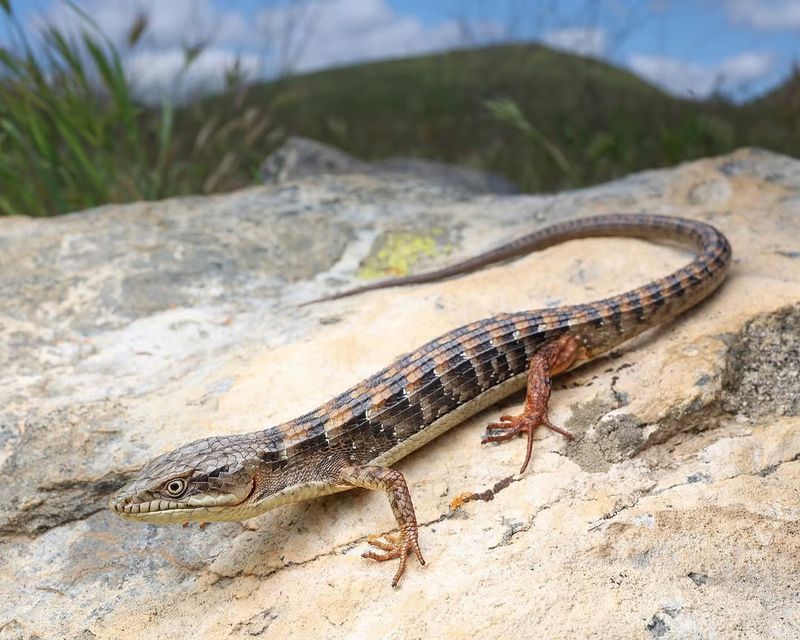
A southern alligator lizard in a California yard is worth keeping around. UC IPM’s lizard guidance recommends leaving native lizards alone when possible, and the research supports treating this species as a beneficial native predator rather than a nuisance to be removed.
Preserve suitable habitat where it remains safe and compliant with local fire requirements, address black-widow risks through exclusion, cleanup, cautious removal, or professional help, and reduce unnecessary pesticide use through integrated pest management. These steps support the lizard without asking it to carry responsibilities it cannot reliably fulfill. A sighting does not tell you what the lizard has been eating, and it does not replace the practical spider-management steps that protect your household from actual contact with black widows.
The lizard may consume black widows and other arthropods as part of its normal hunting behavior. That possibility is supported by documented predation records and a notable 2022 venom-resistance study. What it cannot do is guarantee your yard is spider-free, substitute for defensible-space compliance, or replace the judgment calls that keep people safe. The best thing a California homeowner can do for a southern alligator lizard is simply leave it alone and let it do what it does naturally, which turns out to be more than most people realize.