
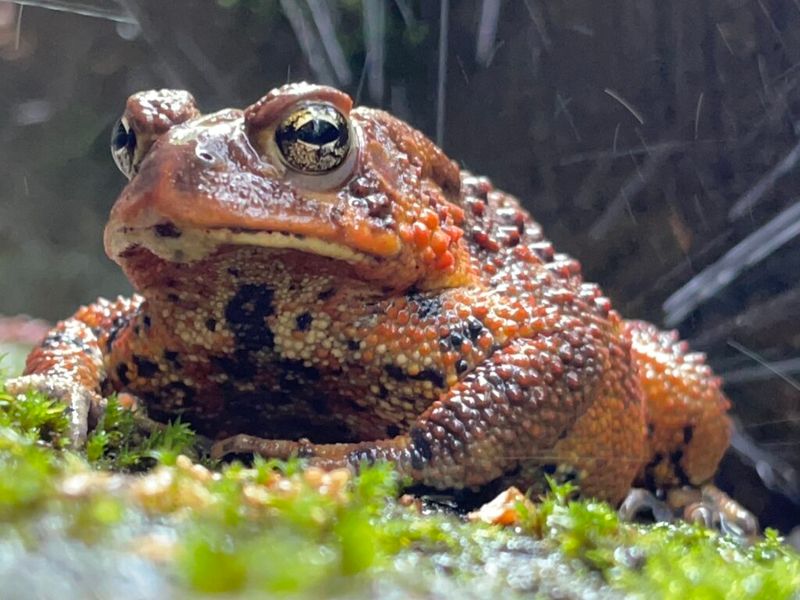
Finding a warty, slow-moving toad in your California yard after dark is the kind of moment that makes you stop and wonder what exactly is living out there. That animal may well be a native western toad passing through or resting in your garden, and it is almost certainly hunting beetles, ants, and other invertebrates while you sleep. Understanding what you are actually looking at, what it eats, and how to share your yard responsibly can help you make smarter choices about pest control, habitat, and safety for your pets and your home.
A nighttime toad sighting does not confirm its identity or breeding status
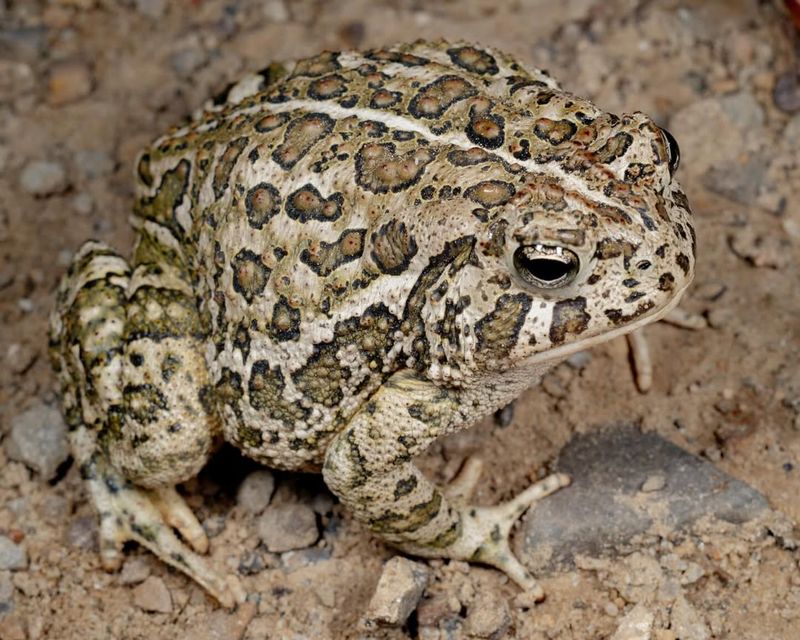
Spotting a toad after dark near your flower beds or along a garden path feels like a clear sign you have a western toad living on your property. The reality is a little more layered. California is home to several native toad species that overlap significantly in appearance and range, and a quick look or a blurry phone photo is usually not enough to confirm which one you are dealing with.
According to the California Herps toad identification guide, correctly distinguishing among California’s native toads requires careful attention to morphology and geography, not just a general impression of a bumpy brown amphibian. The western toad (Anaxyrus boreas) does occur widely across the state, from sea level to roughly 10,000 feet, covering coastal areas, oak savannas, riparian corridors, and inland valleys. Deserts and the highest mountain peaks are the main exceptions to its broad range.
Even if your visitor is a western toad, a nighttime appearance in the garden does not mean your yard contains breeding habitat or a permanent population. National Park Service guidance on the western toad notes that adults can travel and forage on land well away from water, while actual breeding requires a wetland, pond, or stream. Seeing one toad hunting near your roses on a warm evening tells you the animal is using your property as terrestrial foraging or refuge habitat, nothing more.
California also has rare and protected species within the toad family, including the federally threatened Yosemite toad and the endangered arroyo toad, so casually labeling any warty yard visitor as a western toad can lead to inaccurate assumptions about its needs and legal status. If you want a confident identification, note the location, take the clearest photograph you can from a respectful distance, and compare it against a regional field guide or the California Department of Fish and Wildlife western toad account before drawing conclusions.
The visitor may eat garden invertebrates, but not on a guaranteed schedule
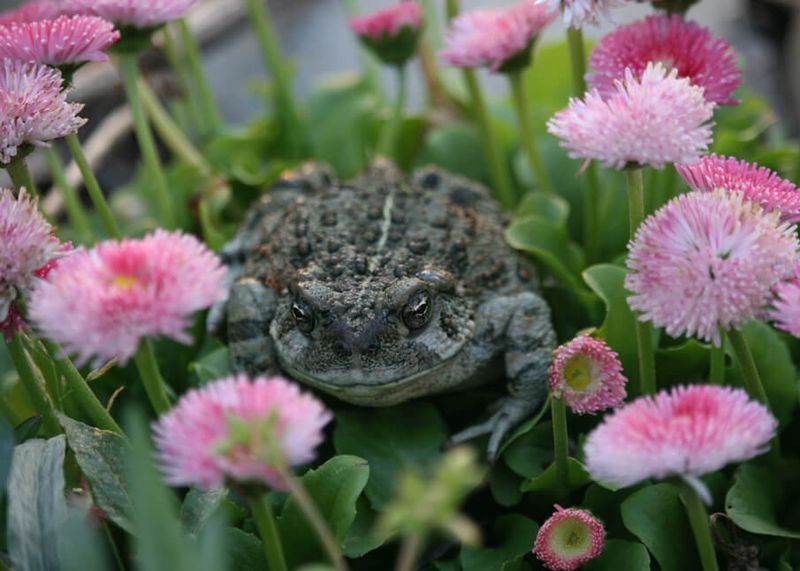
Adult western toads are opportunistic hunters, meaning they eat whatever small, catchable prey crosses their path during a night of foraging. Beetles, ants, and a wide assortment of terrestrial insects and arthropods make up the core of their diet, according to the California Department of Fish and Wildlife life history account for the western toad. That same source lists earthworms, snails, and slugs as foods that are eaten less commonly, not as staples.
The U.S. Forest Service Fire Effects Information System review of Anaxyrus boreas adds bees, grasshoppers, flies, sowbugs, arachnids, and moth-related insects to the prey list, painting a picture of a generalist predator that takes what it finds rather than targeting specific garden pests. Cutworms, specifically, do not appear as a verified prey item in the reviewed scientific literature. Some caterpillar-like or moth-related larvae could fall within the broader category of things a toad might snap up, but calling cutworms a confirmed part of its California yard diet goes further than the evidence supports.
There is also an important distinction between eating a pest and controlling it. A toad hunting through your garden beds on a given night may consume several beetles or a slug it happens across. That is predation, and it is ecologically real. What it is not is a reliable, measurable reduction in pest damage to your plants.
A single animal foraging opportunistically cannot be counted on to patrol your beds on a schedule or focus its attention on the species causing the most harm.
Some garden handouts have suggested that toads consume thousands of insects per season, but those figures are not drawn from field measurements of western toads in California yards. Treat the animal’s pest-eating habits as a modest, unpredictable bonus rather than a service you can plan around. The toad is doing what toads do, and that happens to include some garden pests along the way.
Cool daytime refuge may make a yard more suitable
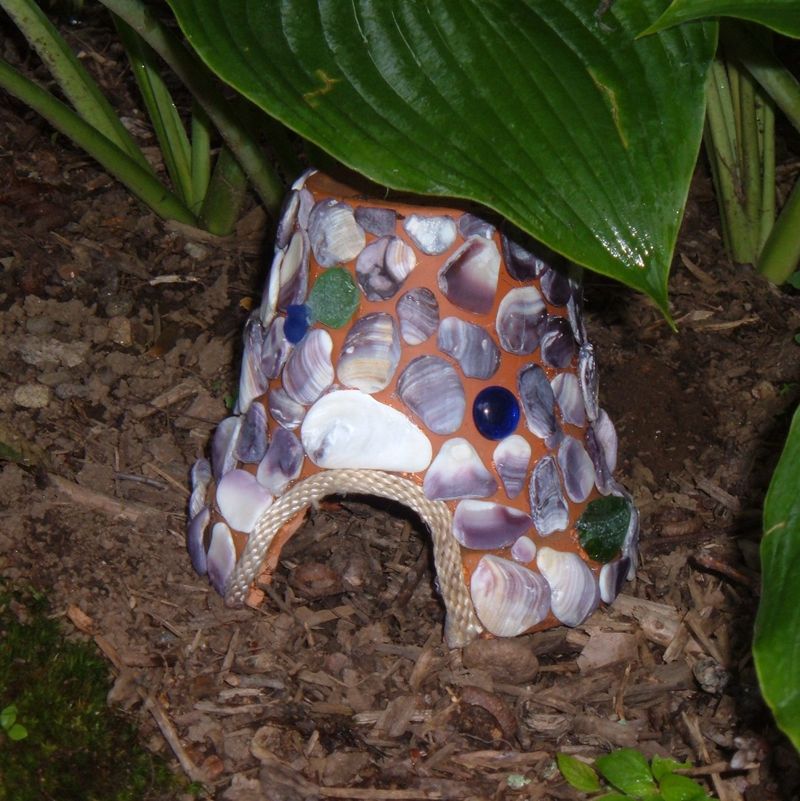
Nocturnal foragers need somewhere safe and cool to spend the day. For a western toad visiting a California yard, that might mean a patch of damp leaf litter under a shrub, a gap beneath a flat rock, the shaded underside of a low wooden planter, or a thick mulched border that stays cooler than the surrounding soil. These features do not create a toad; they make a yard a reasonable place for one to rest between nighttime forays.
Penn State Extension’s guide to garden toads describes useful shelter as including damp mulch, leaf litter, dense low vegetation, spaces beneath rocks or logs, and simple overturned-pot shelters with a notched entry. Removing every such feature from a yard does not guarantee a toad will leave, but it does remove the kind of microhabitat that makes daytime refuge practical. A yard stripped of all ground-level cover, shade, and damp spots becomes a less attractive place for a toad to spend the hot California daylight hours.
That said, the same moist, shaded hiding places that appeal to a toad also appeal to slugs. Thick mulch and dense low cover can harbor the very pests you want to reduce. Rather than choosing between toad habitat and slug management, treat the two goals as a tradeoff that requires targeted action on both fronts. Keep some shaded, cool areas in lower-traffic parts of the garden while actively managing slug populations through the methods described later in this guide.
The key framing here is ecological inference, not proven yard-level cause and effect. Removing cool daytime shelter may make your yard less suitable for a visiting toad. Keeping some of it, thoughtfully placed, may help. Neither outcome is guaranteed for any individual animal, but the habitat logic is sound and the cost of preserving a modest shaded corner is low.
Offer limited refuge without wasting water or weakening fire safety
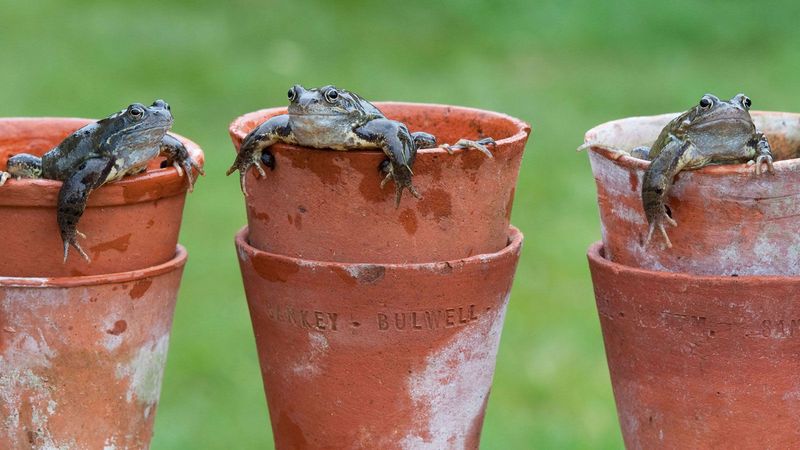
Creating a more toad-friendly yard in California does not mean running sprinklers at midnight or landscaping the whole property with dense moisture-holding cover. A modest shaded refuge, a few strategically placed rocks or a simple clay pot shelter, and one optional water source can go a long way without compromising the water-wise principles that California’s dry-summer climate demands.
If you want to offer a water source, garden toad guidance from Penn State Extension recommends a shallow, clean container placed in a shaded spot and set low enough that an amphibian can enter and exit without difficulty. Refresh the water regularly to prevent it from becoming stagnant or a mosquito breeding site. A visiting toad does not require a pond, a bog garden, or extra irrigation across the whole property. Those additions may benefit other wildlife but come with real costs in a state where water restrictions and drought are ongoing concerns.
Wildfire safety must take priority over any habitat feature near your home. CAL FIRE’s defensible space guidelines require homeowners in fire-prone areas to maintain an ember-resistant zone immediately around the structure and to remove dead vegetation, dry debris, and combustible materials from the areas closest to the home. Dry mulch, brush piles, stacked logs, and accumulated leaf litter in these zones are fire hazards, regardless of their value as wildlife habitat.
The practical solution is to locate any toad-friendly features in parts of the yard that comply with local defensible-space requirements. California Board of Forestry defensible space zone rules distinguish between the ember-resistant area closest to a structure and the zones farther out where some native vegetation is managed rather than cleared. A shaded rock or a clay pot shelter placed well away from the home, in a compliant zone, can offer useful refuge without creating an ignition risk. When fire safety and wildlife habitat appear to conflict, fire safety wins.
Use integrated pest management instead of outsourcing slug control to one toad
Counting on a single toad to manage a slug problem is a strategy that the evidence does not support. UC Statewide IPM Program guidance on snails and slugs acknowledges that toads and other natural enemies do prey on slugs and snails, but it explicitly notes that natural enemies alone are rarely sufficient for satisfactory control in a home garden. Predation happens; reliable population-level reduction from one foraging animal does not.
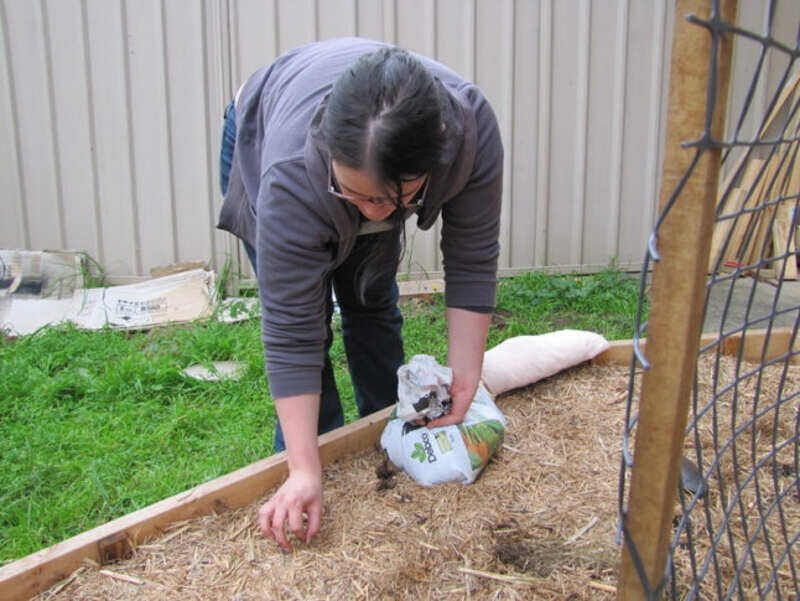
A more dependable approach combines several targeted actions. Start by inspecting plants and their surroundings in the evening or early morning, when slugs are most active, and remove them by hand into soapy water. Reduce the conditions that favor slugs by watering in the morning rather than the evening, so soil surfaces dry out before nighttime. Avoid leaving boards, dense ground cover, or debris in areas where you are actively managing a slug outbreak, since those are the same spots where slugs hide during the day.
When physical methods are not enough, appropriately labeled baits can be used as a targeted supplement. Products containing iron phosphate are commonly recommended as a lower-risk option compared to older metaldehyde-based baits, but any bait must be applied strictly according to its California-approved label. No slug product is automatically safe for wildlife simply because it carries an organic or reduced-risk designation. More on pesticide precautions appears in the next section.
One honest tradeoff is worth acknowledging: if you water only in the morning and keep soil surfaces drier at night, you may also reduce the damp nighttime conditions that make your yard attractive to a foraging toad. The goal is not to eliminate all moisture everywhere, but to target the specific areas where slugs are causing damage while preserving some shaded, cooler corners elsewhere in the yard. Balanced management, not blanket dryness or blanket wetness, is what keeps this approach practical in a California garden.
Reduce pesticide exposure around amphibian habitat

Amphibians absorb water and dissolved substances through their skin, which means a toad moving across a recently treated lawn or garden bed can pick up pesticide residues without ever ingesting them directly. EPA research on pesticide uptake and toxicity in frogs has investigated how amphibians are exposed through dermal contact with contaminated surfaces and water, finding that skin absorption is a meaningful route of exposure for these animals. This does not mean that every pesticide application will harm a yard toad, but it does mean that reducing unnecessary chemical use is a reasonable precaution when native wildlife may be present.
The first step is to exhaust nonchemical options before reaching for any spray or bait. Hand removal, physical barriers, habitat modification, and timing adjustments address many common pest problems without introducing chemical residues into the environment. When a pesticide is genuinely necessary, UC IPM’s guidance on keeping California waterways clean recommends selecting the least-toxic product that will do the job, applying it only where needed, and following the label precisely.
Organic or least-toxic labels are useful starting points, but they are not guarantees of wildlife safety. Some organically approved pesticides are toxic to beneficial insects or aquatic organisms at certain concentrations. Pyrethroid insecticides, which are widely available and often marketed for broad garden use, carry particular risks for aquatic animals and should be avoided where runoff could carry them into storm drains or waterways, a real concern in many California neighborhoods.
Keeping pesticide applications targeted, reading California-approved labels carefully, and timing applications to avoid periods when a toad is likely to be active are all practical steps that reduce risk without requiring you to abandon pest management entirely. If you are unsure whether a product is appropriate near amphibian habitat, UC IPM’s pesticide information resources offer product-specific guidance grounded in California conditions.
Observe the toad, protect pets, and avoid unnecessary relocation
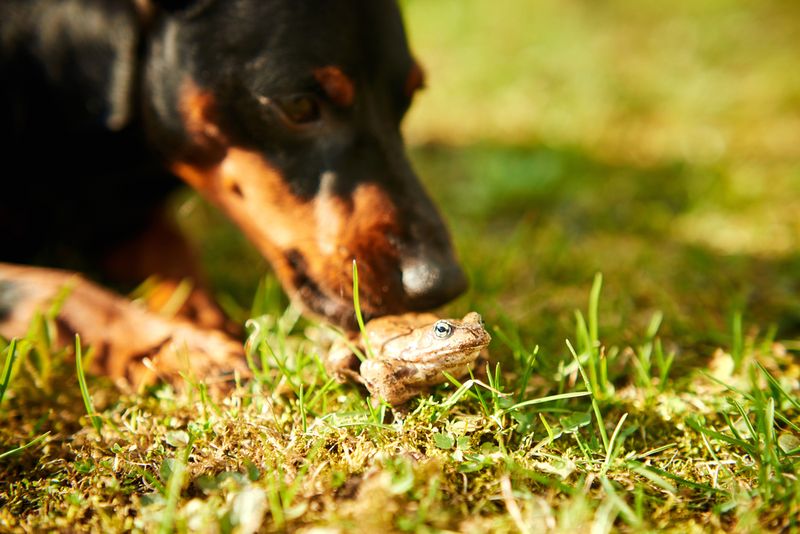
The simplest and safest rule for a toad in your yard is to leave it alone. Handling toads unnecessarily stresses the animal, and toad skin secretions can irritate human mucous membranes. More importantly, moving a toad from one location to another, even within the same neighborhood, carries conservation risks that are not obvious at first glance.
Amphibian disease is a recognized concern in California and across the western United States. A USGS study on the effects of amphibian chytrid fungus on frog and toad survival in the western U.S. documents the impact this pathogen has had on wild populations. The Amphibian Ark’s field-sampling protocol for chytrid fungi recommends minimizing handling and avoiding the movement of animals or potentially contaminated equipment between locations as a disease-prevention precaution. This guidance is aimed at researchers, but the underlying principle applies to homeowners too: unnecessary relocation and shared equipment can pose conservation risks, so the safest approach is to let the animal be.
Pets are a more immediate concern for most California households. Dogs and cats that mouth or ingest a toad can be exposed to skin secretions that cause real harm. Pet Poison Helpline’s toad toxicity guidance identifies symptoms including excessive drooling, vomiting, breathing difficulty, weakness, seizures, and abnormal heart rhythm as signs requiring urgent veterinary attention. If your dog or cat licks, mouths, or swallows a toad, rinse the animal’s mouth gently with water and contact a veterinarian or animal poison control service right away.
Do not wait for symptoms to appear before making that call.
Supervising pets in the yard at dusk and dawn, when toads are most likely to be active, is the most practical preventive step. Teaching dogs a reliable leave-it command around wildlife reduces risk further. The toad is not aggressive, but a curious or prey-driven pet does not know that.
Treat the toad as a useful neighbor, not a guaranteed exterminator
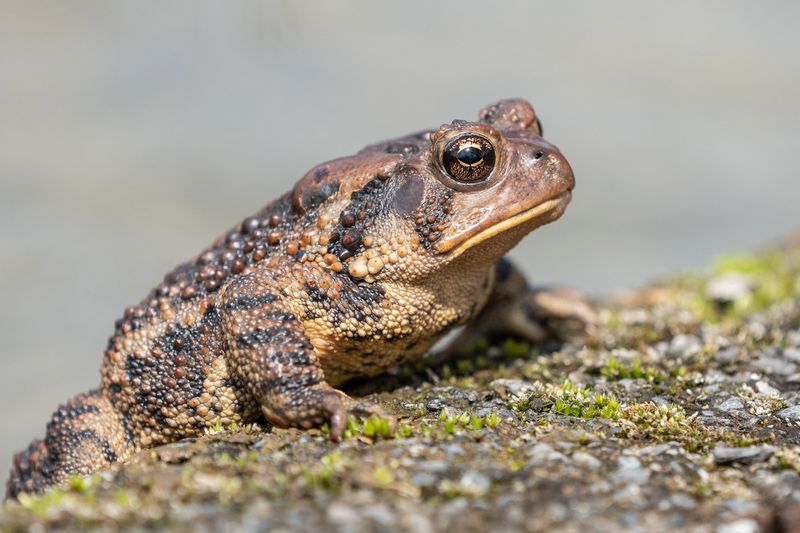
A toad appearing in your California yard at night is worth appreciating for what it likely is: a native animal using your property as part of its terrestrial range. According to the California Department of Fish and Wildlife western toad account, these animals occupy a wide range of habitats across the state and eat beetles, ants, and other terrestrial invertebrates as their primary foods. Some slugs and other garden pests may end up on the menu too, but that is a secondary benefit, not a service you can rely on.
The practical decision rule is straightforward. Preserve a modest shaded refuge in a part of your yard where fire rules allow it, skip unnecessary pesticide applications, and continue targeted IPM for slugs and other pest problems. UC IPM’s snail and slug management guidance remains your most reliable resource for keeping those populations in check, because no single predator, including a toad, will do that work on its own. Make sure any habitat features you add comply with CAL FIRE defensible space requirements before placing them near your home.
Responsible coexistence with a yard toad means protecting the animal from pesticides and unnecessary handling, protecting your pets from its secretions, protecting your home from fire risk, and protecting your garden from pests through methods that actually work. The toad fits into that picture as a welcome part of a functioning yard ecosystem, not as a replacement for any of it. A garden that supports native wildlife while staying fire-safe, water-wise, and well-managed is not a compromise – it is simply a California yard done right.