
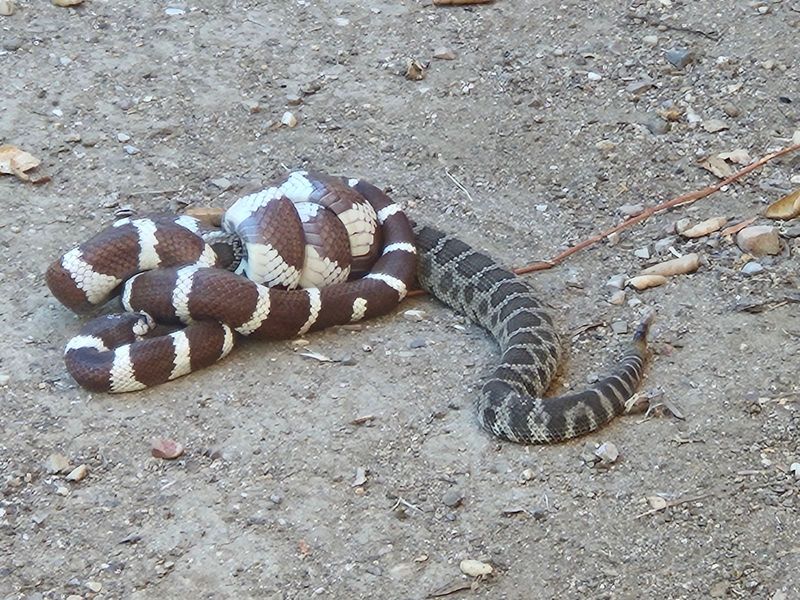
Spotting a boldly banded snake gliding through your California yard can stop you cold, especially if rattlesnakes live anywhere near your neighborhood. Many homeowners grab a shovel before they realize they may be looking at the California kingsnake, Lampropeltis californiae, a nonvenomous native that belongs in the local ecosystem. Understanding what that sighting actually means, and what it does not, could save a beneficial snake and help you make smarter decisions about the venomous ones.
A California kingsnake in the yard is a native predator, not a promise of protection
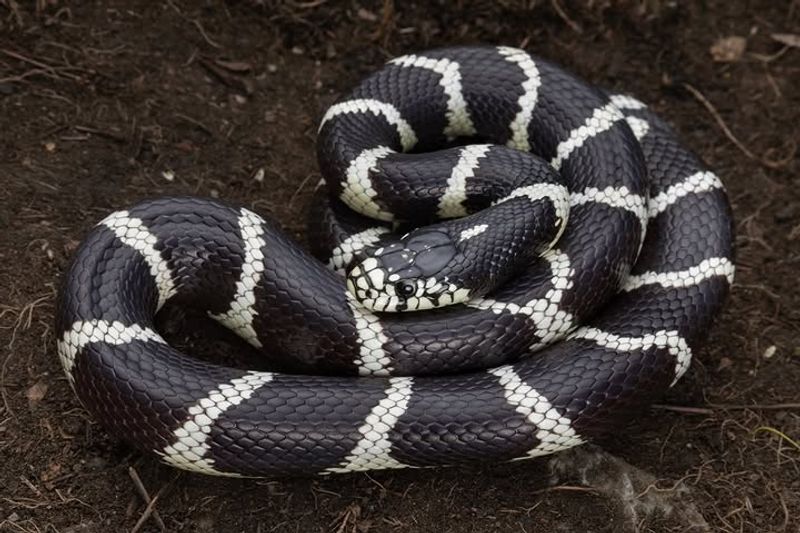
Seeing a banded snake move through your garden beds or vanish under a wood pile can feel like a warning, but a California kingsnake, Lampropeltis californiae, is a nonvenomous constrictor and a permanent piece of California’s native wildlife. The U.S. Fish and Wildlife Service describes it as one of the most widespread native snakes in the state, found from coastal scrub to inland valleys and up into foothill terrain.
A kingsnake moves through a yard because the yard offers something useful, prey, a travel corridor, or a place to rest under a rock or board. That is not evidence that rattlesnakes are present, actively being hunted, or that your property has earned some kind of protection. A sighting simply means the snake found your patch of California worth passing through or stopping in.
California’s wildlife habitat relationships account for the species places kingsnakes in valley-foothill riparian corridors, irrigated landscapes, rock outcrops, and vegetation clumps, which describes a large share of suburban California. The snake is not a sentinel posted at your fence line.
Identification deserves a careful note. California also has mountain kingsnakes, such as the California mountain kingsnake, Lampropeltis zonata, which wear red, black, and white or yellow bands. A red-banded snake is not a California kingsnake, and the two species have different diets and habitat needs. More critically, California State Parks notes that several native snakes share similar banded patterns, meaning color alone cannot confirm a species from across the yard.
If you cannot identify the snake confidently from a safe distance, treat it as potentially venomous and keep people and pets away.
Its menu is broad—and rattlesnakes are only one part of it
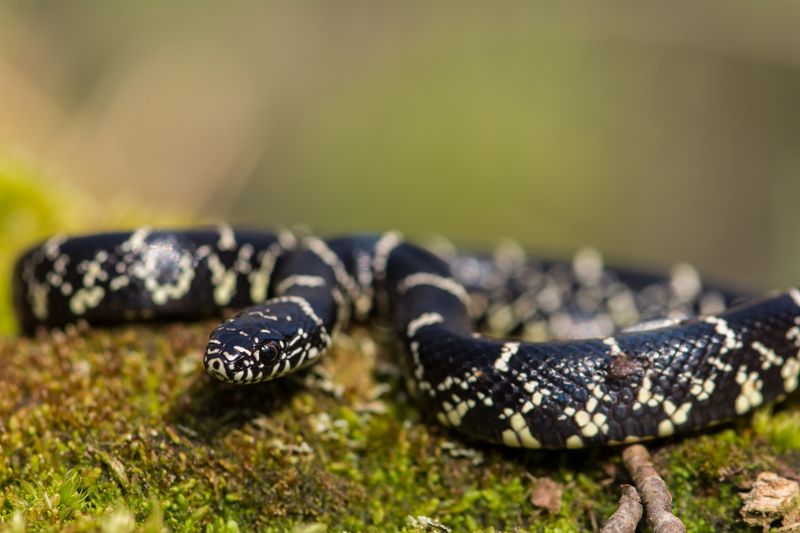
The image of a kingsnake as a dedicated rattlesnake hunter makes a great story, but the actual diet research tells a more complicated and more honest picture. A 2019 feeding ecology study by Wiseman, Greene, Koo, and Long, drawing on 2,662 museum specimens, published records, and field observations, found that snakes and mammals each accounted for 29 percent of recorded prey items. Lizards, birds, squamate eggs, and amphibians filled out the rest of the menu.
Rattlesnakes specifically came in at roughly 7 percent of all recorded prey items in that study. They were a meaningful part of the diet, not a trivial one, but they were far from the centerpiece. Within the snake portion of the diet, rattlesnakes represented about 24 percent of prey by frequency and 37 percent by biomass and energy, which reflects their size and caloric value. Those numbers support the statement that California kingsnakes may eat rattlesnakes, and they do not support the claim that rattlesnakes are the kingsnake’s primary food.
The mammal category also needs a reality check. Mammals made up 29 percent of prey items in the study, but the data do not show that every mammal eaten was a rat or a house mouse. California kingsnakes eat pocket mice, ground squirrels, and other native small mammals alongside commensal rodents. One individual snake moving through your yard is not running a dedicated rodent-reduction program.
Diet also shifts with the snake’s body size, the season, and the region. A younger, smaller California kingsnake is more likely to take lizards than a large adult capable of overpowering a rattlesnake. Treating any single sighting as proof that your yard’s snake or rodent population is being managed misreads what the science actually shows.
How a nonvenomous snake can take on another snake
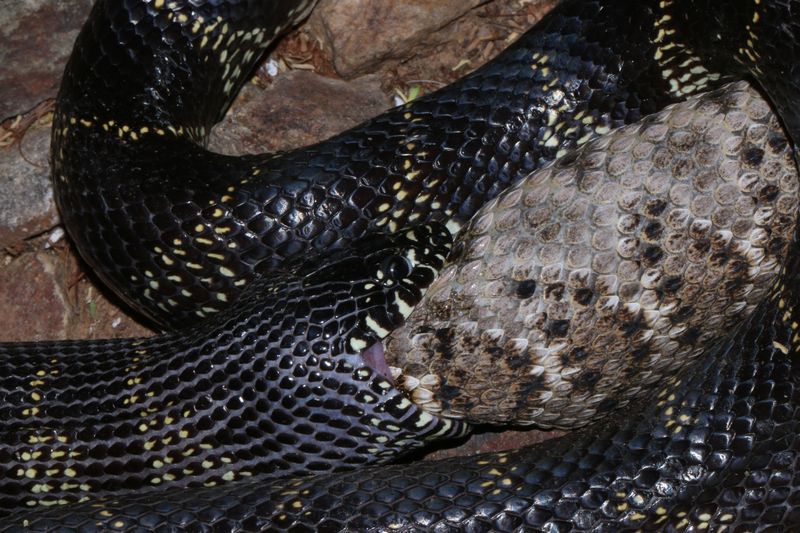
Watching a snake eat another snake seems like it should require venom or some extraordinary weapon, but a California kingsnake relies on muscle and mechanics. The Los Angeles Zoo describes the California kingsnake as a nonvenomous constrictor that subdues prey by coiling tightly around it, cutting off the prey’s ability to breathe, and then swallowing the animal whole, generally headfirst.
Getting a rattlesnake down requires solving a real physical problem. A biomechanics study by Jackson, Kley, and Brainerd documented how California kingsnakes manage to consume other snakes that can equal or even exceed the predator’s own length, using a combination of jaw mobility and body repositioning that allows the kingsnake to fold and compact a long prey item during swallowing.
There is also the question of venom. A rattlesnake can bite during a predation attempt, and research has documented that kingsnakes carry a specialized resistance associated with their predation on pit vipers. Early research published in Nature identified antivenom activity in kingsnake blood plasma, and the 2019 diet study discusses this resistance in the context of rattlesnake predation. That resistance is specialized, not absolute.
It should not be described as universal immunity to all venomous snakes or all venom types, and it gives homeowners no practical reason to get closer to either animal.
The biology is genuinely impressive, but admiring it from a safe distance is the right call. A rattlesnake engaged with a predator is still capable of striking a person who gets too close, and a cornered kingsnake may bite defensively. Neither snake benefits from human involvement in the encounter.
Why one kingsnake cannot solve a rattlesnake problem
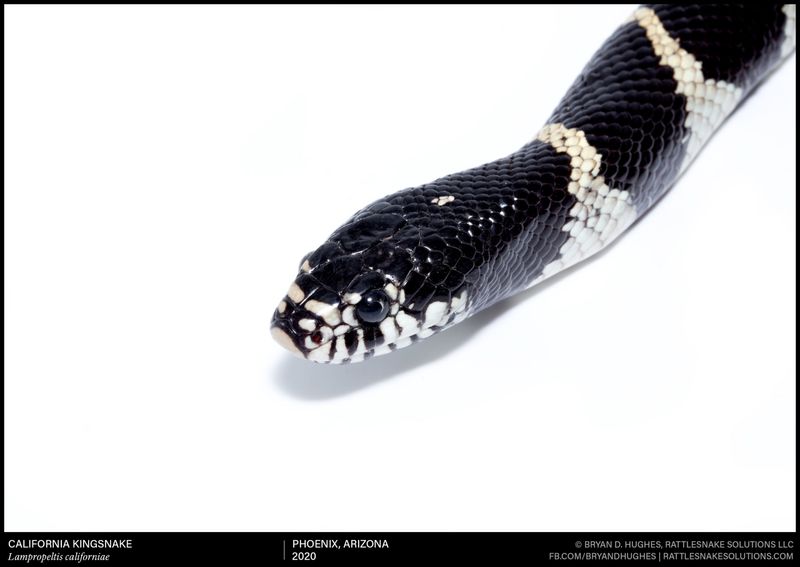
Homeowners sometimes hear that kingsnakes eat rattlesnakes and conclude that having one around means the rattlesnake problem is handled. UC Statewide IPM is direct on this point: the number of rattlesnakes consumed by natural predators is too small to meaningfully reduce the rattlesnake population around an individual home or garden. One kingsnake passing through a yard does not change that math.
A sighting also does not confirm that rattlesnakes are absent, that they have been scared off, or that the local population has shrunk. Rattlesnakes and kingsnakes can occupy overlapping habitat without the kingsnake eliminating the rattlesnakes nearby. The 2019 diet study makes clear that kingsnakes are generalist predators with a broad and variable menu, so a particular individual may not encounter a rattlesnake at all during a visit to your property.
Rodent populations follow a similar logic. California kingsnakes do eat mammals, and rattlesnakes commonly prey on rodents, so reducing rodents is a genuine and practical way to make a yard less attractive to both species. But no published evidence shows that one kingsnake will meaningfully reduce a yard’s rodent load on its own. The connection between kingsnake presence and fewer rattlesnake visits is indirect, uncertain, and not a substitute for managing the conditions that attract rodents in the first place.
Rattlesnakes also deserve a fair description in this conversation. CDFW’s human-wildlife conflict guidance and UC IPM both describe rattlesnakes as native predators with real ecosystem value, including rodent control. The goal for most California homeowners is not to eliminate rattlesnakes from the landscape but to reduce the chance of a dangerous encounter near the house. A kingsnake sighting is an interesting ecological event, not a management strategy.
When a snake appears, distance matters more than identification bravado
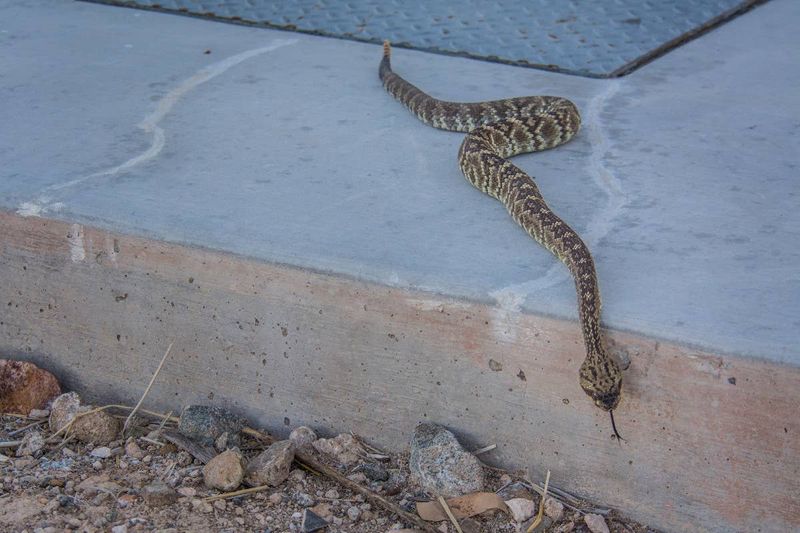
Curiosity is understandable when a snake shows up in the yard, but the first move should always be distance, not a closer look. Getting near enough to check the head shape, the rattle, or the pupil shape puts you within striking range, and rattlesnakes do not always rattle before striking. If you cannot confidently identify the snake from where you already stand, keep people and pets well away and treat the animal as potentially venomous until you have better information.
For a snake you can clearly identify as a California kingsnake, nonvenomous and not blocking a doorway or posing an immediate hazard, the right response is to give it space and let it leave on its own. CDFW’s rattlesnake guidance and UC IPM both emphasize that most snake bites happen when people try to pick up, corner, move, or kill a snake. A kingsnake that feels trapped will bite defensively, and a defensive bite from a nonvenomous snake still carries bacteria and can cause injury.
A rattlesnake near the house calls for a different response. Do not attempt to kill it, capture it, or move it yourself. UC IPM notes that bites commonly occur during exactly those attempts. CDFW adds that a dead rattlesnake can still deliver a bite reflexively and inject venom for a short time after death, so even a snake that appears dead should not be handled.
Call a licensed wildlife removal professional and keep everyone away from the area until help arrives.
If someone is bitten by a suspected rattlesnake, the only correct response is emergency medical care. Go to an emergency room or call 911 immediately. Do not apply a tourniquet, pack the bite in ice, cut the wound, or attempt suction. Those approaches do not help and can make the injury worse.
Antivenom administered at a hospital is the treatment that works.
Manage the yard conditions that bring snakes close to the house
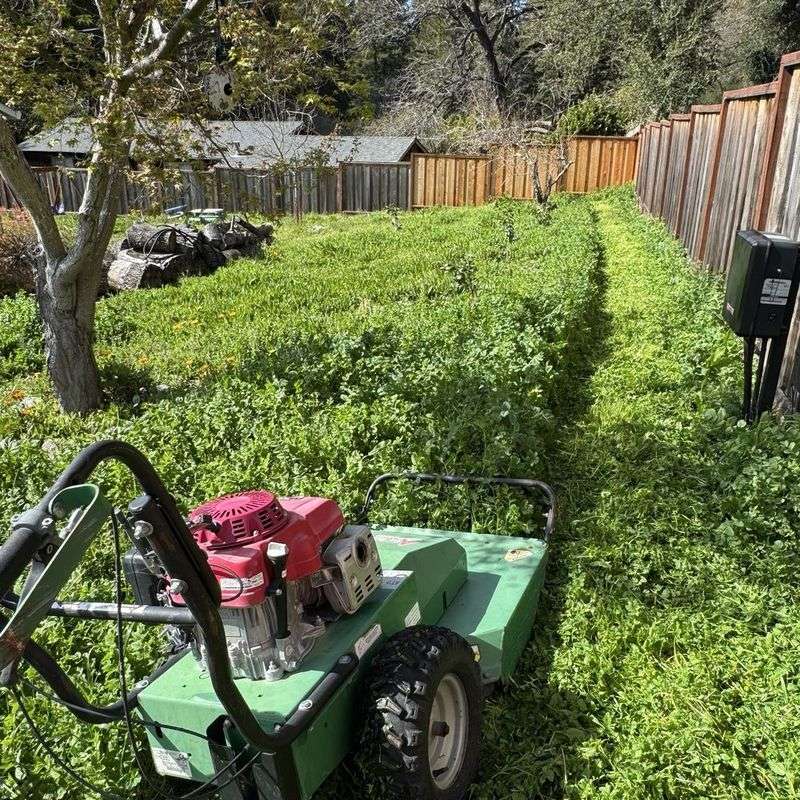
Snakes follow food and shelter, and a yard that offers both is a yard that will see more snake activity. The most reliable way to reduce encounters is to change the conditions that make a yard attractive, starting with what rodents need to survive near the house.
Secure all pet food and birdseed in sealed containers and bring them inside at night. Fallen fruit, open compost, and unsecured garbage all draw rodents, which draw the snakes that eat them. UC IPM’s rattlesnake management guidance specifically identifies brush, tall grass, lumber piles, rocks, and surface objects as relevant habitat features that give both rodents and snakes places to hide and move. Stacking lumber and firewood off the ground and away from the house removes one of the most common snake refuges in a California yard.
Dense vegetation close to the foundation deserves attention too. Overgrown ground cover, thick ornamental grasses, and tangled shrubs give snakes cover and shade during the day. Thinning plantings within a few feet of the house reduces that cover without requiring you to eliminate native plants from the broader yard. Keeping grass mowed and clearing debris from rock walls and retaining walls also removes common resting spots.
California’s wildlife habitat relationships account for the kingsnake notes that the species uses rock outcrops, vegetation clumps, and burrows for refuge, all features common in suburban and wildland-interface yards. For homeowners in hillside communities or fire-prone zones, defensible-space and vegetation-management requirements from CAL FIRE and local fire agencies often align directly with snake-habitat reduction. Clearing brush within 30 to 100 feet of structures, depending on slope and local rules, reduces both fire risk and snake cover simultaneously.
None of these steps guarantee that a kingsnake or rattlesnake will never cross the property line. Snakes travel, and California’s open landscapes mean neighboring habitat will always supply new individuals. Consistent yard management lowers the probability of close encounters without eliminating it entirely.
Leave a safely identified kingsnake alone—and do not manufacture a solution
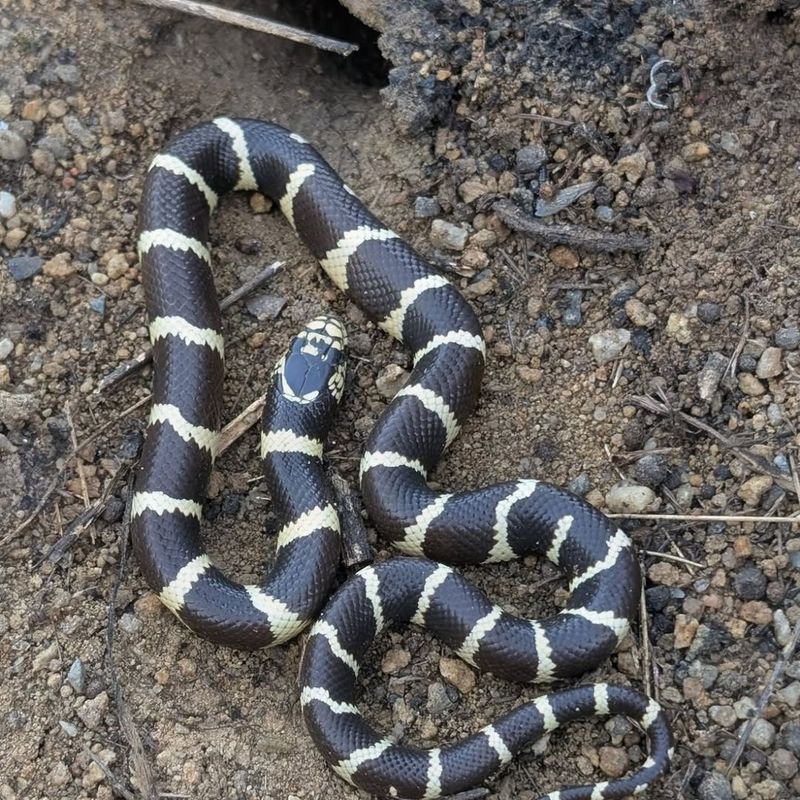
A California kingsnake you can clearly identify from a safe distance is a nonvenomous native predator worth leaving alone. That is the full stewardship message, and it does not need to be stretched into something larger. The snake is not a pest-control service, it is not assigned to your property, and it should not be handled, relocated, or encouraged to stay.
Two approaches that circulate online are worth naming and rejecting. First, releasing captive-bred or wild-caught kingsnakes to control rattlesnakes is not a legal or effective solution. CDFW states plainly that releasing animals into the wild requires written authorization and would generally not be approved because of pathogen, parasite, and genetic risks to wild populations. Second, leaving shed kingsnake skin outside to repel rattlesnakes is an unsupported folk remedy.
No tested evidence backs it as a practical deterrent, and UC IPM does not include it among recommended rattlesnake management strategies.
California law also applies here. Title 14 of the California Code of Regulations, Section 40 generally restricts intentionally killing, injuring, capturing, possessing, transporting, or otherwise taking native reptiles, subject to specific exceptions and local rules. Killing a kingsnake because it looks alarming may carry legal consequences beyond the ecological loss.
Real snake management is quieter than the stories suggest. Yard conditions, professional removal when needed, and a practiced habit of giving snakes space accomplish more than any single animal ever could. A kingsnake in the yard is a sign that California’s native food web still reaches your fence line, and that is worth something on its own terms.