
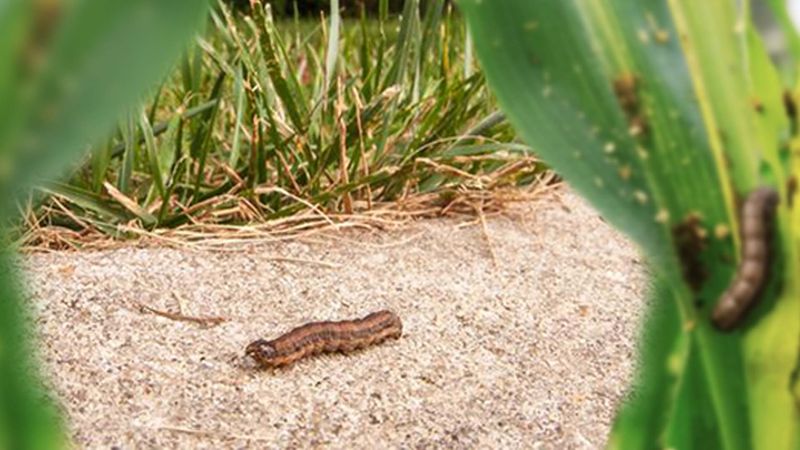
Every late summer, North Carolina homeowners notice patches of grass turning brown almost overnight, and fall armyworms are often the culprit. These migratory caterpillars can move through a lawn fast, and the instinct to grab a spray can is understandable. But before you treat, it pays to know what you are actually dealing with, what role birds can realistically play, and when targeted action is truly needed.
North Carolina faces recurring fall armyworm risk
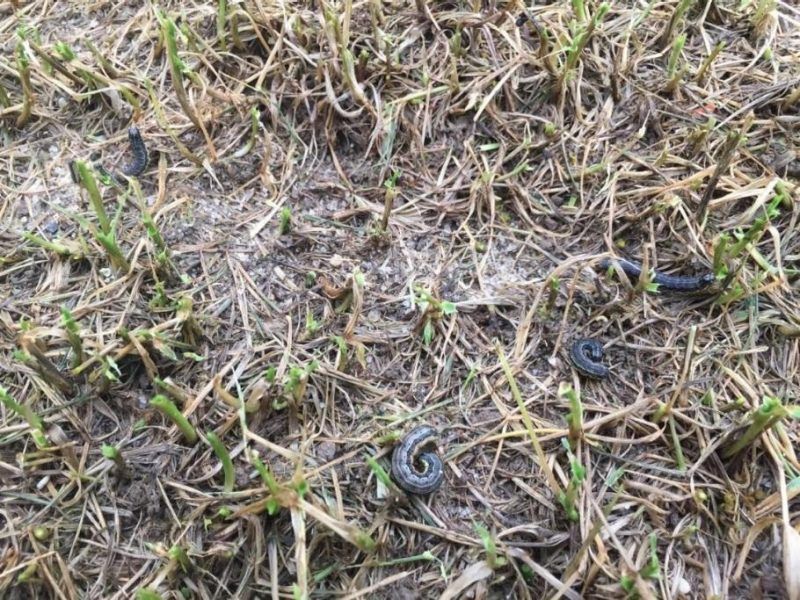
Fall armyworms are not a freak event in North Carolina. They arrive every warm season, migrating northward from farther south, and NC State Extension confirms that several generations can develop during the state’s long warm period. Bermudagrass, fescue, ryegrass, and bluegrass are all on the menu, so both warm-season and cool-season lawns are at risk.
Damage can seem to appear almost overnight. Egg masses are often deposited on light-colored vertical surfaces, including building siding, fences, and signs, and the young larvae drop down and move outward from there. Newly installed sod and young turf that has not yet developed deep roots tend to suffer the most, because they have less stored energy to push through recovery.
Before you assume your county is under attack, check the facts. NC State maintains a self-reporting fall armyworm activity map that lets you see where confirmed or suspected infestations have been logged. Local Cooperative Extension offices also publish current reports tied to specific counties, which is far more reliable than a statewide headline. Recurring seasonal risk is real, but that is different from a verified outbreak happening in your neighborhood right now.
Knowing the pest’s habits helps you stay a step ahead. Armyworm populations tend to build through summer and peak in late summer into early fall in North Carolina. Keeping an eye on your lawn during that window, especially if neighbors report damage, puts you in a much better position than waiting until the brown patches are already spreading.
Confirm the caterpillar before changing your lawn plan
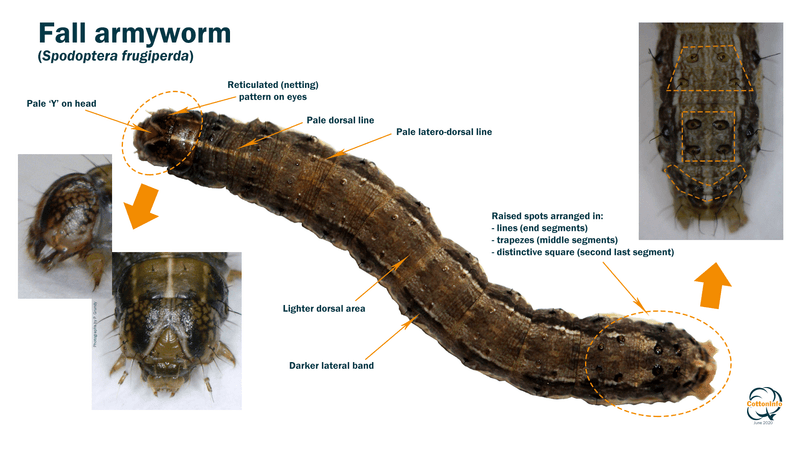
Brown or thinning grass does not automatically mean armyworms. Drought stress, summer heat, fungal disease, and other lawn insects such as sod webworms or chinch bugs can all produce patches that look similar at a glance. Reaching for a treatment before you know what caused the damage wastes money and can harm beneficial organisms that were never part of the problem.
Start your inspection at the border between healthy green grass and the damaged area. That edge is where actively feeding larvae are most likely to be found. Check early morning or in the evening, since armyworms tend to feed most aggressively when temperatures are cooler. NC State Extension describes the characteristic pale inverted “Y” marking on the head capsule as one of the clearest identification features.
Look for the caterpillars themselves, the small dark frass pellets they leave behind, and ragged feeding damage on individual grass blades.
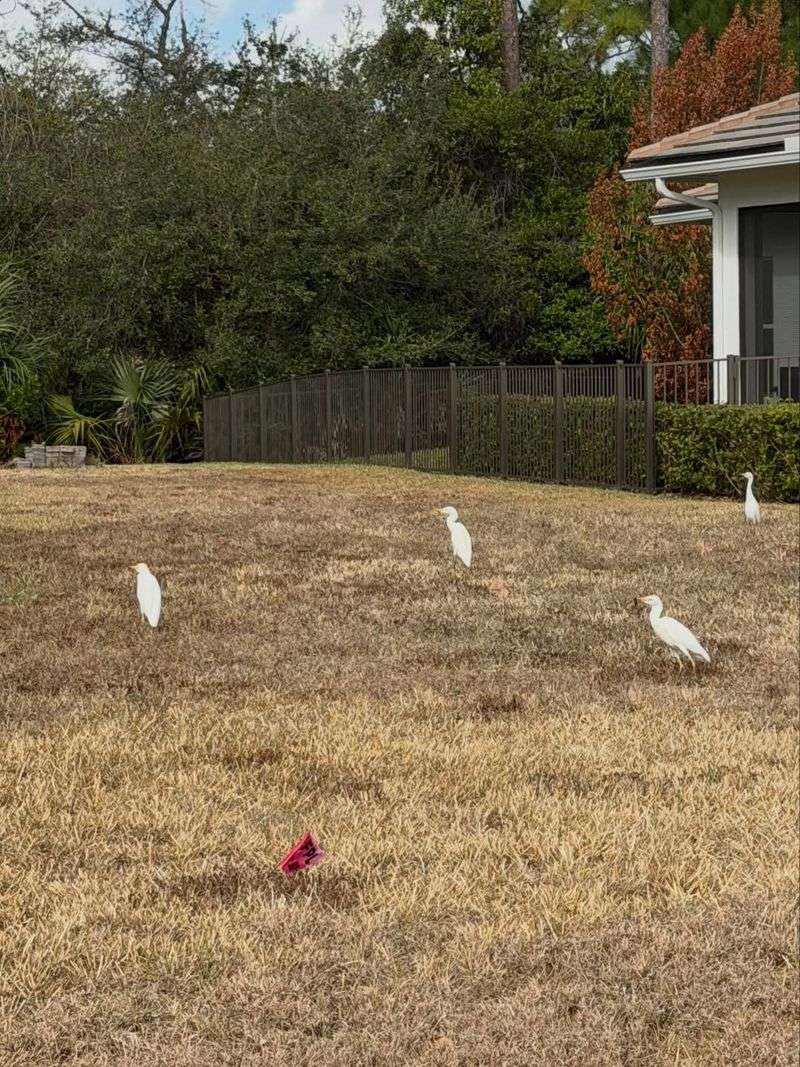
Pay attention to where birds are concentrating. Crows or other insect-eating birds working a particular section of the lawn can point you toward an active feeding zone worth investigating. That is a scouting clue, not a verdict, but it narrows down where to look first.
NC State’s turfgrass pest resource also notes that larval size matters. Larger, later-stage larvae are approaching the end of their feeding period and will soon move into the soil to pupate. If most of what you find are big caterpillars, the heaviest feeding damage for this generation may already be winding down. Smaller larvae still have most of their feeding ahead of them, which affects both the urgency of your response and how well any treatment is likely to work.
Birds eat armyworms, but they cannot guarantee control
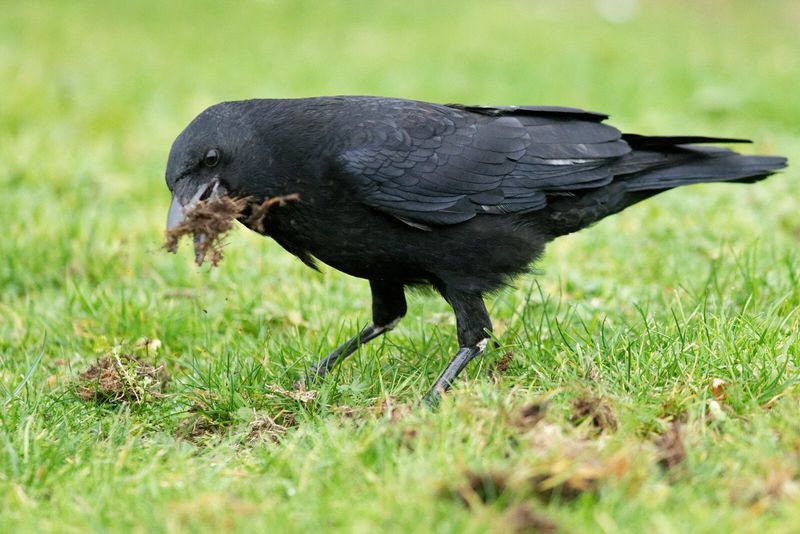
Plenty of insect-eating birds will take fall armyworm larvae when they find them. Crows, starlings, robins, and other ground-feeding species actively work lawns where larvae are present, and NC State Extension notes birds, especially crows, congregating in damaged areas as a sign worth investigating when scouting for armyworm activity in pastures. That behavior carries over to residential turf as well.
A turfgrass study published in Urban Ecosystems found greater arthropod predation in residential lawns than in intensively managed sod farms. That is an observational finding. The study did not test whether adding bird feeders, birdbaths, or native plants caused the difference, and it did not demonstrate that bird predation stopped or meaningfully slowed an active armyworm outbreak.
The honest picture from extension science is more measured. NC State Extension states that natural enemies can sometimes keep fall armyworm populations in check, but they may not control large populations. Iowa State Extension echoes that caution, noting that natural enemies are part of the picture but are not reliable enough to protect a lawn when armyworm numbers are high.
Seeing birds working your lawn actively is useful information. It tells you larvae are probably present and worth confirming. What it does not tell you is whether the birds are eating enough caterpillars to prevent significant turf loss. UC IPM’s turfgrass guidance reinforces that natural-enemy activity is one factor in integrated management, not a standalone control strategy.
Use bird activity as a scouting prompt, not as reassurance that the problem is resolving itself.
Build native habitat for long-term bird support
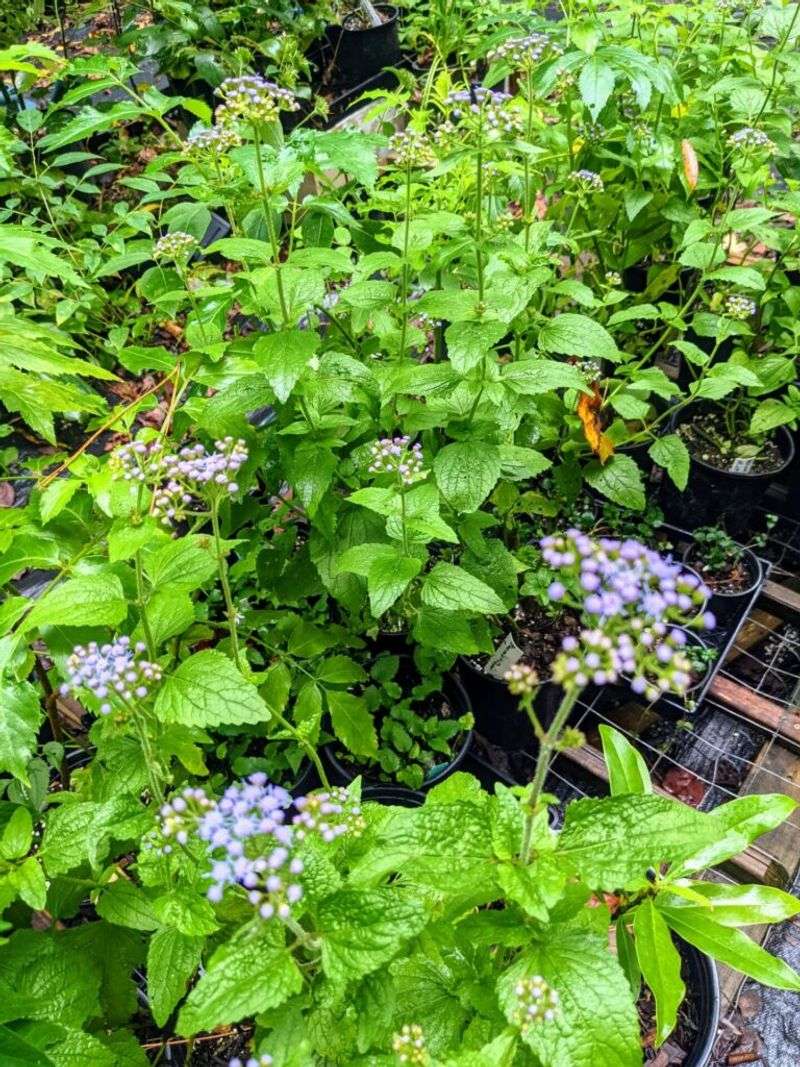
Supporting insect-eating birds over the long term starts with the plants around your lawn, not with a feeder. Native plants do something a feeder cannot: they supply insects, caterpillars, seeds, berries, shelter, and nesting materials across multiple seasons. NC Wildflower Society explains that native plants function as living, year-round food sources that support the full range of a bird’s needs, not just the seed-eating part.
NC State Extension’s Plant Toolbox lets you filter North Carolina native plants by region, soil type, light conditions, and intended function, including shelter, cover, fruit, and insect habitat. That kind of site-specific matching matters because a plant that thrives in the coastal plain may struggle in the Piedmont or the mountains. Start there rather than with a generic list.
Some plants that NC resources identify as useful for birds include native oaks, northern spicebush, viburnums, goldenrods, blackgum, switchgrass, little bluestem, coneflowers, and cardinal flower. NC Audubon highlights native plants that serve birds through multiple functions, and northern spicebush in particular draws attention for its berries and the insects it supports. Treat these as starting points to evaluate through local resources, not as a guaranteed roster for every yard.
Audubon’s bird-friendly plant guidance is clear that plant-to-bird relationships are broad and vary by geography, available resources, and species. No single plant is going to attract a specific armyworm-eating bird on demand. The goal is layered, diverse native vegetation that gives birds a reason to stay in and around your yard through the season. Any reduction in armyworm pressure that comes from that habitat is a benefit worth having, but it is a long-term outcome, not a quick fix for caterpillars already working through your turf right now.
Use water and cover instead of relying on a feeder
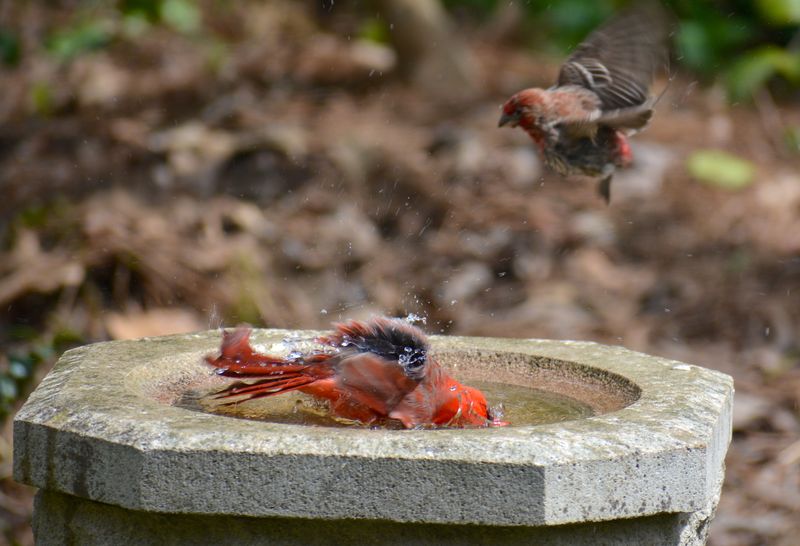
A bird feeder is easy to put up, and it does draw birds. What it does not do is replace habitat. Birds need food, clean water, shelter from predators and weather, nesting space, and the kind of structural diversity that layered vegetation provides. NC Wildflower Society points out that a feeder addresses only one of those needs, and it attracts primarily seed-eaters rather than the insectivores most likely to go after armyworm larvae.
Clean, shallow water is one of the most effective things you can add. A birdbath placed near shrub cover, changed every couple of days to prevent mosquito breeding, draws a wider range of species than seed alone. Retaining some leaf litter, brush piles, or dense shrub plantings gives ground-feeding birds the cover they need to feel safe foraging. Audubon’s habitat guidance consistently emphasizes that shelter and nesting resources matter as much as food sources when you want birds to linger rather than just pass through.
One thing worth knowing: a yard managed for birds will have caterpillars in it. That is not a sign of failure. Caterpillars are critical food for nestlings, and bird-friendly landscapes are built around insects, not in spite of them. Seeing caterpillars on your native plants does not mean your habitat strategy is not working; it means the habitat is functioning.
The goal is a yard where birds have genuine reasons to stay and forage, not a yard scrubbed clean of every insect. That kind of sustained presence, built through habitat quality rather than a feeder alone, is the realistic foundation for any natural-enemy benefit over time.
Escalate when confirmed damage outruns natural enemies
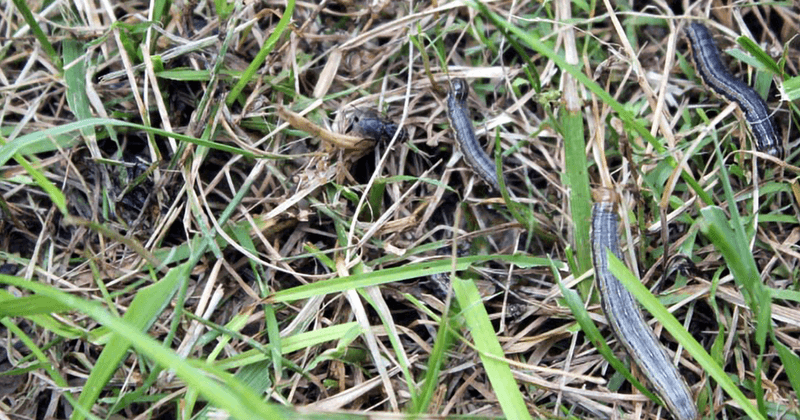
At some point, habitat support and bird activity are not enough for the immediate problem. Knowing when to escalate matters as much as knowing not to spray reflexively. The decision should rest on confirmed larvae, the speed and extent of the damage, the size of the caterpillars you are finding, and how vulnerable your lawn is, not on an arbitrary number.
NC State Extension is direct about the limits of natural control: when fall armyworm populations are large, natural enemies, including birds, parasitoids, and pathogens, may not prevent serious turf injury. Iowa State Extension makes the same point. If you are watching actively feeding small larvae spread across a significant area of lawn that is already losing ground, waiting for birds to catch up carries real risk of additional damage.
Two thresholds that appear in extension literature do not apply cleanly to your residential yard. NC’s three-larvae-per-square-foot guideline was developed for pastures and forage systems, not home lawns with different grass types, uses, and recovery capacity. UC IPM’s five-larvae-per-square-yard figure comes from California turfgrass guidance and is not a North Carolina homeowner rule. Use those numbers as rough context, not as a trigger point, and talk to your local Cooperative Extension office about what makes sense for your specific turf.
Larval size is one of the most practical escalation signals. Smaller larvae are actively feeding and more susceptible to treatment. Large, late-stage larvae are close to entering the soil to pupate, meaning the feeding damage for that generation may be nearly done. Starting native-plant habitat work is always a reasonable long-term step, but it should not delay a response when confirmed, small, actively feeding larvae are spreading damage across a lawn that is already struggling.
Choose targeted treatment only after checking authorization
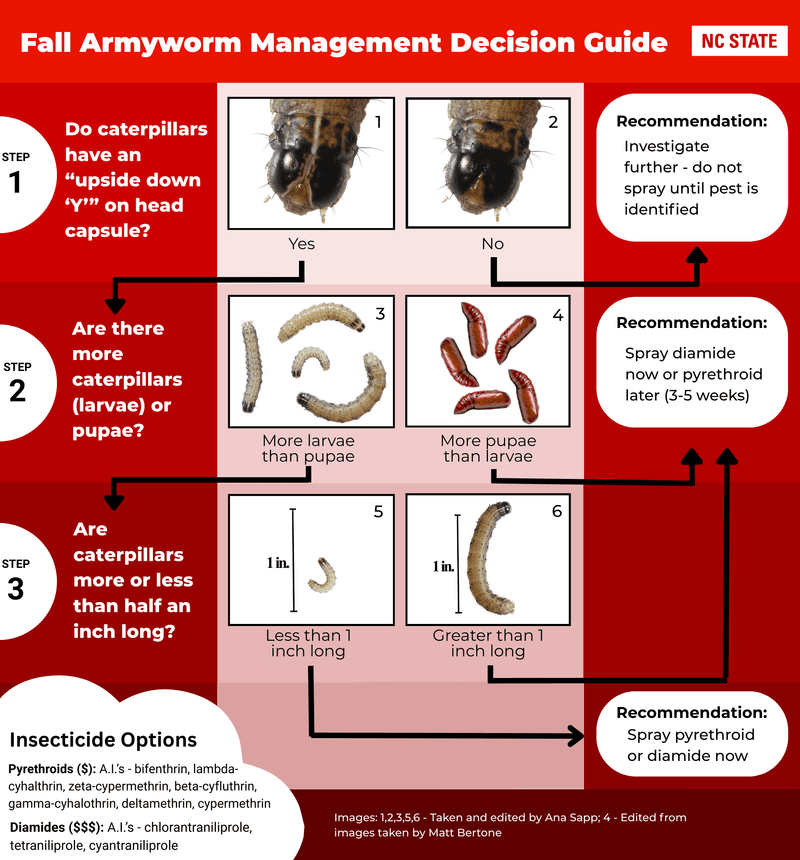
Once you have confirmed an active infestation with small larvae causing real turf damage, the question shifts to treatment options. The first stop is not a product shelf. Contact your local North Carolina Cooperative Extension office and ask what is currently labeled for fall armyworms in residential turf in your county. That conversation matters because product registrations change, older extension tables do not automatically reflect current legal use, and what worked for a neighbor or appeared in a five-year-old guide may not be authorized for your situation today.
EPA is explicit that pesticide labels are legally enforceable documents. Using a product on a site or pest not listed on the current label, or applying it at a rate not specified, is a violation of federal law regardless of what an older publication suggested. Verify the current EPA label for any product you are considering and confirm that it is registered for residential turf use in North Carolina for fall armyworms specifically.
NC State Extension notes that insecticides are generally less effective against large, late-stage larvae and work best when caterpillars are still relatively small. Timing your response to larval size is one of the most practical ways to improve results while minimizing the amount of product you need to apply.
When treatment is authorized and warranted, apply it only to the affected areas rather than broadcasting it across the entire lawn. EPA’s wildlife protection guidance advises using pesticides only when necessary, targeting the problem area, and following every label direction designed to reduce exposure to birds, beneficial insects, fish, children, and pets. Do not assume that a product labeled as organic or botanical is automatically safe for wildlife. Neem and pyrethrum-based products carry their own exposure risks depending on how and where they are used.
Read the full label, follow it completely, and avoid treating during peak pollinator activity hours.
Pair lawn scouting with long-term habitat care
The practical sequence for handling a suspected fall armyworm problem in North Carolina runs like this: verify the damage is actually from armyworms, scout the border between healthy and damaged turf, treat increased bird activity as a clue worth investigating rather than proof of control, and check the NC State activity map along with your local Extension office before drawing conclusions about current county conditions.
Birds genuinely contribute to integrated pest management over time. They can reduce larval numbers and serve as a living early-warning system for infestations you might otherwise miss. What they cannot do is reliably stop a severe, fast-moving infestation on their own. Building native-plant habitat is the right long-term investment, but it is a season-by-season project, not a same-week fix for caterpillars already eating your turf.
When confirmed damage is serious and larvae are small and actively feeding, a targeted, properly authorized treatment is a reasonable escalation, applied only to affected areas and with full attention to reducing exposure to wildlife, children, and pets. Habitat-building and careful pest management are not opposites. A yard that supports birds year-round is also a yard better equipped to weather the next armyworm season with more natural allies already in place.