
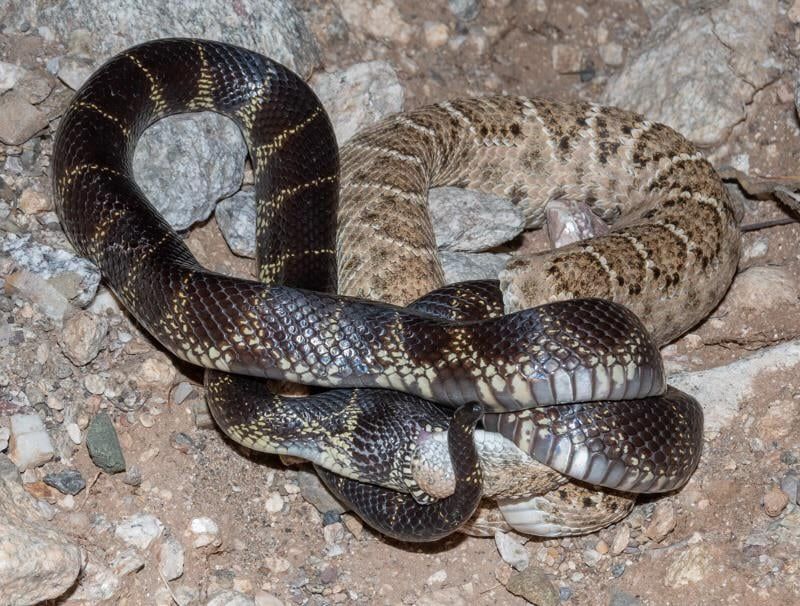
A striped or banded snake slipping through your garden beds might look alarming, but that snake could be one of California’s most ecologically interesting native predators: the California kingsnake. These nonvenomous reptiles eat a wide range of prey, and yes, that menu sometimes includes rattlesnakes. That fact has generated a lot of excitement online, but the real story is more nuanced than any single headline can capture. Understanding what kingsnakes actually do, and what they cannot reliably do, helps you make smarter decisions about your yard, your family, and your local wildlife.
California kingsnakes are native predators, not yard security
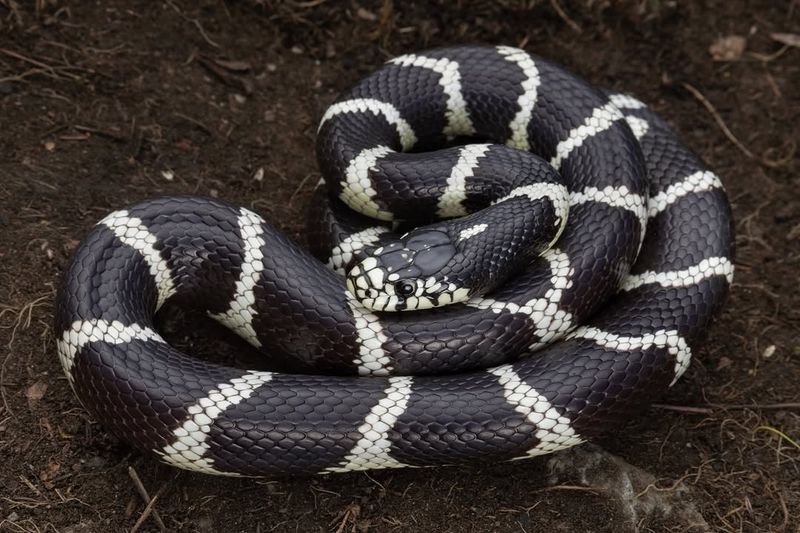
Found across much of California, the California kingsnake, known scientifically as Lampropeltis californiae, is a native, nonvenomous snake that shows up in a surprising range of settings. The California Department of Fish and Wildlife habitat account places kingsnakes in riparian corridors, irrigated landscapes, rock outcrops, vegetation clumps, rodent burrows, and ground-cover areas. That list reads a lot like a description of a typical California backyard, which is why homeowners in the Central Valley, the Bay Area, and the inland foothills encounter them regularly.
Spotting one near the patio does not mean the yard is now protected from rattlesnakes or rodents. A kingsnake shares a food web with those animals, but sharing a food web is not the same thing as controlling a population. One snake moving through a half-acre lot hunts on its own schedule, follows its own range, and may never cross paths with the specific rattlesnake resting under your wood pile.
A quick note on names: the California kingsnake is not the same animal as the California mountain kingsnake, which is Lampropeltis zonata. The mountain kingsnake wears red, black, and white banding that can resemble a coral snake. The California kingsnake typically shows black-and-white or brown-and-white banding or striping, though color patterns vary. Treating these as interchangeable causes confusion and can lead homeowners to misidentify the snake in front of them.
The corrected premise here matters. UC Integrated Pest Management guidance does not recommend relocating kingsnakes onto residential properties or treating any predator as a substitute for practical yard management. A kingsnake deserves to be left alone because it is a native animal with a real ecological role, not because it guarantees safety.
The diet evidence shows a generalist snake
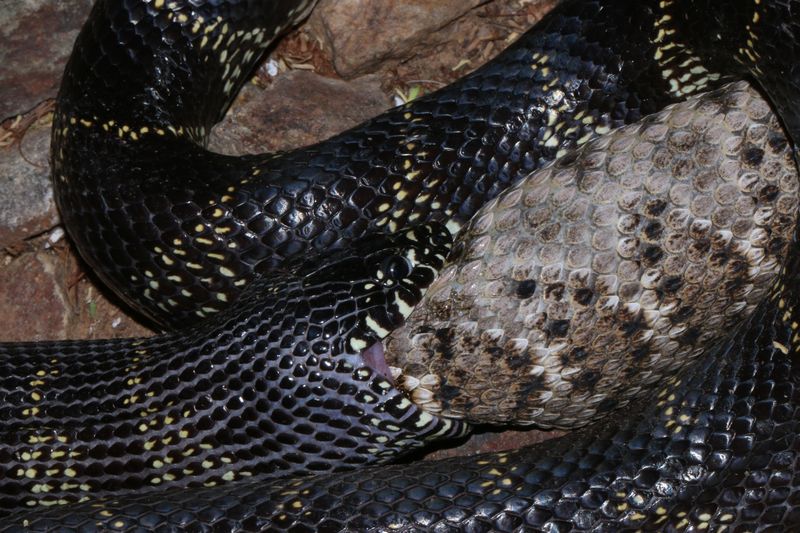
A large-scale analysis published in Herpetological Conservation and Biology pulled together data from 2,662 museum specimens, published records, and field observations to build the most detailed picture yet of what California kingsnakes actually eat. That study found snakes as a category made up about 29% of identified prey items, while rattlesnakes specifically represented roughly 7% of the overall diet and about 16% of total prey biomass and energy. Those numbers confirm real rattlesnake predation, but they also show that rattlesnakes are far from the kingsnake’s primary food source.
Lizards, rodents, birds, bird eggs, squamate eggs, and amphibians all appear on the menu. The CDFW habitat account identifies lizards and snakes as primary foods, while the diet study found roughly comparable numbers of mammal and snake prey items overall. That breadth is the defining feature of this species: it is a generalist that takes whatever prey it can overpower and swallow in its current environment.
Generalist feeding has consequences worth acknowledging. California kingsnakes also consume bird eggs and nestlings, which means a kingsnake visiting a yard with nesting birds is not behaving unusually. It is simply hunting. Framing kingsnakes as animals that only benefit the yard by removing pests misrepresents how they actually function in a food web.
What the diet evidence does support is this: kingsnakes are opportunistic, wide-ranging predators that genuinely eat rattlesnakes when the opportunity arises. That is ecologically meaningful. A 7% dietary contribution does not make rattlesnakes a specialty, but it does confirm that the interaction is real, not mythological. Putting those numbers in plain terms helps homeowners appreciate the species without building expectations the biology cannot support.
Eating rattlesnakes does not keep them out of a yard
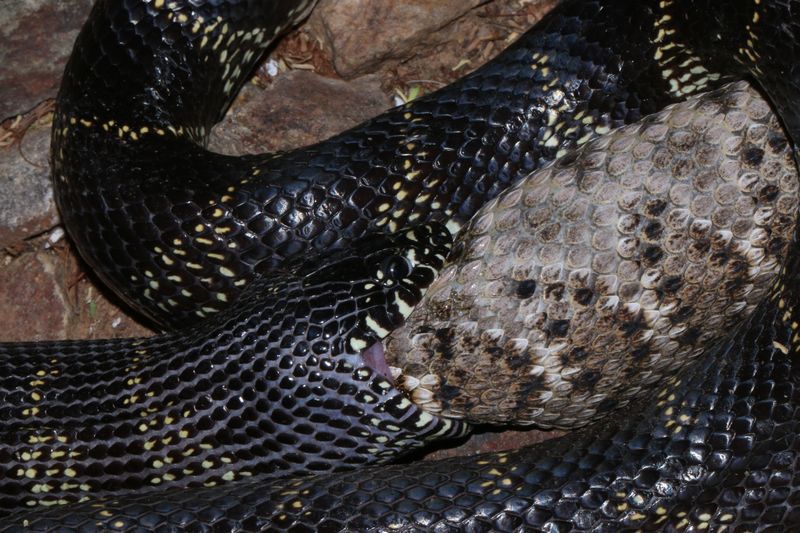
California kingsnakes carry a physiological resilience to rattlesnake venom, and they are physically capable of subduing and consuming a rattlesnake. That part of the popular story is biologically grounded. CDFW confirms that kingsnakes are known rattlesnake predators, and the diet study discussed in the previous section quantifies how often that predation actually occurs across a large sample. So the headline’s biological kernel is real.
Where the logic breaks down is in the jump from “can eat rattlesnakes” to “keeps rattlesnakes out of the yard.” An individual predator eating rattlesnakes occasionally, across a home range that may span many acres, does not translate into population-level suppression of rattlesnakes in one specific yard. UC IPM states explicitly that the number of rattlesnakes eaten by predators is not significant enough to solve a homeowner’s rattlesnake problem, and the program does not recommend relocating kingsnakes onto residential properties as a control strategy.
A kingsnake sighting is not a guarantee of safety. Rattlesnakes and kingsnakes can occupy the same landscape simultaneously, drawn by the same food sources and shelter opportunities. Seeing a kingsnake near the fence line does not mean rattlesnakes have been driven away.
Homeowners who want fewer rattlesnake encounters need to address the conditions that attract rattlesnakes: available rodent prey, dense vegetation, debris piles, rock stacks, and gaps in structures. That approach actually changes the habitat. Counting on a wild kingsnake to patrol the perimeter does not, and attempting to relocate or release one introduces new problems, including stress and mortality for the snake and potential legal complications under California wildlife regulations.
Why kingsnakes are not proven roof-rat control
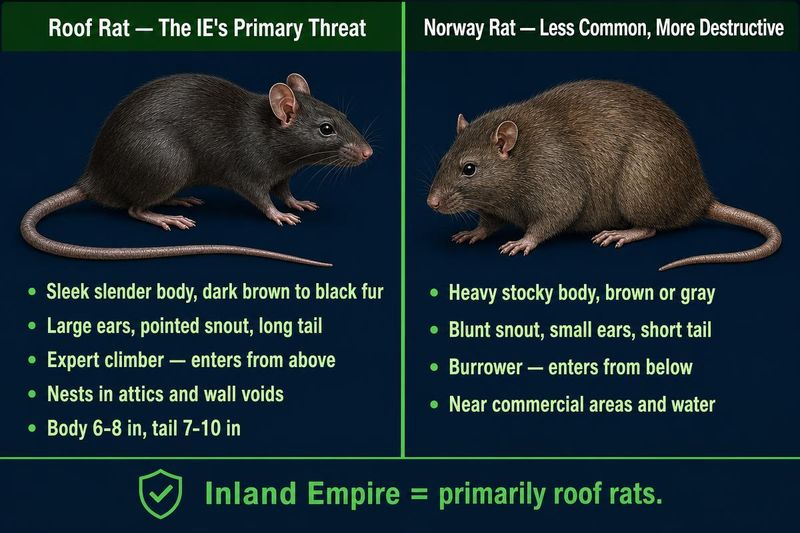
Roof rats are not the same animal as the gopher or vole you might find tunneling through a lawn. Rattus rattus is an introduced commensal rodent that arrived in North America with European settlement, and it has thrived in California’s cities and suburbs by going up rather than down. UC IPM describes roof rats as agile climbers that commonly nest in trees, dense shrubs, attics, wall voids, and other elevated spaces, and that travel hundreds of feet while foraging through fruit trees, utility lines, and rooftop edges.
California kingsnakes, by contrast, hunt primarily at ground level. The CDFW habitat account places them in mammal burrows, beneath surface objects, under rocks, and within low vegetation. A snake foraging along the ground and a rat traveling a canopy of citrus branches and fence tops occupy largely separate vertical zones. The mismatch in habitat use suggests that encounter rates between kingsnakes and roof rats would be lower than the popular narrative implies, though this is an ecological inference from documented habitat use rather than a directly tested homeowner experiment.
Before taking any rodent-control action, identifying the actual animal causing damage matters. Not every rodent in a California yard is a pest. CDFW notes that native rodents, including woodrats, deer mice, and California ground squirrels, serve as seed dispersers and prey for hawks, owls, foxes, and other wildlife. Treating every small mammal as a roof rat and responding with blanket control measures can harm native species that belong in the yard.
Roof rats cause real problems: gnawed wiring, contaminated food storage, structural damage, and disease risk. Those problems call for targeted exclusion and sanitation, not a hope that a kingsnake will handle it. The snake’s diet includes rodents, but documented consumption is not the same as demonstrated population control in a suburban setting.
Leave wild snakes alone and keep your distance
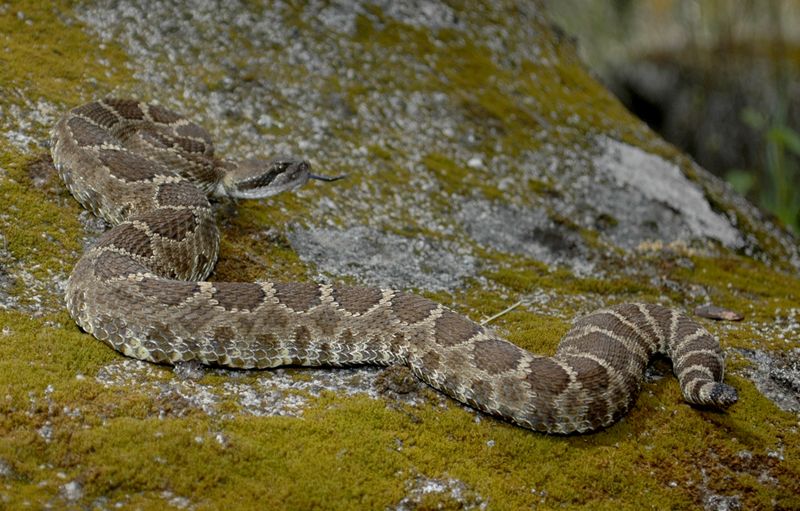
Any snake encountered in a California yard deserves a wide berth, regardless of what it looks like. UC IPM reports that the majority of rattlesnake bites happen when inexperienced people attempt to pick up, move, pester, or kill a snake. The safest behavior is the simplest one: back away, give the snake space, and let it move on.
Color and pattern alone are not reliable identification tools. Gopher snakes, which are large, nonvenomous, and native to California, can flatten their heads, vibrate their tails, and hiss loudly in a convincing rattlesnake impression. CDFW notes that gopher snakes are frequently mistaken for rattlesnakes, and that automatic killing of any snake that looks vaguely threatening is both ecologically unjustified and potentially dangerous during the attempt. Even a nonvenomous kingsnake will bite when handled, so handling any wild snake carries a real risk of injury.
If a rattlesnake is encountered in a location where people or pets could be harmed, the right call is to contact a licensed wildlife professional or a pest management company with snake-removal experience. CDFW’s human-wildlife conflict guidance for snakes points homeowners toward professional removal rather than DIY capture or relocation.
Two specific warnings bear repeating. A suspected rattlesnake bite requires immediate emergency medical care, not a wait-and-see approach. And a rattlesnake that appears dead may still be capable of injecting venom through a reflexive bite for a period after death, so keeping distance from a dead rattlesnake is just as important as avoiding a live one. The rule is consistent: do not touch, approach closely, or attempt to move any snake you cannot positively identify from a safe distance.
Remove the food, shelter, and access that attract pests
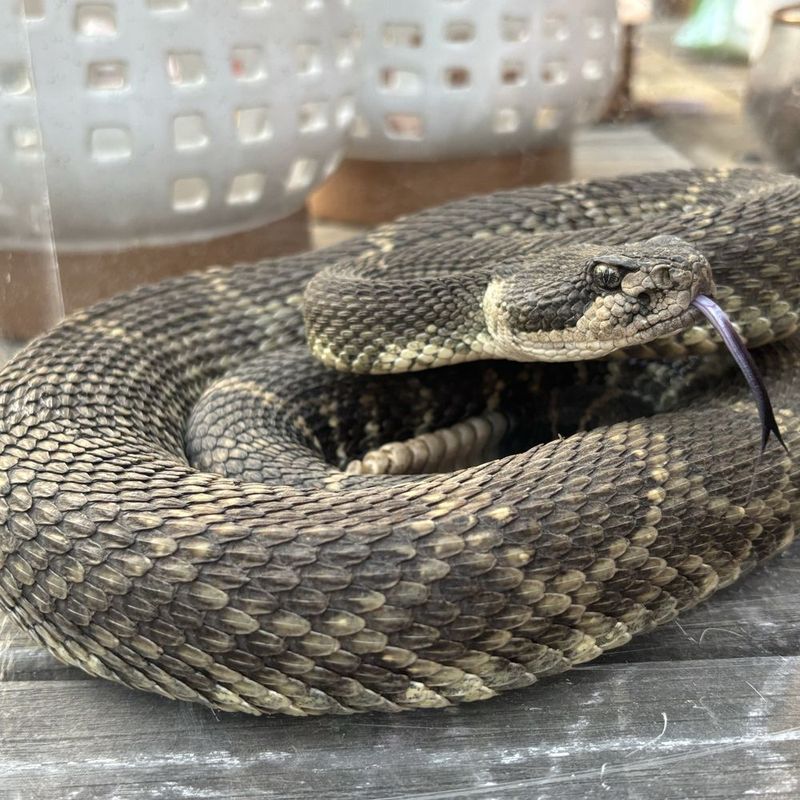
Practical yard management does more to reduce rattlesnake and roof-rat encounters than any predator can. The two pest problems share the same root causes: available food, abundant hiding spots, and easy entry into structures. Addressing those conditions systematically is the most reliable approach available to a California homeowner.
For roof rats, UC IPM recommends sealing any opening larger than one-quarter inch in exterior walls, rooflines, vents, and utility penetrations. Roof and crawl-space vents should be covered with hardware cloth, and gaps around pipes and conduit should be packed with steel wool or caulked. Remove fallen fruit promptly, store pet food in sealed containers, and bring bird feeders in at night. Dense shrubs and ivy growing against the house create ideal rat habitat; trimming or removing them reduces nesting opportunities significantly.
Trapping is appropriate when an infestation is already present, but placement matters. Snap traps and enclosed bait stations must be positioned where children, pets, birds, snakes, and other non-target wildlife cannot reach them. Under decks, inside wall voids accessed through bait-station openings, and in enclosed attic spaces are typically appropriate locations.
For rattlesnakes, UC IPM advises removing heavy brush, tall grass, rock piles, lumber stacks, logs, and other debris that provide daytime cover. Seal foundation cracks, gaps under doors, and openings around plumbing. Rodent burrows in the yard should be filled only after the rodents have been controlled; an empty burrow is one less rattlesnake shelter. Keep wood piles elevated and away from the house, and store them in a way that allows inspection before reaching in.
None of these steps require eliminating every native plant or all natural cover. The goal is reducing the specific conditions that concentrate pest activity near the house while leaving surrounding habitat functional for native wildlife.
Skip unproven repellents and use poison cautiously
Plenty of products and folk remedies promise to keep snakes or rodents away, and most of them do not deliver. UC IPM is direct on this point: sulfur, mothballs, horsehair ropes, snake-repelling plants, and commercial chemical repellents either do not work or lack sufficient evidence to recommend. Spending money on these products and assuming the problem is handled can create a false sense of security while the actual conditions attracting snakes and rats go unaddressed.
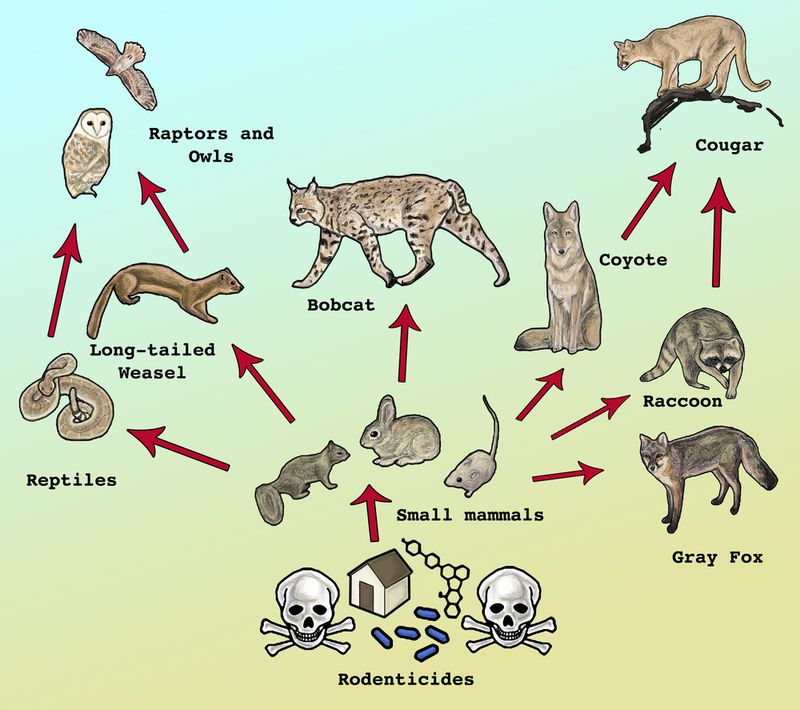
Rodenticides are a more complicated case. Anticoagulant rodenticides do kill rats, but they also pose real risks to wildlife that eat rodents. CDFW wildlife health monitoring has documented secondary poisoning in raptors and other predators and scavengers that consume rodents exposed to these compounds. A barn owl, a red-tailed hawk, or a gray fox that hunts in the same yard where rodenticides have been applied can accumulate a toxic dose through the prey it eats, not through direct bait consumption.
California has moved to restrict many uses of second-generation anticoagulant rodenticides because of these non-target risks. The California Department of Pesticide Regulation outlines current prohibitions and allowed uses for these compounds, and the rules are subject to change. Homeowners who choose to use any rodenticide should read the current label requirements carefully, follow all placement and disposal instructions, and use the least-toxic option appropriate for the situation.
Exclusion, sanitation, vegetation management, and properly placed snap traps remain the first-line recommendation for a wildlife-conscious California homeowner. These methods address the problem without creating downstream risks for the raptors, native snakes, and other predators that are doing real ecological work nearby. UC IPM’s rat management guidance walks through each of these steps in detail and helps homeowners sequence them effectively.
Protect the kingsnake without expecting it to protect the yard
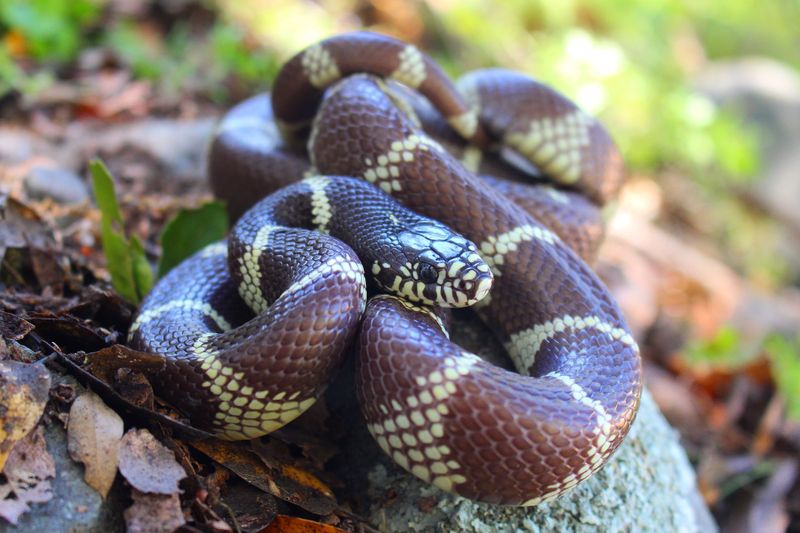
A California kingsnake moving through the yard is worth appreciating and worth leaving alone. As a native predator broadly distributed across California, Lampropeltis californiae belongs in the landscape. It sometimes eats rattlesnakes, sometimes eats rodents, and contributes to the kind of layered, functioning food web that keeps suburban ecosystems from becoming entirely dependent on human intervention.
What it cannot do is serve as a hired guard. No wild snake can be recruited, retained, or reliably directed to solve a rattlesnake or roof-rat problem. UC IPM’s position is clear: predators do not eat enough rattlesnakes to significantly reduce a homeowner’s risk, and releasing or relocating snakes onto a property is not a recommended strategy. The same logic applies to roof rats, where exclusion and sanitation outperform any predator-based hope.
The practical summary is straightforward: remove food sources, seal building access points, clear debris and dense vegetation near the house, and give any unidentified snake a respectful distance. A kingsnake that shows up on its own is doing something genuinely useful in the broader yard ecosystem, even if that contribution cannot be measured in rattlesnakes repelled or rats eliminated. The best thing a homeowner can do for it, and for the yard, is make the habitat less attractive to pests and more survivable for native predators that are already there.