
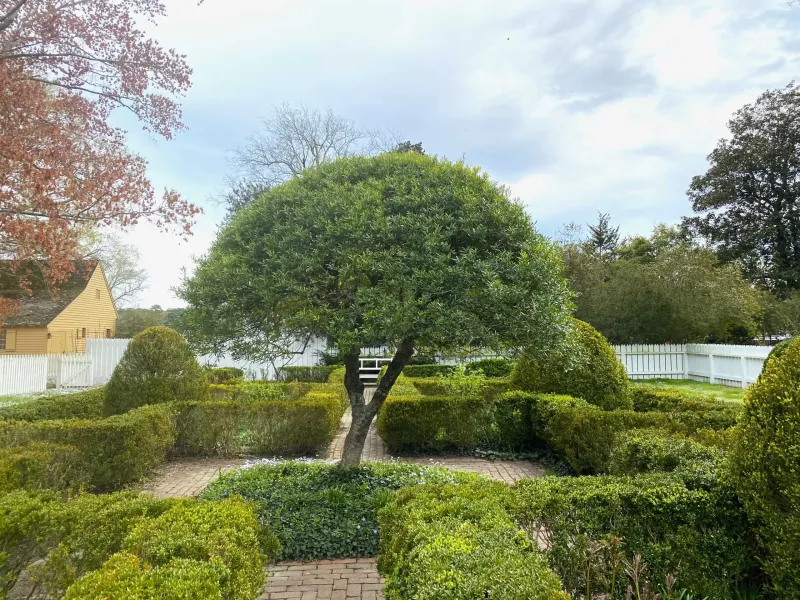
If you are tired of trimming a ligustrum hedge, you may be wondering what else could fill the same spot. Texas has a tough native evergreen that deserves a look.
Yaupon holly handles heat, takes a haircut, and feeds wildlife. It also comes in sizes that fit very different yards, so a little planning goes a long way.
Identify the ligustrum before judging the problem
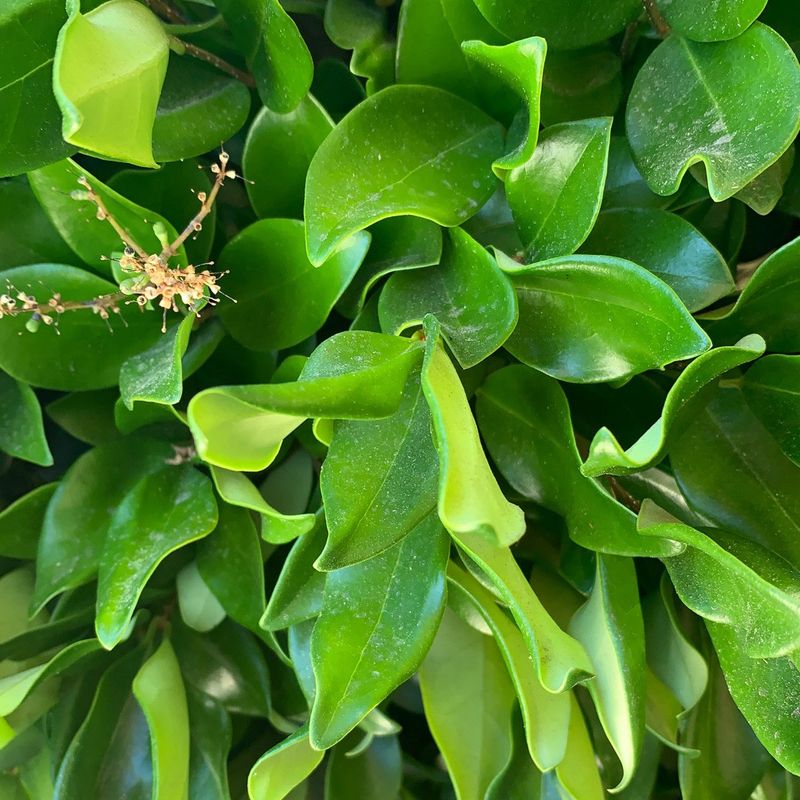
The name “waxleaf ligustrum” does not point to just one plant. Texas Invasives uses “Japanese privet” for Ligustrum japonicumL. quihouiL. lucidum and “waxyleaf privet” for , while other sources use “waxleaf privet” for .
Before you decide what to do, check the scientific name of the shrub in your yard.
That matters because the invasive record differs by species. Texas Invasives documents spread by glossy privet (L. lucidum), and the same database also lists waxyleaf privet as a plant that spreads.
The entry for Japanese privet says its invasiveness in Texas is unclear and urges caution. So one privet’s record should not be pinned on all of them.
Texas Invasives also describes its list as a recommendation, not a law, so nothing here forces you to rip out a hedge.
Odor and pollen need the same care. Glossy privet has strongly scented flowers, and some people find the smell unpleasant while others call it fragrant.
Texas Invasives says glossy privet is insect-pollinated and does not produce wind-blown pollen, yet a peer-reviewed review of Ligustrum pollen describes allergenic proteins and possible allergy reactions. Calling every privet pollen-heavy is too broad, but saying it can never bother anyone is also too strong.
A fair reason to replace a ligustrum is simple. You may live near natural areas where a spreading species could escape, or you may just want a native plant that supports local wildlife.
Either is a sound reason to keep reading.
Yaupon offers a native evergreen alternative
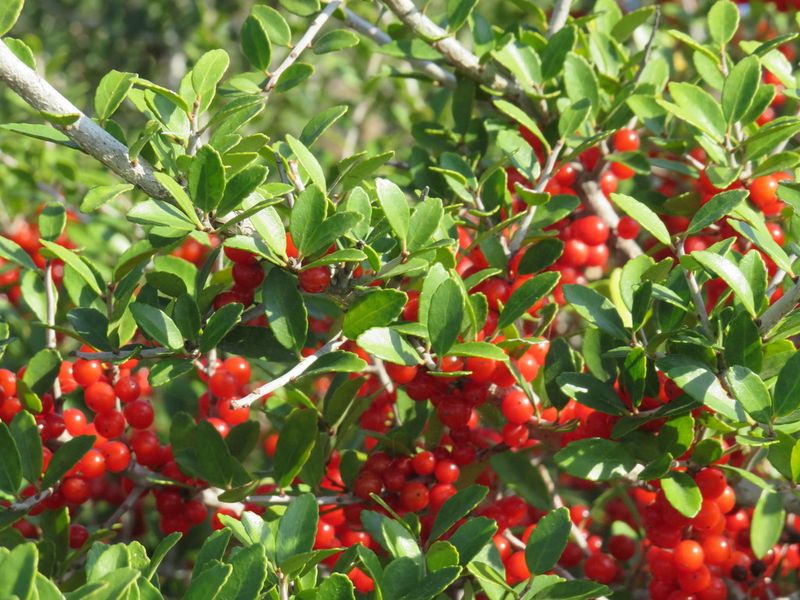
Yaupon holly (Ilex vomitoria) is a shrub that grows wild across parts of Texas, and it earns a spot on the short list for ligustrum replacement. It is not a perfect match for every hedge, but it has a lot going for it.
According to Austin’s Watershed Protection plant guide, yaupon is a native, evergreen shrub with dark-green foliage. Female plants carry red berries, which add color when many other shrubs look plain.
Because it keeps its leaves all year, it can screen a view or anchor a foundation bed in January as well as July.
Drought tolerance is another selling point. Texas A&M’s WaterSmart program for the Upper Texas Gulf Coast includes yaupon among its recommended “Five that Survive” shrubs.
That fits the reality of triple-digit summers and watering restrictions, where a plant that needs little extra irrigation once settled makes life easier.
A few honest limits apply. Dark-green and sturdy is a fair description, but you should not expect a high-gloss, showroom look at every site or through every extreme stretch of heat and drought.
Soil, sun, and water all change how a shrub looks. Think of yaupon as a tough, good-looking workhorse rather than a flawless one.
The next step is choosing the right form, because yaupon ranges from a small tree to a knee-high mound.
Match the yaupon form to the space
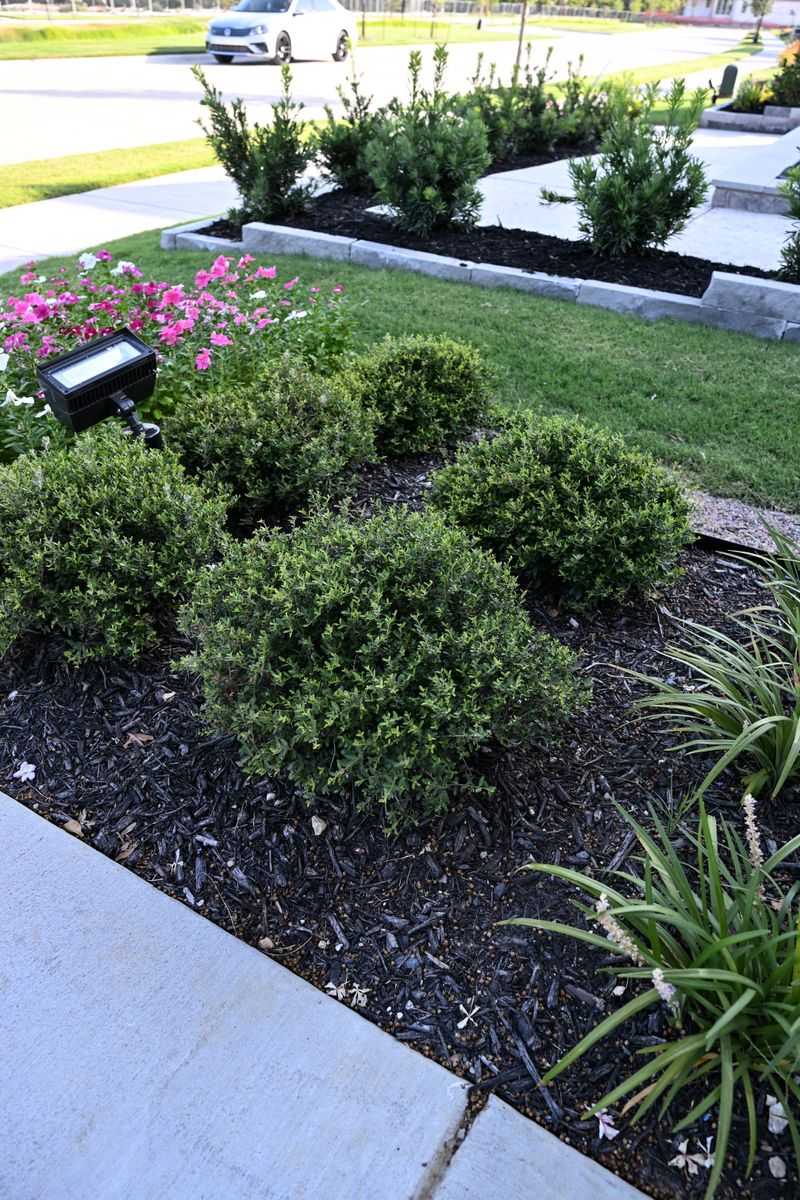
Size is where many replacement plans go wrong. Austin’s plant guide lists standard yaupon at roughly 12 to 20 feet tall and 10 to 15 feet wide, so it can grow into a large shrub or small tree.
Think about what your ligustrum does now before you buy anything.
If your hedge is a tall privacy screen, standard yaupon can work well. Texas A&M AgriLife Extension in Bexar County describes it as suitable for a tall clipped hedge.
Give it room, though, since a plant that wants to reach 15 feet will need steady pruning in a tight space.
If your ligustrum sits under a window or along a walkway, look at dwarf selections. The same Bexar County source describes dwarf ‘Nana’ as compact and slow-growing, which suits low hedges.
A dwarf form will not give you the height of a screen, so do not expect it to block a neighbor’s second-story view.
Before you shop, measure the planting strip and write down the height you want in five years. Then read the tag or ask the nursery for the cultivar’s mature height and width.
Names vary, and a label that only says yaupon does not tell you whether you are getting a 15-foot shrub or a 3-foot mound.
Ask about screening density too. Some cultivars grow tighter than others, and a plant that fits the size may still leave gaps if the form is open.
Drought tolerance still takes establishment care
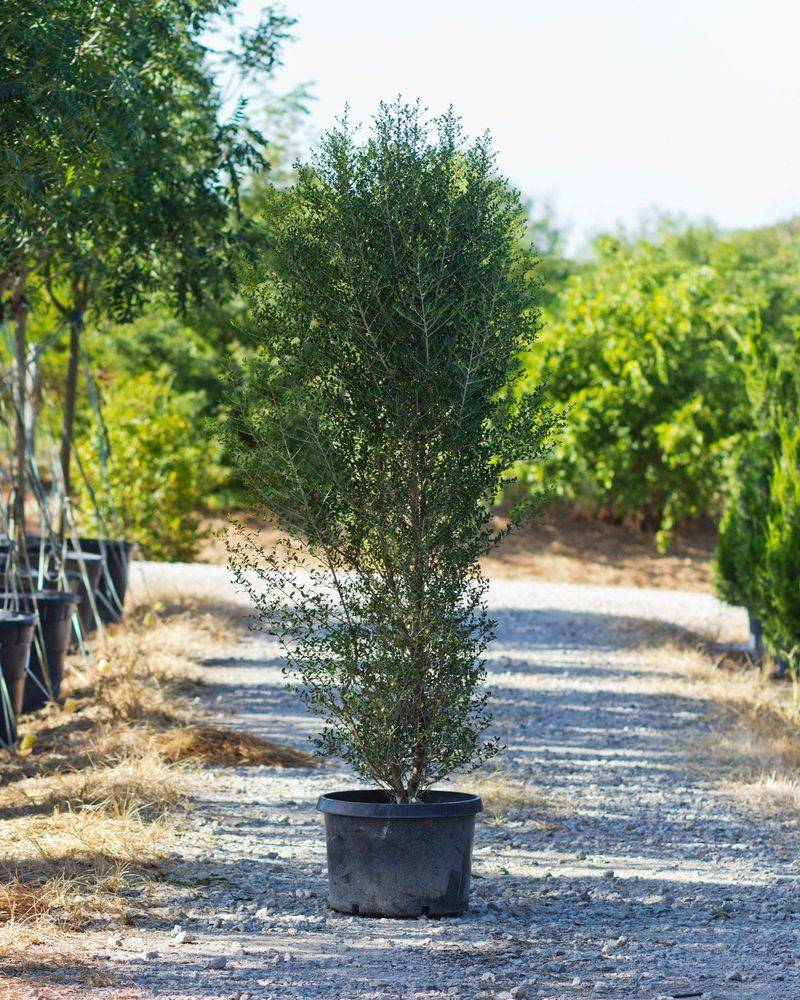
Drought-tolerant does not mean no water. Adapted plants like yaupon need little supplemental irrigation once established, according to the Texas A&M WaterSmart shrub guide, but the key word is established.
A new shrub has a small root system that has not yet spread into the surrounding soil. Texas A&M Forest Service guidance on watering newly planted trees makes the point that new plantings need regular water while they settle in.
Plan to water a new yaupon on a steady schedule through its first growing seasons, soaking the root zone slowly rather than sprinkling the leaves.
A layer of mulch helps hold moisture, as long as you keep it from piling against the stems. Check the soil a few inches down before watering.
If it is still damp, wait. If it is dry, water deeply.
Even older plants may need a drink during a severe dry spell. Wilting, dull leaves, or leaf drop are your clues that a yard shrub has gone too long without moisture.
Timing depends on where you live in Texas. For North Texas, the Texas Water Resources Institute identifies fall as an ideal time for major landscape projects and describes spring planting as workable.
Other regions, from the Gulf Coast to the Hill Country, have their own heat and freeze patterns, so ask a local nursery or your county Extension office what works near you.
Planting early enough for roots to grow before peak summer heat gives the shrub its best shot at becoming the low-maintenance plant you wanted.
Female plants bring berries, but the fruit is not for people
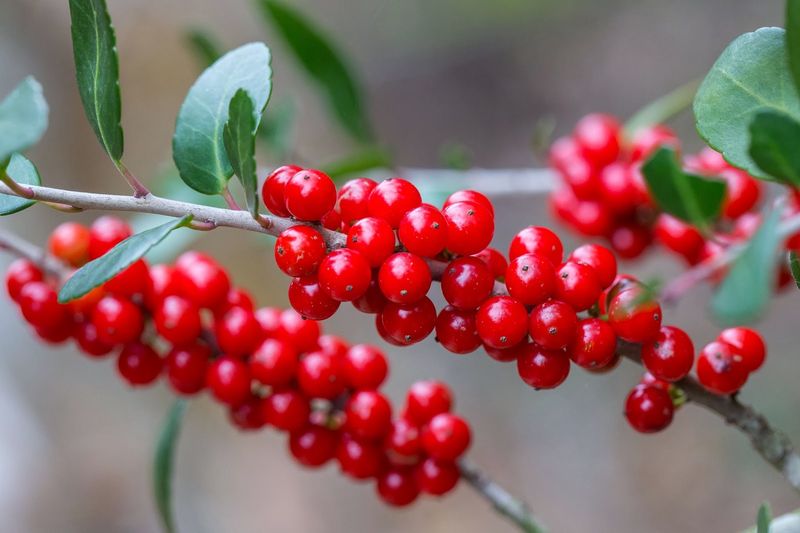
Those red berries only show up on half the population. Yaupon plants are either male or female, and only females produce fruit.
The berries feed wildlife and the flowers attract pollinators, as noted in Austin’s plant guide.
If you want berries, ask the nursery to confirm the plant’s sex and cultivar. Some dwarf selections may not produce fruit, which the Bexar County Extension article on winter hollies helps explain.
Berry-bearing females often need a male nearby for pollination, so a small shrub bought in a pot may not guarantee a berry display.
Now the safety part, stated plainly. Yaupon berries are poisonous to humans, according to Austin’s guide, and Poison Control advises that holly berries are toxic to people and pets.
If you have small children or a dog that chews on things, plant yaupon away from play areas or choose a male or non-fruiting form.
You may have read that yaupon makes tea. A UF/IFS Extension landscaping guide discusses tea made from the leaves, but that does not make the berries safe.
Leaves and berries are different parts of the plant, and you should never snack on the fruit or add it to a brew.
Birds will happily handle the berries, and that is part of the appeal. Let them have them.
Choose yaupon when its mature size fits your hedge
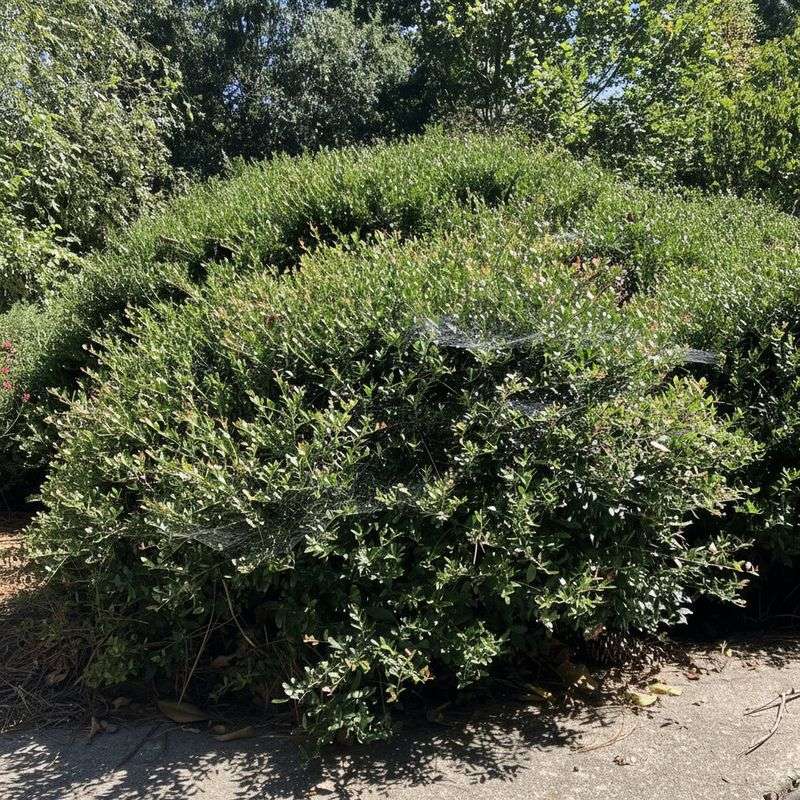
Start by identifying your current ligustrum if you can. Decide how tall and dense the new hedge needs to be, then pick a yaupon form and cultivar whose mature size, listed in sources like Austin’s plant guide and the Bexar County Extension article, matches the site.
Plan on regular watering after planting, since new shrubs are not drought-proof.
Yaupon is a strong native choice, not a universal swap. A shrub that fits its space will always look better than one fighting it.