
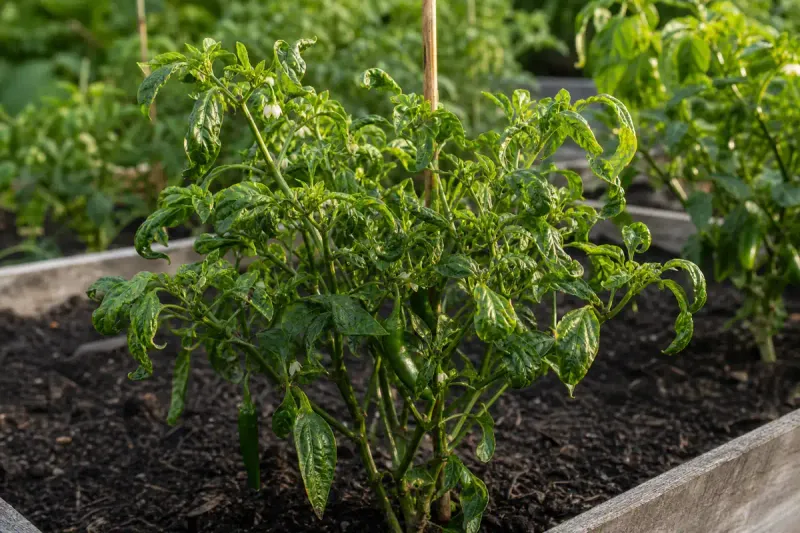
Walking out to your pepper plants and finding the leaves rolled into tight curls or feeling unusually stiff can send a wave of worry through any gardener. Before you reach for a spray bottle or start pulling plants, take a breath, because curled leaves in late summer heat are one of the most common concerns pepper growers face. The cause is often tied to environmental stress rather than disease, but the same symptom can come from several different problems. Knowing how to read the whole plant, not just the shape of one leaf, is what gets you to the right answer.
Leaf curl offers a clue, not a diagnosis
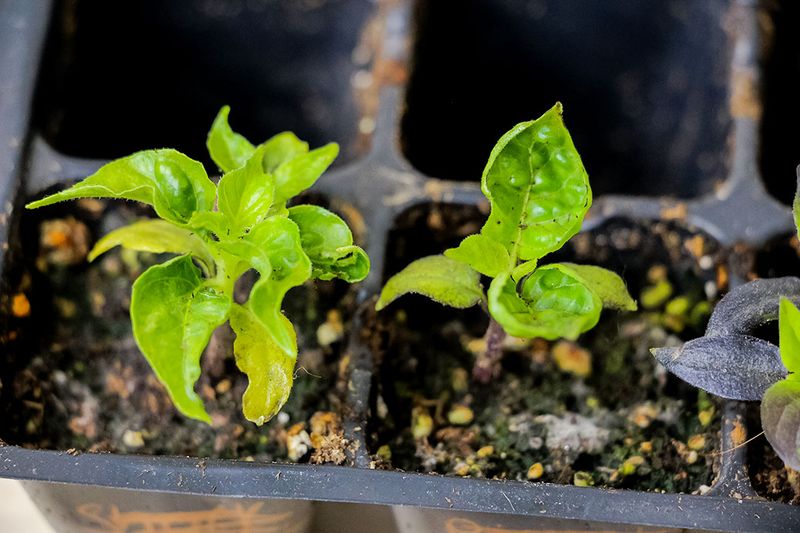
Rolled or stiffened leaves on an otherwise healthy-looking pepper plant are genuinely concerning, but the shape of the leaf alone does not tell you what caused the change. Washington State University Hortsense classifies physiological leaf roll in peppers as an abiotic or cultural problem, meaning it comes from growing conditions rather than a pathogen, and it typically does not require pesticide treatment. Plants affected by this kind of environmental stress usually stay green, continue growing at a normal pace, and do not show severe distortion or progressive decline.
What matters more than the direction of the curl is the full picture the plant is showing you. A pepper that has broadly changed leaf shape across most of its canopy during a stretch of hot weather, while still holding its color and setting fruit, is telling a different story than one with mottled leaves, stunted shoots, or symptoms concentrated on just one or two plants in the row.
UC IPM notes that pepper and eggplant physiological roll is generally described as downward rolling, while other extension sources describe upward curling under environmental stress. Because the direction varies across sources, upward curling and leaf thickening together do not confirm physiological stress on their own. Assess the whole plant, not just one leaf characteristic, before drawing any conclusion.
Heat and moisture stress can disrupt water balance
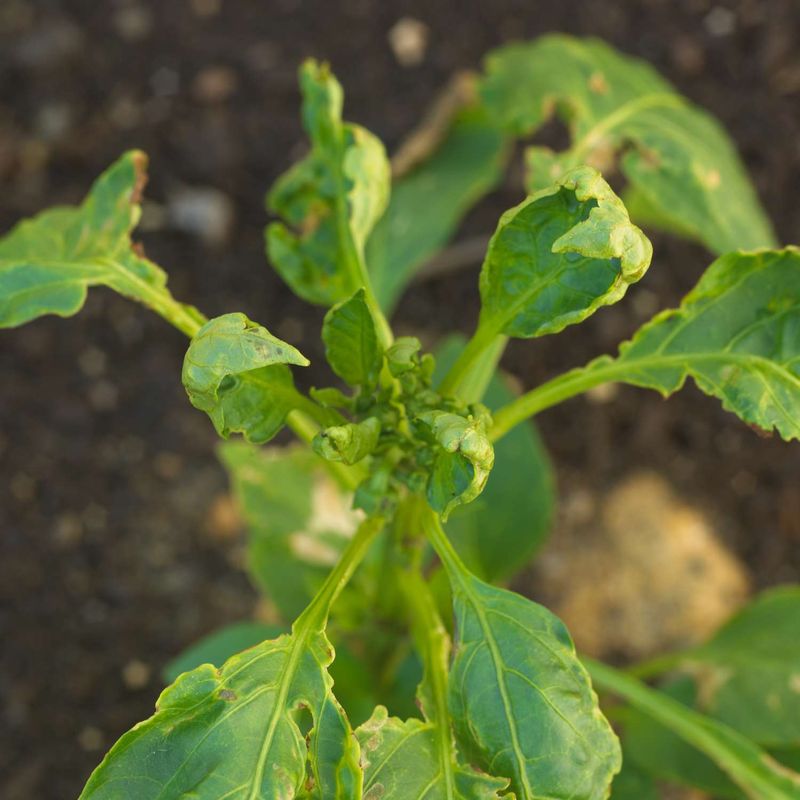
On a hot, windy August afternoon, pepper leaves lose water faster than the roots can replace it. That gap between supply and demand is what triggers the plant to curl its leaves, a physical response that reduces the surface area exposed to drying air. WSU Hortsense identifies high temperatures, drought, and excess soil moisture as the environmental conditions most associated with physiological leaf roll in peppers.
The connection between unstable moisture and leaf curl is also real. When soil swings repeatedly from bone-dry to saturated and back again, roots can struggle to function normally even during the wet phase, making it harder for the plant to keep pace with the water demand that heat creates. University of Minnesota Extension consistently recommends keeping soil moisture even rather than allowing repeated dry-to-wet cycles, precisely because those swings put extra strain on plants already working hard in the heat.
That said, this describes a plausible stress pathway, not a proven chain of events for every curled pepper. A single hot afternoon or one missed watering does not usually tip a healthy plant into visible leaf roll on its own. The stress pathway involves accumulated heat load, root-zone conditions, and plant health together. Recognizing that combination is more useful than blaming any single afternoon.
Check soil and roots before watering
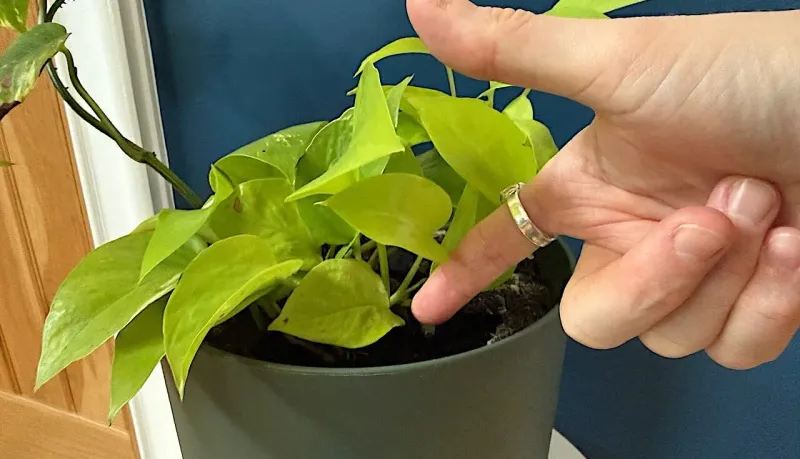
Curled leaves feel like an urgent call to water, but adding moisture to already-wet soil can make things worse rather than better. The most useful first step is to push a finger or a small trowel about two inches below the soil surface near the base of the plant. University of Minnesota Extension guidance on watering vegetable gardens recommends checking the root-zone soil before irrigating rather than responding to leaf appearance alone.
Dry soil at that depth is a clear signal that the plant needs water. Damp or wet soil combined with a plant that still looks stressed or wilted is a different situation entirely. When the soil is moist but the plant is struggling, the problem is likely in the roots or drainage, not in the amount of water available at the surface. Waterlogged soil can damage roots directly or create conditions where root rot pathogens thrive, leaving the plant unable to take up water even when plenty surrounds it.
Utah State University Extension points out that persistent wilt, yellowing, soft or dark roots, foul-smelling soil, or plant collapse alongside wet conditions all point toward a root health or drainage problem rather than simple drought. In that case, watering more will not help and may actively harm the plant. Investigate drainage and root condition first.
Stabilize moisture and reduce heat load
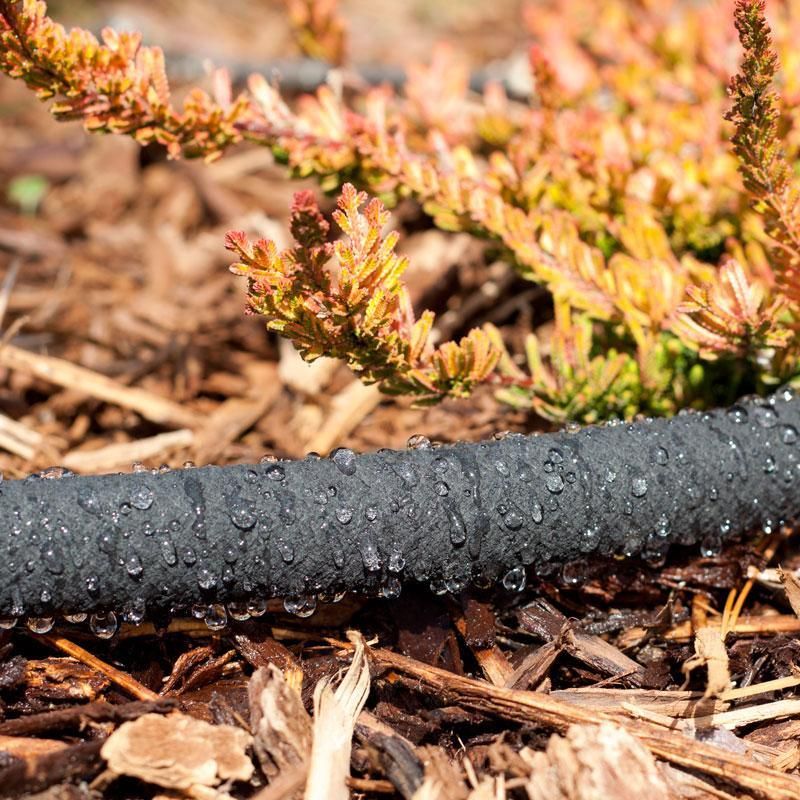
Once you have confirmed the root zone is dry, the goal shifts to watering in a way that actually reaches the roots and stays there. Deep, slow watering at the soil surface is far more effective than quick overhead sprinkling. Oregon State University Extension sets a broad target of about one to two inches of water per week from rain and irrigation combined for peppers, but that number needs to flex with weather conditions, soil type, plant size, and whether you are growing in containers or in the ground.
Aim water at the soil rather than at the leaves. Wet foliage from overhead sprinklers can increase the risk of foliar disease, and water landing far from the root zone does little good. A soaker hose or drip line laid along the base of the plants handles both concerns at once. Minnesota Extension watering guidance favors deep, infrequent sessions over frequent light sprinkles because deep watering encourages roots to follow moisture downward, where soil stays cooler and more stable.
Mulch is one of the most straightforward tools available during a heat stretch. A two- to three-inch layer of straw, wood chips, or shredded leaves over the root zone slows evaporation and moderates soil temperature at the same time. For extreme heat, OSU Extension recommends temporary shade cloth held above the plants on stakes with enough airflow underneath to prevent heat buildup. Minnesota Extension suggests 30 to 40 percent shade cloth at peak heat.
If a plant is visibly wilting mid-afternoon, water it then rather than waiting until morning, because leaving an actively wilted plant dry overnight adds unnecessary stress.
Give the plant time to recover
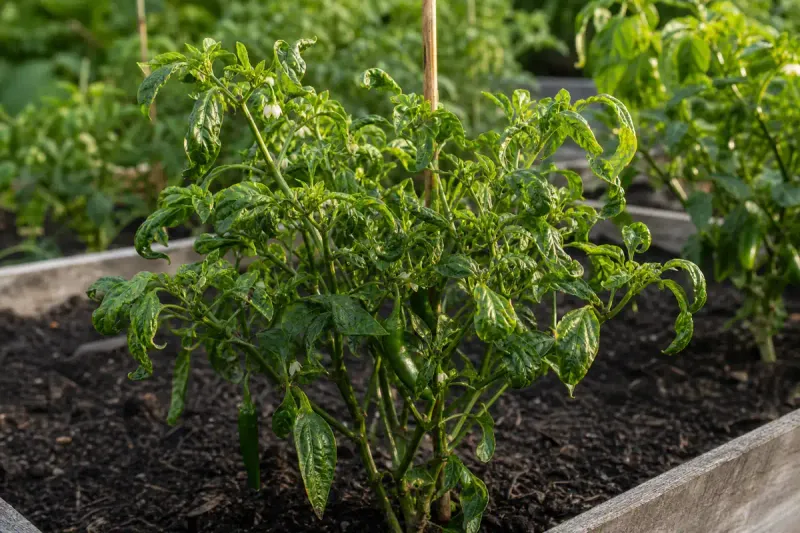
After conditions improve, many gardeners expect the curled leaves to spring back to their original flat shape. That may not happen. University of Minnesota Extension notes for related vegetable disorders that physiological rolling can persist even after the plant has stabilized, and some affected leaves may stay changed. The more reliable sign of recovery is healthy new growth emerging from the top of the plant, not the return of older leaves to their previous appearance.
During a heat event or in the days just after, hold off on pruning, transplanting, or fertilizing if you can. OSU Extension advises skipping these activities during extreme heat because each one adds a layer of stress to a plant that is already working hard to maintain itself. Fertilizing in particular can push new growth that the plant lacks the water and energy to support.
WSU Hortsense describes physiological leaf roll as generally harmless to the plant when conditions are corrected, but severe heat or water stress can reduce flowering, fruit set, and overall yield independently of the leaf curl itself. Resist the urge to reach for calcium sprays, Epsom salts, or any supplement marketed for leaf problems. Utah State University Extension pepper guidance ties most apparent nutrient issues in peppers to water management and root function, not to soil deficiencies that a foliar spray would fix.
Recognize symptoms that point elsewhere
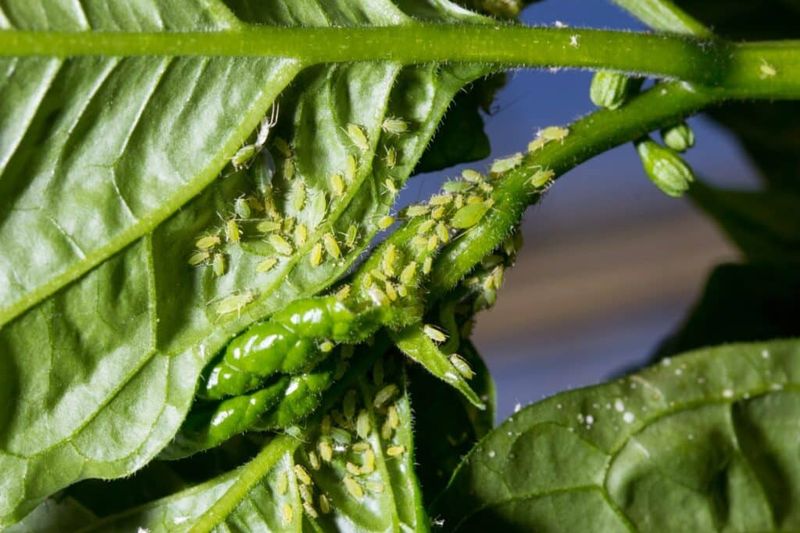
Physiological stress is a reasonable first hypothesis when the overall pattern fits, but several other problems produce curled or distorted pepper leaves and need a different response. Checking for them early saves time and protects the rest of the garden. Start by turning leaves over and looking closely at the undersides, especially on newer growth near the shoot tips. University of Minnesota Extension identifies aphids as a significant pepper pest that can curl leaves when populations build up, and aphids also leave behind sticky honeydew residue and sometimes cause yellowing around the feeding sites.
Aphid presence does not automatically mean the leaf curl is harmless. Aphids can transmit pepper viruses, so finding insects on a plant with curled leaves calls for closer inspection of the whole plant rather than immediate reassurance. Signs that point toward viral disease include mosaic or mottled coloration, yellowing, stunted or malformed new shoots, distorted fruit, and decline concentrated in certain plants rather than spread evenly across the whole planting. Utah State University Extension notes that viruses cannot be cured with a spray, and heavily affected plants may need to be removed to protect neighboring plants.
Herbicide injury is a separate and easy-to-overlook possibility. Pointed, cupped, or unusually twisted new leaves, especially when they appear after nearby lawn treatment, spray drift, use of a shared sprayer, or application of compost that may have been made from herbicide-treated grass clippings, should not be attributed to heat. Peppers are sensitive to growth-regulator herbicides. USU plant health guidance recommends reviewing recent chemical use in and around the garden when new growth looks distinctly twisted or malformed rather than simply rolled.
Root problems and poor drainage also warrant attention when wilt persists, roots appear dark or soft, or the soil smells foul.
Use the whole pattern to choose your next step
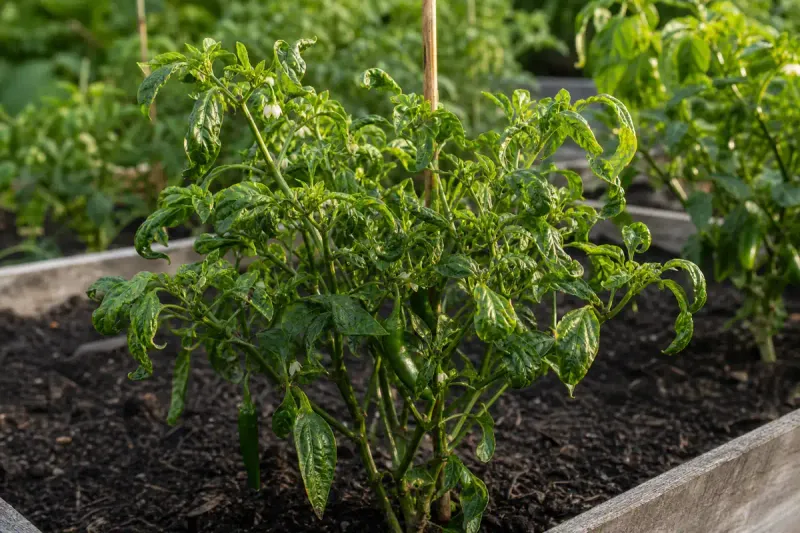
When most of the plant is green, growth has not stalled, fruit is developing normally, and recent weather has been hot and dry or inconsistently watered, the picture leans toward physiological stress. Correct the growing conditions first: confirm the root zone is actually dry before watering, water deeply at the soil surface, apply mulch, and consider temporary shade during extreme heat. Then watch new growth over the following days rather than focusing on whether the older curled leaves have relaxed. WSU Hortsense and UC IPM both frame physiological leaf roll as a condition that responds to environmental correction rather than chemical treatment.
When symptoms are isolated to a few plants, accompanied by pests or discoloration, showing twisted or unusually distorted new growth, or appearing alongside wet and damaged roots, the stress pattern no longer fits and a different investigation is needed. Checking the root zone remains the single most useful first action regardless of which direction the diagnosis goes. Curled pepper leaves are a prompt to look more carefully, not a verdict on their own.