
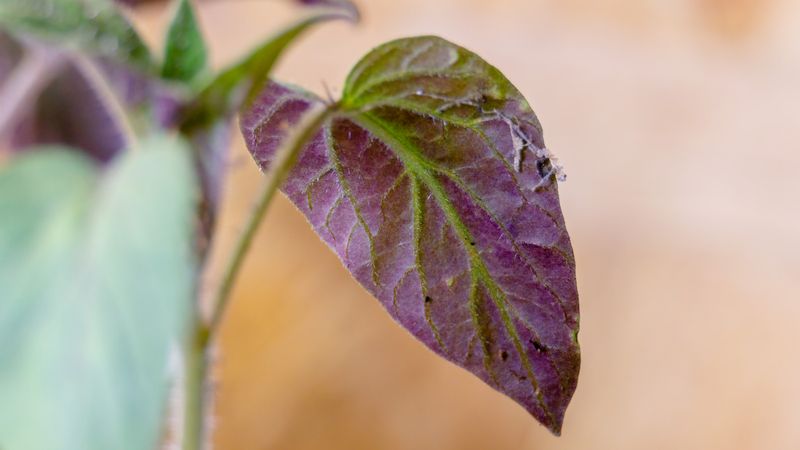
Turning a tomato leaf over and finding purple or reddish-purple coloring underneath can stop you cold. That color change is worth paying attention to, but it does not point to one single cause on its own. Understanding what phosphorus does for your plant, and why roots sometimes struggle to take it up, can help you figure out what is really going on before you reach for a fertilizer bag.
Purple undersides are a phosphorus clue, not a diagnosis
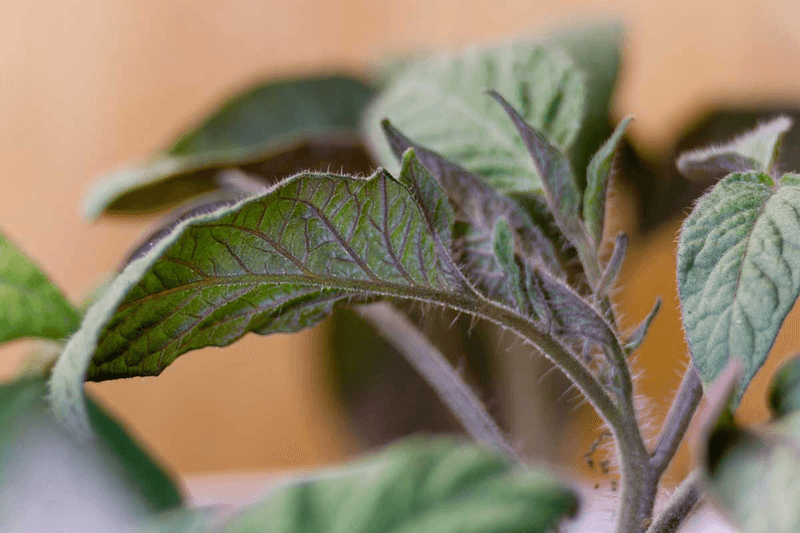
Reddish-purple or deep purple coloring on the underside of tomato leaves, along the veins, or on young stems is one of the recognized signs that phosphorus may not be reaching the plant in enough quantity. Texas A&M’s tomato problem solver lists purple or reddish-purple leaf undersides alongside dark-green foliage, slow growth, stunting, delayed maturity, and reduced yield as the cluster of symptoms most associated with phosphorus trouble. Older leaves on the plant tend to show the color shift first, though the pattern can vary with plant age and how severe the problem is.
Here is the critical distinction: seeing purple does not automatically mean your soil is running low on phosphorus. A tomato can show every sign of phosphorus deficiency while sitting in soil that contains plenty of the nutrient, simply because its roots cannot access what is there. Phosphorus availability depends on root health, soil temperature, drainage, and soil pH, as well as actual nutrient levels.
A plant that looks vigorous, is setting fruit normally, and happens to have a faint purple tint may simply be expressing a cultivar trait or mild stress response. Cornell’s tomato diagnostic key notes that purple coloration overlaps with other plant conditions, including viruses, root problems, and environmental stress. The color is a prompt to look closer, not a shortcut to a fertilizer fix.
The root zone often determines phosphorus access
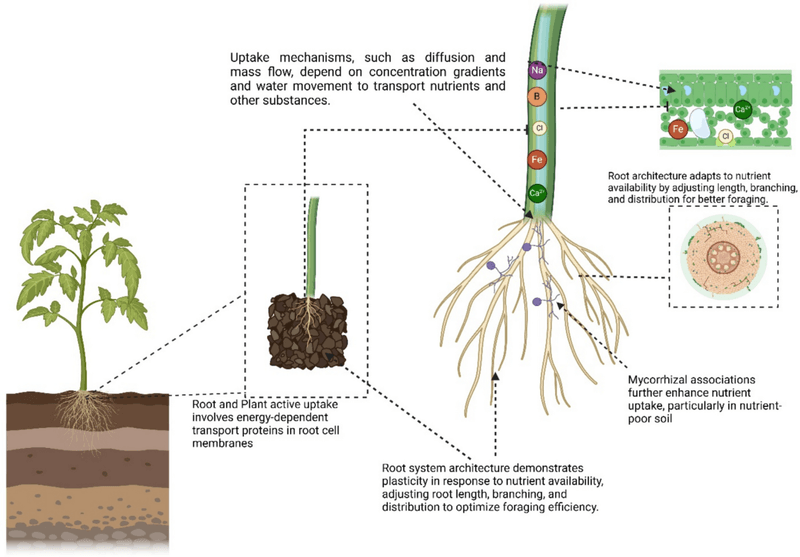
Phosphorus moves through soil very slowly compared to nutrients like nitrogen. Roots have to actively grow toward phosphorus particles and pull them in, which means a plant with weak, damaged, or cold-stressed roots may struggle to absorb phosphorus even when a soil test shows the nutrient is present. Penn State’s guide on managing phosphorus for crop production explains that phosphorus availability depends on soil pH, soil phosphorus concentration, root growth, soil temperature, and the way phosphorus binds to soil particles.
Cool or waterlogged soil slows root development significantly. When roots grow slowly, they cover less soil volume and intercept less phosphorus, producing deficiency-like symptoms even in fertile ground. Texas A&M specifically reports poor phosphorus uptake by tomato roots in cold soil, and Penn State notes that young plants can display phosphorus-deficiency symptoms in cold, wet conditions because their root systems have not yet expanded enough to compensate.
Several different situations can restrict phosphorus uptake, and they each call for a different response. Unsuitable soil pH can lock phosphorus into forms the plant cannot use. Waterlogged soil starves roots of oxygen and slows their activity. Root diseases such as Pythium physically destroy the tissue that does the absorbing.
Poor root development from compaction or transplant shock limits the total surface area available for uptake. Adding more phosphorus fertilizer does not fix any of these underlying problems, which is exactly why diagnosing the root zone matters as much as measuring the nutrient itself. Oregon State Extension highlights soil temperature, pH, and drainage as environmental factors that directly shape how well roots function and how available nutrients remain.
August does not prove a heat-triggered lockout
Noticing purple undersides on your tomato leaves in August is understandable, but the timing does not confirm that summer heat triggered a phosphorus lockout. University extension guides most consistently link phosphorus-uptake symptoms to cool soil, young transplants, and early-season cold conditions, not to August heat swings as a routine cause. University of Maryland Extension’s tomato problem guide describes purple undersides and stems as a common phosphorus-deficiency pattern in stressed transplants rather than a late-season heat phenomenon.
Before assuming heat is to blame, review what your plant has been through recently. Cool nights that dropped soil temperature, uneven watering that stressed roots, soil that stayed waterlogged after a heavy rain, or pre-existing root damage can all reduce phosphorus uptake and show up as purple coloring at any point in the season. An August appearance may simply mean the plant has been quietly struggling for a while and the symptom finally became visible.
Heat stress is a real problem for tomatoes, but its typical effects are different from what phosphorus trouble looks like. Penn State’s heat-stress guide reports that tomato heat stress becomes significant at roughly 88 to 102 degrees Fahrenheit, with nighttime temperatures above 70 degrees Fahrenheit also contributing, and that flowers and fruit are far more heat-sensitive than leaves and stems. Heat management, which means consistent watering and shade during the worst heat, is worthwhile on its own, but it is a separate concern from diagnosing why leaves are turning purple underneath.
Compare the whole plant before blaming fertilizer
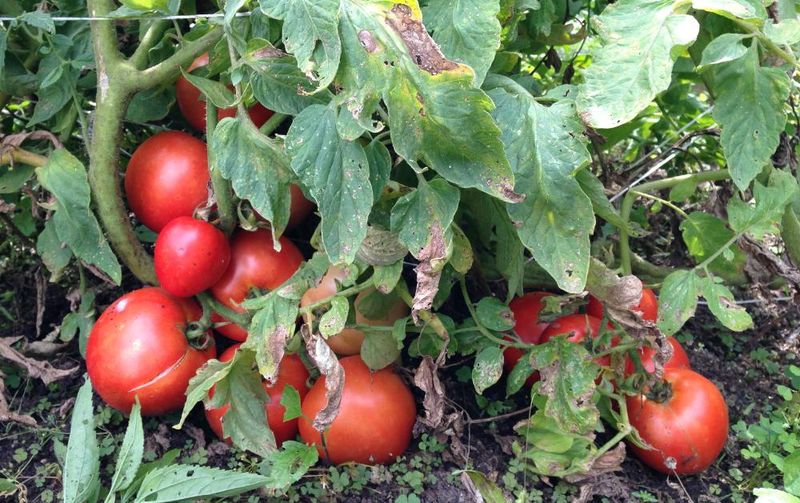
A quick look at the full plant can tell you a lot before you buy anything or change your watering schedule. A tomato that is fruiting well, growing at a normal pace, and showing no other symptoms may simply carry a purple tint from its genetics or from mild stress, and that color is unlikely to threaten your harvest. The concern becomes more real when purpling shows up alongside weak stems, very dark green leaves, slow or stalled growth, or noticeably reduced fruit production.
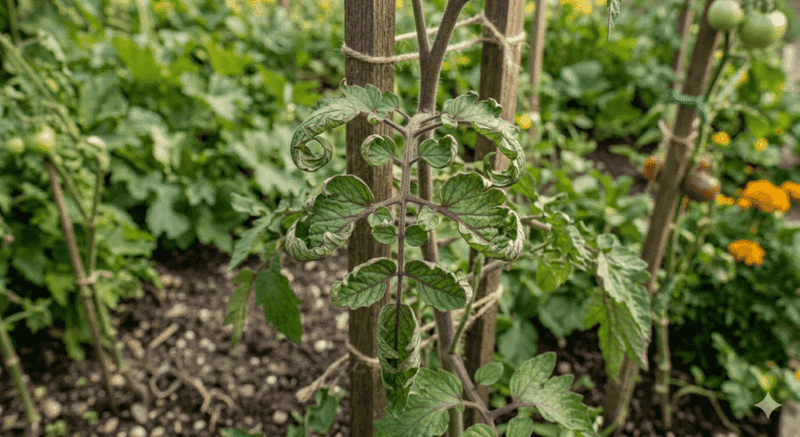
Pay close attention if your plant’s leaves are rolling upward, feeling thick and stiff, or yellowing while also showing purple veins on the undersides. Utah State Extension’s guide to beet curly top virus describes exactly this combination of symptoms, along with premature fruit ripening and poor production, as characteristic of a viral infection rather than a nutrient problem. Curly top is spread by leafhoppers and cannot be fixed with fertilizer.
Leaf mold looks completely different from either of those patterns. Penn State’s tomato disease scouting guide describes leaf mold as yellow areas on the upper leaf surface paired with olive-green to brown fuzzy growth on the underside, appearing most often in humid, poorly ventilated conditions. If you see lesions, fuzzy patches, or rapid yellowing spreading across the plant, that calls for a disease diagnosis rather than a nutrient response.
When the whole plant is declining and you cannot identify a clear cause above ground, gently remove the plant from its container or dig carefully near the base to check the roots. UMass Extension notes that root diseases such as Pythium can reduce phosphorus uptake because damaged roots cannot absorb nutrients effectively. Brown, discolored, or rotting roots are a signal to seek diagnostic help rather than simply adding more fertilizer. Cornell’s vegetable diagnostic key also emphasizes examining the full symptom picture before reaching a nutrient conclusion.
Learn what a soil test can—and cannot—tell you
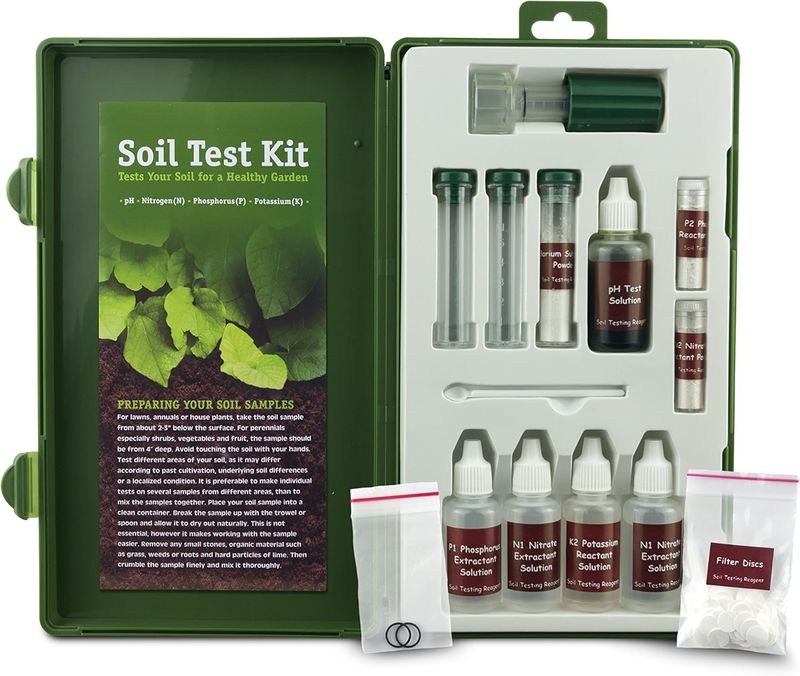
A soil test is the most reliable tool you have for deciding whether phosphorus fertilizer is actually needed. Testing measures plant-available phosphorus and soil pH, and a good laboratory report will include crop-specific recommendations for lime and fertilizer based on your actual results. Penn State’s soil-testing guidance advises using those results to determine whether phosphorus is needed and at what rate, rather than applying products based on symptoms alone.
Soil pH matters enormously for phosphorus availability. UMass Extension gives an optimum tomato pH range of 6.2 to 6.8 and notes that phosphorus becomes much less available below pH 6. A practical target for most home gardens is roughly 6.0 to 6.8, though recommendations vary somewhat by region and testing method. If your soil is too acidic, liming to bring pH into range may restore phosphorus availability without any added phosphorus fertilizer.
That said, a soil test cannot diagnose everything on its own. Adequate phosphorus on the report does not rule out a root-zone problem. Soil temperature, drainage quality, root condition, and whole-plant symptoms all factor into whether the plant can actually use what the test shows is present. University of Minnesota Extension’s tomato growing guide recommends low- or no-phosphorus fertilizer unless a soil test specifically calls for more.
Adding phosphorus when levels are already adequate or high is not harmless. Penn State warns that excess phosphorus can accumulate in soil and move into surface water through runoff and erosion, making over-application both wasteful and environmentally damaging.
Support the roots while you wait for results
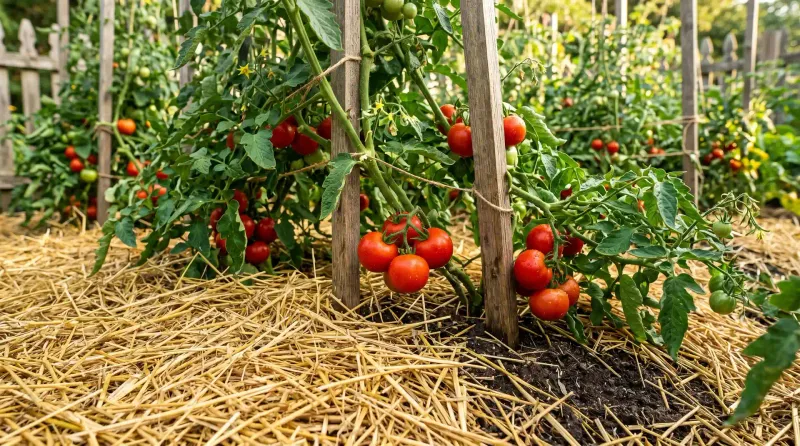
Sending off a soil sample and waiting for results does not mean standing still. Several practical steps can improve root conditions right now without risking over-fertilization or making a diagnosis you are not yet ready to confirm.
Even soil moisture is one of the most important things you can maintain. Roots that cycle between bone-dry and waterlogged cannot absorb nutrients reliably, and water stress adds another layer of strain on a plant that may already be struggling. University of Minnesota Extension recommends mulch as a practical tool for moderating soil temperature and retaining moisture around tomatoes, both of which directly support root function. A two-to-three-inch layer of straw, shredded leaves, or wood chips around the base of the plant can help buffer the root zone from temperature swings and dry spells.
If your soil stays soggy after rain, improving drainage by adding organic matter, raising the bed, or redirecting water away from the root zone is worthwhile. Avoid deep cultivation near the plant’s base, since tomato roots spread wide and shallow, and breaking them adds stress at exactly the moment the plant needs support. Penn State’s heat-stress guidance underscores that consistent watering and protection from severe heat are the core responses during hot weather, keeping the plant stable rather than compounding its stress. These steps support uptake conditions broadly, but they are not a guaranteed cure for a nutrient disorder or root disease.
Think of them as reducing the obstacles while you gather better information.
Apply phosphorus only when the evidence supports it
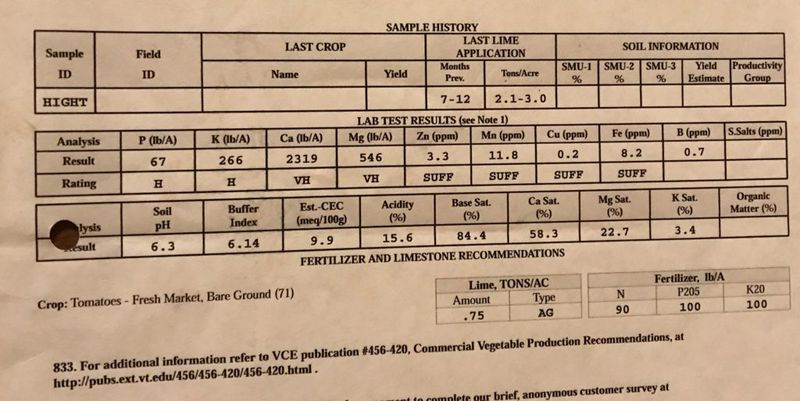
Once your soil test results arrive, let the numbers guide your next step rather than the purple color on the leaves. Two very different situations call for two very different responses, and treating them the same way can cause real harm to your soil and your garden.
When the test confirms that phosphorus is genuinely low, follow the laboratory’s recommended product and application rate. The recommendation is calibrated to your actual soil, not a generic guess. Penn State’s soil-testing program is clear that product choice and rate should come from the report, not from the symptom. A modest, balanced correction is appropriate; applying extra phosphorus on top of the recommendation is not better and may cause problems down the line.
When the test shows phosphorus is adequate or high, do not reach for bone meal, rock phosphate, a bloom booster, or a high-phosphorus tomato fertilizer. University of Minnesota Extension’s guide to phosphorus fertilizers is direct on this point: excess phosphorus accumulates in soil and can eventually reach waterways. UMN’s fertilizing guide also notes that foliar phosphorus applications can sometimes supply the nutrient in cool soils, but this is not a substitute for proper diagnosis and must follow product label directions carefully.
One more honest reality: correcting the underlying cause may improve new growth, but already-purple leaves are unlikely to turn green again. Fertilizer cannot undo viral disease, reverse root rot, or restore tissue that has already been damaged. UMN’s tomato growing guide supports a test-first approach precisely because the same visible symptom can have multiple causes, and only the right fix for the right cause will actually help the plant move forward.
Use the color as a prompt to investigate
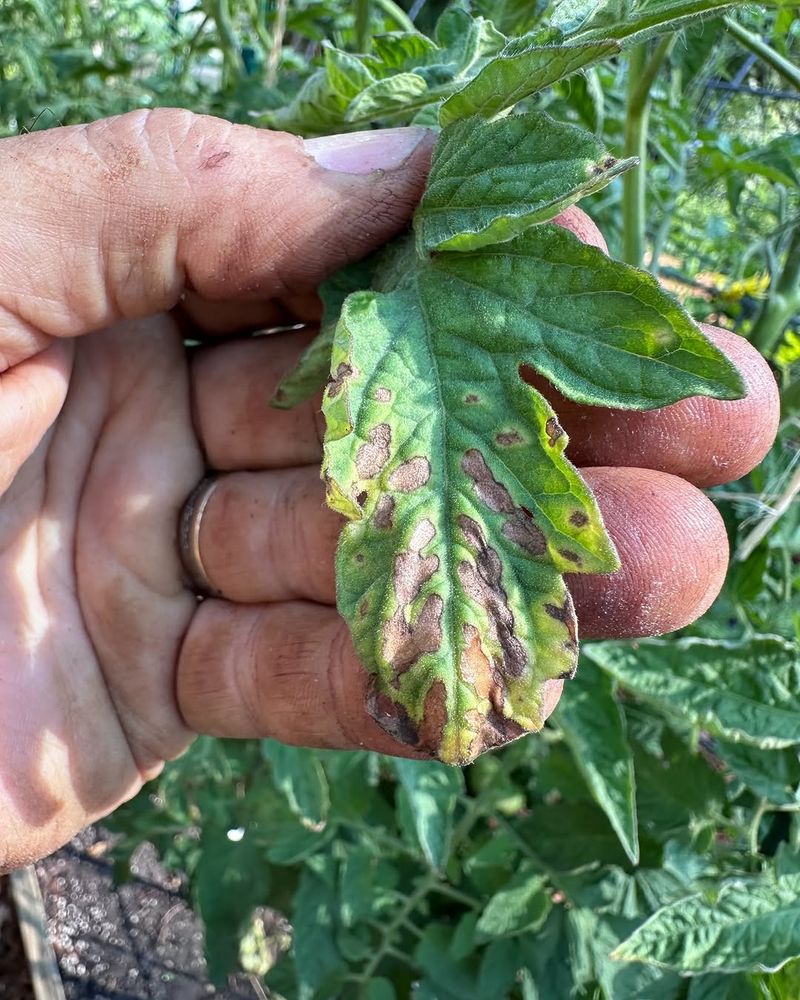
Purple undersides on tomato leaves are worth taking seriously, but they work best as a starting point for investigation rather than a final answer. Work through the plant systematically: check the whole-plant pattern, review recent root-zone conditions like soil temperature and drainage, inspect roots if the plant is declining, and test soil pH and phosphorus before acting. Texas A&M’s phosphorus deficiency guide and University of Maryland Extension’s tomato problem key both support this stepped approach.
Neither the August calendar date nor the leaf color alone identifies one hidden lockout. The color may be a phosphorus-availability warning, a cultivar trait, a viral symptom, or a response to root stress. A soil test gives you the clearest picture of what your soil actually contains and what, if anything, needs correcting. Treating only the confirmed cause protects both your plants and your soil from the downstream costs of unnecessary fertilizer.
A worried look at a purple leaf is a reasonable reaction; what matters most is what you do next.