
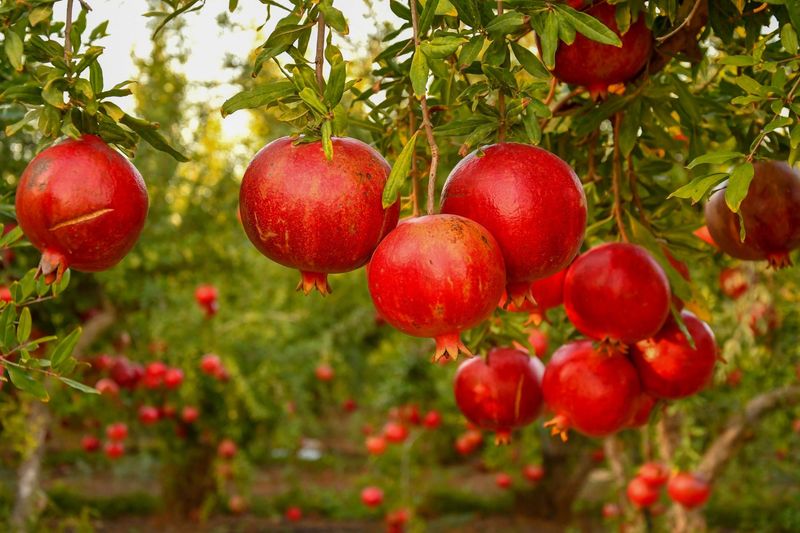
A pomegranate tree in a Central Valley yard can turn July heat into deep red fruit by fall. The tree has a long history in California, and it suits many hot inland gardens better than most people expect.
Still, it is not a plant that grows great fruit on air alone. Here is what to know before you plant one.
Why inland summers suit pomegranates
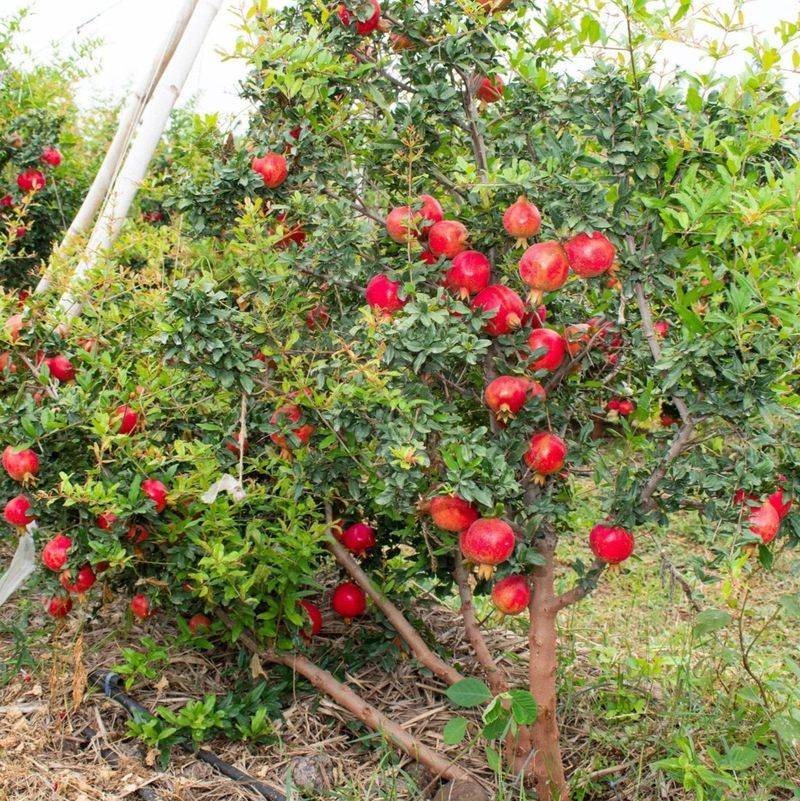
Long, hot, dry summers are the kind of weather pomegranates like. UC Cooperative Extension notes that the tree is well adapted to California’s interior valleys, where that summer heat helps fruit mature with good color and flavor.
Location matters a lot. The same UC source says mild coastal summers can limit commercial fruit production, even though the plant can still grow there as an ornamental.
A yard in Fresno, Modesto, or Redding has a better shot at sweet, richly colored fruit than one in a foggy beach town.
Heat tolerance has limits, though. Fruit hanging in full exposure and young woody growth can get sunburned, and UC IPM sunburn guidance points to inadequate soil moisture or poor root function as factors that make damage more likely.
Look for pale, tan, or bleached patches on the sun-facing side of fruit or on new trunks and branches. Those spots are a sign that a hot afternoon was harder on the tree than its reputation would suggest.
A healthy root system with steady moisture is the best defense you control.
A long-standing California crop, not a verified new trend
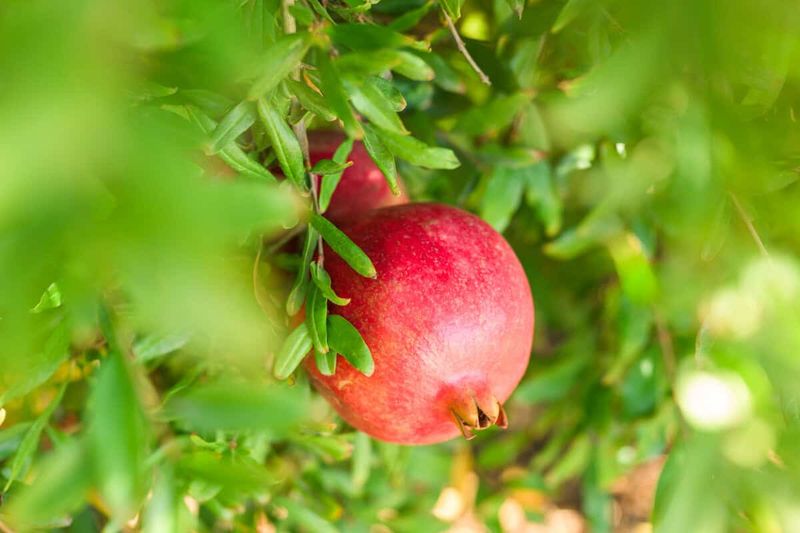
Pomegranates are no newcomer here. They have grown in California for a long time, and horticultural research describes past growth in commercial acreage in the state.
That history is useful context, but it does not show that more homeowners are planting them today. Nobody has counted backyard trees, so a comeback story would be a guess.
What the record does show is that the tree has a track record in California conditions. That is a better reason to consider one than any trend.
The real question for your yard is whether the site, the soil, and your watering habits can give it what it needs to bear fruit.
The sections ahead take that question step by step, from choosing a cultivar to knowing when the fruit is ready.
Drought tolerance does not guarantee a good crop
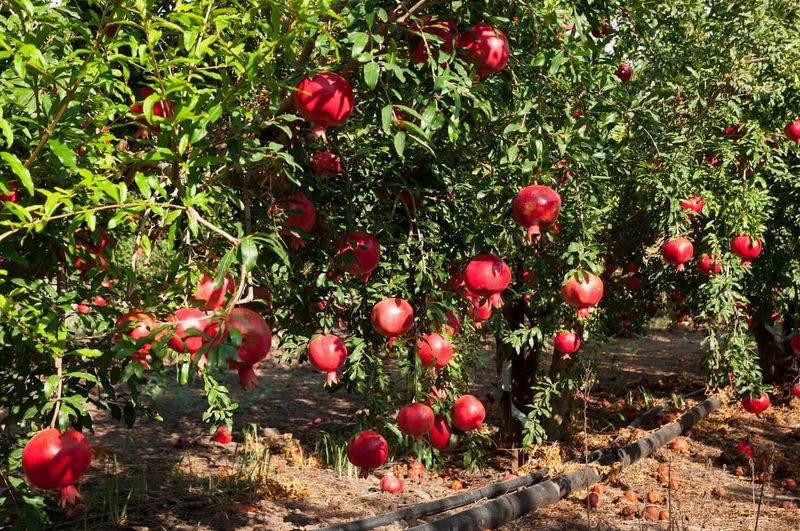
Surviving a dry spell and producing a good crop are two different things. An established pomegranate can tolerate periods of drought, but Utah State University Extension makes clear that regular water supports better fruit.
Young trees are the most vulnerable. A newly planted pomegranate needs regular establishment watering while its roots spread, and UC IPM watering advice notes that young fruit trees suffer quickly from water stress.
Once the tree is established, water deeply rather than in frequent sips. How often depends on your soil, the weather, and how the tree looks.
Sandy soil dries faster than clay, and a heat wave changes the math. There is no single low-water schedule that fits every yard.
Research backs up the caution. In one field study, giving trees 50% of seasonal crop water use cut yield in 10 of 11 tested cultivars, by 14% to 51% in the affected ones.
That is a research treatment, not a home watering recipe, but it shows that big water cuts cost fruit.
Reviews of the research, including this look at pomegranate water relations, report results that vary by cultivar, climate, timing, and how severe the deficit is. Think of drought tolerance as a safety net for the tree, not a promise about your harvest.
Choose an edible cultivar and a suitable site
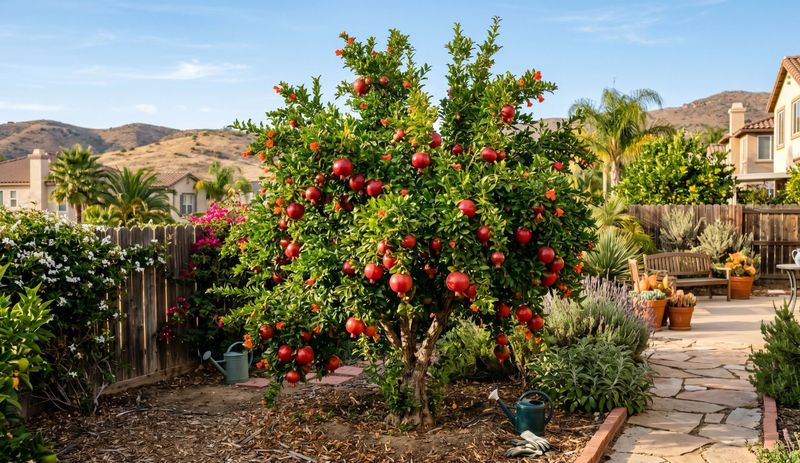
Not every pomegranate is grown for eating. Some are ornamental and produce mostly inedible fruit, so check the label or ask the nursery, as UC IPM advises, and pick a named edible-fruiting cultivar if a harvest is your goal.
Next, find a sunny, warm spot. Pomegranates tolerate a range of soils, but UC Cooperative Extension warns that poor drainage or highly alkaline soil can hurt growth, yield, and fruit quality.
A simple drainage test helps. Dig a hole about a foot deep, fill it with water, and see whether it drains within a few hours.
If water lingers, plant on a mound or choose another spot. Heavy clay patches in valley yards are common trouble areas.
As for pollination, pomegranates are generally self-pollinating, so one tree can set fruit. According to UC Marin Master Gardeners, cross-pollination may help fruit set, so a second tree is a bonus if you have room, not a requirement.
Plan for a shrub or a trained small tree
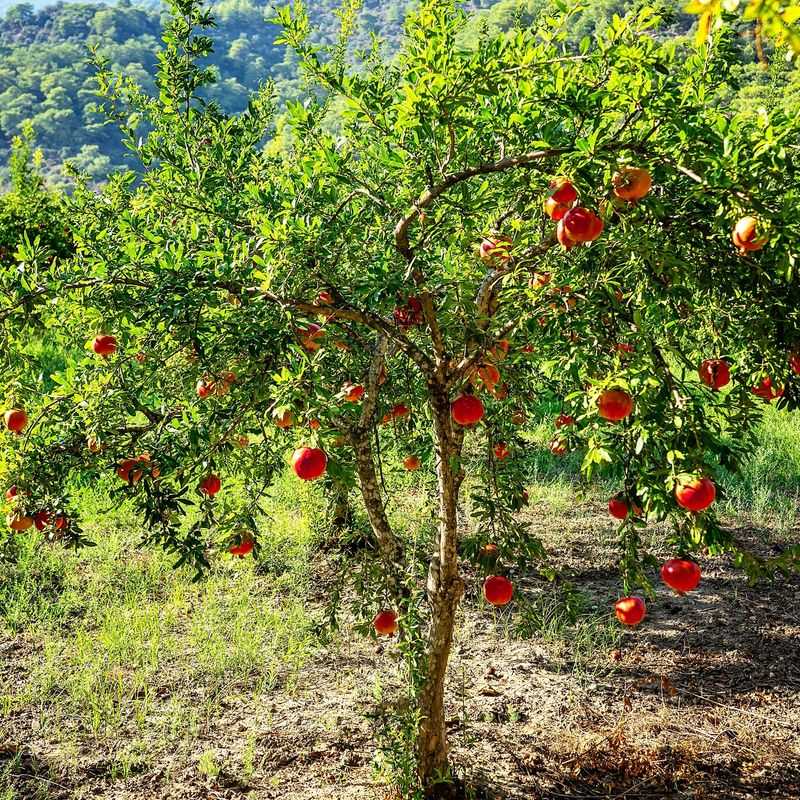
Left alone, a pomegranate tends to grow as a bushy, multi-stemmed shrub. With pruning, you can train it to a single trunk or a few main trunks and shape it into a small tree.
For planning, UC Cooperative Extension describes trained trees reaching roughly 15 to 20 feet. Treat that as a rough guide rather than a promise, since cultivar, pruning, soil, and care all change the final size.
A shrub form works well along a fence line or as a loose screen, where suckers and extra stems are welcome. A trained tree suits a spot where you want walking room underneath and easier access to fruit.
Leave space from walkways, patios, and structures so the canopy has room to spread without constant cutting. Picking a form early saves you from fighting the plant later.
Keep moisture reasonably consistent to limit cracking risk
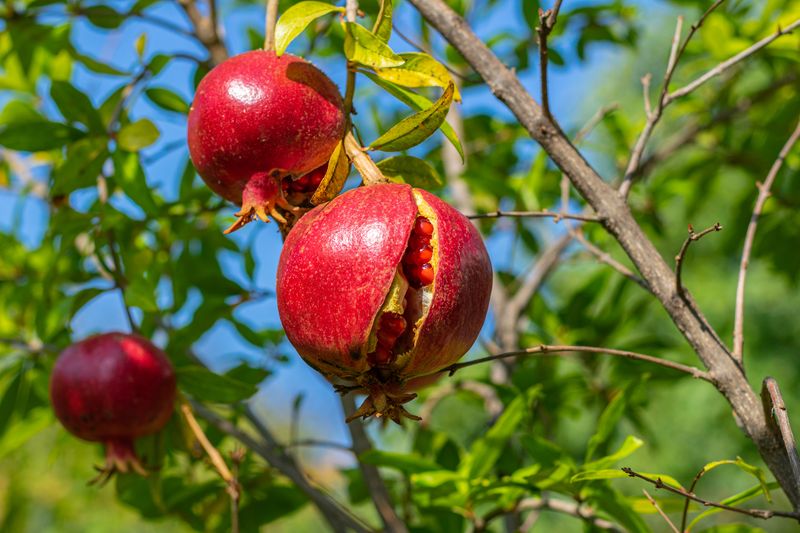
A split pomegranate is a familiar disappointment. Utah State University Extension explains that a long dry stretch followed by a rapid rush of water, including a fall rain, can contribute to cracking.
The fix is steadier moisture, not a sudden cutoff. UC Master Gardeners of Santa Clara County describe irregular moisture as a cracking factor, so aim for even soil moisture as fruit matures.
Holding back water before harvest can backfire. Water stress can shrink fruit, and a UC fruit and nut newsletter describes competing risks when irrigation is reduced.
Hot weather adds another one. UC IPM and a UC subtropics article on sunburn both tie sunburn to heat and water-stressed trees.
A layer of mulch over the root zone, kept a few inches from the trunk, can help even out soil moisture swings.
Judge harvest by the fruit, not a fixed date
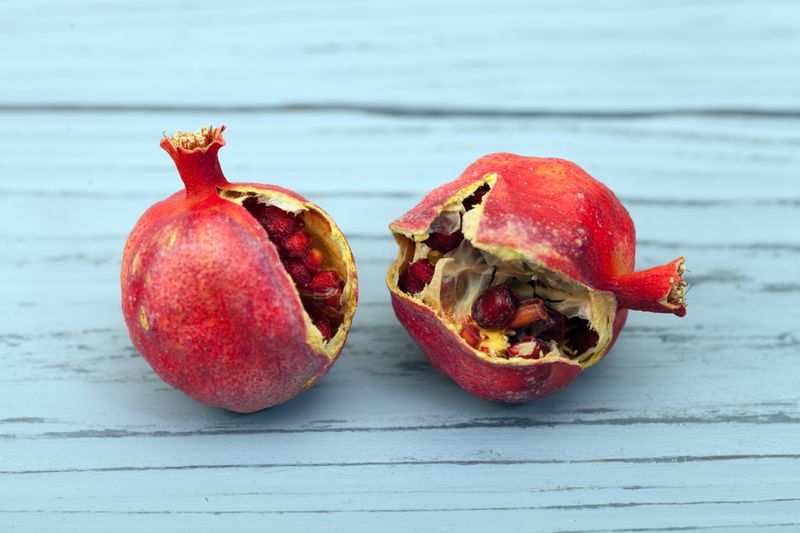
Many California backyard guides place pomegranate harvest in fall, often October into November. UC Master Gardeners of Placer County note that the exact timing shifts with cultivar, bloom date, and summer weather, so a calendar date is only a rough guide.
Use the fruit as your clock. Look for full, rich color for the cultivar, and tap the fruit gently.
A metallic sound is a useful clue that it is ready.
Timing matters because pomegranates do not keep ripening after they come off the tree. Picking early gets you bland, pale fruit that will not improve on the counter.
When it is time, clip the fruit from the stem with pruning shears rather than pulling it, which can damage the fruit and the branch. The Santa Clara County October tips also point out that harvesting before heavy rain helps avoid splitting.
Decide whether a pomegranate fits your yard
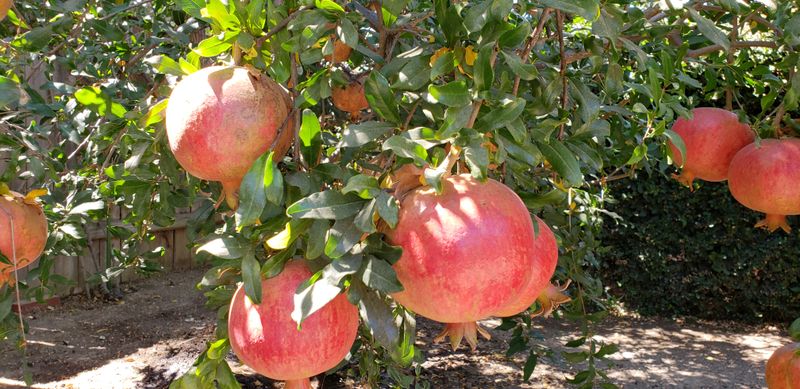
A pomegranate makes sense if you have a sunny, well-drained spot in a hot inland valley and can water a new tree regularly, then adjust irrigation as the seasons demand. UC Cooperative Extension backs the climate fit.
Skip the idea that a productive tree needs almost no water. Utah State University Extension says water supports fruit, even for trees that can ride out dry spells.
Give it heat, drainage, and a drink when it needs one, and a pomegranate can reward you with fruit worth waiting for.