
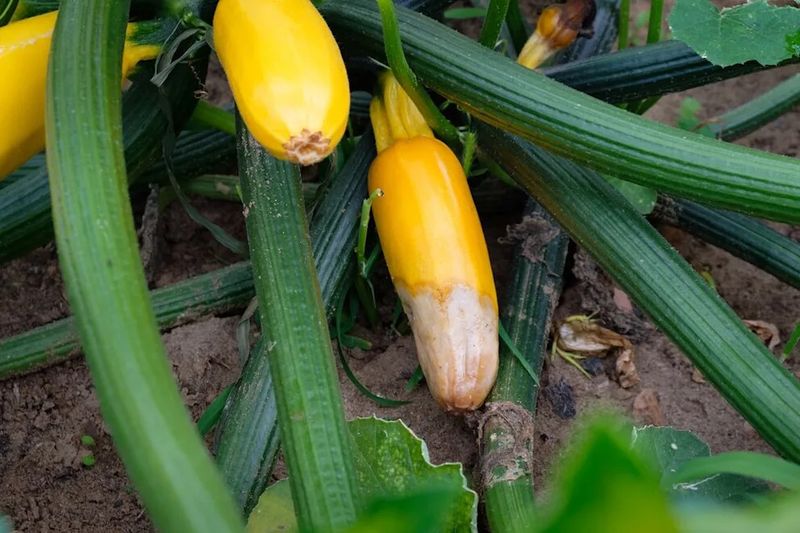
Watching a tiny zucchini shrivel and turn soft at the blossom end is one of the most frustrating surprises in a summer garden, especially when the plant looks healthy and covered in flowers. The rot you see near the tip often shows up after the real trouble has already happened, which means finding the right fix starts with figuring out what went wrong first. Poor pollination is a common culprit when young fruit stops growing and decays, but it is not the only one, and choosing the wrong remedy can waste time on fruit that is already beyond saving. Knowing how to read the fruit, protect the next set of flowers, and give your plant steady care can turn a discouraging August week into a much better harvest.
A tiny zucchini may fail before the rot appears
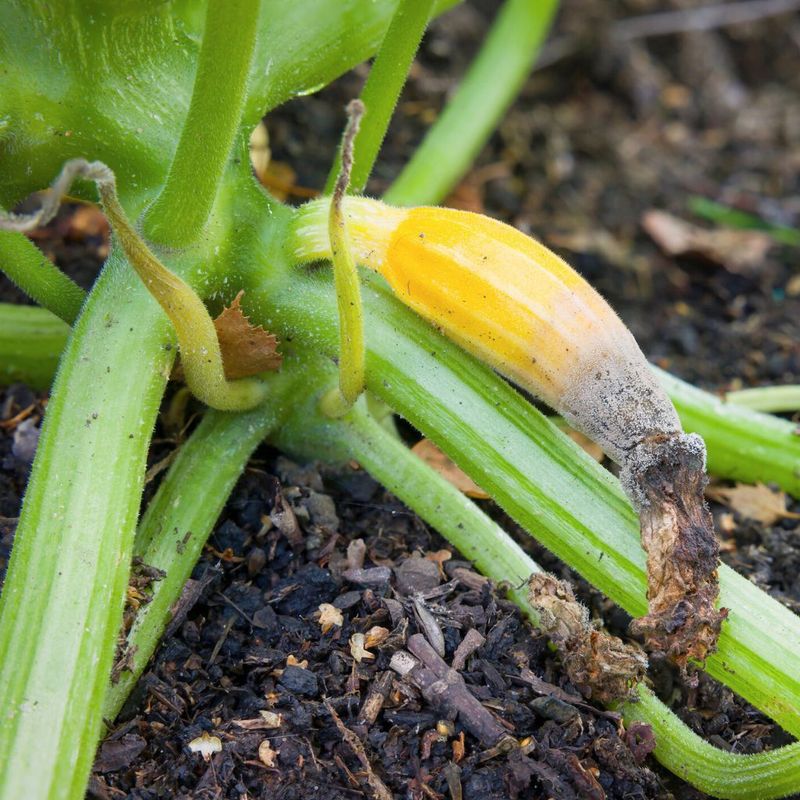
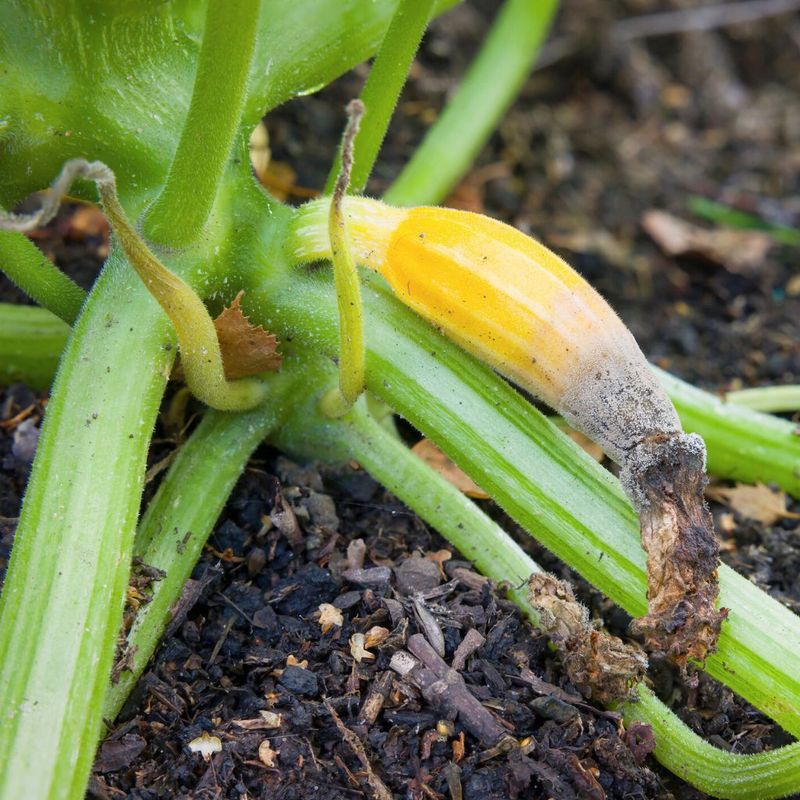
Rot at the blossom end of a small zucchini can feel like a sudden failure, but the process usually begins days before the decay becomes visible. When a female flower receives incomplete or no pollen, the young fruit that forms at its base may stop developing almost immediately. That arrested fruit then shrivels, softens, and eventually decays, so the rot you notice is often a later consequence rather than the original problem.
University of Minnesota Extension guidance on summer squash notes that rotting of small fruit is frequently associated with poor pollination, particularly among the first fruit set of the season. Seeing rot does not automatically confirm that a pathogen started the trouble; the sequence can be incomplete pollination followed by secondary decay.
That said, not every blossom-end failure traces back to pollination. Blossom-end rot and wet fungal infections can each begin on their own and produce damage that looks similar at a glance. Before choosing a remedy, inspect the fruit carefully, because the shape, texture, and color of the damage carry real diagnostic clues about what actually went wrong.
Count female flowers, not just blossoms
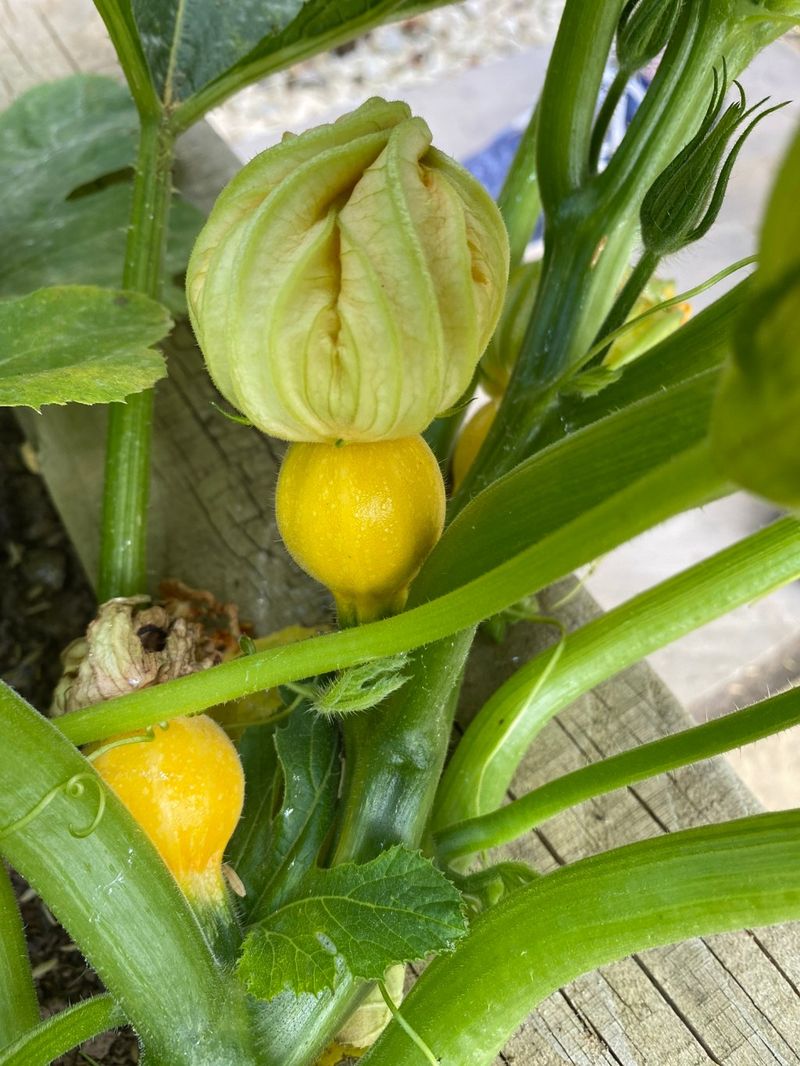
A zucchini plant covered in bright yellow blossoms can still produce very little fruit, and understanding why starts with learning to tell the two flower types apart. Female flowers carry a small, rounded swelling at their base, which is the immature zucchini itself. Male flowers grow on a slender, straight stem with no swelling below the petals and exist solely to supply pollen.
Only female flowers can develop into fruit, and they need pollen from a male flower to do it. University of New Hampshire Extension explains that early in the season a plant often produces a rush of male flowers before female flowers appear in meaningful numbers. This timing gap means a garden can look full of activity while almost no successful pollination is taking place.
Even when both sexes are present on the plant at the same time, male and female flowers do not always open on the same morning. If the male flowers nearby have already closed or have not yet opened when a female flower is ready, that female has little chance of setting fruit regardless of how many total blossoms are on the vine. Counting only total flowers and assuming the plant is doing fine is an easy mistake to make in a busy garden.
The pollination window lasts only one morning
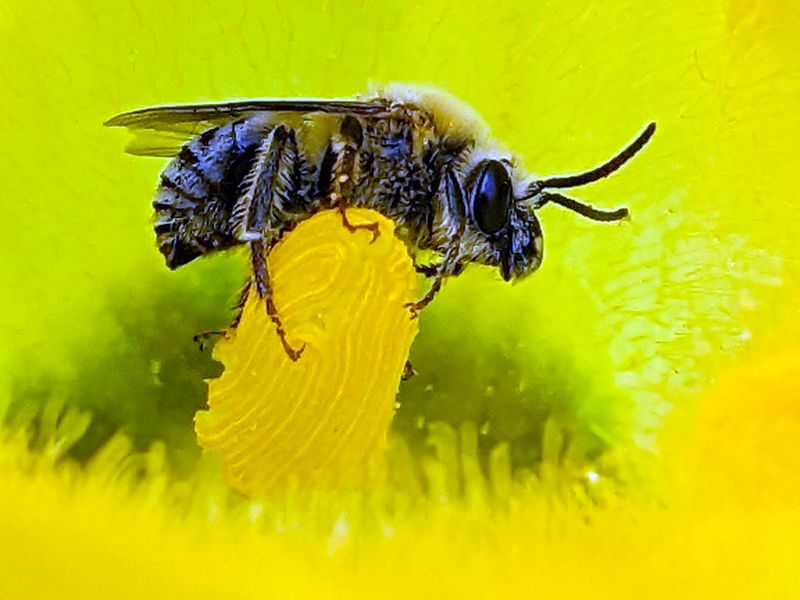
Squash flowers open in the morning and stay receptive for roughly one day before closing for good. Native squash bees are among the most effective visitors, and they tend to forage early, often finishing their work before mid-morning. Bumblebees and honeybees also contribute, but the entire useful window is short enough that a single cloudy or rainy morning can mean a female flower receives no pollen at all.
According to USDA Agricultural Research Service information on squash pollination, squash bees are important and often early-morning pollinators of Cucurbita crops. When bee activity is suppressed by poor weather or absent because row covers are blocking access, female flowers can open and close without receiving adequate pollen, leading directly to small, aborted fruit.
Heat and general plant stress can also cause blossom drop or fruit abortion on their own, independent of what the bees are doing. A wilting plant under drought stress may shed flowers before they even open fully. These are separate mechanisms, and it matters which one is at work: a bee-access problem calls for a different response than a watering problem. UMN irrigation guidance for vegetables reinforces that moisture stress and pollination trouble can overlap in August, making careful observation essential before acting.
Use the fruit’s pattern to narrow the cause
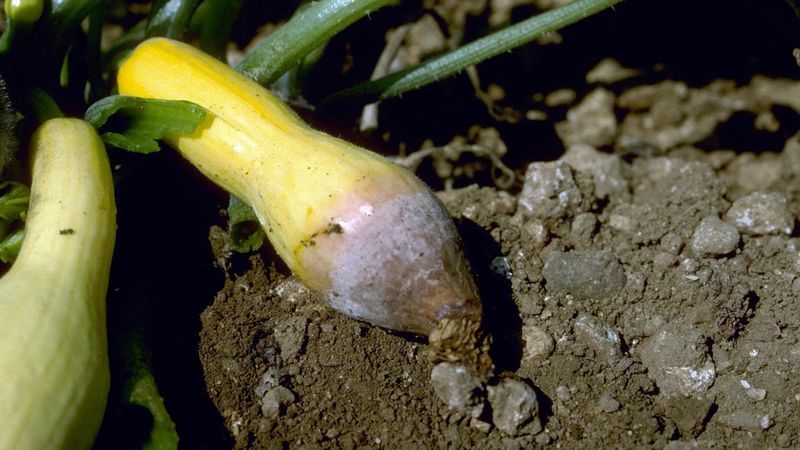
The appearance of the failing fruit tells you more than the rot alone. A fruit that stopped growing when it was still very small, turned soft and shriveled uniformly, or developed an uneven or lopsided shape most often points toward incomplete pollination. The ovary simply never received the signal to keep developing, so it collapsed rather than enlarging into a recognizable zucchini.
Blossom-end rot looks different. Colorado State University Extension’s cucurbit disorder guide describes blossom-end rot as beginning with a water-soaked lesion at the blossom tip that gradually becomes a sunken, dead, brown or black area as the fruit continues to enlarge around it. The rest of the zucchini may look normal while that lesion grows, which is a key visual difference from a fruit that simply stopped growing entirely.
Wet, soft fruit covered with white, purple, or black fuzzy growth suggests something else again. UMN Extension’s Choanephora rot page identifies this fungal pathogen as a separate cause of soft blossom-end decay, particularly during prolonged wet periods. The fungus infects flowers and can spread into the developing fruit tip.
A poorly pollinated fruit can also be invaded secondarily by fungi or bacteria after it stops developing, so visible mold does not always mean the fungus caused the initial failure. The sequence may be pollination trouble first, decay second. Checking whether the fruit ever started to enlarge normally is one of the most useful questions to ask when you pull a failed fruit off the vine.
Hand-pollinate the next open female flower
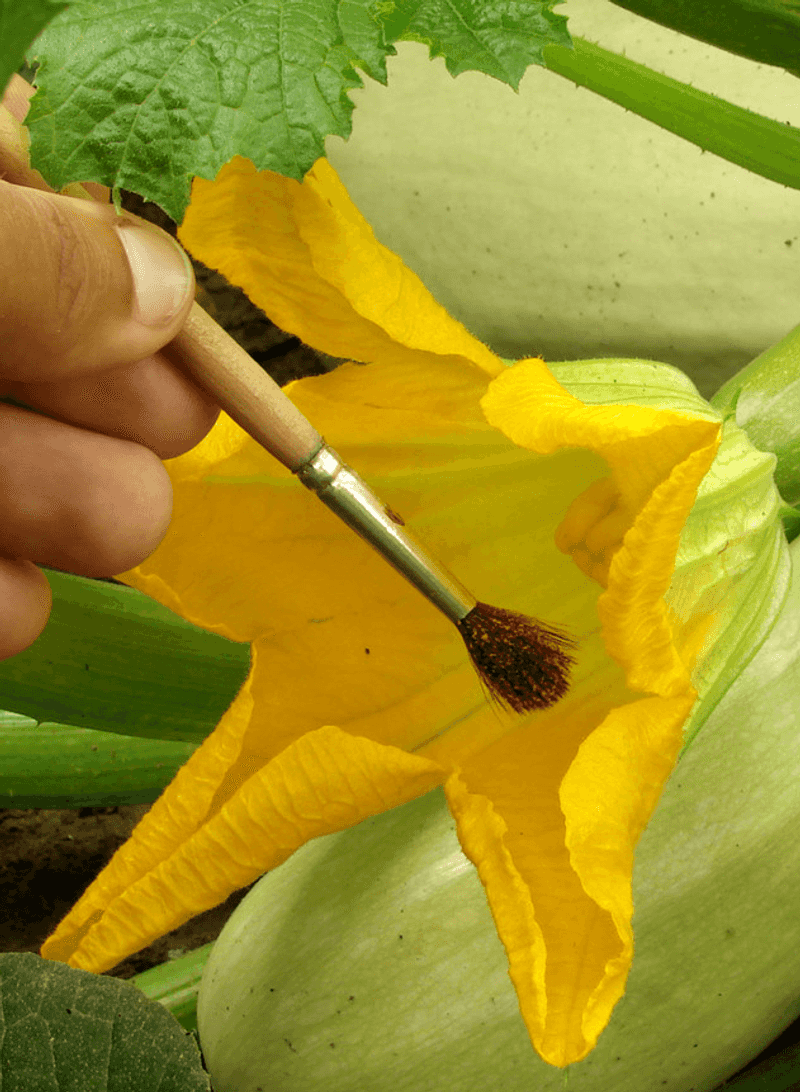
Hand-pollination is a low-cost, low-risk rescue step that works when bee activity has been low, weather has disrupted the normal flowering window, or male and female flowers have not opened on the same day. The key is timing: go out early in the morning, when both sexes are open and fresh. Waiting until afternoon means the flowers may already be closing, and pollen viability drops as the day heats up.
Start by confirming that you have both an open male flower and an open female flower at the same time. The female flower has the small swollen ovary at its base; the male has the narrow stem and a central structure coated in powdery yellow pollen. UMN Extension’s guidance on zucchini flowering problems recommends using a small paintbrush to collect pollen from the male flower’s anther and then gently brushing it onto the lobed stigma at the center of the female flower. Alternatively, you can remove the male flower entirely, peel back its petals, and dab the anther directly against the stigma.
Repeat the transfer two or three times to improve coverage, but handle the stigma gently to avoid damaging it. Hand-pollination increases the chance that a particular female flower will set fruit, but it does not guarantee every treated flower will mature to a full zucchini. Weather, plant health, and other stresses still play a role, so keep checking new flowers over the following mornings rather than assuming one session has solved the problem.
Make the garden accessible to pollinators
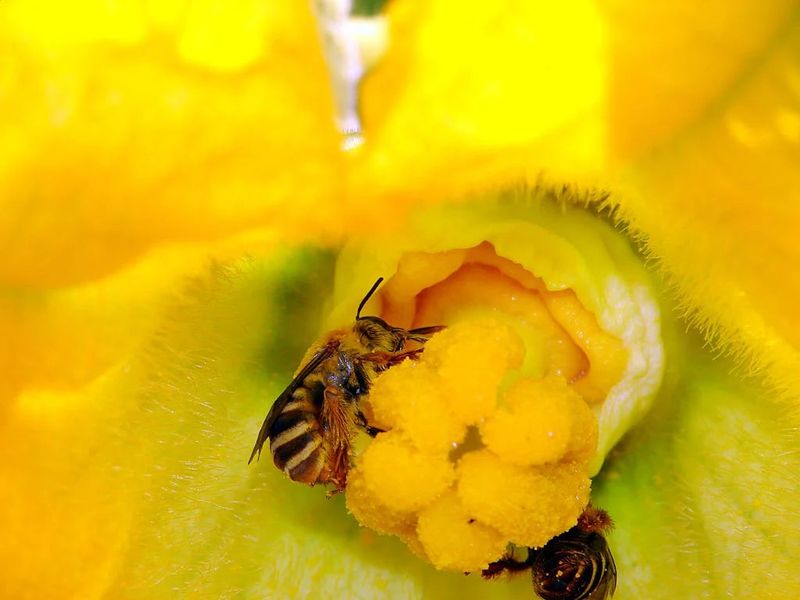
Watching for bee activity on your zucchini in the morning is one of the most direct ways to assess whether pollination is actually happening. Spend five minutes near the plants between 7 and 10 a.m. on a clear day. If you rarely see bees landing on the open flowers, that absence is a real signal worth addressing before the next set of female flowers opens.
Maintaining flowering plants nearby supports native squash bees and other pollinators throughout the season. USDA ARS squash pollination research documents the importance of native bees to Cucurbita crops and highlights that habitat availability affects their presence. Simple additions like a patch of flowering herbs or native annuals near the vegetable bed can help sustain bee populations through the summer.
Row covers that exclude insects are a common reason for poor pollination in home gardens. UMN’s vining vegetable guide notes that covers must be removed or opened when flowers are present to allow bee access. If you are using covers for pest control, consider lifting them during peak morning hours and replacing them afterward.
Avoid applying insecticides to or near blooming zucchini unless there is a clear, justified pest problem. UMN’s pollinator pesticide guidance explains that many products harm bees directly or through residues, and the EPA’s pesticide label guidance is clear that any product must be used strictly according to its label, including all pollinator restrictions. Spraying to address a pest problem will not bring bees back and may make the situation worse.
Keep moisture steady instead of chasing calcium
Consistent soil moisture is one of the most practical things you can do for developing zucchini fruit. Allowing the soil to dry out severely between waterings and then soaking it heavily creates stress cycles that can interfere with how the plant moves nutrients into growing fruit. Mulch laid a few inches deep around the base of the plant helps moderate these swings by slowing evaporation from the soil surface.
UMN’s vegetable irrigation strategies recommend consistent moisture management for cucurbits to support steady fruit development. Erratic watering is one of the conditions most commonly associated with blossom-end rot in zucchini and related crops.
Blossom-end rot concerns calcium delivery to the developing fruit, but the soil itself is rarely low in calcium in most home gardens. Utah State University Extension’s blossom-end rot notes explain that uneven watering, excess moisture, root damage, soil salinity, and other stresses can all interfere with how calcium moves through the plant, even when plenty of calcium is present in the soil.
Adding eggshells, milk, or calcium sprays to correct blossom-end rot is a popular suggestion, but Colorado State University Extension’s vegetable disorder resource states that these additions are unlikely to correct the problem when the underlying issue is a watering or uptake stress. Fixing the moisture pattern is more likely to help than adding calcium in any form. A simple soil test can confirm whether a genuine nutrient deficiency exists before spending time on amendments.
Remove failed fruit and reassess the next set
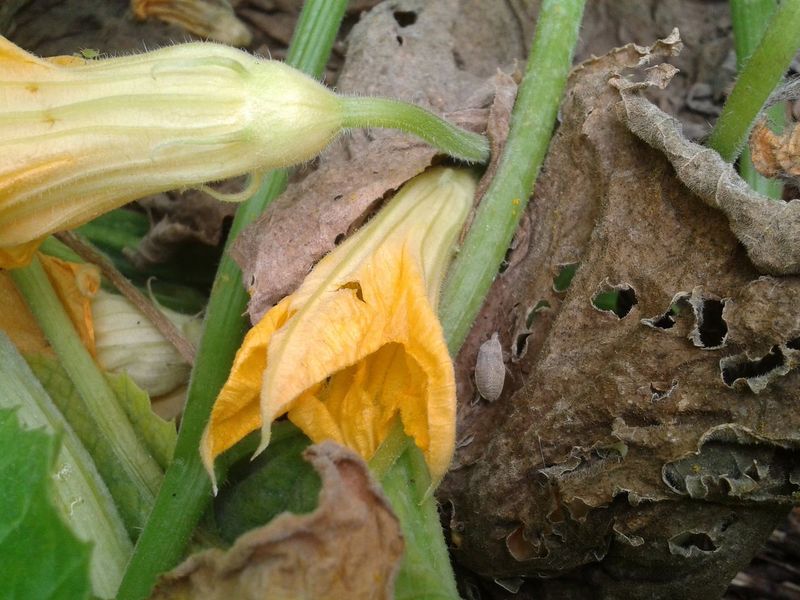
Pulling collapsed, mushy, or visibly moldy fruit off the vine is worth doing promptly. Leaving decaying fruit in place can allow fungal spores to spread to nearby healthy flowers, and UMN Extension’s Choanephora rot guidance recommends sanitation and removal of infected material as a primary management step, noting that fungicides are not a reliable solution because new susceptible flowers open daily.
After clearing the failed fruit, shift your attention to the next open female flowers. Check them early in the morning, watch for bee visits, and hand-pollinate if conditions look unfavorable. UMN’s summer squash growing guide confirms that the first fruit set is often the most vulnerable to poor pollination, so later flowers in the season may succeed more reliably once male and female flowers are opening in better sync.
A useful diagnostic rule to carry forward: fruit that fails when it is still very tiny and never enlarges often points toward a pollination gap, while fruit that begins to grow but develops a distinct lesion or fuzzy growth near the tip warrants a closer look at blossom-end rot or wet rot. Keep moisture consistent, keep the morning observation habit, and let the next flowering window show you what the plant can do when conditions line up.