

Glance out at a North Carolina yard in late summer and you might spot a dozen small green lizards clinging to fence rails, darting through shrubs, and flashing bright dewlaps from every sunny perch. That sudden abundance can feel like something changed overnight. Understanding what is actually driving those sightings helps you support a useful native animal, keep your family safer from mosquitoes and ticks, and avoid a few common misconceptions about what lizards can and cannot do for your yard.
Late summer can put several generations in view
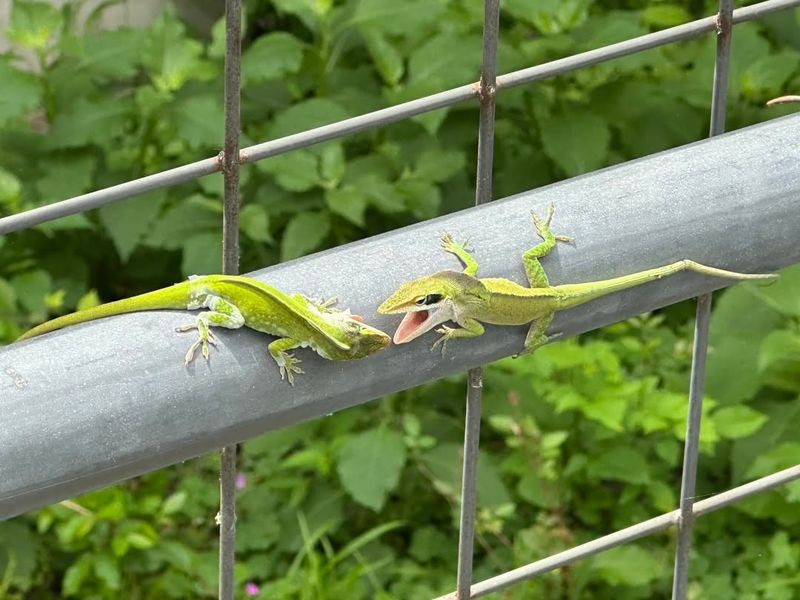
Green anoles are native North Carolina lizards, and summer is essentially their busiest season. NC Wildlife Resources Commission describes them as warm-weather, daytime-active animals whose breeding season stretches from spring all the way through late summer. That extended reproductive window is the single most important reason a yard can look suddenly crowded.
Female green anoles do not lay a clutch of eggs all at once. Instead, each female deposits roughly one egg every two weeks throughout the warm season, tucking eggs into moist soil or leaf litter. Those eggs take several weeks to hatch, and newly emerged hatchlings are fully independent from day one, immediately searching for small insects on their own. By the time August or September arrives, a yard can contain breeding adults still in peak activity, juveniles that hatched earlier in summer and are now growing fast, and a fresh wave of hatchlings from the most recent eggs.
All three groups overlap in the same space at the same time, and that overlap is what makes a yard feel suddenly full. None of that requires the total population to have surged dramatically. Green anoles are especially associated with the Coastal Plain and southern Piedmont of North Carolina, where warm humid summers give them the longest possible active season. In the higher mountains, sightings are less expected and may represent range edges rather than a typical late-summer gathering.
Recognizing this seasonal biology first keeps the rest of the interpretation grounded.
More sightings do not always mean more lizards
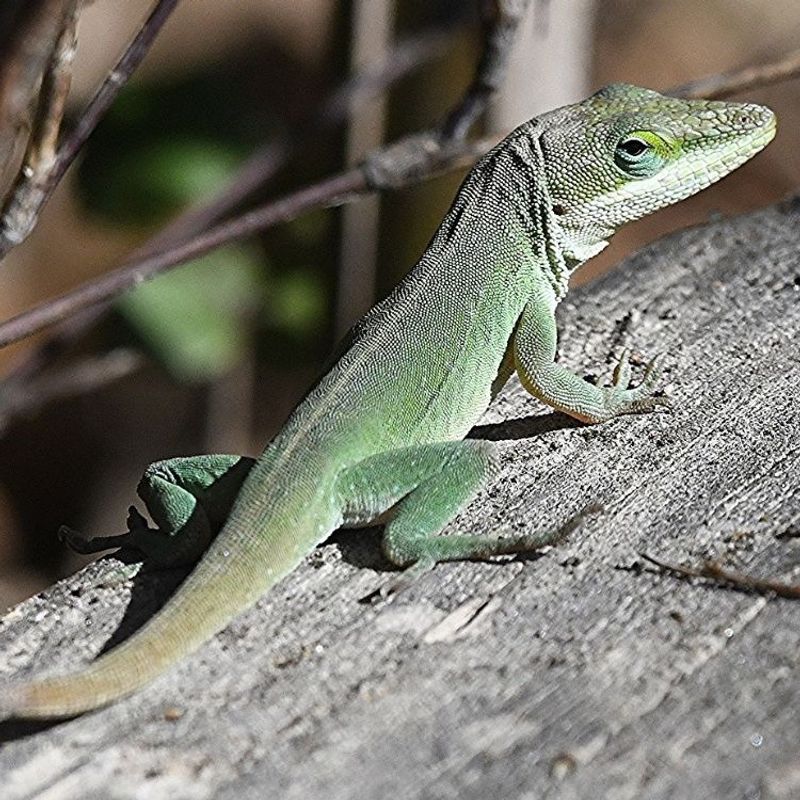
Counting more animals in a yard on a warm August afternoon is not the same as confirming the population grew. Warm temperatures push green anoles into longer, more active daytime forays, and a lizard moving through open basking spots is far easier to notice than one sheltering quietly under bark during a cool morning. The animals themselves have not changed; the conditions that make them visible have.
Juvenile emergence adds another layer to the perception. Small hatchlings spread out to establish their own tiny territories, which means a yard that held one adult pair may suddenly appear to contain six or eight lizards scattered across different plants and fence sections. A homeowner who never paid much attention to the back corner of the yard may also simply be looking more carefully after spotting the first few lizards near the door. That shift in attention is real and counts as a factor in what gets noticed.
NC Wildlife’s profile of the green anole notes that these lizards rely on vegetated perches and tend to use whatever climbing and basking surfaces are available, which means a yard with more mature plants simply presents more places where an anole can be seen. Without systematic monitoring over time, a homeowner cannot determine from casual observation alone whether the population actually increased, stayed the same, or shifted from nearby habitat. The fair and accurate conclusion is that sightings increased. Whether lizard numbers did is a separate question that casual observation cannot answer.
Vegetation and shelter make a yard more usable

A yard that has grown denser over recent seasons, whether from maturing shrubs, spreading vines, or a gardener who started leaving more natural edges, offers green anoles something genuinely useful: structure. Anoles need climbing surfaces for basking, leafy cover for hunting and hiding, and sheltered moist spots near soil or leaf litter where females can deposit eggs. A closely clipped, edge-to-edge lawn provides almost none of those things. A yard with layered plants, native vines climbing a fence, or even a brushy corner near the property line provides all of them at once.
Research conducted in open pine forests in eastern Texas found a striking relationship between shrub density and green-anole abundance. That USDA Forest Service study estimated the anole population in a high-shrub-density plot at roughly 16 times the population in a low-shrub-density plot, and the lizards also showed a preference for relatively large shrubs over small ones. That is meaningful evidence that habitat structure can drive large differences in anole abundance. The important caveat is that the study was conducted in eastern Texas, not North Carolina, and in a pine-forest setting rather than a suburban backyard.
Its result cannot be used to predict exactly what will happen in any individual NC yard, but it does suggest that a yard with more shrub structure is more likely to support anoles than one without.
NC Wildlife notes that green anoles use humid environments and vegetated perches, reinforcing that vegetation complexity matters. A yard that has gotten a little less manicured over the past year or two may simply have crossed a threshold where it became genuinely usable habitat, drawing in animals that were always nearby but had fewer reasons to settle. That is not a guarantee, but it is a plausible explanation worth keeping in mind.
What does the insect signal really tell you?
A common instinct when anoles appear in numbers is to assume the yard must be crawling with bugs. Green anoles do eat insects, so the logic seems straightforward. Their actual diet is broader and more varied than that assumption suggests. NC Wildlife lists flies, crickets, moths, butterflies, termites, ants, beetles, spiders, and other small arthropods as part of the green anole’s menu.
They are generalist insectivores, taking whatever small prey crosses their path rather than targeting one specific group.
That broad diet means more anoles could reflect more of any of those prey types, or it could reflect better vegetation, more basking space, fewer predators, or recent hatchling emergence. Prey availability is one piece of the habitat puzzle, not a simple on-off switch. Research on anoles and prey abundance reinforces this complexity. A USGS-published study examined how habitat structure and prey abundance affected the occupancy and abundance of two anole species, Anolis cristatellus and Anolis krugi, in secondary forests in Puerto Rico.
That research found that habitat structure and prey could both matter, but the relationship was not simple or uniform across contexts. Crucially, that study involved different anole species in a different region, and it cannot be used as direct evidence about how prey abundance predicts green-anole numbers in a North Carolina yard.
The practical takeaway is that anoles fit into the yard food web as participants, not as measuring instruments. Seeing more of them tells you the yard is supporting some level of arthropod activity and has usable habitat, but it does not tell you which insect species increased, by how much, or whether any specific pest is behind the change. Treating the lizards as a rough sign of a living, active yard ecosystem is accurate. Treating them as a precise insect-population gauge is not.
Anoles are not your mosquito or tick program

Seeing a yard full of lizards can feel reassuring if you are worried about mosquitoes and ticks. That reassurance has limits worth understanding clearly. Green anoles eat a wide range of small arthropods, and they may occasionally consume a mosquito or a tick larva, but they are not specialized hunters of either pest, and there is no reliable evidence that a visible increase in green anoles in a North Carolina yard meaningfully reduces mosquito or tick populations for the people living there.
For mosquitoes, the primary line of defense is eliminating the water where they breed. CDC guidance on mosquito control at home centers on emptying, scrubbing, covering, or removing water-holding containers every week, including buckets, plant saucers, gutters, toys, tarps, and any low spots in the yard that collect standing water. Mosquitoes can complete their larval development in a surprisingly small amount of still water, so consistent removal of those sites matters far more than the presence of lizards nearby.
Tick prevention follows a different but equally specific set of actions. CDC tick-prevention guidance emphasizes reducing leaf litter, keeping grass mowed, clearing brush along yard edges, and limiting contact with wooded borders where ticks wait for a host. Personal protection, including repellents containing DEET or picaridin and daily tick checks after outdoor time, remains essential throughout the warm season in North Carolina. None of those measures can be replaced by relying on lizards.
NC Wildlife describes green anoles as valuable native wildlife that belongs in the yard ecosystem. That is accurate and worth appreciating. Appreciating them as part of a living yard and depending on them to protect your family from vector-borne illness are two very different things.
Support the habitat without creating a mosquito nursery

Keeping some of the messiness that makes a yard useful to anoles does not require a complete overhaul or a tolerance for neglect. Small, deliberate choices add up quickly. Leaving a section of shrubs unclipped along a fence line, letting a native vine climb a trellis or wall, and avoiding the removal of every fallen log or brushy corner all help create the layered structure that green anoles use for perching, hunting, and egg-laying. NC Wildlife’s suburban backyard habitat guidance encourages homeowners to manage yard edges and plantings with native wildlife in mind, and that approach lines up well with what the habitat research shows anoles need.
The firm boundary in this stewardship approach involves water. Standing water should never be deliberately created or maintained to attract or support anoles. Anoles get the moisture they need from humid air, damp soil, and the surfaces of wet leaves, not from open water features, and they do not require a pond or water dish. Standing water, by contrast, is exactly what female mosquitoes need to lay eggs and complete their life cycle.
CDC guidance recommends emptying and scrubbing any container that holds water at least once a week, since even a small amount of still water can support mosquito larvae through their full development. Birdbaths should be emptied and refilled regularly. Gutters need clearing so water does not pool. Tarps, buckets, plant saucers, toys, and any low areas in the yard that do not drain well all deserve attention on a weekly schedule.
Supporting anole habitat and running a tight mosquito-prevention routine are fully compatible goals, and neither one has to sacrifice the other.
A careful pest plan still matters
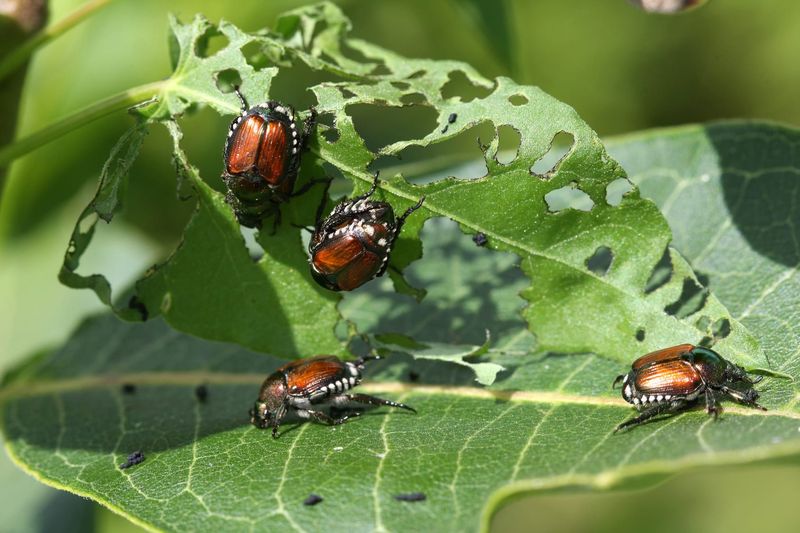
A yard with green anoles present is not a yard where pesticides can be skipped or where broad spraying becomes less consequential. Anoles forage actively through treated vegetation and consume arthropods that may have been directly exposed to pesticide residues. EPA guidance on reducing pesticide impacts on wildlife specifically recognizes that reptiles and amphibians face dietary exposure routes in addition to direct contact, meaning that a lizard eating sprayed insects absorbs whatever those insects absorbed. Anoles in the yard are a reason for careful pesticide decisions, not a sign that pest management is no longer needed.
When a pest problem can be addressed through habitat changes or mechanical controls, those approaches should come first. Removing a wasp nest with a physical trap, clearing the leaf litter where fungus gnats breed, or fixing a gap that lets insects enter the house all solve the problem without chemical exposure to the broader yard ecosystem. Those options are worth exhausting before reaching for a spray.
If a pesticide is necessary, EPA pesticide safety guidance is clear: use only an EPA-registered product, and follow all applicable label directions. The label carries legal authority and addresses application rates, timing, weather conditions, runoff precautions, re-entry intervals, and any protective measures the product requires. Not every label covers every possible scenario, so reading the full label before application, rather than relying on memory or past use, is the practical standard. Spot treatments and targeted applications reduce the amount of product that reaches non-target animals, including the anoles that share the yard.
Check the lizard before interpreting the clue
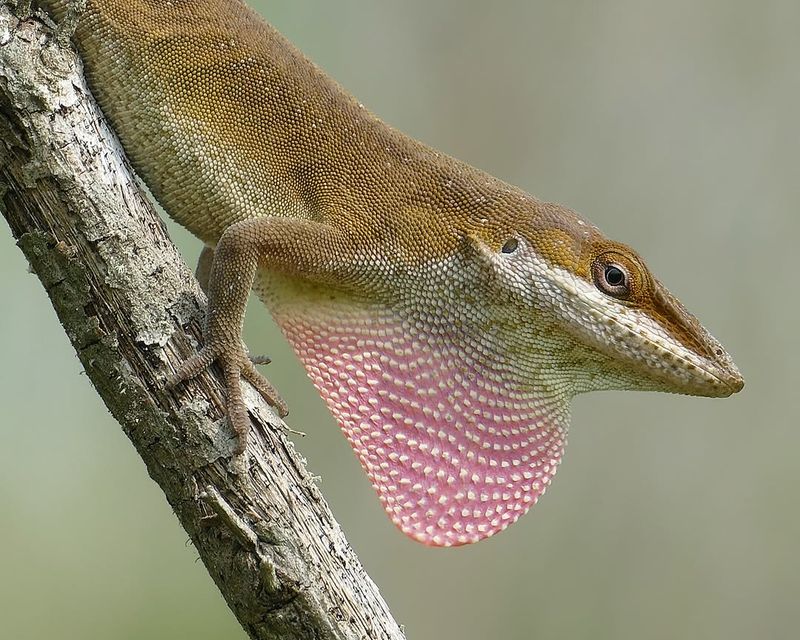
Before drawing conclusions from a late-summer lizard sighting, it helps to confirm which lizard you are actually looking at. Green anoles are well known for their color-change ability, shifting between bright green, olive, and various shades of brown or gray depending on temperature, activity level, stress, and the surface they are resting on. A brown lizard clinging to a fence post or tree trunk may be a native green anole in its brown phase, not a different species.
Brown anoles (Anolis sagrei) are a separate, introduced species that does not have a true green color phase. They tend to stay closer to the ground, have a more robust body shape compared to the slender green anole, and display a different pattern on the back and tail. NC State Parks reptile records show brown anole reports from more than 30 North Carolina counties, often linked to nurseries, greenhouses, landscaping supply chains, or transported plants. Many of those records may represent isolated individuals rather than established, self-sustaining breeding populations, and the ecological effects of brown anoles in North Carolina remain uncertain.
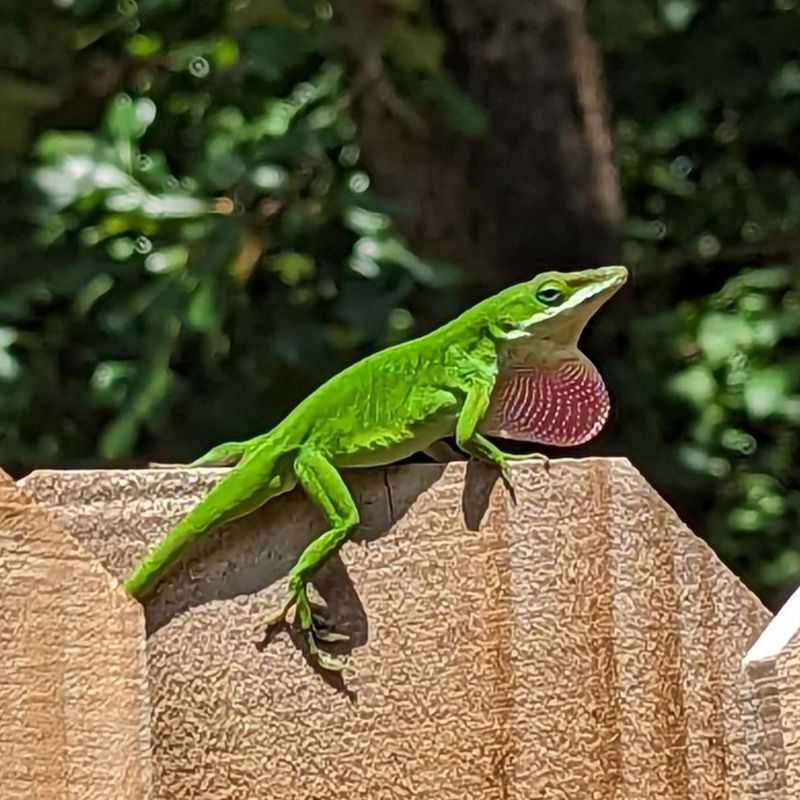
NC Wildlife advises considering the full picture when identifying an anole: body pattern, head shape, behavior, and location all matter alongside color. A brown lizard near the top of a shrub that flashes a pink or red dewlap is almost certainly a native green anole. Identifying species from a quick glance at color alone can lead to incorrect conclusions about what is in the yard. Capturing or relocating any wild anole based on a visual assumption is not recommended and does not serve a useful yard-management purpose.
Read the surge as a habitat clue, not a diagnosis
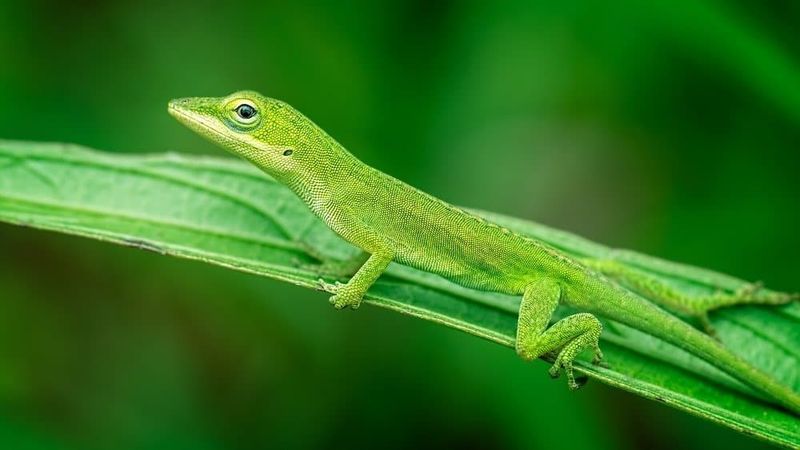
A late-summer yard full of green anoles most likely reflects several things happening at once: overlapping adult activity, juvenile emergence, fresh hatchlings, warm temperatures that keep lizards visible all day, and local habitat conditions that make the yard genuinely usable. NC Wildlife and the available habitat research both point toward warmth, vegetation structure, shelter, moisture, and arthropod prey as the factors that shape where and when anoles appear. No single trigger caused the surge, and casual observation cannot identify which factor mattered most in any individual yard.
The right response is straightforward. Observe the animals with some appreciation for what their presence suggests about the yard’s condition. Retain the layered vegetation and natural shelter that NC Wildlife’s suburban habitat guidance supports. Remove mosquito-breeding water on a weekly schedule following CDC recommendations.
Keep up tick precautions along yard edges and during outdoor time, as CDC tick-prevention guidance outlines. Use pesticides sparingly, targeted, and only when mechanical or habitat solutions fall short. A yard that supports native lizards and protects the people in it at the same time is not a contradiction; it is just a yard managed with both goals in mind.