
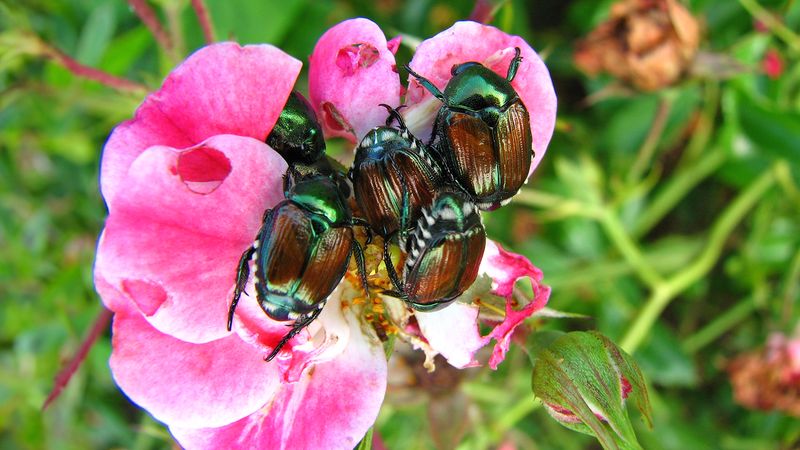
Every summer, Japanese beetles show up in North Carolina yards and go straight for roses and bean plants, chewing leaves down to lacy skeletons. A lot of gardeners have heard that planting the right native shrub nearby will keep the beetles away, but that promise turns out to be harder to keep than it sounds. The good news is there are real steps you can take to protect your plants, and choosing a native shrub still makes sense, just for different reasons than beetle control.
The evidence does not support a beetle-blocking shrub
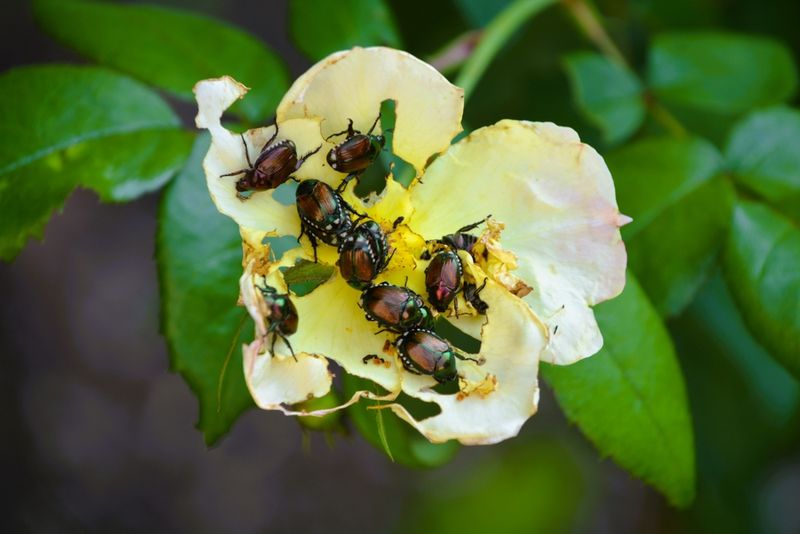
Gardening advice spreads fast online, and one idea that keeps circulating is that a particular native shrub will shield roses and beans from Japanese beetles. Before acting on that claim, it helps to know what the actual research found. A replicated field study published in the Journal of Economic Entomology tested several companion plants and odor treatments around roses, including rue, zonal geranium, garlic chives, fennel, cedar, spearmint, and others that gardeners commonly recommend. None of them significantly reduced Japanese beetles on the roses, and some treatments were associated with more beetles, not fewer.
The researchers concluded that companion planting and masking odors were probably ineffective as protection strategies for highly susceptible ornamentals like roses. That finding applies to aromatic herbs and popular companion plants tested in a controlled setting, not to every shrub that has ever been grown near a rose. But it does mean the bar for claiming repellency is higher than most gardening tips acknowledge.
Reviewing the available sources turned up no reliable evidence that a North Carolina-native shrub protects both roses and beans or produces beetle-free plants during peak feeding season. That conclusion is specific to the sources consulted here, not a sweeping claim about every native plant ever studied. What it does mean, practically, is that planting a native shrub beside your roses is not a substitute for a real beetle-management plan.
The better approach is to separate two worthwhile goals: choose a native shrub because it fits the site and supports local wildlife, then use physical and behavioral tactics on the roses and beans themselves. The rest of this article shows how to do both without overpromising what either strategy will deliver.
Why Japanese beetles remain difficult to exclude
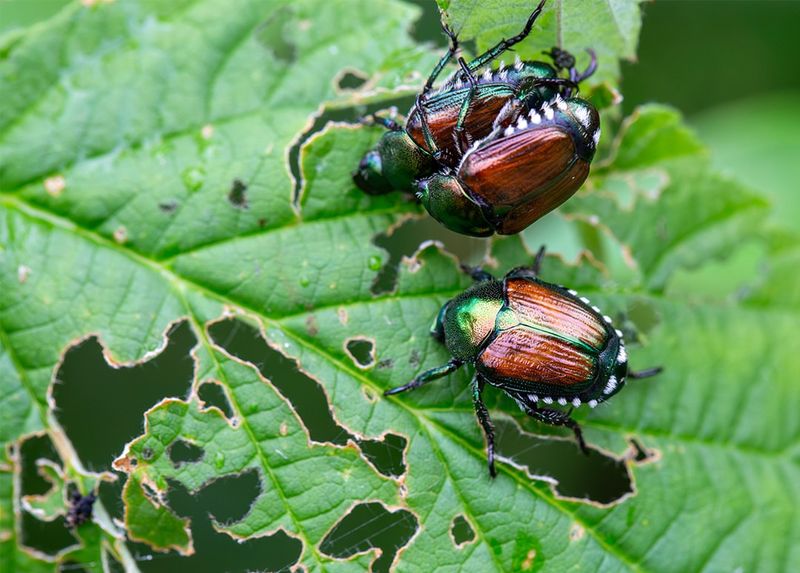
Part of what makes Japanese beetles so frustrating is how they operate. Adult beetles feed on more than 300 plant species, and University of Minnesota Extension confirms that roses rank among their preferred hosts, while University of Maryland Extension notes that beans are also vulnerable to the same skeletonizing leaf damage and flower destruction. A beetle does not need to start in your yard. Adults fly readily and can arrive from neighboring properties, open fields, or untreated lawns down the street.
That dispersal behavior is exactly why a single shrub planted in one corner of the yard cannot intercept every beetle headed for your roses. The beetles are not following a fixed path that a plant barrier can interrupt. They locate hosts by a combination of plant volatiles and visual cues, and once a few land and begin feeding, they release aggregation signals that draw in more beetles from the surrounding area.
Below ground, the larvae tell a different story. Grubs feed primarily on grass roots in lawn soil, and treating the lawn for grubs is a separate management task from protecting the plants above. Killing grubs in your own lawn will not immediately stop flying adults from arriving, because those adults may have developed in a neighbor’s yard or a nearby open space. North Carolina Forest Service records show that the beetle completes one generation per year, with adult activity peaking in early to midsummer and then declining as the season advances.
That seasonal decline matters. Populations do ease off later in summer, which means the worst damage window is finite. University of Georgia Extension describes Japanese beetle control as difficult once populations are established, and “beetle-free” is simply not a realistic target when adults can fly in from outside your property throughout the peak feeding period. Reduced feeding damage and protected harvests are the achievable goals.
Use spicebush for the site and habitat—not for beetle control
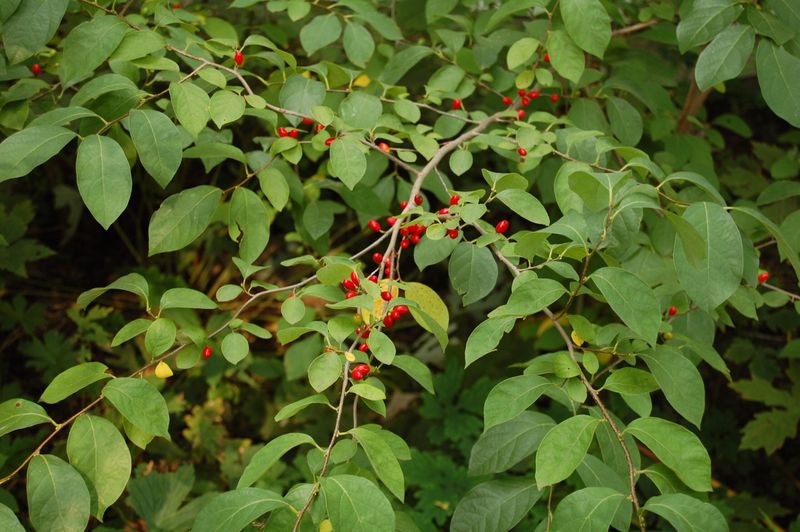
Spicebush earns a spot in a North Carolina landscape for real reasons, just not because it repels Japanese beetles. The NC State Extension plant profile for spicebush describes a native shrub suited to moist, well-drained, partly shaded sites, the kind of setting found along the edge of a woodland, beside a rain garden with good drainage, or in a low area of the yard that dries out between rains. It grows 6 to 12 feet tall and wide, producing small yellow flowers in early spring before the leaves emerge and bright red berries in fall that birds actively seek out.
For the right site, those are compelling qualities. Spicebush supports spicebush swallowtail butterfly larvae, provides early-season pollen for native bees, and adds fragrance when the leaves are crushed. Choosing it for those documented benefits makes good landscape sense. Choosing it because you expect it to keep beetles off your roses does not, because the plant profile makes no such claim and no source reviewed here supports it.
A native shrub and a Japanese-beetle-resistant shrub are not the same thing. A plant can be ecologically valuable, regionally appropriate, and genuinely useful in a North Carolina yard without having any demonstrated effect on beetle feeding nearby. Spicebush fits moist, partly shaded spots where it can perform the habitat work it is actually built for. If your site is wet, full-sun, or dry, a different native shrub will serve you better, and the next section covers those alternatives.
Match native shrubs to site conditions and goals
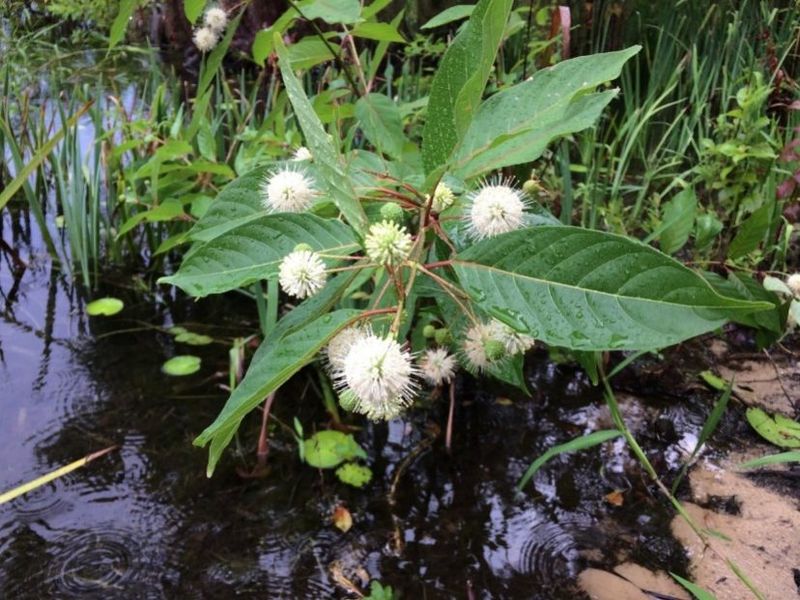
Choosing among native shrubs works best when the starting point is your site, not a pest-control promise. Buttonbush is a strong candidate for wet locations. The NC State Extension profile for buttonbush describes a shrub that thrives at pond edges, along streams, and in rain gardens where standing water is not unusual. Its round, globe-shaped white flowers attract butterflies and bees, and its seeds feed waterfowl.
If your yard has a consistently soggy area where other shrubs struggle, buttonbush is built for exactly that.
Sweet pepperbush fits a slightly different niche. NC State Extension’s sweet pepperbush profile points to moist, acidic soil with good drainage and tolerance for part shade, conditions common in North Carolina’s Piedmont and coastal plain. Its fragrant white flower spikes bloom in midsummer when many other shrubs have finished, making it a useful pollinator resource during the same weeks Japanese beetles are most active. That overlap is worth noting, but fragrance that attracts pollinators is a separate quality from any capacity to deter beetles.
American beautyberry comes up in beetle conversations because of its mosquito-related research. The NC State Extension profile for American beautyberry discusses compounds that have been studied in the context of mosquito repellency. That evidence does not carry over to Japanese beetle control, and treating it as beetle repellency would misread the research. Beautyberry’s magenta berry clusters are genuinely striking and wildlife-friendly, so plant it for those qualities on a well-drained site with adequate sun.
None of these profiles establish reliable protection for roses or beans. Select among them based on drainage, light levels, available space, and whether your priority is bird habitat, pollinator support, fragrance, or visual screening.
Reduce rose damage with morning monitoring and handpicking
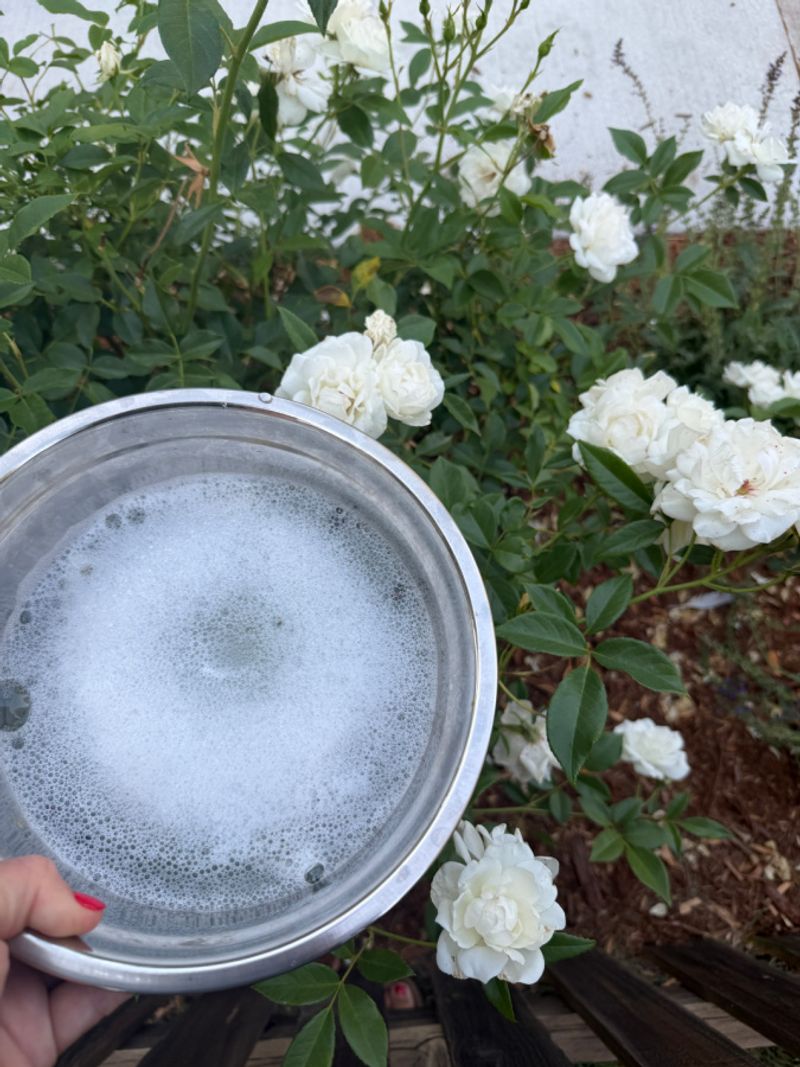
Roses need a hands-on strategy, and morning is the best time to apply it. Japanese beetles are less active in cooler early hours, which makes them slower to fly and easier to knock off a stem. Walk your rose beds before the heat builds, hold a container of soapy water below each bloom and leaf cluster, and tap the stem or shake the branch so beetles fall directly into the water. University of Minnesota Extension recommends this approach for small numbers of rose bushes as a practical nonchemical tactic.
Removing damaged blooms is a secondary option worth trying. When beetles feed, they release compounds that can draw additional beetles to the same plant. EPA-indexed research describes the aggregation effect as real but notes that the benefit of bloom removal is limited rather than dramatic. Deadheading a badly chewed flower will not stop a beetle already in your yard, but it can modestly reduce the signal that pulls in more from nearby.
Healthy, well-watered roses with good soil nutrition can often absorb significant feeding without dying. The primary cost is flower quality and appearance during peak beetle weeks, not plant survival. Young transplants, shrubs that are already stressed by drought or disease, and plants that lose most of their foliage repeatedly face greater risk and may need more consistent monitoring.
Keep expectations calibrated. Daily handpicking during the four-to-six-week peak season will reduce the number of beetles feeding on your roses at any given time, but beetles from outside your yard can replace those you remove. Consistent effort through the feeding window, combined with healthy plant care the rest of the year, gives roses the best chance of coming through with minimal lasting damage.
Keep beetles away from beans with secured row covers
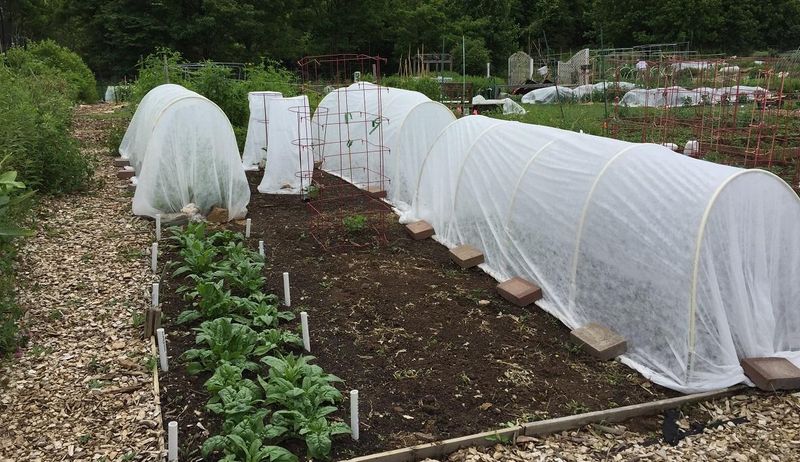
Bean plants call for a different approach than roses, and the most reliable nonchemical option is also one of the simplest. Row covers, the lightweight fabric barriers sold at garden centers, create a physical boundary that adult beetles cannot cross. University of Delaware Cooperative Extension specifically recommends row covers for beans and notes that the covers can stay in place throughout the entire growing season because beans do not depend on insect pollinators to set fruit. That is a meaningful advantage over crops like squash or melons, which need covers removed for pollination.
The installation detail that determines whether covers actually work is edge security. A cover draped loosely over plants and weighted at the corners with soil or rocks can still leave gaps at ground level where beetles crawl underneath. Bury the fabric edges in soil or pin them firmly to the ground so no opening remains. University of Maryland Extension confirms that beans are a target for Japanese beetle feeding, making this physical barrier approach especially practical for protecting an edible crop without chemical exposure.
A row cover over your beans does not eliminate beetles from the yard or treat larvae in the soil. Beetles will continue feeding on uncovered plants elsewhere in the garden. The cover’s job is to block adult access to the bean crop specifically, which is the outcome that matters most for a usable harvest.
Skip untested household sprays on edible plants. Without knowing a product’s crop registration, concentration, and preharvest interval, applying it to beans introduces risks that a simple fabric cover avoids entirely.
Avoid trap-first decisions and follow pesticide labels
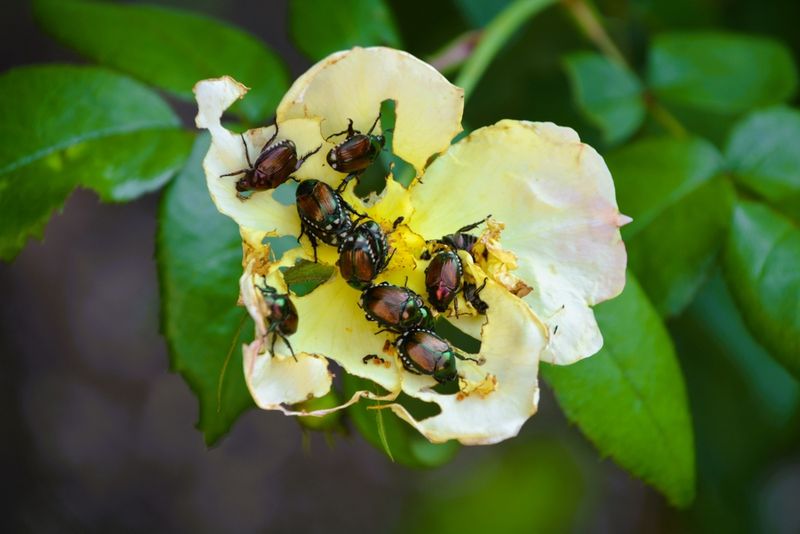
Beetle traps look like a satisfying solution because they fill up fast, but the fill rate is part of the problem. Lincoln County UGA Extension warns that traps can attract more beetles into a yard than they actually capture, which means placing a trap near roses or beans may increase feeding pressure on exactly the plants you are trying to protect. Ask Extension guidance reinforces that traps are not a reliable default defense for ornamentals or edible crops.
If you reach the point where chemical control seems necessary, label compliance is not optional, it is the legal and safety baseline. A product must be registered for the specific plant you intend to spray and for Japanese beetles as the target pest. For beans and other edible crops, the label must also include directions for that crop and state the preharvest interval, the number of days that must pass between the last application and harvest. Applying a product not labeled for edible use on a food crop creates a safety risk that no amount of beetle pressure justifies.
Roses add another layer of complexity because they bloom during the same weeks beetles are most active. EPA pollinator-protection guidance explains that pesticide labels may restrict applications during bloom, during periods of pollinator activity, or near flowering plants that bees visit. Applying a systemic insecticide to rose foliage or nearby soil while flowers are open can expose bees and other beneficial insects. An EPA-registered pesticide label will specify these restrictions, and following them is required, not suggested.
Avoid homemade mixtures, essential oils, dish-soap sprays, and neem products on edible beans unless you have confirmed that the specific formulation is registered for that crop, at that concentration, with a stated preharvest interval. When in doubt, the row cover described in the previous section is the safer choice for beans.
Build a wildlife-friendly yard and measure the right outcome
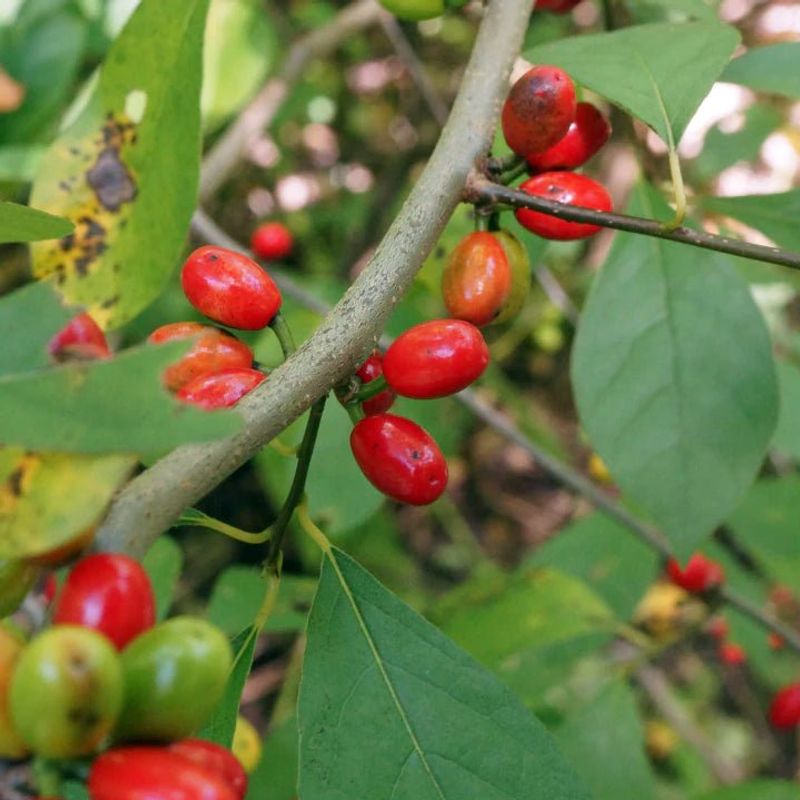
Putting the whole plan together starts with honest site assessment. If your yard has a moist, partly shaded spot with well-drained soil, spicebush fits well and brings genuine wildlife value: early pollen for bees, larval habitat for spicebush swallowtails, and fall berries for birds. A wet area near a downspout or pond edge calls for buttonbush instead. A sunny border with moist, acidic soil is where sweet pepperbush earns its place.
Plant whichever shrub matches your actual conditions, and let its habitat performance be the measure of success.
For the roses, commit to the morning routine during peak beetle weeks. Walk the beds, knock beetles into soapy water, and remove the most damaged blooms. University of Minnesota Extension frames this as a realistic management approach for home gardeners, not a guarantee of zero damage. For the beans, install secured row covers at transplant time and leave them in place through harvest.
Measure the season by reduced feeding damage, roses that finish the summer with most of their foliage intact, and a bean harvest you can actually use. The native shrub improves the yard’s ecological value and supports local wildlife. The garden defenses, not the shrub, are what stand between the beetles and your plants. A yard that does both things at once is a genuinely good outcome, even if a beetle or two still shows up for the party.