
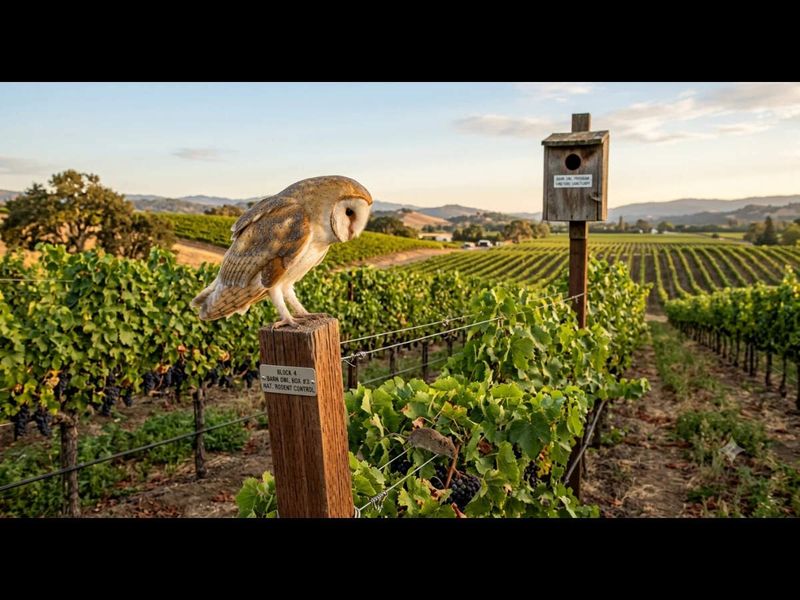
Somewhere in a California yard tonight, a barn owl is gliding silently over the grass, hunting by sound alone. These pale, heart-faced birds have a reputation for keeping pocket gophers, voles, and mice in check, and more homeowners are putting up nest boxes hoping to recruit one. The promise is real enough to take seriously, but the full picture is a little more complicated than the headlines suggest. Understanding what barn owls actually do, and the one maintenance mistake that can cost you a nesting pair, makes all the difference.
Barn owls can help with rodents—but they are not exterminators
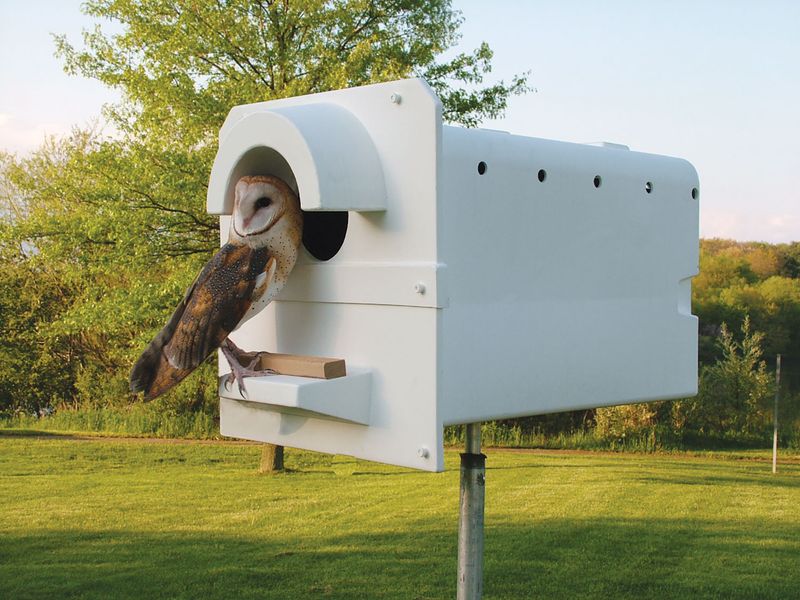
Barn owls are among the most effective nocturnal hunters in California, and the list of animals they pursue reads like a homeowner’s pest wishlist. UC Cooperative Extension research on barn owls as biological control confirms that California prey commonly includes pocket gophers, voles, mice, and rats, with small rodents making up the bulk of what pellet studies document. That is genuinely useful, and it is one reason nest boxes have gained popularity from the Central Valley to the coastal foothills.
Pellet analysis, however, shows what an owl ate, not how much it reduced the total rodent population on a given property. A yard might host a hunting barn owl regularly and still carry a significant rodent load, especially if neighboring lots or open fields keep replenishing the supply. Prey removal and population suppression are two different outcomes, and mixing them up leads to unrealistic expectations.
Consumption estimates do appear in the research. UC Davis California Raptor Center materials note that a breeding pair may consume roughly 2,000 rodents per year under the right conditions, while some vineyard studies estimate 3,000 to 4,000 for a family unit. These figures come from specific agricultural settings with abundant prey and open hunting terrain. Treating them as a reliable forecast for a suburban backyard would be a stretch, and no researcher frames them that way.
The practical takeaway is that a barn owl is a potentially valuable partner in rodent management, not a guaranteed exterminator. Yards with consistent prey, open hunting space, and a safe nesting site give owls the best chance to make a noticeable dent. Where those conditions are missing or marginal, results will be modest, and other control methods remain necessary.
California studies show promise, not guaranteed gopher or rat control

Pocket gophers make a stronger case than rats as a California barn owl prey target, and multiple diet studies back that up. Gophers are active near the surface, predictable in their tunneling patterns, and common across the grasslands, vineyards, and suburban edges where barn owls hunt. Rats, while they do appear in prey records, tend to be more cautious and often inhabit dense cover that limits an owl’s aerial advantage. Presenting rats as a dependable primary target would overstate what the evidence actually shows.
A review evaluating barn owls as biological control for gophers in vineyards and orchards found that earlier work produced little evidence of reliable population-level gopher control from nest boxes alone. That conclusion matters, because it means adding a box does not automatically translate into fewer gophers, even when owls take up residence and begin hunting regularly.
More recent research offers a more encouraging data point. A Napa Valley study evaluating barn owl nest boxes in winegrape vineyards found reduced gopher activity during periods of peak owl hunting, which is a meaningful finding. Still, reduced activity during active hunting windows is not the same as long-term population suppression, and vineyard conditions, with wide open rows, dense prey populations, and multiple boxes per site, differ considerably from a typical suburban lot.
A broader California review of barn owls as pest control candidates concluded that whether they can reduce rodent populations to acceptable levels remained unresolved. That honest uncertainty is worth holding onto. The research does not say barn owls are useless; it says their contribution is real but variable, shaped by landscape, prey density, and how many owls are hunting a given area. Suburban homeowners should expect a complementary benefit at best, not a clean solution.
A nest box succeeds only when the property supports an owl
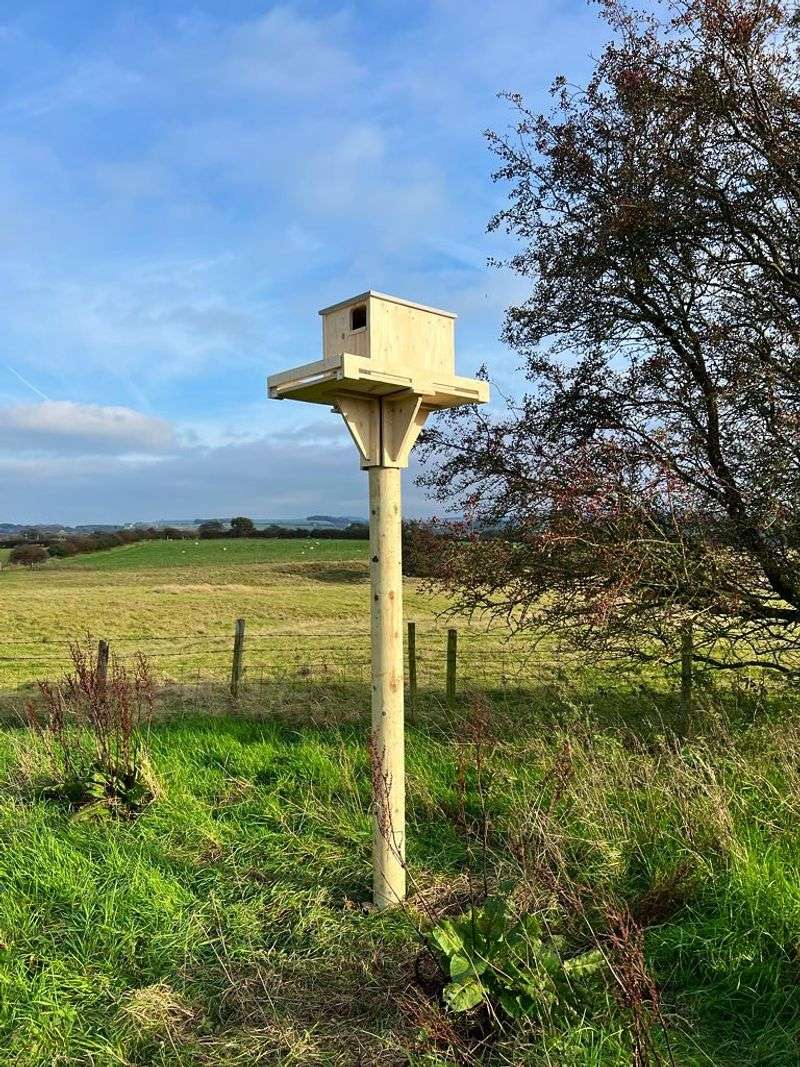
Putting up a box is the easy part. Whether an owl ever uses it depends on conditions the box itself cannot create. Barn owls need a consistent food supply nearby, open ground or low vegetation where they can hunt by flying slowly and listening, and a nesting site that feels safe from predators and disturbance. Remove any one of those three elements and the box may sit empty for years.
UC Cooperative Extension nest box placement guidance recommends mounting boxes in open areas such as grasslands, orchard edges, or vineyard borders, at least 10 feet above the ground, and away from busy roads where traffic can pose a collision risk. A box tucked into a dense hedge, mounted too low, or positioned above a high-traffic driveway is working against the owl’s natural preferences from the start.
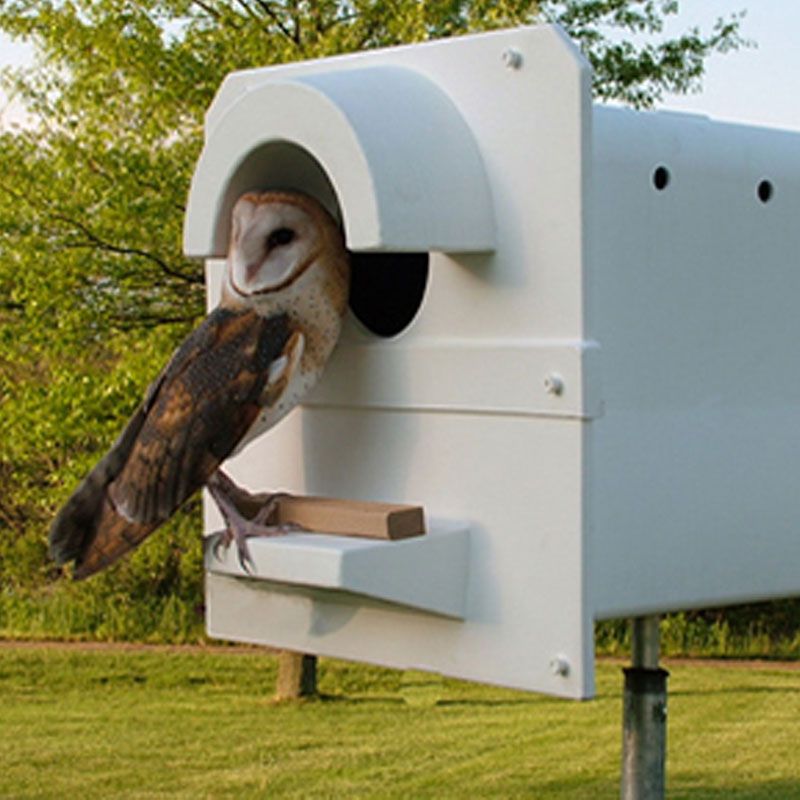
Box design matters too. Western SARE barn owl box guidance specifies that boxes should be watertight, structurally sound, and built to barn owl dimensions – not repurposed birdhouses or improvised containers. The same guidance advises against adding a perch or porch beneath the entrance hole. Fledglings waiting for food may use such a structure while still developing flight skills, making them more visible and accessible to predators like raccoons or cats.
One misconception worth clearing up: ordinary daytime yard activity does not automatically chase barn owls away. These birds are more tolerant of human proximity than many raptors, and they typically sleep through most of what happens in a suburban yard during daylight. Mowing, gardening, and routine foot traffic near a nest box are not the problem. The specific risk, which the next section covers in detail, is much narrower and tied to a particular time of year.
The risky habit is disturbing an occupied box at the wrong time
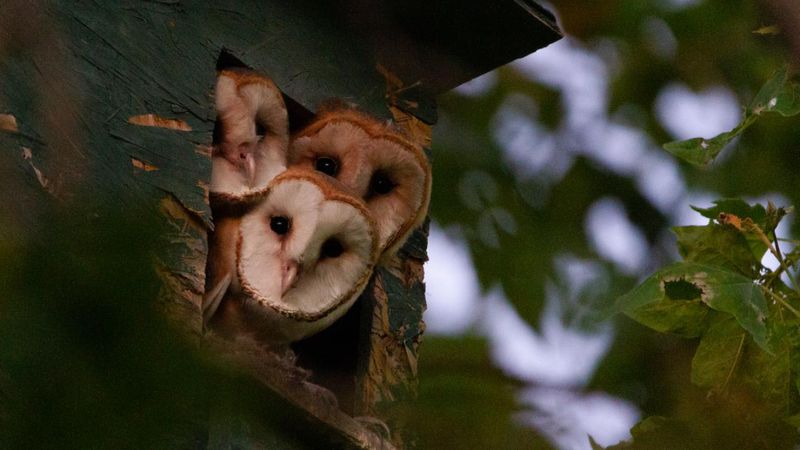
Most homeowners who lose a nesting pair do not chase the owls away with noise or landscaping. The more common and more avoidable mistake is opening, cleaning, moving, or repeatedly inspecting a nest box during the months when a pair is actively breeding inside it. California barn owls begin nesting earlier than many people expect, and that timing is the key to understanding the risk.
A 2022 Journal of Wildlife Management study using California barn owl banding records found a statewide median egg-laying date of February 20, with breeding activity commonly beginning in winter. By the time spring arrives and a homeowner thinks to check the box, eggs or young chicks may already be present. Opening the box at that point can disrupt incubation, stress the brooding adult, or cause a bird to flush from the nest in a way that leaves eggs or hatchlings exposed.
This does not mean that any single disturbance guarantees abandonment. Barn owls vary in how they respond, and some pairs tolerate brief intrusions better than others. The risk is real enough, however, that it should not be tested unnecessarily. Once a box shows signs of activity, such as feathers near the entrance, pellets on the ground below, or an adult visible at the opening at dusk, the safest response is to observe from a distance and leave the box alone entirely.
UC Cooperative Extension nest box guidance reinforces this approach, recommending that homeowners avoid disturbing active nests and schedule any necessary maintenance well outside the breeding window. The habit that puts nesting at risk is not a busy yard or a lawnmower. It is an opened box lid on a February or March morning when a pair is counting on that cavity to raise their young.
Plan nonintrusive box maintenance for late summer or fall
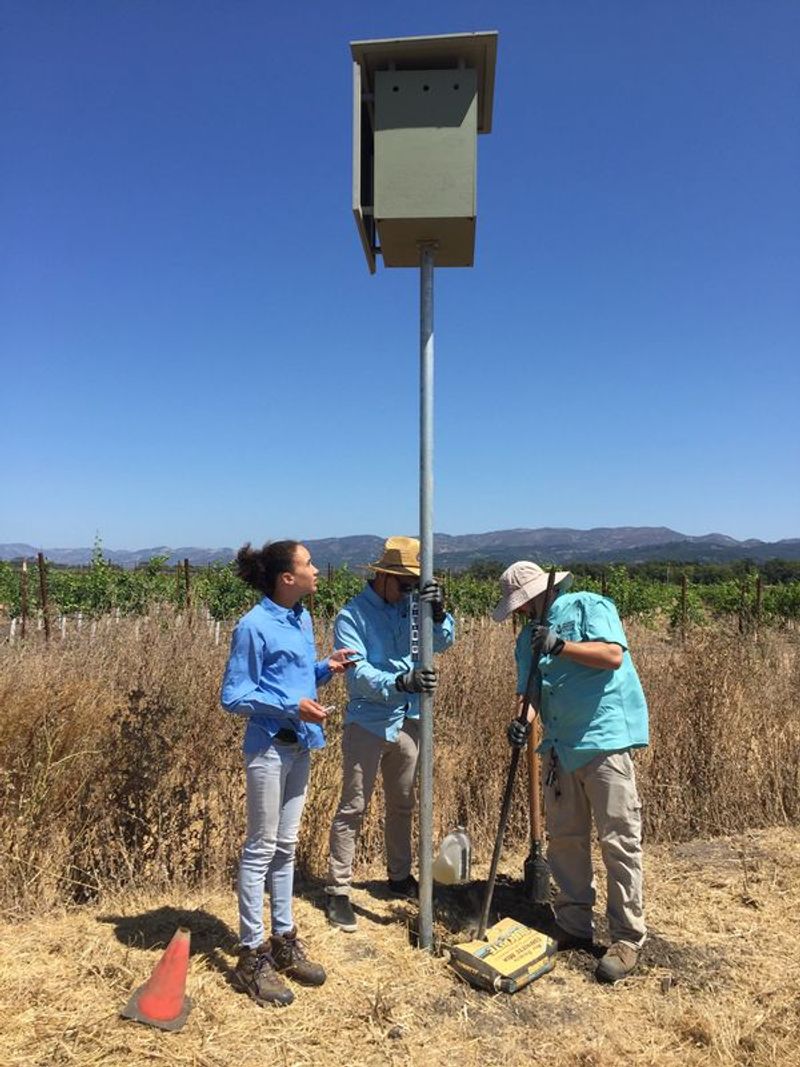
Timing is everything when it comes to barn owl box care. The window that California breeding records support most strongly for maintenance runs from September through November, after the last fledglings have left and well before the next breeding cycle begins. August is a reasonable starting point if you want to inspect early, but the safest and best-supported period is that late-summer-to-fall stretch before winter nesting can resume.
Before touching the box, observe it from a distance over several evenings. If an adult appears at the entrance at dusk, or if you hear hissing or clicking sounds from inside, treat the box as occupied and postpone any work. When occupancy is uncertain, err toward waiting. The California Department of Fish and Wildlife guidance on human-wildlife conflicts involving birds directs homeowners to contact wildlife authorities or a qualified rehabilitator rather than handle active nests, eggs, chicks, or birds themselves.
That same principle applies when you are unsure whether a box is still in use.
For a box you have confirmed is empty, maintenance is straightforward. Check the structure for warped wood, gaps that let in rain, or loose mounting hardware. Clear any accumulation of debris that has built up to a dangerous level, but leave a thin layer of nesting material or add a small amount of clean wood shavings as a base for the next occupant. Western SARE barn owl box maintenance guidance notes that accumulated pellets and dust can pose respiratory concerns, so wear a dust mask and gloves during any cleaning work.
The same 2022 banding study that established the February median egg-laying date specifically recommends September through November as the maintenance window for California boxes, grounding that advice in statewide breeding data rather than general estimates. Never clean an occupied box. If there is any doubt about occupancy, contact a wildlife professional before proceeding.
Combine owl habitat with proven rodent-management tools
A barn owl nest box is not a substitute for dealing with an active rodent problem. If rats are getting into a garage, or gophers are shredding a vegetable bed, waiting for an owl to move in and solve it is not a workable plan. Barn owls may reduce rodent pressure over time in favorable conditions, but they work on their own schedule and cannot be directed at a specific infestation.
UC IPM guidance on rats recommends starting with sanitation and structural exclusion – sealing entry points, removing food sources, and eliminating harborage – before relying on population control methods. These steps address the conditions that attract rats in the first place, and they work whether or not an owl is present. For pocket gophers, UC IPM’s pocket gopher management guidance identifies trapping as an effective and practical approach for small numbers in residential settings, and recommends underground wire barriers where protecting specific garden beds or root zones is the priority.
Rodenticides deserve a specific caution in this context. California Department of Fish and Wildlife avian health investigations have documented widespread exposure of raptors, including barn owls, to second-generation anticoagulant rodenticides through poisoned prey. A rodent that consumes bait does not die immediately; it remains active and catchable for days, and an owl that eats it can absorb a lethal or sublethal dose of the same compound. Using rodenticides while trying to attract barn owls works directly against the goal.
The most durable yard strategy layers complementary methods: good sanitation, physical exclusion where feasible, trapping for active gopher or rat problems, and a properly placed nest box that gives a local owl a reason to stay. Each tool covers gaps the others leave. Barn owls hunt at night across open ground; traps work in tunnels and enclosed spaces; exclusion stops entry at the source. Together they accomplish more than any single approach, and none of them require giving up the others.
Support the owl without asking it to do everything
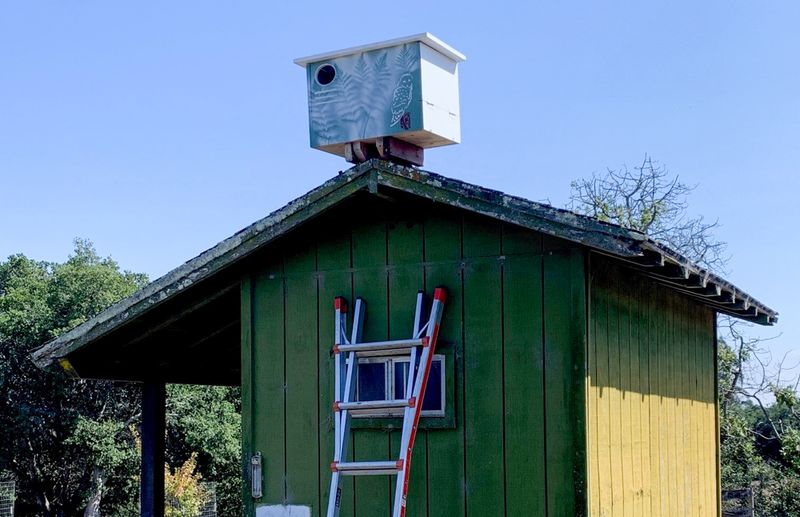
A properly placed, undisturbed barn owl box is a reasonable investment for California homeowners who have the right conditions – open hunting area, steady prey, and a location away from heavy traffic and predator pressure. Occupancy is not guaranteed, and even a resident pair will not eliminate every rodent on the property. What a nesting owl can do is contribute meaningfully to reduced rodent activity over time, especially for pocket gophers and voles, while costing nothing once the box is up and sited correctly.
Legal protection applies to barn owls at every stage. California Department of Fish and Wildlife guidance confirms that raptors receive protection under the Migratory Bird Treaty Act and state law, covering the birds themselves, their eggs, chicks, and active nests. Homeowners should never handle an owl, disturb eggs or young, or attempt to remove an active nest. For an injured bird or a box that appears to contain an active nest outside the normal maintenance window, contact a licensed wildlife rehabilitator or the relevant wildlife authority.
Research reviewing barn owls as biological control agents is consistent on one point: boxes support owls only when the surrounding habitat supports them too. Putting up a box is a beginning, not a solution. The rest of the work involves maintaining the open hunting space, keeping rodenticides out of the equation, and following a seasonal maintenance schedule that respects the owl’s breeding calendar.
The protective habit that matters most is not eliminating normal yard life. California banding research points to one specific, avoidable action: opening or disturbing an occupied box during winter or spring. Get that timing right, observe from a distance, and let the owl do what it does best after dark. A yard that makes room for a barn owl is usually a healthier yard in more ways than one.