
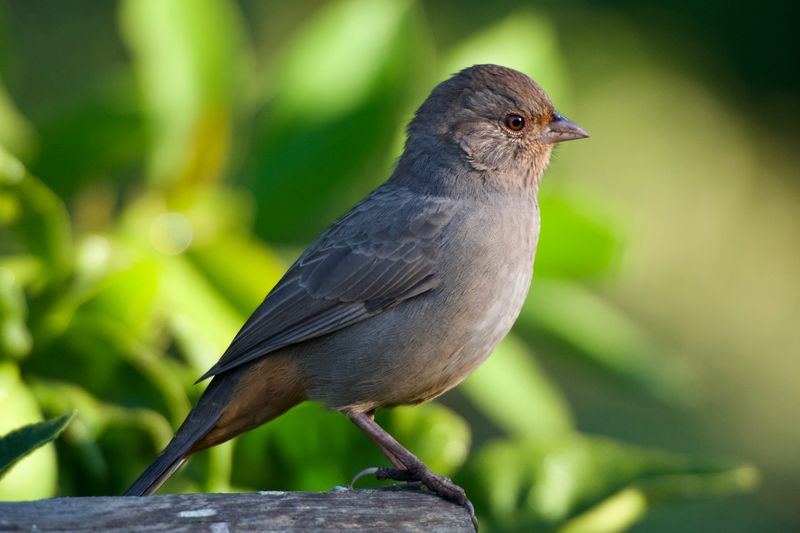
Every California gardener knows the heartbreak of checking on new seedlings in the morning only to find ragged, chewed edges and a trail of slime. You might have heard that a chunky brown bird called the California towhee can help with that problem, and the truth is a little more complicated than the hopeful version. Towhees may eat some snails and other small creatures while scratching around the yard, but they are not a reliable fix for the mollusks shredding your plants overnight. Understanding what this bird actually does, and what your yard actually needs, can help you support wildlife and protect your garden at the same time.
California towhees may help, but they will not solve a slug problem
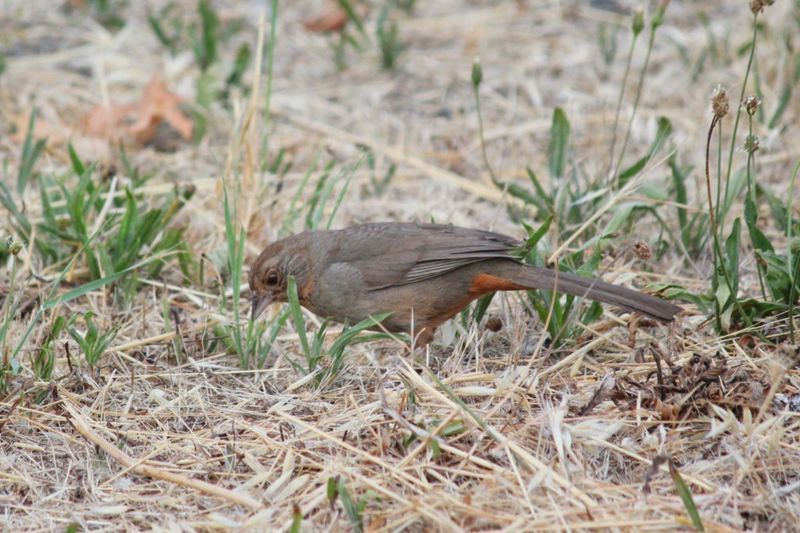
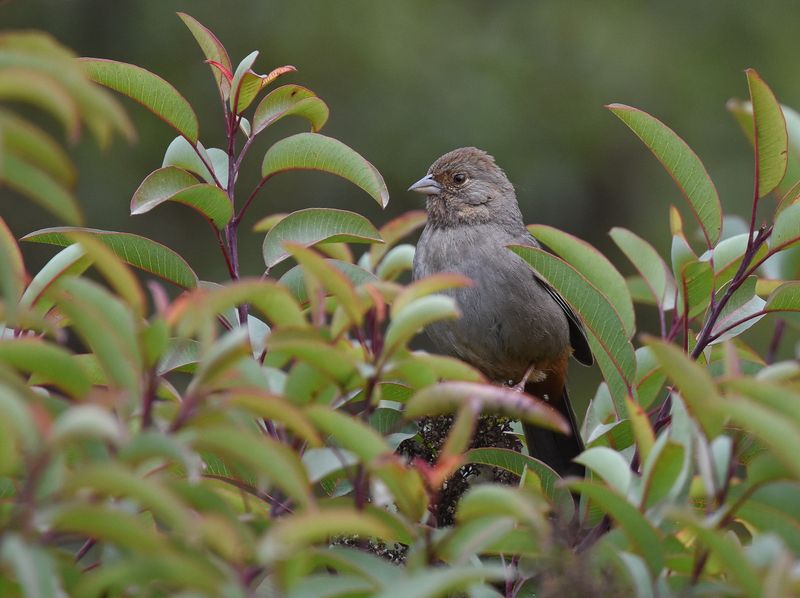
Spend enough time in a California backyard and you will almost certainly meet a California towhee. These stocky, warm-brown birds are year-round residents across much of the state, and they spend most of their waking hours on the ground, scratching through leaf litter and poking around near shrubs. Their diet is broad: seeds and plant material make up the bulk of what they eat, and they also take insects, small invertebrates, and other animal foods when the opportunity arises. Cornell Lab of Ornithology’s California towhee life history documents this wide-ranging diet, and the Sacramento Audubon Society specifically notes that snails appear in the towhee’s menu during nesting season.
That detail is worth pausing on, because “snails during nesting season” is not the same as “reliable garden pest control.” A bird that occasionally swallows a snail while foraging is participating in the food web, not managing a population. The evidence for regular slug consumption by California towhees is even thinner. Slugs and snails belong to the same class of mollusks, but the species-specific accounts mostly mention snails or broad invertebrate categories, not the particular garden slugs that tend to do the most damage to tender seedlings overnight.
UC IPM is direct on this point: UC IPM’s guide to snails and slugs lists wild birds among the natural enemies of these pests but cautions that most predators are rarely effective enough to provide satisfactory garden control. That is the practical takeaway here. California towhees are genuinely useful members of your yard’s food web, and supporting them makes ecological sense. Treating them as a dependable substitute for snail and slug management, though, is likely to leave your seedlings just as chewed as before.
Confirm the overnight damage before changing your yard
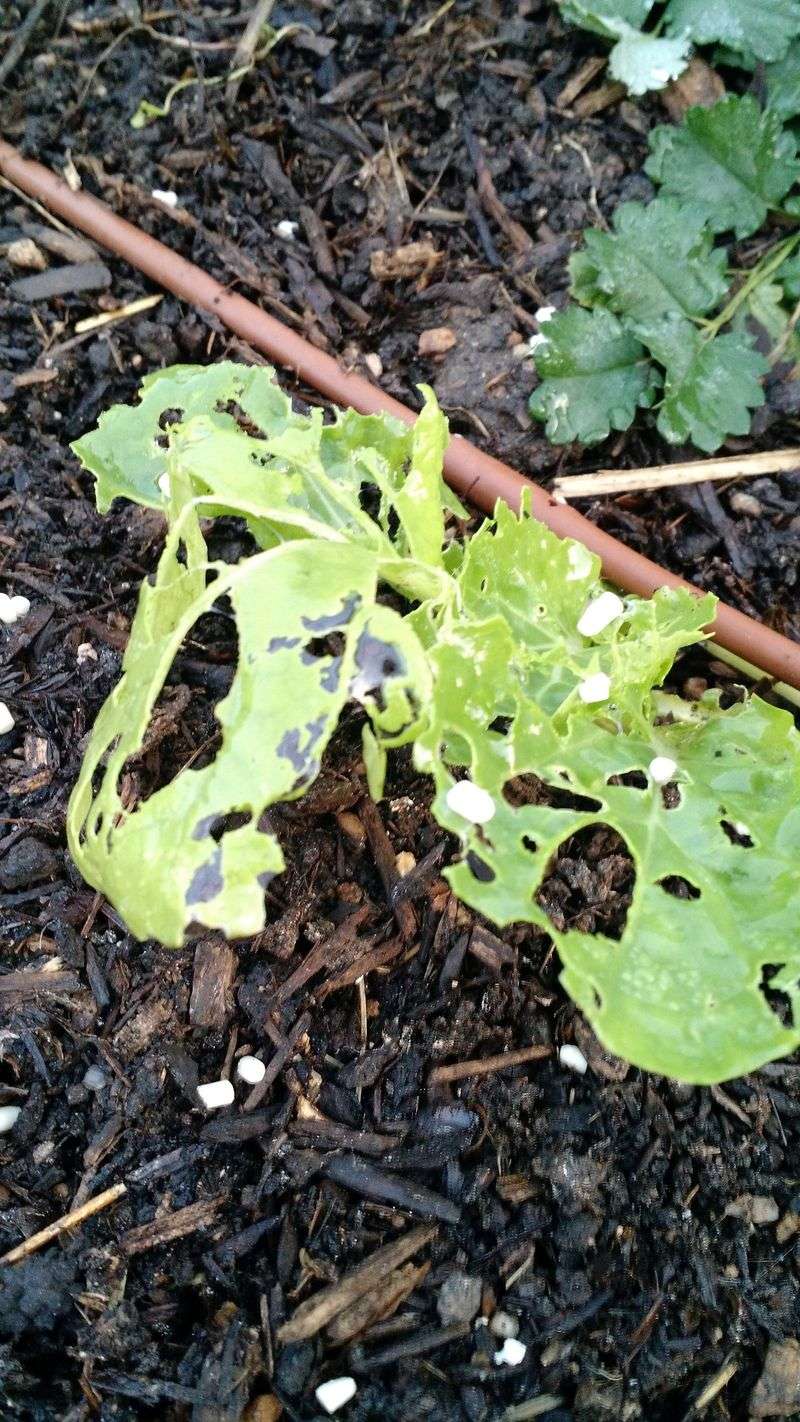
Before reorganizing your yard around a pest you might not actually have, take five minutes after dark with a flashlight. Snails and slugs are primarily nocturnal creatures, and UC IPM’s snail and slug guidance confirms they are most active at night, seeking out sheltered, shaded spots during daylight hours. They are especially drawn to seedlings and other succulent, low-growing plants, which is exactly why a tray of new transplants can look fine at sundown and devastated by sunrise.
The good news is that slime trails make identification straightforward. If you find irregular holes or chewed leaf edges and see the telltale silvery mucus trail on leaves, soil, or nearby surfaces, snails or slugs are almost certainly responsible. Without that trail, the culprit might be caterpillars, earwigs, or another chewing pest entirely, and the management approach would be different. Misidentifying the problem means managing the wrong thing while the actual pest keeps feeding.
Here is where the California towhee enters the picture in a realistic way. Cornell Lab’s towhee account describes the bird’s foraging as a daytime activity, with the characteristic double-scratch maneuver happening in full daylight near brush and open ground. Towhees are not active at night, and they are not hunting through your garden beds while the slugs feed. Any snails a towhee eats are ones it encounters during its daytime rounds, which may or may not overlap with the specific population causing damage after dark.
That timing gap is a key reason why the bird, even when present, cannot be counted on to protect seedlings from overnight mollusk feeding.
Towhees use brush beside open ground
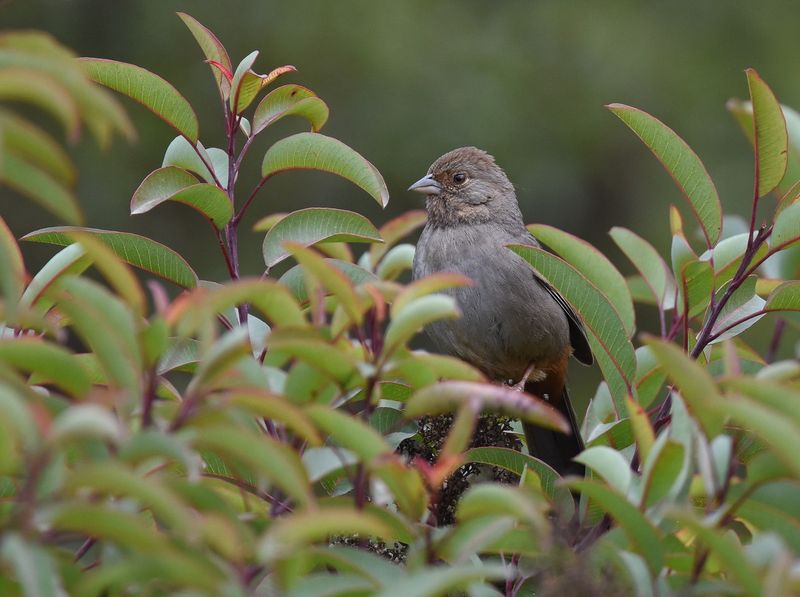
Watch a California towhee work a patch of ground and you will see the double-scratch in action: the bird lunges forward, hops sharply backward, and uses both feet to flip leaf litter and expose whatever is hiding underneath. It is an efficient technique, and it works best where open ground sits right next to protective cover. According to Cornell Lab’s life history account, towhees commonly forage on open ground near brush, moving between exposed soil and the shelter of nearby shrubs throughout the day.
The habitat picture is fairly specific. The California Department of Fish and Wildlife’s habitat relationships account for the California towhee describes the species as a bird of brushy edges, chaparral, coastal scrub, riparian vegetation, and urban areas that offer suitable structure. Towhees nest low, typically in shrubs or small trees within a few feet of the ground, and they rely on dense thickets for cover from predators. A yard with a lawn and no shrub layer, or a yard where every hedge has been trimmed to a tight geometric box, offers less of what the bird needs than one with some native or naturalistic plantings along a fence or property edge.
Leaf litter plays a supporting role in this picture. UC Cooperative Extension’s guidance on leaving some natural yard debris notes that fallen leaves, stems, and small organic material support the insects and invertebrates that ground-foraging birds depend on. Towhees scratching through leaf litter are finding prey as well as seeds. That said, leaf litter alone does not guarantee a towhee will visit or stay.
The structural habitat, meaning the shrubs, the brushy edges, and the open ground beside them, matters more than any particular amount of fallen leaves.
Indiscriminate cleanup can remove habitat, but raking is not the enemy
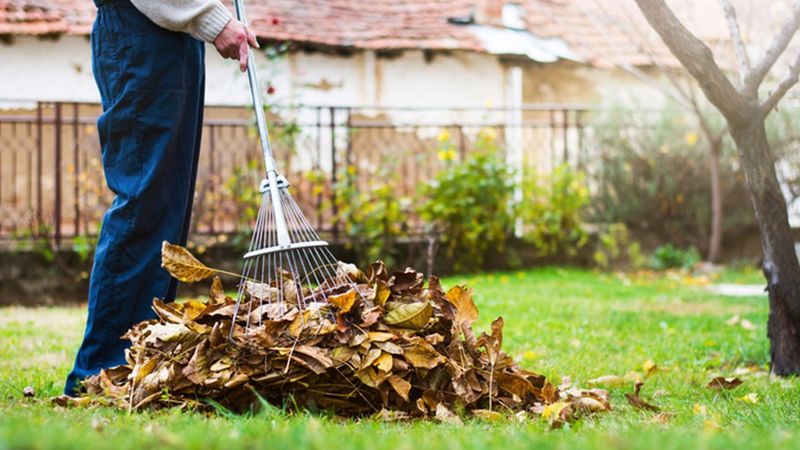
A perfectly raked yard has a certain appeal, especially in the months when fallen leaves pile up fast. The problem is not raking itself; the problem is raking everywhere, all the time, without thinking about what different parts of the yard actually need. UC Cooperative Extension’s research on yard debris and habitat makes the case that fallen leaves, stems, and organic litter in appropriate areas provide food and shelter for the insects, beetles, and invertebrates that songbirds and ground-foragers depend on. Strip that material out of every corner and you reduce the food base that makes a yard worth visiting.
At the same time, dense debris and excess moisture are exactly what UC IPM identifies as favorable conditions for snails and slugs. Boards, stones, thick ground covers with low leafy branches, and piles of organic material all serve as daytime hiding spots for mollusks that feed at night. Piling debris around seedling beds in the name of wildlife support can actually make the slug problem worse, not better. The goal is not to maximize cover throughout the garden; it is to place it thoughtfully.
Selective management, rather than blanket cleanup or blanket neglect, is the practical middle ground. California Department of Fish and Wildlife’s towhee habitat account reinforces that towhees need brushy structure and adjacent open foraging ground, not an uninterrupted carpet of leaf litter. Keeping debris away from paths, drains, vulnerable seedling beds, and building foundations, while preserving some natural material along fences or back edges of the property, lets you support foraging habitat without creating a mollusk refuge right next to your most tender plants.
Separate defensible space from wildlife-supporting habitat
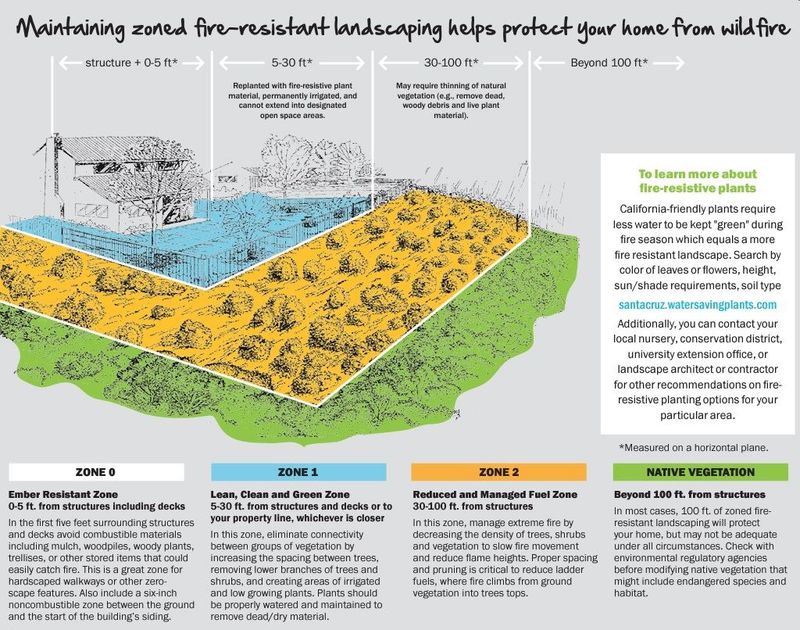
California yards carry responsibilities that gardeners in most other states do not face. Wildfire risk is real across coastal hills, inland valleys, and mountain communities, and CAL FIRE’s defensible space guidelines require homeowners to remove dead or dry vegetation, clear dead leaves and pine needles in Zone 1 (the 0-30 foot zone around structures), reduce fuel loads within 100 feet, and maintain separation between shrubs, trees, and buildings. Local jurisdictions can impose stricter standards, so checking with your county fire agency matters as much as knowing the state baseline.
None of that conflicts with supporting California towhees if you think of the yard in zones rather than as one uniform space. Near the house, compliance with defensible-space rules takes priority. Dead vegetation comes out, dry leaves get cleared, and shrubs are spaced and pruned to reduce fire pathways. Farther from structures, where fire risk is lower and local rules allow, there is more flexibility to preserve the brushy edges, native shrubs, and patches of natural debris that towhees and other wildlife use.
California Department of Fish and Wildlife’s towhee habitat description places the bird in brushy edges and dense thickets, which can often be maintained in parts of a yard that are not in the immediate structure-protection zone.
A back fence line planted with native shrubs, a side yard with naturalistic plantings and some open ground nearby, or a rear corner with a preserved shrub cluster can all serve as reasonable towhee habitat without conflicting with fire safety near the house. UC Cooperative Extension’s guidance on habitat-friendly yard practices supports leaving some natural material in appropriate areas, which aligns with this zone-based approach. This is not a tested towhee-attraction formula; it is a practical way to reconcile fire safety, wildlife support, and garden management in a California yard.
Protect seedlings with integrated snail and slug management
Reliable seedling protection requires actions that actually work against nocturnal mollusks, not a wait-and-see approach built on hoping a bird shows up. Moisture management is one of the most effective starting points. UC IPM’s integrated management approach for snails and slugs recommends switching from overhead sprinklers to drip irrigation where practical, and watering close to sunrise rather than in the evening. Wet soil and foliage at night create ideal conditions for mollusk activity; drier evening conditions make the garden less hospitable.
Hand-picking after dark is unglamorous but genuinely effective for small gardens. Go out an hour or two after sunset with a flashlight and a container of soapy water, and you can remove a meaningful number of snails and slugs from a seedling bed in a single pass. Removing or managing daytime hiding spots near vulnerable plants, such as boards left on the ground, dense low-growing ground covers right next to seedlings, and piles of debris, reduces the population that shelters nearby and feeds at night.
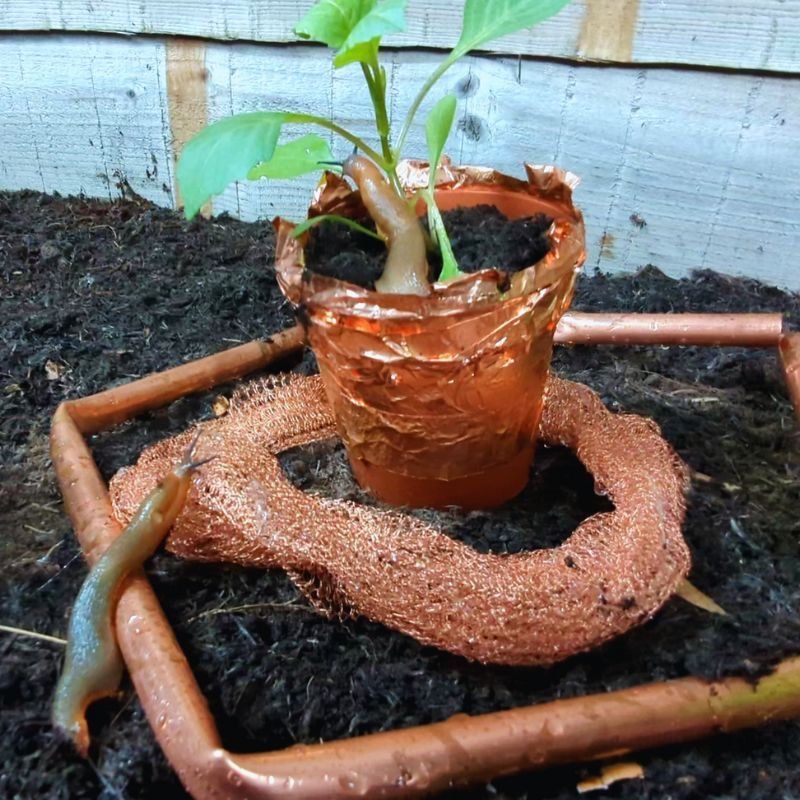
Physical barriers offer another layer of protection for especially vulnerable transplants. Copper tape around raised beds or individual containers can deter snails and slugs, and wire cages or row covers protect seedlings during their most tender early weeks. If persistent pressure makes plant selection a consideration, UC IPM notes that plants with aromatic or less-succulent foliage, including lavender, rosemary, sage, California poppy, nasturtium, and lantana, tend to attract less mollusk attention. These are options worth considering in a persistently difficult bed, not guaranteed solutions, and they work best as part of a broader management strategy rather than as a standalone fix.
Traps, including shallow containers sunk to soil level and filled with beer or a yeast-water mixture, can also help reduce local populations around seedling beds. Check and empty them every morning to keep them effective and to prevent them from becoming daytime refuges themselves.
Use mollusk baits cautiously and avoid risky shortcuts
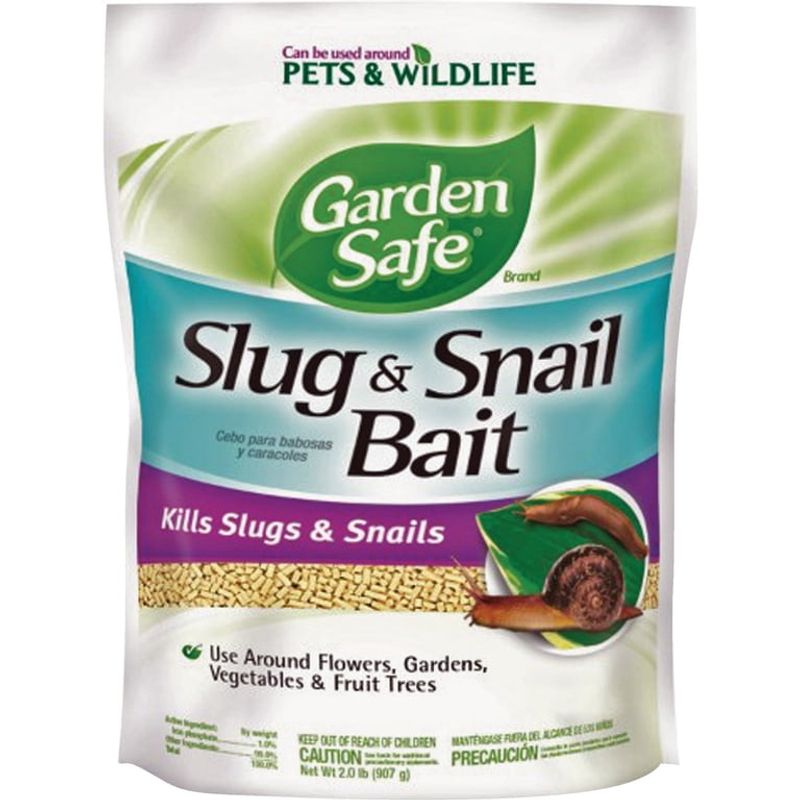
When non-chemical methods are not enough, bait becomes a reasonable next step, but the choice of product matters considerably. UC IPM’s snail and slug management guidance identifies iron-phosphate products as safer than metaldehyde around children, pets, birds, fish, and other wildlife in relevant situations. Safer, though, is not the same as harmless. UC IPM’s pesticide active ingredient profile for iron phosphate confirms that baits kill snails and slugs broadly, including native species and any predatory mollusks present.
Always read and follow the product label, place bait according to instructions, and use only what is needed near vulnerable plants.
Metaldehyde products carry more serious risks and should be avoided where birds, dogs, cats, or children might encounter them. UC IPM identifies metaldehyde as particularly poisonous to dogs and cats, and potentially poisonous to birds. Carbaryl-containing baits add another concern: they can harm earthworms and beneficial soil insects, undermining the soil health and invertebrate community that supports a functioning garden ecosystem. Neither product belongs in a yard managed with wildlife in mind unless all safer alternatives have genuinely been exhausted.
Decollate snails are sometimes suggested as a biological control, since they prey on brown garden snails. Releasing them in California is not a casual option. UC IPM explains that releases are legally restricted to specific California counties and warns against introducing them near natural areas because of risks to native and potentially endangered snail species. Check current regulations with your county agricultural commissioner before considering this approach.
For general bird support, including towhees, California Department of Fish and Wildlife’s Wildlife Health Lab recommends natural food sources through native landscaping rather than artificial feeders, which can attract rodents and potentially increase rodenticide use that harms raptors and other wildlife. Audubon’s bird-friendly yard guidance similarly emphasizes native plants and varied vegetation structure as the most durable foundation for supporting birds, without promising that any particular setup will bring specific species to your yard.
Support the towhee without giving slugs the whole garden
A yard that works for California towhees and for your seedlings does not require choosing one over the other. Preserve brushy edges, native shrubs, and patches of open ground along back fences or property edges where fire-safety rules allow, and you create the structural habitat California Department of Fish and Wildlife’s towhee habitat account describes as the bird’s actual requirement. Keep seedling beds drier in the evenings, remove daytime hiding spots for mollusks near vulnerable plants, and use hand-picking or barriers as a first line of defense. When damage is confirmed and non-chemical methods fall short, UC IPM’s integrated pest management approach provides a framework for choosing controls that minimize risk to soil life, native mollusks, and wildlife.
Near structures, follow CAL FIRE’s defensible space requirements without compromise. Dead and dry vegetation comes out, and debris is managed according to local rules. Farther from the house, a lighter touch and some preserved natural structure can coexist with a tidy, functional garden. California towhees may eat some snails they encounter during their daytime foraging rounds, and that is a welcome contribution to a balanced yard.
The birds that scratch through your garden edges are worth supporting for their own sake, and the yard that serves them well turns out to be a yard managed with intention rather than one left entirely to chance or raked entirely bare.