
A headline claiming one native plant draws in geckos and locks roaches out of your house sounds like exactly the kind of yard hack Texans want. The truth is more complicated, and more useful. Texas frogfruit is a real native groundcover with genuine habitat value, but no research backs the idea that its scent attracts lizards or that lizards can guard your doorway against cockroaches. Understanding what frogfruit actually does, and what it cannot do, puts you in a much stronger position than any one-plant promise ever could.
Correct the one-plant roach-control premise
Headlines about one magic plant that draws lizards and keeps roaches away travel fast on social media, but the underlying claim does not hold up. After searching through authoritative sources, no evidence was found identifying a native Central Texas plant whose scent specifically attracts geckos or anoles. There is also no research showing that lizards reliably prevent cockroaches from entering a home.
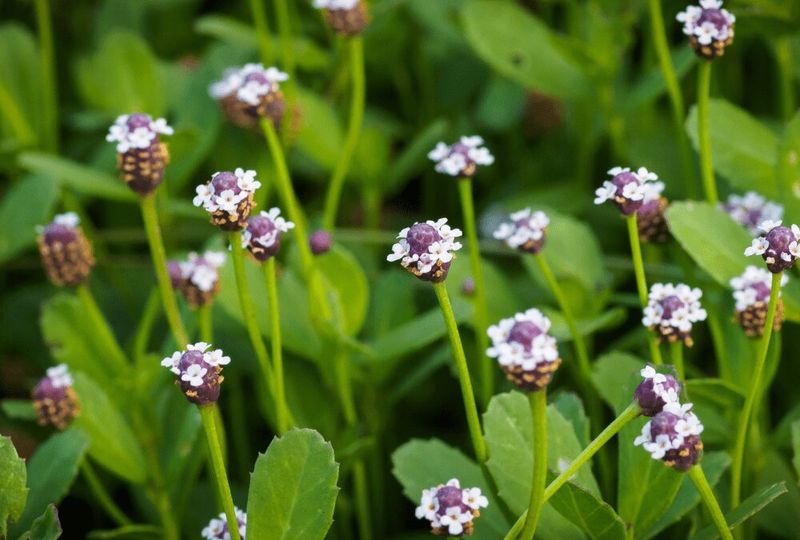
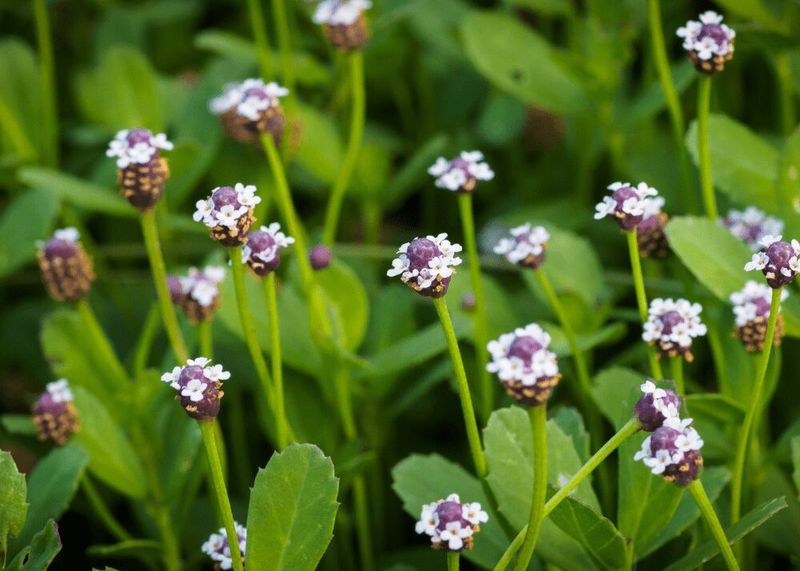
Texas frogfruit (Phyla nodiflora) does come up as a defensible candidate when you look at native groundcovers with documented habitat value. Austin’s official plant guide describes it as a native groundcover and butterfly larval host that attracts native pollinators, making it a reasonable choice for a Central Texas yard focused on supporting wildlife. That is a meaningful, real benefit, but it is a different claim than “this plant draws in geckos.”
Texas Parks and Wildlife guidance on habitat resources frames native plants as contributors to food and shelter for wildlife, with insects at the center of the food web. That framing supports a conditional connection between native vegetation and insect-eating lizards, but it does not point to any single plant as a lizard magnet.
For indoor roach prevention, EPA pest control guidance points squarely at exclusion, sanitation, moisture reduction, and integrated pest management, not at planting choices. This article separates what frogfruit can reasonably offer outdoors from what actually protects your home from cockroaches, because those are two very different problems requiring two very different solutions.
What Texas frogfruit actually offers
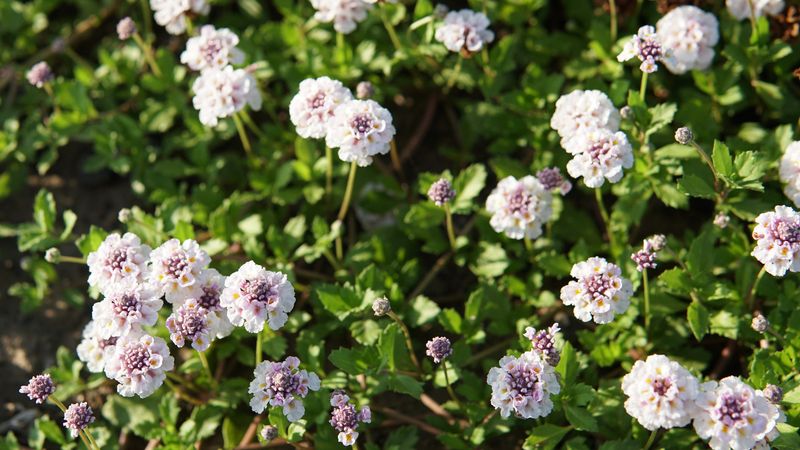
Texas frogfruit (Phyla nodiflora) is a mat-forming native plant that stays low, typically reaching about 6 to 8 inches tall. Austin’s watershed protection plant guide recommends it for sun to part shade and notes that it tolerates poor drainage, which makes it a practical option in spots where other groundcovers struggle. It produces small clusters of white and lavender flowers that draw in native pollinators, and it serves as a larval host plant for certain butterfly species, including the white peacock and phaon crescent.
Texas A&M AgriLife Extension identifies both Texas frogfruit and lanceleaf frogfruit as native species that attract native pollinators, reinforcing its value as a yard plant with real ecological function. That pollinator and butterfly value is well-documented and worth planting for on its own merits, without needing to attach unproven lizard-attraction claims to it.
One management reality to plan for is spread. Frogfruit moves quickly once established, filling in open areas with a dense mat. That is useful if you want a low groundcover that outcompetes weeds, but it can become a trimming task near walkways, drainage features, or other areas where you need defined edges. Seasonal edging and occasional trimming keep it from overtaking adjacent beds or creeping toward the foundation.
What frogfruit cannot honestly be sold as is a heat-proof performer for every demanding Texas site or a universally reliable groundcover regardless of conditions. The sources document specific traits, sun and part shade tolerance, poor drainage tolerance, and pollinator value, and those are the claims worth repeating. Overpromising on any plant’s toughness sets up a frustrating planting experience, and Central Texas gardeners have enough of those already.
Trace the possible habitat connection carefully
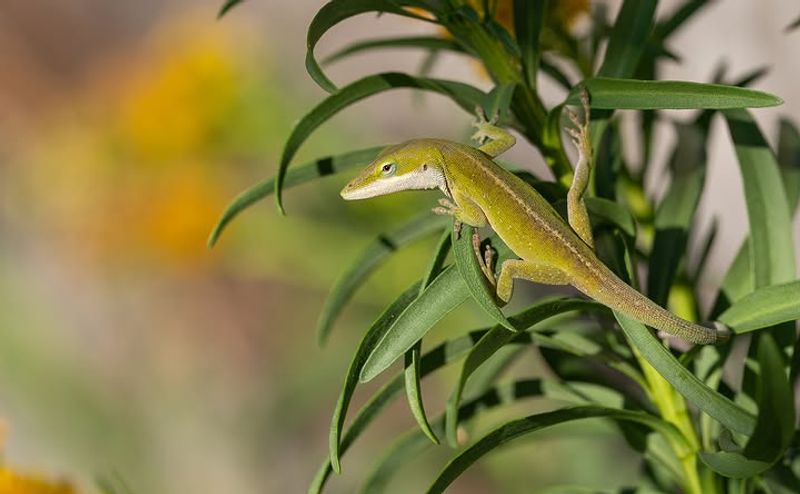
There is a logical chain connecting native plants to insect-eating lizards, but every link in that chain is conditional, and none of them runs directly from frogfruit to gecko. Native plants support insect populations. Insects attract insect-eating wildlife. Insect-eating lizards like green anoles may use yards where insects and suitable cover are available.
That is the honest version of the story.
Texas Parks and Wildlife habitat resources guidance describes native plants as providers of food and shelter and notes that insects are a key part of the wildlife food web. That framing supports the idea that a yard with healthy native plantings may attract more insects, which could in turn attract insect-eating lizards. But “may” is doing important work in that sentence.
The TPWD green anole profile describes green anoles as lizards that need greenery, occasional shade, and moisture, and that commonly use trees, shrubs, walls, and fences. Frogfruit alone, a low mat 6 to 8 inches tall, does not provide trees, substantial shrubs, or the vertical structure anoles prefer. It can be one layer in a habitat, but it is not a self-contained anole environment.
University of Florida IFAS Extension’s anole resource identifies anoles as predators of beetles, flies, spiders, roaches, and other small invertebrates. That confirms anoles may eat roaches on occasion, which is genuinely useful context. What it does not support is the idea that anoles reliably control German cockroaches, American cockroaches, or any established household infestation. An outdoor lizard eating an occasional roach near the foundation is a different situation entirely from meaningful pest management.
No authoritative source in the available research documents frogfruit’s fragrance attracting anoles or geckos. Lizards respond to habitat conditions and prey availability, not to a specific plant’s scent. Frogfruit may contribute to habitat conditions that lizards can use, and that is a reasonable, honest thing to say about it.
Separate green anoles from Mediterranean house geckos
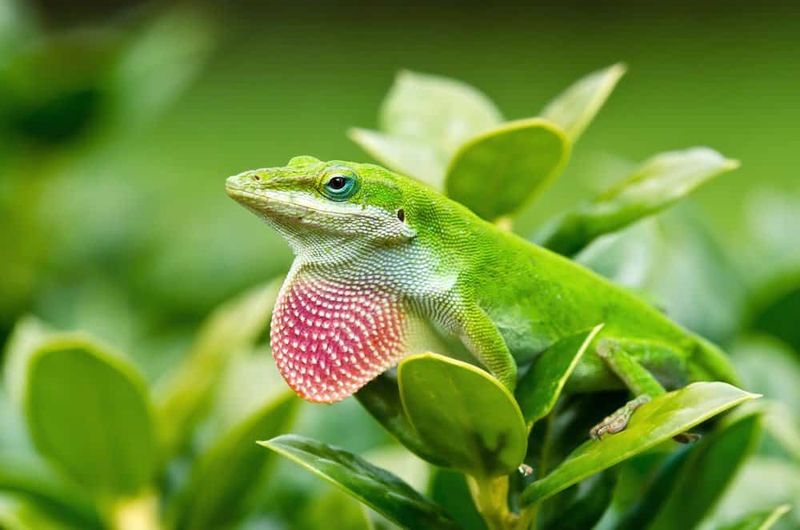
Central Texas homeowners often use “gecko” and “anole” as interchangeable words for any small lizard they spot near the house. They are not the same animal, they live differently, and understanding the difference matters when someone is trying to think clearly about lizards and pest control.
Green anoles (Anolis carolinensis) are native in the eastern third of Texas. TPWD’s green anole species profile describes them as lizards associated with greenery, shade, and moisture, typically found on trees, shrubs, walls, and fences. They are daytime hunters and tend to stay in vegetated areas rather than clustering around building entrances. If you have healthy native plantings and some tree or shrub cover, green anoles are plausible yard visitors in the right parts of Texas.
Mediterranean house geckos (Hemidactylus turcicus) are a different story. TPWD’s nonnative species research lists Mediterranean house geckos as established but nonnative in Texas. They are nocturnal, and they commonly associate with buildings and porch lights rather than garden plantings. Their presence near a door at night is almost always about the insects drawn to that light, not about any plant in the yard.
Texas Master Naturalist guidance on Mediterranean geckos in Central Texas describes them as insect predators that feed on insects attracted to lights. That is a useful function, but it is tied to the light source and building surface, not to frogfruit or any native plant nearby. A gecko hunting moths at your porch light is not evidence that your garden is keeping roaches out of the house.
Keeping these two lizards distinct also matters for accuracy. Crediting a native plant with attracting a nonnative gecko that is actually responding to your outdoor lighting is the kind of reasoning that produces popular but misleading gardening claims. Both lizards can be interesting yard wildlife, but neither one is a reliable pest barrier, and neither one is there because of frogfruit.
Plant frogfruit as one managed habitat layer
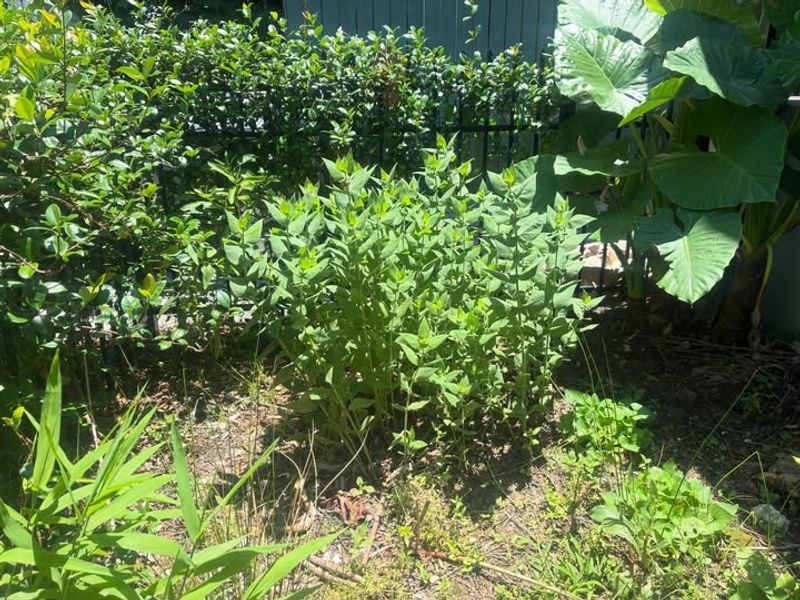
Treating frogfruit as a single-plant wildlife solution sets up unrealistic expectations. A more productive framing is to use it as one low layer within a yard that includes other habitat components. Texas Parks and Wildlife habitat guidance points toward layered vegetation, shade, moisture, undisturbed cover, and insect resources as the elements that collectively support wildlife. Frogfruit fits into that picture as a groundcover layer, not as a complete system on its own.
TPWD’s Hometown Greenery background materials reinforce that insects are central to the wildlife food web and that native plants support those insect populations. Pairing frogfruit with native shrubs, a shade tree, and a reliable water source creates far better conditions for insect-eating lizards than frogfruit alone. Thinking in layers is the practical approach.
Placement and management are where this gets concrete. Austin’s frogfruit plant guide documents its rapid spread, which is a useful groundcover trait but also a maintenance reality. Keep it edged and trimmed, particularly near walkways, drainage swales, and the home’s perimeter. A dense, unmanaged mat pressing against a foundation holds moisture and organic debris, which creates exactly the kind of sheltered, damp microhabitat that pests, including roaches, find attractive.
EPA pest control guidance recommends maintaining a dry, accessible perimeter around a building. That means keeping mulch, dense vegetation, and organic debris pulled back from the foundation line, not piled against it. A managed strip of bare or sparsely planted ground between your frogfruit bed and the house wall is a simple, sensible buffer. You can have a thriving native groundcover and a well-maintained building edge at the same time, but it takes intentional placement and seasonal attention to keep both goals working together.
Why outdoor lizard predation cannot stop indoor roaches
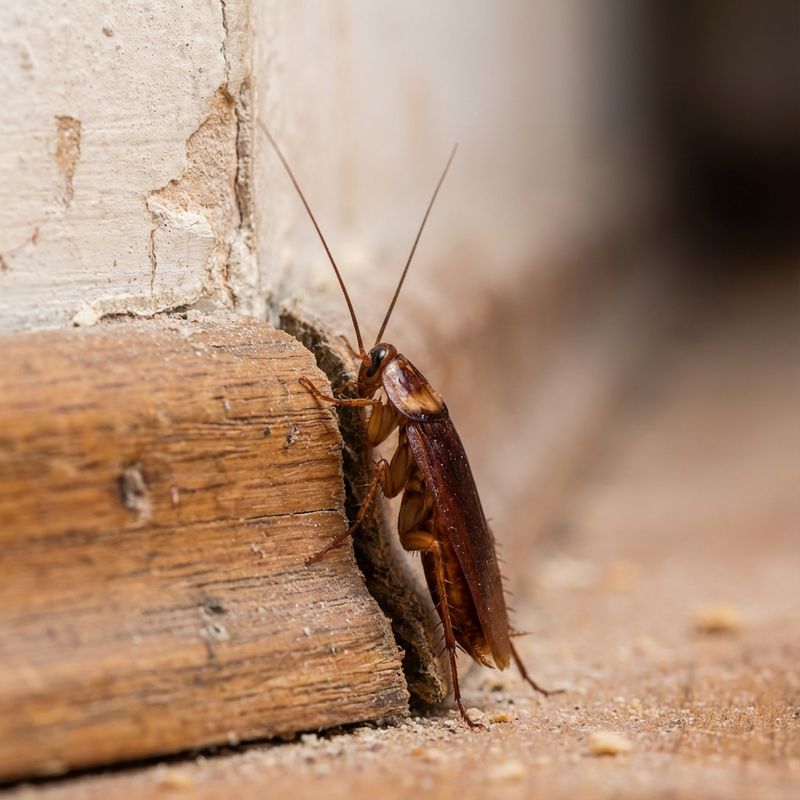
Watching a green anole snag an insect near the back steps is genuinely satisfying, but that moment does not scale into household pest control. Roaches enter homes through cracks around baseboards, gaps at door thresholds, plumbing penetrations, torn screens, and even inside cardboard boxes carried in from outside. An outdoor lizard positioned in a garden bed has no practical ability to intercept roaches using those routes.
University of Florida IFAS Extension’s anole page confirms that anoles eat small invertebrates including roaches, which is a real and interesting ecological fact. It does not support the conclusion that anole predation controls German cockroach or American cockroach populations at a household level. German cockroaches, in particular, reproduce rapidly indoors and rarely need to travel across open ground where a lizard might intercept them.
EPA guidance on evaluating pesticide need frames the core problem clearly: roaches survive wherever they find food, water, and shelter. Removing those conditions is what reduces an infestation, not deploying a predator outside. Even a yard full of healthy, well-fed anoles cannot address what is happening inside a wall void or under a kitchen appliance.
The phrase “keeping roaches out of your house” in the original headline implies a barrier function that outdoor lizards simply do not provide. Frogfruit does not repel roaches. Anoles do not patrol entry points. EPA roach prevention materials are unambiguous that keeping roaches out requires physical exclusion and sanitation, not wildlife management.
These are complementary yard and home strategies, not competing ones, but they cannot be swapped for each other.
Use exclusion and integrated pest management for real prevention
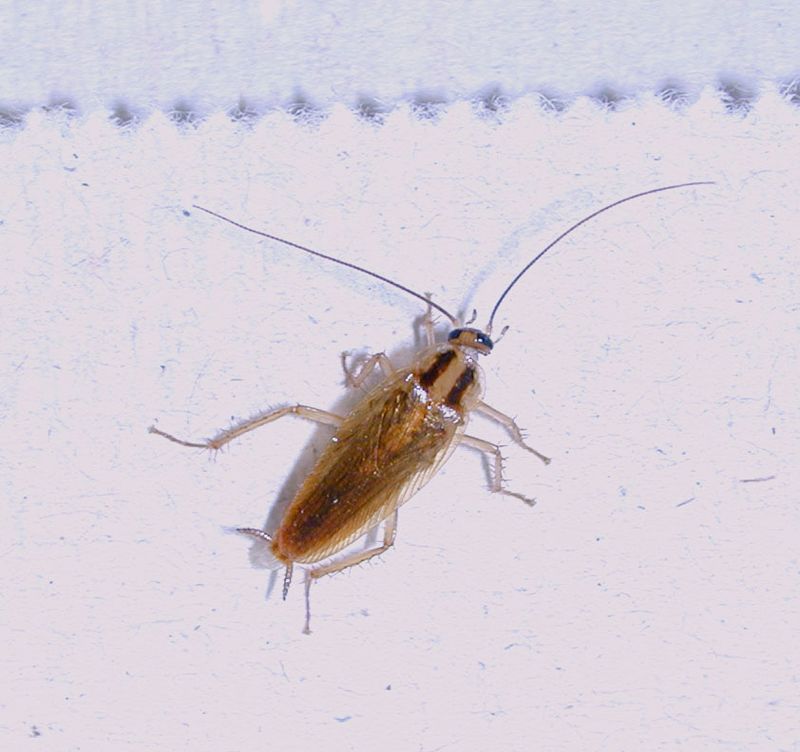
If roaches are a concern, the actions that actually reduce their access and survival indoors are well-established and have nothing to do with what is growing in the yard. Start with the building envelope. Seal cracks around baseboards, plumbing penetrations, window frames, and door frames with caulk. Replace worn weatherstripping on exterior doors.
Check that door sweeps make full contact with the threshold. Repair any torn or poorly fitted window and door screens.
EPA integrated pest management resources list these exclusion steps as the foundation of roach prevention, alongside removing the food, water, and shelter that allow roaches to survive once inside. Keep food in sealed, airtight containers. Clean up crumbs and spills promptly. Dry out sinks, tubs, and pet water dishes overnight when possible.
Fix dripping faucets and leaky pipes, because moisture is a primary roach attractant in Texas kitchens and bathrooms.
Clutter reduction matters more than most people expect. Roaches use stacked cardboard, paper bags, and cluttered storage areas as harborage. Replacing cardboard storage boxes with plastic bins with lids removes a common hiding and breeding spot. When chemical control is necessary, tamper-resistant bait stations placed in corners, under appliances, and along wall junctions are more targeted and less disruptive than broadcast sprays.
On the subject of sprays and foggers, CDC guidance on asthma control warns that sprays and foggers can trigger asthma attacks, which is a serious health consideration in households with asthmatic family members. That warning applies to both pesticide sprays and to homemade essential-oil repellent sprays used around lizards without verified safety data. Neither category should be used casually.
One more firm line: do not release pet lizards or imported geckos outdoors as a pest-control strategy. TPWD nonnative species research documents the ecological complications that established nonnative reptiles already create in Texas. Adding more nonnative animals to that picture is not a solution to a roach problem, and it may create new ones.
Choose frogfruit for habitat, not a guarantee
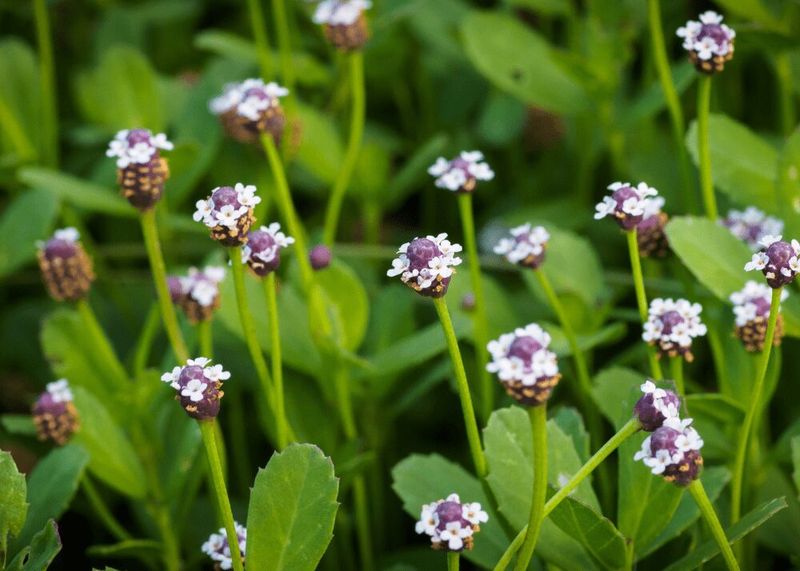
Texas frogfruit earns a place in a Central Texas yard as a useful native groundcover with documented pollinator and butterfly value. Austin’s plant guide and Texas A&M AgriLife both support its use as a low-growing native that attracts pollinators and tolerates poor drainage. Those are real, practical reasons to plant it.
What frogfruit cannot honestly be credited with is attracting geckos or anoles through its scent, increasing lizard populations in a yard, or preventing cockroaches from entering a home. Texas Parks and Wildlife habitat guidance supports native vegetation as a contributor to wildlife-friendly conditions generally, not as a species-specific lizard attractant. Frogfruit may contribute to habitat conditions that insect-eating lizards can use, but that conditional chain is a far cry from a roach barrier.
The practical takeaway is straightforward. Plant frogfruit where a low native groundcover fits your yard, manage its spread, and keep it away from the foundation perimeter. Pair it with other native layers if supporting lizards and pollinators is a goal. For actual roach prevention, rely on EPA-recommended exclusion and IPM steps: seal the gaps, dry out the moisture, clean up the food sources, and use targeted baits when needed.
A well-planted yard and a well-sealed house are both worth having, and neither one substitutes for the other.