
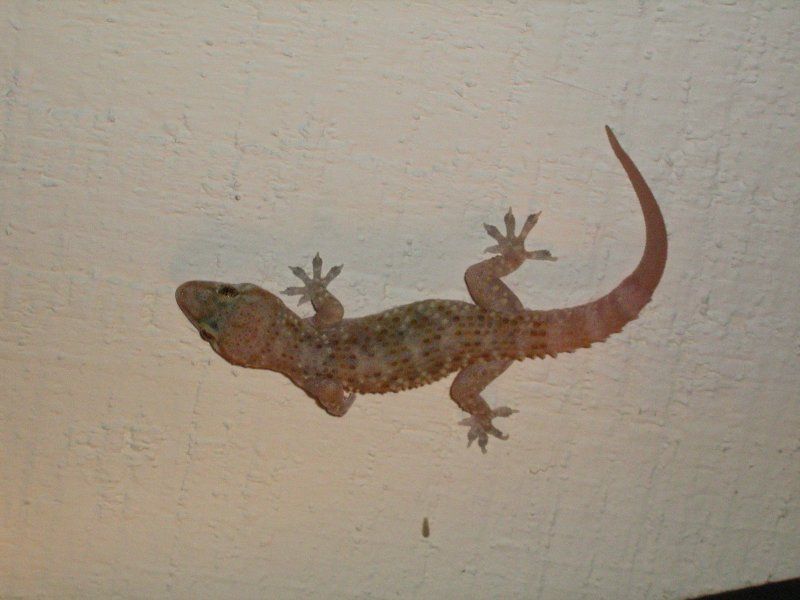
Spot a small lizard clinging to the wall near your porch light on a warm Texas night, and you might assume it is doing your roach problem a favor. That instinct is partly right and partly a stretch, and the difference matters if you actually want fewer cockroaches in the house. Mediterranean house geckos do eat insects, including the occasional cockroach, but no research confirms that more geckos on the porch translates to fewer roaches slipping inside. Understanding what these little lizards actually do, and what you still need to do yourself, puts you in a much better position.
That plain brown porch lizard may be a Mediterranean house gecko
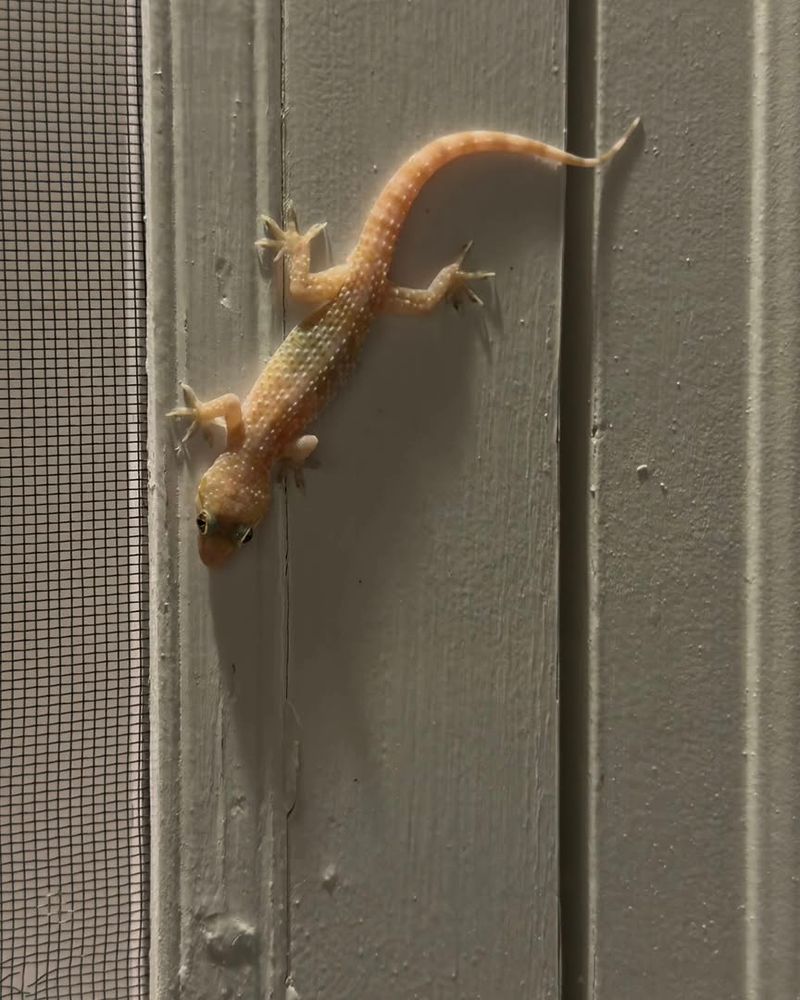
Not every small brown lizard that skitters across a Central Texas porch wall is the same animal. Texas hosts two introduced house gecko species, the Mediterranean house gecko and the common house gecko, and telling them apart from a passing glance can be tricky. Knowing which one you are looking at matters before you start making assumptions about its diet or its role around your home.
The Mediterranean house gecko is the more frequently encountered of the two in Texas. Texas A&M’s City Bugs factsheet on house geckos describes the species as typically light-colored or mottled, running about four to five inches from snout to tail tip. Its skin is noticeably bumpy rather than smooth, its snout is rounded, its pupils are vertical like a cat’s, and the toe pads are broad and sticky, allowing it to cling to glass, stucco, and painted wood with ease. These are the features worth checking before you assume identification.
Both house gecko species are introduced in Texas, meaning neither is native to the state. The Mediterranean house gecko is more widely reported, though its presence across Central Texas is not uniform. County-level distribution records show that new Central Texas sightings were still being documented as recently as 2009, while stronger established populations have historically been reported in parts of East and South Texas. A lizard in your Austin-area backyard may well be a Mediterranean house gecko, but the species has not colonized every Central Texas neighborhood equally.
A plain brown lizard could also be a juvenile Texas spiny lizard, an anole, or another native species entirely. Checking for the vertical pupil and the bumpy skin texture together is the most reliable quick field test. Getting the identification right is the first step, because the gecko’s habits, its prey associations, and the coexistence guidance that follows all hinge on knowing what is actually living on your porch wall.
Why porch lights become nighttime hunting stations
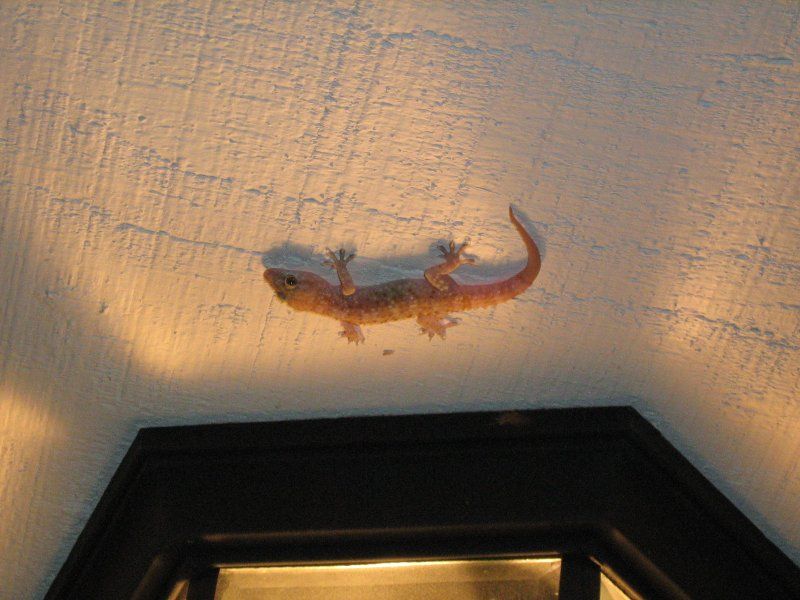
Mediterranean house geckos are strictly nocturnal. During daylight hours they shelter in cracks, crevices, and gaps around structures, then emerge after dark to search for food. That behavioral pattern is why porch lights become such reliable places to spot them.
Porch lights, illuminated windows, and other lit exterior surfaces attract moths, beetles, gnats, and a range of other flying insects. Geckos learn quickly that these lit zones concentrate prey, so they position themselves nearby and wait. Texas A&M notes that house geckos commonly wait near porch lights and other illuminated areas to ambush the insects that gather there. The hunting posture is patient: the gecko stays still, then lunges when prey moves within range.
What this scene does not tell you is that the lights are solving a cockroach problem. Lights attract insects broadly, and some of those insects may include cockroaches that are already foraging near the building perimeter. Adding or intensifying outdoor lighting to draw more geckos has not been shown to reduce cockroach entry into a home. Brighter perimeter lighting could just as easily pull more insects toward the building exterior, which is the opposite of what most homeowners want.
The practical takeaway is more modest. Existing porch lights create a visible hunting zone where geckos may catch exposed insects on warm Texas nights. That is a genuine ecological interaction worth watching. Texas A&M’s cockroach management guidance makes clear that cockroach entry depends on structural gaps and sanitation conditions, not on how many predators happen to be foraging outside.
Enjoy the gecko near the light as an interesting nighttime visitor, but treat the lighting association as an observation, not a pest-control strategy.
The Texas diet study shows broad insect predation, not roach control
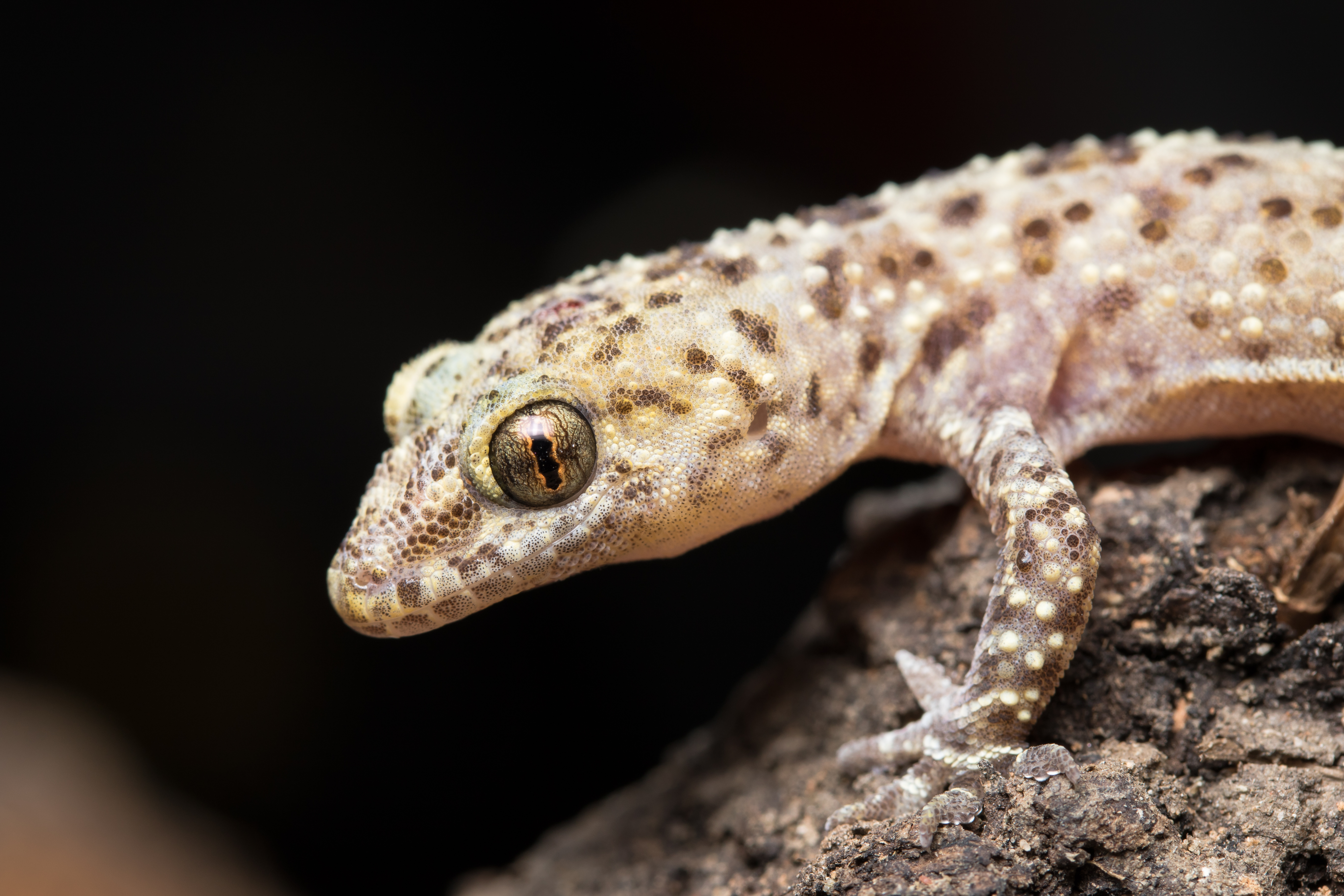
The strongest piece of Texas-specific evidence about what Mediterranean house geckos actually eat comes from a stomach-content study conducted in Nacogdoches, in East Texas. Researchers examined 167 geckos collected between April 19 and October 15, 1990, and identified what each animal had been eating. That published study found that the dominant prey categories by volume were Orthoptera (grasshoppers and crickets), Lepidoptera (moths and their larvae), and Isopoda (pill bugs and related crustaceans). These three groups led the diet data, not cockroaches.
The study also found that prey size scaled with gecko size, meaning larger individuals took larger prey. Geckos that perched lower to the ground consumed more ground-dwelling prey, which makes sense given how close their hunting position was to soil-level insects. This detail is relevant on a Texas porch: a gecko sitting low on a wall or near the base of a door frame is more likely to intercept crawling insects, including cockroaches that might be moving along the foundation, than one perched higher near the light fixture.
Texas A&M does list cockroaches among the prey items that house geckos consume, and that is accurate. Cockroaches are part of the diet. The point worth holding onto is that cockroach predation is one item in a broad menu, not the gecko’s primary focus. A gecko hunting near a porch light on a June night in Austin is probably catching more moths and crickets than roaches.
More critically, no study reviewed here measured whether having more geckos on a porch reduced the number of cockroaches entering a home. Predation of exposed insects outdoors and the rate of indoor cockroach entry are two separate things. Geckos eat what they can catch in the open; cockroaches that are already inside or moving through structural gaps are operating in a completely different environment. The diet study confirms that geckos are active, opportunistic predators.
It does not confirm household-level biological control.
How to preserve outdoor sightings without spreading geckos
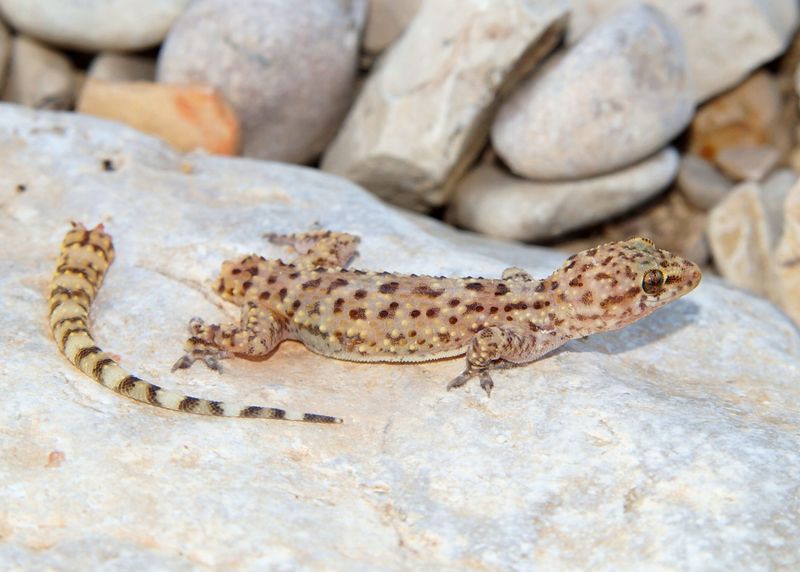
Seeing a gecko on your porch regularly is worth encouraging in a low-key way, but the approach looks nothing like buying lizards or setting up a habitat project. Mediterranean house geckos are a nonnative species in Texas. The Texas Invasive Species Institute classifies the Mediterranean house gecko as introduced, and Texas Parks and Wildlife nonnative species research documents the species among Texas’s established introduced reptiles. The ecological consequences of its spread are not fully resolved, so intentionally moving, releasing, or purchasing geckos to stock your yard is not a responsible action regardless of how appealing the idea sounds.
What you can do is leave existing outdoor geckos alone. Avoid handling them unnecessarily, since repeated stress reduces their effectiveness as hunters and can cause injury. If a loose piece of bark, a stack of clay pots, or a gap behind exterior trim provides shelter away from the building, leaving that undisturbed gives a gecko a place to rest during the day without creating a path into the house. The key distinction is location: exterior shelter that sits away from the building envelope is fine to retain.
Gaps around doors, windows, soffits, plumbing penetrations, and electrical conduit entries are a different category entirely. Those openings lead inside, and any crack a gecko can squeeze through is also a crack a cockroach can use. Seal those routes regardless of gecko activity. The goal is to preserve porch-side habitat while closing every route into the living space.
Frame this approach as observation and coexistence, not pest management. A gecko that finds your porch comfortable may eat exposed insects over many warm Texas nights. That is a pleasant side effect of leaving it in peace. Texas A&M’s house gecko factsheet supports leaving outdoor geckos undisturbed, and that guidance holds up even when you are also working on a cockroach problem, because the two efforts address different parts of the issue.
A porch gecko cannot reach every cockroach hiding in the house
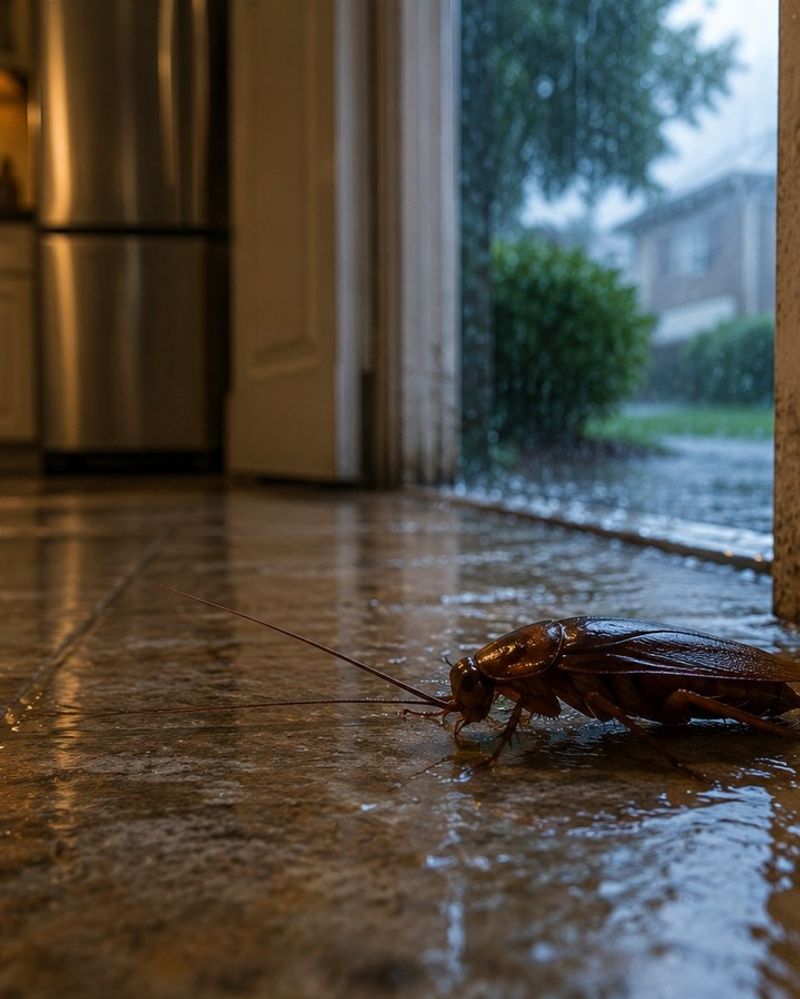
A gecko clinging to the outside of your house and a cockroach living behind the refrigerator are separated by more than a few inches of drywall. They occupy entirely different environments, and the gecko has no practical way to reach the indoor one. Keeping that scale difference in mind prevents a comfortable outdoor sighting from becoming a reason to delay real cockroach management.
Cockroaches that establish themselves indoors typically shelter in wall voids, plumbing gaps, beneath appliances, inside drains, in cardboard clutter, and in other dark, warm, humid spaces. Texas A&M’s cockroach biology and management publication explains that these harborages keep cockroaches hidden and protected during the day, emerging at night to forage. A gecko on the exterior wall is hunting in a completely different zone from where the indoor population lives and breeds.
The type of cockroach matters here too. Large outdoor species like the American cockroach and the smokybrown cockroach, both common in Central Texas, typically live in mulch, tree holes, and utility areas and enter homes through poorly sealed doors, soffits, floor drains, and similar openings. A gecko foraging near those entry points might occasionally intercept one before it enters. German cockroaches, by contrast, are almost exclusively indoor insects.
They reproduce rapidly inside kitchens, bathrooms, and behind appliances, and they are not part of the porch ecosystem at all. A gecko outside has zero impact on a German cockroach population inside.
Visible gecko activity near a light or along a foundation wall can feel reassuring, but it says nothing about what is happening in the kitchen at 2 a.m. Finding where cockroaches are entering and where they are harborage requires a different kind of attention, one focused on the building itself rather than the wildlife on its surface. Texas A&M’s factsheet on house geckos also reinforces this separation, noting that geckos hunt exposed prey while indoor cockroach populations persist in structural harborages well beyond their reach.
Build exclusion into an integrated cockroach plan

Sealing the building is one of the most reliable ways to reduce cockroach pressure, but it works best as part of a broader effort that also addresses why cockroaches are present in the first place. Exclusion without sanitation leaves food, water, and shelter in place. Sanitation without exclusion leaves the entry routes open. Running both together is the starting point.
Texas A&M’s integrated cockroach management guidance recommends inspecting all exterior openings as a first step. Walk the perimeter of the house and check the condition of door sweeps, weatherstripping, window screens, soffit vents, and any point where plumbing or electrical lines pass through the exterior wall. Gaps around pipes are common and frequently overlooked. Floor drains in garages and utility rooms can also serve as cockroach entry points.
Caulk or foam gaps that lead to the interior, and replace any damaged weatherstripping or door sweeps that are letting air, light, or insects through.
Inside, fixing leaky pipes and dripping faucets removes one of the primary attractants for cockroaches in a Texas home, where summer heat makes moisture especially valuable to insects. Remove food debris from counters and appliances, store dry goods in sealed containers, and reduce cardboard clutter in pantries, garages, and under sinks. These sanitation steps cut off the resources that allow cockroaches to persist even after entry routes are sealed.
Sticky monitoring cards placed along baseboards, under appliances, and near suspected entry points serve a practical diagnostic function. They show where cockroach activity is concentrated, which helps you prioritize sealing and treatment efforts rather than guessing. Check them every few days when first placed. Counting what you catch and where tells you more about the actual problem than a visual scan of the kitchen floor at night.
Together, inspection, sanitation, exclusion, and monitoring address cockroach entry and persistence in ways that watching a gecko on the porch simply cannot.
Use targeted control without turning the porch into a pesticide zone
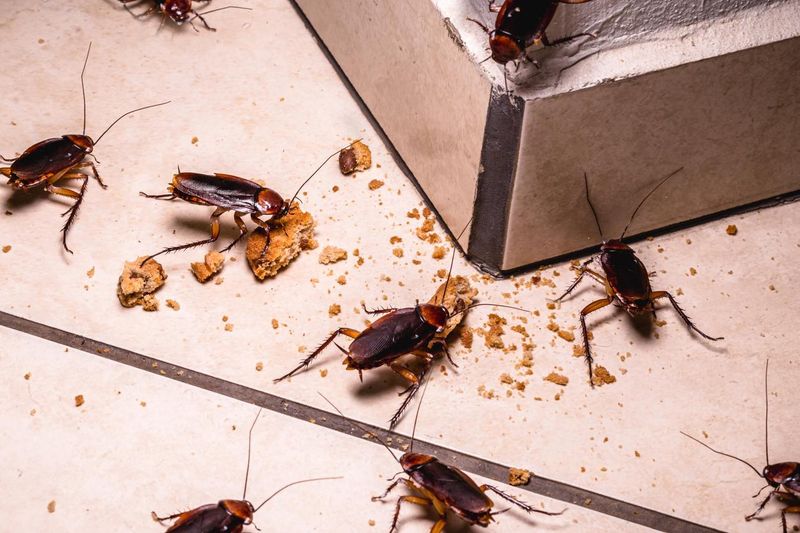
When inspection and monitoring reveal an active cockroach problem that sanitation and exclusion alone are not resolving, adding a targeted treatment step makes sense. The approach Texas A&M recommends combines those prevention measures with appropriately chosen control tools applied where the evidence points. Sticky cards that catch cockroaches near an appliance or under a sink tell you exactly where to focus.
For most household cockroach situations, gel bait applied in small amounts at harborage sites is a practical first-line treatment. Cockroach dusts, such as boric acid or diatomaceous earth, can be effective in wall voids and cabinet voids where bait is difficult to place. Vacuuming is useful for reducing populations quickly in visible harborages before applying other treatments. Texas A&M’s cockroach management publication is direct on one point: sticky traps alone are not sufficient for a well-established infestation.
Monitoring tools identify the problem; they do not resolve it on their own.
Broad outdoor pesticide spraying around the porch or foundation is where the gecko connection becomes relevant again. General insecticides reduce the insect populations that geckos depend on for food, which can harm gecko numbers indirectly even when the product is not designed to target reptiles. EPA guidance on reducing pesticide impacts on wildlife recommends treating only the areas where pest activity is confirmed, avoiding broadcast applications, and following all product label directions, which carry legal weight and specify application rates, target sites, and safety precautions.
If a gecko happens to wander inside during any of this, Texas A&M’s house gecko factsheet recommends the same exclusion-first response: find and seal the entry point it used. The gecko itself can be captured gently using a container placed over it, slid closed with a piece of cardboard, and released outside near where it was found. Do not transport it to another neighborhood or release it at a different property, as that contributes to the spread of a nonnative species. Treat indoors precisely, preserve the outdoor environment where practical, and keep those two zones clearly separate in how you apply products.
Let the gecko patrol remain a bonus, not the plan
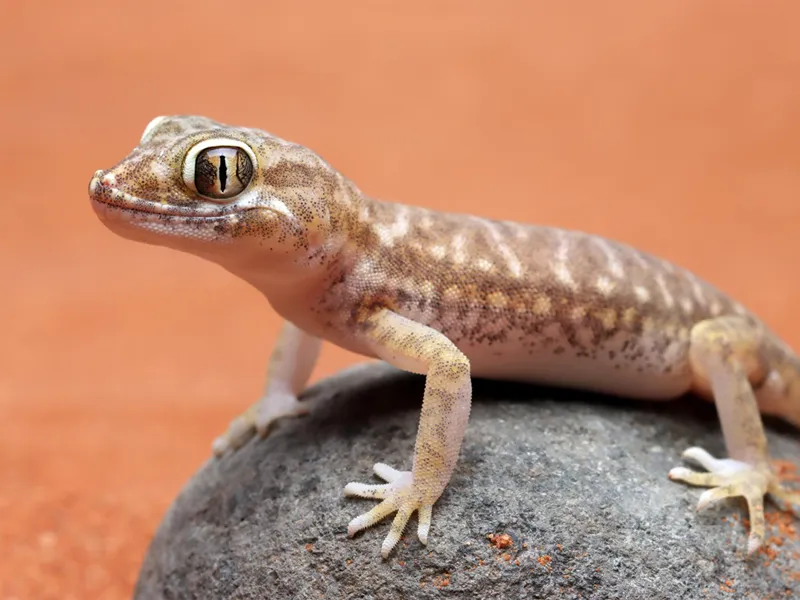
An existing Mediterranean house gecko on your Central Texas porch is a genuinely useful neighbor on warm nights. Texas A&M’s house gecko factsheet confirms that these lizards eat cockroaches and a range of other insects, and the Nacogdoches diet study shows just how varied that diet is across a Texas season. Watching one work the perimeter of a porch light is a small, free piece of Central Texas ecology playing out a few feet from the back door.
What the gecko cannot do is replace the work of finding entry routes, tightening sanitation, monitoring with sticky cards, and applying targeted treatments where cockroach evidence appears. Texas A&M’s cockroach management guidance makes the household strategy clear, and none of it involves counting lizards. Leave the outdoor gecko undisturbed, move any indoor one outside locally in a container, seal the gaps that connect the porch world to the living space, and put the real prevention effort where it reliably pays off.
A gecko that keeps showing up on your porch is a sign of a healthy outdoor insect community and a lizard that found a good spot. That is worth appreciating on its own terms, separate from whatever the roach situation is inside.