
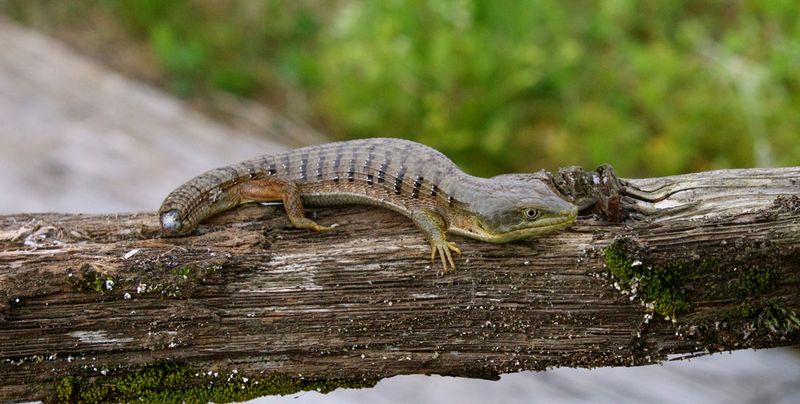
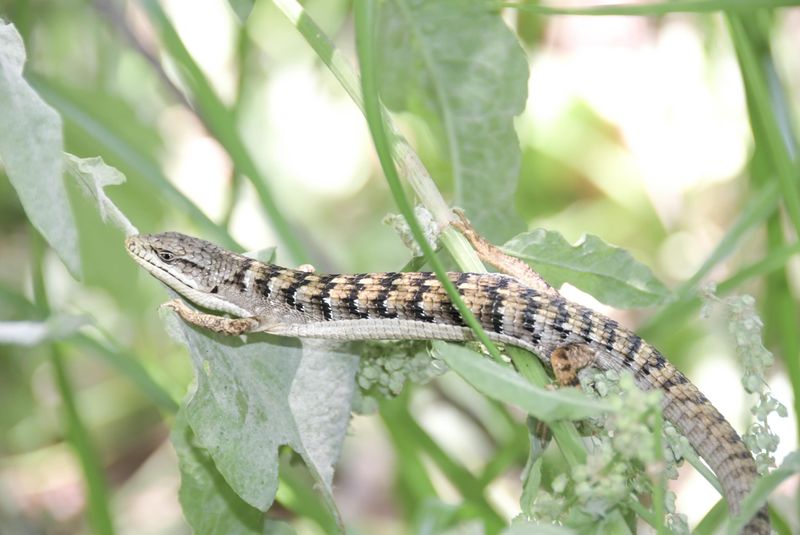
A long-bodied lizard with a large head and short legs sometimes shows up in California yards, garages, and garden beds, and its snake-like movements can startle even experienced gardeners. That lizard is the southern alligator lizard, a native species that eats a surprisingly wide range of prey, including black widow spiders and snails.
Understanding what it actually does, and what the science really says, can help you make a smarter call the next time one crosses your path.
Meet the southern alligator lizard hiding in plain sight
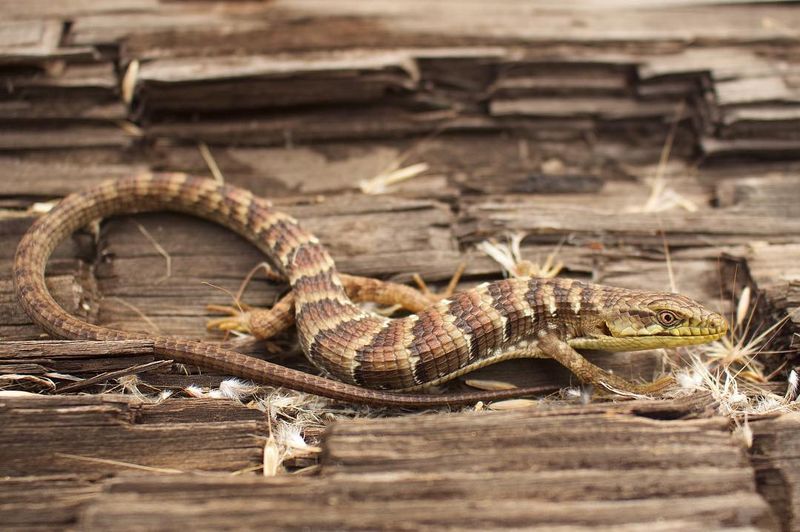
Rough, keeled scales running down a long, cylindrical body. Short legs that barely seem to lift the animal off the ground.
A large, triangular head and a tail that can stretch nearly as long as the body itself. When a southern alligator lizard moves through leaf litter or slides under a garden board, the motion looks distinctly snake-like, and that single visual impression may be enough to make a homeowner reach for a shovel before getting a second look.
The species behind that startling silhouette is Elgaria multicarinata, the southern alligator lizard. The National Park Service describes it as a ground-dwelling lizard that favors sheltered spots at or near soil level, including leaf litter, rocks, logs, boards, and brush piles, with a sunny patch nearby for warming up.
That habitat description fits a typical California yard almost perfectly, which is why these lizards turn up in garages, along fence lines, under potted plants, and at the edges of garden beds so regularly.
A quick comparison helps place it in context. The western fence lizard, that small, blue-bellied reptile familiar to almost every California homeowner, belongs to the genus Sceloporus.
The southern alligator lizard belongs to Elgaria. They share a state and a general ecological neighborhood, but they are not close relatives in the taxonomic sense.
Where the fence lizard is compact and quick, darting up walls and fence posts, the alligator lizard is heavier-bodied and more deliberate, patrolling ground level rather than climbing.
California Herps notes that identifying alligator lizard species from a photograph or general location alone can be tricky, since the northern alligator lizard (Elgaria coeruleaElgaria multicarinata) also occurs in parts of California. For the black-widow research discussed later in this article, the relevant species is specifically .
Appearance-based misidentification as a snake or some kind of threat is a plausible reason a homeowner might act against one of these lizards, even if no reliable data documents exactly how often that happens.
Its menu includes spiders, snails, and much more
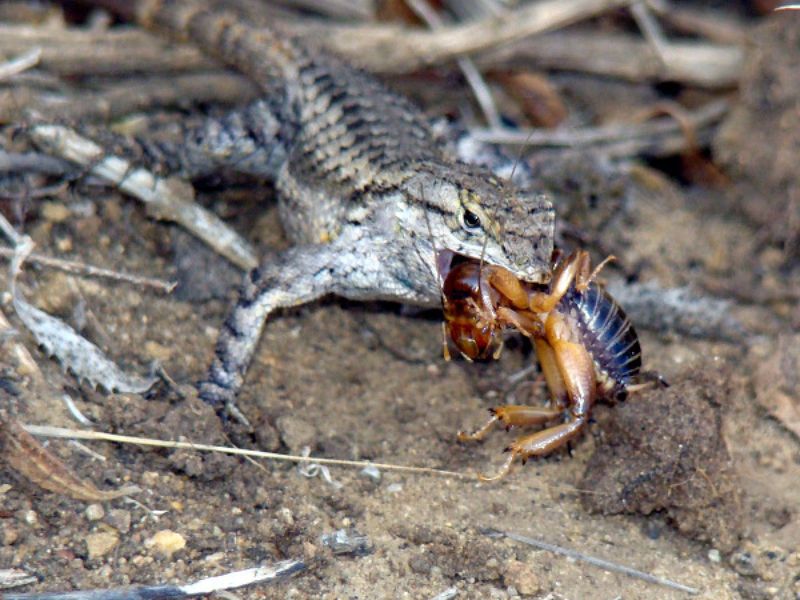
Opportunistic is the right word for how the southern alligator lizard feeds. Rather than specializing in one or two prey types, it takes whatever is available and catchable at ground level.
The National Park Service lists its documented prey as including insects and their larvae, ground beetles, grasshoppers, crickets, spiders, centipedes, scorpions, sow bugs, and snails. That roster covers a lot of what California gardeners consider nuisance invertebrates, which is part of why the species gets attention as a potentially useful yard resident.
Black widows and snails appear on that list, and they are real prey items, not marketing language. A lizard patrolling a woodpile, a fence base, or a dark corner of a garage is genuinely capable of finding and eating either one.
What the diet record does not tell you is how often any individual lizard encounters those specific prey items, or in what quantities. The documented list is a menu of possibilities, not a schedule of guaranteed daily catches.
The diet can also include small vertebrates. Southern alligator lizards will eat other lizards and, on occasion, young birds or small mammals.
That detail matters for anyone who thinks of the species purely as a pest-control service. An opportunistic predator does not distinguish between prey a gardener dislikes and prey a gardener values.
Beneficial arthropods, small native lizards, and the occasional garden-friendly insect are all potential targets.
None of that makes the lizard a problem. It simply makes it a native predator doing what native predators do, moving through available habitat, consuming whatever it can catch, and filling a role in a food web that existed in California long before suburban yards replaced the landscape.
Recognizing that broader picture keeps expectations realistic and avoids overstating the lizard’s usefulness in any one direction.
What the black-widow research actually found
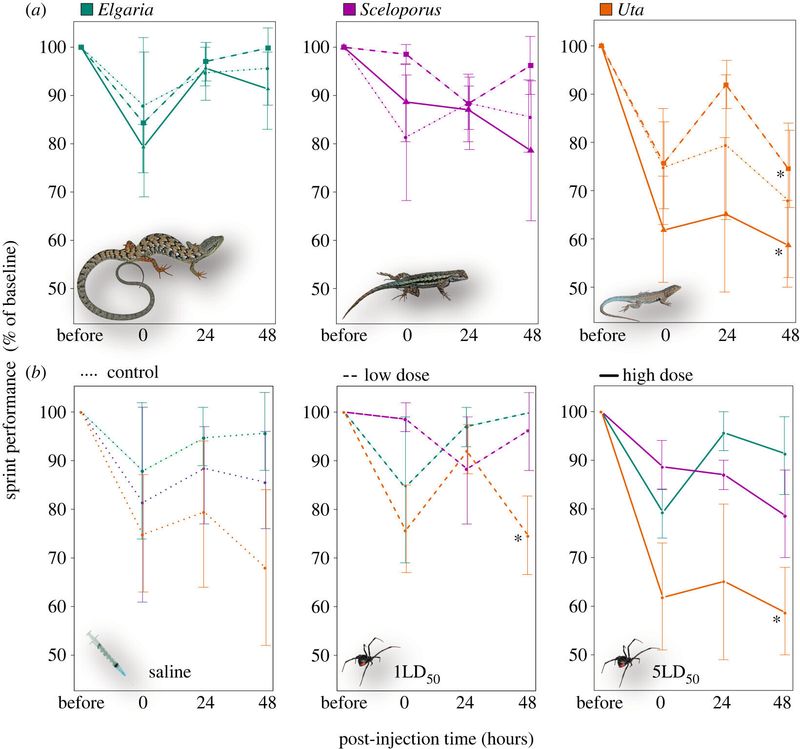
The specific evidence behind the black-widow claim comes from a peer-reviewed paper published in 2022. Thill and colleagues, writing in Royal Society Open Science, set out to examine how lizards that coexist with western black widow spiders (Latrodectus hesperus) respond to those spiders, both as predators and as potential venom targets.
Southern alligator lizards (Elgaria multicarinata) were among the species tested.
The study had two connected parts. First, it confirmed that southern alligator lizards do prey on western black widows, establishing the predator-prey relationship in documented, peer-reviewed terms.
Second, it measured how different lizard species responded physiologically to experimental black widow venom exposure. Southern alligator lizards came through the venom treatments with notably little sprint-performance decline and minimal muscle damage or immune-system activation compared with other species tested under the same conditions.
Those results support describing the southern alligator lizard as showing resistance or tolerance to western black widow venom under the study’s experimental conditions. They do not support calling the animal immune.
The researchers used controlled venom injections and tracked measurable physiological markers. What that protocol captures is how the lizard’s body responded to a specific dose in a laboratory setting, not what happens across every possible bite, venom load, life stage, or environmental condition a lizard might encounter outside.
Translating a laboratory result into a backyard prediction takes additional steps that the study was not designed to provide. A homeowner cannot look at a southern alligator lizard in the garden and conclude that it will reliably neutralize the black widows in a woodpile or that every encounter ends safely for the lizard.
What the research does establish, clearly and usefully, is that this species has a documented physiological tolerance that helps explain how it can and does eat one of California’s most medically significant spiders. That is a meaningful finding, even with its limits kept in view.
A useful predator is not a guaranteed exterminator
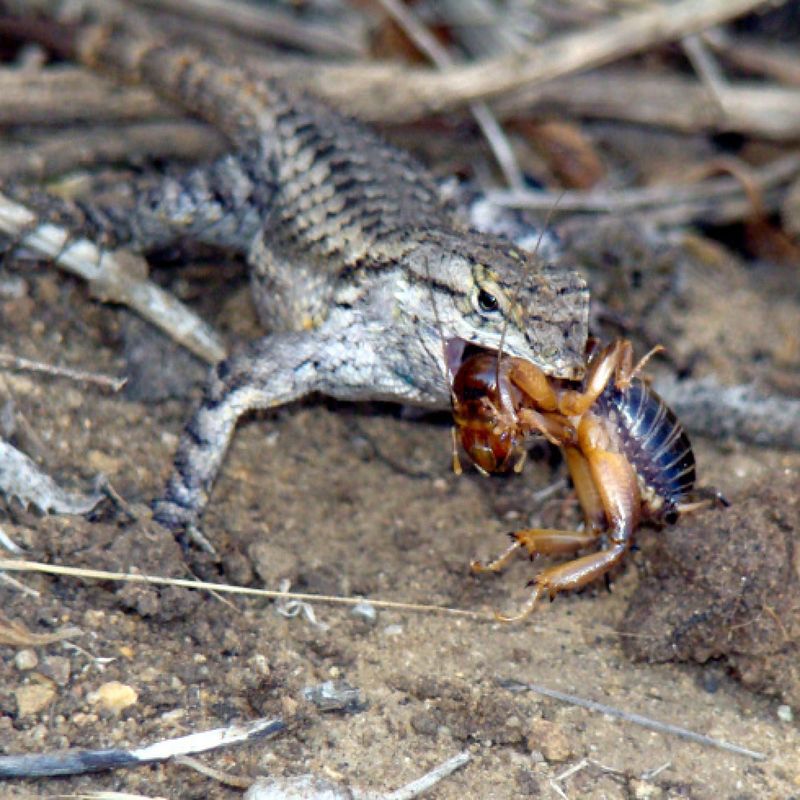
Knowing that a southern alligator lizard can eat western black widows and snails is genuinely useful information. Knowing what that fact does not mean is equally important for setting realistic expectations about a lizard living in your yard.
The 2022 Royal Society study documents predation and venom tolerance; it does not measure how many black widows a lizard removes from a residential property over a season, or whether the presence of a lizard meaningfully reduces spider counts in an outdoor space. The National Park Service diet record lists snails among documented prey, but it does not report removal rates or garden-control outcomes.
No supplied source establishes a predictable feeding rate, a measurable reduction in black widow populations, or any guarantee that a lizard in the yard keeps spiders out of the garage or house.
The broad diet is also a reminder that the lizard does not sort prey by whether a gardener approves of it. Ground beetles, which are valuable predators of pest insects in their own right, appear on the same prey list as snails and sow bugs.
UC Integrated Pest Management notes that California lizards are generally beneficial, but that framing reflects their overall role in the food web, not a promise that every meal serves the gardener’s interests.
The practical takeaway is that the southern alligator lizard is a native predator worth having around, not a targeted biological-control agent you can deploy against a specific pest problem. Its presence in a yard is a sign of a reasonably healthy local food web, and that is worth something on its own terms, even without a guaranteed pest-reduction number attached to it.
Leaving it alone is usually the garden-smart choice
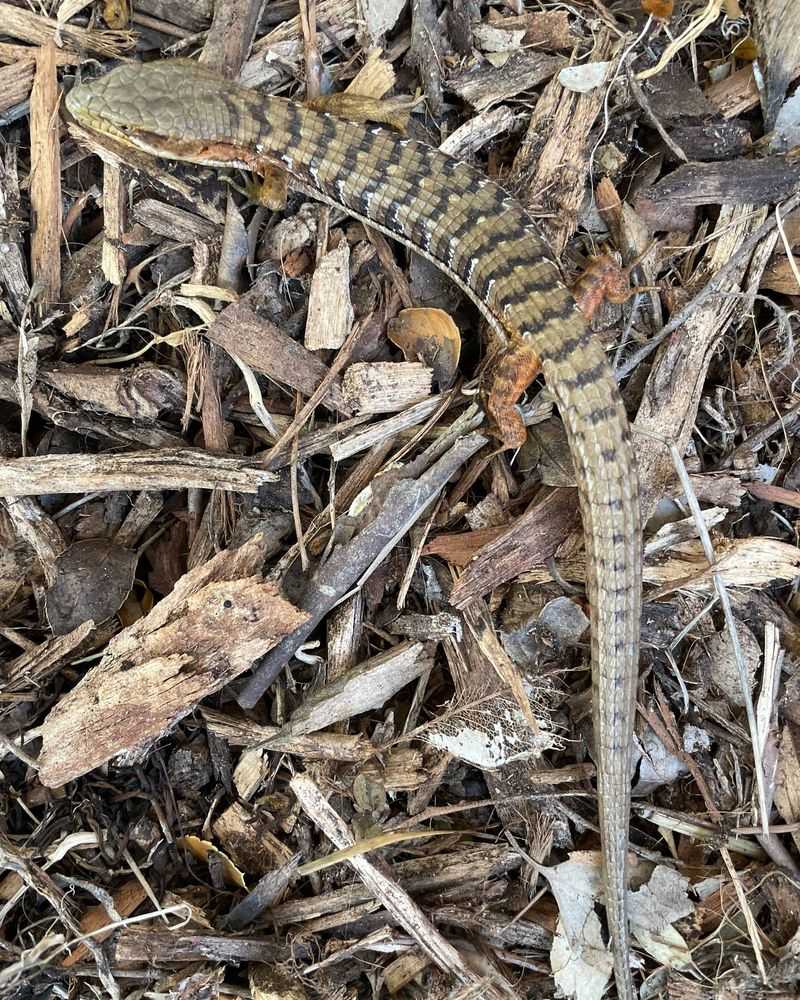
When a southern alligator lizard shows up in a California yard, the default response supported by the available evidence is straightforward: leave it alone. UC Integrated Pest Management states clearly that California lizards cause no measurable damage to garden plants, may help with pest control, and should generally remain outdoors undisturbed.
That guidance applies to an alligator lizard patrolling a bed of native plants just as much as it applies to a fence lizard basking on a wall.
One of the less obvious ways homeowners can help native lizards and other beneficial wildlife is by reconsidering broad-spectrum pesticide use. Products that kill a wide range of insects and arthropods do not stop at the target pest.
They can eliminate the prey base that lizards, birds, and other predators depend on, disrupting the food web that makes natural pest suppression possible in the first place. UC IPM guidance on protecting natural enemies recommends integrated pest management approaches, targeted or selective treatments, and nonpersistent products where intervention is necessary, always with strict attention to label directions.
To be precise about what the evidence does and does not say: no species-specific data in the supplied sources documents that broad-spectrum pesticides directly kill southern alligator lizards. The concern is about the food web.
Reduce the prey, and you reduce the conditions that allow a predator to survive and reproduce in a given yard. The lizard does not need to be poisoned directly to be pushed out of a space where its food supply has been eliminated.
Choosing targeted treatments over broadcast spraying, timing applications to avoid peak lizard activity on warm days, and reading labels carefully for effects on non-target wildlife are all practical steps that cost nothing extra and keep native predators working in your favor. A yard managed with some restraint around pesticide use is simply more likely to support the kind of food web that keeps individual pest outbreaks in check over time.
Support a lizard without creating a fire hazard
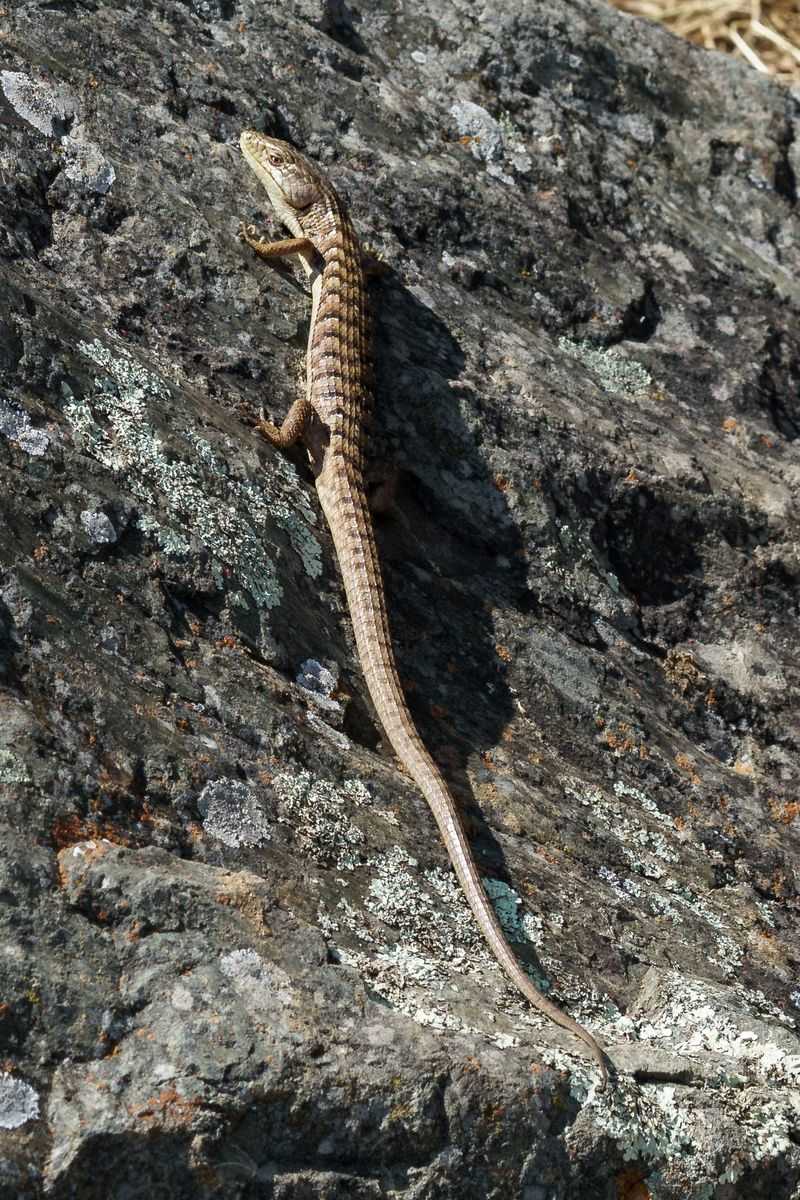
Habitat is the starting point for whether a southern alligator lizard can actually use a yard. The National Park Service notes that the species favors ground-level cover close to sunny areas, using rocks, logs, leaf litter, boards, and brush as daytime shelter and foraging corridors.
Replicating some version of that structure in a yard can make the space more hospitable, but in California, any habitat recommendation has to be weighed against wildfire risk and local defensible-space requirements.
Rocks are the safest place to start. Flat or stacked rocks absorb heat during the day and release it slowly, creating the warm microhabitats alligator lizards actively seek.
Unlike combustible materials, rocks carry no fire-loading concern and require no qualification based on your fire zone or proximity to wildland areas. Adding a few appropriately sized rocks to a garden border or along a fence line is a low-risk, low-maintenance step that can genuinely improve habitat value.
Logs, leaf litter, brush, and dense low plantings are a different category. Each of those features can provide real shelter for lizards and other beneficial wildlife, but each also adds to the fuel load that defensible-space rules are designed to reduce.
California’s defensible-space requirements, local fire ordinances, and site-specific conditions, including slope, vegetation type, and proximity to structures, all shape what is appropriate in a given location. Before retaining or adding any combustible ground cover or dense vegetation near a structure, check with your local fire department or CAL FIRE for the rules that apply to your zone.
When requirements are unclear or the property sits in a high fire-hazard severity zone, prioritize compliance with fire safety over habitat enhancement. A lizard-friendly yard is a worthwhile goal, but it is not worth creating a fire risk to achieve.
In many California yards, nonflammable features alone can provide meaningful habitat without putting the home or surrounding area at greater risk.
When one enters the house, move it safely
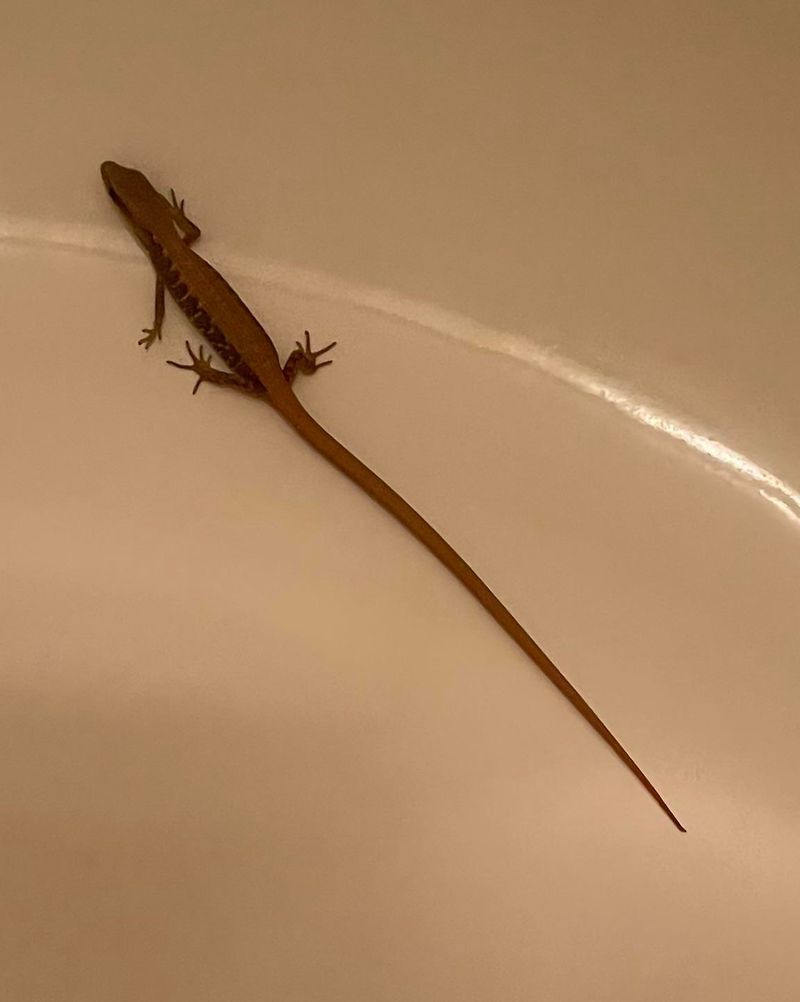
Finding a southern alligator lizard inside a garage, laundry room, or living space is more common than most homeowners expect, given how often these lizards patrol the edges of structures. The right response, according to UC Integrated Pest Management, is capture and outdoor release near the point of capture, not killing the animal.
That guidance reflects both the lizard’s ecological value and the straightforward reality that removing it alive is the most sensible outcome for everyone involved.
Wear gloves before attempting to handle the lizard. Southern alligator lizards are not venomous, but they will bite if they feel cornered, grabbed, or restrained, and their teeth can puncture skin.
A bite is painful and the lizard may hold on. Gloves reduce that risk substantially and also provide a better grip when guiding the animal into a container or toward an open door.
A cardboard box, a plastic container with ventilation, or even a folded towel can serve as a temporary enclosure for the short trip outside.
Release the lizard as close to the capture point as practical, in a sheltered outdoor spot with nearby ground cover. Moving it across town or into a different neighborhood is not recommended.
Relocation stresses the animal, removes it from familiar territory, and may conflict with California rules that regulate the taking and possession of native lizards. Short-distance outdoor release accomplishes the goal without those complications.
After any contact with a lizard, wash hands thoroughly with soap and water. CDC guidance on reptiles and amphibians recommends handwashing after handling because reptiles can carry bacteria including Salmonella.
Clean any bite or scratch promptly with soap and water as well, and seek medical attention if the wound shows signs of infection.
To reduce repeat entries, seal openings approximately one-quarter inch or larger around door frames, utility penetrations, windows, and vents. Lizards follow insects, and insects follow light and warmth, so reducing entry points for both addresses the root cause.
Keep in mind that separate, sensible black-widow precautions around sheds, play areas, and spaces used by children or pets remain worthwhile regardless of whether a lizard is living nearby.
The evidence-based verdict: native ally, not backyard superhero
Putting all of it together, the southern alligator lizard is a native California predator with a broad diet that genuinely includes western black widows and snails, two prey items that matter to homeowners. UC IPM confirms that California lizards cause no damage to garden plants and may contribute to pest control, and the 2022 research documents both predation on western black widows and a meaningful physiological tolerance to their venom.
Those are real findings worth knowing.
What the evidence does not support is treating the lizard as a guaranteed pest-removal service or a reason to skip other precautions around black widows. The National Park Service diet record confirms a wide prey range; it does not promise a measurable reduction in spider or snail populations in any specific yard.
The lizard should not be handled casually, since a bite is painful even though the animal is not venomous.
The practical decisions flow naturally from the evidence: leave outdoor individuals undisturbed, avoid unnecessary broad-spectrum pesticide applications that strip away the food web supporting natural predators, maintain compatible habitat using nonflammable features where fire rules allow, and use careful short-distance release with gloves for any indoor visitor. A lizard that looks alarming at first glance turns out to be doing quiet, useful work in the background of a California yard, and that is exactly the kind of native ally worth keeping around.