
If you have been eyeing your pergola and wondering whether a California native vine could do the same job as wisteria while bringing hummingbirds into the yard, you are asking a genuinely good question. The answer involves one promising plant called California honeysuckle, but also a few honest corrections about size, water, and what to expect from a smaller climber.
Lonicera hispidula is real, it blooms in pink, and hummingbirds do visit it, but it is not a direct swap for a large wisteria canopy. Getting the most from this native means matching it to the right structure, the right site, and realistic goals.
The native climber is smaller than the headline suggests
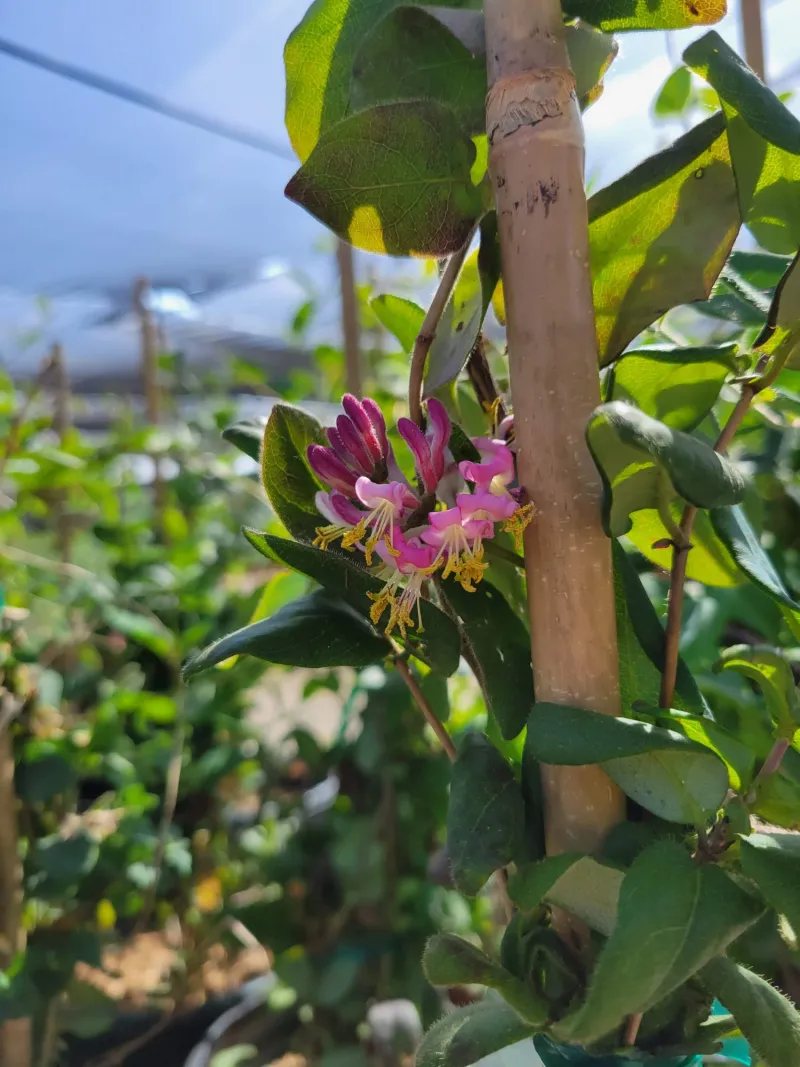
California honeysuckle goes by several names in nurseries and gardening guides: western honeysuckle, hairy honeysuckle, and its botanical name, Lonicera hispidula. All three labels refer to the same California-native plant, but the common names can cause confusion at the nursery counter, since other honeysuckle species share similar names.
Always ask for Lonicera hispidula by its botanical name to make sure you are getting the right plant.
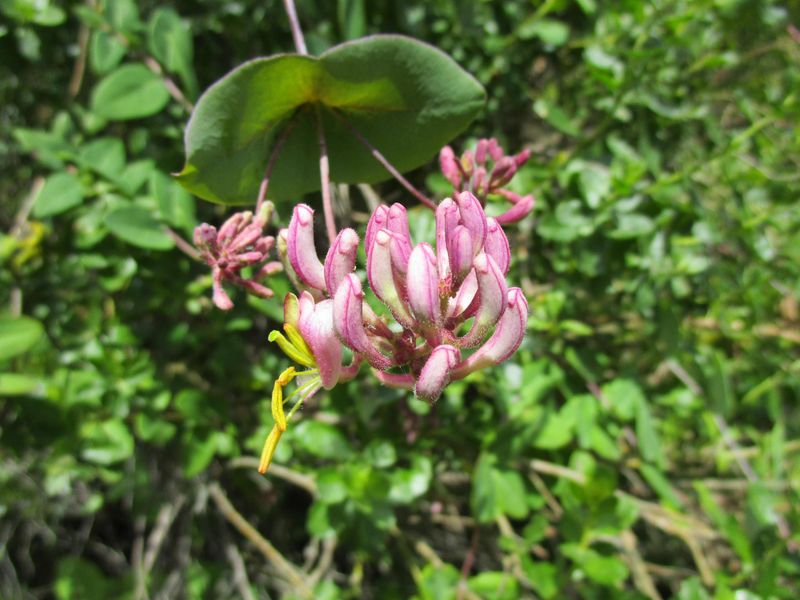
The vine produces clusters of soft pink tubular flowers during spring and into summer. Those blooms are the main draw for hummingbirds, and the plant can grow in full sun or partial shade, giving it some flexibility across different garden exposures.
UC Master Gardener guidance for Lonicera hispidula puts the mature plant at roughly 4 feet high by 8 feet wide, which is a modest footprint compared with a well-established wisteria that can run 30 feet or more across a pergola.
That size difference matters a lot when you are planning overhead shade. Lonicera hispidula twines and scrambles rather than surging upward with the vigor of a large woody vine.
On a small trellis or a modest pergola section, it can fill in attractively and provide seasonal color. On a full-sized pergola where you are hoping for dense canopy coverage, the honest answer is that this plant is unlikely to deliver that result on its own, at least not at the scale most homeowners picture when they think of wisteria.
Treating California honeysuckle as a smaller, wildlife-friendly climber in its own right, rather than as a wisteria stand-in, sets up a much more satisfying outcome. The plant has real strengths, and those strengths show up best when the structure and expectations are sized to match the vine.
Compare purpose, not just water use
One of the most common reasons California gardeners consider swapping wisteria for a native vine is the assumption that wisteria is a heavy water user. The reality is more nuanced.
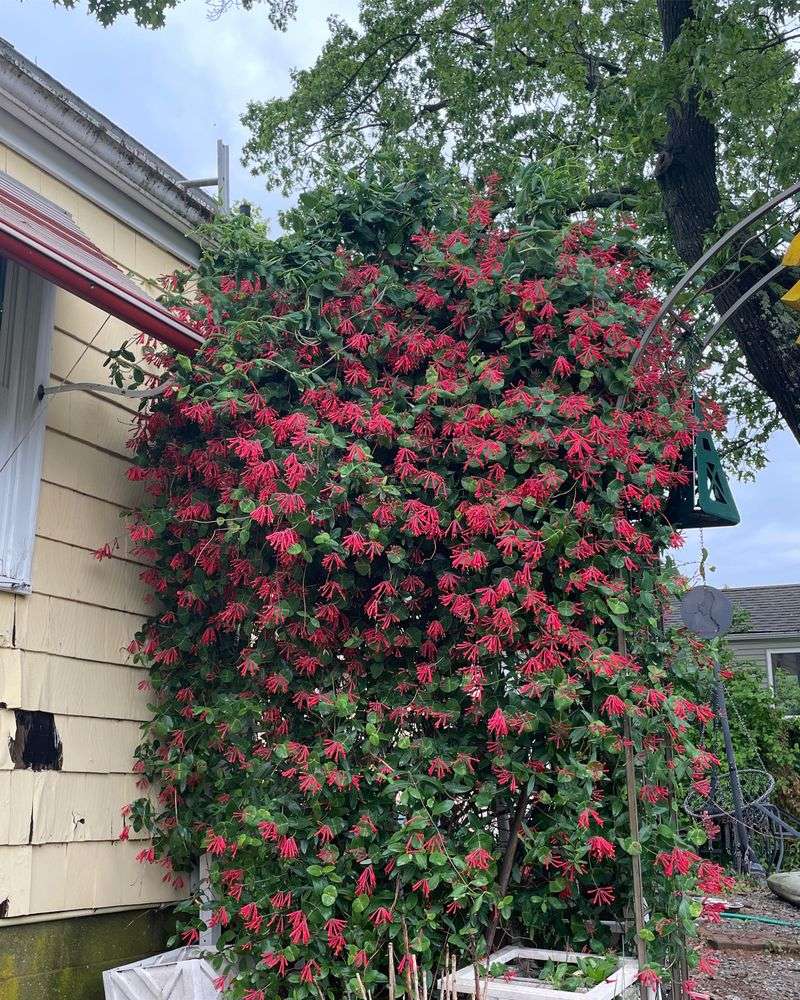
UC IPM’s wisteria profile describes the plant as adaptable and needing little to moderate water once established, which puts it closer to a drought-tolerant shrub than a water-hungry one. The stronger argument for choosing California honeysuckle is not a guaranteed water bill reduction but rather a shift in ecological purpose.
Wisteria, particularly Chinese and Japanese wisteria, is not native to California and provides limited wildlife value compared with plants that evolved alongside local pollinators and birds. California honeysuckle, by contrast, offers pink flowers that hummingbirds actively seek, and it supports the broader web of insects and birds that depend on native plant communities.
Choosing a native vine for that ecological fit is a legitimate and worthwhile reason to make the switch, even if the water savings turn out to be modest rather than dramatic.
Wisteria also demands consistent pruning and training to stay in bounds and produce good flower displays. UC Marin Master Gardeners’ pruning guide outlines a two-season pruning schedule needed to keep wisteria flowering and manageable.
California honeysuckle has its own maintenance needs, but its smaller scale means the workload is generally lighter.
Where the comparison breaks down is canopy performance. If your primary goal is a shaded outdoor room under a large pergola, wisteria’s scale and density remain hard to match with a vine that tops out at roughly 4 feet tall.
UC Sonoma’s profile of Lonicera hispidula does not describe it as a canopy vine, and homeowners planning a full-shade structure should factor that in before committing to the swap.
Hummingbirds get seasonal support, not a summer guarantee
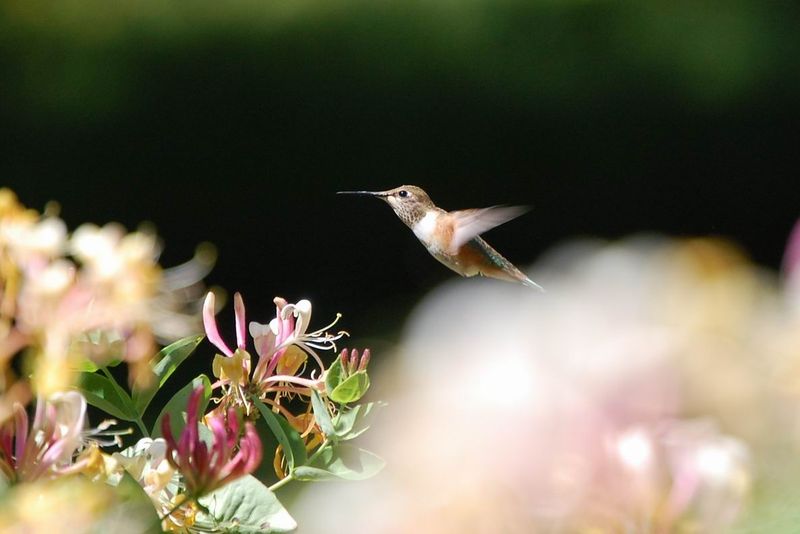
Pink tubular flowers and hummingbirds are a reliable pairing in California gardens, and California honeysuckle earns its reputation as a hummingbird plant during spring and into summer. Anna’s hummingbirds, which stay in California year-round, are frequent visitors to tubular blooms, and the timing of Lonicera hispidula’s flower display overlaps with peak hummingbird activity in many parts of the state.
The qualification worth keeping in mind is that “all summer” is a stretch. Bloom timing depends on the plant’s age, the local climate, how much water it receives, and the specific cultivar.
A newly planted vine may produce only a modest flush of flowers in its first season. A plant in a hot inland location with limited irrigation may finish blooming earlier than one growing in a cooler coastal yard.
The sources confirm spring-and-summer flowering and hummingbird attraction, but they do not document continuous nectar production from June through September across every California climate zone.
UC Marin Master Gardeners’ hummingbird garden guide makes a practical point that applies directly here: hummingbirds benefit most from a sequence of nectar plants rather than a single vine. Pairing California honeysuckle with other native bloomers that flower at different times, such as salvias, penstemons, or monkeyflowers, keeps nectar available across a longer season and gives hummingbirds a reason to stay in the yard even when the honeysuckle finishes its main flush.
Think of Lonicera hispidula as one reliable stop on a hummingbird route through your garden rather than the whole route itself. That framing is both more accurate and more useful when you are planning a planting scheme around wildlife support.
Design the support around a modest climber
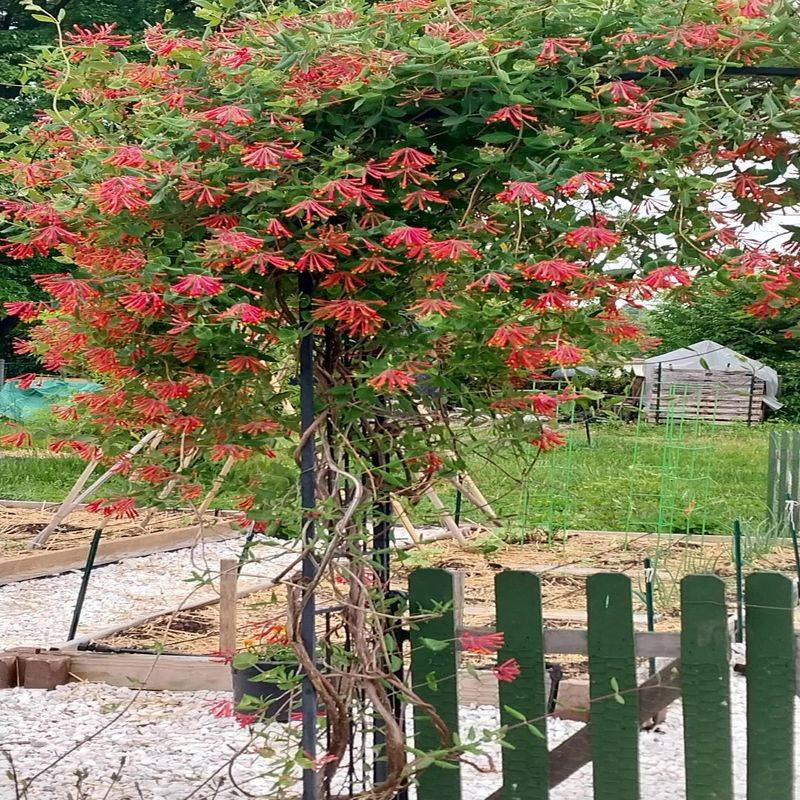
Before you buy the plant, spend a few minutes looking at your existing structure. A full pergola built to support a mature wisteria is overbuilt for a vine that matures at roughly 4 feet high by 8 feet wide.
California honeysuckle will perform better, and look better, on a structure sized to its actual reach: a sturdy trellis panel, a section of pergola wire, a fence with horizontal support wires, or a modest arbor over a garden path.
UC IPM’s honeysuckle guidance notes that vining honeysuckles need sturdy support and may require tying until their stems are strong enough to hold themselves upright. Young Lonicera hispidula stems are flexible and will twine around a wire or thin stake, but they can also flop sideways or trail along the ground if nothing directs them upward.
Check on the plant every few weeks during the first growing season and use soft garden ties to guide new growth in the direction you want.
For hotter inland sites, the structure’s orientation matters. UC Master Gardeners of Napa County suggest that partial shade or protection from afternoon sun can improve performance in warmer locations.
Placing the trellis on a north- or east-facing wall, or under the dappled shade of a nearby tree, reduces heat stress and may extend the bloom period slightly.
Without consistent support and occasional training, the vine is likely to ramble outward along the ground rather than climb. That is not a failure of the plant; it is simply its natural habit when left to itself.
A little guidance in the early months pays off with a tidier, more vertical display that shows off the flowers where you can actually see and enjoy them.
Treat lower water use as a site-dependent outcome
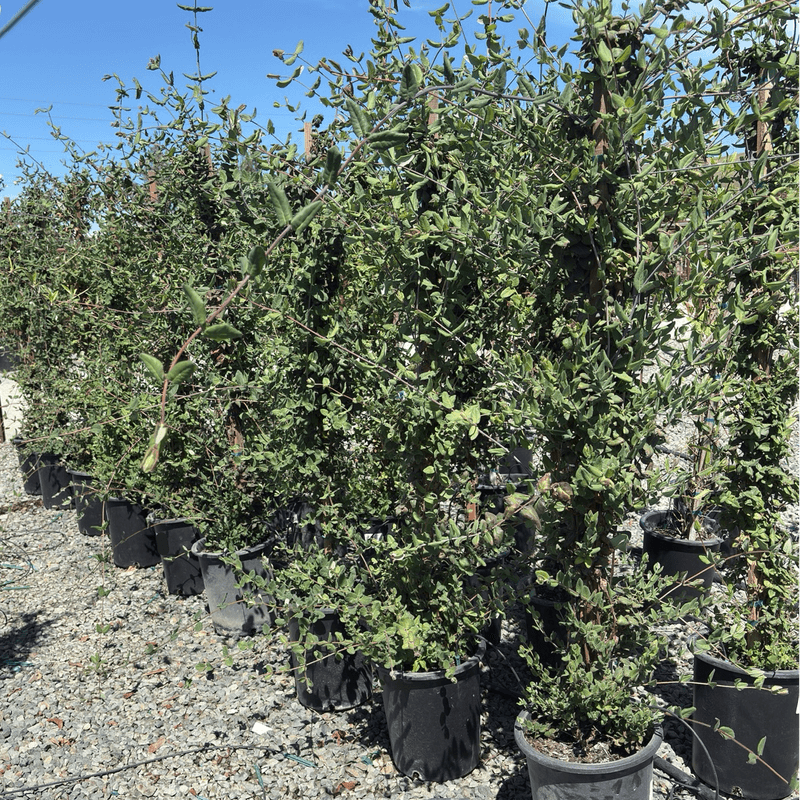
“Native plant” and “no water needed” are not the same thing, and California honeysuckle is a clear example of why that distinction matters. The plant is native to parts of California that include moist slopes and riparian edges, meaning it evolved in conditions that receive more summer moisture than a typical inland garden provides.
Calling it drought tolerant without context can set a homeowner up for a struggling, unattractive vine.
UC Master Gardeners of San Mateo and San Francisco Counties are clear that California natives generally need regular irrigation during their first year or two while their root systems develop. Skipping summer water in year one is one of the most common reasons native plantings fail.
UC Sonoma’s profile of Lonicera hispidula also notes that the plant looks best with regular summer water, which means even an established plant in many California gardens will benefit from supplemental irrigation rather than surviving on rainfall alone.
UC ANR’s drought and water conservation guidance recommends watering slowly and deeply rather than with frequent shallow sprinkles, which encourages roots to grow downward and increases the plant’s resilience during dry spells. A drip line or a slow hand-watering session that soaks the root zone thoroughly once or twice a week during the first summer is a reasonable starting point.
UC Sonoma’s native plant growing guide recommends fall planting for most California natives, timed to take advantage of the rainy season. A plant put in the ground in October or November gets several months of natural rainfall to begin establishing before it faces its first dry summer.
In a coastal garden with mild summers, Lonicera hispidula may eventually get by with minimal supplemental water. In a hot inland valley, plan on regular irrigation as a long-term commitment, not just a first-year courtesy.
Do not confuse honeysuckle with California pipevine
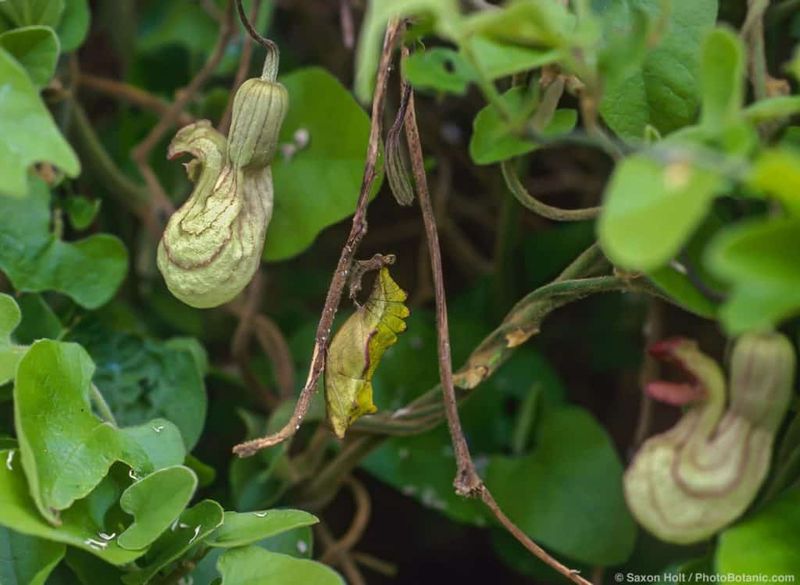
California pipevine, Aristolochia californica, sometimes shows up in conversations about native climbers for California gardens, and it is worth understanding what it actually does before deciding whether it belongs on your trellis. The two plants fill different ecological niches, and mixing them up leads to mismatched expectations.
UC Master Gardeners of Napa County describe Aristolochia californica as a vine suited to shaded or filtered-light locations, which already separates it from California honeysuckle’s preference for sun or partial shade. Its flowers are unusual curved pipe shapes that appear mainly in late winter and early spring, well before the summer bloom period that makes Lonicera hispidula relevant to hummingbird gardeners.
The wildlife story for California pipevine centers on the pipevine swallowtail butterfly, one of the most striking native butterflies in the state. The San Lorenzo Valley Habitat Restoration Program’s pipevine profile explains that Aristolochia californica is the essential larval host plant for this butterfly species, meaning caterpillars depend on it to survive.
That is a significant ecological role, but it is a butterfly story, not a hummingbird one, and the bloom timing does not align with the spring-and-summer hummingbird window that California honeysuckle covers.
Both plants are genuinely useful California natives worth growing if the site fits. The point is simply that they do different things at different times of year for different creatures.
If your goal is a vine that brings hummingbirds during spring and summer, Lonicera hispidula is the more appropriate choice. If you have a shaded corner and want to support pipevine swallowtail butterflies, Aristolochia californica is the plant to seek out.
Screen the site for climate, species, and fire exposure

A few quick site checks before planting can prevent the most common mistakes with California honeysuckle. Start with the botanical name.
Common names like “honeysuckle” cover a wide range of species, some native, some not, with different water needs, growth habits, and ecological profiles. Confirm you are buying Lonicera hispidula specifically, and ask the nursery staff or check the plant tag for the Latin name before you leave the parking lot.
Next, honestly assess your climate zone. UC ANR’s California native plants overview makes the point that “California native” spans an enormous range of environments, from cool foggy coastlines to hot inland valleys to high-elevation foothill gardens.
A plant native to a moist coastal slope may struggle without supplemental water in a hot Sacramento Valley yard. Match the plant’s documented habitat preferences to your actual conditions rather than assuming any California native will thrive anywhere in the state.
Check your drainage. UC ANR drought guidance and the UC IPM honeysuckle profile both flag good drainage as important for healthy honeysuckle performance.
A spot that holds standing water after rain is a poor choice regardless of climate zone. Also verify that you can deliver regular summer irrigation during the establishment period and, if needed, beyond it.
For homeowners in fire-prone areas, a vine on a pergola or trellis requires additional thought. CAL FIRE’s defensible space guidance emphasizes removing dead and dry vegetation regularly, maintaining required clearance between plants and structures, and following any stricter local standards that may apply in your jurisdiction.
No vine growing against or over a structure can be called fire safe. Dead stems and dry leaves accumulate on any climber and become fuel during fire season, so plan for regular cleanup as part of the maintenance routine.
Check Cal-IPC’s horticulture plant list to confirm that any vine you are considering is not flagged as an invasive risk in your region, and verify your local fire agency’s specific requirements, which may exceed the state standard.
Choose California honeysuckle for the right pergola job
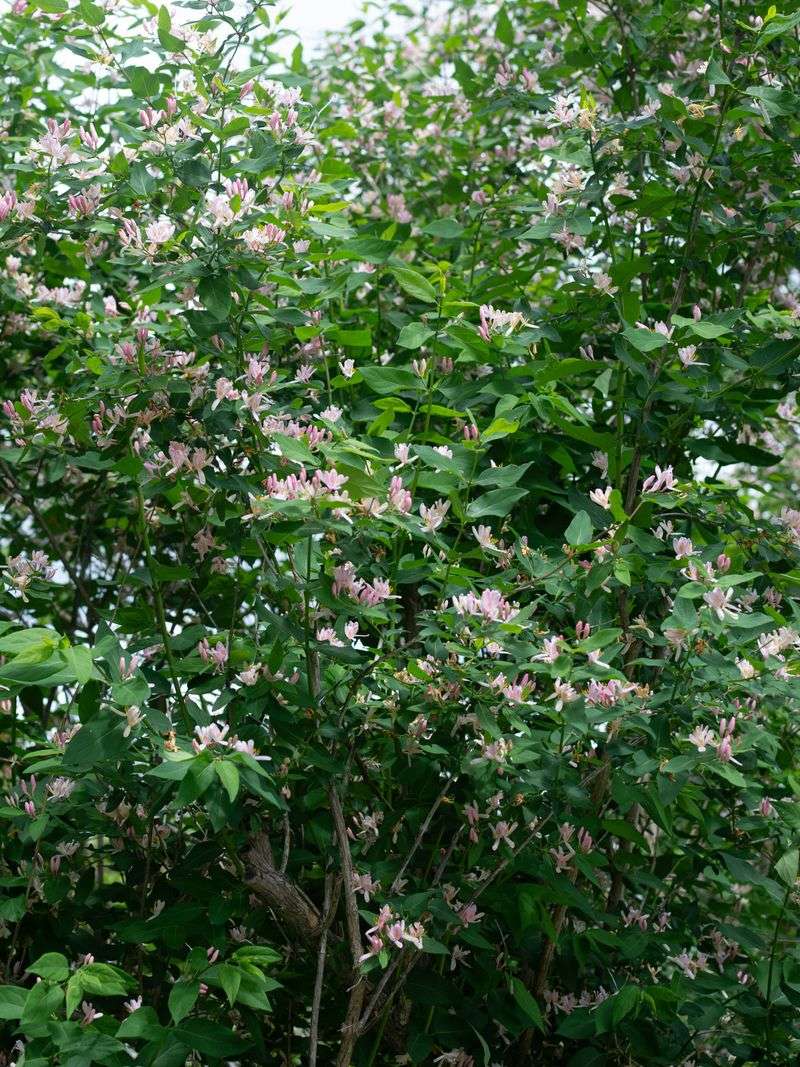
Lonicera hispidula earns a place in a California garden when the conditions line up: a modest trellis or small pergola section, a site with good drainage and adequate sun, a realistic plan for establishment watering, and an owner who wants seasonal pink flowers and hummingbird visits rather than a dense overhead canopy. In that context, it is a genuinely rewarding native plant with real ecological value.
If your primary goal is overhead shade across a full pergola, wisteria’s documented growth habit still makes it the more practical choice for that job, even with its pruning demands. Choosing the right plant for the right purpose is better stewardship than forcing a small native climber to perform a role it was never built for.
UC Marin Master Gardeners’ hummingbird garden advice reinforces this by recommending a sequence of native nectar plants rather than a single vine, which means California honeysuckle works best as part of a broader planting plan.
For the homeowner who wants a California-native climber that supports local wildlife, requires a manageable structure, and brings pink spring-and-summer blooms to a sunny or partly shaded spot, Lonicera hispidula is worth growing. The hummingbirds that stop by during bloom season are a genuine payoff, not a marketing promise.