
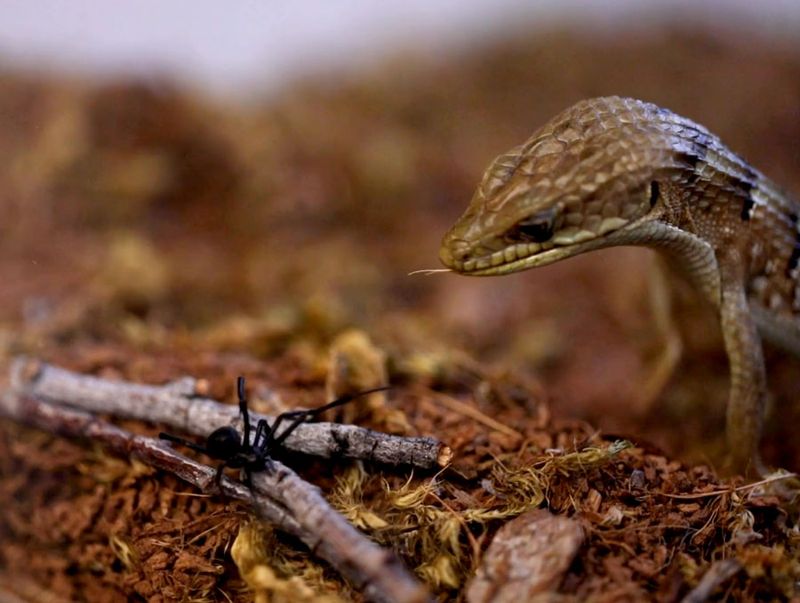
Most California homeowners know the spiky blue-bellied lizard doing push-ups on the back fence, but there is a second native lizard working the shadier corners of the same yard that almost nobody notices. The southern alligator lizard is a stocky, slow-moving predator that eats black widows, snails, and scorpions and spends most of its life tucked beneath rocks, logs, and leaf litter rather than basking in plain sight.
Routine yard cleanup can remove exactly the kind of ground cover this lizard uses, though whether that directly displaces individual lizards is harder to prove than the headline suggests. Understanding what the animal actually needs, and where fire safety sets firm limits, helps homeowners make smarter choices about the space between the fence and the flower bed.
Meet the southern alligator lizard beneath the yard’s cover
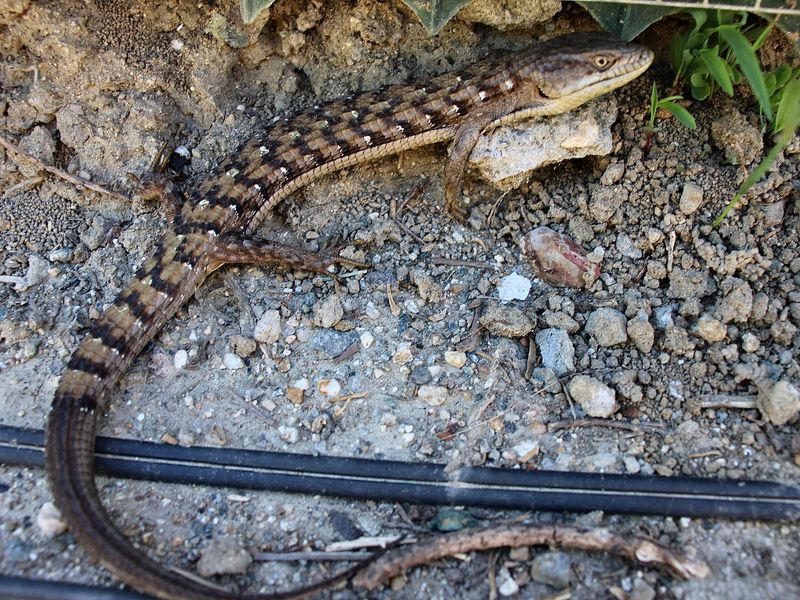
Somewhere under the leaf pile near your garden border, or wedged beneath a flat rock at the edge of a mulched bed, there may be a lizard most California homeowners have never properly identified. The southern alligator lizard, Elgaria multicarinata, is the species most likely responsible for the occasional serpentine flash of movement in a shaded corner of a Southern California yard.
Stocky, with strongly keeled scales that give it a rough, almost armored look, it reaches lengths of up to about seven inches from snout to vent, with a tail that can more than double that measurement.
California actually has more than one alligator lizard species and several subspecies spread across different regions, so the term “California alligator lizard” does not describe a single uniform animal statewide. The CDFW California Wildlife Habitat Relationships account for the southern alligator lizard confirms a broad distribution that covers much of the state, with the southern alligator lizard being the relevant species for most of the Southern California homeowners who encounter one near a garden bed.
Behaviorally, this lizard operates differently from the western fence lizard that most people recognize. National Park Service natural history notes for Channel Islands describe southern alligator lizards as preferring sunny locations with nearby cover and as frequently found beneath debris, driftwood, rocks, or dense vegetation rather than out in the open.
They are active during daylight, but they rarely sit exposed on top of a surface the way a fence lizard does on a post or wall cap.
That secretive habit is precisely why they go unnoticed. The useful native predator in a yard may be the one you almost never see, moving through the shadowed gap between a stepping stone and a clump of native grass, rather than the lizard performing territorial push-ups on the fence rail in full sun.
Shade alone does not define their habitat, but cover near accessible warmth is a consistent feature wherever they turn up, according to Yosemite National Park wildlife observation records.
Black widows are documented prey, not a guaranteed pest-control service
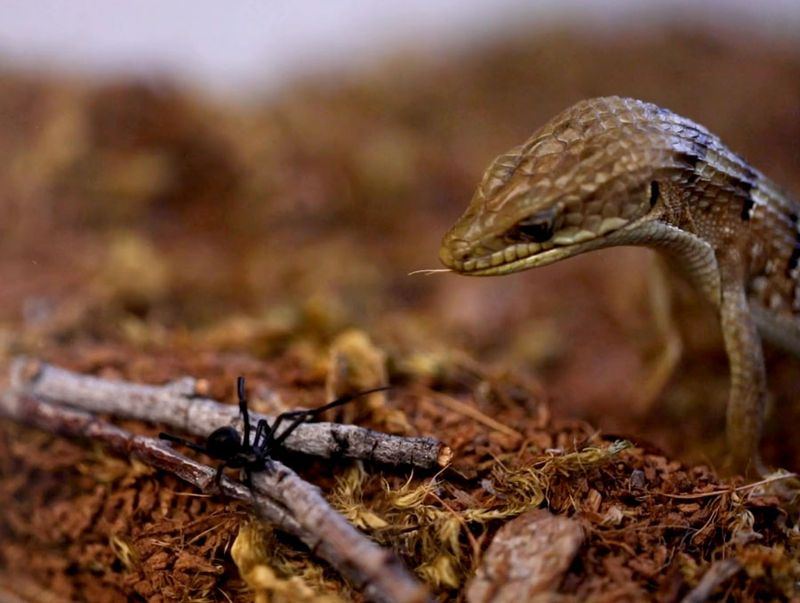
Few things get a California homeowner’s attention faster than a black widow web tucked behind a garden pot or under a deck ledge. The good news is that southern alligator lizards genuinely eat them.
NPS Channel Islands natural history records list black widow spiders and snails alongside centipedes, scorpions, sow bugs, and insects as documented prey. That diet breadth makes the southern alligator lizard one of the more useful generalist predators a California yard can host.
Older natural history research adds an intriguing detail. A historic dietary study of San Diego alligator lizards found that individuals could distinguish black widow egg cases containing eggs or spiderlings from empty cases, actively selecting the occupied ones.
That finding suggests the relationship between these lizards and black widows is not a modern anecdote or a lucky coincidence, but part of a long-standing predator-prey dynamic. The study is old and focused on a particular population, so it works best as natural-history context rather than evidence of reliable spider reduction in today’s residential yards.
The most recent laboratory evidence is striking but also requires careful reading. A 2022 peer-reviewed study found that southern alligator lizards tolerated experimental injections of western black widow venom with little apparent effect on sprint performance or muscle tissue, suggesting strong physiological resistance.
The researchers did not characterize this as immunity, and the mechanism behind it remains an open question. Describing the lizard as immune would go further than the data support.
Two other distinctions matter for homeowners. First, the study used injected venom delivered directly into tissue, which is not the same exposure a lizard gets when it swallows a spider whole.
Ingested venom behaves differently from injected venom, and the study did not test every black widow species, every California population, or every possible exposure route. Second, and more practically, none of this research measured how many black widows disappear from a specific yard because a lizard lives there.
Predation is documented; household-level control is not. NPS species profile notes confirm the diet without making any pest-control guarantee, which is the honest framing homeowners should carry forward.
The fence-lizard comparison is about visibility and cover
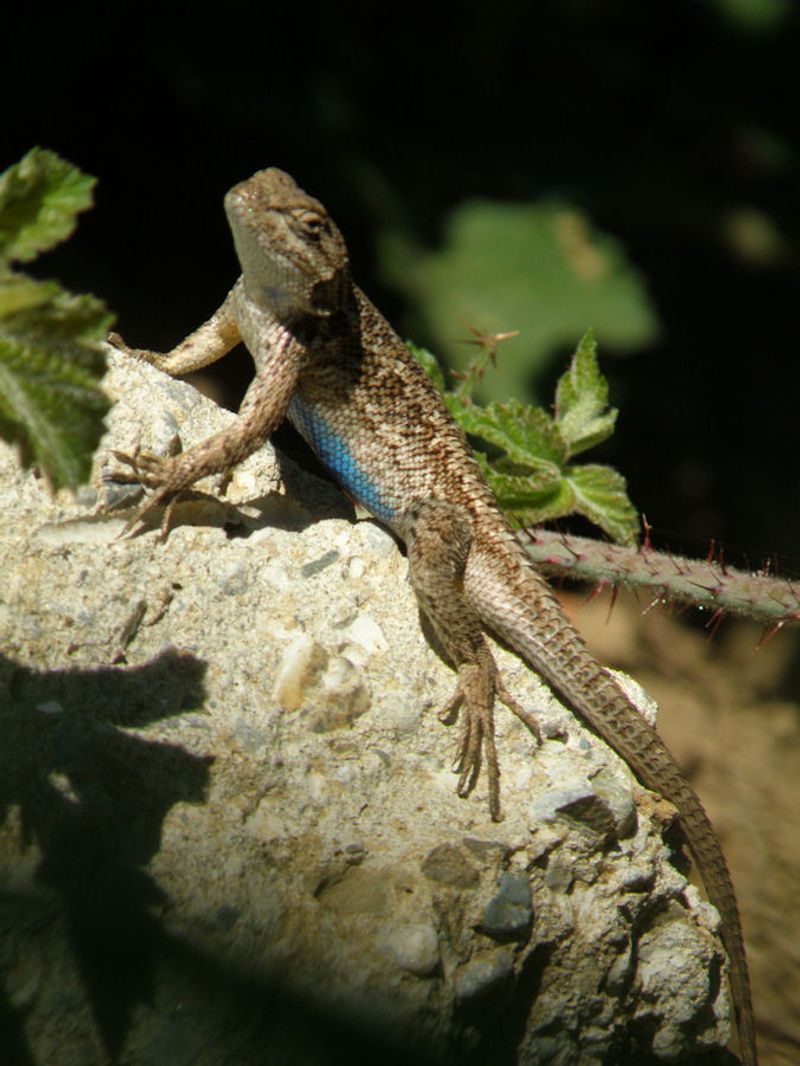
Western fence lizards get most of the credit for spider predation in California yards, partly because they are so easy to spot. Males advertise themselves with push-up displays and bright blue belly patches, and they tend to choose conspicuous perches: fence rails, rock faces, wood piles stacked in the open, retaining walls, and deck posts.
That visibility creates the impression that fence lizards own the yard, while alligator lizards remain invisible by comparison.
The difference between the two species is real but should not be overstated into an exclusive territorial split. NPS Point Reyes natural history notes describe western fence lizards using rocks, logs, woodpiles, fences, and building surfaces, and CDFW habitat relationship data confirm that fence lizards also use cover objects and are not restricted to bare, sun-baked surfaces.
They shelter, they forage in vegetation, and they eat spiders. The 2022 venom study that tested alligator lizards also tested western fence lizards and found that fence lizards maintained whole-animal sprint performance after black widow venom injections, though they did show muscle damage and immune activation, meaning they are not simply unaffected.
Both species are documented predators of western black widows.
What separates them is temperament and foraging style more than a hard boundary between sun and shade. Alligator lizards are more secretive and cover-oriented, moving through debris and dense vegetation rather than pausing on exposed surfaces.
A shaded garden bed with ground cover, rocks, and low plants is a place where an alligator lizard turns up more often, not because fence lizards cannot enter it, but because alligator lizards spend more of their time in exactly that kind of space. Homeowners who only watch the sunny fence line for lizards may be missing the predator already working the darker corners of the same property.
How ground cover may support a secretive hunter
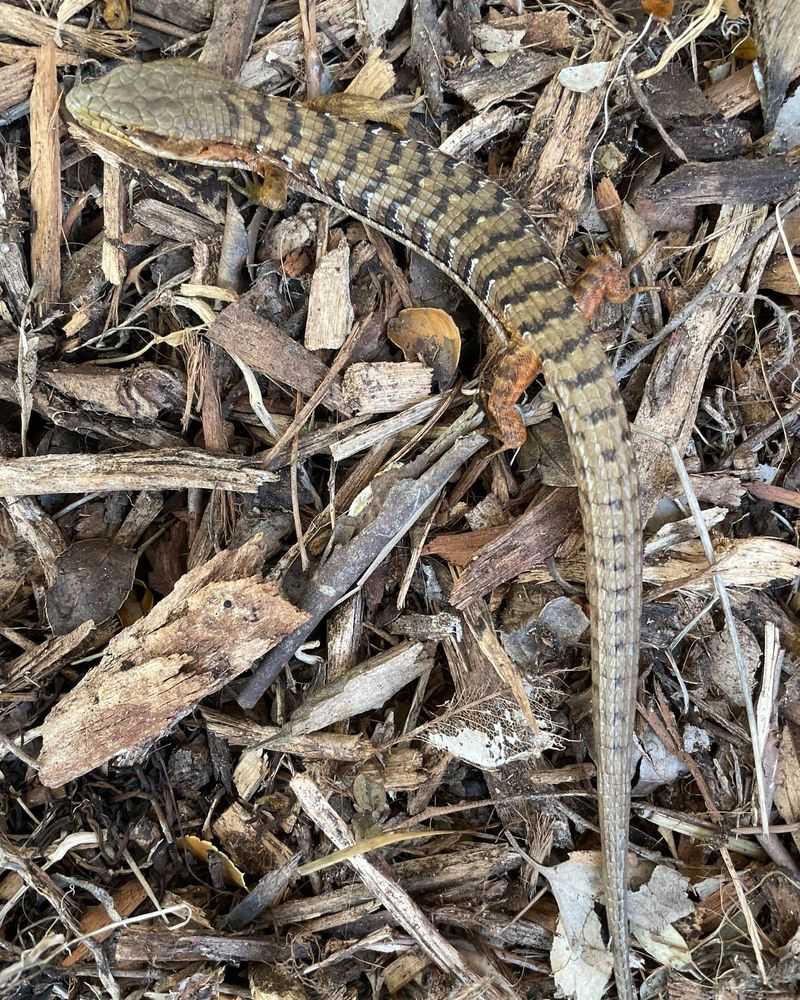
Leaf litter, flat rocks, low-growing shrubs, logs, and soil crevices serve multiple functions for a secretive lizard. They provide shelter from predators, stable moisture and temperature gradients, and travel corridors that let an animal move through a yard without crossing open ground.
For a southern alligator lizard, which forages by moving slowly through cover rather than sprinting across exposed surfaces, these features are the landscape it navigates every day.
Channel Islands NPS records consistently describe southern alligator lizards in association with debris, driftwood, rocks, and dense vegetation. Yosemite wildlife observations note similar cover preferences in a very different climate, suggesting the pattern holds broadly across the species’ range.
When a homeowner removes every layer of organic material from a bed, rakes bare soil between plants, and eliminates low-lying debris, the result is a space with fewer of the features this lizard uses for shelter and movement.
That reasoning is directionally sound, but it should be held carefully. No study located here directly documents a before-and-after effect in which homeowner raking causes alligator lizards to leave a specific yard.
The connection between cover removal and reduced habitat suitability is a reasonable inference from documented habitat preferences, not a proven population-level outcome. Leaf litter depth, litter type, and specific plant species are not known thresholds, and no source supports a claim that a particular arrangement of logs or a certain square footage of mulch guarantees a lizard will stay.
Other factors matter alongside cover: prey availability, nearby access to warmth, pesticide history, soil disturbance, and the presence of cats or other predators all shape whether any lizard uses a given patch of yard. Removing ground cover is one variable in a larger picture, and combining it with vegetation clearing, broad pesticide applications, and high foot traffic is likely more disruptive than any single action taken alone.
The CDFW habitat profile for this species describes a range of cover and vegetation associations without specifying a minimum requirement, which reflects how much individual variation exists across California yards and habitats.
Build habitat around access to suitable temperatures
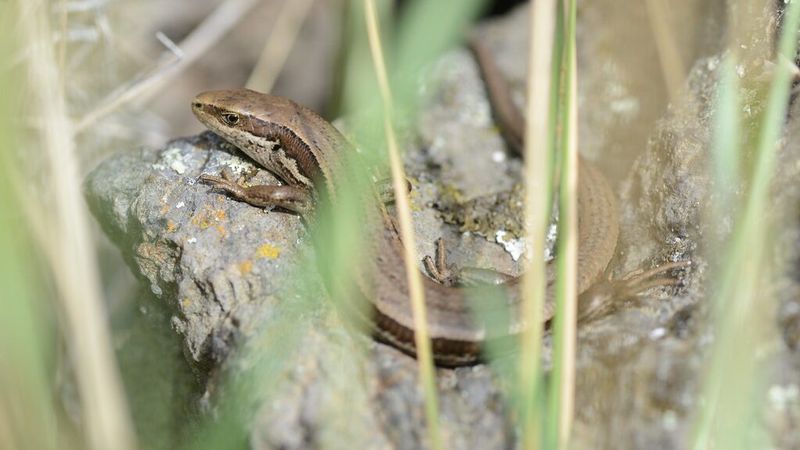
Translating habitat preferences into yard choices requires one correction to a common assumption: a shaded bed is not automatically good habitat just because it has leaf litter and cover. Southern alligator lizards are ectotherms, meaning they depend on external warmth to regulate body temperature and stay active.
A bed that receives no direct sun, stays cold and wet through most of the day, or sits in a heavily disturbed area near high foot traffic may have cover but still lack what a lizard needs to thermoregulate and forage effectively.
The practical target is a combination: some sheltered, cover-rich ground near an area that receives at least partial sun or retains warmth through the afternoon. Channel Islands NPS notes describe southern alligator lizards preferring sunny locations with nearby cover, and Yosemite wildlife records confirm similar patterns in a cooler mountain setting.
That combination, not shade alone, is the relevant habitat feature.
Where local rules and site conditions allow, homeowners can retain some natural ground cover outside required defensible-space zones: a flat rock near a low-water native shrub, a small brush pile in a back corner that stays dry, a layer of fallen leaves under a native oak. UC ANR guidance on creating wildlife refuge areas encourages retaining natural features that support native species without recommending specific configurations or promising particular outcomes.
These are habitat-support ideas, not a tested recipe. Adding irrigation, importing soil amendments, or purchasing materials specifically to attract lizards is not supported by the evidence and could create other problems.
Overwatering a bed to keep litter moist, for example, may favor slugs and fungal growth over the dry-to-slightly-moist conditions alligator lizards tend to prefer. The goal is to reduce unnecessary disturbance in areas that already have some natural structure, not to engineer a new microhabitat from scratch.
Any lizard that uses the space will have found it on its own terms.
Defensible space comes first near California homes

No wildlife benefit justifies keeping combustible material next to a California home. CAL FIRE’s defensible space guidance is explicit: the first five feet around a structure, including decks, porches, fences attached to the house, and outbuildings, require the removal of dead leaves, debris, and combustible bark or mulch.
This zone, sometimes called Zone 0, is where embers land during a fire and where ignition most often begins. Leaf litter, wood chips, bark mulch, and dry plant material in this zone are fire hazards regardless of their wildlife value.
Zone 1 extends from five feet to thirty feet from the structure (or farther in some jurisdictions) and requires clearing dead and dry vegetation, removing ladder fuels, and keeping plants well-spaced. California Board of Forestry defensible space documentation notes that in Zone 2, which runs from thirty to one hundred feet, fallen leaves, needles, twigs, bark, cones, and small branches may be allowed to a depth of three inches under state guidance.
However, local fire agencies and jurisdictions frequently impose stricter requirements, and homeowners in a State Responsibility Area or a Very High Fire Hazard Severity Zone should confirm what their specific rules allow before retaining any ground material.
The practical separation for wildlife purposes is geographic: do not retain combustible cover anywhere within required clearance zones, but consider whether managed cover farther from the structure is compatible with local rules and site conditions. A naturalistic patch of rocks, low native plants, and minimal dry debris at the far edge of a large lot is a very different situation from a leaf pile against a wood fence attached to the house.
Homeowners in densely landscaped suburban settings, on flat lots with no direct wildland interface, face lower ember-ignition risk than those on hillsides in brush country, but CAL FIRE guidance applies broadly. When in doubt, remove the material near the structure and consult your local fire department or CAL FIRE unit for site-specific advice.
Fire safety is the firm boundary that habitat guidance cannot move.
Protect lizards without ignoring spiders or pesticide impacts
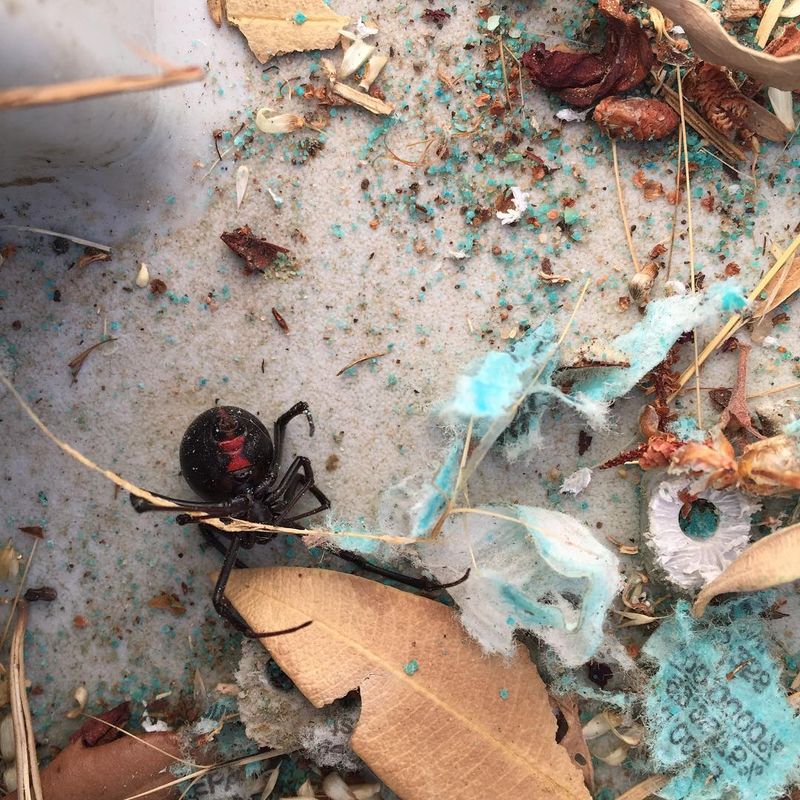
Black widows are shy and rarely aggressive, but they can show up in exactly the kinds of sheltered, undisturbed spots that also attract alligator lizards: under garden pots, behind stacked wood, in the gap between a retaining wall block and a fence post, along a garage foundation. Managing those high-contact areas carefully is not optional, even in a yard that supports native predators.
UC IPM guidance on widow spiders recommends using gloves and a tool, not bare hands, whenever disturbing places where black widows may shelter. Anyone bitten should stay calm, note the time, and seek medical advice promptly.
Pesticide use around the yard deserves careful thought when native predators are part of the picture. Broad, preventive spray applications can affect lizards indirectly by reducing the invertebrate prey they depend on and by contaminating surfaces they contact during foraging.
UC IPM’s pesticide guidance recommends identifying the specific pest before choosing a treatment and considering nonchemical options first. UC IPM’s guidance on protecting natural enemies advises selecting products with the least adverse effect on beneficial species when a pesticide is truly necessary.
Alligator lizards themselves require a particular kind of respect: observe them, but leave them alone. UC IPM’s lizard management page notes that alligator lizards may bite strongly when roughly handled and that gloves are appropriate if one needs to be moved from indoors.
They are not venomous to people, but a bite from a large individual is not trivial. More importantly, do not attempt to collect, purchase, or relocate alligator lizards.
California law regulates the take and possession of native lizards, and introducing animals from elsewhere can be harmful to the animals and ecologically inappropriate.
Supporting a native predator is a reasonable stewardship choice, but it does not replace the practical steps UC IPM recommends for spider management: reducing clutter near doors and foundations, removing webs regularly, sealing gaps, and using CDC-recommended precautions in areas where black widows are likely. A lizard in the yard is a welcome presence, not a substitute for any of those measures.
Preserve safe cover, not every pile of debris
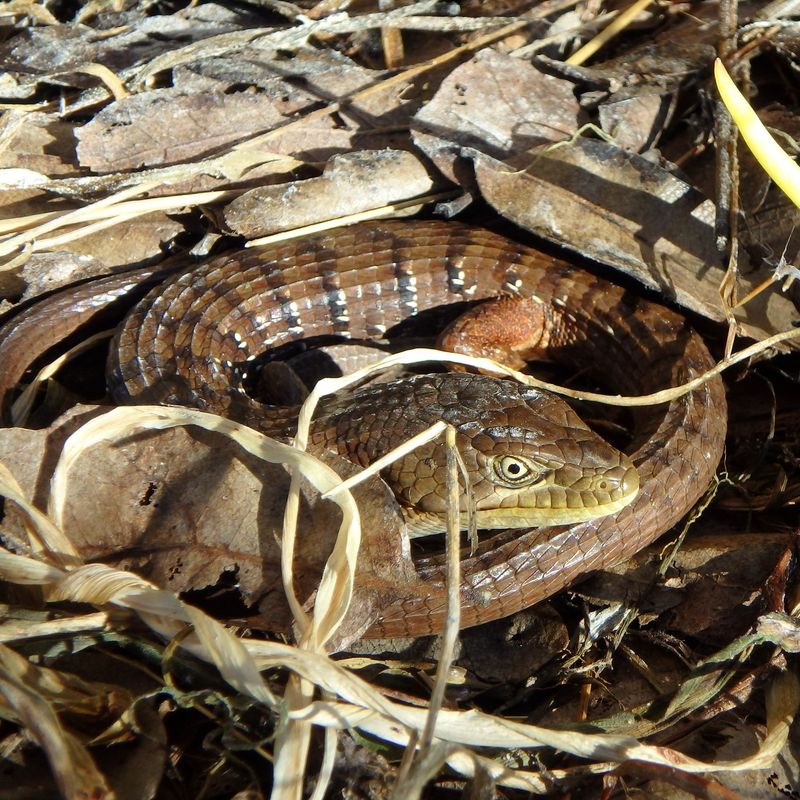
Southern alligator lizards can be a genuine asset in a California yard. They eat black widows, scorpions, snails, and other arthropods, and they do it quietly, without any input from the homeowner beyond leaving suitable habitat alone.
Ground cover near accessible warmth may support their use of a yard, and reducing unnecessary disturbance and pesticide use gives them a better chance of staying. None of that guarantees a lizard will appear, and none of it guarantees black widow numbers will drop to a particular level, but the conditions are worth preserving where local rules allow.
The headline framing, that homeowners scatter these lizards by raking, is stronger than the evidence supports. Removing cover and ground litter may make parts of a yard less suitable for a secretive species that depends on those features, but no study documents a direct displacement effect from routine yard cleanup.
NPS natural history records describe habitat preferences clearly without claiming that any specific homeowner action causes lizards to leave.
The workable principle is simpler than the headline suggests: keep combustible debris out of required CAL FIRE defensible-space zones, manage black widow hot spots with gloves and common sense, avoid broad pesticide use where it is not necessary, and leave any lizard you find alone. Where space and rules allow, a rock, a low native shrub, and a patch of undisturbed leaf litter at the far edge of the yard cost nothing and may matter more than any deliberate habitat project.
A yard that is tidy where it needs to be and a little wild where it can afford to be is, in the end, a yard that works for everyone living in it.