
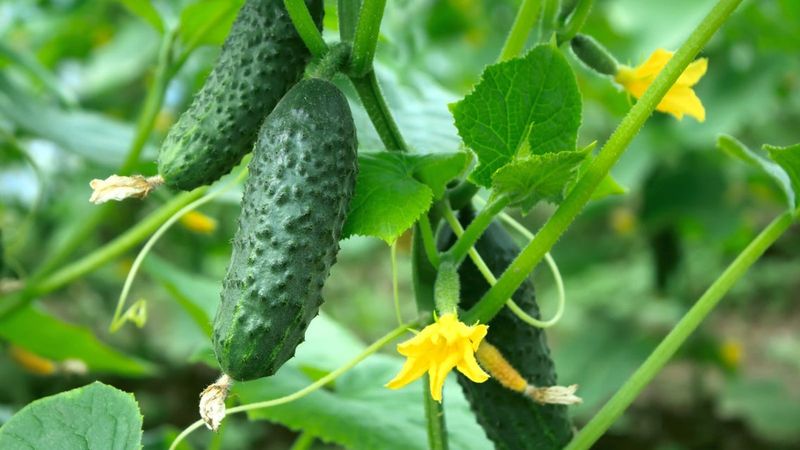
Biting into a cucumber you grew yourself only to get a mouthful of bitterness is one of the more discouraging moments in a summer garden. The problem feels like it snuck up on you at harvest, but the real cause was building weeks earlier while the vine was flowering and setting fruit.
August heat often gets the blame, but it is only part of the story. Understanding what actually triggers that bitter flavor puts the fix well within your reach, long before the next cucumber is ready to pick.
Bitterness begins with a cucumber defense compound
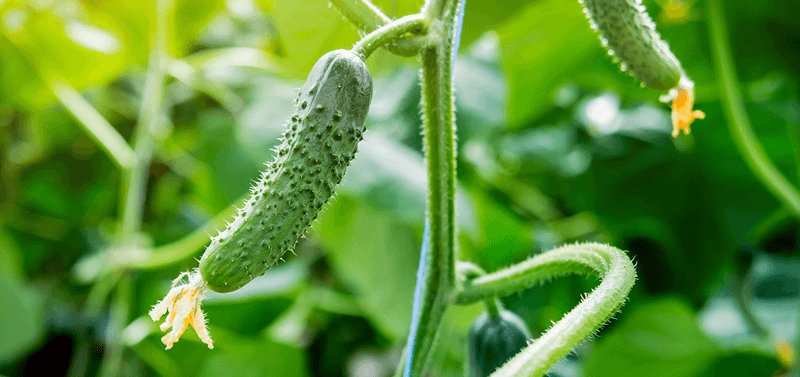
Cucumbers produce a group of naturally occurring compounds called cucurbitacins, and these are responsible for the bitter flavor that occasionally shows up at harvest. Plants in the cucurbit family, which includes cucumbers, squash, and melons, use cucurbitacins as a chemical defense against insects and other threats.
In cucumbers specifically, the levels of these compounds are shaped by two forces working together: the plant’s inherited genetics and the conditions it experiences while growing.
Research published in Science on cucurbitacin biosynthesis shows that domestication gradually selected for cucumbers with lower baseline bitterness, and that specific genes regulate how much of these compounds a plant produces. That genetic component is why cultivar choice matters.
A variety bred for low bitterness starts with a lower baseline risk than an older or more stress-prone type.
Genetics are not the whole picture, though. Environmental conditions during the growing season can push cucurbitacin levels higher even in a variety that normally tastes mild.
Utah State University Extension notes that stresses including high temperatures, drought, and uneven watering can all affect fruit quality. The practical takeaway is that bitterness at harvest is not a mystery that arrives from nowhere.
It reflects decisions and conditions that played out earlier in the season, which means gardeners have real opportunities to reduce the risk before any fruit is ever picked.
August heat exposes uneven moisture at the worst time
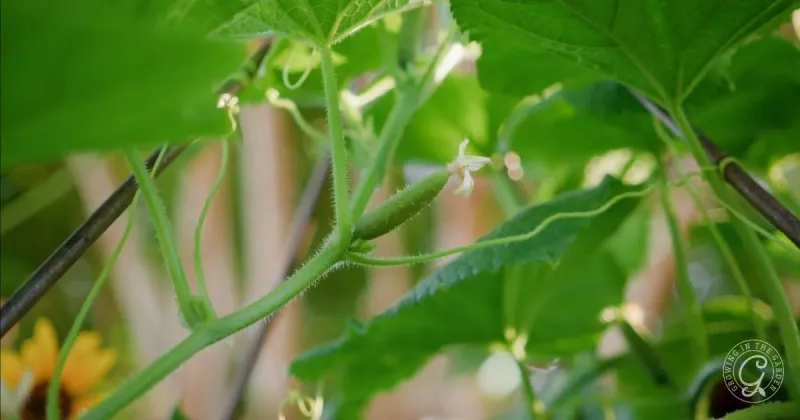
Late summer is when cucumber vines are often deep into flowering and fruit production, which makes it the most vulnerable window for quality problems. High temperatures during this period do not simply make fruit taste worse on their own.
What heat tends to do is accelerate soil drying and magnify the effect of any existing gaps in your watering routine.
Utah State University’s guidance on vegetable water needs specifically warns that drought stress during the reproductive phase, meaning while plants are flowering and setting fruit, can result in bitter and misshapen cucumbers. The vine is drawing heavily on root-zone moisture at this stage, and when that moisture becomes scarce or fluctuates sharply between wet and dry, the plant experiences stress that can increase cucurbitacin production.
Penn State Extension’s cucumber production guidance identifies temperatures above roughly 95 degrees Fahrenheit as a point where cucumber growth and maturity slow noticeably. That kind of heat does not create a guaranteed bitterness threshold, but it does mean the vine is working harder to manage stress, and any shortfall in soil moisture becomes more consequential.
Alabama Cooperative Extension lists wide temperature swings, poor fertility, low soil pH, insect damage, and disease as additional possible contributors to bitterness, reinforcing that heat is one piece of a larger picture. The strongest explanation for August bitterness is heat working alongside inconsistent or insufficient soil moisture, not heat acting alone.
Is the root zone drying out between waterings?
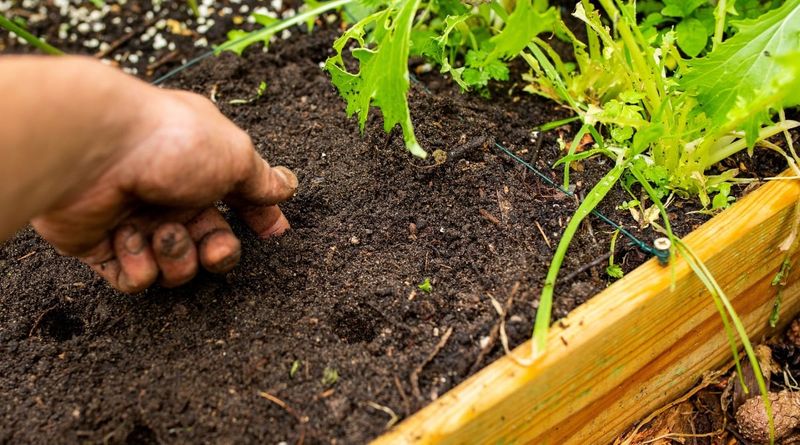
Before adjusting your irrigation schedule, spend a few minutes actually checking what is happening below the soil surface. A cucumber plant can look fine from a distance and still have a dry root zone, or it can show some midday drooping that recovers by evening without the soil ever being truly moisture-deficient.
Relying on appearance alone gives you an incomplete picture.
University of Minnesota Extension’s vegetable garden watering guidance advises checking about 2 inches below the surface. If the soil at that depth feels dry, the plant needs water, and you should not delay watering simply to hit a preferred morning window.
A wilting plant on a dry root zone is telling you something urgent.
Soil texture changes the equation significantly. Sandy soils drain quickly and may need water more often than a standard schedule suggests, while heavier clay soils hold moisture longer but can become waterlogged if watered too frequently.
Utah State University’s vegetable water recommendations make clear that the goal is consistent root-zone moisture adjusted to your actual soil conditions, not a rigid calendar rule that ignores rainfall, plant size, wind, or heat.
Rainfall during the week also counts. If your area received a meaningful amount of rain, check the soil before running irrigation anyway.
Overwatering creates its own problems, including increased disease risk and reduced crop quality. The finger-test habit, done every day or two during peak heat, gives you the site-specific information that any fixed schedule cannot.
Steady root-zone moisture is the practical prevention plan
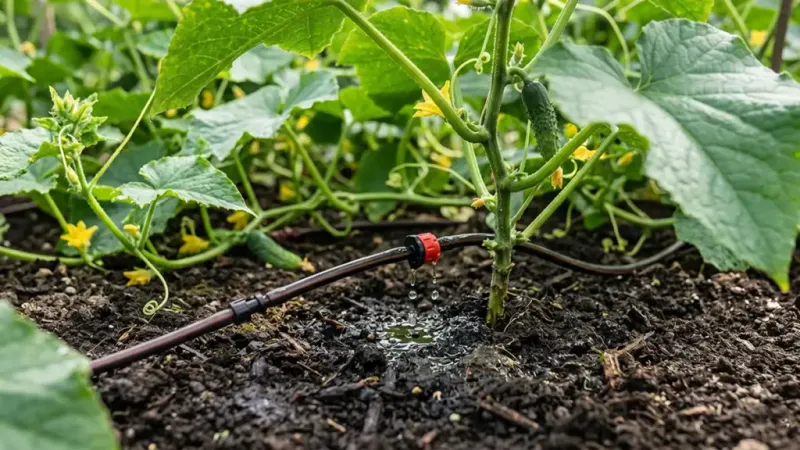
Consistent soil moisture during flowering and fruit production is the most direct action you can take to reduce bitterness risk in future cucumbers. The method matters as much as the frequency.
Applying water directly to the soil through drip irrigation, a soaker hose, or careful hand watering at the base of the plant keeps the root zone moist without wetting foliage. Wet leaves create conditions that favor fungal disease, so keeping water off the plant while getting it to the roots serves two purposes at once.
University of Minnesota Extension’s cucumber growing guide uses roughly 1 inch of water per week from rain or irrigation as a starting estimate for established plants. Treat that figure as a baseline to adjust, not a target to hit regardless of conditions.
During a week of extreme heat and wind, the vine may need more. After a soaking rain, it may need none.
UMN’s general vegetable watering guidance reinforces that the real goal is reasonably even soil moisture without leaving the root zone persistently saturated.
Organic mulch is one of the most useful tools for keeping that moisture stable. UMN’s mulching guidance recommends applying organic mulch roughly 2 to 4 inches deep, while keeping it pulled back from plant stems to avoid rot.
Straw, shredded leaves, and wood chips all slow evaporation and moderate soil temperature, which means the root zone stays more even between waterings. During an August heat wave, that buffer can make a real difference.
Utah State University’s water recommendations also note that sandy soils and heavy clay soils behave differently and may need frequency adjustments beyond what a weekly inch estimate covers. Check the soil, apply water when the top 2 inches are dry, and let actual conditions guide the schedule.
Variety choice lowers the baseline risk
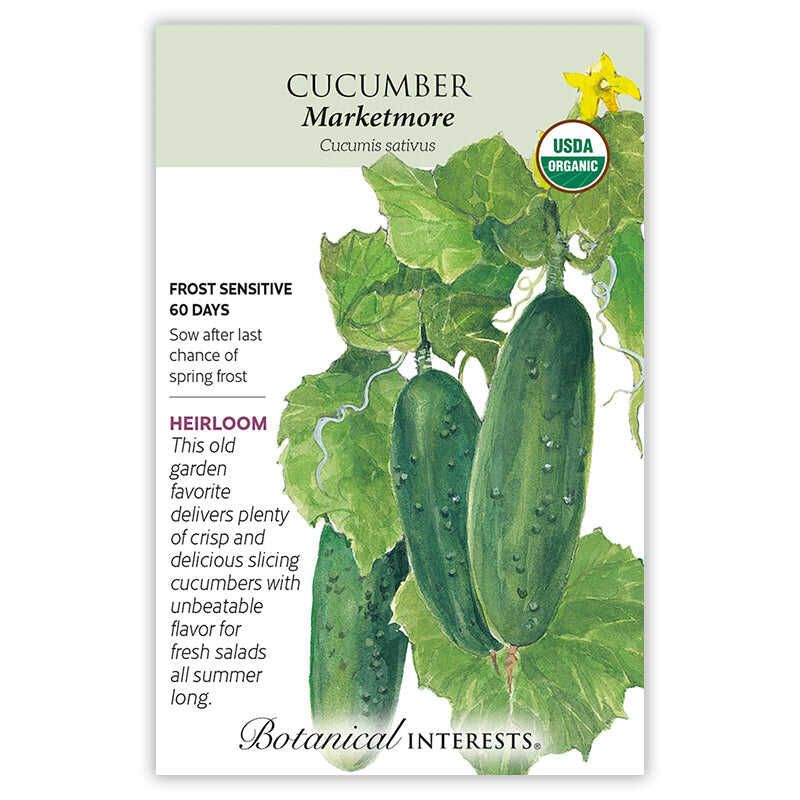
Choosing a cultivar with a lower bitterness baseline is one prevention step you can take before the season even starts. Alabama Cooperative Extension’s guide to bitter cucumbers names Sweet Slice, Sweet Success, Marketmore, and Marketmore 76 as examples of varieties that tend toward milder flavor.
These are not guarantees, but they do begin from a genetically lower starting point for cucurbitacin production.
Burpless types are often marketed as having reduced bitterness, and many do have lower baseline levels. The important caveat, as Oklahoma State University Extension notes in its summer horticulture tips, is that even a low-bitterness variety can develop noticeable bitterness under severe heat or drought stress.
Genetics reduce the likelihood, but they do not eliminate the environmental risk entirely.
Beyond water stress, other possible contributors to elevated cucurbitacin levels include poor soil fertility, low soil pH, significant temperature swings between day and night, heavy shade, insect injury to the plant, and disease. Utah State University Extension also points out that cross-pollination with squash, melons, or watermelons does not cause current-season cucumbers to turn bitter, which is a persistent myth worth setting aside.
If your garden has a history of bitter fruit and you have not had a soil test recently, that test could reveal whether fertility or pH issues are adding stress to your plants. Correcting a documented deficiency may help reduce overall plant stress, though it should not be approached as a direct bitterness cure without knowing what the soil actually needs.
Harvesting often protects quality, but it cannot undo bitterness
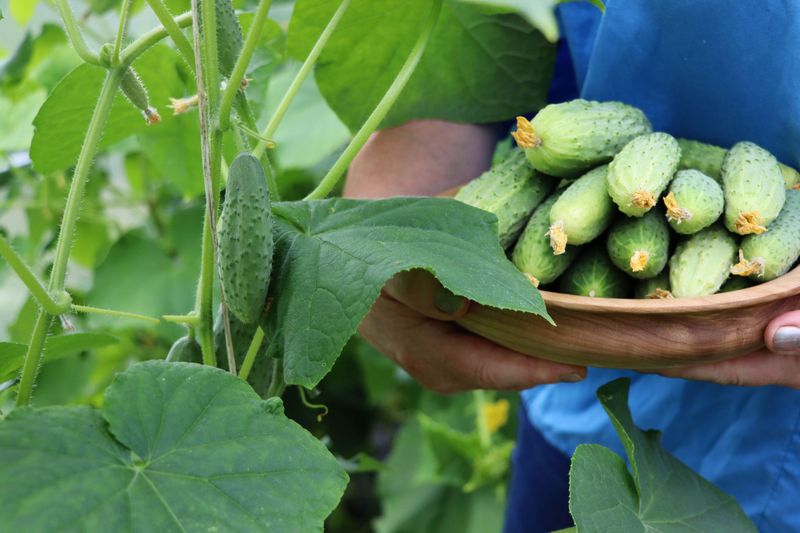
Frequent harvesting is a genuine quality practice for cucumbers. Fruit left on the vine too long grows oversized, develops tougher seeds, and often turns yellow, which signals the vine to slow new fruit production.
University of Minnesota Extension recommends picking cucumbers every other day during the main harvest window, and sometimes more often during very warm stretches when fruit develops quickly.
Picking promptly keeps the vine productive and the fruit at its best texture and flavor. What it cannot do is reverse cucurbitacins that already formed while the fruit was developing on the vine.
Bitterness is built in during growth, not something that accumulates after harvest, so a timely picking schedule is a quality habit rather than a bitterness remedy.
For cucumbers that taste mildly bitter rather than strongly so, there are a couple of preparation steps worth trying. Utah State University’s cucurbit harvest guidance and Purdue Extension’s cucumber food information both note that bitterness often concentrates near the skin and can be more pronounced toward one end of the fruit.
Peeling and trimming that portion may improve the flavor of a mildly bitter cucumber for some people.
These steps are a possible flavor improvement, not a safety treatment. For a cucumber that tastes strongly bitter, trimming and peeling are not a reliable fix.
The right response in that case is covered in the next section.
A strongly bitter cucumber belongs in the discard pile
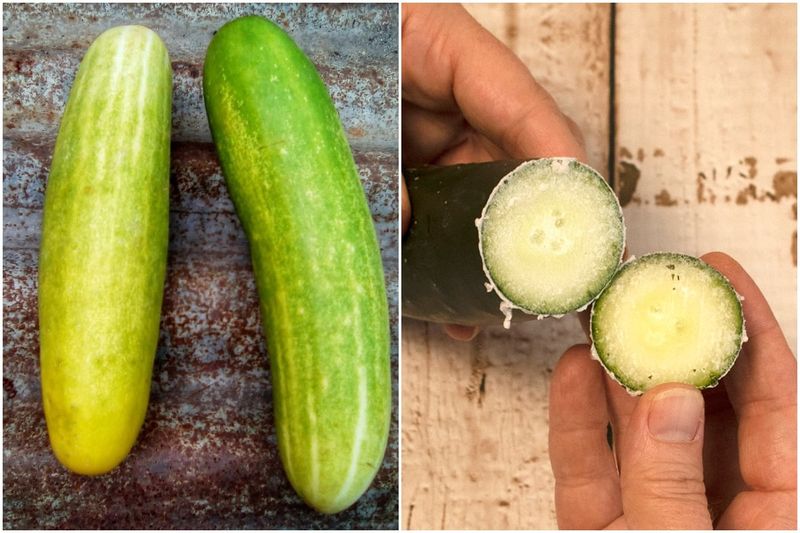
Mildly bitter cucumbers are unpleasant but generally not a safety concern. Strongly bitter ones are a different matter.
Very high cucurbitacin concentrations in cucurbits can cause gastrointestinal illness, and the level of bitterness in your mouth is the clearest signal you have about whether a particular fruit crosses that line.
Poison Control’s guidance on toxic squash syndrome advises tasting only a very small raw piece if you need to assess bitterness. If the flavor is strongly bitter, spit it out and discard the entire fruit.
Cooking, pickling, soaking, salting, and peeling are not reliable ways to neutralize high cucurbitacin levels, and Poison Control is explicit that cooking does not make a dangerously bitter cucurbit safe to eat.
Ask Extension’s resource on cucumber bitterness confirms that peeling may improve the flavor of a mildly bitter cucumber but should not be treated as a safety guarantee for fruit with strong bitterness. The compounds can be distributed throughout the flesh, not just in the skin.
Ordinary garden cucumbers grown from standard cultivars are not the same as wild or ornamental gourds, which can carry far higher cucurbitacin concentrations. Still, the cautious approach applies to any cucurbit that tastes noticeably and strongly bitter: take a tiny taste, spit it out if it is sharp and unpleasant, and put the cucumber in the compost rather than on the table.
The next cucumber starts with today’s watering check
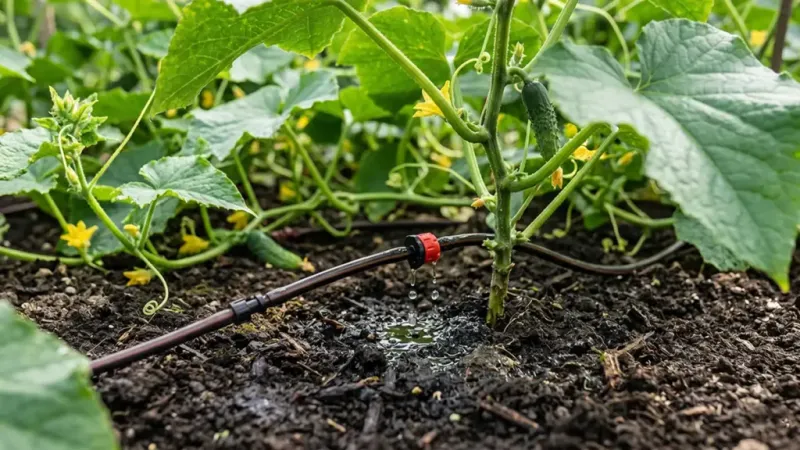
Reducing bitterness in next season’s cucumbers, or even next month’s harvest from the same vine, comes down to a short sequence of practical steps. Start by choosing a cultivar with a lower bitterness baseline.
Then keep root-zone moisture as consistent as possible through the entire flowering and fruiting period, check the soil 2 inches below the surface rather than guessing from the plant’s appearance, and apply mulch to slow evaporation between waterings.
Utah State University Extension’s water recommendations and UMN Extension’s cucumber growing guide both support this approach, framing consistent soil moisture and appropriate cultivar selection as the two most actionable levers home gardeners have. Harvest promptly and often to keep fruit quality high and the vine producing.
None of these steps come with a guarantee. Alabama Cooperative Extension’s bitter cucumber resource makes clear that genetics and other stresses still play a role, and some fruit may still develop bitterness despite careful management.
What irrigation and mulch can reliably do is prevent future stress. What they cannot do is rescue a cucumber that has already turned strongly bitter.
The best time to act on that knowledge is the next time you walk out to check the garden.