
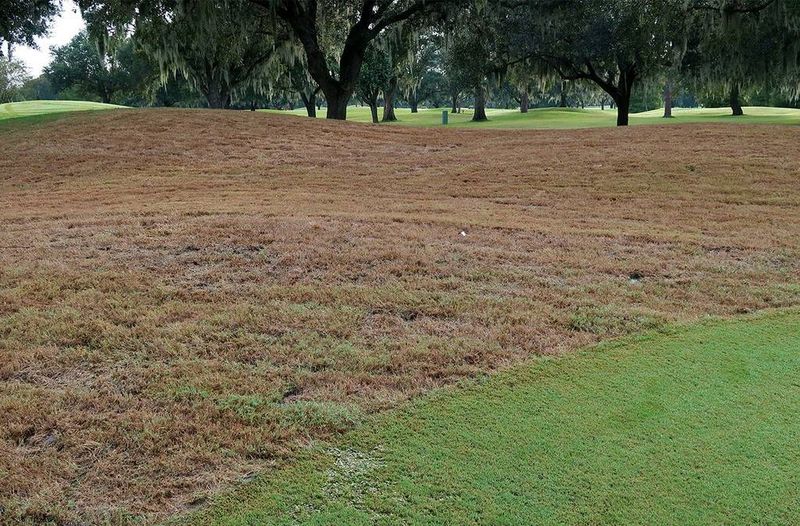
Something unsettling happens when a patch of your lawn turns brown in a matter of days, and no amount of watering seems to fix it. Fall armyworms are one of the most disruptive summer turf pests in North Carolina, capable of stripping grass down to bare soil before most homeowners realize what hit them.
Knowing what actually causes these outbreaks, and what to do before reaching for a spray bottle, can save your lawn and your peace of mind.
Brown patches can hide a fast-moving turf pest
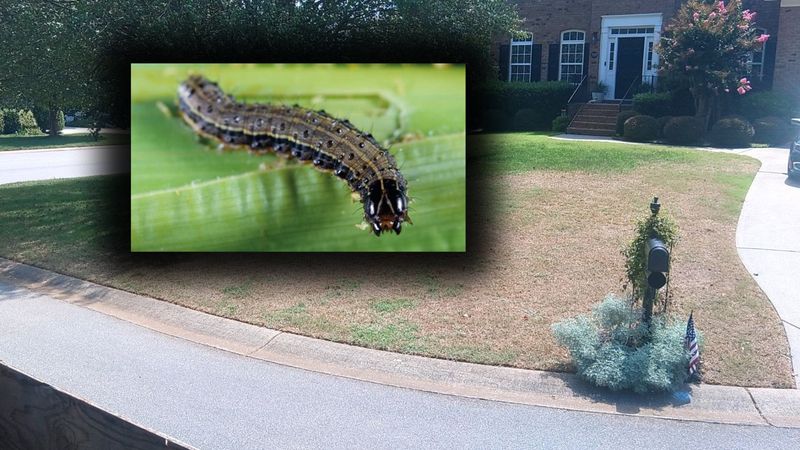
Patches of brown turf in a North Carolina summer yard can point to several different problems, and fall armyworms are just one possibility. Drought stress, fungal disease, nutrient deficiencies, and other insects all produce symptoms that look remarkably similar from the street.
Rushing to a conclusion without checking the grass more carefully is how a lot of homeowners end up treating the wrong problem entirely.
The fall armyworm, Spodoptera frugiperda, is a caterpillar that feeds primarily on grasses. Bermudagrass, fescue, ryegrass, and bluegrass are all on the menu, which means most North Carolina lawns have at least one susceptible species.
NC State Extension’s fall armyworm guide describes the pest as sporadic but potentially serious in turf, and notes that larvae feed in groups, allowing them to consume much of the above-ground foliage across a section of lawn before moving on.
Because larvae feed together, the resulting damage can look like it spread quickly across one area and then stopped abruptly at an invisible line. Affected zones sometimes radiate outward from wherever egg masses were originally deposited, which creates a pattern that differs from the more uniform browning you would see with drought.
Still, that pattern alone is not enough to confirm the cause.
The first practical decision any homeowner faces when brown patches appear is whether to inspect or to treat. Treating without confirming the pest wastes money, can harm beneficial insects, and does nothing if the actual problem is a dry spell or a fungal issue.
Before spending anything on a product, spend ten minutes looking closely at the damaged area and its edges. That inspection, covered in detail a few sections ahead, is the step that separates a smart response from a reactive one.
North Carolina outbreaks begin with moths, not a homeowner’s hose
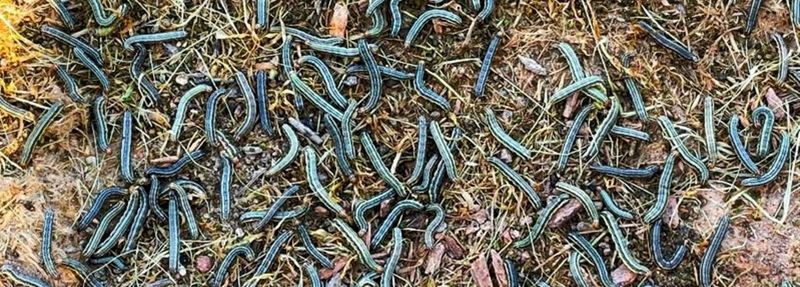
Blaming a lawn outbreak on watering habits or thatch buildup feels logical, but it misses where fall armyworms actually come from. The pest does not overwinter in North Carolina in meaningful numbers.
Instead, moths migrate northward from Florida and the Gulf Coast each spring and summer, riding wind currents and storm systems up through the Southeast. Female moths that land in North Carolina lay egg masses on vegetation and on flat surfaces nearby, including fence posts, shed walls, mailbox posts, and the undersides of eaves.
NC State Extension confirms that eggs can hatch within 2 to 10 days under warm conditions, and that several generations can occur within a single North Carolina summer. That rapid cycling is part of why a lawn can look fine in early July and noticeably damaged by late July or August.
The population can build quickly once a generation establishes, especially in warm, humid weather that shortens the development time between egg and feeding larva.
Damage can become noticeable over a short period because young larvae begin feeding almost immediately after hatching and work together across a patch of turf. As they grow, their appetite increases sharply, meaning the last few days of a larval generation cause the most visible harm.
By the time brown patches are obvious, the larvae responsible may already be large or close to burrowing into the soil to pupate.
Weather patterns, the timing and volume of northward migration, where individual moths choose to lay eggs, and how much local population pressure builds across a region are the primary drivers of an outbreak. A homeowner’s irrigation schedule or thatch depth may influence how quickly turf recovers or how well it tolerates feeding, but neither one invited the moths to land in the yard.
Correcting that assumption matters because it shapes how you respond, and whether your response actually helps.
Inspect the lawn before you call it an armyworm outbreak
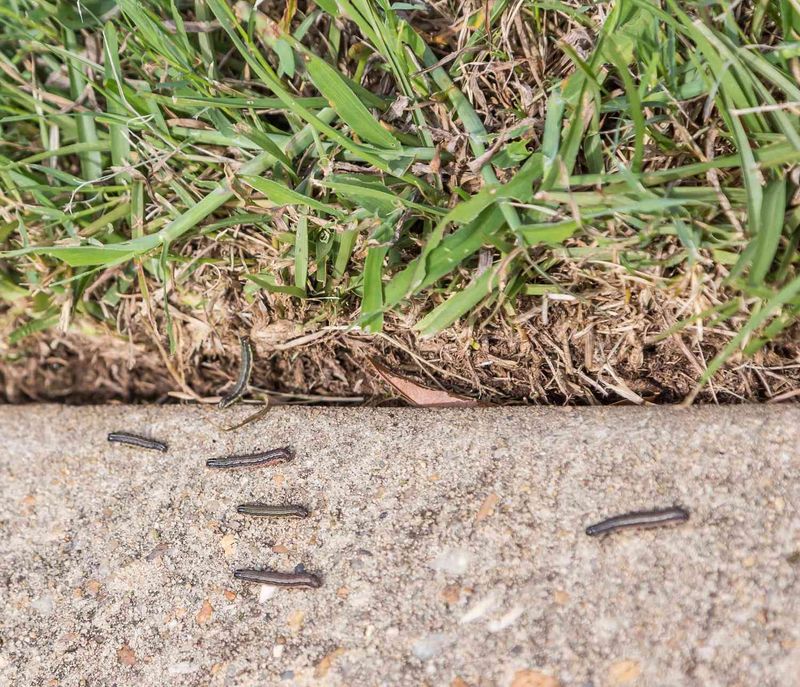
Brown turf is a symptom, not a diagnosis. Before treating anything, walk the damaged area carefully and look for signs that narrow down the cause.
Start at the edges of the brown patch, where actively feeding larvae are more likely to be found. Then check nearby structures, fence posts, signs, sheds, and building walls for egg masses, which look like small fuzzy clusters of greenish-gray or tan eggs covered with fine hairs from the female moth’s body.
University of Georgia extension research on fall armyworm biology identifies egg-mass scouting as a useful early-detection step and notes that damage often begins near structures where eggs were first laid. Finding an egg mass is a meaningful early warning, but it does not confirm that active larvae are the reason your turf is brown right now.
The eggs may have already hatched and the larvae may have moved, or the egg mass may belong to a generation that has not yet caused damage.
A practical way to check for active larvae is the soap-flush method. NC State’s arthropod pest guide for North Carolina turf recommends mixing 2 tablespoons of dish detergent in 1 gallon of water and pouring it slowly over a 2-square-foot area at the edge of the damaged zone.
Larvae and other insects will surface within a few minutes. Count what you see, and note their size, because larval size affects how you should respond.
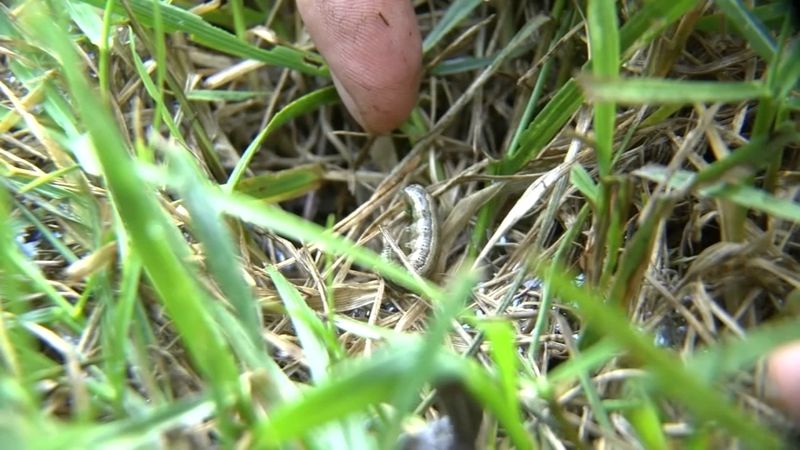
If the soap flush turns up nothing, or if the insects you find do not match fall armyworm larvae, contact your local NC State Extension office or a qualified pest management professional before treating. Fall armyworm larvae are greenish to brown with a pale stripe along each side and a distinctive inverted Y-shaped mark on the head capsule.
Confirming active larvae in or near damaged turf, or getting reliable identification from an extension service, is the responsible threshold for moving forward with any treatment decision.
Excessive thatch gives larvae cover and roots a harder life
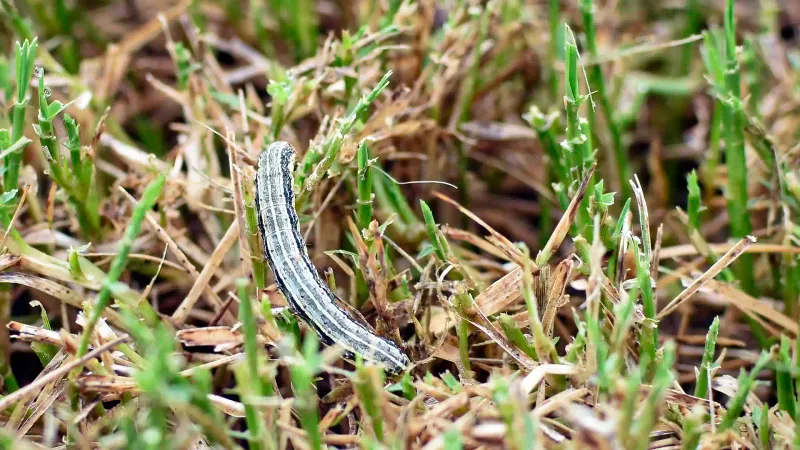
Thatch gets blamed for a lot of lawn problems, and with fall armyworms it plays a real but limited role. Understanding what thatch actually is helps separate useful cultural advice from oversimplified cause-and-effect stories.
Thatch is not a layer of grass clippings. NC State’s organic lawn care guide explains that thatch consists mainly of roots, stems, and lower leaf portions that accumulate below the mowing height.
Clippings decompose quickly and contribute very little to thatch buildup, so leaving them on the lawn is not the culprit.
A thin thatch layer is normal and even beneficial, cushioning the soil surface and moderating temperature. NC State’s Extension Gardener Handbook section on lawns gives approximately one-quarter to one-half inch as a generally appropriate thatch range.
Problems begin when buildup exceeds about one-half inch. At that point, the layer can restrict root development, interfere with water moving down into the soil, and encourage fungal growth.
For fall armyworms specifically, thick thatch also provides a cool, shaded hiding place where larvae can rest during the heat of the day before resuming feeding in the evening.
Reducing excessive thatch through core aeration or careful dethatching can improve water penetration and reduce that daytime shelter, which supports better turf health overall. However, the connection between thatch and an armyworm outbreak needs to stay proportional.
NC State’s fall armyworm publication emphasizes that migrant moths and egg masses on nearby vegetation or structures are the broader source of population pressure, not a lawn’s organic layer.
Measuring thatch before deciding to dethatch is worth the extra step. Push a screwdriver or pencil into the turf at several spots and feel for the spongy layer above the soil.
If it stays under half an inch, leave it alone. If it runs deeper, plan dethatching for the right season for your turf type, keeping in mind that removing thatch cannot stop moths from arriving or laying eggs in the next generation.
Water for turf resilience, not as an armyworm-control shortcut
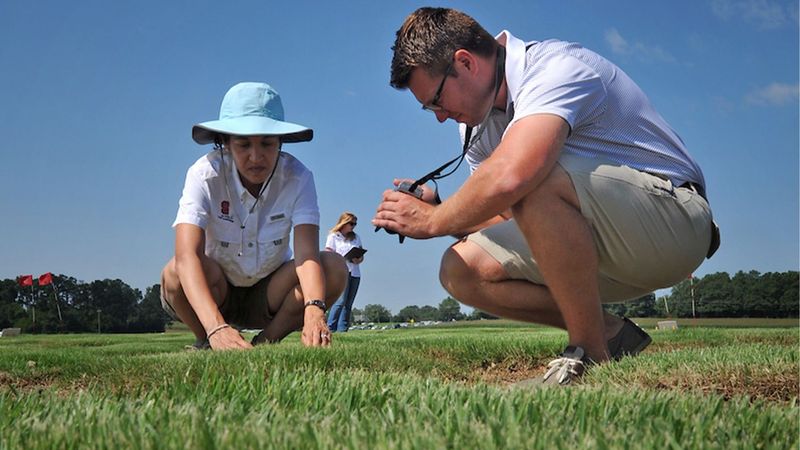
Irrigation gets pulled into fall armyworm conversations in a complicated way. Some sources note that moist conditions can support young larval development, while others point out that late-stage larvae actually perform well in dry weather, and that storm systems carrying moisture into the Southeast are sometimes the same events that help introduce migrant moths.
University of Georgia’s fall armyworm biology and management research reflects this nuance, which is why the simple instruction to “water less to prevent armyworms” does not hold up. Underwatering has its own costs, and a drought-stressed lawn is more vulnerable to insect and disease damage, not less.
The more useful framing is that irrigation supports turf resilience. A lawn that is adequately hydrated going into an armyworm feeding event has better stored energy and a stronger root system, giving it a better chance of recovering once the larvae are gone.
NC State’s turfgrass water requirements publication explains that severe drought stress increases susceptibility to insect and disease damage, which supports correcting chronic underwatering while avoiding persistently soggy conditions.
Deep, infrequent watering is generally preferable to light, frequent applications. Wetting established lawn soil to roughly 6 to 8 inches encourages roots to grow downward rather than staying shallow where they are more vulnerable.
About 1 inch of water per week is often cited as a broad starting point, but NC State’s lawn care guidance is clear that the right amount depends on turf species, soil type, season, rainfall totals, and your specific location in the state. Piedmont clay holds water differently than coastal sandy soil, and a bermudagrass lawn in August has different needs than a tall fescue lawn in the same month.
Rather than running an automatic timer on a fixed schedule, watch the turf for early wilt signs, such as a blue-gray tint or footprints that stay visible longer than usual, and check soil moisture before irrigating. That responsive approach avoids both the drought stress that slows recovery and the persistently wet areas that provide less-than-ideal conditions for long-term turf health.
Treat confirmed active larvae while they are still small
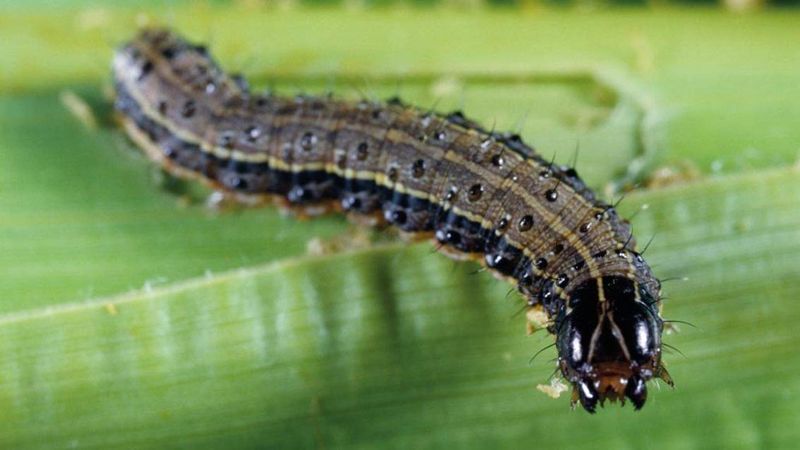
Once active larvae are confirmed in or near damaged turf, timing matters more than product selection. Young fall armyworm larvae, roughly the first three instars, are far more responsive to treatment than large, mature caterpillars.
NC State Extension notes that insecticides are generally ineffective against large larvae because those larvae may be close to finishing their feeding and burrowing into the soil to pupate. Spraying at that stage costs money and exposes the yard to chemicals without meaningfully reducing damage.
Before applying anything, NC State recommends mowing the lawn and lightly irrigating when possible. Mowing removes some of the foliage canopy that can block a product from reaching larvae feeding lower in the turf, and light irrigation can move the product into the thatch layer where larvae shelter during the day.
After that, the product label takes over as the controlling authority. The label specifies application timing, how to water the product in, any mowing restrictions before or after treatment, reentry intervals, and what protective equipment to wear.
No recommendation in an article or online forum overrides what the current label says for residential turf use in North Carolina.
Avoid selecting a product or rate based on older extension lists without checking whether that product is still registered for homeowner use on residential turf in the state. Registrations change, and a product that was labeled for this use several years ago may have different restrictions today.
The EPA’s pesticide labeling guidance reinforces that the label is a legal document governing every aspect of an application.
Natural enemies including parasitic wasps, ground beetles, and birds can suppress fall armyworm populations, and large outbreaks may still overwhelm biological control. If you do treat, EPA guidance on protecting children from pesticides recommends removing children, toys, and pets from the area before application and keeping them away until the product has dried or the label’s reentry interval has passed.
Protect pollinators by avoiding applications when flowers are blooming nearby and by following any label restrictions on application timing relative to pollinator activity.
UGA’s turfgrass management research indicates that mild to moderate armyworm damage may regrow within roughly three to four weeks under suitable conditions, with appropriate fertilization and irrigation supporting recovery. Severe damage that reaches crowns, stolons, or roots may require resodding.
Recovery speed also depends on turf species, the time of season, and whether growing conditions remain favorable after the infestation ends.
Reset the lawn for resilience, not a guaranteed pest-free summer
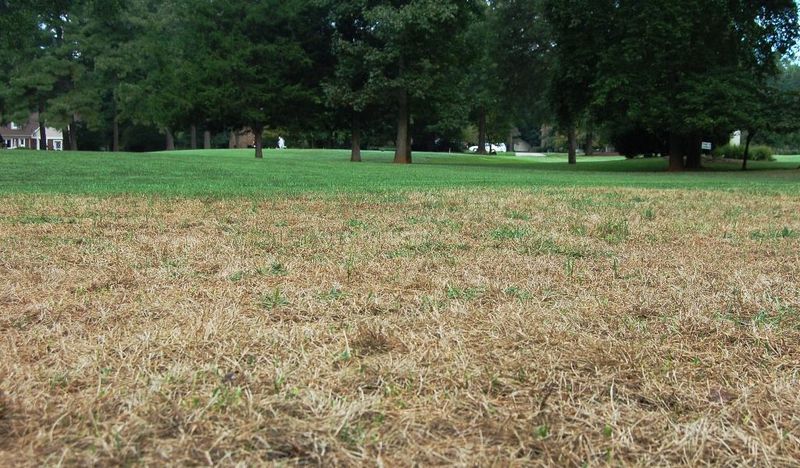
After an armyworm event, the temptation is to overhaul everything at once. A more measured approach serves the lawn better.
Start by measuring thatch depth before scheduling any dethatching work. If the layer sits below half an inch, skip mechanical removal entirely and focus on irrigation and fertility instead.
If it runs deeper, plan dethatching for a time that suits your specific turf type, because the timing that works for bermudagrass does not necessarily work for centipedegrass or St. Augustinegrass.
NC State’s lawn handbook specifically warns that centipedegrass and St. Augustinegrass may not tolerate aggressive power-raking, and that dethatching at the wrong time can injure turf that is already stressed. Core aeration is often a gentler alternative that improves water and air movement into the soil without the tearing action of a power rake.
Pair aeration with overseeding where appropriate for your turf type, and follow up with a light top-dressing if soil structure needs improvement.
Irrigation adjustments after an outbreak should focus on supporting regrowth rather than following a fixed schedule. NC State’s turfgrass water requirements guide supports using evapotranspiration-informed scheduling and turf response, rather than automatic timers, to determine when and how much to water.
Warm-season grasses like bermudagrass, actively growing through the summer, may recover more readily from feeding damage than cool-season grasses already under heat stress. Recovery still depends on whether crowns, stolons, or root systems were damaged, how severe the infestation was, and whether weather conditions stay favorable.
UGA’s research on fall armyworm management ties recovery expectations directly to turf species, season, and infestation severity rather than presenting a guaranteed timeline. Better water penetration, stronger root development, and reduced daytime larval shelter can all improve turf resilience, but none of these practices controls where migrant moths land or how many egg masses they deposit nearby.
The goal of a post-outbreak reset is a healthier lawn that handles the next wave better, not a lawn that avoids the next wave entirely.
A brownout calls for investigation, not an automatic spray
Brown patches deserve a measured response, not a panicked one. The sequence that actually helps starts with a close inspection of the damaged area and nearby structures, looking for active larvae at turf edges and egg masses on flat surfaces.
Finding an egg mass is a reason to watch carefully, not a trigger to spray. NC State Extension is clear that confirming active larvae in or near the damaged turf, or getting reliable identification from an extension office or qualified professional, should come before any treatment decision.
When treatment is justified and larvae are still small, act promptly, follow the product label precisely, and protect children, pets, and pollinators throughout the process. After the infestation is resolved, use irrigation and thatch management to support recovery and improve turf resilience going forward.
NC State’s lawn guidance and its turfgrass water requirements publication both support adjusting cultural practices to keep turf vigorous, which gives it the best chance of tolerating and recovering from feeding pressure.
None of these steps will stop moths from migrating north next summer or prevent them from laying eggs in your yard again. A well-maintained lawn is simply a more resilient one, and resilience, not immunity, is the honest and realistic goal.