
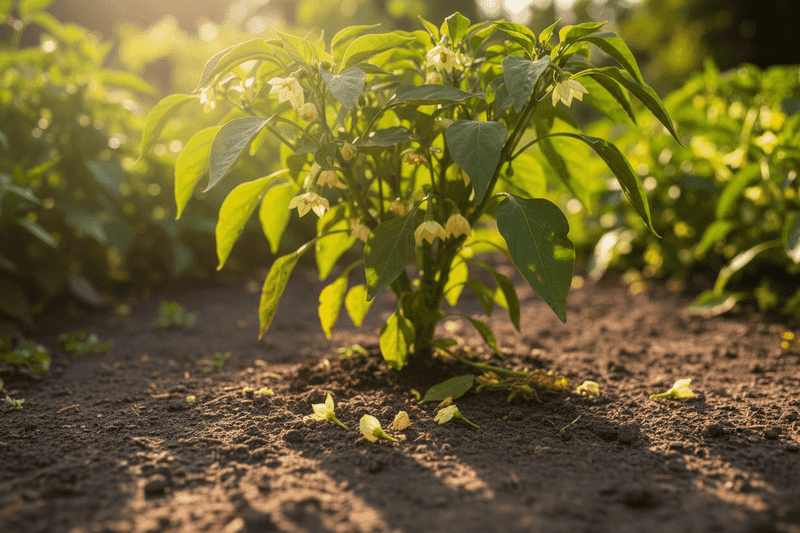
Watching a pepper plant fill up with flowers in August feels like a promise – and then every blossom falls off before a single pepper forms. That maddening pattern has a surprising lead suspect hiding in your overnight temperatures, not just your garden hose.
But warm nights are only part of the story, and blaming one cause without checking the others can leave you chasing the wrong fix all season. This guide walks through how to read the clues your plant is giving you and respond with steps that actually match what is happening.
First, identify what is actually dropping
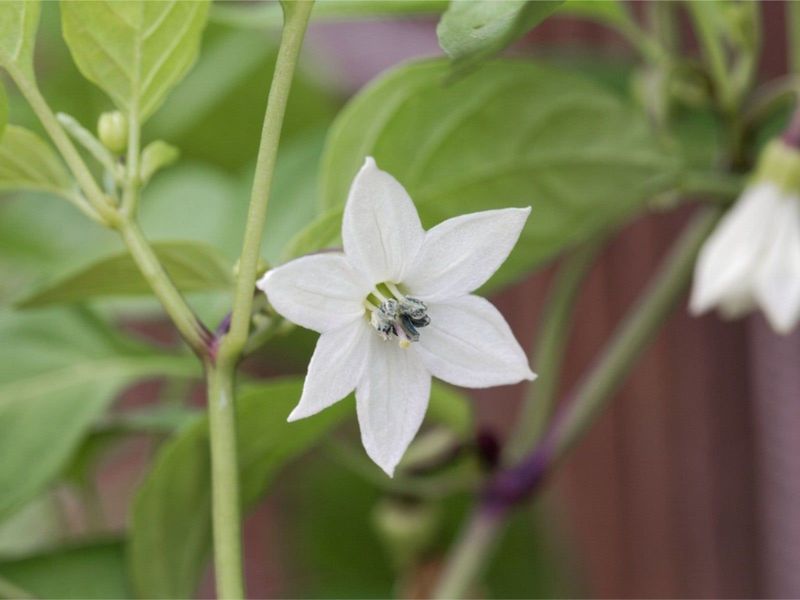
Pepper plants in August often look healthy right up until the moment their flowers start disappearing. Knowing exactly what you are watching drop – and when it drops – changes your entire diagnosis.
A blossom that falls before any fruit begins to form tells a different story than a tiny pepper that starts to develop and then shrivels off the plant a week later.
There is also a third pattern that sometimes gets confused with the other two: blossom-end rot. That problem shows up as a dark, sunken, dead area on the bottom tip of a pepper that is already growing, and it has nothing to do with whether the flower was ever pollinated.
University of Georgia Cooperative Extension explains that blossom-end rot reflects a disrupted calcium-movement and water-management problem in developing fruit, not a pollination failure.
Before reaching for any explanation, check one thing first: squeeze the soil a few inches down near the root zone. If it is dry or bone-dry, water stress belongs at the top of your list.
Oregon State University Extension notes that uneven or inadequate moisture can cause buds, flowers, and small fruits to drop even when temperatures seem reasonable. If moisture is consistently adequate, then warm nights become a much more useful clue to investigate.
Warm nights can interrupt pollination before symptoms appear
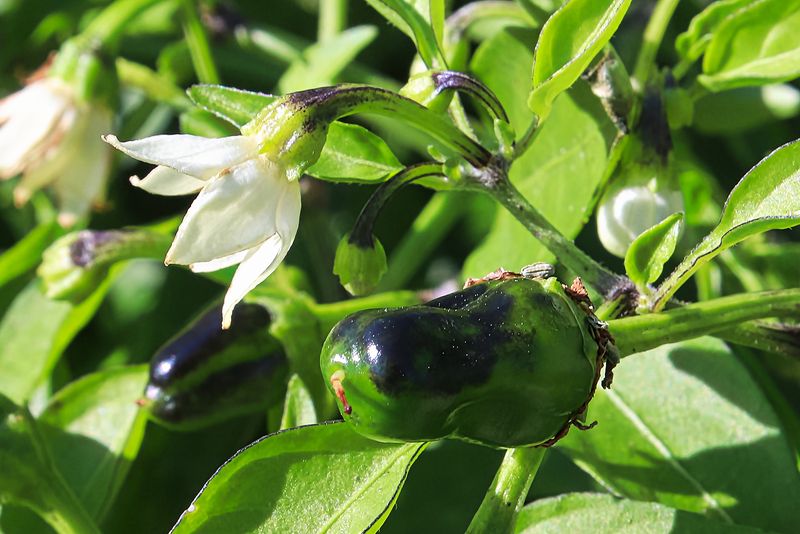
A pepper flower can look perfectly healthy on the outside while something has already gone wrong inside. Heat affects pollen long before you can see any visible damage on the bloom itself.
When temperatures stay elevated overnight, the plant may reduce pollen production, fail to release pollen properly, or produce pollen grains that cannot complete the job of fertilizing the flower – meaning the bloom drops without ever setting fruit.
University of Maryland Extension identifies night temperatures above roughly 75 degrees F combined with daytime highs above roughly 95 degrees F as general conditions that can cause pollination problems in fruiting vegetables including peppers. The UC Statewide IPM Program similarly notes that poor or incomplete pollination in peppers can result from temperature extremes that interfere with pollen viability and release.
Hot days and warm nights tend to work together rather than independently. Research on sweet pepper flower quality found that temperature stress during reproductive development can reduce pollen function and lead to blossom abortion and poor fruit set even when the flowers appear normal.
Oklahoma State University Extension reports that peppers may drop blooms when daytime temperatures push much above 90 degrees F alongside nights that stay warm – a combination that is common across much of the US in August. The 70-75 degree F nighttime range is a useful warning signal, not a precise cutoff that applies equally to every pepper type or every growing situation.
Measure the heat where the plant grows
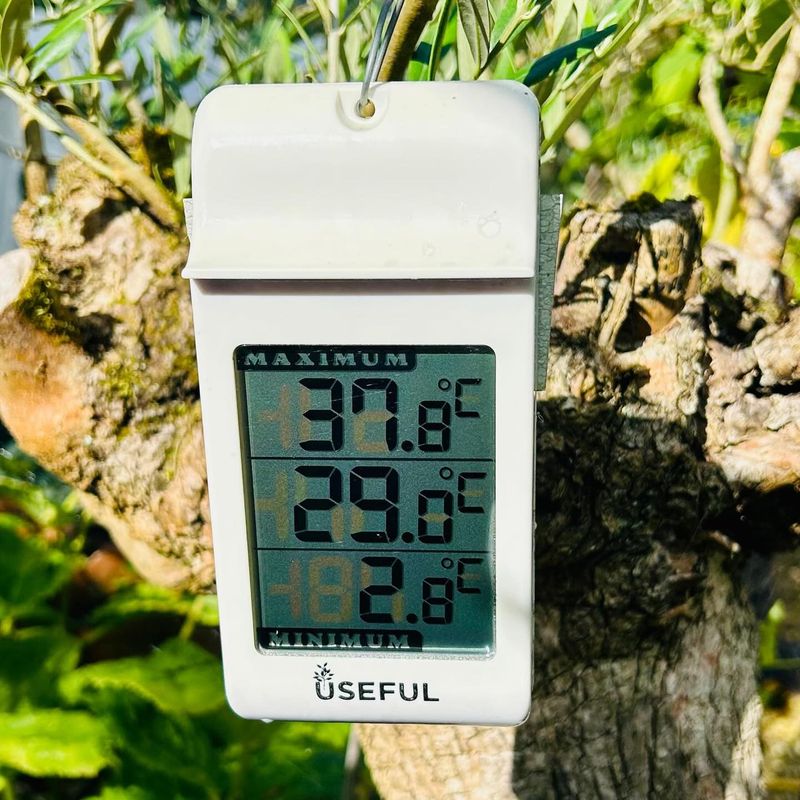
Your local weather report gives you the official overnight low for the nearest station, which might be miles away and nowhere near a concrete patio, a brick wall, or a row of black plastic mulch. Plants growing in those environments can experience temperatures several degrees higher than what any forecast shows, including after dark.
Hard surfaces – pavement, walls, containers, dark-colored plastic, and dense fencing – absorb heat during the day and release it through the night, keeping the air around your pepper plants warmer than the official reading suggests. University of Maryland Extension recommends checking temperatures at plant level rather than relying solely on weather-station data when diagnosing heat-related pollination problems.
A simple digital min-max thermometer placed near the foliage overnight gives you a much more accurate picture of what your plant actually experienced.
A University of Delaware Extension specialist notes that the precise nighttime temperature at which pepper pollen is damaged has not been firmly established, so treat your measurements as diagnostic clues rather than pass-fail scores. Record both the overnight low and the recent daytime high near the plant, and factor in how long those temperatures have persisted.
Duration matters: a single warm night is less likely to explain widespread blossom drop than a stretch of several consecutive hot days and warm nights.
Rule out water stress before blaming the heat
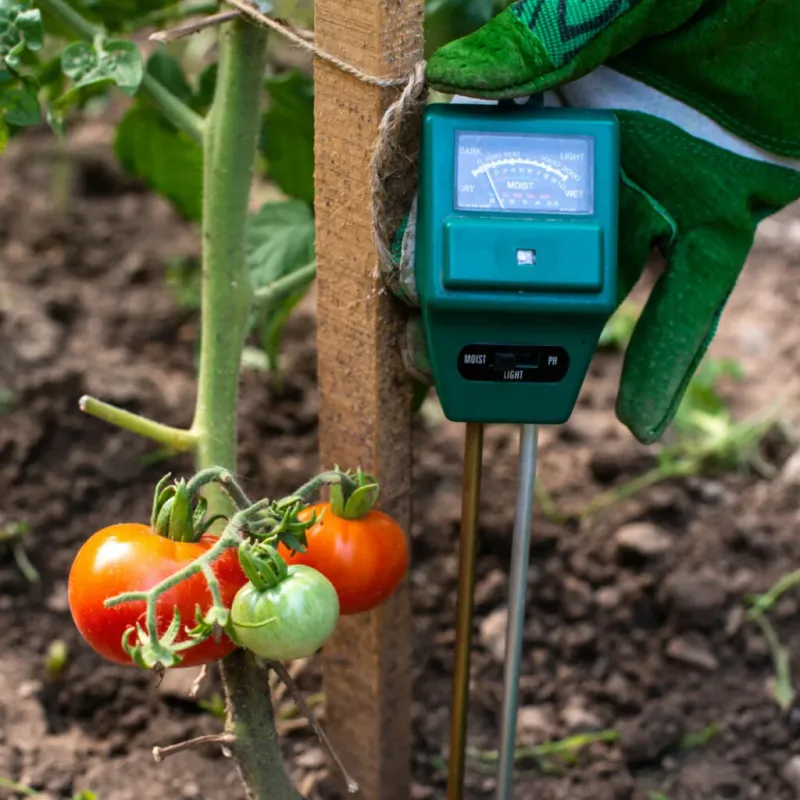
Soil moisture deserves the first checkpoint, not an afterthought. Dry soil, repeated wet-dry cycles, or containers that dry out quickly between waterings can all cause pepper flowers and small fruits to drop – and those symptoms look nearly identical to heat-related blossom drop.
Wind and low humidity speed up moisture loss from both the soil and the plant, making the problem worse on hot August afternoons even when you watered the day before.
University of Minnesota Extension recommends keeping pepper root zones evenly moist with consistent, thorough watering rather than shallow repeated sips. Shallow watering encourages surface roots that dry out faster and leaves plants more vulnerable during heat spikes.
Utah State University Extension similarly advises deep, even moisture rather than light frequent applications that never reach the lower root zone.
Saturated soil creates its own problems – waterlogged roots struggle to function and can lead to fruit-set issues that look nothing like drought stress. The goal is consistently moist, well-drained soil, not wet soil.
Oregon State University Extension recommends mulching the root zone to reduce evaporation, moderate soil temperature swings, and slow the wet-dry cycling that stresses pepper plants during hot weather. Once you are confident the root zone is staying evenly moist, you can interpret other clues – including overnight temperatures – with much more confidence.
Lower the heat load without depriving peppers of light
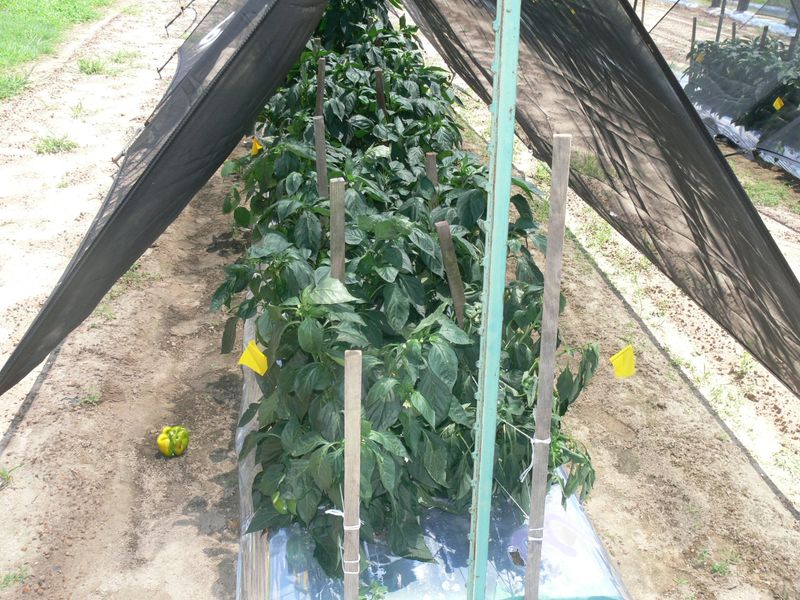
After confirming that soil moisture is adequate and that plant-level temperatures are genuinely excessive, temporary shade becomes a reasonable next step. The key word is temporary – shade cloth is a heat-management tool during a heat wave, not a permanent fixture.
Peppers need substantial light to flower and set fruit, so blocking too much of it trades one problem for another.
University of Maryland Extension research on beating summer heat in vegetable systems found beneficial results from approximately 30% shade cloth for heat-sensitive crops including peppers when installed correctly. That level of shading reduces radiant heat load without cutting light so severely that plant growth slows.
Avoid very dense shade fabrics that block 50% or more of sunlight unless you have tested them in your specific setup and confirmed the plants are still performing well.
Row covers and enclosed tunnel coverings deserve separate attention. University of Maryland Extension notes that row covers can raise temperatures by 5 to 15 degrees F inside the enclosure.
During August heat, that added warmth can push already stressed plants past their tolerance and cause more blossom drop, not less. Remove or vent any row covers during hot weather and monitor temperatures underneath before leaving them in place.
University of Minnesota Extension also advises against applying unnecessary fertilizer or foliar sprays during extreme heat, as stressed plants can react poorly to treatments they would otherwise tolerate.
Inspect for cool nights, pollination limits, and pests
August heat gets most of the blame for blossom drop, but a complete diagnosis needs to close the other doors too. Cool nights are one of them.
While warm nights dominate the conversation in midsummer, Colorado State University Extension notes that nighttime temperatures below about 55 to 60 degrees F can also interfere with pollination, cause misshapen fruit, reduce seed formation, or trigger blossom abortion. Gardeners in high-elevation areas, cool coastal zones, or regions that swing between hot days and surprisingly cold nights may face both problems in the same season.
Pollinator activity is worth understanding correctly. Peppers are largely self-pollinating, so a quiet garden without many bees is not automatically the explanation for missing fruit.
Oklahoma State University Extension confirms that peppers do not depend on insects the way some other crops do. Hand-pollination with a small brush or an electric toothbrush can sometimes help move viable pollen from flower to flower, but it cannot repair pollen that heat has already damaged.
If the pollen itself is nonviable, moving it around accomplishes nothing.
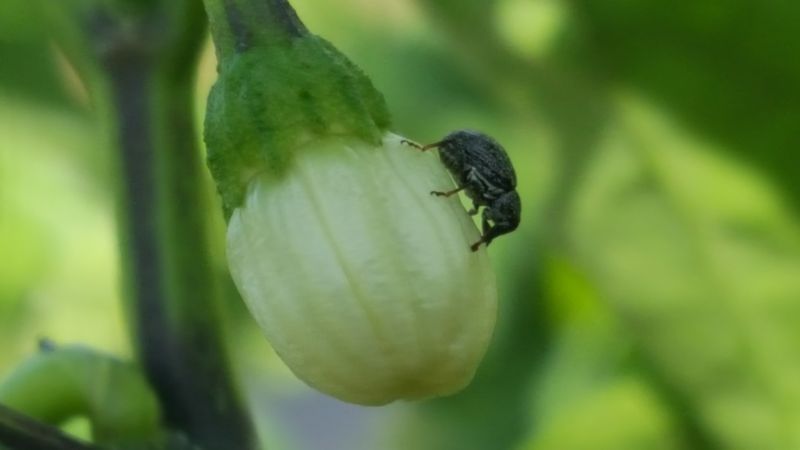
Pest damage is a separate cause that deserves a close look before heat gets the final verdict. Inspect each bud and open flower carefully for small holes, larvae, or feeding injury.
University of Georgia Extension IPM guidance identifies pepper weevil as one insect capable of causing bud and flower drop in regions where it occurs, with larvae feeding inside the bud before it ever opens. UC IPM also notes that physical damage to flower structures can mimic heat-related drop.
Finally, if a developing pepper shows a dark, dead patch on its lower end rather than dropping as a blossom, that is blossom-end rot – a separate calcium-movement and water-management issue, not a pollination failure.
Expect fruit set to improve when conditions moderate
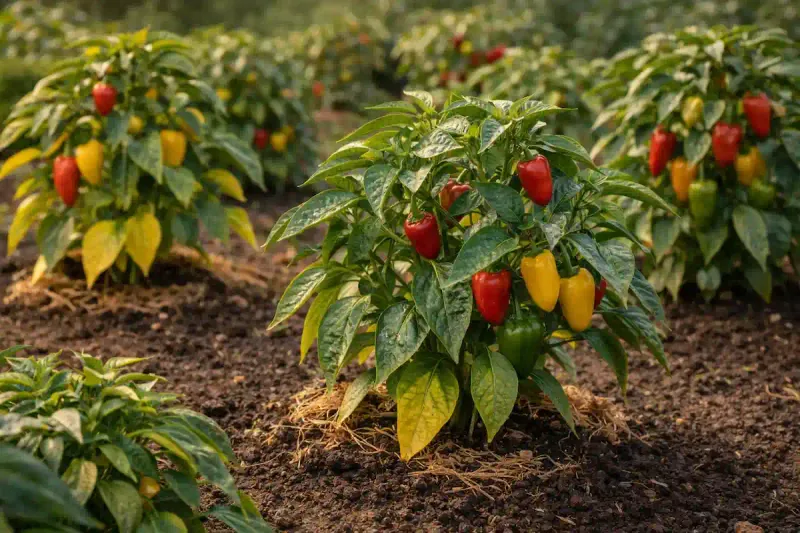
A stretch of dropped blossoms during a brutal August heat wave does not mean the plant is finished for the season. Peppers commonly resume flowering and setting fruit once temperatures ease – and that recovery can happen faster than most gardeners expect.
University of Maryland Extension notes that a temporary pause in fruit set does not necessarily mean permanent damage, and that plants often return to productive flowering as conditions improve.
The practical action sequence while you wait: verify plant-level overnight and daytime temperatures with a min-max thermometer, keep the root zone evenly moist with deep consistent watering and mulch in place, reduce extreme heat exposure with temporary shade if conditions warrant it, and hold off on fertilizer or foliar sprays unless you have diagnosed a specific deficiency. Check new buds and flowers for feeding injury or other physical damage before assuming heat is still the dominant cause.
Oklahoma State University Extension points out that pepper type and cultivar affect heat tolerance considerably – some small-fruited or pungent varieties handle high-temperature fruit-set stress better than bell peppers do. University of Minnesota Extension reinforces that consistent care during and after a heat spell gives plants the best environment for recovery.
Watch new growth for healthy buds rather than expecting a specific recovery date – the plant will tell you when conditions are working again.