
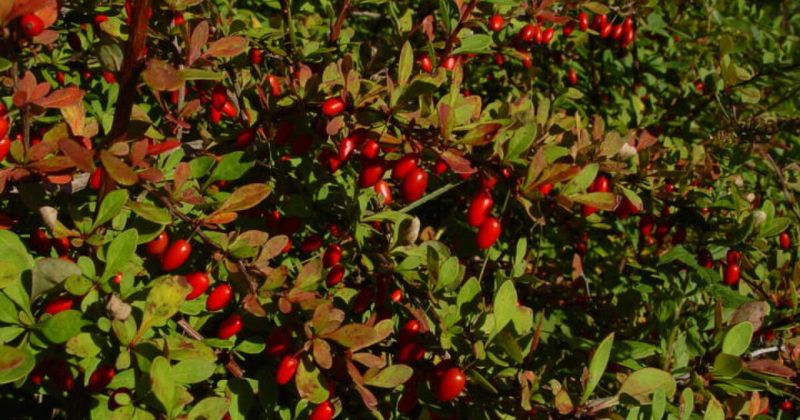
Walk the edge where your lawn meets the woods and you might brush past a thorny, low-growing shrub without giving it a second thought. That shrub could be Japanese barberry, an invasive plant that North Carolina homeowners are increasingly being asked to take seriously.
Research from the Northeast suggests that dense stands of barberry may create conditions that favor ticks and the small mammals that carry them. Knowing what to look for, how to remove it properly, and what to do beyond removal can help you make smarter choices about your yard.
First, confirm that the thorny shrub is Japanese barberry
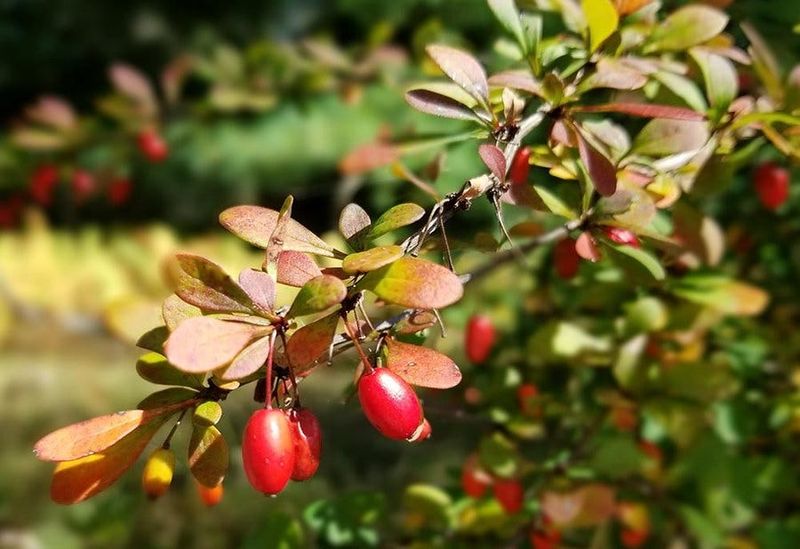
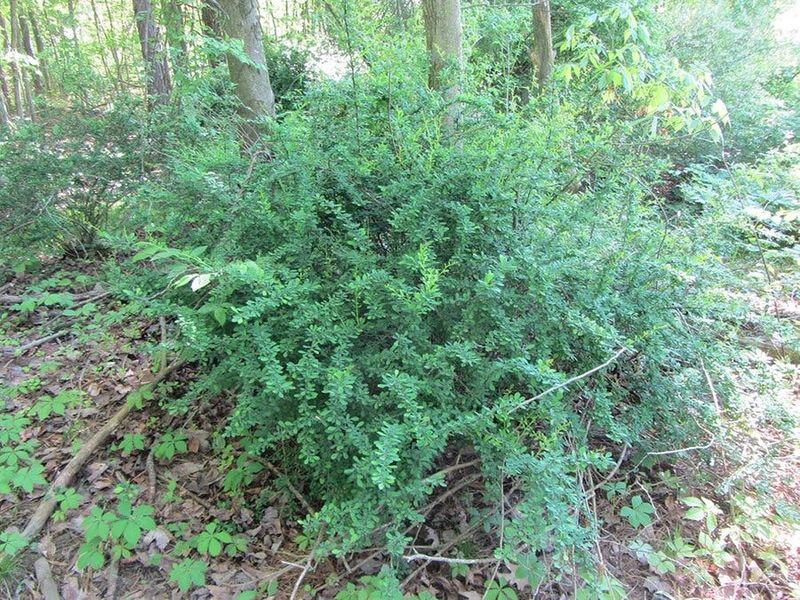
Before pulling on gloves and reaching for a shovel, take a few minutes to study the plant carefully. Japanese barberry (Berberis thunbergii) is a deciduous shrub that typically grows 3 to 6 feet tall and spreads 4 to 7 feet wide.
Its arching stems are brown to gray, and the whole plant takes on a rounded, mounded shape that can look tidy enough to pass for an intentional hedge.
The leaves are small, oval to spoon-shaped, and arranged alternately along the stem. One of the most reliable identification features is the spine situation: Japanese barberry has a single, unbranched spine at each node, unlike some other barberries that carry three-parted spines.
In spring, small yellow flowers hang in clusters beneath the stems, and by fall those flowers become bright red oblong berries that can cling to the plant well into winter.
Leaf color varies by cultivar. The straight species has green leaves, but many cultivars sold in nurseries carry burgundy, gold, or variegated foliage.
N.C. State Extension notes that some cultivars are marketed as sterile or low-seed, but the reproductive behavior of any individual plant depends on its specific cultivar identity, not just its label.
A plant sold under the barberry name without a confirmed cultivar designation should not be assumed to be non-invasive.
Other thorny shrubs grow in North Carolina too, including native hawthorns, multiflora rose, and other Berberis species. If you are uncertain about what you have, bring a stem sample with leaves, spines, and if possible berries to your local Cooperative Extension office before disturbing the plant.
Acting on a confident identification protects you from removing a beneficial native by mistake.
North Carolina identifies barberry as invasive, but not as a statewide hedge epidemic
Japanese barberry earns attention in North Carolina not because it blankets the state, but because of what it does when it gets established. N.C.
State Extension classifies the species as invasive, pointing to its ability to spread by bird-dispersed berries and root suckers, form dense thorny thickets, and alter soil chemistry in ways that disadvantage native plants nearby.
The picture of its statewide spread is less dramatic than some headlines suggest, though. The North Carolina Flora describes it as uncommon but probably increasing and spreading, which is a measured assessment rather than an alarm.
Meanwhile, an N.C. Department of Transportation invasive-plant guide noted that barberry had rarely escaped cultivation and was not yet considered a major threat in the state at the time of that assessment.
Those descriptions do not cancel each other out. They reflect the reality that a plant can be genuinely invasive and still be locally variable in how far it has spread.
You may find Japanese barberry growing along a wooded edge in a Piedmont neighborhood, an older suburban landscape, or near a trail where birds have carried seeds from a nearby ornamental planting. Or you may not find it at all.
The N.C. Forest Service encourages homeowners to remove exotic invasives and replace them with native plants, a recommendation that applies here regardless of whether barberry is common on your street or just present on your property.
The ecological concern is real: once established, barberry can crowd out native shrubs, reduce plant diversity at the woodland edge, and create a persistent infestation that takes real effort to clear. That is reason enough to investigate it when you find it.
Dense stands may create a more tick-friendly habitat
Ticks do not seek out Japanese barberry the way a bee finds a flower. The connection is about habitat, not attraction.
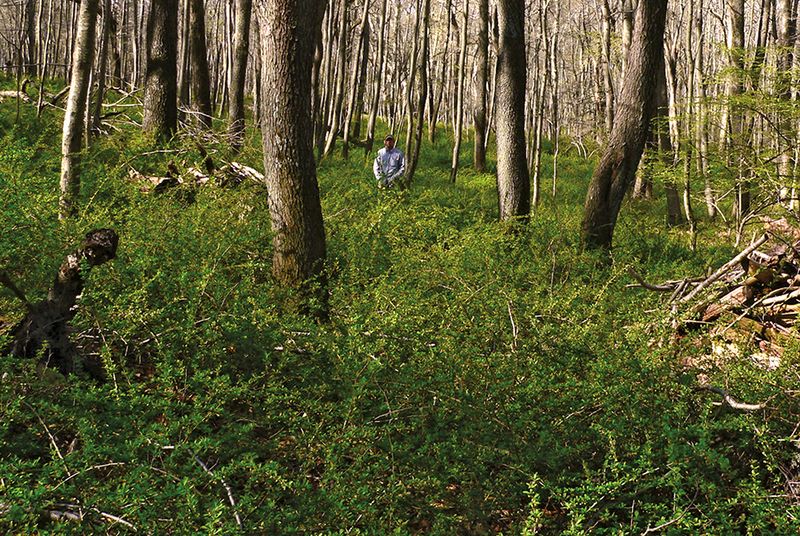
Dense barberry growth can produce a humid, shaded understory at the ground level, and that kind of sheltered microenvironment suits white-footed mice, the small mammals that serve as primary reservoir hosts for Borrelia burgdorferi, the bacterium associated with Lyme disease. When mice are plentiful in an area, the larval ticks that feed on them pick up the infection and carry it into later life stages.
The research supporting this idea comes from the Northeast, not from North Carolina residential yards. A 2009 Connecticut Agricultural Experiment Station study found that dense Japanese barberry stands supported conditions favorable to white-footed mice and blacklegged ticks, and that managing barberry reduced tick abundance along with the prevalence of Borrelia-infected ticks in those plots.
That is meaningful evidence of a habitat association in a northeastern field setting.
A 2023 study similarly found higher numbers of blacklegged ticks and white-footed mice in fully invaded barberry habitat compared to non-invaded habitat. A broader review in BioScience examining plant invasions and tick-borne disease risk described the proposed pathway: invasive shrubs alter microclimate, support host populations, and may change the questing surfaces available to ticks.
What these studies do not show is that every Japanese barberry shrub in a North Carolina backyard produces a measurable increase in tick numbers or human disease risk. The Connecticut findings came from heavily invaded habitat in a region where blacklegged ticks and Lyme disease are far more concentrated than in most of North Carolina.
The habitat mechanism is plausible and worth taking seriously, but the evidence does not transfer automatically from a Connecticut field plot to a suburban Piedmont yard with a few barberry plants near the fence line.
Removal may change one habitat feature, but it cannot guarantee a safer yard
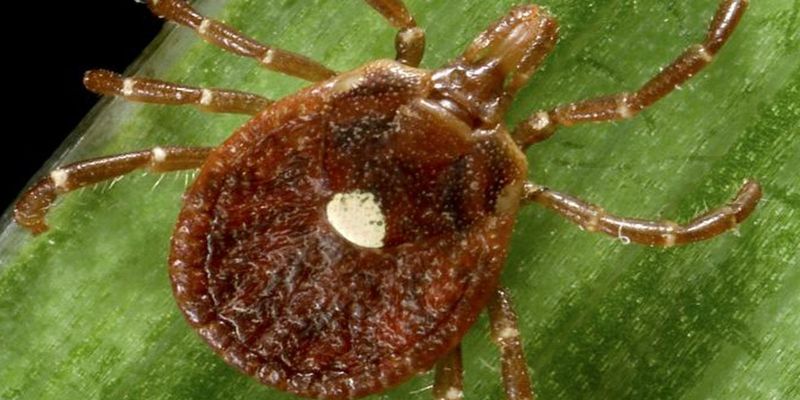
Pulling out a barberry stand removes one piece of the puzzle, not the whole picture. Ticks live in leaf litter, tall grass, brush piles, and the transition zone between lawn and woods.
Those habitats exist with or without barberry, and they can support questing ticks regardless of what shrubs are growing nearby. Removing the barberry while leaving dense leaf litter, animal pathways, and heavy brush undisturbed may produce little practical change in tick activity at your property.
A 2024 study from southern Maine makes that point clearly. Researchers found that partial trailside barberry removal reduced barberry clumps by only 41 percent and produced no measurable reduction in questing adult or nymphal blacklegged ticks.
The authors concluded that the treatment was not aggressive enough and that the remaining edge habitat was still suitable for tick activity. One partial removal did not move the needle.
North Carolina’s tick picture is also broader than a single tick species or disease. The N.C.
Department of Health and Human Services tracks multiple tick-borne illnesses across the state, including ehrlichiosis, Rocky Mountain spotted fever and other spotted-fever group illnesses, and STARI, in addition to Lyme disease. State surveillance data show that these conditions are reported from counties across North Carolina, not concentrated in a single region the way Lyme disease is concentrated in the Northeast and upper Midwest.
Tick abundance, infection prevalence in ticks, human exposure, and diagnosed illness are four separate things. More ticks in an area does not automatically mean more infected ticks, and more infected ticks does not automatically mean more human cases.
Removing Japanese barberry is a reasonable step that addresses an invasive plant and may reduce one type of favorable habitat. Treating it as a guarantee against tick bites or illness sets up an expectation that the evidence does not support.
Remove small plants by the root crown
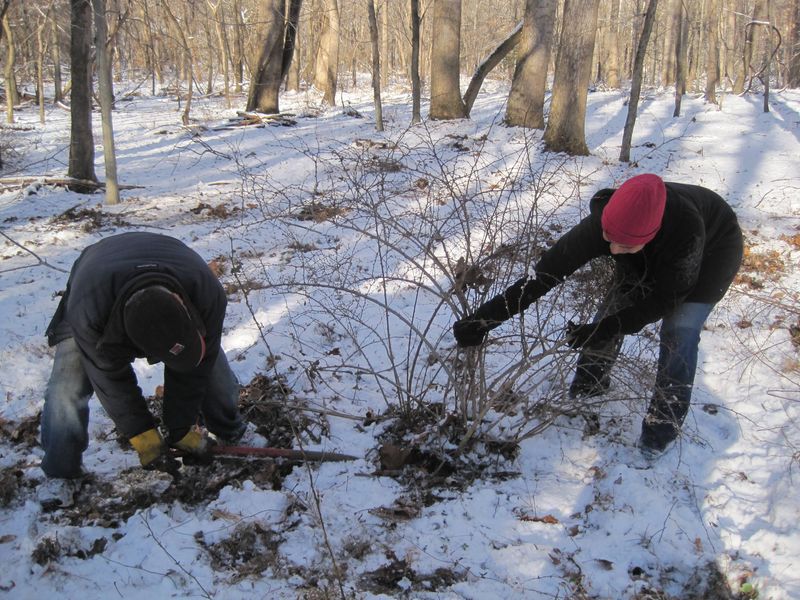
Seedlings and young barberry plants, generally those with stems thinner than a pencil and root systems that have not yet spread widely, can often be removed by hand with the right preparation. Tackle the job after a soaking rain or deep watering, when the soil is soft enough to give up roots without snapping them off below the surface.
Moist soil makes a real difference because dry, compacted ground tends to break the root crown off and leave viable tissue underground.
Use a narrow trowel, a hori-hori knife, or a long-handled weeder to loosen the soil around the base of the plant before pulling. The goal is to remove the entire root crown, the dense woody base where the stems emerge, because cutting or pulling the top growth alone often leaves enough viable tissue for the plant to resprout.
Work the tool down and around the crown, then lift the whole plant free rather than yanking straight up.
Protective clothing is not optional here. UConn Extension recommends wearing thick gloves and long sleeves when working with Japanese barberry because the spines are sharp enough to puncture thin garden gloves and can cause painful puncture wounds.
Leather or puncture-resistant gloves are a better choice than fabric. Long pants tucked into socks also protect your legs from both spines and any ticks present in the area while you work.
Before you remove anything, confirm the plant identity using N.C. State Extension resources or a visit to your local Extension office.
Once you have removed a plant, bag the material and dispose of it rather than composting it on-site. Check yourself for ticks after working in the area, shower within two hours, and put work clothes in the dryer on high heat before washing.
Treat established thickets as a persistence project
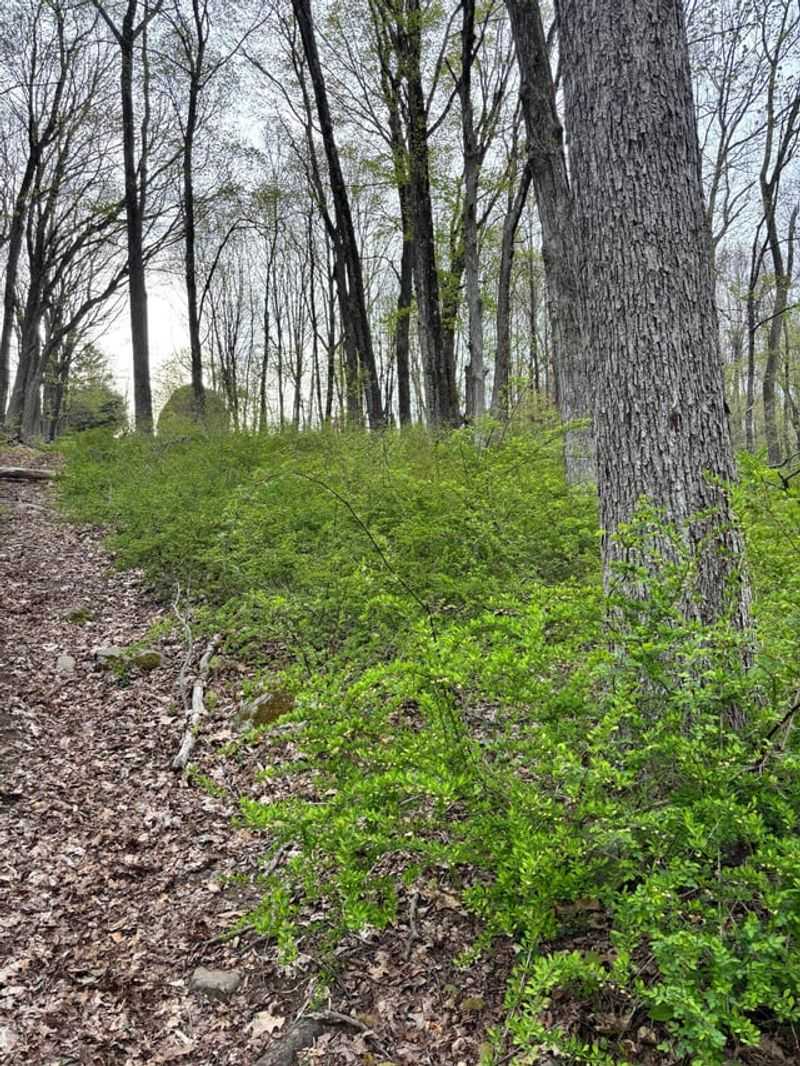
A mature barberry thicket is a different problem than a cluster of young seedlings. Established plants develop thick, woody root systems that can resprout aggressively after cutting, and a single-season effort rarely finishes the job.
Approaching a large infestation with a clear multi-year plan is more realistic than expecting one afternoon of work to resolve it.
Repeated cutting can limit seed production and slow the spread of a thicket, but it typically does not kill established plants on its own. UConn Extension describes several herbicide approaches for larger infestations, including cut-stump treatment, where herbicide is applied directly to a freshly cut stem; cut-stem or stem-injection methods; basal-bark application to the lower stem; and foliar spray for actively growing plants.
Penn State Extension similarly outlines these techniques for persistent infestations and emphasizes the importance of timing, product selection, and follow-up monitoring.
Any herbicide use must follow the product label exactly. Labels specify application rates, timing, buffer distances from water, and required personal protective equipment, and those instructions are legally binding, not suggestions.
Check whether your county or municipality has additional rules about herbicide use near streams, wetlands, or property lines. If the infestation is large, close to water, or on difficult terrain, hiring a licensed pesticide applicator is a practical choice that reduces both risk and frustration.
Directed burning is sometimes listed as a barberry control method in research literature, but Extension guidance on flame-weeding cautions against casual use near dry leaf litter, mulch, wood fencing, ornamental grasses, structures, or woodland edges. For most North Carolina homeowners working near a wooded edge, mechanical removal or herbicide treatment by a professional is a far safer path than open flame.
Whatever method you use, plan to monitor treated areas for at least a full year and treat any resprouting promptly before plants re-establish.
Improve the whole wooded edge and choose replacements for the site
Barberry removal works best as part of a broader effort to make the wooded edge less hospitable to ticks overall. CDC recommends clearing tall grass, brush, and leaf litter near areas where people spend time outdoors, mowing regularly, trimming back overhanging vegetation to let in more sunlight, and placing a 3-foot-wide barrier of wood chips or gravel between the lawn and the wooded area.
That barrier interrupts the transition zone where ticks tend to quest for hosts moving between habitats.
Removing barberry while leaving the surrounding edge unchanged limits what you gain. Dense leaf litter, brush piles, and unrestricted wildlife movement through the area can maintain tick-friendly conditions even after the barberry is gone.
The CDC Tick Management Handbook notes that landscape modifications can support exposure reduction but should not be treated as a substitute for personal protection and tick checks. Think of edge improvement as one layer in a practical plan, not a complete solution.
Once barberry is out, the cleared space benefits from a native replacement that fits your specific conditions. Soil moisture, light availability, drainage, salt exposure, mature shrub size, and your location within North Carolina all matter.
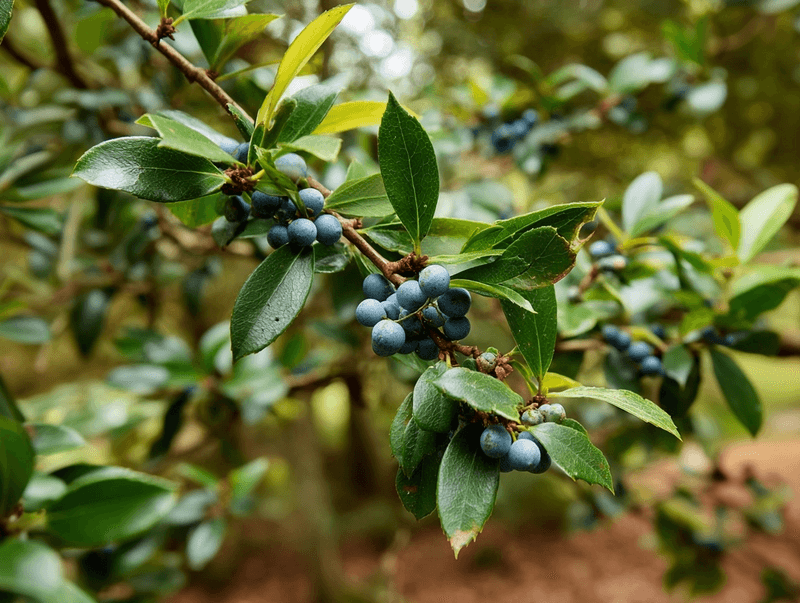
Inkberry holly (Ilex glabra) is a native, wildlife-supporting shrub well suited to coastal and moist-site conditions, where its tolerance for wet soils and salt air makes it a strong candidate for Coastal Plain homeowners. It offers cover and berries for birds without the invasive spread.
Meadowsweet (Spiraea alba) is a native hedge option for moist soils and stream-adjacent sites, where it supports pollinators and butterfly larvae through the growing season. Neither inkberry nor meadowsweet is a universal fit.
A dry, sunny Piedmont slope calls for different natives than a shaded mountain hollow or a wet Coastal Plain edge. Your local Extension office or a native plant nursery can help you match the right species to the actual conditions on your property.
Pair landscape changes with personal tick protection

Landscape work addresses the environment around you. Personal protection addresses the ticks that are already out there, regardless of what shrubs are or are not growing nearby.
Both matter, and neither one covers what the other misses.
CDC recommends using EPA-registered repellents as directed on the label, with products containing DEET, picaridin, IR3535, or oil of lemon eucalyptus among the reviewed options for people. Applying permethrin to clothing and gear before heading outdoors adds another layer because permethrin kills ticks on contact rather than just repelling them.
Treated clothing can remain effective through multiple washes when applied correctly.
After any time spent near wooded or brushy areas, check your entire body for ticks, paying attention to the scalp, behind the ears, the back of the knees, and the waistband area where ticks often migrate. Showering within two hours of coming indoors helps remove unattached ticks and gives you a chance to do a thorough check.
Tumble dry work clothes on high heat for at least ten minutes before washing, since heat kills ticks that laundering alone may not.
Pets that roam yard edges can carry ticks indoors, so CDC guidance on Lyme prevention includes checking pets after outdoor time and using veterinarian-recommended tick preventives. Product selection for cats requires extra care because some active ingredients safe for dogs are toxic to cats.
Ask your vet before applying any tick product to a cat.
North Carolina health officials track tick-borne illnesses statewide and consistently recommend personal protection as a core prevention strategy. Removing Japanese barberry where it is present is a reasonable step that addresses an invasive plant and may reduce one type of sheltered habitat.
What it cannot do is replace the daily habit of checking, protecting, and staying aware every time you or your family steps near that wooded edge. Removing a problematic shrub is a good reason to go outside – just bring your repellent.