
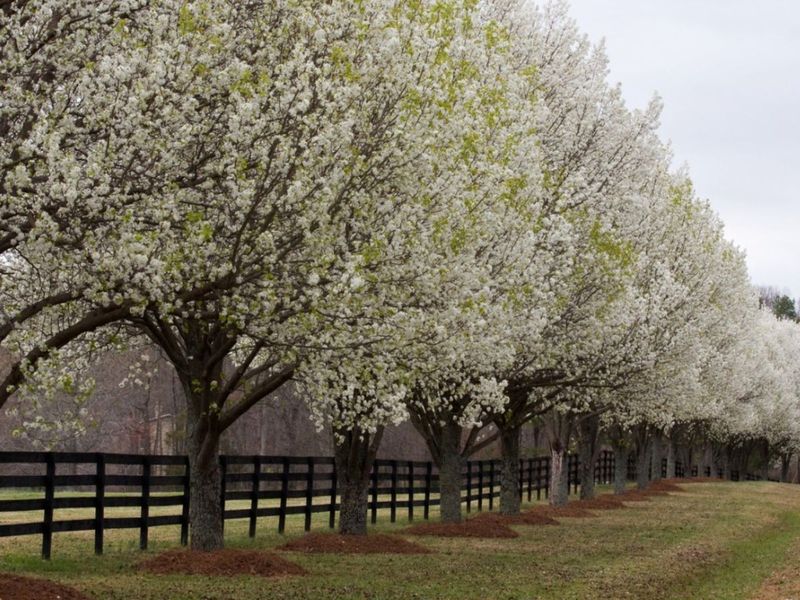
Most North Carolina homeowners have seen a Bradford pear in full white bloom and thought it looked like a great deal – fast growth, tidy shape, and a spectacular spring show. What many don’t know is that a native tree called black gum has been growing quietly in NC forests for centuries, offering shade, wildlife food, and blazing fall color without the structural risks or invasive spread that come with Bradford pear.
Black gum doesn’t show up in many front yards, but for homeowners with enough room and a long-term mindset, it’s worth a serious look.
Black gum offers an underused native alternative
Black gum goes by several names – black tupelo, sour gum, and its botanical name, Nyssa sylvatica – but no matter what you call it, the tree itself is the same impressive native species that has shaped North Carolina’s forests for thousands of years. NC State’s native plants guidance confirms it grows across all three of the state’s major regions: the Mountains, the Piedmont, and the Coastal Plain.
That kind of statewide range means most North Carolina homeowners are gardening in soil and climate where black gum already belongs.
Walk past one in summer and you’ll notice the leaves first. They’re a deep, glossy green that catches light differently from most shade trees, with a polished look that holds through the heat of July and August.
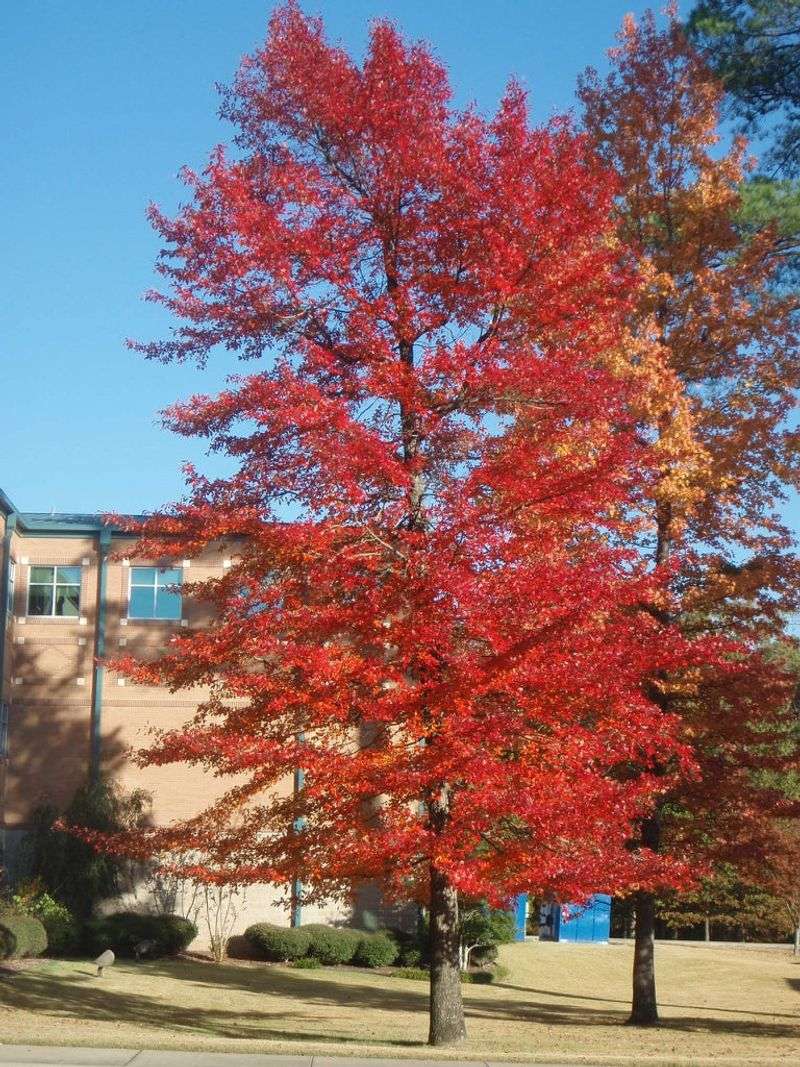
Come fall, black gum is one of the earliest trees to change color, and it does so dramatically – leaves shift from red to deep purple and sometimes orange before dropping, often while neighboring trees are still fully green.
Size matters when you’re choosing a shade tree, and black gum delivers. NC State Extension’s plant profile puts the typical landscape size at roughly 40 to 70 feet tall, while the N.C.
Forest Service notes some trees can reach 60 to 80 feet with a crown spread of 25 to 35 feet. That’s a genuinely large tree, and it’s part of why black gum is sometimes described as an underused native rather than a household name at the garden center.
That eventual size is also a caution worth taking seriously. Black gum is not a good fit for a narrow side yard, a small front lawn, or a spot near a foundation, driveway, or overhead utility line.
Homeowners who have the open space and the patience for a long-term investment, though, will find it a legitimate shade tree with qualities a Bradford pear simply cannot match.
Bradford pear solved short-term problems but created long-term ones
Bradford pear didn’t end up in tens of millions of American yards by accident. When nurseries started selling it widely in the 1960s, it checked every box a homeowner or developer could want: fast growth that produced real canopy within a few years, a tidy symmetrical shape that needed little pruning to look good, white spring flowers that bloomed reliably, and a tough constitution that handled compacted soil, drought, and urban heat without much complaint.
NC State Extension’s Callery pear overview documents all of these original selling points, and they were real. Bradford pear earned its popularity honestly, at least in the short term.
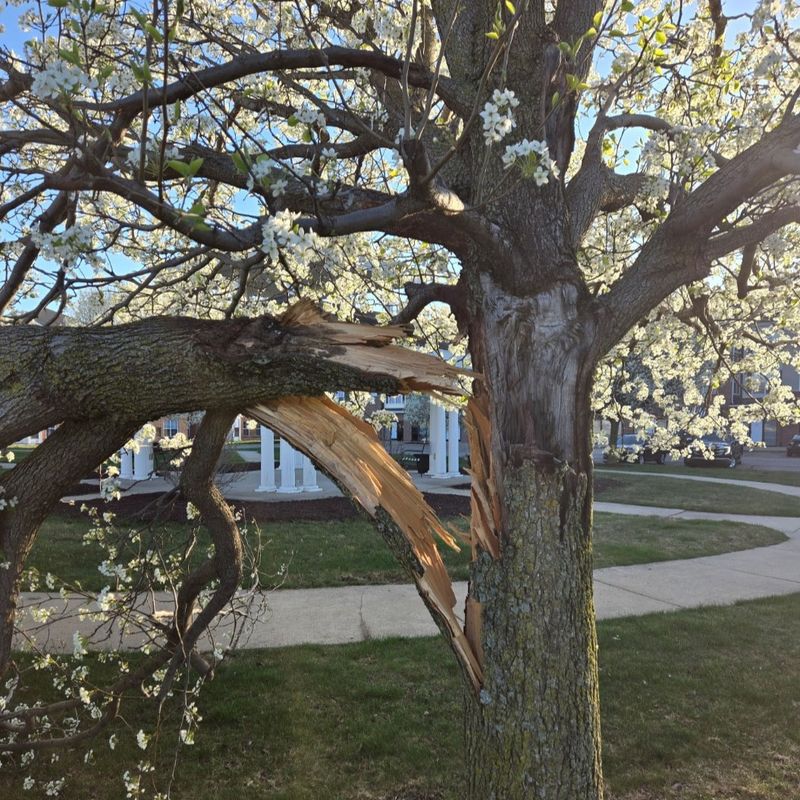
The structural problem became obvious as trees aged. Bradford and its Callery pear relatives develop multiple upright branches that grow from nearly the same point on the trunk, creating narrow V-shaped unions with very little wood connecting them.
As the canopy fills in and gets heavier, those junctions become the tree’s weakest point. Clemson Extension’s Bradford pear fact sheet documents the frequent splitting and breakage that results, especially during the ice storms, high winds, and heavy summer rain events that are common across North Carolina.
Not every mature Bradford pear will fail, but the risk is baked into the tree’s basic architecture.
The ecological problem took longer to surface. Bradford pear was originally thought to be self-sterile, which would have meant its fruit was a dead end.
That turned out to be incomplete. Bradford cannot self-pollinate, but when multiple Callery pear cultivars grow near each other – or when Bradford trees grow near rootstock sprouts from grafted trees – cross-pollination produces viable fruit.
Birds eat those small fruits and carry the seeds into fields, roadsides, and forest edges, where the resulting plants form dense thorny thickets.
NC Wildlife’s post on Bradford pears and the NC Bradford Pear Bounty program both reflect how seriously state agencies now view the invasive spread of Callery pear seedlings into natural areas. The canopy those seedlings form shades out native wildflowers and shrubs that other wildlife depend on.
Bradford pear’s fruit does feed birds in the short term, but the downstream effect on native plant communities is a meaningful cost.
Black gum supports wildlife through nectar, fruit, and habitat
Spend time near a black gum in bloom and you’ll hear it before you see much – bees work the small, inconspicuous flowers with real persistence because the nectar is high quality. NC State Extension notes that black gum flowers are a valuable nectar source for bees and other pollinators, and beekeepers in the Southeast have long valued the species for honey production.
The flowers aren’t showy, but their ecological function is solid.
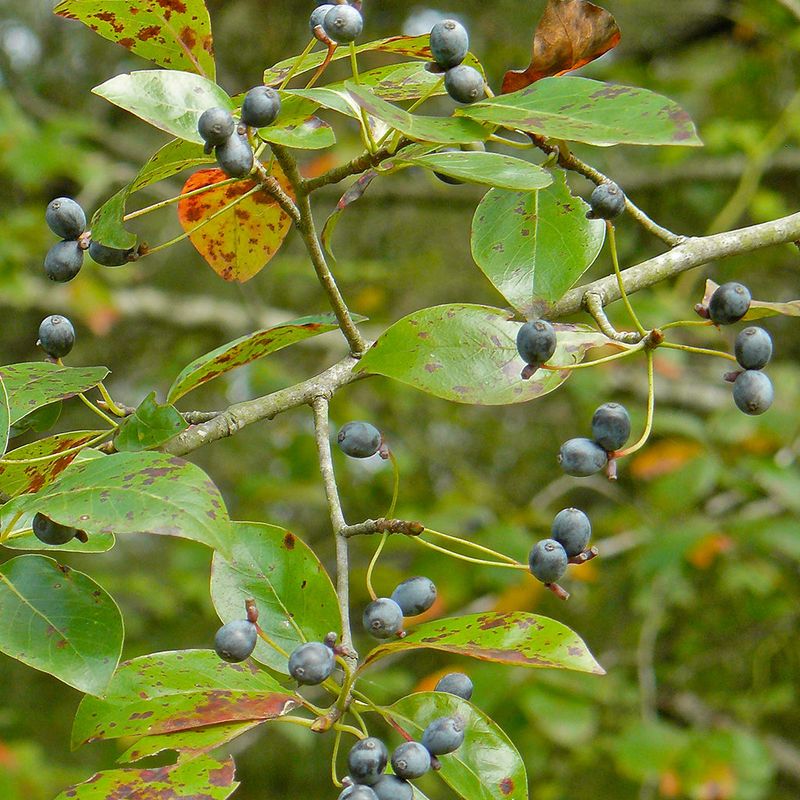
Later in the season, the tree produces clusters of small blue-black fruits that ripen in early fall, right when migrating songbirds need high-energy food. The N.C.
Forest Service’s black gum profile lists thrushes and other songbirds, wild turkeys, black bears, foxes, raccoons, and opossums among the species that eat the fruit. NC State calls it an important food source during fall migration, which is a meaningful distinction – trees that produce fruit at peak migration timing provide real value to birds moving through the state.
One practical note: black gum is generally dioecious, meaning male and female flowers typically grow on separate trees. A female tree may produce limited fruit without a compatible male pollinator nearby.
Before purchasing, ask your nursery whether the tree is a fruiting female and whether there are compatible pollinators in the area. Some cultivars have mixed flower expression, so confirming fruiting expectations upfront saves disappointment later.
Wildlife benefits also depend on what surrounds the tree. A single black gum in a mowed lawn produces less habitat value than the same tree growing near native shrubs, wildflowers, and retained leaf litter.
NC State’s landscaping for wildlife guidance and NC Wildlife’s suburban backyard recommendations both emphasize layered plantings – trees, shrubs, ground covers, water sources, and leaf litter together – as the foundation of a useful wildlife yard. Black gum is a strong anchor for that kind of planting, not a standalone solution.
Leaving fallen leaves under and around the tree, as NC State’s native plants handbook recommends, also provides habitat for ground-dwelling insects that form the base of many food chains.
Match the tree to the yard, soil, and timeline
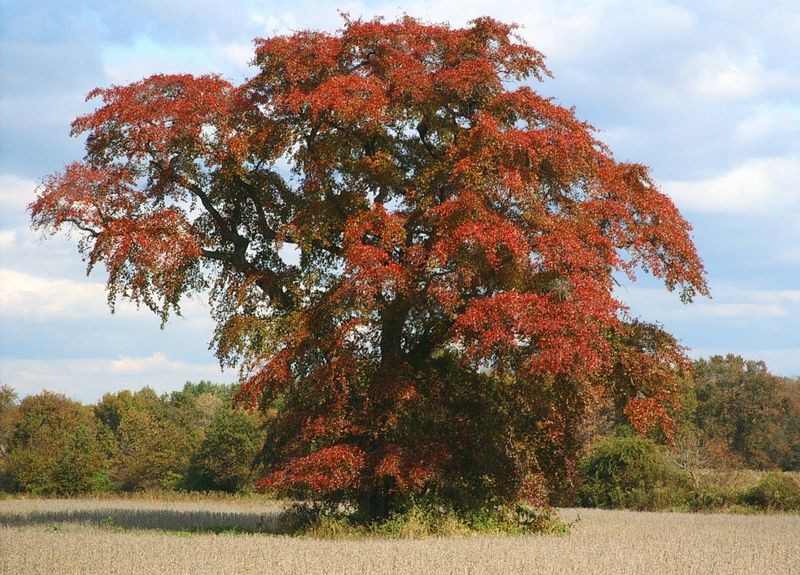
Before buying a black gum, the first question isn’t where to plant it – it’s whether the yard can actually accommodate one at maturity. A tree that tops out between 40 and 70 feet tall with a crown spread of 20 to 35 feet needs genuine open space.
NC Forest Service planting guidance is clear that large trees should not go beneath utility lines and need substantial clearance from buildings, driveways, sidewalks, and septic systems. Walk the intended spot and look up, look down, and look sideways before committing.
Growth rate is where Bradford pear has a genuine advantage, and it’s worth acknowledging plainly. Bradford pear can add three feet or more per year under good conditions, producing real canopy relatively quickly.
NC State’s black gum profile puts typical cultivation growth at roughly 12 to 15 feet over ten years, though faster growth is possible with good watering and soil conditions. That’s a meaningful difference if shade is the primary goal in the near term.
Black gum is a long-term investment, and homeowners should approach it that way.
Soil conditions matter considerably. Black gum grows best in full sun with moist, acidic, well-drained soil, which describes much of the Piedmont and parts of the Coastal Plain well.
It can tolerate some drought, heat, periodic flooding, poorly drained stretches, wind, and even coastal salt exposure, giving it more adaptability than many large trees. The one clear limitation is alkaline soil.
Strongly alkaline conditions are a poor fit, and a simple soil test is worth doing before planting if pH is uncertain in your area.
The N.C. Forest Service’s black gum page also notes the tree’s adaptability to a range of NC conditions, which is reassuring for gardeners across the state’s varied regions.
Still, adaptable doesn’t mean suitable everywhere. A cramped urban lot, a yard with heavy alkaline fill soil, or a site under power lines remains a poor match regardless of how resilient black gum can be under better circumstances.
Plant black gum where it can remain permanently
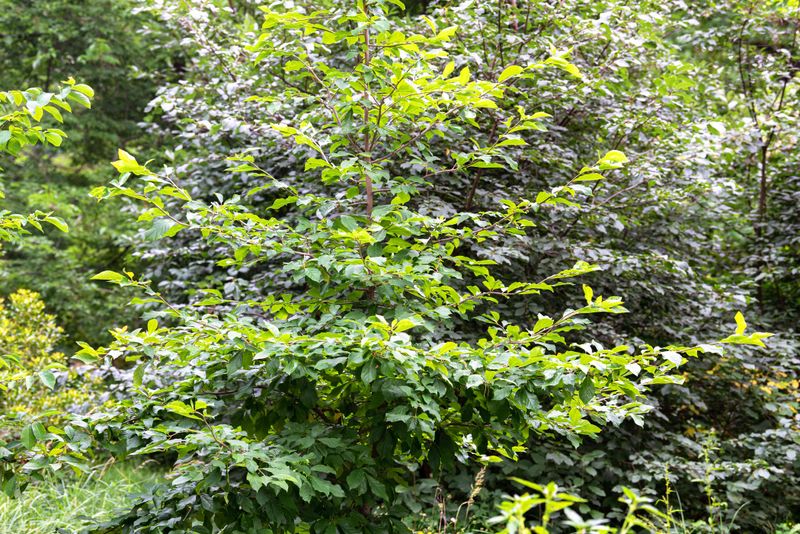
Black gum develops a long taproot early in its life, which is part of what makes it so resilient once established – but it also means the tree does not transplant well after it settles in. Plant it in its permanent location from the start, and plan around that spot rather than assuming you can move the tree later if circumstances change.
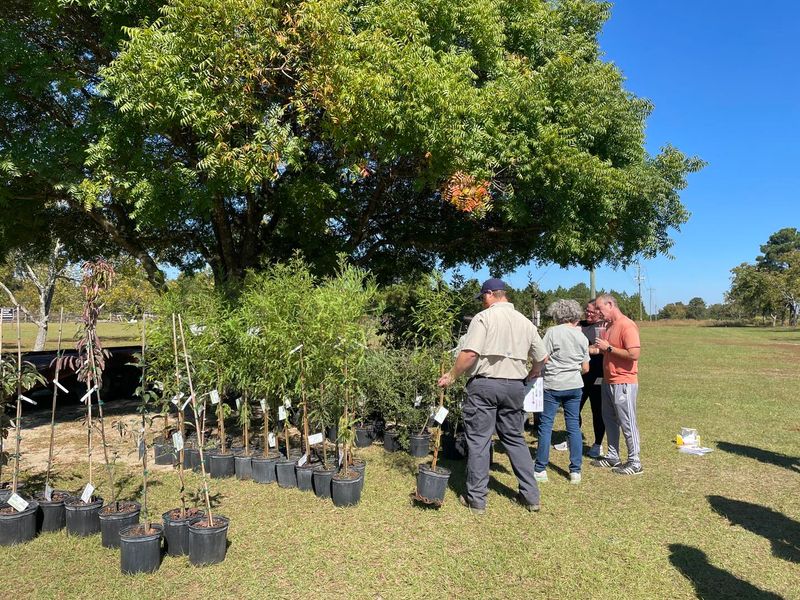
A young, healthy nursery tree is the right starting point, not a large specimen that has already built a complex root system.
Digging the hole correctly sets the tree up for the next decade. NC State’s woody ornamentals handbook recommends a hole that is wider than the root ball but no deeper – the goal is to set the tree so the root flare, the point where the trunk widens at the base, sits at or just above the surrounding soil grade.
Planting too deep is one of the most common and damaging mistakes homeowners make with young trees. After setting the tree, water thoroughly to settle the soil and eliminate air pockets around the roots.
Mulch is your next best tool. Apply 2 to 3 inches of organic mulch over the root zone, but keep it at least 6 inches away from the trunk itself.
Mulch piled against the bark – the classic “mulch volcano” – traps moisture and invites rot and pest problems. A proper mulch ring suppresses competing grass and weeds, moderates soil temperature, and retains moisture through dry spells, all of which matter most during the first two or three years of establishment.
NC Forest Service planting guidance recommends watering regularly during establishment and avoiding fertilizer during the first two years, when the root system is still developing and fertilizer can do more harm than good. Prune only dead or damaged branches in the early years, and let the tree’s natural form develop without aggressive shaping.
Protect the trunk and root zone from lawn mowers and string trimmers, which can wound the bark and introduce disease. Finally, NC State’s native plants guidance makes a practical point worth following: leave fallen leaves where you can.
Leaf litter under the tree returns nutrients to the soil and provides habitat for beetles, firefly larvae, and other ground-dwelling organisms that contribute to a healthy yard ecosystem.
Replace an existing Bradford pear with a measured plan
Removing a mature Bradford pear is not always the right first move, even if you’ve decided black gum is the tree you want long-term. Planting black gum first, while the Bradford pear is still standing, lets the native tree begin establishing before the old tree comes down.
That sequence preserves some shade during the years when black gum is still small, provided the yard has enough room for both trees without crowding the young one out of adequate sunlight. Think of it as a handoff rather than an overnight swap.
Whether and when to remove the Bradford pear depends on its condition and location. A tree with visible splitting, major cracks at branch unions, or significant deadwood near a house, driveway, or utility line poses a risk that increases with every storm season.
NC State Extension’s Callery pear overview and Clemson Extension’s fact sheet both document the structural risks that come with the cultivar’s narrow branch unions, and those risks compound as the canopy grows heavier. A qualified arborist can assess the tree’s actual condition and tell you whether the risk is immediate or manageable for another season.
Topping the Bradford pear is not a solution. Removing large portions of the canopy triggers rapid, weakly attached regrowth that is often more hazardous than the original structure.
NC Forest Service guidance supports hiring a professional for removal near targets, and the same logic applies to any significant pruning work on a mature tree close to structures. Standard pruning may tidy the canopy and remove crossing or rubbing branches, but it cannot erase the fundamental branch-union geometry that makes Bradford pear prone to failure over time.
The invasive spread factor – seeds dispersed by birds into nearby natural areas – is also worth considering as part of the decision, especially if the yard borders a field or wooded edge.
Choose black gum for long-term value, not instant shade
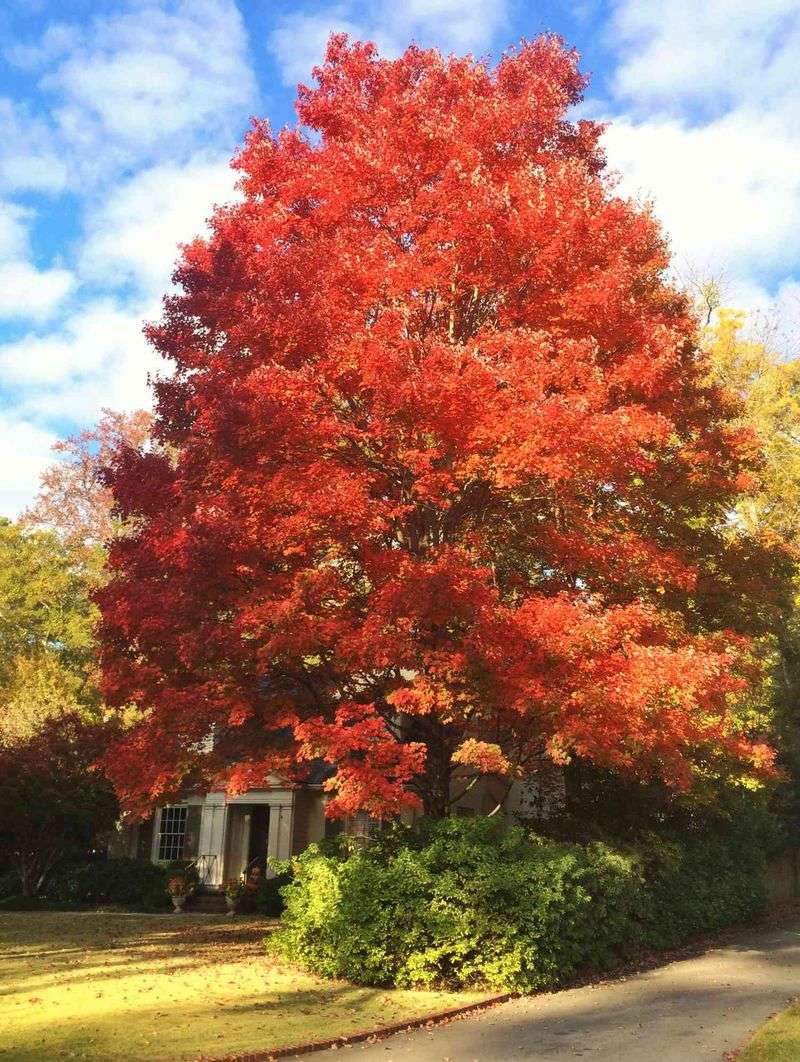
Black gum earns its place in a North Carolina yard for homeowners who have enough open space, realistic expectations about growth pace, and an interest in what a tree can do beyond casting shade. NC State’s black gum profile and the N.C.
Forest Service both describe it as a strong landscape tree with genuine ecological credentials – pollinator support, wildlife fruit, and vivid seasonal color that few ornamental trees can match. Those qualities compound over time in a way that Bradford pear’s fast early canopy never does.
One tree, though, is a start rather than a complete answer. NC State’s landscaping for wildlife guidance frames it well: native habitat builds through layered plantings that combine trees, shrubs, wildflowers, grasses, water sources, and retained leaf litter, not through a single specimen swap.
Black gum anchors that kind of yard beautifully, but the surrounding planting matters too.
For the homeowner with room to grow it right, black gum is a strong long-term alternative to Bradford pear – not a faster option, not a universally superior choice for every site, but a tree that rewards patience with structural reliability, native ecological value, and fall color that will stop neighbors in their tracks for decades to come.