
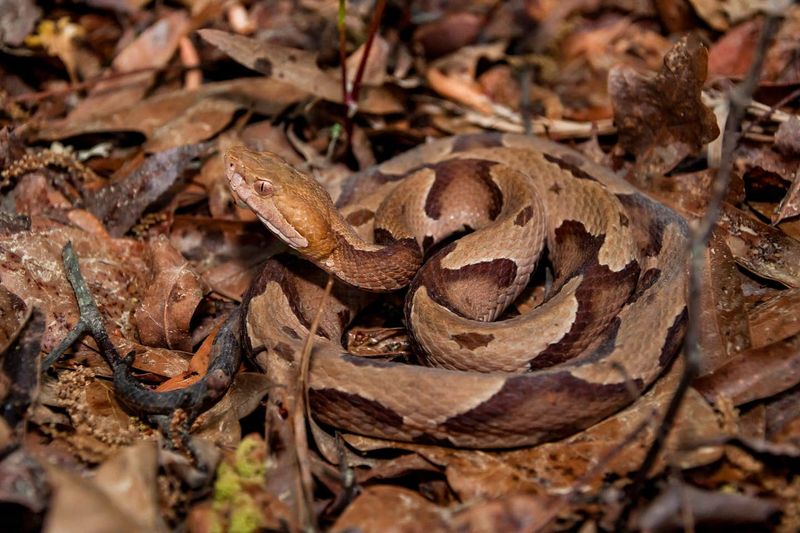
Spotting a copperhead along the edge where your yard meets the woods can stop you in your tracks, especially when kids or dogs are nearby. North Carolina homeowners along forested borders see this more often than many expect, and the sighting carries real information worth understanding.
Knowing what that encounter actually tells you, and what it does not, helps you respond calmly, protect your family, and avoid making the situation harder than it needs to be.
Late summer changes the timing of sightings, not the diagnosis
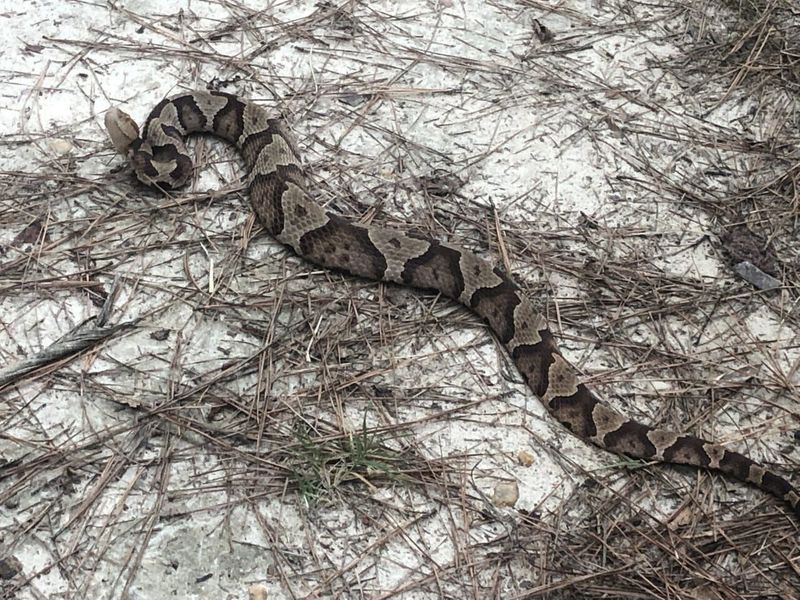
North Carolina copperhead occurrence records and reported sightings cluster noticeably from July through September, and that pattern is worth understanding before drawing conclusions. NC Wildlife Resources Commission records show this seasonal concentration, but the pattern reflects a mix of factors, not a simple spike in snake numbers.
Reporting habits, survey timing, and the sheer amount of time people spend outside in summer all shape what gets recorded.
During the hottest weeks of the year, copperheads tend to shift toward more nocturnal movement, which can bring them into yards and paths at times when people are walking dogs or letting children play after dinner. That timing shift alone can make encounters feel more surprising than they would in cooler months.
A snake that was always nearby may simply become more visible when its schedule overlaps with yours.
Late summer and early fall also coincide with the period when female copperheads give birth to live young. That biological fact is real, but one sighting on your property does not confirm a nearby birth site, a den, or a new population establishing itself.
Births may add to the number of snakes moving through a landscape during this window, but drawing a straight line from one backyard encounter to a nesting event on your lot goes further than the evidence supports.
Human outdoor activity is another piece of the picture. Gardens get more attention, evening walks are longer, and children spend more unstructured time near the edge in summer.
More eyes on the landscape naturally means more sightings, regardless of whether snake behavior has changed at all. The overlapping factors, shifting snake schedules, possible births, and more people outdoors, do not add up to proof of an infestation, a den, or a single yard condition that triggered the encounter.
The wooded edge is a usable route and refuge
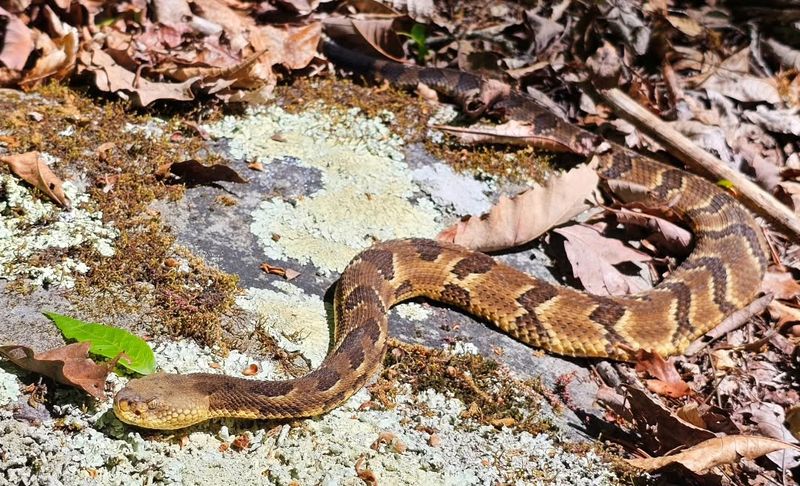
A copperhead along your property line is telling you something specific about the landscape, not about your housekeeping. NC State Extension’s guide to pit vipers describes copperheads using wooded edges, meadows, herbaceous vegetation, canopy cover, leaf litter, logs, rocks, and other surface cover as connected parts of a usable habitat.
Your yard adjoining a forest is part of that connected system, not an isolated target.
Research on copperhead spatial ecology reinforces this point. A Journal of Herpetology study on copperhead spatial ecology found that these snakes use edge habitats and move through fragmented landscapes, meaning a suburban lot bordered by forest is not unusual territory for them.
The snake you saw was likely using the edge as a movement corridor or resting spot, not homing in on your yard specifically.
Copperheads are broadly distributed across North Carolina, found in virtually every county except the Outer Banks. That widespread presence means that living near wooded habitat puts you in copperhead country by definition, regardless of what any individual yard looks like.
A sighting along the edge is consistent with that broad range rather than evidence that something has gone wrong on your property.
Proximity to a house does not mean the snake is drawn to the structure itself. Suitable temperature, shade, cover, and prey can all be found along the natural boundary between lawn and forest.
The snake may have been resting, hunting, or simply moving through on its way somewhere else. Treating a wooded edge as an invitation to wholesale clearing misreads the situation and can damage native habitat that supports birds, pollinators, and the same predators that help keep rodent populations in check.
What cover and prey reveal about an encounter-prone zone
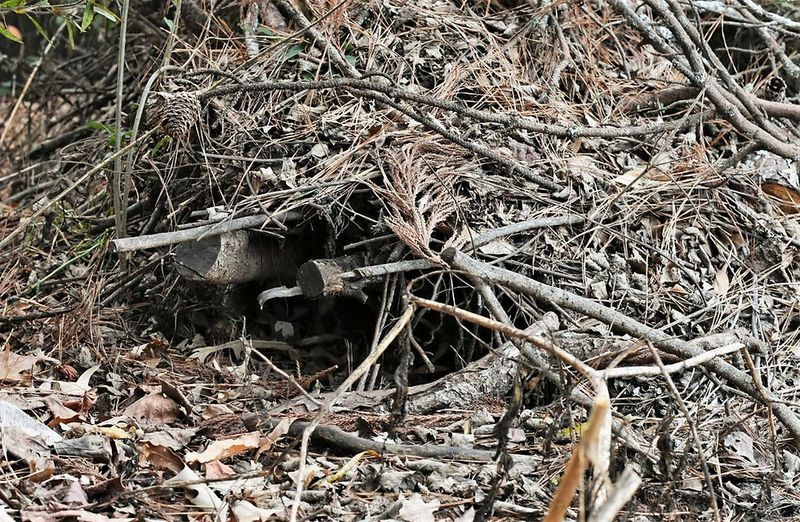
Walking your edge with fresh eyes after a sighting can be genuinely useful, as long as you are looking for conditions rather than trying to find the snake itself. NC State Extension notes that copperheads use brush piles, fallen logs, rock piles, heavy leaf litter, and dense herbaceous vegetation as cover, and these same features often support the small animals copperheads hunt.
Gaps beneath sheds, porches, or stored equipment are worth noting too. A low, dark space that stays cool during the day is attractive to a snake trying to regulate its body temperature, and those same spaces can shelter mice, voles, or lizards.
NC State Extension’s wildlife management guidance identifies these structural gaps as conditions that increase the likelihood of unwanted wildlife encounters near the home.
The prey picture is broader than most homeowners assume. Copperheads eat small mammals, yes, but they also take amphibians, lizards, small birds, and insects depending on the season and what is available.
A sighting near a rock pile does not automatically mean a mouse problem; it may simply mean the rock pile is a comfortable hunting spot for whatever happens to be moving through. Several conditions often overlap along an edge, and the combination increases encounter opportunities without any single feature being the decisive cause.
The practical value of this inspection is not to diagnose what drew the snake in. It is to identify which features near high-use areas, the back door, the path to the play set, the dog run gate, are worth addressing first.
Targeted attention to the spots where your family actually spends time is more useful than trying to audit the entire wooded boundary in one afternoon.
One copperhead cannot diagnose a rodent problem
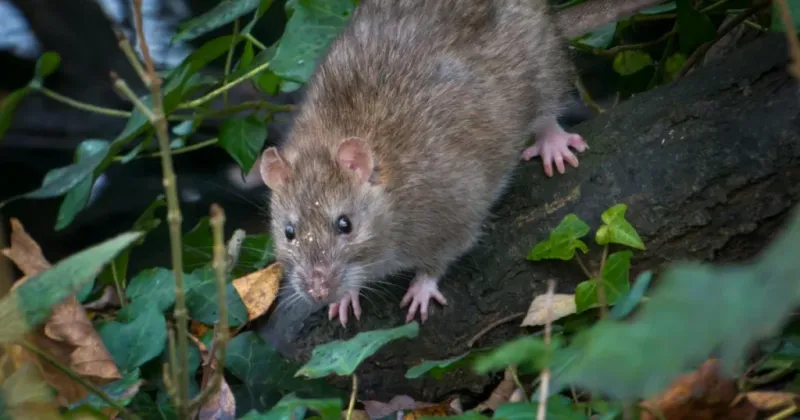
After a sighting, the most common leap homeowners make is to assume the snake arrived because of a mouse or rat problem. That connection is understandable, but one copperhead cannot establish unusually high rodent activity on your property.
NC State Extension confirms that copperheads eat a wide range of prey, so a snake near your edge may have been hunting frogs, lizards, or insects, not raiding a rodent colony.
Similarly, a single sighting does not prove a den, a nest, or a breeding site exists on your lot. NC Wildlife Resources Commission describes copperheads as widely distributed and naturally occurring across the state, which means movement through suitable habitat is a normal part of their range use.
The snake may simply have been passing through.
That said, looking at actual observable evidence of rodent activity is still worthwhile, and not just because of snakes. Spilled birdseed, unsecured pet food, open garbage, fallen fruit, and visible rodent holes near buildings are conditions worth addressing on their own terms.
NC State Extension’s backyard wildlife guide connects these attractants to broader wildlife management rather than treating them as a copperhead-specific problem.
Separating what you can actually see from what you are inferring keeps the response proportionate. Secure food sources and address confirmed rodent evidence because those steps make practical sense.
Avoid spending money on pest control services based solely on a snake encounter, because the sighting alone does not tell you whether rodents are actually present in unusual numbers.
Target the house-side conditions first
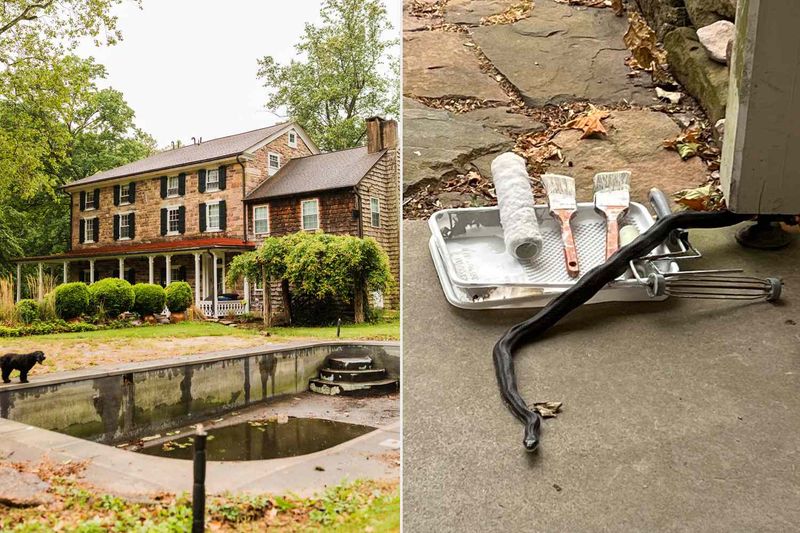
The most productive response to a sighting is a focused look at what is happening between the wooded edge and your home’s foundation, not a plan to clear everything green. NC State Extension’s wildlife management guidance recommends removing or relocating brush piles, junk, and unmanaged wood piles that sit close to the house.
Moving a wood pile from beside the back steps to a spot at the far end of the yard reduces the chance that a snake resting there is also near a door your family uses daily.
Vegetation management near buildings matters too. Trimming grass and herbaceous plants back from foundations, walkways, and the edges of decks removes the low, shaded cover that makes a narrow strip of yard feel like an extension of the wooded edge.
You are not eliminating habitat; you are creating a less hospitable transition zone between the forest and your home.
Food sources deserve equal attention. Secure pet food after each feeding, bring birdseed feeders in or use baffled poles, pick up fallen fruit promptly, and keep garbage in sealed containers.
These steps reduce prey opportunity without requiring any structural work. Mississippi State University Extension’s guide to reducing snake problems includes securing food sources among the most straightforward ways to make a yard less hospitable to snakes over time.
Foundation inspection comes next. Check where utilities enter the house, look at door thresholds and crawl space vents, and examine the base of sheds and garages for openings larger than about one-quarter inch.
Seal gaps with materials appropriate for the location, keeping ventilation requirements in mind. A crawl space vent that needs airflow should be covered with properly fitted hardware cloth rather than blocked entirely.
Working from the house outward, rather than from the woods inward, keeps the effort targeted and manageable.
High-use zones deserve focused exclusion
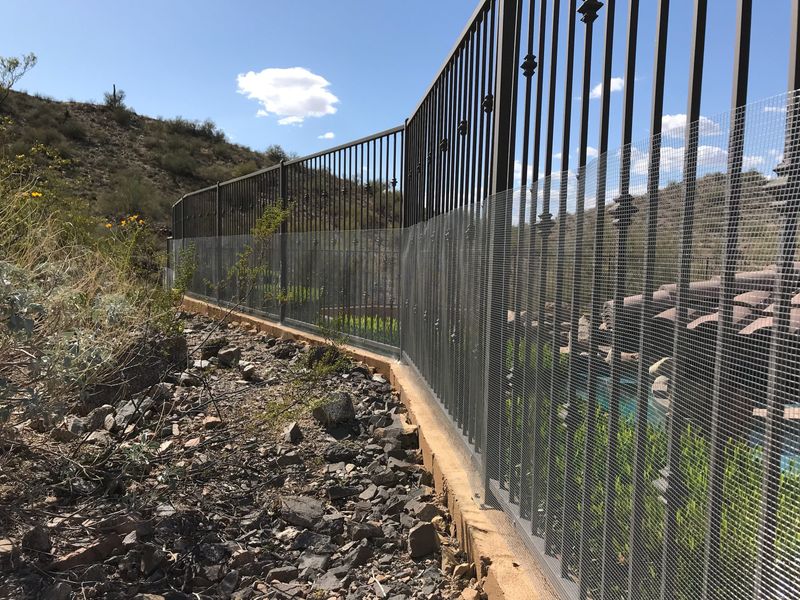
Children’s play areas, dog runs, and frequently used paths along the wooded edge are the spots where distance and vegetation management alone may not feel like enough. For those locations, a physical barrier can add a meaningful layer of protection.
Utah State University Extension’s guidance on keeping snakes out of yards describes rigid hardware cloth with openings of about one-quarter inch or smaller as the most reliable fencing material, installed with the bottom edge buried several inches into the ground to prevent snakes from pushing under it.
Vegetation management around the fence line is part of making the barrier work. Tall grass or dense plants growing against the fence give a snake a way to climb over, so keeping that strip clear is as important as the fence itself.
NC State Extension also notes that physical exclusion around specific high-risk areas is more effective than trying to manage the entire yard perimeter.
This kind of targeted fencing is a proportionate response to a specific concern, not a prescription for enclosing your entire property line. Fencing the full wooded boundary would be expensive, visually disruptive, and potentially harmful to wildlife that moves through the edge, including the hawks, foxes, and other predators that naturally help regulate small mammal populations.
Skip the commercial repellents and household remedies. Mothballs, sulfur, cinnamon, and essential oil products are not supported by extension research as effective copperhead deterrents, and mothballs used outdoors can expose children, pets, and wildlife to toxic chemicals while also violating product labeling requirements.
A well-installed physical barrier around the spaces your family uses most is a far more reliable investment than any spray or granule product currently on the market.
Distance is the right response to a sighting
Seeing a copperhead calls for one immediate action: create space. Back away slowly, keep children and pets well clear, and leave the snake where it is.
CDC guidance on venomous snakes is straightforward on this point: do not attempt to handle, trap, move, or kill the snake. Most copperhead bites happen when someone tries to do one of those things.
Resist the urge to get a closer photograph for identification purposes. NC Wildlife’s guidance on handling wildlife specifically cautions against relying on a single visual trait, such as head shape or pupil shape, to determine whether a snake is venomous.
If a photograph is possible from a genuinely safe distance, it may help an expert later, but approaching the snake to get a better shot is not worth the risk.
For everyday work along the edge, protective habits make a real difference. NC State Extension’s backyard wildlife guide recommends wearing closed-toe shoes or boots and long pants whenever you are near the wooded boundary, using gloves when moving brush or debris, and carrying a flashlight after dusk.
Never place your hands under logs, rocks, boards, or dense vegetation without first using a tool to move the material.
When a snake needs to be removed from a location where it genuinely poses a safety concern, contact a North Carolina Wildlife Control Agent who is specifically licensed or authorized to handle venomous snakes. The NC Wildlife licensed agent directory lets you search by county, and the NC Wildlife “Have a Wildlife Problem” page can help you identify the right resource.
Before scheduling any removal, confirm that the agent’s authorization specifically covers venomous species, because not all wildlife control licenses include that authorization.
A suspected bite requires emergency care

Any bite from a snake that might be venomous is a medical emergency, full stop. Call 911 or get the person to an emergency department immediately.
CDC guidance on venomous snakebites calls for keeping the person as calm and still as possible, because movement can speed venom circulation. Remove rings, watches, and any tight clothing or jewelry near the bite site before swelling develops and makes removal difficult.
If the wound can be gently washed with soap and water and loosely covered, do that while waiting for help or during transport. Those are the actions that support medical care.
Everything else commonly suggested, including tourniquets, cutting the wound, sucking out venom, applying ice packs, using electric shock, and attempting to capture or kill the snake to bring along for identification, should not be done. A NIOSH bulletin on venomous snake hazards explicitly lists these interventions as harmful or ineffective, and attempting them wastes time that should be spent getting the person to a hospital.
Fang marks are not a reliable indicator of whether venom was delivered. Marks may be small, obscured by swelling, or not immediately visible, and their absence does not mean the bite was harmless.
Any suspected venomous bite deserves urgent evaluation regardless of how the wound looks in the first few minutes.
Do not attempt to identify the snake by returning to find it or by approaching it. Medical staff can treat a copperhead bite without seeing the snake, and trying to catch or photograph it at close range is how a second bite happens.
Getting the person to emergency care quickly is the only priority once a bite has occurred.
Read the sighting as a habitat signal, not a verdict
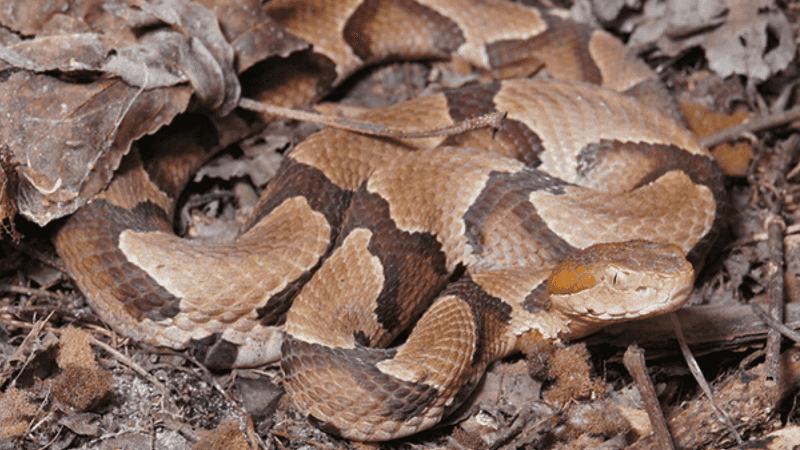
A copperhead along the wooded edge is carrying information, just not the dramatic kind most people assume. NC State Extension and NC Wildlife both describe these snakes as naturally occurring across nearly the entire state, so proximity to forested habitat puts most North Carolina homeowners in the same position.
The sighting tells you the landscape is usable copperhead habitat, which is useful to know.
The proportionate response works from the house outward: reduce cover and food sources near buildings and high-use areas, seal structural gaps, build protective habits for edge work, and consider targeted fencing around play areas or dog runs if those spaces sit very close to the tree line. CDC guidance on wildlife and healthy homes frames this kind of targeted management as the right approach, distinct from trying to eliminate wildlife from the broader landscape.
Snakes, including copperheads, are part of the ecological system that keeps the wooded edge functioning. Managing encounter risk near the spaces your family uses most is a reasonable and achievable goal.
Trying to make the entire boundary snake-free is neither realistic nor good for the native habitat that makes a North Carolina wooded yard worth having in the first place. One sighting asks for attention, not alarm.