
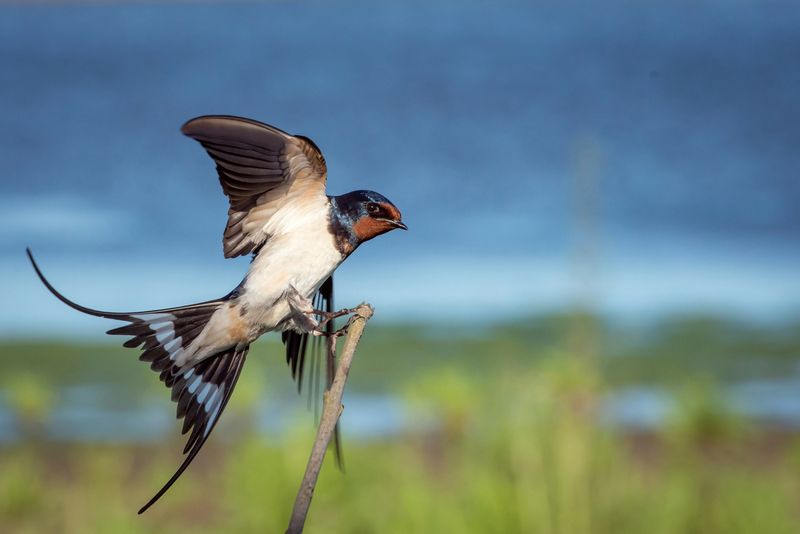
Barn Swallows are some of the most acrobatic birds you will spot over a Central Texas yard, sweeping low across open ground and snatching insects right out of the air. Plenty of homeowners assume that more of these birds means fewer mosquitoes buzzing around the patio, and that idea sounds reasonable enough.
The truth is a little more complicated, and knowing the difference between what swallows actually do and what they cannot reliably deliver will help you support these birds the right way while still keeping summer insects in check.
Barn Swallows really do hunt insects in open air
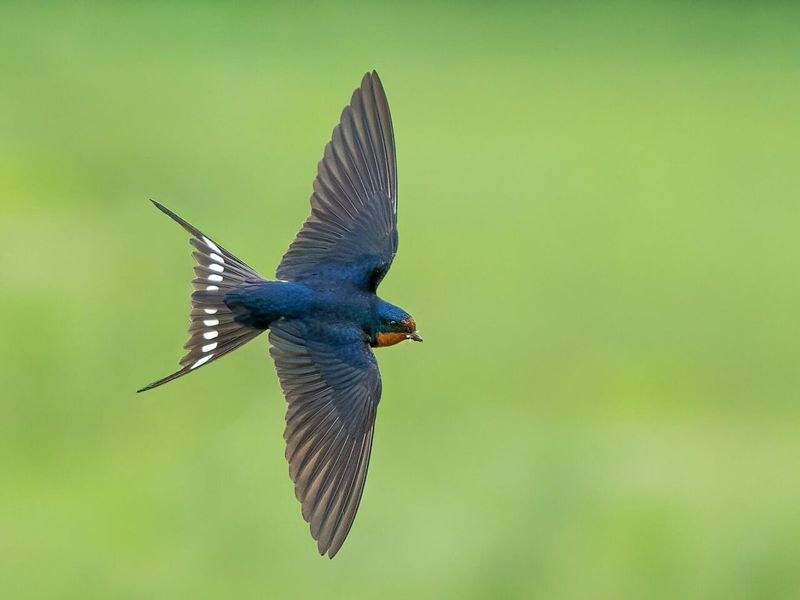
Watch a Barn Swallow work a field at dusk and you will quickly see why people associate them with pest control. These birds forage almost exclusively in flight, often skimming just a few feet above the ground or water as they chase down prey.
Open spaces are their preferred hunting grounds: fields, pastures, parks, pond edges, farmyards, and shorelines all attract them, and a Central Texas yard that sits near any of those habitats stands a reasonable chance of hosting a few on a summer evening.
Their diet is genuinely broad. Cornell Lab of Ornithology’s Barn Swallow life history lists flies as the primary prey group, but beetles, bees, wasps, ants, moths, butterflies, and other flying insects all show up in the diet as well.
A DNA-metabarcoding study published in The Auk found that Barn Swallow nestlings consumed prey drawn from 130 different insect families, and the data showed a preference for relatively large dipteran prey, meaning bigger flies rather than the smallest midges or gnats.
That breadth is important context. Seeing swallows arc over your lawn does not mean they are working through your yard’s specific mosquito population.
They range widely across the surrounding landscape, and their flight path may simply reflect where the most accessible prey happens to be at that moment. Their presence over a particular patch of ground is a sign of abundant aerial insects in the broader area, not confirmation that they have chosen your yard as a dedicated hunting territory.
Why Barn Swallows are not a proven mosquito-control treatment
A list of insects in a bird’s diet does not tell you how much of each species the bird actually eats, and that distinction matters a lot when the conversation turns to mosquitoes. Cornell’s detailed account of Barn Swallow feeding behavior notes that they “usually take relatively large, single insects rather than feeding on swarms of smaller prey.” Mosquitoes are small, light insects that form dense swarms near standing water and shaded vegetation, which puts them toward the less-preferred end of the swallow’s prey spectrum.
The metabarcoding research on nestling diet confirms a generalist feeding pattern with a tilt toward larger flies, not a specialization on the biting species most likely to ruin your evening on the patio. A study examining aerial invertebrate abundance and swallow foraging further suggests that swallow activity tracks existing insect abundance rather than driving it down.
In plain terms, a yard full of swallows may simply be a yard that already had abundant flying insects, including mosquitoes, before the birds arrived.
Correlation and causation are easy to confuse outdoors. Abundant swallows can reflect nearby water, livestock, pasture, warm weather, or surrounding habitat rather than signaling that the birds are reducing your household mosquito count.
Supporting Barn Swallows is a genuinely worthwhile goal for any Texas wildlife gardener, but treating them as a dependable mosquito-reduction strategy sets an expectation the evidence does not support. The narrower, defensible benefit is this: swallows eat a variety of flying insects and contribute to natural insect predation, and that alone is a good reason to welcome them.
Build the habitat combination Barn Swallows actually use
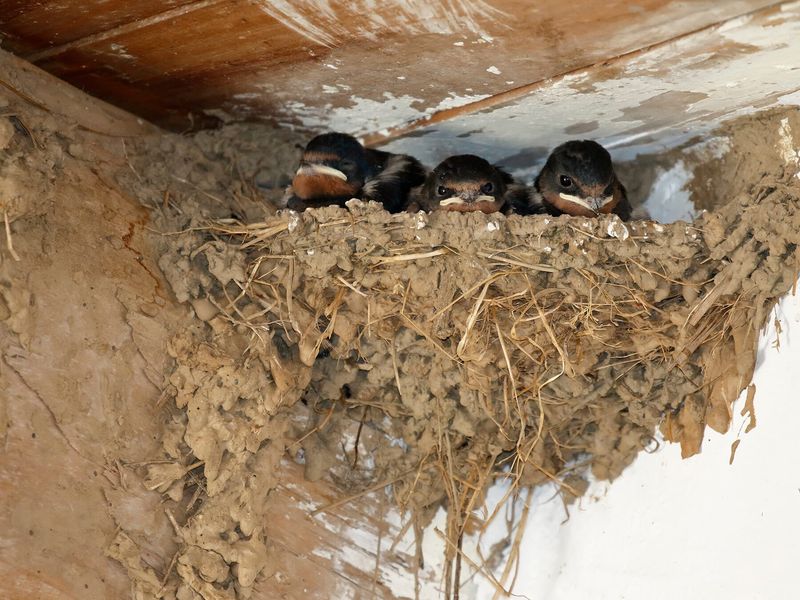
Barn Swallows do not move into a yard simply because someone wants them there. They settle where three things come together: open aerial space for hunting, a sheltered structure suitable for a mud-cup nest, and nearby access to mud and insect-rich habitat.
Properties near open fields, pastures, ponds, or working farmyards in Central Texas already supply much of what the birds need naturally, and those settings offer better prospects than a tightly enclosed suburban lot surrounded by fences and mature tree canopy.
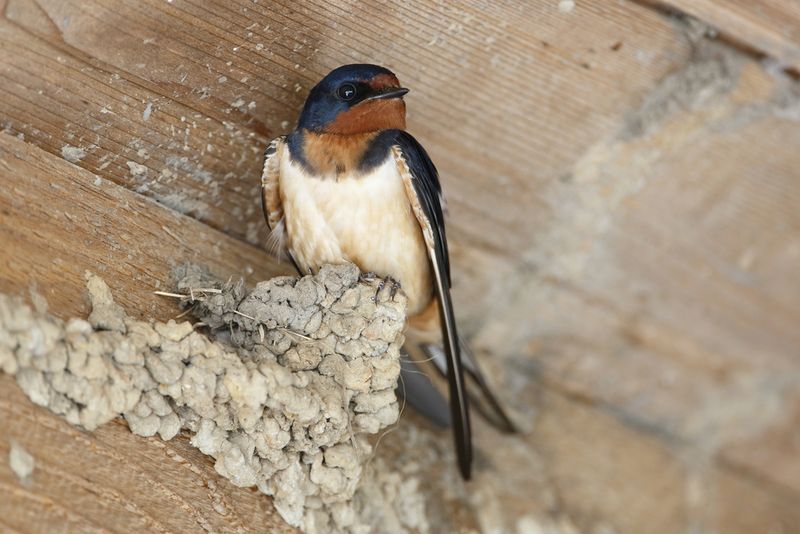
Cornell’s life history account confirms that swallows attach their nests to human-made structures such as barn eaves, shed rafters, bridges, wharfs, porches, and culverts, and that they need open ground or water nearby for foraging. Texas Parks and Wildlife’s wildlife management guidance echoes this, recommending that landowners preserve the combination of open foraging space and a sheltered nesting ledge.
Removing obstructions that block low-level flight over a lawn or garden, keeping an outbuilding open, or leaving a stretch of yard unmowed near a fence line can make a property more inviting without adding unnecessary features.
Rutgers Cooperative Extension guidance on supporting Barn Swallow colonies recommends placing artificial nesting structures near pastures, fields, water bodies, or forest edges rather than in the middle of dense residential plantings. Readers should treat these habitat improvements as opportunities rather than guarantees.
Site selection ultimately depends on local prey abundance, existing structures, predator pressure, mud availability, and the broader landscape, all of which are factors no homeowner fully controls.
Install an open nesting shelf instead of a conventional birdhouse
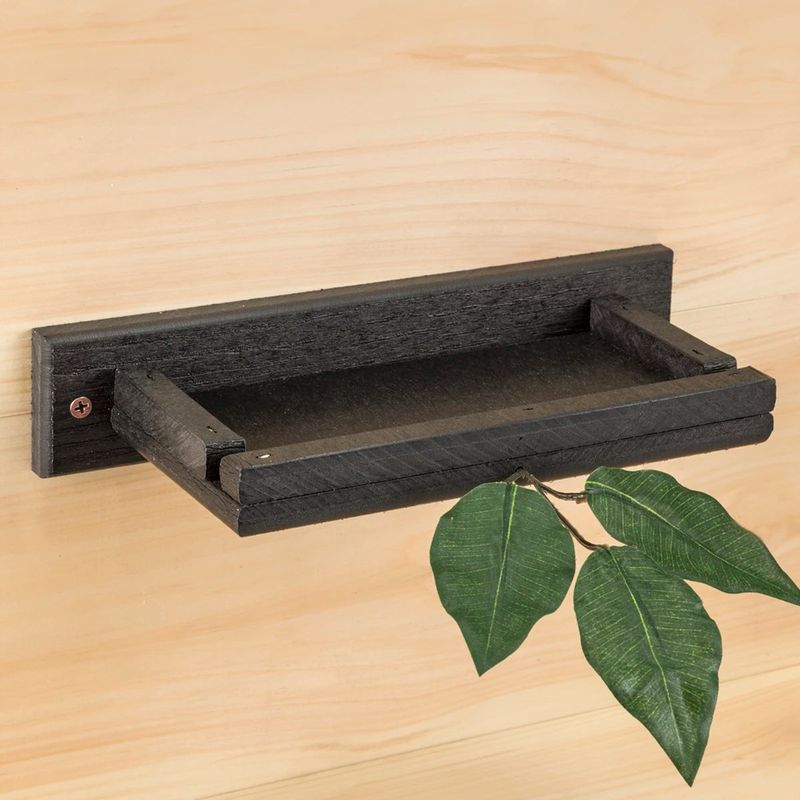
Picking up a standard enclosed birdhouse at the hardware store will not help Barn Swallows. These birds are not traditional cavity nesters.
They build open mud cups pressed against a vertical surface under a roof or overhang, and a box with a round entrance hole simply does not match that behavior. Texas Parks and Wildlife’s wildlife management publication makes this clear and recommends open nesting shelves placed under barn eaves, porch ceilings, or similar sheltered structures instead.
For a practical starting point, Texas Parks and Wildlife’s nesting shelf brochure and the TPWD bird houses page describe an open structure approximately 6 by 6 inches with a 6-inch depth. University of Maryland Extension’s Barn Swallow fact sheet suggests mounting shelves roughly 8 to 12 feet above the ground.
Treat those figures as reasonable guidelines rather than precise requirements, because published plans vary and the birds will ultimately judge the site on their own terms.
Placement matters as much as dimensions. A shelf tucked under the eave of a barn, carport, or covered porch gives birds the overhead protection they need and mimics the ledge-and-overhang geometry they prefer in natural settings.
Rutgers Extension also advises installing structures near suitable foraging habitat rather than in isolated or heavily trafficked spots. Put the shelf up before local breeding activity begins in spring so it is weathered and available when birds start scouting.
No shelf design, dimension, or placement guarantees that swallows will show up, but offering the right structure in the right spot removes one barrier they might otherwise face.
Provide mud without creating mosquito habitat
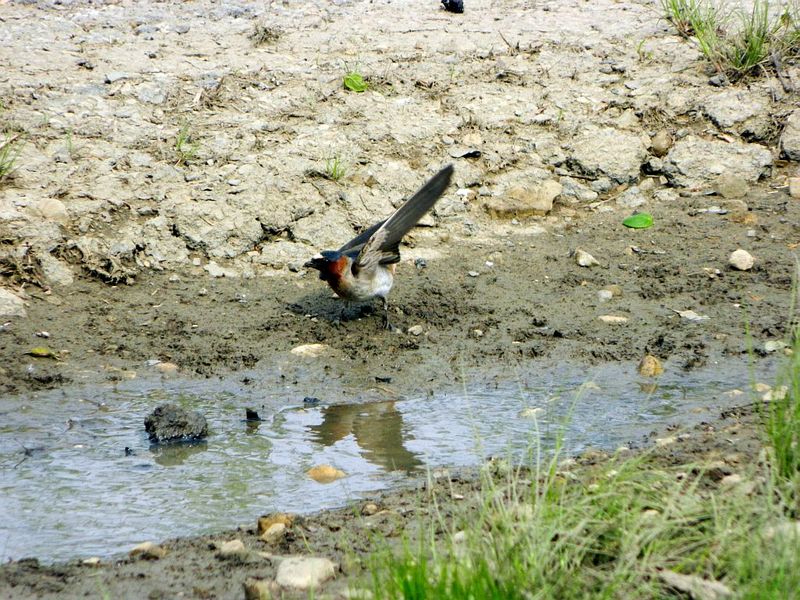
Mud is not optional for Barn Swallows. Both sexes gather it in small loads and press it into the cup-shaped base of the nest, mixing in grass stems and lining the finished structure with softer material.
Cornell’s life history account describes this building process in detail, and any property that loses its mud to concrete, gravel, or compacted turf loses a resource the birds genuinely need.
The complication is that standing water creates mosquito breeding habitat. CDC guidance on mosquito control at home recommends eliminating or covering any container that holds water because mosquitoes can lay eggs in even a small amount that sits undisturbed for a few days.
Adding a bucket, pond, birdbath, or other water feature specifically to attract swallows would work against the mosquito-management goal that likely motivated the idea in the first place.
A reasonable middle path is a shallow, naturally damp area of bare soil near a garden bed or fence line that drains freely after rain and never holds pooled water. A low spot that stays moist from irrigation runoff, for example, can provide workable mud without becoming a container.
Researchers have not established that offering a dedicated mud source reliably attracts Barn Swallows, so treat this as a supportive habitat detail rather than a proven lure. Avoid any setup where water collects and sits still, and check regularly to confirm the area is draining as intended.
Plan shelf placement around droppings and protected nests
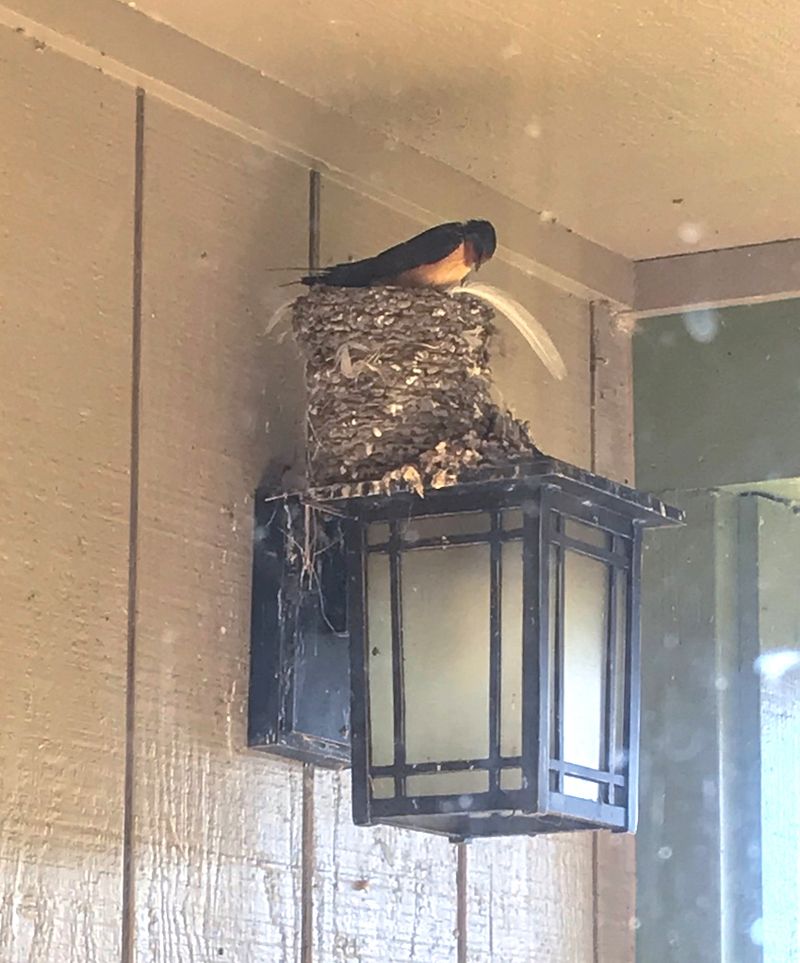
Before a single nail goes into a nesting shelf, think carefully about where the droppings will land. Barn Swallows are prolific nesters and a successful clutch means weeks of accumulated feces and nest debris falling directly below the attachment point.
Texas Parks and Wildlife’s nesting shelf guidance advises choosing locations where droppings will not fall on doors, patios, vehicles, food-preparation surfaces, or heavily used walkways. A shelf positioned over a gravel strip or bare soil at the back of a barn or outbuilding is far easier to manage than one centered above a frequently used entry.
The legal dimension is equally important to understand before nesting begins. U.S.
Fish and Wildlife Service guidance on bird nests explains that active nests containing eggs, chicks, or dependent young are protected under federal law. The Migratory Bird Treaty Act, 16 U.S.C. 703, makes it unlawful to destroy or disturb such nests without authorization.
Once a pair has committed to a site and laid eggs, your options for relocating the nest are extremely limited. The practical answer is to plan your shelf placement thoughtfully in late winter or early spring, before swallows arrive, so you are satisfied with the location before it becomes protected territory.
USFWS guidance on nuisance swallows identifies Barn and Cliff Swallows as species whose nests can produce substantial feces and debris, and it outlines the limited options available once nesting is underway. For droppings cleanup, CDC information on histoplasmosis prevention notes that disturbing large accumulations of bird droppings can expose people to Histoplasma fungal spores.
CDC and NIOSH engineering controls guidance advises against dry sweeping or scraping, recommending dust-suppression methods and, for large accumulations, qualified professional cleanup. A season’s worth of droppings under an active nest is not a job for a dry broom and a trash bag.
Use CDC mosquito control alongside wildlife support
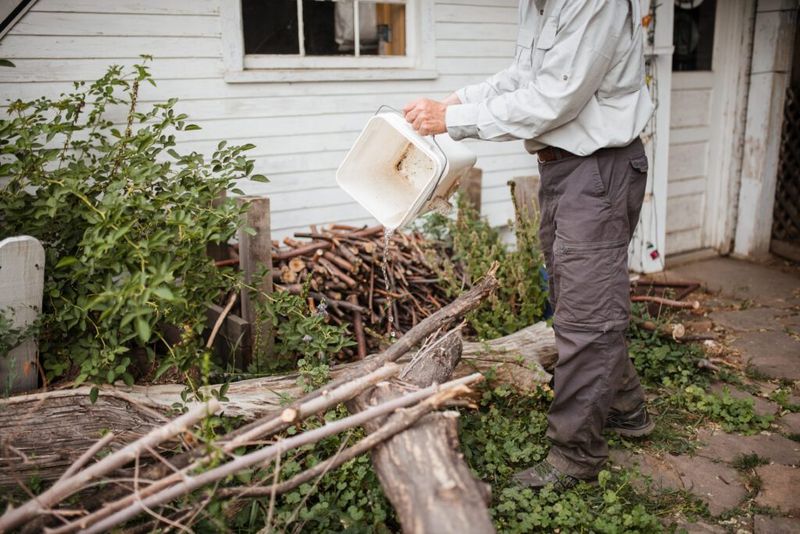
Welcoming Barn Swallows to a Central Texas property is a worthwhile wildlife goal, but the birds cannot carry the weight of your mosquito management on their own. Mosquito populations are driven by breeding sites, and the most direct way to cut into that population is to eliminate the water where eggs are laid.
CDC guidance on mosquito control at home recommends emptying, scrubbing, turning over, covering, or discarding any water-holding item at least once a week. That list includes flower pot saucers, buckets, tarps, old tires, clogged gutters, and any other container that collects rain.
Cover rain barrels and larger storage containers with tight-fitting lids or fine mesh so mosquitoes cannot reach the water surface to lay eggs. Check and repair window and door screens, because a gap as small as a few millimeters is enough for common Texas species to enter a home.
When source reduction alone is not sufficient, CDC’s integrated mosquito management toolkit covers the appropriate use of larvicides in standing water that cannot be drained and adulticides for outdoor adult mosquito pressure. Both should be applied according to label directions and local regulations.
Source reduction addresses mosquito breeding more directly and more reliably than waiting for aerial predators to arrive. Swallows eat insects opportunistically across a wide landscape; they are not stationed above your yard targeting the mosquitoes that emerge from your neighbor’s forgotten birdbath.
Running both tracks together – supporting native wildlife habitat and applying evidence-based mosquito controls – gives Central Texas homeowners a more complete response to summer insect pressure than either approach alone. Barn Swallows are a genuine asset to a wildlife-friendly yard, and they deserve support on their own ecological merits, separate from any pest-control expectation.
Set an honest expectation for a swallow-friendly yard
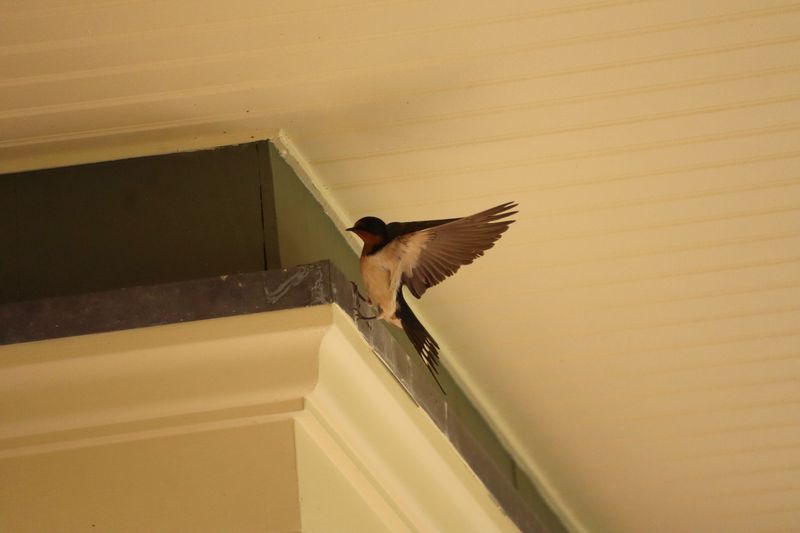
A Barn Swallow-friendly yard in Central Texas comes down to three practical commitments: keep open foraging space available, put up a well-placed open nesting shelf before breeding season, and offer mud access without adding containers that hold standing water. Pair those habitat steps with CDC-recommended source reduction measures and you have a yard that supports native wildlife and addresses mosquito pressure through methods that actually work.
Manage expectations honestly along the way. Cornell’s life history data and Texas Parks and Wildlife guidance both make clear that site selection depends on local conditions no homeowner fully controls.
A shelf may go unoccupied for a season or more. A pair that nested last year may choose a different spot next spring.
That uncertainty is part of working with wild animals rather than managed ones.
When a Barn Swallow does show up and begin carrying mud to your eave, what you are watching is a native Texas bird doing exactly what it evolved to do: building a family, eating whatever flying insects cross its path, and contributing to the broader web of life in your yard. That is worth supporting for its own sake, even if it never noticeably changes the mosquito count on a hot August evening.