
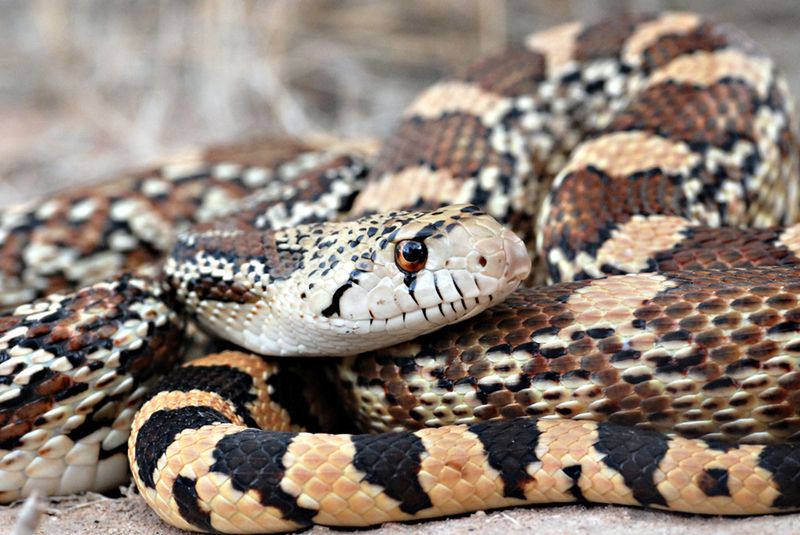
Something large, tan, and patterned just crossed your vegetable bed, coiled up near the tomatoes, and started hissing. Before you reach for a shovel, consider that the snake you are looking at might be doing your garden a favor.
California gopher snakes are nonvenomous predators that sometimes eat the same pocket gophers tunneling under your raised beds, yet their rattlesnake-like defensive display can trigger a fear response that ends badly for the snake. Understanding what you are actually seeing, and what the snake can and cannot do for your yard, is the first step toward a smarter response.
A gopher snake may help your garden—but it will not clear the beds
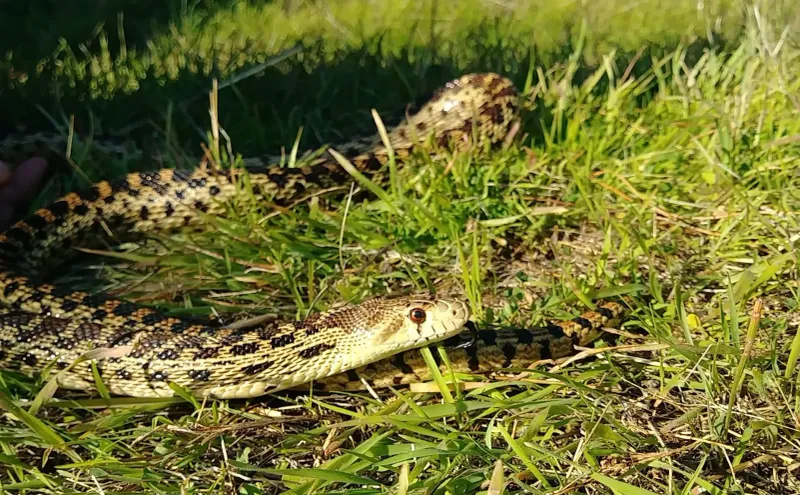
Spend enough time gardening in California and you will eventually share your yard with a gopher snake. Pituophis catenifer, commonly called the California gopher snake, is a nonvenomous predator found across a wide range of habitats, including grasslands, woodlands, farmland, riparian corridors, and suburban yards.
California Herps documents the species across nearly every county in the state, which means a homeowner growing vegetables almost anywhere in California could realistically encounter one.
The snake’s diet includes pocket gophers, mice, moles, rabbits, birds, eggs, lizards, and occasionally other snakes. Rodríguez-Robles’s 2002 feeding ecology study found that rodents and other small mammals are important prey overall, but the exact composition of the diet varies by region, the snake’s size and age, and what prey happens to be available locally.
Pocket gophers are on the menu, but they are not the only item.
The California Department of Fish and Wildlife notes that snakes provide an ecosystem benefit by helping control rodent populations, and that acknowledgment is fair. If a gopher snake hunts around your vegetable beds, it may occasionally consume a pocket gopher that would otherwise have destroyed a row of carrots.
That is a genuine, if limited, ecological service.
The critical word is “limited.” A single snake passing through a yard, or even one that regularly patrols it, cannot be counted on to eradicate an established gopher infestation or reliably clear your beds. Predation and pest eradication are not the same thing, and treating any wild animal as a pest-management program is a setup for disappointment.
The practical takeaway is coexistence at a respectful distance, not dependence on one reptile to solve a rodent problem.
Its rattlesnake imitation is a defensive warning
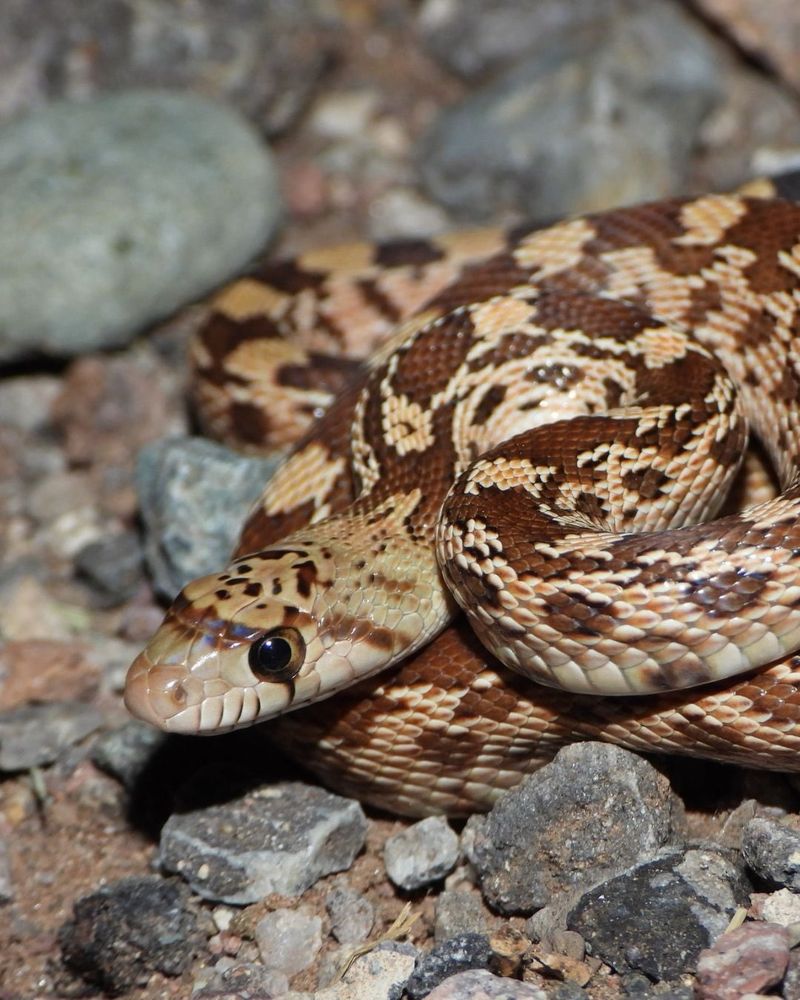
When a gopher snake feels cornered or threatened, it does not simply slither away. Instead, it may flatten its head into a wider, more triangular shape, pull its body into tight coils, and begin hissing loudly.
If dry leaves or grass are nearby, the snake will vibrate its tail rapidly against them, producing a sound that can be startlingly similar to a rattlesnake’s warning rattle.
That combination of postures and sounds is a defensive display, sometimes described as mimicry, meant to convince a potential predator that the snake is more dangerous than it actually is. UC IPM’s rattlesnake guidance identifies this behavior directly, noting that gopher snakes can flatten their heads and vibrate their tails in ways that cause people to mistake them for rattlesnakes.
The display is the snake communicating stress, not issuing a venom threat.
For a homeowner who has not spent time studying California reptiles, the encounter can be genuinely alarming. A large, coiled, hissing snake with what looks like a triangular head and a tail making a rattling sound against the mulch is a reasonable thing to step back from quickly.
That instinct to create distance is exactly right.
What is harder to justify is the next step of killing the animal. The resemblance to a rattlesnake is real enough to explain an initial fright, but the defensive display itself is the clearest sign that the snake wants to be left alone, not that it is preparing to strike.
Giving the snake space and time to move on is the safest and most ecologically sound response for everyone involved, including the snake.
No single visual clue makes a snake safe to approach
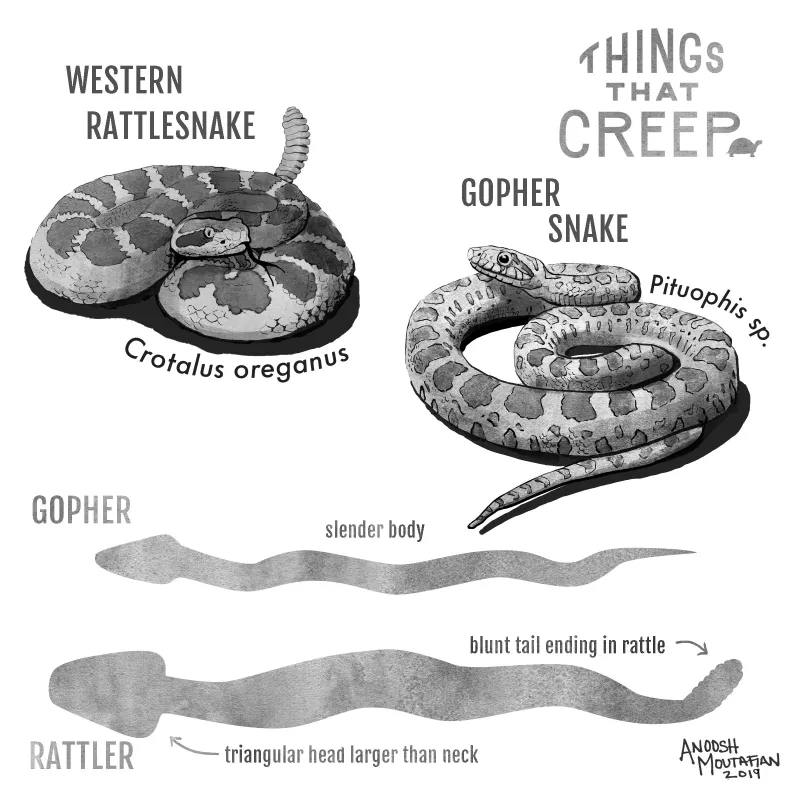
Homeowners sometimes look for a quick visual test that will tell them whether a snake is safe, and a few features do show up consistently when comparing gopher snakes and rattlesnakes from a safe distance. Gopher snakes are generally more slender than rattlesnakes, carry a glossy sheen on their scales, have round pupils, and a head that is only slightly wider than the neck.
UC IPM’s gopher snake image guide illustrates several of these field marks clearly.
The problem is that none of these features, taken alone or even together, is a reliable green light to move closer. A gopher snake that feels threatened can flatten its head dramatically, making it look triangular and far more like a rattlesnake’s broad, arrow-shaped head than it does in a relaxed state.
UC IPM notes explicitly that a triangular-looking head is not a reliable identification test on its own, precisely because defensive flattening can produce that shape in a nonvenomous snake.
The rattle test has a similar flaw. Absence of a visible rattle does not confirm that a snake is harmless.
Rattles are made of keratin segments that can break, wear down, or be shortened, so a rattlesnake that has lost part of its rattle may not produce a full sound or display a recognizable rattle at all. Inspecting a snake’s tail closely enough to confirm the presence or absence of a rattle requires getting far too close to a potentially venomous animal.
California’s gopher snake also comes in several subspecies, and genomic research on Pituophis catenifer confirms meaningful regional variation in appearance across the state. A pattern-based identification guide built around one subspecies may not match the snake in your yard.
The safest approach is to take a photograph from a safe, comfortable distance and send it to your local UC Cooperative Extension office, a qualified wildlife professional, or a reputable identification resource. CDC guidance on wildlife reinforces that photographing from a distance is the appropriate step, not closer examination.
Predation is not the same as gopher control
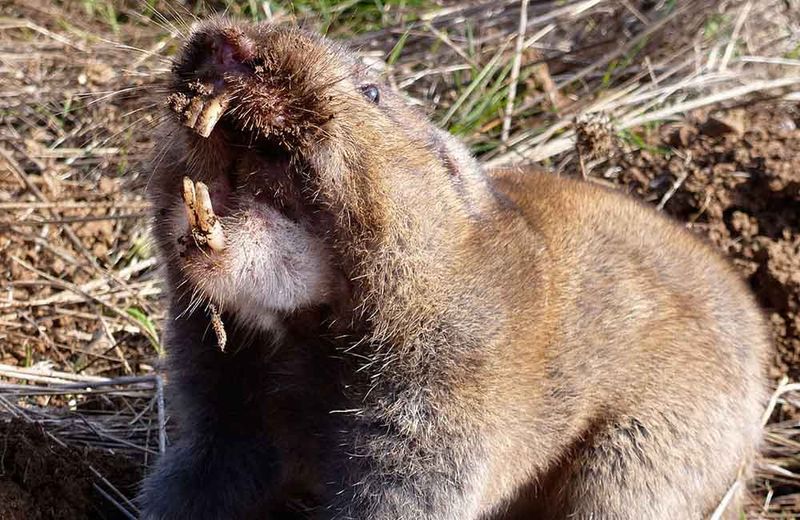
Knowing that a gopher snake eats pocket gophers is useful context, but it does not translate directly into a garden management strategy. Rodríguez-Robles’s diet research confirms that rodents and other small mammals feature prominently in the gopher snake’s diet across its range, but the study also shows that what any individual snake eats depends heavily on local prey availability, the snake’s body size, and regional conditions.
A gopher snake in your yard may focus on mice or ground squirrels rather than the pocket gopher destroying your carrot bed.
Even when a gopher snake does pursue a pocket gopher, the gopher has a meaningful defense. Pocket gophers can rapidly pack soil into their tunnel openings, sealing sections of the burrow system with earthen plugs in response to a threat.
That behavior limits how far a snake can follow a gopher underground and means that a single predator cannot reliably access or monitor the entire burrow network beneath a garden.
UC IPM’s pocket-gopher guidance addresses this directly: predators are generally not expected to reduce gopher numbers enough to prevent plant damage. That is a practical conclusion worth taking seriously.
A gopher snake may occasionally catch a gopher near your beds, and that is a genuine ecological contribution, but it is not a pest-control program. Treating it as one means accepting ongoing plant damage while waiting for an animal whose hunting schedule, territory, and prey preferences you cannot control.
The snake’s ecological value is real. Framing it as a free substitute for proven gopher management is not accurate, and it sets homeowners up to lose plants they worked hard to grow.
Both things can be true at once: the snake is worth protecting, and you still need a plan for your vegetable beds.
Give every snake room to leave
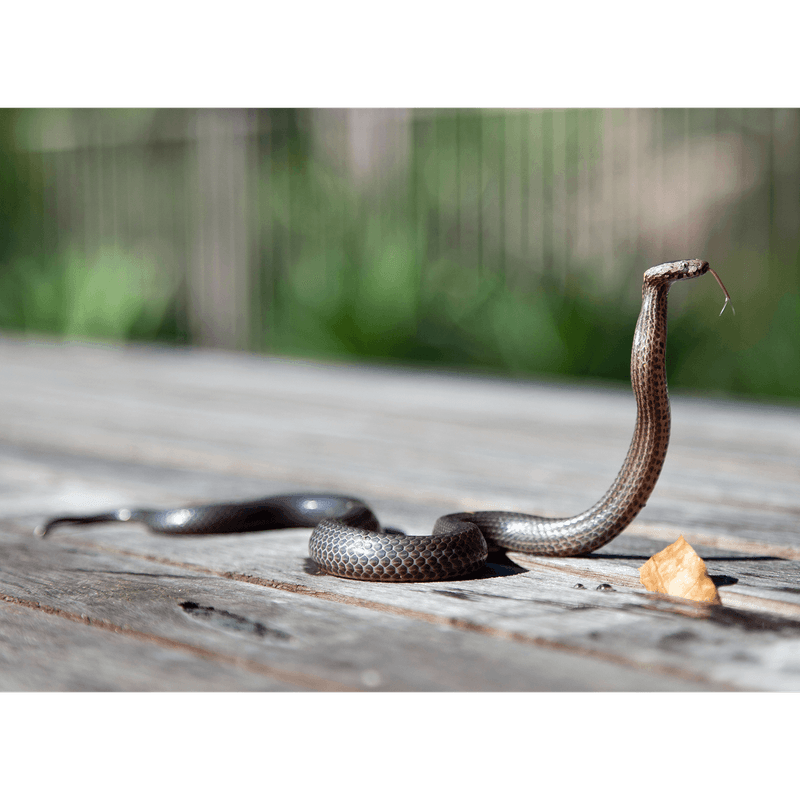
Encountering a snake in the yard calls for one immediate action: create distance. Move children and pets away from the animal calmly and without rushing toward the snake to shoo it along.
Sudden movement toward a snake is more likely to trigger a defensive response than to speed the animal’s departure.
Once everyone is clear, the best course outdoors is usually to wait. A gopher snake that is not cornered, blocked, or repeatedly disturbed will typically move on when it is ready.
California Department of Fish and Wildlife advises leaving snakes alone and giving them space, which is practical advice that applies to any snake you cannot confidently identify from a safe distance.
Never attempt to pick up, trap, or kill a snake. CDC guidance on venomous snakes notes that many bites happen during attempted handling or killing, including bites from snakes that people believed were harmless or already dead.
Even a nonvenomous gopher snake can bite defensively if restrained, and a snake you are not certain about should be treated with the same caution as a venomous one until a qualified person makes a determination.
If the snake enters your home, a garage, or another enclosed space and cannot exit on its own, contact your local animal control agency or a licensed wildlife professional rather than attempting removal yourself. CDC’s wildlife guidance recommends qualified help for situations where an animal needs to be removed from a structure.
If a bite occurs and the species is uncertain, move away from the snake immediately, call emergency services, and keep the person calm and as still as possible until medical care arrives. Skip the home remedies: cutting the wound, attempting to suck out venom, applying ice, and using a tourniquet are all contraindicated and can cause additional harm.
Fast transport to medical care is the only step that matters after the call is made.
Use exclusion and trapping to protect vegetable beds
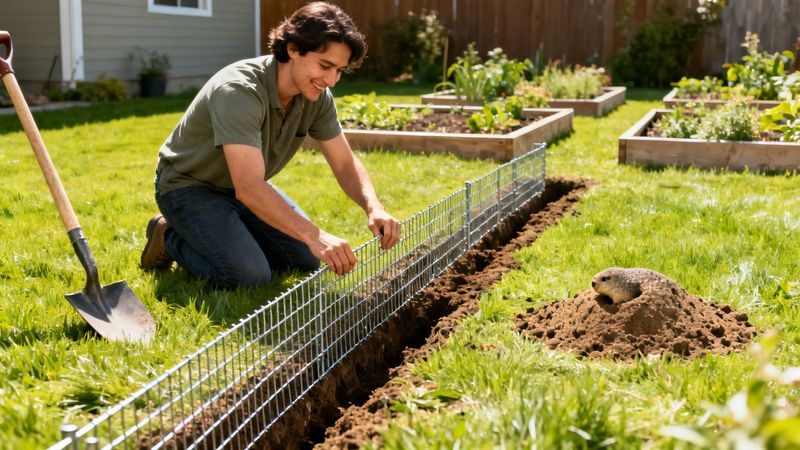
Fresh mounds of soil in a fan or crescent shape, with the opening plugged, are the clearest sign that a pocket gopher is actively working beneath your garden. When you see those mounds near vegetable beds, the time to act is right away, before root damage accumulates.
Waiting to see whether a resident snake handles the problem means accepting plant losses that could have been prevented.
UC IPM’s pocket-gopher management guidance recommends two approaches that address the problem at the source. The first is physical exclusion: installing galvanized wire mesh or hardware cloth with openings no larger than one inch beneath raised beds before filling them with soil.
For individual plants or transplants, wire baskets placed around the root ball at planting time provide targeted protection. Neither method requires chemicals, and both remain effective regardless of what wildlife is or is not passing through your yard.
The second approach is trapping in active burrows. Pinch traps or box traps placed in freshly opened tunnels and checked at least once a day are the most reliable way to reduce an active population.
UC IPM’s guidance covers placement technique and tunnel-probing methods in detail, and following those instructions closely improves success rates considerably.
Several products marketed as gopher deterrents are worth skipping. UC IPM’s research reviews have found that commercially sold repellents, ultrasonic and vibrating devices, pinwheels, and plants advertised as gopher repellents have not reliably protected plants in controlled trials.
Spending money on those products delays the exclusion and trapping work that actually reduces damage.
None of this means the gopher snake in your yard has no role. If one passes through and catches a gopher along the way, that is a genuine ecological benefit worth appreciating.
The difference is that exclusion and trapping are methods you control and can verify, while a snake’s hunting activity is entirely its own. Protecting your plants does not require choosing one over the other; the two approaches simply operate on different timelines and with very different levels of reliability.
Choose distance and evidence over fear
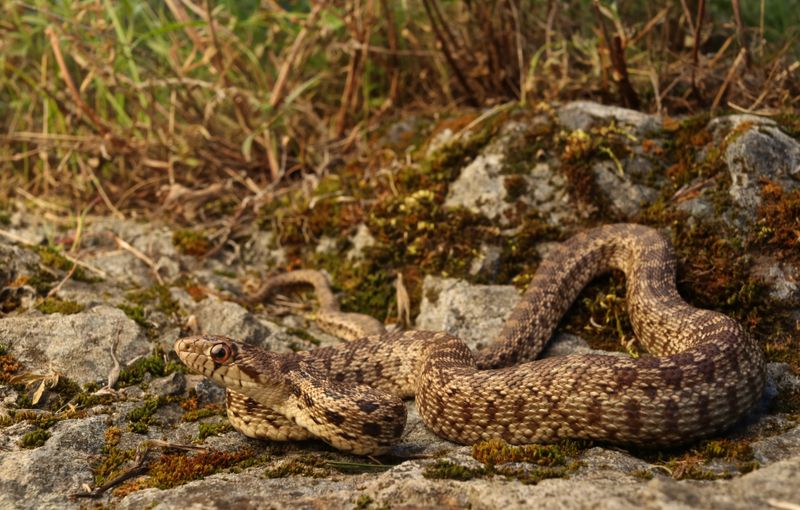
Two things are worth holding onto after reading this far. A California gopher snake may consume pocket gophers and other rodents around your yard, and that is a real, if modest, ecological contribution.
At the same time, no published evidence supports the claim that a resident snake will reliably clear a vegetable bed of gophers, and UC IPM is clear that predators generally will not reduce gopher numbers enough to prevent plant damage.
When a snake appears in the garden and displays that coiled, hissing, tail-vibrating posture, the right response is to back away and give it room. The resemblance to a rattlesnake can be striking, and an initial alarm is understandable.
What the research does not support is describing homeowner killings of gopher snakes as a measured California trend; the risk of misidentification is real, but no reliable statewide survey or rescue dataset quantifies how often it ends in the snake’s death. California Department of Fish and Wildlife simply advises giving snakes space, which is sound guidance regardless of species.
The practical plan is straightforward: keep people and pets away from any unidentified snake, get a photograph from a safe distance if identification would help, and contact animal control or a wildlife professional when removal is genuinely necessary. For active gopher damage, install exclusion mesh and use traps in open burrows.
CDC’s venomous-snake guidance and UC IPM’s gopher management resources give you the specific steps to follow in each situation.
A yard that includes a gopher snake is not a yard under threat. Handled with a little knowledge and a lot of distance, it is a yard with one more working part.